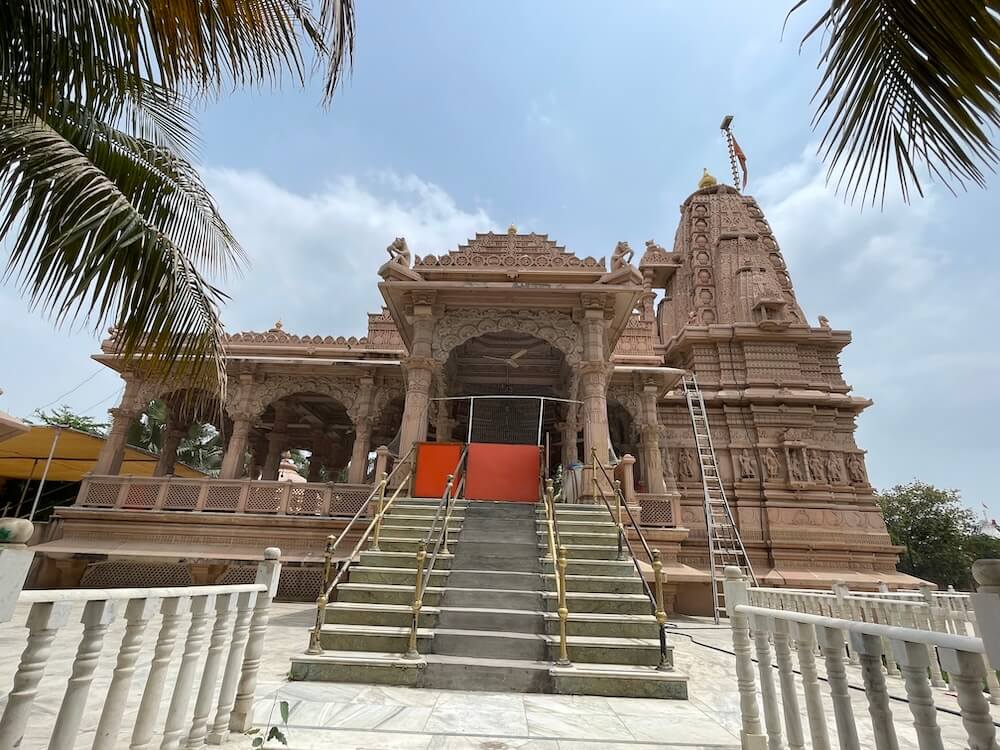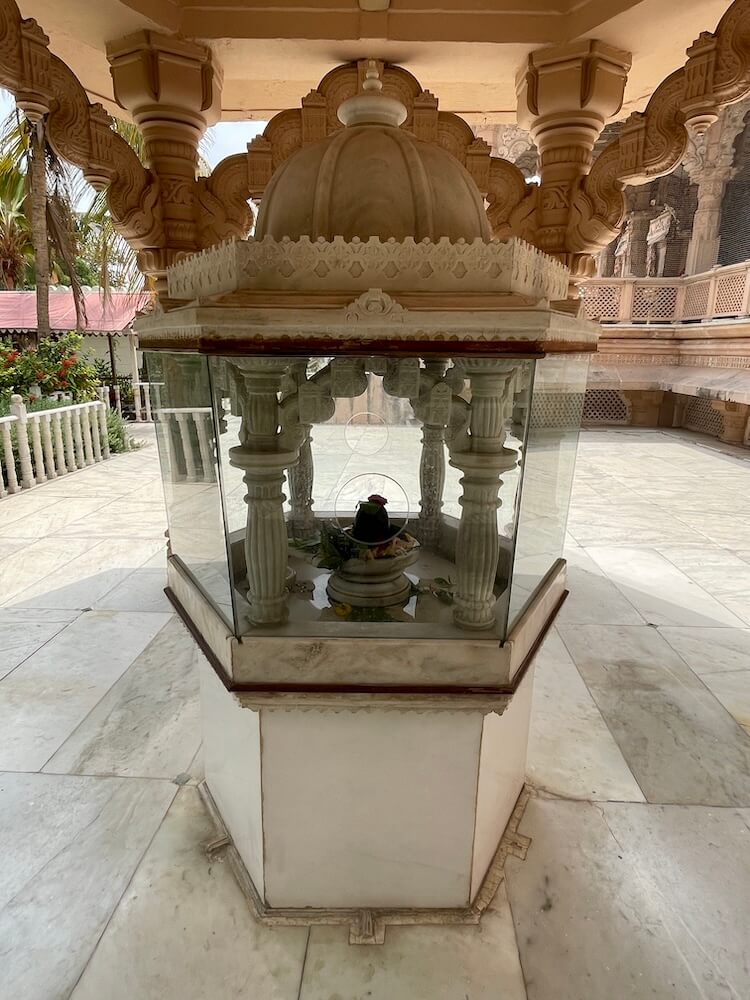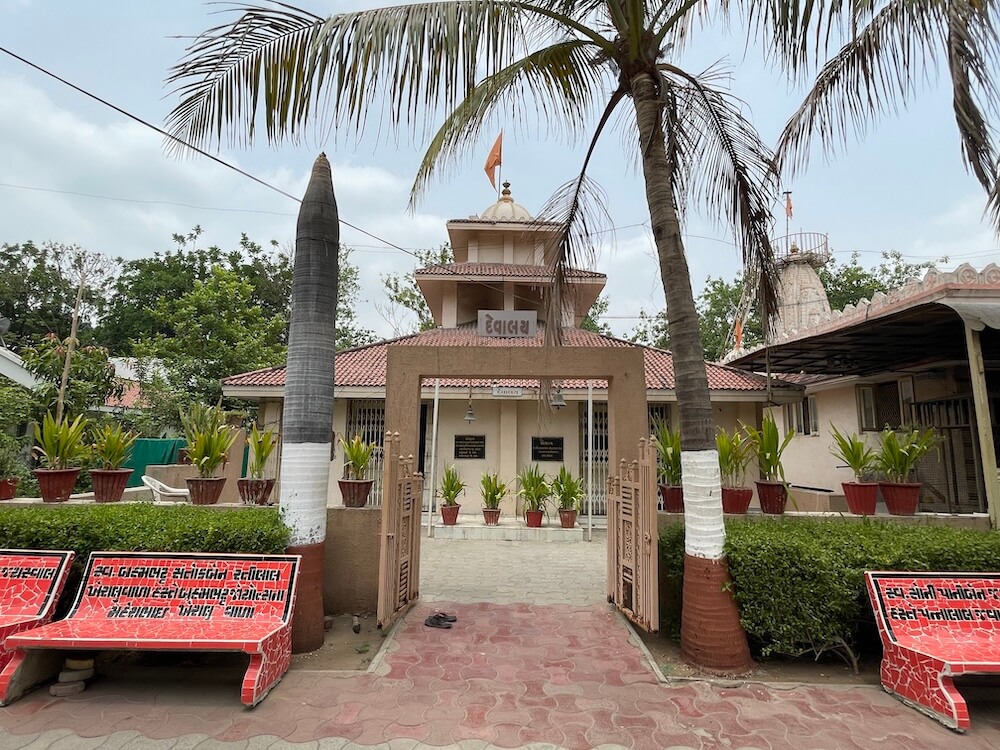
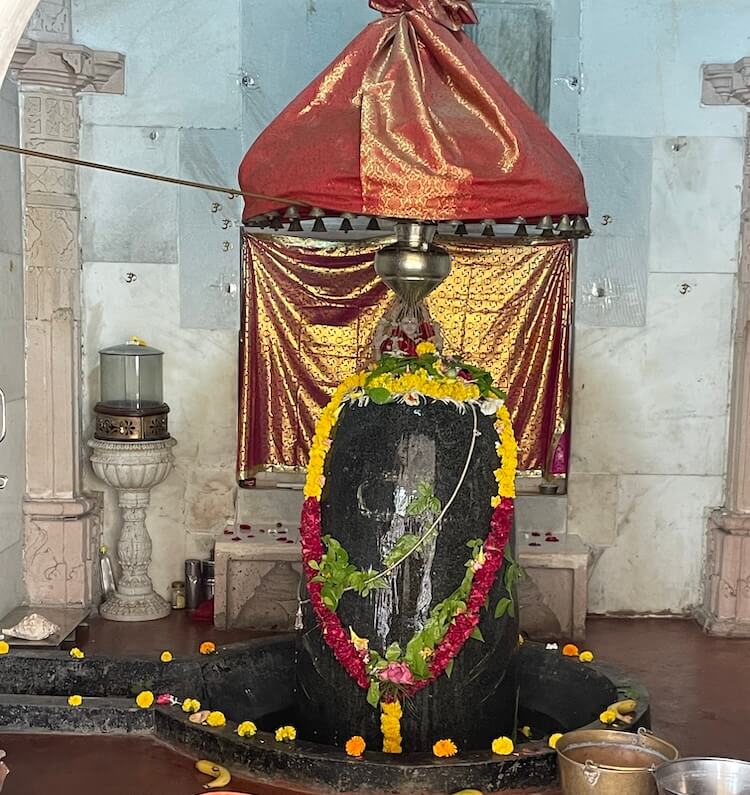
 The Kapileshwar Mahadev Temple, located in Kalol, the gateway to North Gujarat, is believed to be over 1,800 years old. Situated beside a pond, this temple houses a Shivalingam shaped like the hoof of a cow, which is considered jagrut (divinely active) by devotees. It is said that such a Shivalingam exists only in Uttarakhand and Andhra Pradesh apart from this site. Devotees from across Gujarat visit this sacred site to offer belpatra and perform abhishek on the Shivalingam. During the ‘Pavathi’ Fair held on the new moon (Amavasya) of Shravan month, the area echoes with chants of ‘Har Har Mahadev’ as lakhs of devotees gather to worship.
According to a local legend, in ancient times, this area was a dense forest. A shepherd used to bring his cattle here, including a cow named Kapila, which mysteriously let down her milk at a particular spot but gave no milk at home. One day, the shepherd noticed streams of milk falling from her udders at that spot. Curious, he dug the ground and discovered a Shivalingam shaped like a cow’s hoof. A temple was built at that exact spot on Kartik Shukla Panchami of Vikram Samvat 263 (October 27, 207 CE).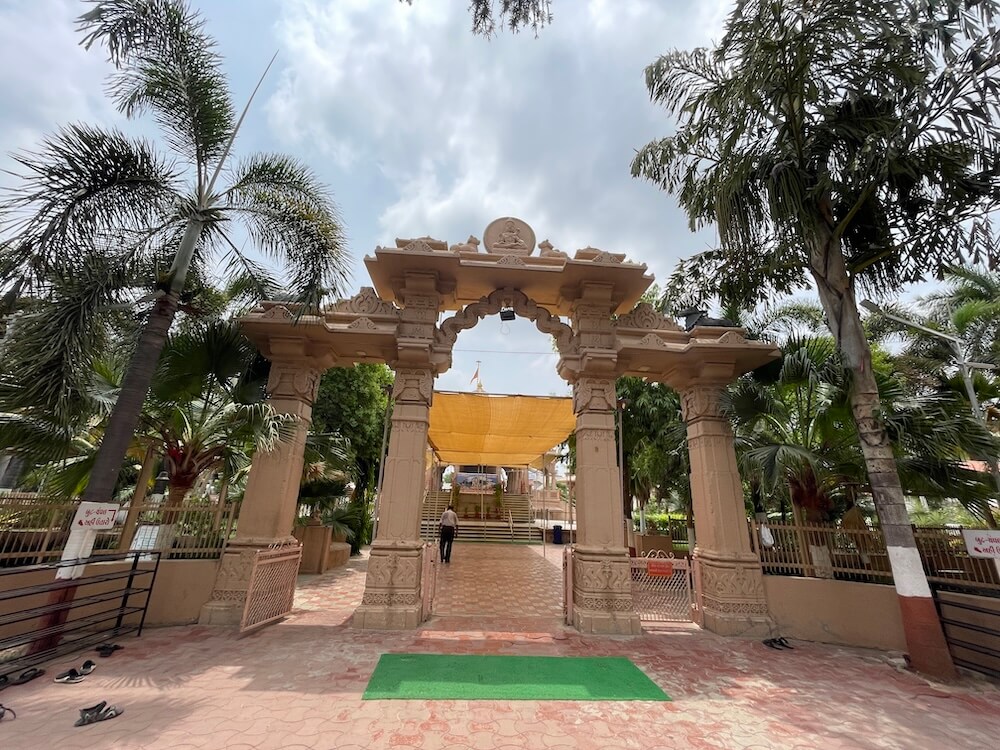 Named after the cow Kapila, the temple came to be known as Kapileshwar Mahadev Temple. The temple has undergone several renovations over time, the latest being in 2020, giving it its current form.
The temple complex is entered through a rectangular gateway. Along the path leading to the temple are large trees and flowering plants. A few steps ahead, the main entrance to the temple appears on the left. The beautifully carved archway features a sculpture of Lord Shiva in the center, flanked by Nandi idols on both sides.
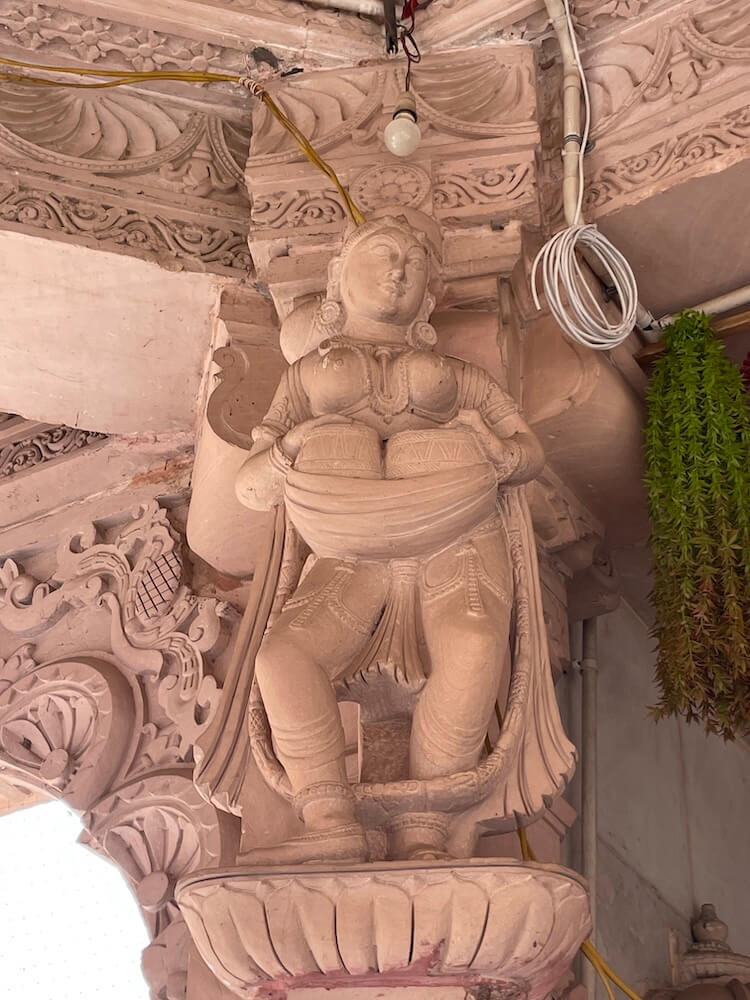
Inside the premises, to the left is a temple of Hanuman and to the right, a temple of Veerbhadra. Further ahead, the main Kapileshwar Mahadev Temple stands elevated on a high platform. 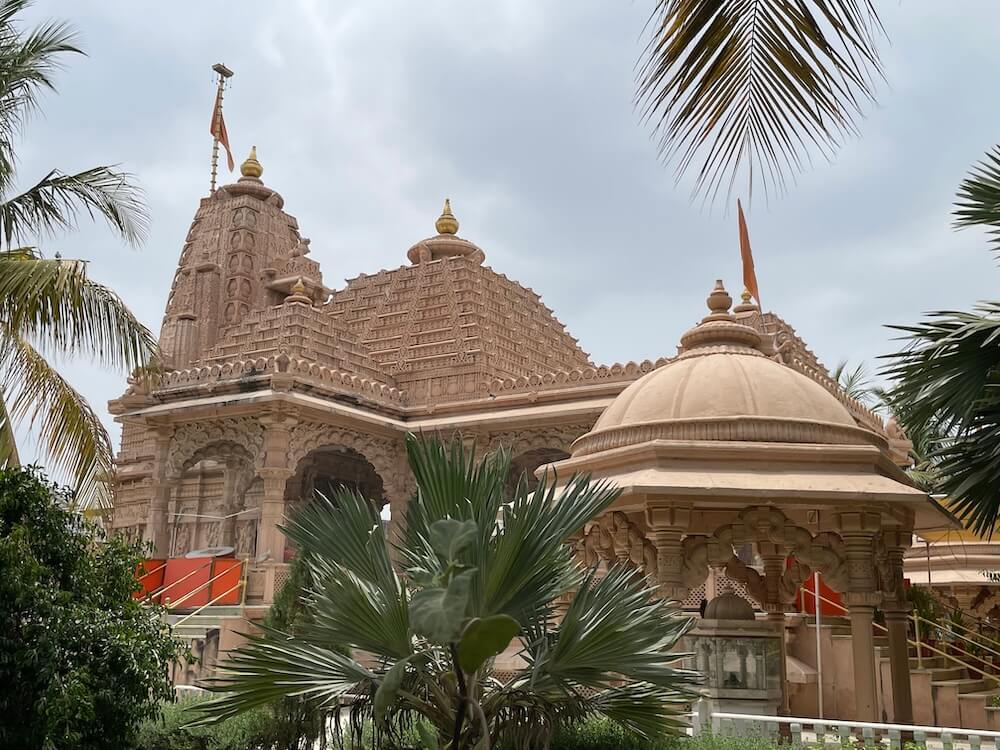 Built in Nagar architectural style using brown sandstone, the temple consists of a mukhamandap (front hall), an open sabhamandap (assembly hall), an antaral (vestibule) and a garbhagriha (sanctum sanctorum). The pyramidal spires above the mandaps and the Urushringa-style spire over the sanctum are prominent features. Sculptures of various deities adorn the outer walls of the sanctum. Three mukhamandaps surround the temple and 11 steps lead up to the entrance. The intricately carved pillars and arches are connected by ornate toranas. The sabhamandap pillars are adorned with sculptures of celestial maidens (sursundaris).
In the sabhamandap, a black stone idol of Nandi sits on a raised marble platform, with a tortoise idol in front. Inside the vestibule, a marble shrine on the left houses Kalbhairav,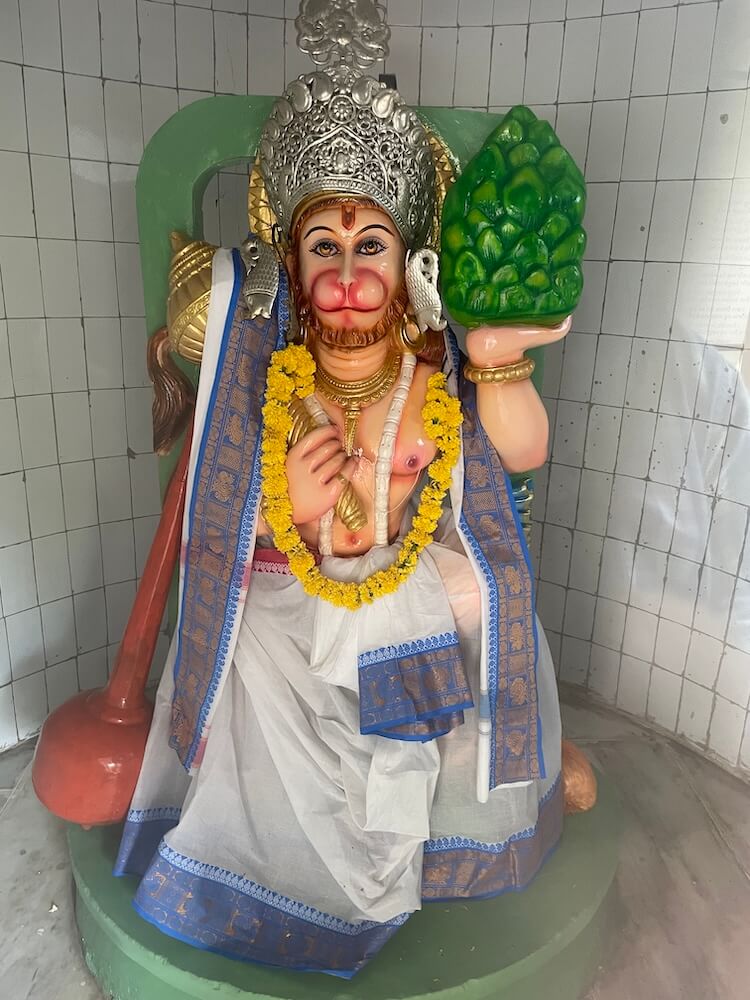 while the right side has an idol of Ganesha.
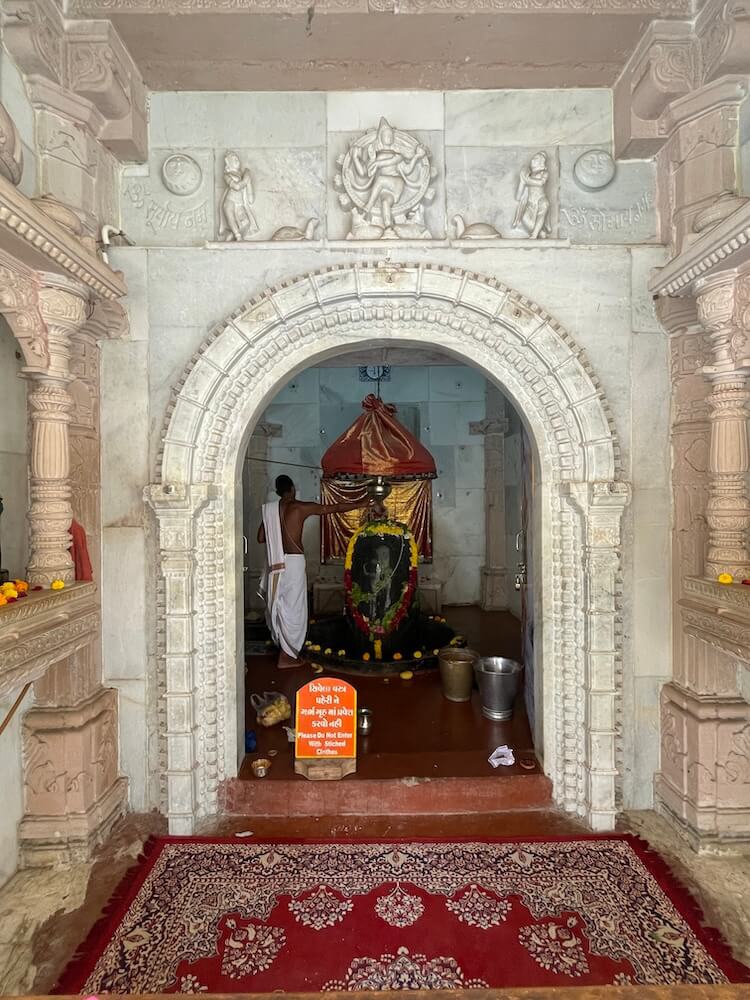
The arched doorway to the sanctum is decorated with intricate carvings. Above the door is a large sculpture of Nataraj (Shiva as the cosmic dancer), flanked by two turtle carvings and images of maidens. On the left side is an image of Surya (Sun God) and on the right, Chandra (Moon God).
Inside the sanctum, in the center, rests a massive Shivalingam in a large shalunka (base). Behind the Shivalingam is a sculpture of Goddess Parvati enshrined in a niche on the rear wall.
The Kapileshwar Mahadev complex includes several other small and large temples. One shrine houses beautiful idols of Lakshmi-Narayan, Ram-Lakshman-Sita-Hanuman and Radha-Krishna. Another contains idols of Sai Baba, Ganesh and Dattatreya. The nearby Shani temple enshrines a finely carved idol of Shani Dev and in front of him is a meditative image of Lord Shiva. One more temple in the complex has four Shivalingams placed on the floor and on the raised platform are idols of Balidev and Sheetala Mata.
Devotees believe that Kapileshwar Mahadev never sends anyone back empty-handed and fulfills all wishes. Thousands of devotees come for darshan throughout the year. Major Hindu festivals are celebrated here with great enthusiasm.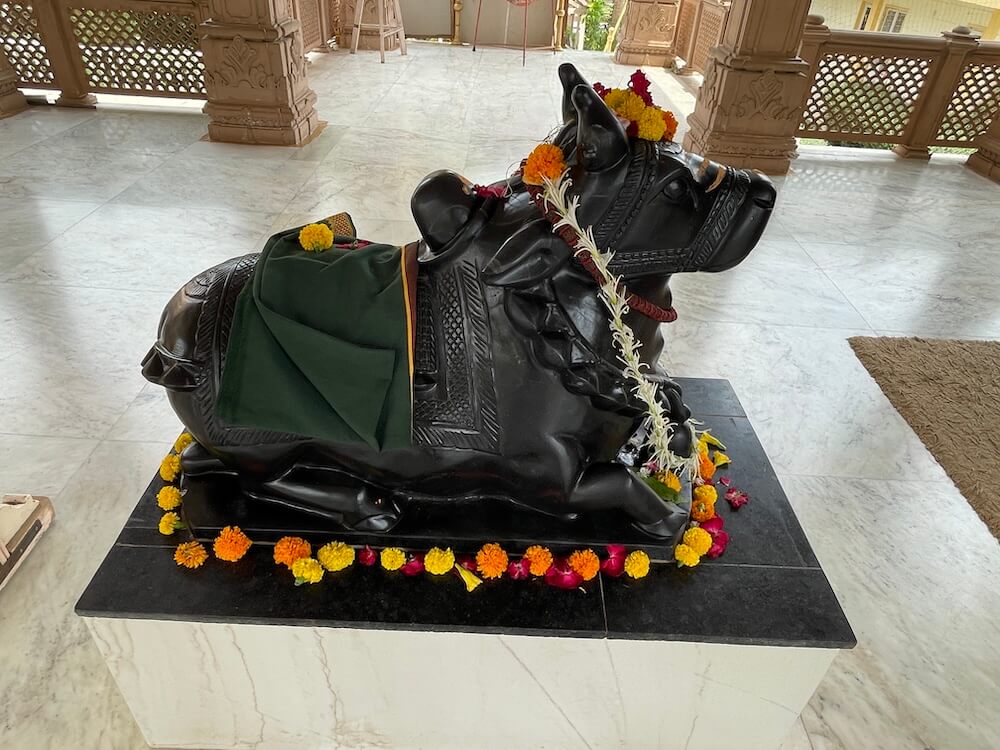
On Mahashivratri, large numbers of devotees offer bel leaves and perform milk or water abhishek on the Shivalingam. During the month of Shravan, the temple is especially crowded. Each day sees special rituals and decorations for the Shivalingam. On Shravan Mondays, hundreds come for darshan. The Pavathi fair on Shravan Amavasya features religious programs, decorative lighting and attracts families from across North Gujarat.
During Diwali, a grand festival of lights is held. On Narak Chaturdashi, the entire area glows with lamps, a grand aarti is performed and fireworks light up the night sky.
A dining hall at the temple offers meals to visiting devotees (₹70 for unlimited Gujarati thali and ₹80 for unlimited Punjabi thali). The complex also includes a cowshed (gaushala).