
कल्लुरथलै श्रीकृष्ण भगवती क्षेत्रम
कंदनसेरी, जि. त्रिशूर.
Kallurthalai Sree Krishna Bhagavathy Kshethram
Kandanassery, Dist. Thrissur.
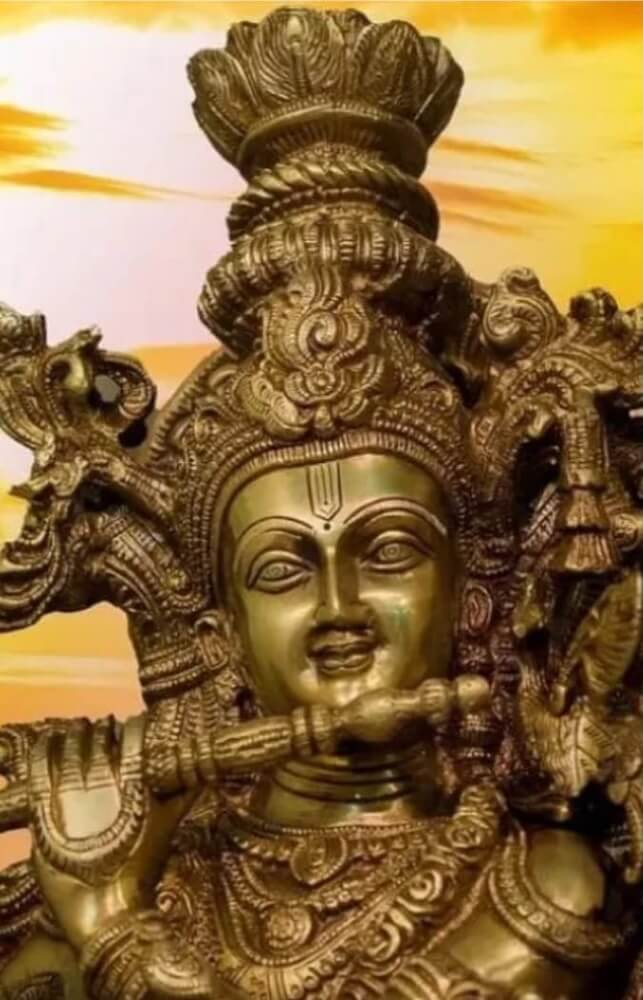 Kallurthalai Sree Krishna Bhagavathy Kshethram, popularly known as Kalluthippara Sree Krishna Temple is an ancient and revered place of worship located in Kandanassery village, near Guruvayur in Thrissur district. Situated in a serene natural environment, the temple stands atop a unique rocky hill, making it a popular destination for both devotees and visitors. What distinguishes Kalluthippara from other Sree Krishna temples is the belief that it is the sacred spot where Lord Krishna’s divine footprint was imprinted on the rock. Lord Sree Krishna is the principal deity of the temple. The temple also houses shrines dedicated to Bhagavathy, Ayyappa, Ganapathi and Murugan. Blending spiritual significance with natural beauty, the temple is regarded as a sacred destination that offers devotees a deeply uplifting and divine experience.
The history of Kalluthippara Sree Krishna Temple dates back several centuries. Although the exact period of its establishment is not recorded, the temple was one of the Hindu places of worship in Kerala that was destroyed during Tipu Sultan’s military campaigns in the 18th century. Following this, the temple remained abandoned and overgrown for many years. In recent times, it was revived through the dedicated efforts of local residents and devotees. The damaged sanctum and surrounding structures were carefully rebuilt and regular worship and temple rituals were restored. The renovation work was carried out under the leadership of a devotees’ committee formed by the local community. Today, the temple is efficiently managed and maintained by the same committee. 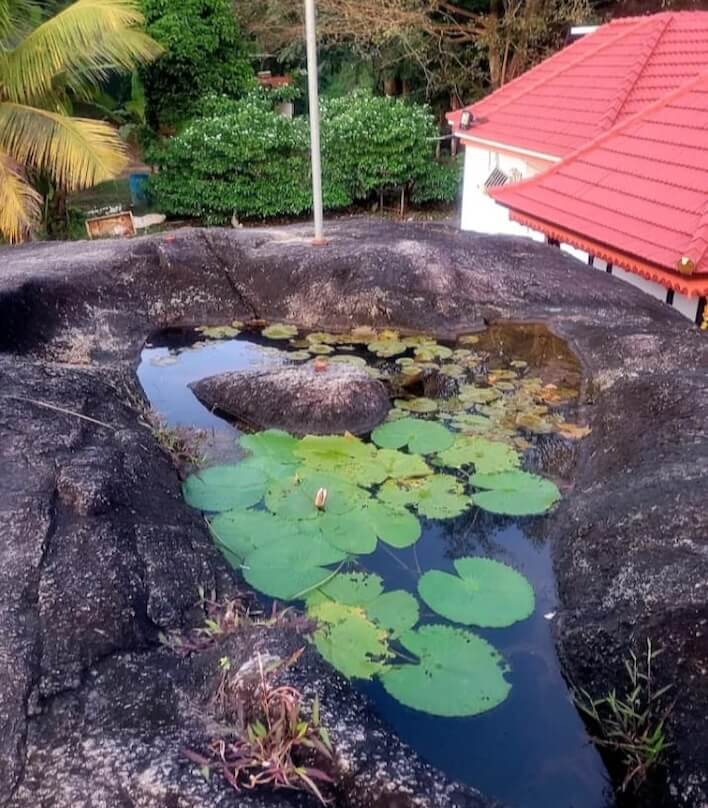 Standing as a symbol of devotion, unity and selfless service, Kalluthippara Sree Krishna Temple continues to be a cherished place of worship.
The significance of Kalluthippara Sree Krishna Temple is enhanced by a beautiful legend that has been passed down through generations. It is believed that Lord Sree Krishna once visited this sacred rock during his divine earthly pastimes and that his right footprint was deeply imprinted on the rock. Even today, devotees visiting the temple can see this large mark, which resembles a human footprint. Traditional belief also holds that markings resembling the trail of a rope carried by the Lord could once be seen on the rock. As a result of this divine footprint, the place came to be known as the ‘rock bearing a footprint’ and over time this evolved into the name ‘Kalluthippara’.
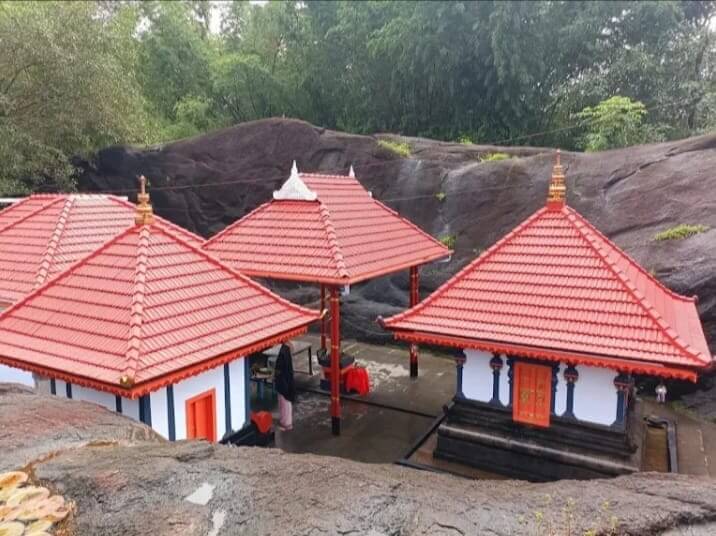
One of the first things visitors notice on reaching the temple is the vast expanse of massive rock formations surrounding the area. There is a lush bamboo grove near the temple. Rebuilt in the traditional Kerala architectural style, the temple’s most striking feature is its unique location between two huge rock formations at a slightly lower level. 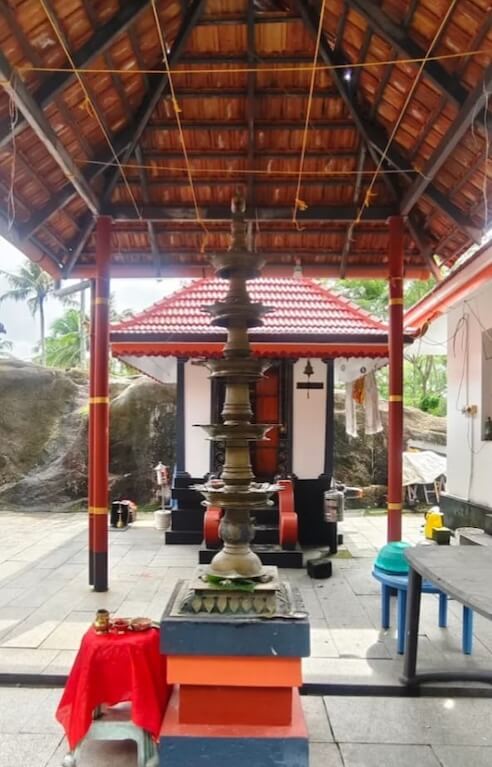 The structure has been designed in harmony with nature, incorporating the natural rocks into its walls and overall layout without disturbing the surrounding landscape. Visitors who climb to the top of the highest rock within the temple complex can clearly see the divine footprint of Lord Sree Krishna, which is associated with the temple’s sacred legend.
The sanctum sanctorum of the temple is a fine example of traditional Kerala architecture. Built in the traditional square shape, it features a sloping tiled roof typical of Kerala temples. Its most notable feature is its location between two massive rock formations at a slightly lower level, blending harmoniously with the natural surroundings. Lord Sree Krishna is the principal deity of the temple and is worshipped here in a calm and divine form that inspires devotion and inner peace among devotees.
In addition to Lord Sree Krishna, the principal deity, the temple complex also houses several other shrines. A shrine dedicated to Lord Ganapathi, the remover of obstacles and the deity first worshipped by devotees, is located near the main sanctum. Separate shrines have also been dedicated to Lord Dharma Sastha (Ayyappa), Bhagavathy and Lord Murugan (Subrahmanya). In keeping with Kerala temple traditions, shrines of Nagaraja and Nagayakshi are situated in a peaceful and scenic part of the temple premises.
Various auspicious days and festivals are observed with great devotion at Kalluthippara Sree Krishna Temple throughout the year. 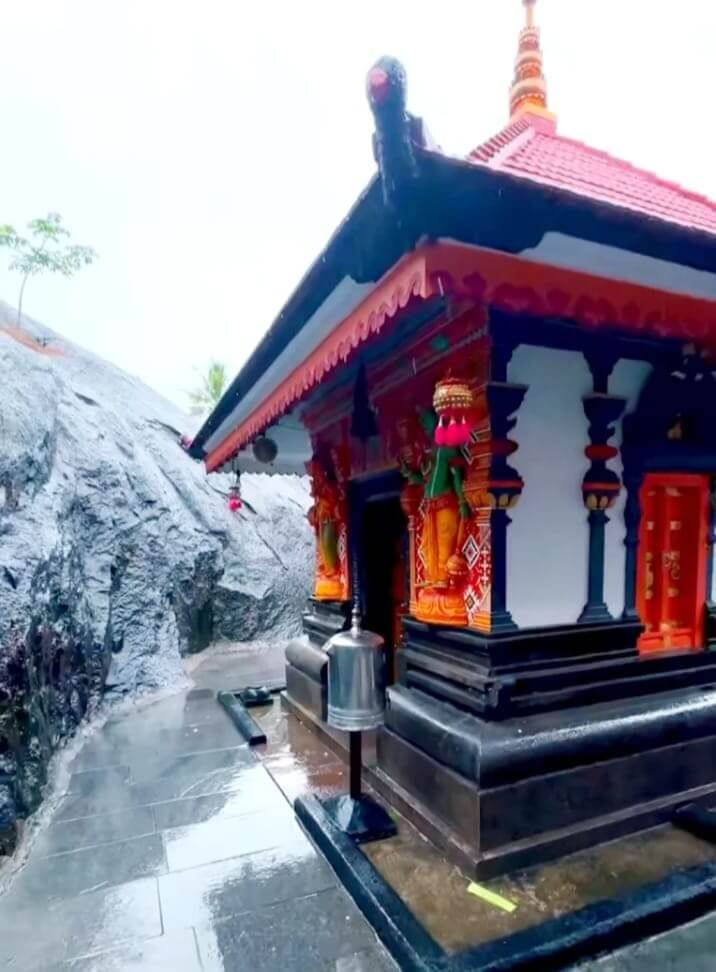 The first day of every Malayalam month is considered especially significant, when a special Paada Pooja is performed at the rock bearing the divine footprint of Lord Sree Krishna. On this day, many devotees visit the temple to offer prayers and seek blessings. As Lord Sree Krishna is the principal deity, Ashtami Rohini, which marks His birth anniversary, is celebrated with great devotion. Special poojas, decorations, Uriyadi and prasadam distribution form part of the celebrations. The 41-day Mandala season, beginning on the first day of the Malayalam month of Vrischikam, is another important spiritual period at the temple. Special lamps and poojas are offered to Lord Dharma Sastha (Ayyappa) during this time. The Pooram festival, usually held in the Malayalam month of Medam, is also one of the temple’s major celebrations, featuring traditional performances, cultural programmes and festive gatherings organised by local residents and the devotees’ committee. Special poojas and rituals are also conducted during major Kerala festivals such as Vishu, Onam and Thrikarthika.
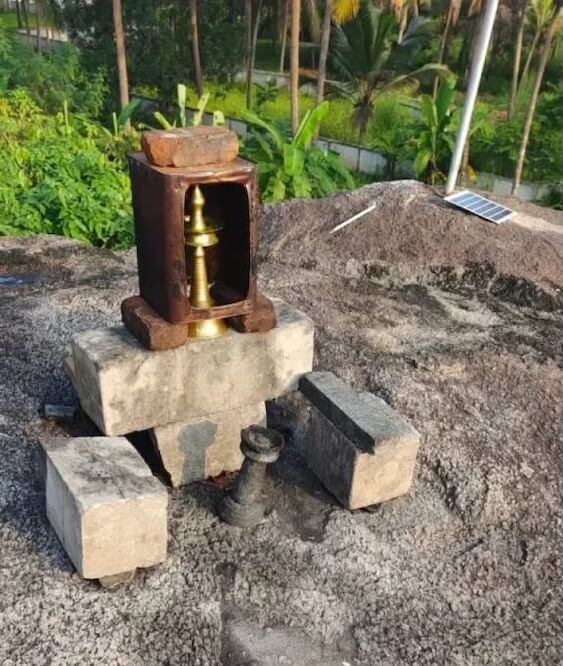
Among the various offerings made at the temple, Paal Payasam (sweet milk porridge) offered to Lord Sree Krishna is the most important. As the deity is worshipped in the form of Child Krishna, devotees also offer butter and Thrikkai Venna as special offerings. Offering a Tulasi garland, which is considered especially dear to Lord Krishna, is another popular vazhipadu at the temple. 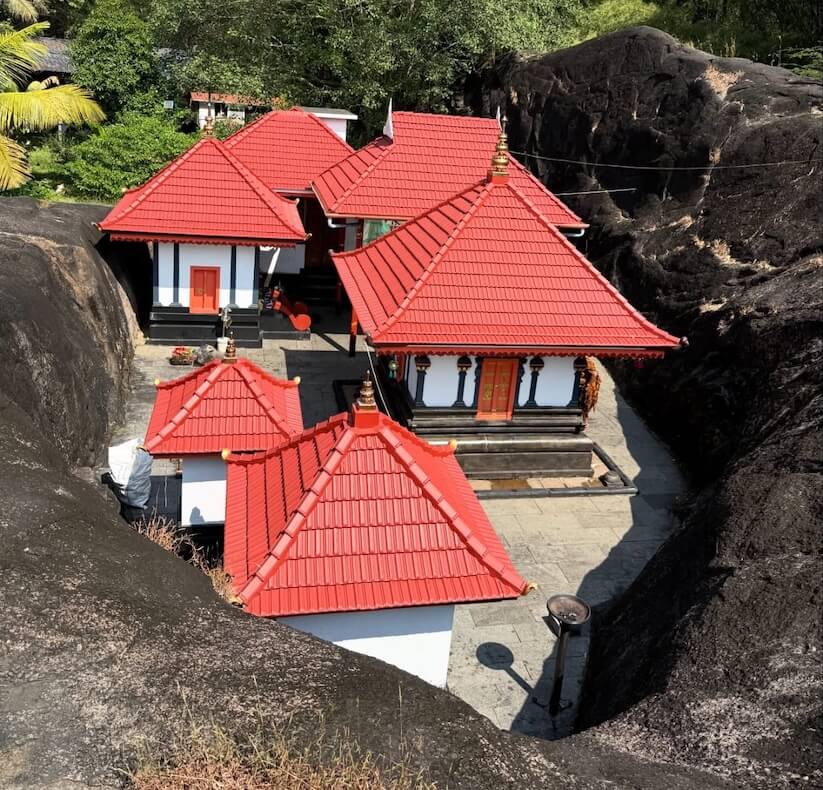 The most unique offering is the Paada Pooja performed at the sacred rock believed to bear the divine footprint of the Lord. This special ritual and archana are conducted with devotion on the first day of every Malayalam month. Devotees also make various offerings to the sub-deities, including Ganapathi Homam and Appam Moodal for Lord Ganapathi, Ellu Vilakku and Neeranjanam for Lord Ayyappa, Kadumpayasam and Lalitha Sahasranama Archana for Bhagavathy and Paal Payasam and Noorum Paalum for the Naga deities.
The temple is open to devotees from 5:30 AM to 10:30 AM and from 5:30 PM to 7:00 PM. The day begins with the opening of the sanctum for Nirmalya Darshanam, followed by morning rituals such as Abhishekam, Malar Nivedyam and Usha Pooja. The main morning ritual is the Ucha Pooja, conducted between 10:00 AM and 10:30 AM. After this, offerings including Paal Payasam are made and the temple closes for the morning. The temple reopens at 5:30 PM for the evening rituals. Deeparadhana, performed by lighting the temple lamps, is the most important evening ceremony and attracts many devotees. This is followed by Athazha Pooja and the final offerings of the day, after which the temple closes at 7:00 PM.
Key highlight :-
- Located 5 km from Guruvayoor town, 10 km from Kunnamkulam town and 25 km from Thrissur town.
- 5 km from Guruvayoor railway station.
- KSRTC and local buses are available to Kandassery from Thrissur town and Guruvayoor town.
- The temple is located within walking distance or a very short auto-ride from this junction.
- Private vehicles can be parked at the temple’s parking ground.
- Accommodation and food facilities are available in the nearby town.
कल्लूरथलाई श्री कृष्ण भगवती क्षेत्रम
कंदनास्सेरी, जिला. त्रिशूर.
मंदिरे
Temples
मंदिर
-
अधिक माहिती
Kondazhy Tritham Tali Siva Temple Kondazhy, Thalappilly, Dist. Thrissur.
View Detailsविवरण देखें -
अशोकेश्वरम श्री महादेवाचे मंदिर वडक्के चिरा, जि. त्रिशूर.
अधिक माहितीAshokeshwaram Sree Mahadeva Temple Vadakke Chira, Dist. Thrissur.
View Detailsअशोकेश्वरम श्री महादेव मंदिर वडक्के चिरा, जिला. त्रिशूर.
विवरण देखें -
अवित्तथुर महादेवाचे मंदिर अवित्तथूर, इरिंजलकुडा, जि. त्रिशूर
अधिक माहितीAvittathur Mahadeva Temple Avittathur, Irinjalakuda, Dist. Thrissur
View Detailsअवित्तथुर महादेव मंदिर अवित्तथुर, इरिंजलाकुडा, जिला। त्रिशूर
विवरण देखें