
कलारीवथुक्कल भगवती मंदिर
वलपट्टणम, जि. कन्नूर.
Kalarivathukkal Bhagavathy Temple
Valapattanam, Dist. Kannur.
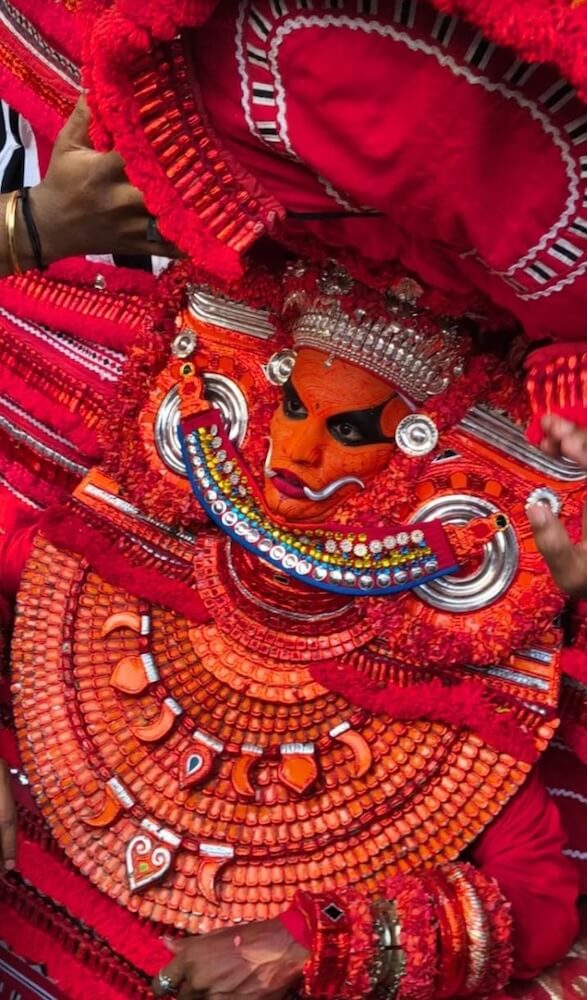 Kalarivathukkal Bhagavathy Temple is an ancient Devi temple located in Valapattanam, Kannur district, near the Valapattanam River. Sri Durga Bhagavathy, regarded as Jagadeeshwari and Adi Parashakti, is the main deity. As the family and tutelary deity of the Chirakkal royal family, the goddess is worshipped here in the form of Bhadrakali. Devotees also worship her as the mother of Kalaripayattu, the traditional martial art of Kerala. The Kaliyattam at this temple marks the end of the Theyyam season in North Malabar.
In ancient times, the region that includes Kannur was ruled by the Mushika dynasty, which later came to be known as the Kolathiri dynasty. The temple gained greater importance after the Kolathiri rulers moved their capital from Ezhimala to Chirakkal, on the banks of the Valapattanam River. A large military fort known as Valapattanam Fort once stood near the river and belonged to the Kolathiri rulers. It is believed that an important Kalari, a traditional martial arts training centre for the royal army, was located inside or near the fort. The temple is believed to have been built beside the main entrance of this Kalari.
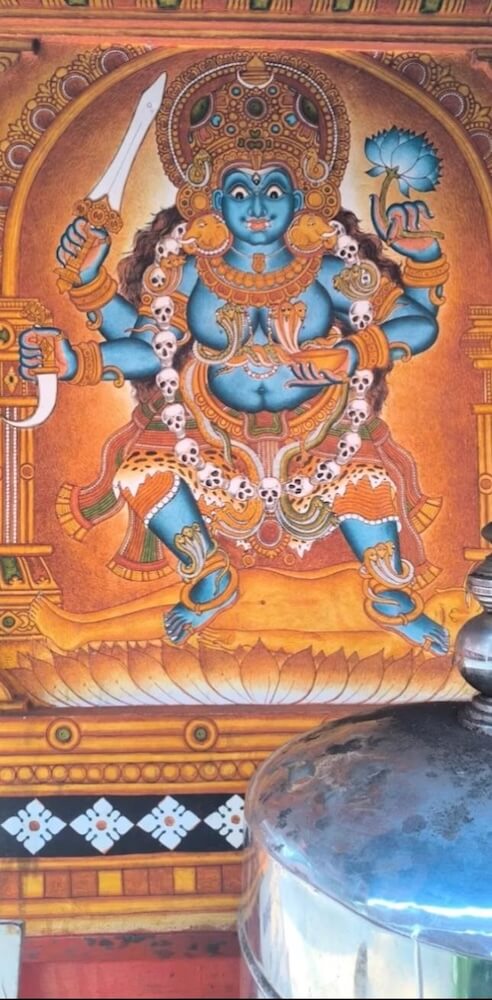
Historical records indicate that the temple is more than 1,200 years old. It is believed to have been built around AD 800, in the late 8th or early 9th century. Historians believe that the temple was established during the reign of the famous Chera king Kulasekhara Alvar (Kulasekhara I), who ruled between AD 767 and 834. The temple was located next to Valapattanam Fort, which served as an important military base of the Kolathiri rulers. The fort suffered major damage during Tipu Sultan’s invasion of Malabar. The walls of the temple also feature beautiful Kerala-style murals that are centuries old.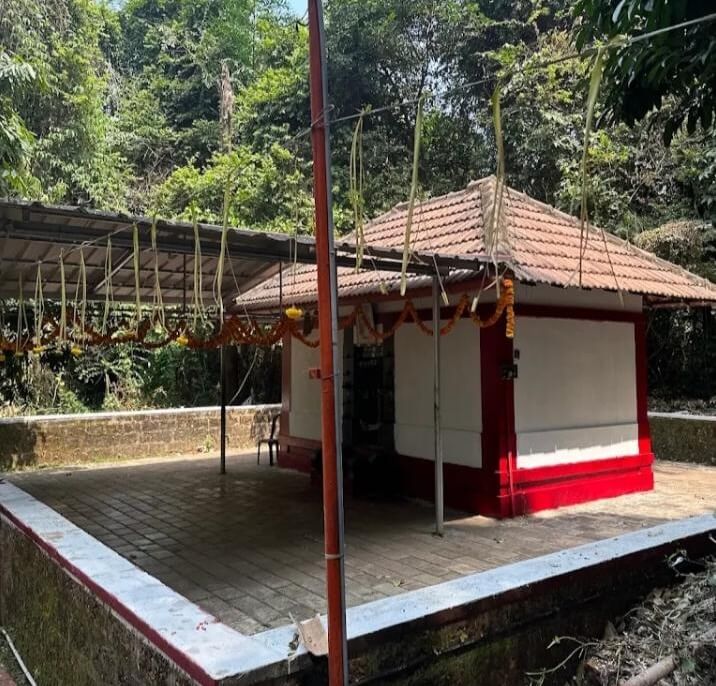
According to historical records, the temple was originally owned by a Brahmin family known as Vadakke Illam. Later, the Chirakkal Kovilakam (royal family) took over the temple as part of strengthening their rule and made it their family and tutelary deity temple. At present, the temple is administered under the supervision of the Malabar Devaswom Board, which comes under the State Government. Kalarivathukkal Bhagavathy Temple is classified as a Category A temple, with high revenue and importance under the Board. However, the Chirakkal royal family continues to have a special position and traditional ceremonial rights at the temple.
According to legend, Goddess Annapoorneshwari travelled from Kashi (Varanasi) in a golden boat with her two companion goddesses. They were Kalarivathukkal Amma (Bhadrakali) and Madayikkavilamma (Thiruvarkad Bhagavathy). At that time, the Kolathunadu region, ruled by the Chirakkal royal family, was home to a famous Krishna temple, now known as the Cherukunnu Krishna Temple. 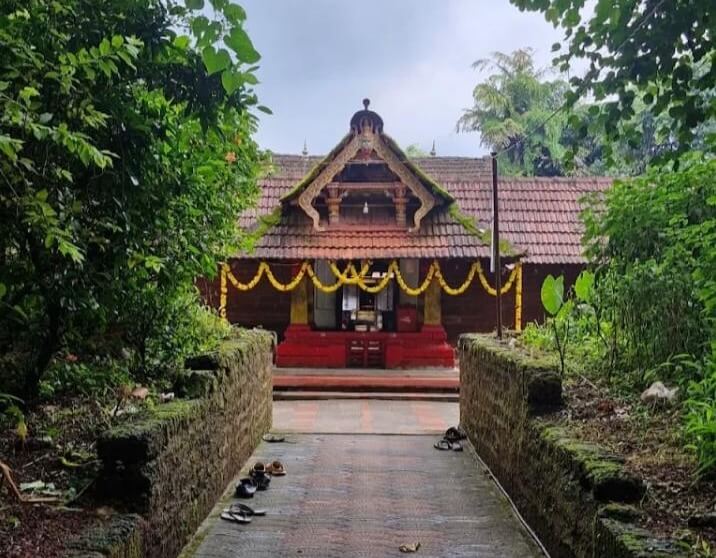 The goddesses are believed to have travelled by boat to the shores of Chirakkal to worship Krishna and see the beauty of the land. Attracted by the natural beauty of the region and the devotion of the people, they decided to stay in Malabar instead of returning to Kashi. Goddess Annapoorneshwari settled at Cherukunnu, Madayikkavilamma at Madayippara and Kalarivathukkal Amma, in the form of Bhadrakali, settled beside the entrance of the Kalari on the banks of the Valapattanam River to protect and bless the devotees. Based on this legend, the Cherukunnu Annapoorneshwari Temple, Madayikkavu and Kalarivathukkal Bhagavathy Temple are regarded as the three main Devi temples of the Chirakkal royal family.
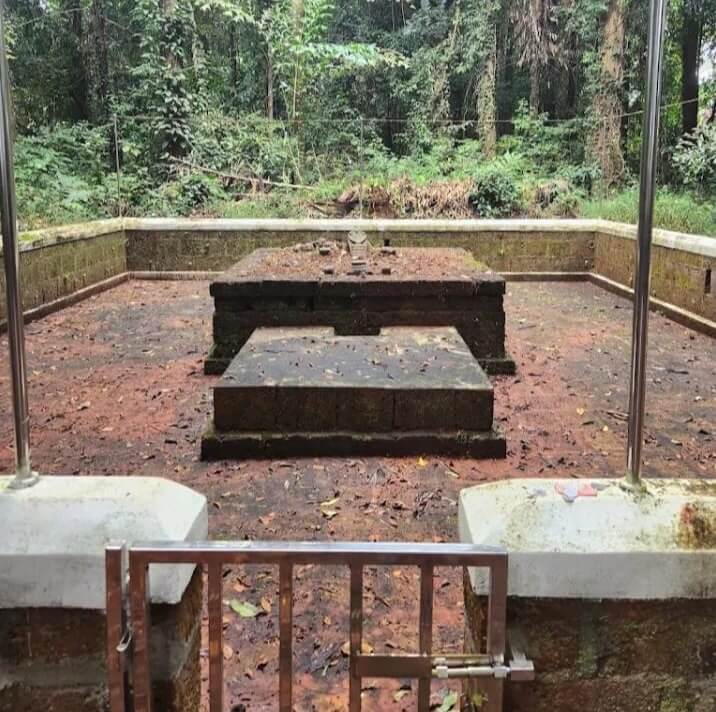
 According to another legend, Parashurama, who is believed to have created Kerala, installed a Shiva Lingam here after recognising the sacredness of this place during his pilgrimage. It is believed that the presence of the Bhagavathy came to the place later. Historians also believe that this is one of the temples built in memory of Kannaki, the heroine of the Tamil epic Silappadikaram.
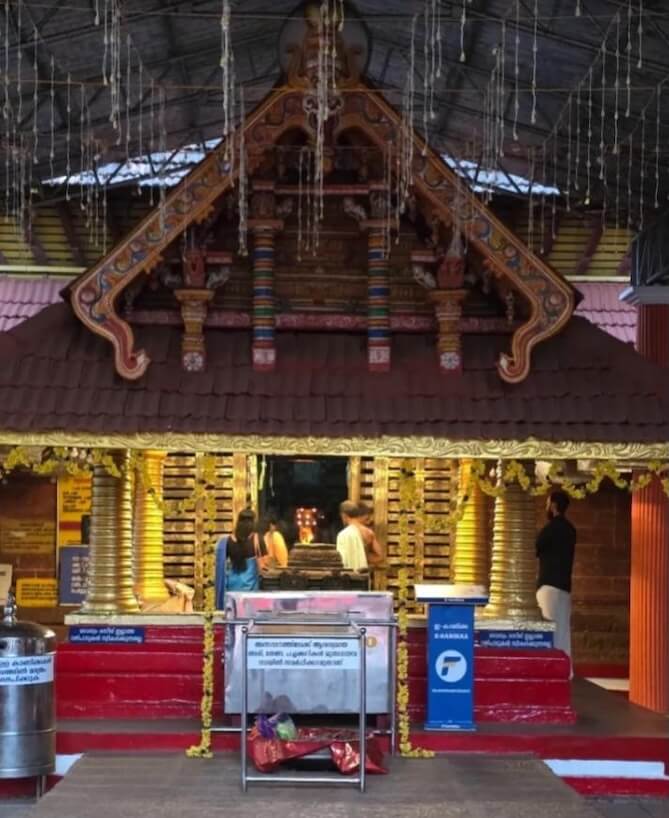
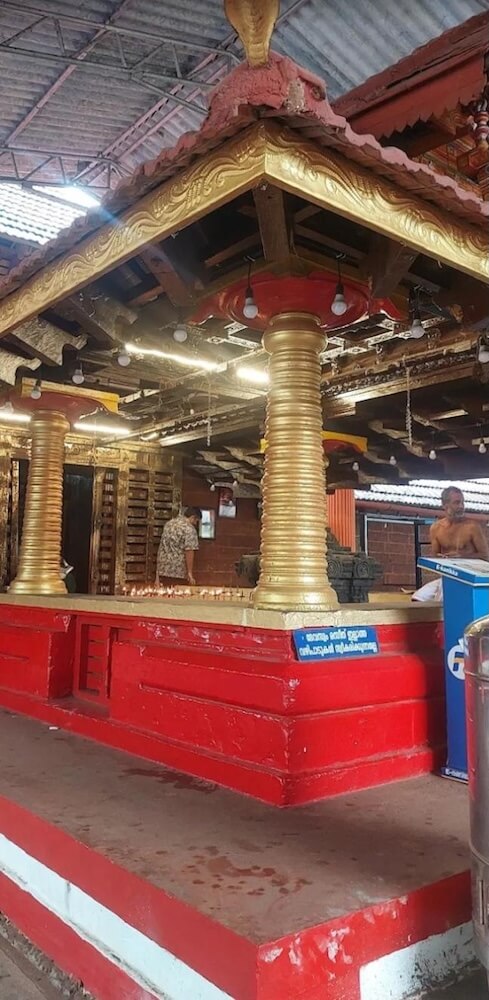
Kalarivathukkal Bhagavathy Temple is built in the traditional Kerala architectural style, without large towers or grand decorations and blends well with its natural surroundings. As you enter the temple from the main road, you find a shaded area filled with large trees and sacred groves. The entrance has a traditional Kerala-style gateway known as a Padippura. The main structures have laterite stone walls and sloping tiled roofs. Beyond the Padippura, there is a spacious inner courtyard, known as the Chuttambalam, along with the main temple structures. A large lamp tower and a Balikkallu (sacrificial stone) are located near the inner entrance.
The main architectural feature of the temple is the presence of four main sanctums inside the Nalambalam, each facing a different direction. They are arranged according to the rare ‘Rurujith Vidhanam’ style of the Kaula Shakta tradition, as prescribed in Tantric texts. 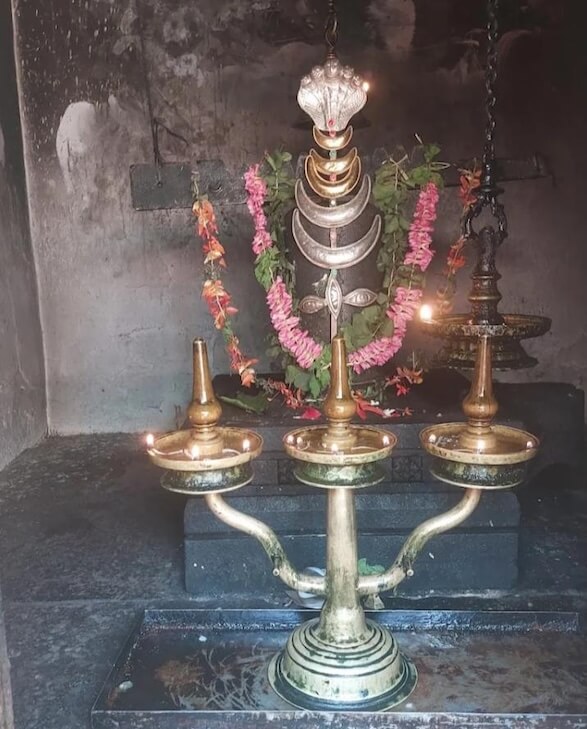 The large Bhagavathy shrine faces west and has a Namaskara Mandapam in front of it. Directly opposite it is the Shiva shrine, which faces east. On the southern side is the Mathrishala, the shrine of the Sapthamathas, facing north, while the shrine of the Kshetrapalaka on the northern side faces east. The Sapthamathas—Brahmi, Maheshwari, Kaumari, Vaishnavi, Varahi, Indrani and Chamundi—are placed in a row on a single pedestal. Ganapathy stands on their left and Veerabhadra on their right as guardians. The northern shrine houses Kshetrapalaka Bhairava, depicted in a fierce form. The sanctums have laterite stone walls and sloping wooden roofs covered with red tiles. Beautiful wooden carvings depicting scenes from the Ramayana and Mahabharata can be seen on the front sections and pillars. Although Bhadrakali, the fierce form of the Goddess, is the main deity, the other deities also have an important place according to the Shakta worship tradition. Another special feature is that the idols are not made of stone or metal; they are wooden idols carved from the core of jackwood. The idol of Bhadrakali is believed to depict the Goddess after Mahadeva calmed her anger following the killing of Darika. Therefore, the Goddess is worshipped here in a calm form and is believed to bless devotees.
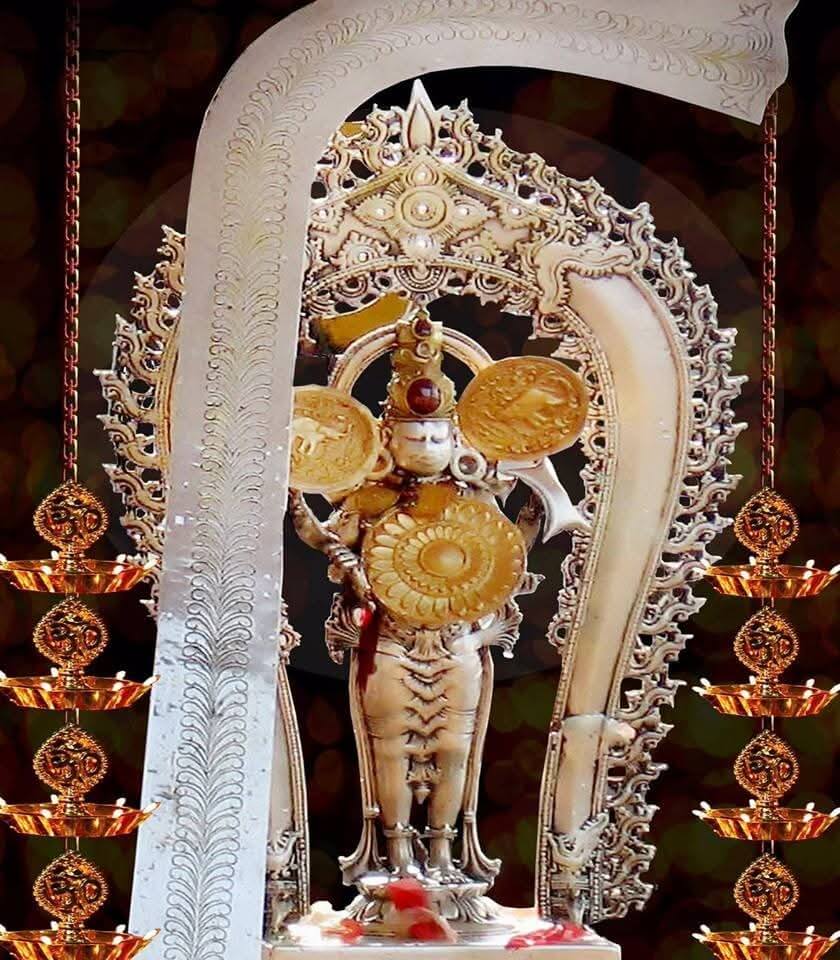
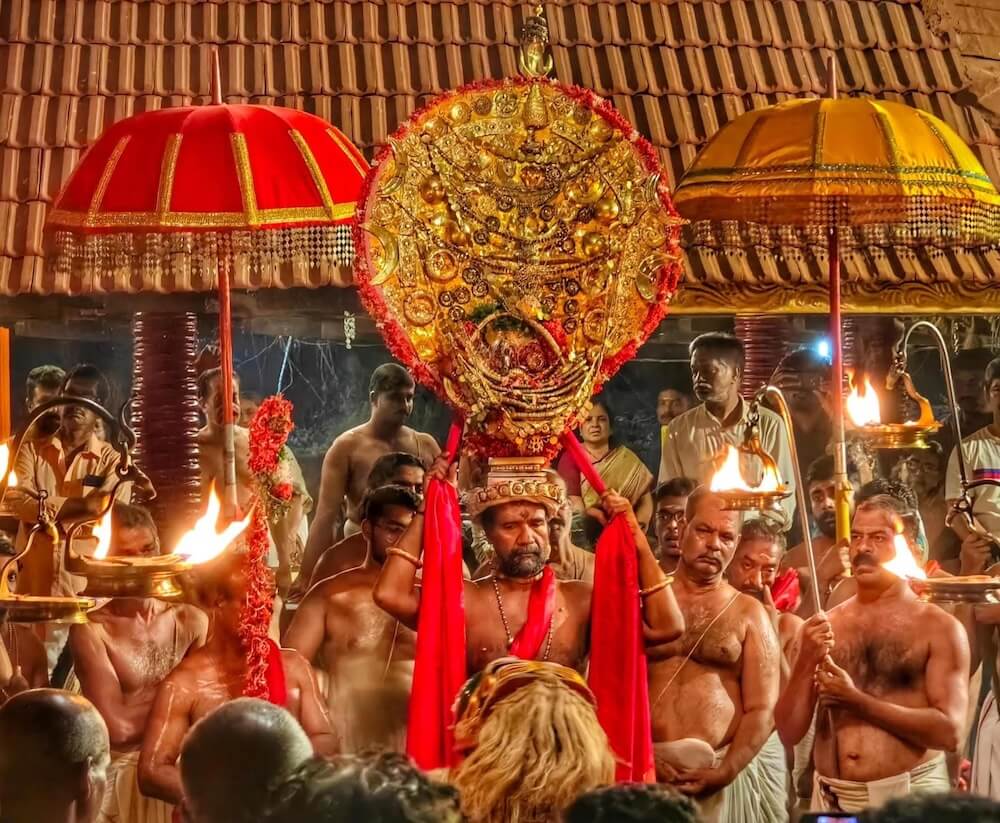
The main festival of the temple, Pooram Mahotsavam, is held in the Malayalam month of Meenam (March–April) and lasts for nine days. The festival begins with a traditional Kalaripayattu performance, where practitioners perform after seeking the blessings of Kalarivathukkal Amma. A large number of devotees gather to watch the performance. The festival concludes with the grand Aarattu on the ninth day. The Kaliyattam Mahotsavam is held on the 26th day of the Malayalam month of Mithunam, around 10 June. It marks the end of the Theyyam season in North Malabar. The Theyyam of Kalariyal Bhagavathy is particularly famous and is known for having the tallest and heaviest Thirumudi (headgear) among the Theyyams of Kannur. Karthika Vilakku is celebrated on Thrikarthika day in the month of Vrischikam (November–December), when thousands of traditional oil lamps are lit on the large lamp tower and around the Chuttambalam. A nine-day Navaratri celebration is held in the month of Kanni (September–October), with special worship in the form of Durga and Vidyarambham ceremonies as important rituals. During the month of Karkidakam (July–August), special Bhagavathy Seva and Ramayana recitation are conducted in connection with Karkidaka Vavu.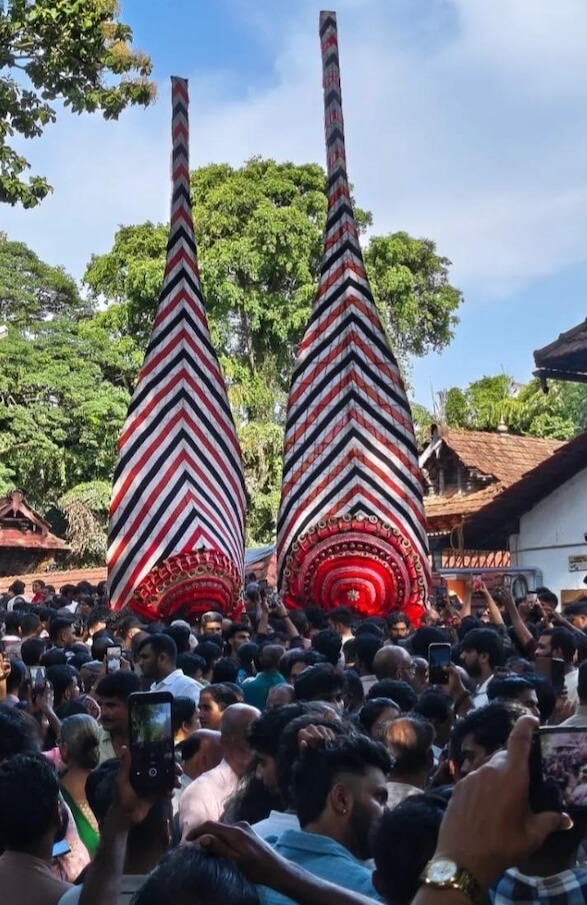
As the temple follows the Shakta (Kaula) tradition, its offerings have their own distinctive features. Devotees perform various offerings to overcome difficulties caused by enemies, fulfil their wishes and remove obstacles to marriage. The main Shakta offerings include Valiya Vattalam Payasam, Valiya Pooja, Shakti Pooja and Niramala. Valiya Vattalam Payasam is a special offering prepared with Kadumadhuram in a large vessel and offered to the Goddess. Valiya Pooja and Shakti Pooja are performed to calm the fierce form of the Goddess and for the fulfilment of devotees’ wishes. Niramala is an offering in which the Sreekovil and Chuttambalam are fully decorated with flowers and floral arrangements. Among the offerings for removing difficulties, Raktha Pushpanjali, performed using red chethi flowers, is considered important. Shathru Samhara Pushpanjali is performed to remove difficulties and opposition, while Swayamvara Pushpanjali is performed to overcome marriage obstacles and seek a suitable partner. As part of special Shakta rituals, chicken offerings are also made on certain days. Guruthi Tharpanam is performed at night to appease the Goddess and for the prosperity of the land and households. Neyvilakku and Kadumadhuram are other common offerings made by devotees.
The temple opens every day at 05:00 AM. Abhishekam is performed at 05:15 AM, followed by Usha Pooja at 07:30 AM. The Pantheeradi Pooja is held at 12:00 PM, followed by Ucha Pooja and the closing of the temple at 01:00 PM. The temple remains closed from 01:00 PM to 06:00 PM and reopens at 06:00 PM. Deeparadhana is held at 06:45 PM, followed by Athazha Pooja at 08:00 PM. The temple closes completely at 08:30 PM. Devotees performing Shakti Pooja can collect the prasadam, including the chicken prasadam, after 12:00 PM or after the Deeparadhana at 06:45 PM. The daily schedule may change on special occasions such as the Pooram Mahotsavam in the month of Meenam and the Kaliyattam (Theyyam) in the month of Mithunam.
Men are required to wear a mundu when visiting the temple. Shirts, vests and similar upper garments are not allowed inside the Nalambalam and must be left outside. Women may wear sarees, set mundu, churidar or similar traditional attire. One of the special features of the temple is that fireworks are not used during festivals. It is said that loud fireworks are avoided because of the fierce form of the Goddess and the nature of the wooden idol. During the Kaliyattam in June, after the Theyyam of Kalariyal Bhagavathy is performed, the large Thirumudi is removed and placed at a special platform near the temple. Many people gather to witness this ceremony. There is also a tradition of not playing loud chenda drums near the Sreekovil. Children and practitioners who learn Kalaripayattu traditionally visit the temple before and after their training to place their weapons for worship.
Key highlight :-
- Located 8 km from Kannur city.
- The nearest railway station is Kannur railway station, about 8 km away.
- KSRTC and local bus facilities are available to the temple.
- Private vehicles can be parked in the temple’s parking area.
- Accommodation and food facilities are available near the temple.
- Contact number +91 4972778050
कलारीवथुक्कल भगवती मंदिर
वलपट्टनम, जिला. कन्नूर.
मंदिरे
Temples
मंदिर
મંદિરો
கோவில்கள்
దేవాలయాలు
ക്ഷേത്രങ്ങൾ
ದೇವಾಲಯಗಳು
মন্দিরসমূহ
ਮੰਦਿਰ
-
श्री मदायी तिरुवरकाडू भगवती मंदिर मदयकावू, पऱ्हांगडी, जि. कन्नूर.
अधिक माहितीSree Madayi Thiruvarkadu Bhagavathy Temple Madayikavu, Pazhayangadi, Dist. Kannur.
View Detailsश्री मदायि तिरुवरकाडु भगवती मंदिर मदायिकावु, पझायंगडी, जिला। कन्नूर.
विवरण देखेंSree Madayi Thiruvarkadu Bhagavathy Temple Madayikavu, Pazhayangadi, Dist. Kannur.
વિગત જુઓSree Madayi Thiruvarkadu Bhagavathy Temple Madayikavu, Pazhayangadi, Dist. Kannur.
விவரங்களைக் காண்கSree Madayi Thiruvarkadu Bhagavathy Temple Madayikavu, Pazhayangadi, Dist. Kannur.
వివరాలను చూడండిSree Madayi Thiruvarkadu Bhagavathy Temple Madayikavu, Pazhayangadi, Dist. Kannur.
വിശദാംശങ്ങൾ കാണുകSree Madayi Thiruvarkadu Bhagavathy Temple Madayikavu, Pazhayangadi, Dist. Kannur.
ವಿವರಗಳನ್ನು ವೀಕ್ಷಿಸಿSree Madayi Thiruvarkadu Bhagavathy Temple Madayikavu, Pazhayangadi, Dist. Kannur.
বিস্তারিত দেখুনSree Madayi Thiruvarkadu Bhagavathy Temple Madayikavu, Pazhayangadi, Dist. Kannur.
ਵੇਰਵੇ ਦੇਖੋ -
अणियाराम शिव मंदिर अनियाराम, थलासेरी, जि. कन्नूर.
अधिक माहितीAniyaram Shiva Temple Aniyaram, Thalassery, Dist. Kannur.
View Detailsअनियाराम शिव मंदिर अनियाराम, थालास्सेरी, जिला। कन्नूर.
विवरण देखेंAniyaram Shiva Temple Aniyaram, Thalassery, Dist. Kannur.
વિગત જુઓAniyaram Shiva Temple Aniyaram, Thalassery, Dist. Kannur.
விவரங்களைக் காண்கAniyaram Shiva Temple Aniyaram, Thalassery, Dist. Kannur.
వివరాలను చూడండిAniyaram Shiva Temple Aniyaram, Thalassery, Dist. Kannur.
വിശദാംശങ്ങൾ കാണുകAniyaram Shiva Temple Aniyaram, Thalassery, Dist. Kannur.
ವಿವರಗಳನ್ನು ವೀಕ್ಷಿಸಿAniyaram Shiva Temple Aniyaram, Thalassery, Dist. Kannur.
বিস্তারিত দেখুনAniyaram Shiva Temple Aniyaram, Thalassery, Dist. Kannur.
ਵੇਰਵੇ ਦੇਖੋ -
श्री राजराजेश्वर मंदिर थालीपरंबा चिरवक्कू, थालीपरंबा, जि. कन्नूर.
अधिक माहितीSree Rajarajeswara Temple Thaliparamba Chiravakku, Thaliparamba, Dist. Kannur.
View Detailsश्री राजराजेश्वर मंदिर थलिपरम्बा चिरावक्कु, थालिपरम्बा, जिला। कन्नूर.
विवरण देखेंSree Rajarajeswara Temple Thaliparamba Chiravakku, Thaliparamba, Dist. Kannur.
વિગત જુઓSree Rajarajeswara Temple Thaliparamba Chiravakku, Thaliparamba, Dist. Kannur.
விவரங்களைக் காண்கSree Rajarajeswara Temple Thaliparamba Chiravakku, Thaliparamba, Dist. Kannur.
వివరాలను చూడండిSree Rajarajeswara Temple Thaliparamba Chiravakku, Thaliparamba, Dist. Kannur.
വിശദാംശങ്ങൾ കാണുകSree Rajarajeswara Temple Thaliparamba Chiravakku, Thaliparamba, Dist. Kannur.
ವಿವರಗಳನ್ನು ವೀಕ್ಷಿಸಿSree Rajarajeswara Temple Thaliparamba Chiravakku, Thaliparamba, Dist. Kannur.
বিস্তারিত দেখুনSree Rajarajeswara Temple Thaliparamba Chiravakku, Thaliparamba, Dist. Kannur.
ਵੇਰਵੇ ਦੇਖੋ