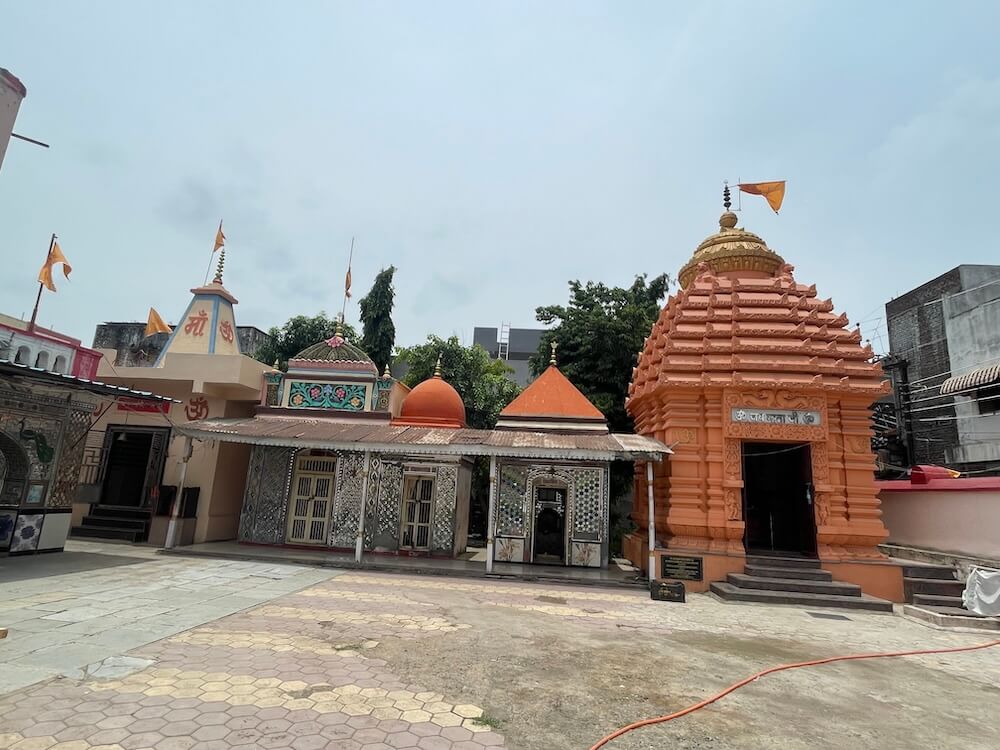
 Since ancient times, it has been a tradition to adorn temples with various forms of art to express devotion and love towards one’s chosen deity. Just as temples are beautified with sculptures, toranas, carvings and paintings, in many places glass has also been used as an element of embellishment. One such glass temple, unique and ancient, stands in the Sindhipura locality of Burhanpur. Within the premises of the Udasi Math, this Kaanch Mandir houses the shrines of Lord Ram, Lord Shiva, Hanuman, Dashbhuja Mata and Kali Mata. The courtyard also features a temple dedicated to Jagadguru Bhagwan Chand.
This Kaanch Mandir in the historic city of Burhanpur, once renowned as the ‘Gateway of the Deccan’, is said to be nearly 450 years old. Within the temple premises lies the monastery of Udasi saints. Presently, Mahant Balyogi Purandas Uपdaseen Maharaj presides over the seat of this math. The history of the Udasi sect traces back to the 16th century, when Baba Shri Chand founded it. Known also as Bhagwan Shri Chand, he was the son of Guru Nanak, the founder of Sikhism. His mother’s name was Sulakshani. Born on December 8, 1494, he lived until January 13, 1629, thus attaining a long life of about 134 years. He advocated the worship of Surya, Vishnu, Shiva, Ganesh and Shakti and is revered as an incarnation of Lord Shiva.
Baba Gurditta, son of the sixth Sikh Guru Hargovind Singh, played an important role in the spread of this sect. 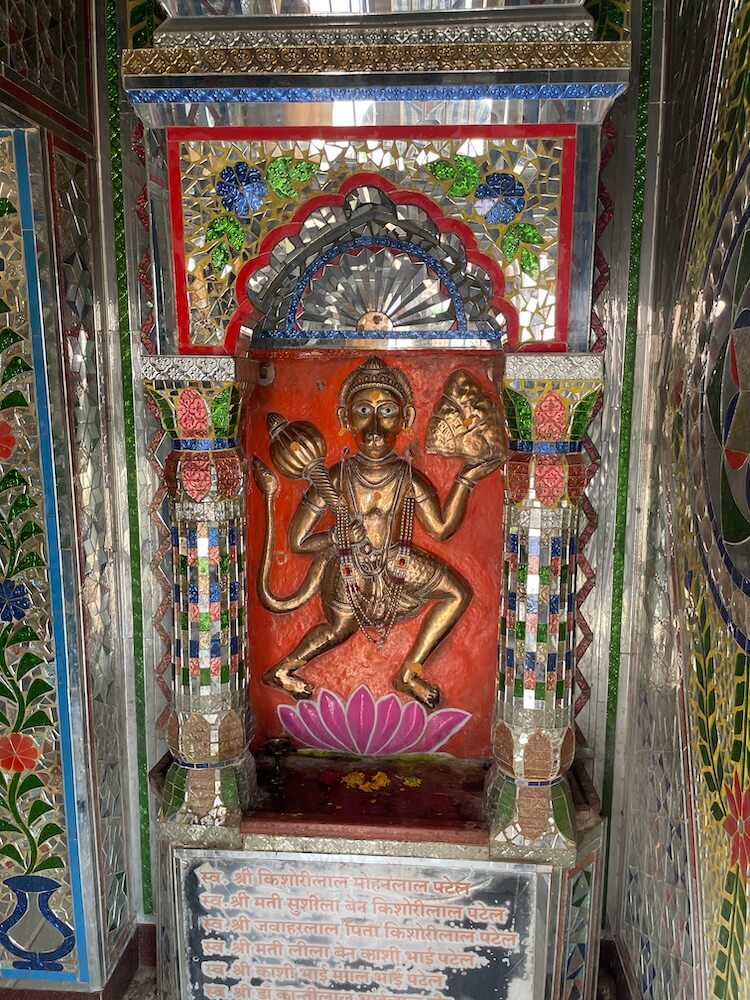 The Udasi tradition has four main branches, with followers primarily found in regions such as Malwa, Jalandhar, Firozpur, Kashi and Rohtak. Many monasteries of the sect exist in these areas. Historical accounts suggest that during the time of Shri Chand himself, the monastery at Burhanpur was established. The lineage of leadership here was continued by saints like Baba Jwardas, Baba Panchamdas, Bishnudas and Premdas. Within the temple courtyard lie the samadhis of twelve such saints and revered ascetics.
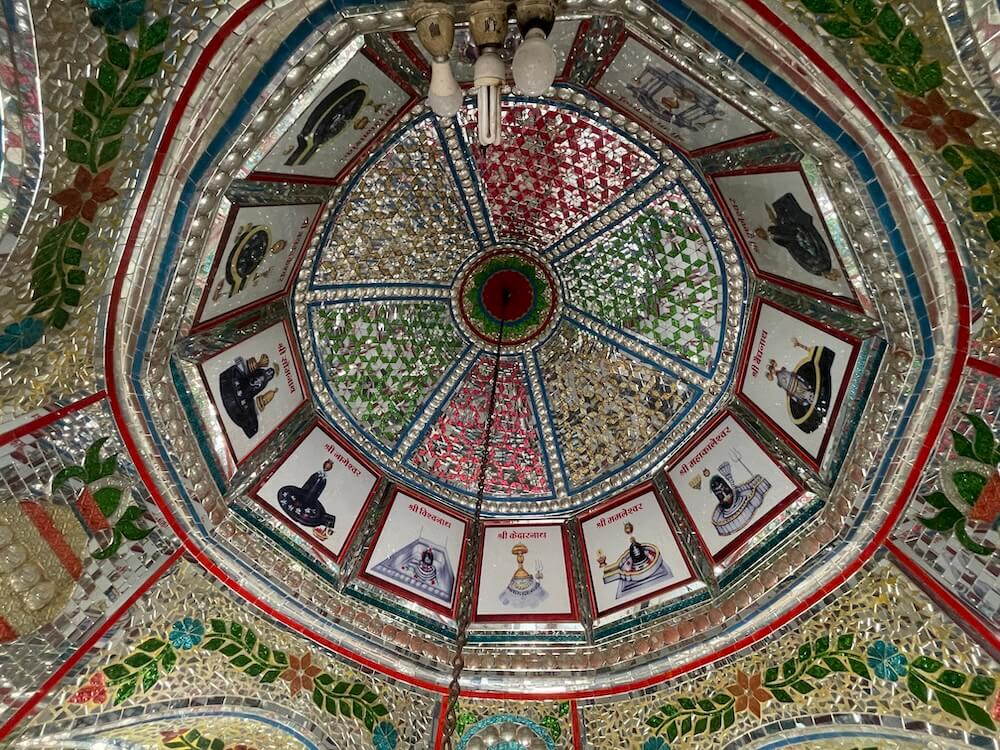
On entering through the simple gateway of the courtyard, to the left, one finds three glass temples and one samadhi decorated with glasswork. The unique feature of these Kaanch Mandirs is the intricate artwork crafted from multicolored glass, both inside and outside the walls. It is said that these glass pieces were imported from Belgium. The first Kaanch Mandir is dedicated to Lord Shiva, who holds a special place in the Udasi sect. In the sanctum lies a Shiva lingam, installed in a square altar, with its shaalunka clad in brass. Remarkably, the face of this shaalunka is turned toward the back wall of the sanctum, with a small marble idol of Nandi placed on its left. Unlike most Shiva temples, where Parvati’s idol is also present, here instead one finds a rough stone idol of Hanuman. The temple tower rises in a pyramidal form above the shrine.
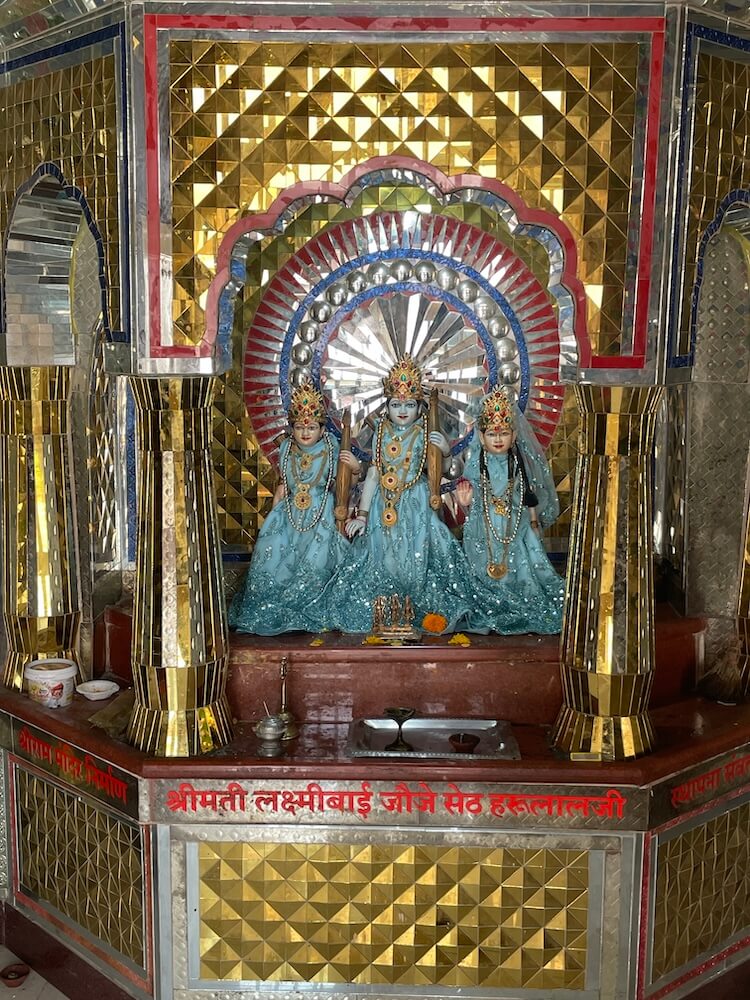
Adjacent to the Shiva temple stands the Hanuman temple, its spire dome-shaped. Within, in a glass-adorned stone shrine, rests an idol of Hanuman carrying the Dronagiri mountain. 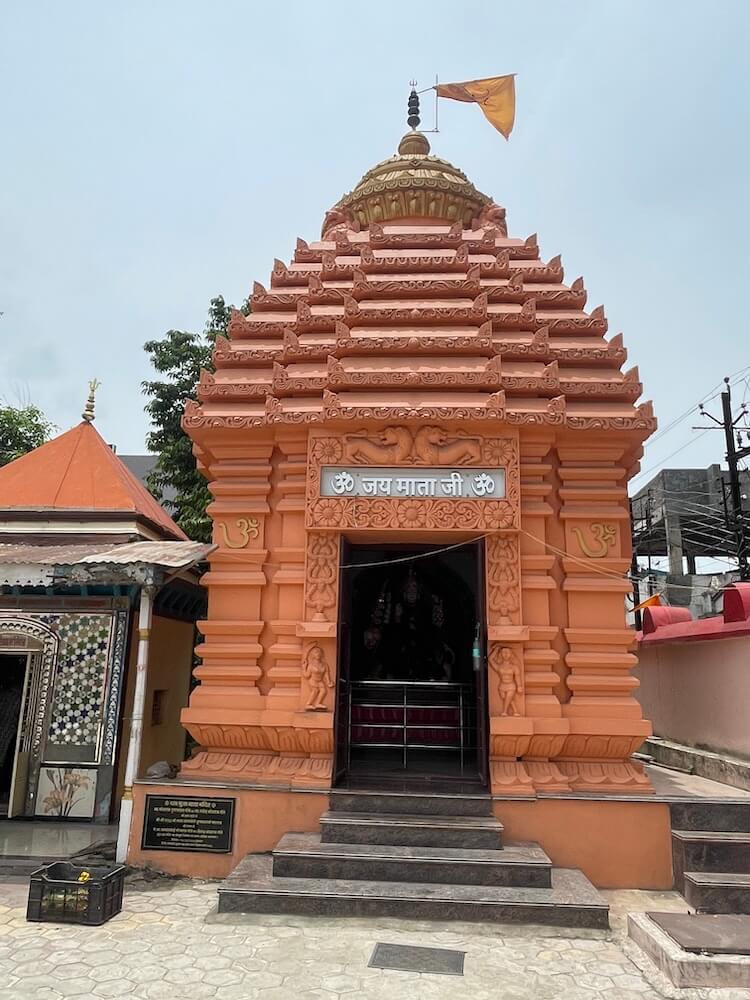 Gilded in golden hues, this idol appears as high-relief sculpture. Next to it is the Ram temple, where a tall stone frame decorated with glass holds the marble idols of Lord Ram, Sita and Lakshman, adorned in garments and ornaments. The spire of this temple is also distinctively designed.
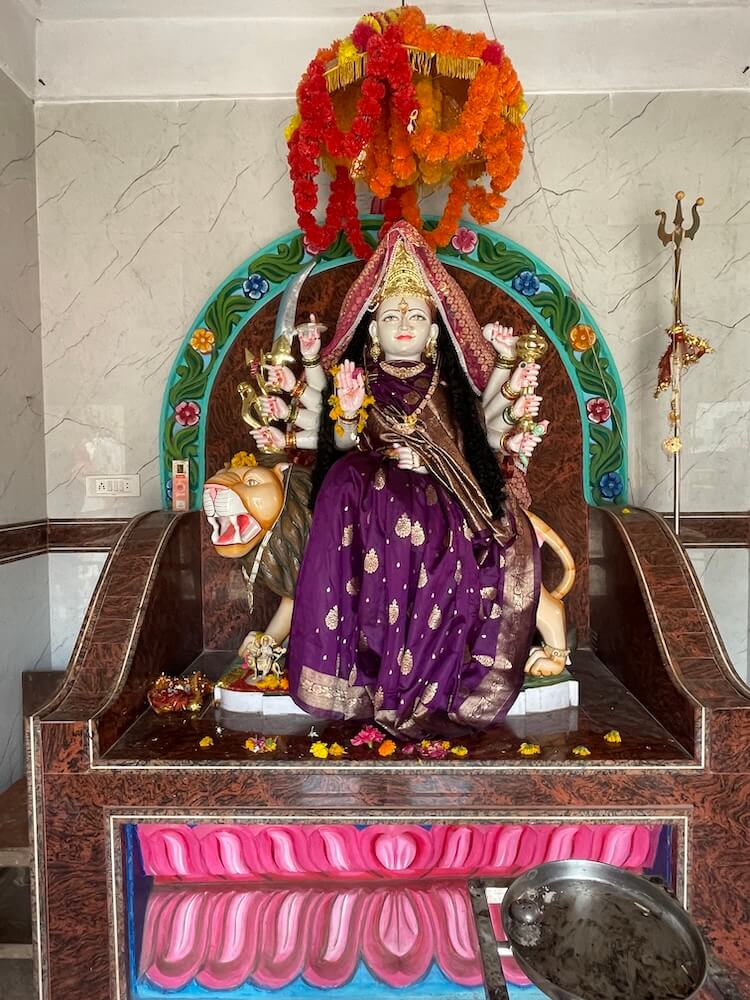
To the left of these glass temples stands the grand shrine of Dashbhuja Mata in her Chandraghanta form. Inspired by Purandas Maharaj, this temple was consecrated on February 22, 2024. Built upon a tall platform using red stone, the temple walls resemble a cluster of pillars joined together. The spire, pyramidal in form, rises above, crowned with a two-tiered amalaka and a pinnacle. At the entrance, carvings of gatekeepers adorn the doorway, while lions, the goddess’s mount, are sculpted above the lintel. Inside, at the center, on a marble pedestal, is enshrined the idol of Dashbhuja Mata, beautifully adorned with ornaments and garments. The goddess, seated on a lion, holds various weapons, as well as a conch, a flower and a bell, with one hand raised in blessing.
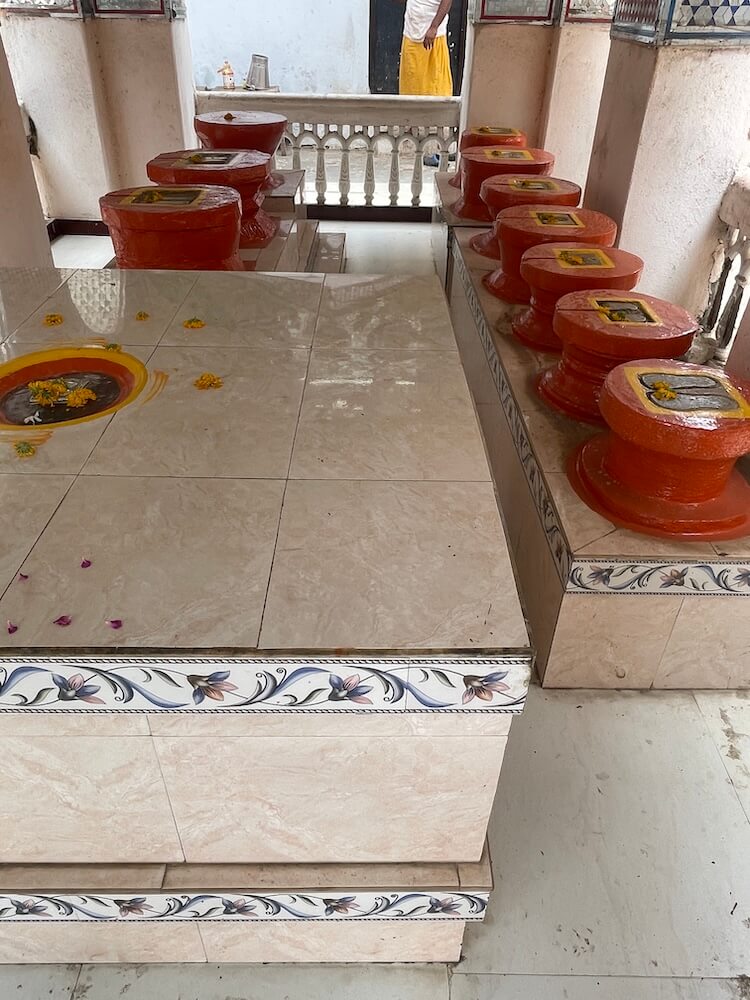
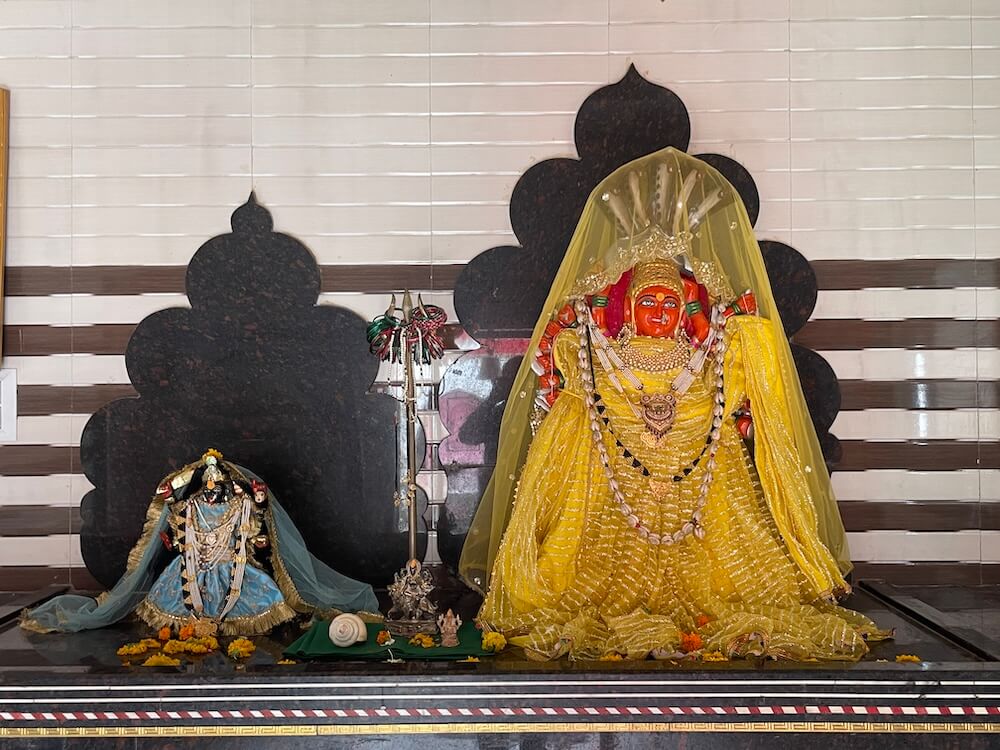
On the right side of the glass temples lies the shrine of Saptashrungi Mata. A large idol of the goddess, richly clothed and bejeweled, rests upon a marble pedestal. She wears a crown, shaded by the hood of a five-headed serpent. Beside her, a smaller idol of the goddess carved from black stone is installed. 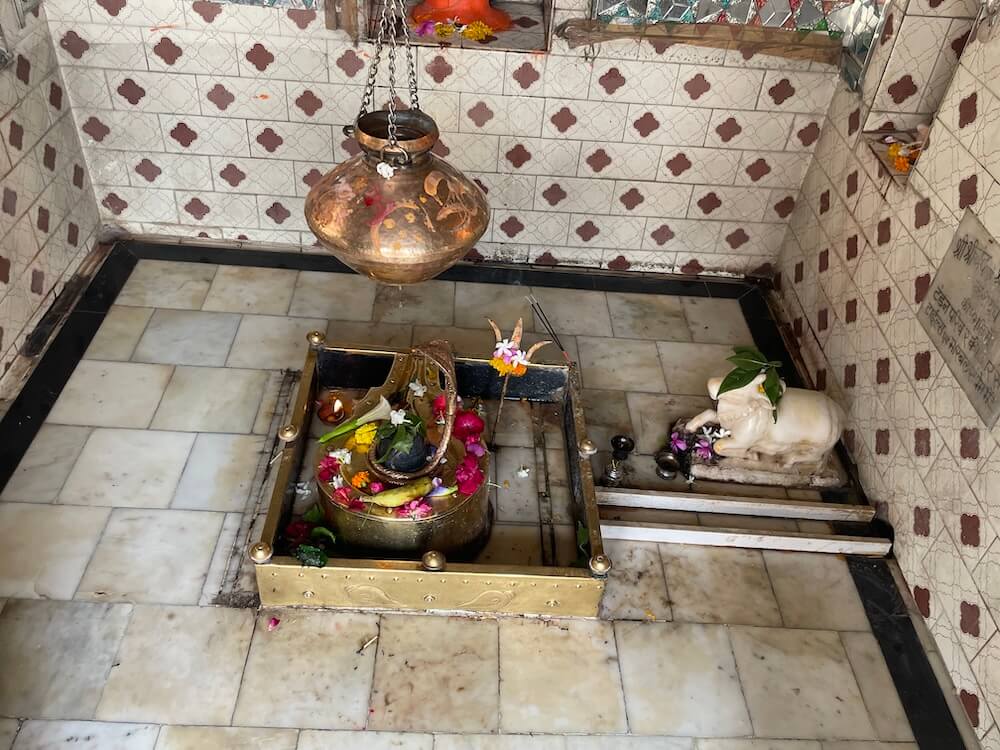 Nearby stands a samadhi temple decorated with glass, where on a large marble platform sacred footprints (padukas) are placed. Near it are eleven carved stone slabs, round and hexagonal in shape, each also bearing sacred footprints. These are the samadhis of saints and holy men of the Udasi tradition.
Adjacent to this samadhi lies the two-storied building of the Udasi Math. Its design resembles an old mansion. The walls, ceilings and pillars inside are adorned with vibrant glass artwork. Within the shrine of this math rests the marble idol of Shri Chand, the founder of the Udasi sect. Alongside, portraits of Purandas Baba, Prayagdas Baba, as well as images of Lord Ram, Hanuman and Krishna are displayed. In another shrine within the math, idols of Krishna, Subhadra and Balarama are installed, modeled after those worshipped in the temple of Jagannath Puri.
Here, festivals like Krishna Janmashtami, Ram Navami, Mahashivaratri, Hanuman Jayanti and Makar Sankranti are celebrated with great enthusiasm in a devotional atmosphere. On Krishna Janmashtami, a grand procession is organized, which also coincides with the birthday celebrations of Mahant Purandas Maharaj. Thousands of devotees from Burhanpur and the surrounding regions participate joyfully in these festivities.