
जगनाथ महादेव मंदिर
छोटा उदेपूर, ता./जि. छोटा उदेपूर
Jagnath Mahadev Temple
Chhota Udepur, Tal./Dist. Chhota Udepur
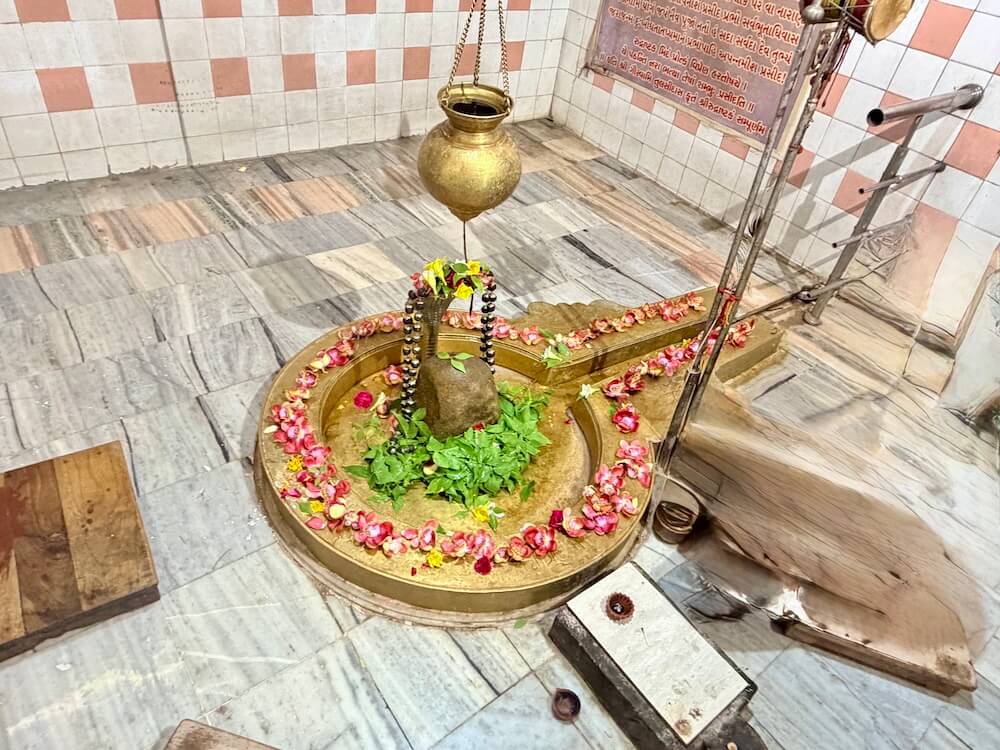 The Jagnath Mahadev Temple is situated in the town of Chhota Udepur, which serves as the administrative headquarters of the Chhota Udepur district. Gracefully positioned along the banks of the Orsang River, this sacred shrine is widely revered as a vital station along the holy Narmada ‘parikrama’ (circumambulation). The sacred Narmada River, originating at Amarkantak in Madhya Pradesh, eventually flows into the state of Gujarat. Similarly, its primary tributary, the Orsang River, which rises in the dense woodlands of Bhavra in Madhya Pradesh, enters Gujarat through the town of Chhota Udepur. The Orsang River subsequently converges first with the Hiran River and ultimately with the Narmada River at the holy village of Chanod.
 Amidst the numerous sanctuaries dotting the banks of the Orsang, the Jagnath Mahadev Temple stands out as a pre-eminent seat of worship. The title Jagnath translates literally to the ‘Ever-Awakened Deity’, reflecting a deep-seated regional belief. While religious traditions in standard Shiva temples restrict devotees to a partial circumambulation, this exceptional shrine allows pilgrims to perform a complete circumambulation around the sacred ‘shivpinda’.
This temple is historically attributed to approximately eight hundred to a thousand years old, with local lore indicating that a sovereign ruler of Pavagadh originally founded it. A fascinating legend prevails regarding the genesis of this sanctuary. It is recounted that the King of Pavagadh once arrived at these riverbanks on a royal hunting expedition.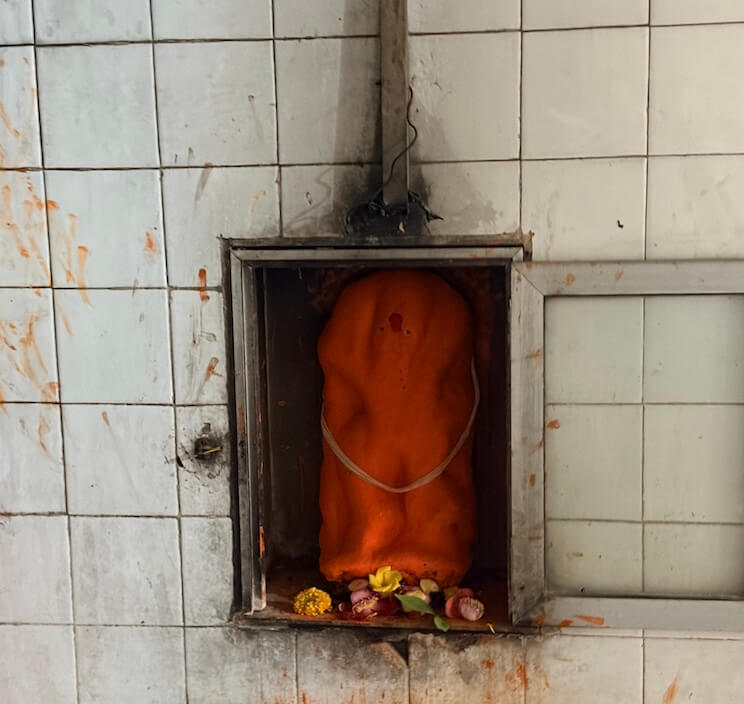 Despite extensive tracking through the wilderness, no quarry crossed his path, leaving the monarch thoroughly exhausted. He consequently resolved to pitch his royal camp along the river bank and rest for the night. During the third watch of the night, while immersed in deep slumber, the King received a divine vision. Lord Shiva Himself manifested in his dream and proclaimed, “O King, this entire domain belongs to Me. I reside right here beneath the earth under this tree in the form of a shivpinda. All the creatures of this forest live under My divine protection. Hence you must abstain from hunting them.”
Startled by this vivid revelation, the King awoke instantly. Prompted by the sacred dream, he ordered excavations at the base of the specified tree, where a pristine ‘shivpinda’ miraculously came to light. Moved by this divine manifestation, the sovereign erected a permanent temple upon the consecrated spot. Vowing never to hunt in this region again, the monarch subsequently departed from the landscape.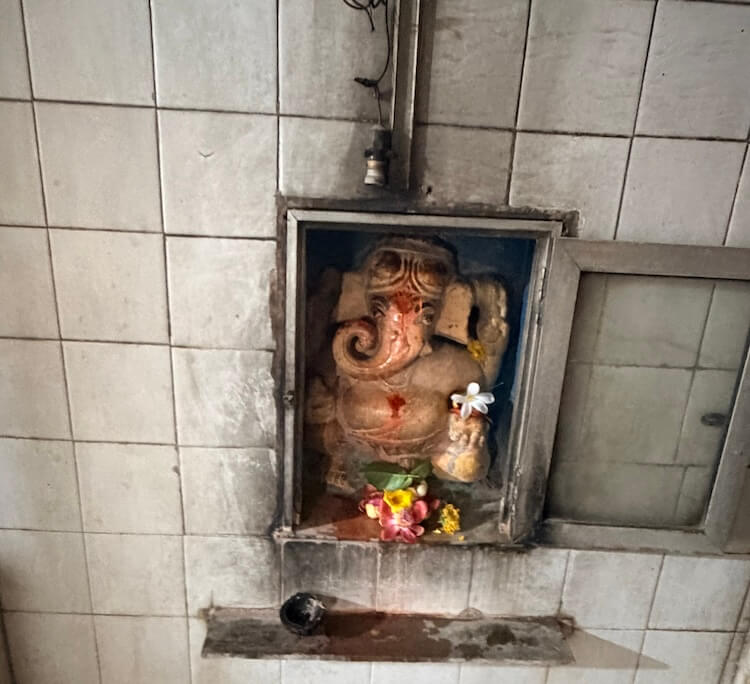 Another popular hagiographical legend concerns a devout ascetic named Chandadev, an ardent devotee of Lord Shiva, who performed rigorous penance at this site. Pleased by his absolute devotion, Lord Shiva manifested in full glory and commanded Chandadev to seek a boon. The ascetic implored, “O Mahadev, may You reside here eternally in the form of this Shivlinga to fulfil the desires of Your devotees. Generally, in any Shiva temple, crossing the channel that discharges the sanctified water from the Shivpinda is strictly forbidden, restricting devotees to a partial circumambulation. However, at my place established at Your holy feet, may Your devotees be liberated from this stricture and earn the supreme spiritual merit of performing a complete circumambulation.” Lord Shiva granted the request and dissolved into the ‘shivpinda’. Owing to this divine boon, the traditional circumambulation does not have to be left incomplete as in other shrines. Because Sage Chandadev himself is believed to be present at the base, a full circumambulation can be completed here.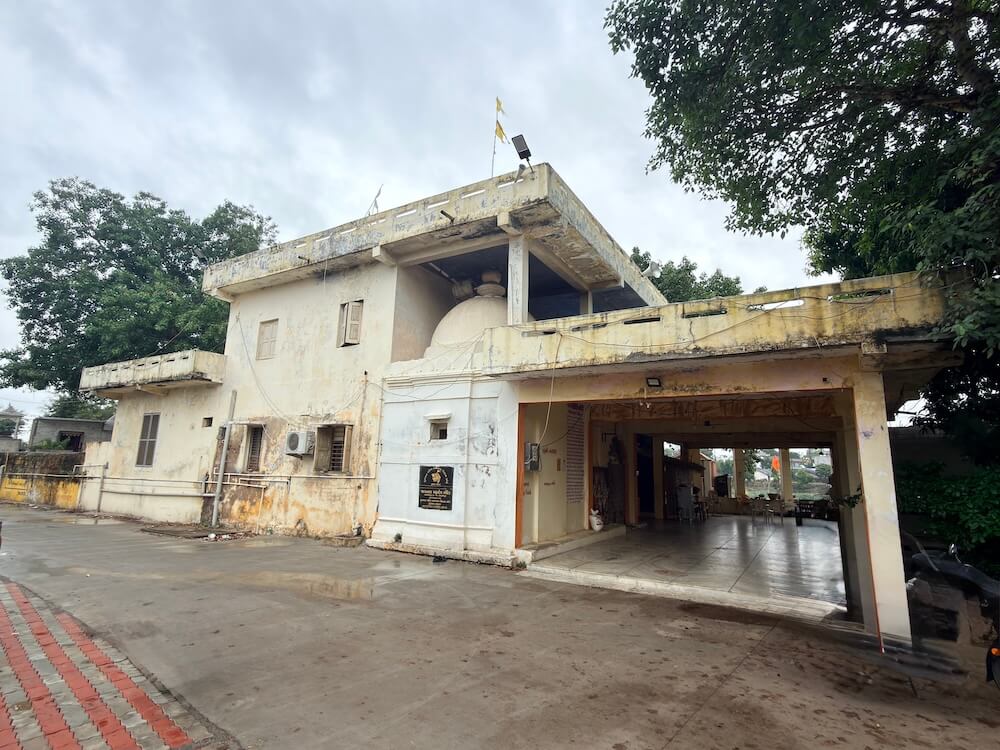
The sanctuary is nestled in a beautifully secluded location along the riverbanks, just a short distance from Chhota Udepur town. A well-constructed metalled road provides seamless access to the temple and a dedicated parking facility is available in front of the premises. A grand reception porch (darshan mandap) stands near the primary entrance, fitted with comfortable seating arranged for the relaxation of visiting pilgrims. The expansive inner courtyard integrates several subsidiary shrines dedicated to various Hindu deities. Within the main reception porch, an elevated stone platform preserves the sacred seat (‘gadi’) of the shrine’s late spiritual preceptor, Madhavgiri Maharaj.
Furthermore, the complex incorporates comfortable residential quarters for the priests and temple attendants, 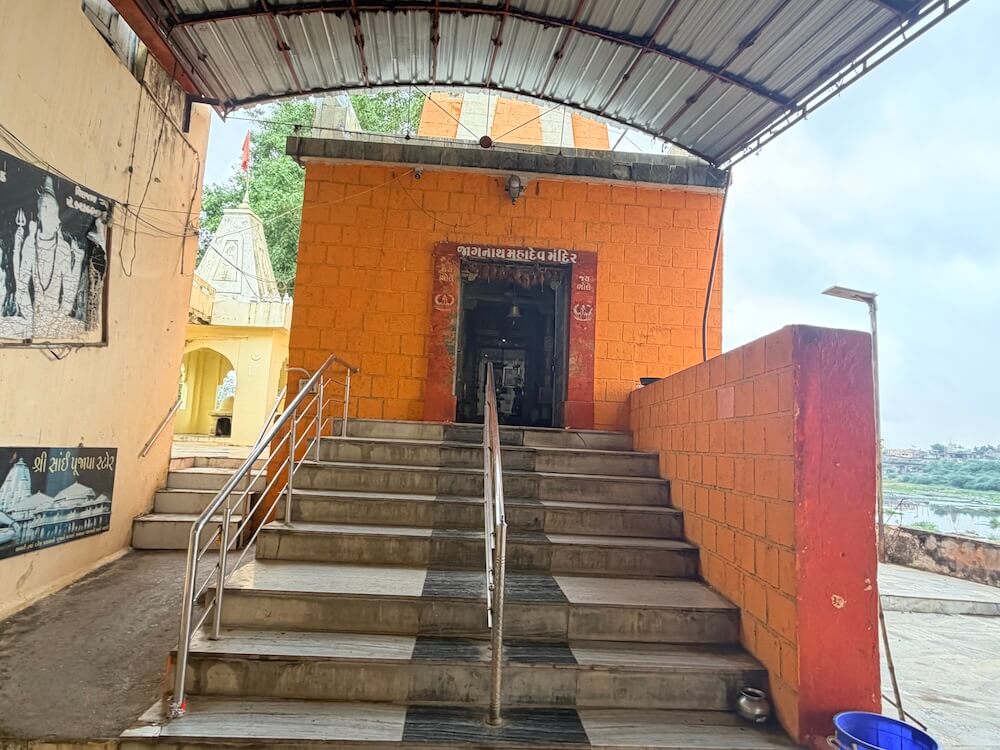 the administrative office of the trust, a well-equipped community kitchen and other utility structures. A majestic, ancient tamarind tree graces the central courtyard, beneath whose canopy a sacred sacrificial pit (‘yagnakunda’) is constructed. Positioned within the same courtyard is a historic, stone-lined well, whose pristine water is drawn exclusively to perform the daily ritual ablutions over the deity.
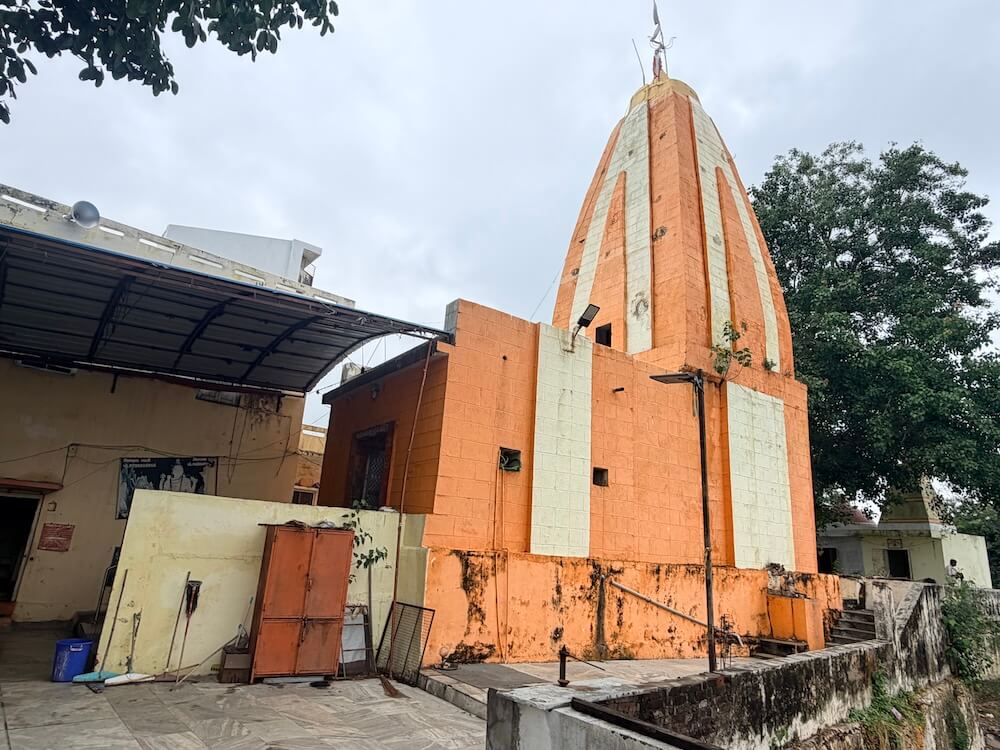
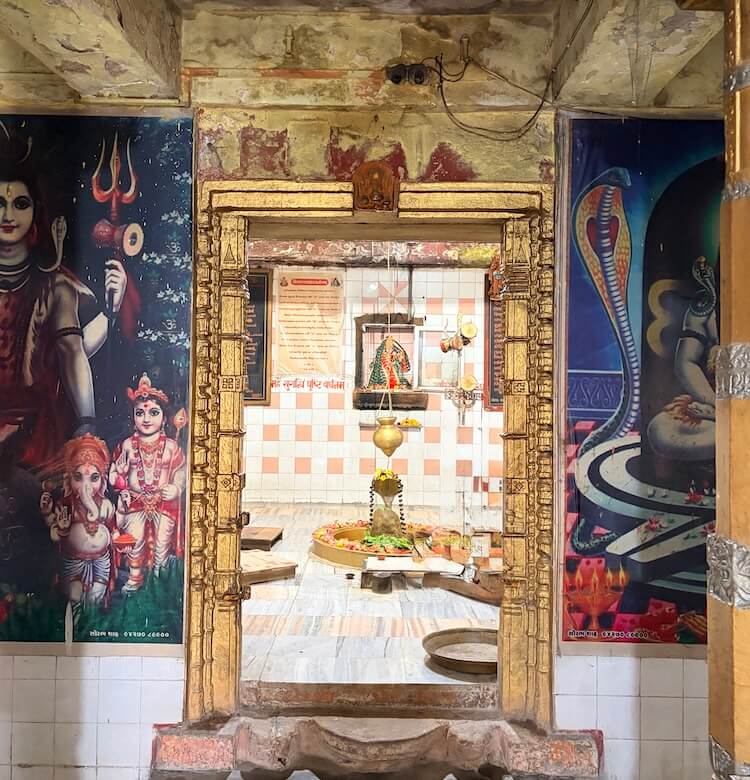
The Jagnath Mahadev Temple rests upon an elevated stone plinth rising approximately four feet high, accessed by ascending a flight of eight ceremonial steps. Structurally, the sanctuary features a classical layout comprising a main assembly hall (sabhamandap) and the primary sanctum sanctorum (garbhagriha).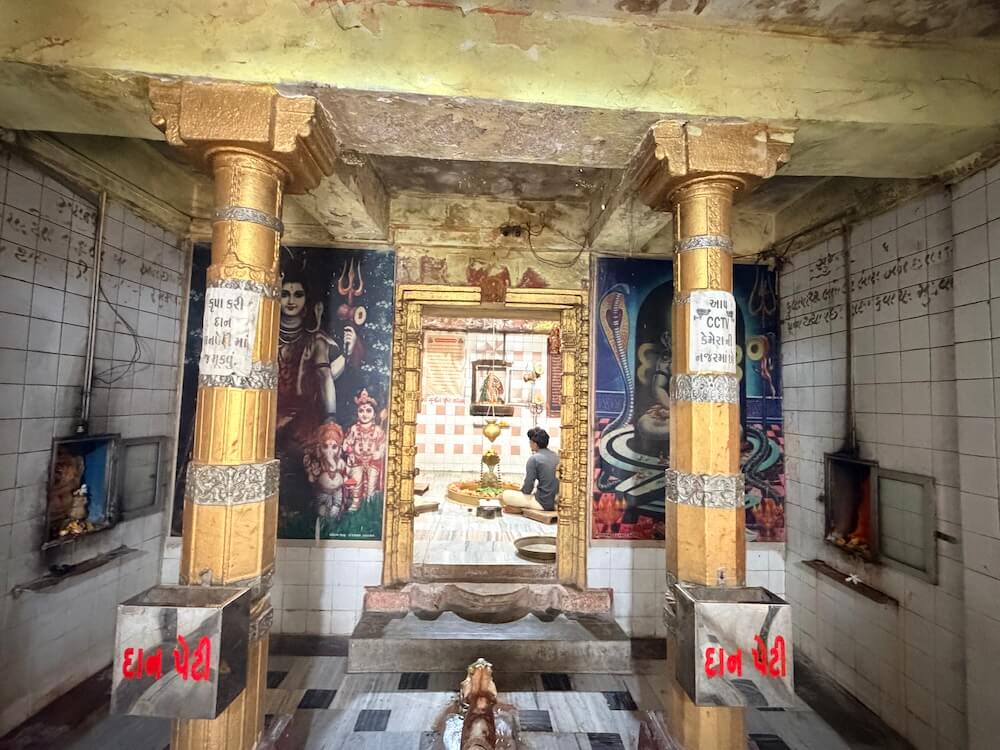 Embedded within the architectural niches of the right and left walls of the assembly hall are elegant idols of Lord Ganesha and Lord Hanuman. Positioned upon a central pedestal near the doorway of the inner sanctum are masterfully sculpted representations of Nandi facing a sacred stone tortoise. Beyond the assembly hall lies the entrance to the sanctum sanctorum, which occupies a slightly elevated floor relative to the hall. The door jambs of the sanctum entrance display detailed relief carvings and a fine sculpture of Lord Ganesha graces the central lintel (lalatabimba). Consecrated at the centre of the sanctum floor is the primordial shivpinda, which is encased in a highly polished brass sheet. A multi-hooded serpent deity cast from five sacred metals (‘panchadhatu’) forms a protective canopy over the shivlinga,
 while a ritual vessel is suspended from the ceiling to ensure a continuous holy drip of water upon the linga. Enshrined within a beautifully sculpted niche on the rear wall behind the main deity is an idol of Mother Parvati. The superstructure surmounting the main sanctum rises into a towering, square-based spire (shikhara) that tapers gradually towards the sky.
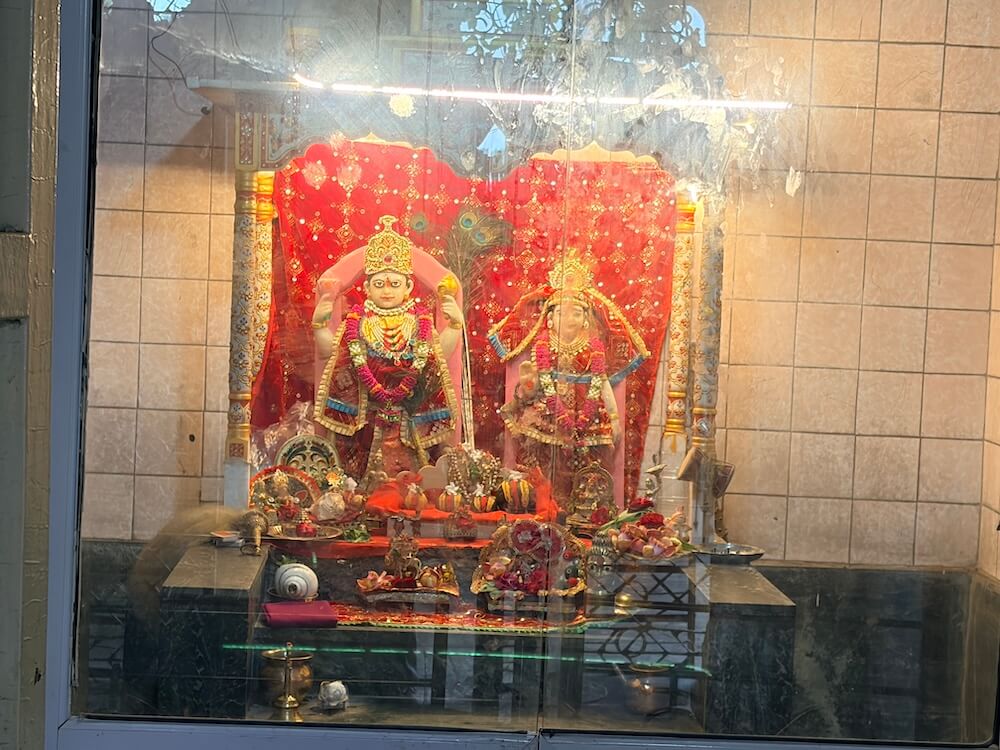
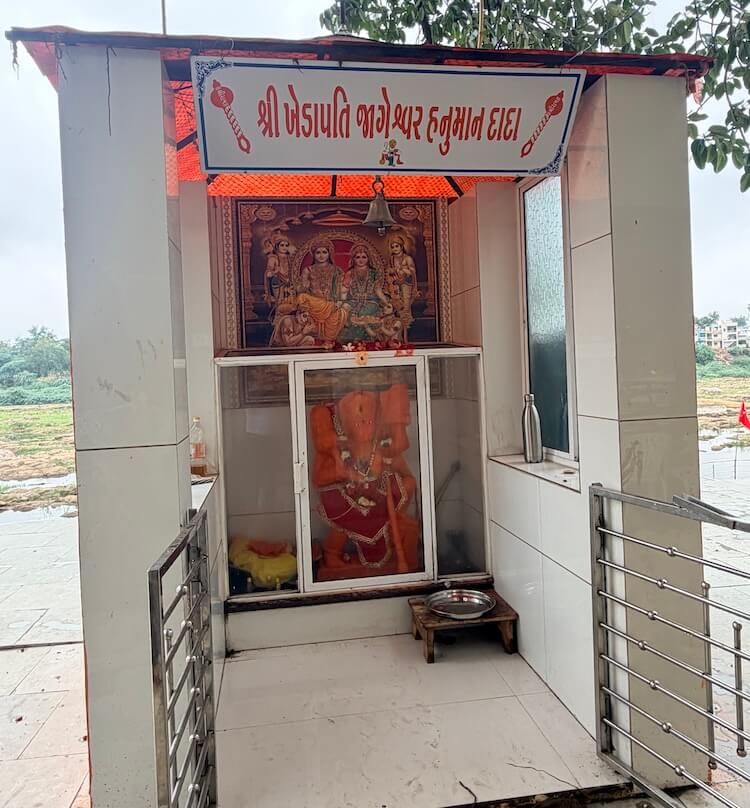
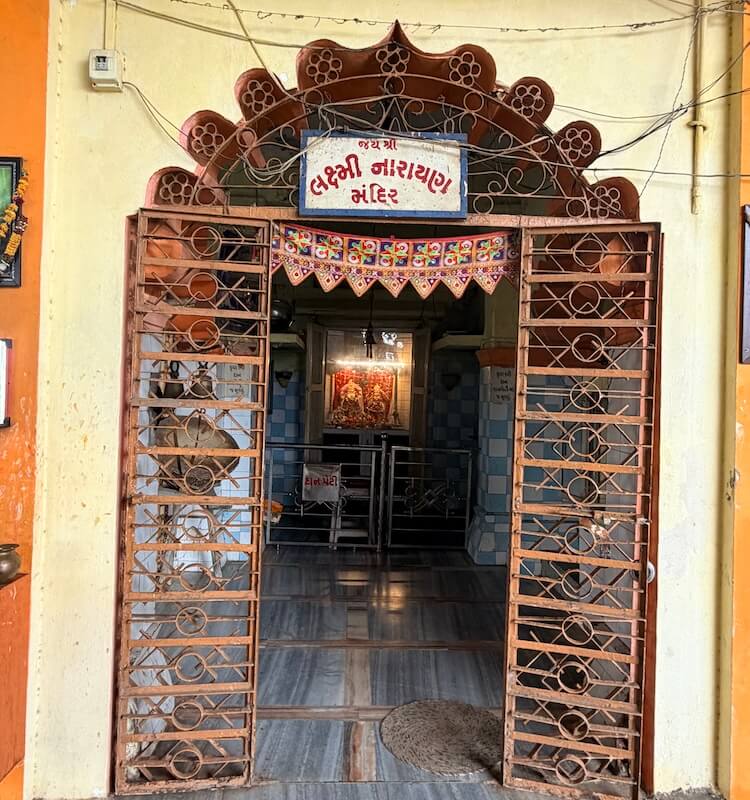
Situated immediately behind the principal Mahadev shrine, within a compact independent niche, is the sacred station dedicated to Chandadev, flanked by a venerable peepal tree. A few paces from this spot lies a cluster of newly erected subsidiary shrines. This contemporary complex includes dedicated temples enshrining Mother Amba, Lakshmi-Narayan, Shani and various other localised tutelary deities.
The festival of Mahashivratra stands as the pre-eminent annual celebration observed at the temple, during which time the entire precinct transforms into a vibrant, animated fairground. On this auspicious day, thousands of devotees from across the region converge upon the shrine to seek blessings. The temple trust organises intensive spiritual rituals, including the ‘Laghurudra’, elaborate traditional ablutions (Maha Abhisheka), congregational singing sessions (‘bhajans’ and ‘kirtans’) and scriptural recitals. Throughout the holy month of Shravan, the temple witnesses an immense influx of pilgrims, particularly on Shravan Mondays. Additionally, prominent festivals such as Nag Panchami, Krishna Janmotsav, Chaitra and Sharadiya Navratra, Dussehra and Diwali are celebrated here with great enthusiasm. The temple doors remain open to welcome devotees for the ‘darshan’ of Jagnath Mahadev daily from 6:00 am until 10:00 pm.
Useful Information :
- Situated at a distance of 2 km from Chhota Udepur bus station
- Reliable state transport bus facilities to the location operate frequently from numerous urban centres across the district.
- Private vehicles can drive directly up to the temple premises.
- Comfortable lodging and breakfast facilities are available in the immediate vicinity.
- Contact: Shivubha Gadhvi, Mob. 9723315915
जागनाथ महादेव मंदिर
छोटा उदेपुर, ताल./जिला. छोटा उदेपुर
मंदिरे
Temples
मंदिर
મંદિરો
கோவில்கள்
దేవాలయాలు
ക്ഷേത്രങ്ങൾ
ದೇವಾಲಯಗಳು
মন্দিরসমূহ
ਮੰਦਿਰ
-
पंचेश्वर महादेव मंदिर हांडोड, ता. संखेडा, जि. छोटा उदेपूर
अधिक माहितीPancheshwar Mahadev Temple Handod, Tal. Sankheda, Dist. Chhota Udepur
View Detailsपंचेश्वर महादेव मंदिर हैंडोड, ताल. संखेडा, जिला. छोटा उदेपुर
विवरण देखेंPancheshwar Mahadev Temple Handod, Tal. Sankheda, Dist. Chhota Udepur
વિગત જુઓPancheshwar Mahadev Temple Handod, Tal. Sankheda, Dist. Chhota Udepur
விவரங்களைக் காண்கPancheshwar Mahadev Temple Handod, Tal. Sankheda, Dist. Chhota Udepur
వివరాలను చూడండిPancheshwar Mahadev Temple Handod, Tal. Sankheda, Dist. Chhota Udepur
വിശദാംശങ്ങൾ കാണുകPancheshwar Mahadev Temple Handod, Tal. Sankheda, Dist. Chhota Udepur
ವಿವರಗಳನ್ನು ವೀಕ್ಷಿಸಿPancheshwar Mahadev Temple Handod, Tal. Sankheda, Dist. Chhota Udepur
বিস্তারিত দেখুনPancheshwar Mahadev Temple Handod, Tal. Sankheda, Dist. Chhota Udepur
ਵੇਰਵੇ ਦੇਖੋ -
पशुपतीनाथ महादेव मंदिर नसवडी, ता. नसवडी, जि. छोटा उदेपूर
अधिक माहितीPashupatinath Mahadev Temple Naswadi, Tal. Naswadi, Dist. Chhota Udepur
View Detailsपशुपतिनाथ महादेव मंदिर नसवाडी, ताल. नसवाडी, जिला. छोटा उदेपुर
विवरण देखेंPashupatinath Mahadev Temple Naswadi, Tal. Naswadi, Dist. Chhota Udepur
વિગત જુઓPashupatinath Mahadev Temple Naswadi, Tal. Naswadi, Dist. Chhota Udepur
விவரங்களைக் காண்கPashupatinath Mahadev Temple Naswadi, Tal. Naswadi, Dist. Chhota Udepur
వివరాలను చూడండిPashupatinath Mahadev Temple Naswadi, Tal. Naswadi, Dist. Chhota Udepur
വിശദാംശങ്ങൾ കാണുകPashupatinath Mahadev Temple Naswadi, Tal. Naswadi, Dist. Chhota Udepur
ವಿವರಗಳನ್ನು ವೀಕ್ಷಿಸಿPashupatinath Mahadev Temple Naswadi, Tal. Naswadi, Dist. Chhota Udepur
বিস্তারিত দেখুনPashupatinath Mahadev Temple Naswadi, Tal. Naswadi, Dist. Chhota Udepur
ਵੇਰਵੇ ਦੇਖੋ -
नानी अंबाजी मंदिर जीवनपुरा, ता. नसवडी, जि. छोटा उदेपूर
अधिक माहितीNani Ambaji Temple Jeevanpura, Tal. Naswadi, Dist. Chhota Udepur
View Detailsनानी अम्बाजी मंदिर जीवनपुरा, ताल. नसवाडी, जिला. छोटा उदेपुर
विवरण देखेंNani Ambaji Temple Jeevanpura, Tal. Naswadi, Dist. Chhota Udepur
વિગત જુઓNani Ambaji Temple Jeevanpura, Tal. Naswadi, Dist. Chhota Udepur
விவரங்களைக் காண்கNani Ambaji Temple Jeevanpura, Tal. Naswadi, Dist. Chhota Udepur
వివరాలను చూడండిNani Ambaji Temple Jeevanpura, Tal. Naswadi, Dist. Chhota Udepur
വിശദാംശങ്ങൾ കാണുകNani Ambaji Temple Jeevanpura, Tal. Naswadi, Dist. Chhota Udepur
ವಿವರಗಳನ್ನು ವೀಕ್ಷಿಸಿNani Ambaji Temple Jeevanpura, Tal. Naswadi, Dist. Chhota Udepur
বিস্তারিত দেখুনNani Ambaji Temple Jeevanpura, Tal. Naswadi, Dist. Chhota Udepur
ਵੇਰਵੇ ਦੇਖੋ