
नानी अंबाजी मंदिर
जीवनपुरा, ता. नसवडी, जि. छोटा उदेपूर
Nani Ambaji Temple
Jeevanpura, Tal. Naswadi, Dist. Chhota Udepur
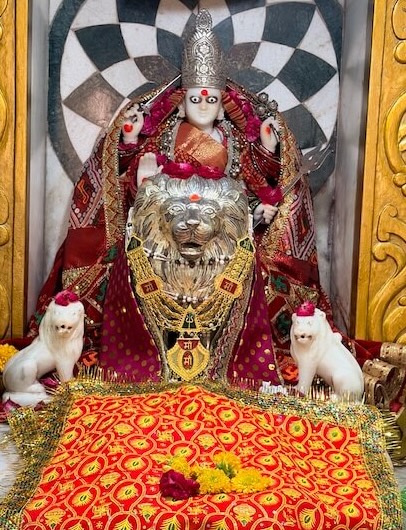 The village of Jeevanpura is nestled within the Naswadi taluka of the Chhota Udepur district, serving as the sacred home of the Nani Ambaji Temple. Sacred lore recounts that the heart of the Goddess Sati fell upon the Gabbar hill within the Aravalli mountain range, giving rise to the principal Ambamata Shaktipeeth. She is widely revered as Moti Ambaji. Apart from this primary sanctuary, various other manifestations of the Goddess established across the landscape of Gujarat are affectionately designated as Nani Ambaji or the Little Ambaji. The Nani Ambaji Temple at Jeevanpura stands distinguished as a pre-eminent bastion of faith for the regional congregation. Possessing a historical antiquity spanning approximately three centuries, this holy shrine welcomes a vast multitude of pilgrims throughout the year to seek the divine audience of the Goddess.
Within the rich tapestry of Hindu theological tradition, fifty-one distinct Shaktipeeths are recognised as the core of the Shakta sect. It is traditionally believed that each sacred seat manifested at the precise location where the severed fragments of Goddess Sati’s mortal frame descended to the earth. Celebrated primary Shaktipeeths are located at Ujjain, Kanchipuram, Srisailam, Kanyakumari, Saharanpur, Kolhapur, Prayag, Vindhyachal, Varanasi, Gaya and Guhyeshwari in Nepal.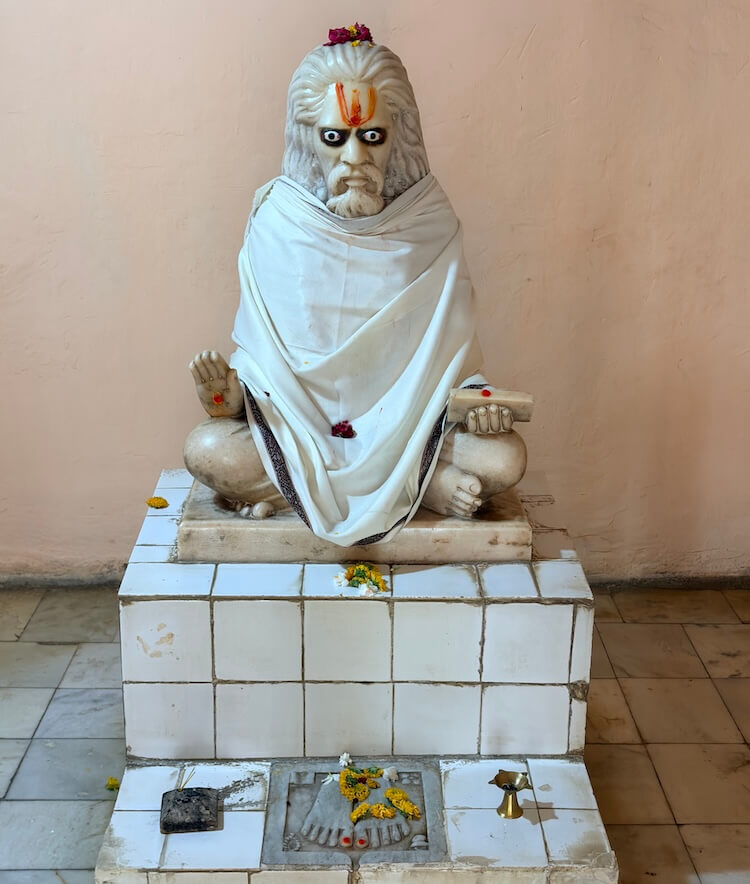 The celebrated Ambaji Mata Temple, nestled in the vicinity of the Gabbar hill within the Banaskantha district of Gujarat, is revered as one of these highly sacred fifty-one shrines. The mythical origin of this seat is intimately intertwined with the historical sacrifice (yajna) organised by Prajapati Daksha. Unable to endure the public humiliation meted out to Her consort, Lord Shiva, during Daksha’s grand congregation, Mother Sati immolated Herself in the sacrificial fires. Deeply aggrieved and enraged by this tragedy, Lord Shiva slung Sati’s mortal remains over His shoulder and commenced the cosmic dance of destruction (Tandava). To preserve the universe from imminent annihilation, Lord Vishnu deployed His discus (Sudarshana Chakra) to sever Sati’s form into fifty-one pieces, which fell across various regions of the Indian subcontinent to establish these timeless citadels of divine energy.
A defining architectural characteristic of the grand Ambaji mother temple is that it enshrines no physical idol of the Goddess. Instead, the inner sanctum houses the sacred ‘Shri Visa Yantra’, which is meticulously adored in accordance with ancient Vedic principles, serving as the primary object of public vision (darshan).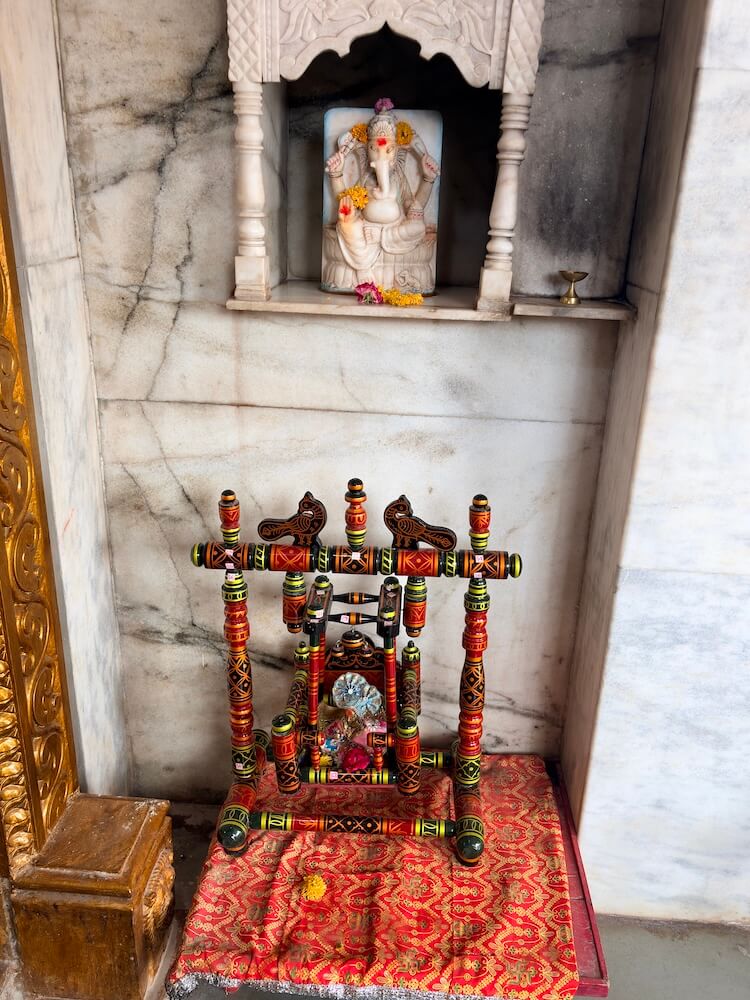 The visual geometry of this mystical emblem is configured so precisely that when viewed from a distance, it evokes the subtle silhouette of the Goddess. Great spiritual importance is assigned to this yantra within the realms of Shakti worship. Exhaustive references to this holy region are found within classical scriptural treatises such as the Devi Bhagavata, Matsya Purana and the Mahabharata. According to mythological accounts, the sacred tonsure and thread ceremonies of Lord Krishna were performed at this site. Local sacred lore further affirms that
during his period of forest exile, Lord Shri Ram visited the Gabbar hill in his quest for Mother Sita to offer prayers to Mother Ambaji. The historical architecture of that mountain shrine remains a testament to ancient craftsmanship, celebrated especially during the grand religious festivals held on Bhadrapada Purnima.
Local traditions affirm that the Nani Ambaji Temple at Jeevanpura possesses a historical antiquity dating back approximately three hundred years, having undergone extensive restoration in recent times. According to a popular regional legend, a devout ascetic arrived at this hillside driven by an intense desire to experience the divine presence of the Goddess. Sustaining himself solely on water, the devotee immersed himself in a disciplined regimen of continuous chanting and meditation. Moved by his absolute fidelity,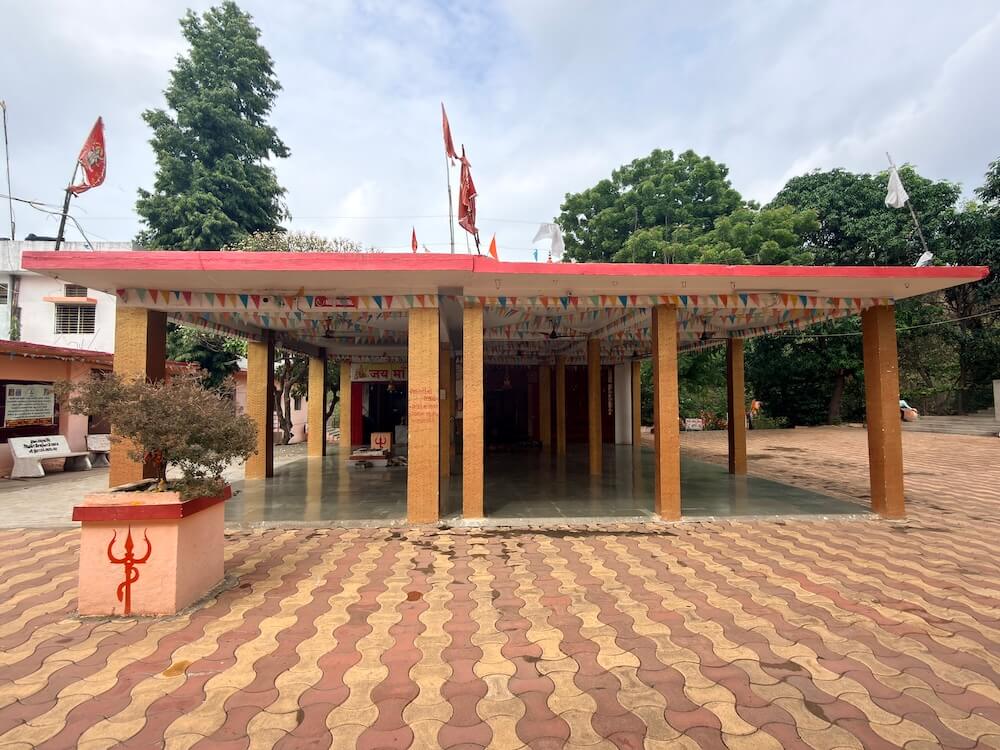 the Goddess granted him a divine vision, disclosing that : ‘I reside right here beneath the earth in the form of a stone sculpture. Seek Me out,’ before dissolving into the ether. Following this sacred mandate, the devotee excavated the site and successfully brought to light a pristine stone idol of the Goddess. Owing to the compact proportions of this discovery, the local congregation began to address the deity affectionately as Nani Ambaji. Initially, a simple structure sheltered the site, which was subsequently transformed into a robust, permanent temple constructed from durable cement-concrete.
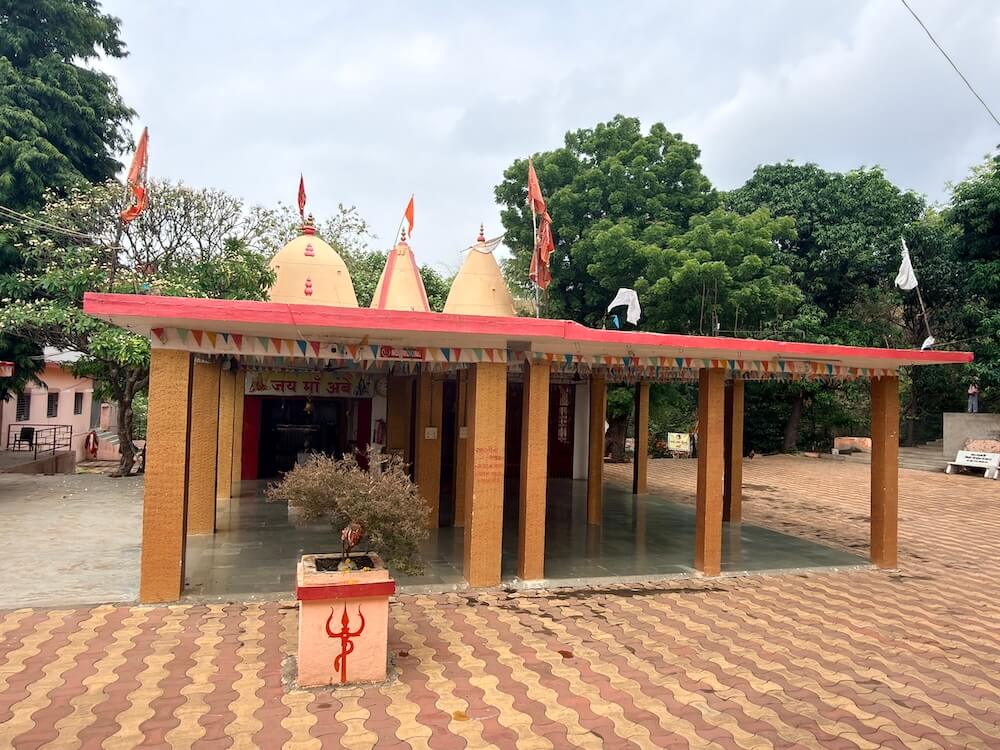
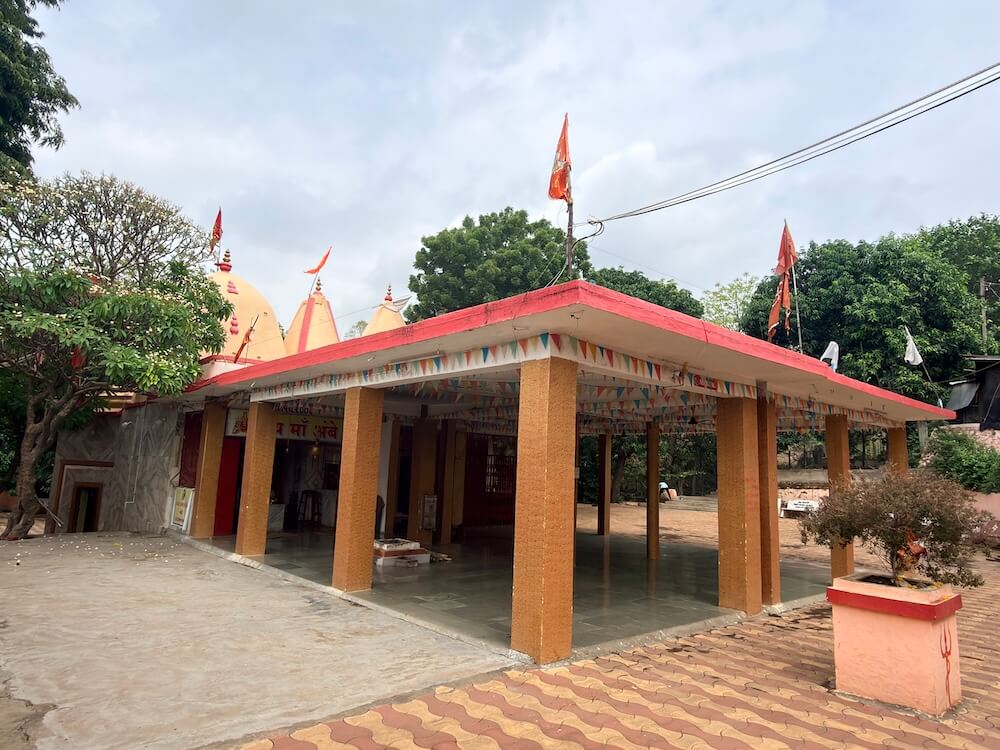
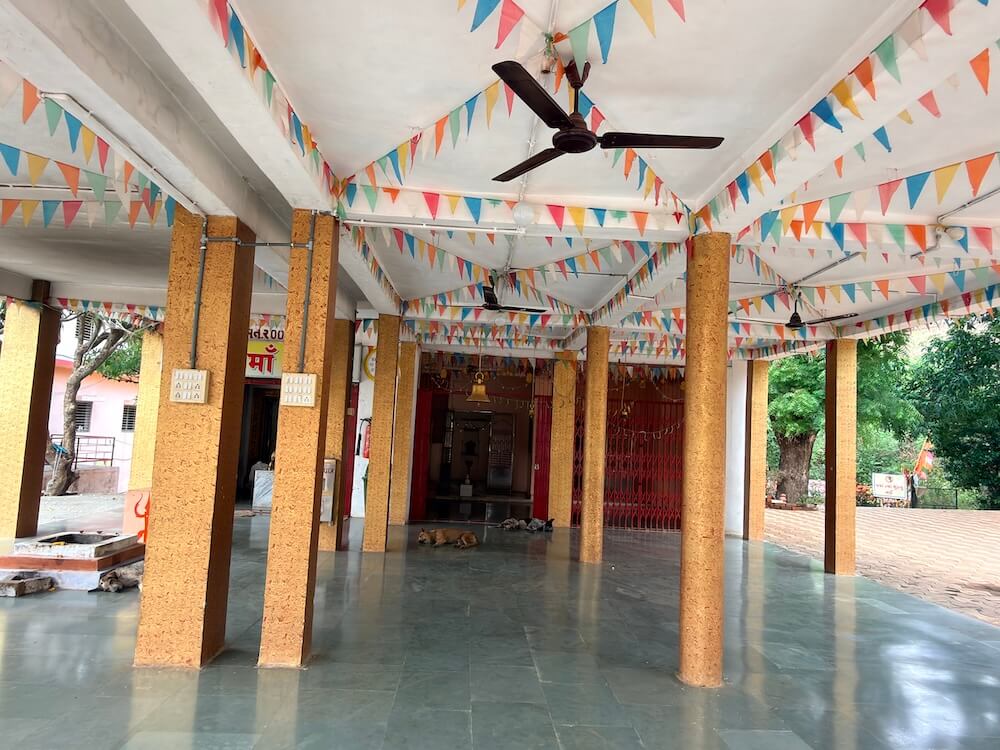
The temple is conveniently situated, running immediately adjacent to the main thoroughfare near Jeevanpura village.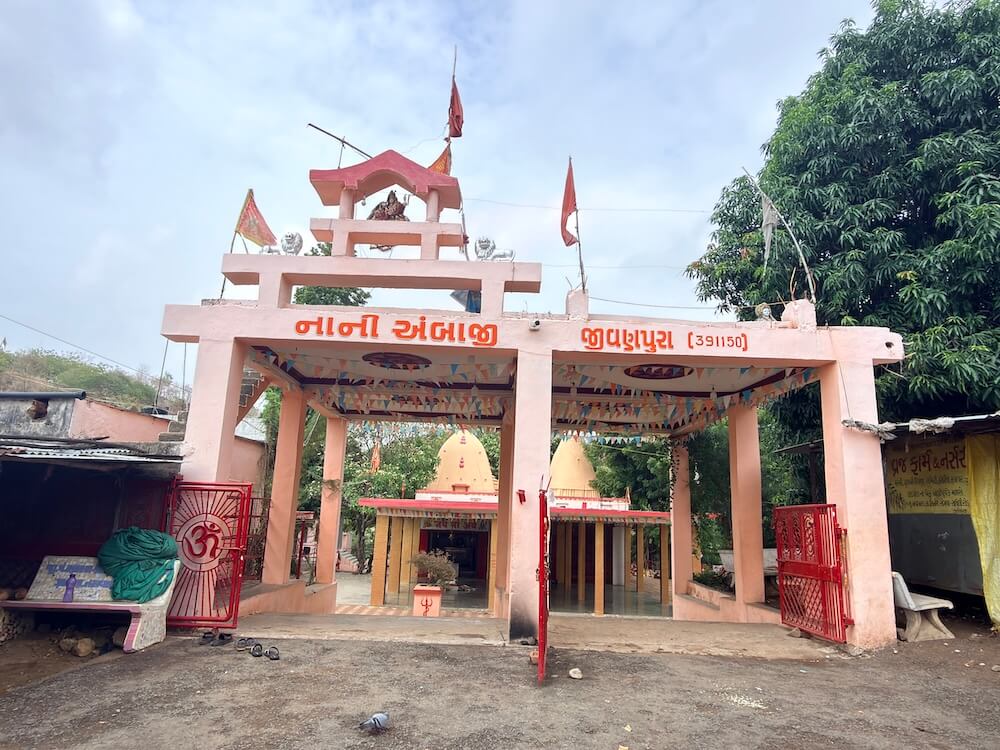 The external approaches are lined with vibrant stalls offering ritual worship materials, local delicacies and traditional commodities. Fronting the structure is a spacious, open reception pavilion (swagatmandap). The upper tier of this pavilion features two matching pilasters adorned with finely carved lion sculptures, while the decorative pediment above houses an elegant idol of Mother Amba. The primary courtyard of the temple rests within a sunken clearing relative to the level of the main road, accessed by descending a short flight of steps onto a neatly paved floor. A sacred tulsi pedestal (Tulsi Vrindavan) stands elevated within this courtyard, which is bordered on all four sides by comfortable stone seating arranged for the relaxation of visiting pilgrims.
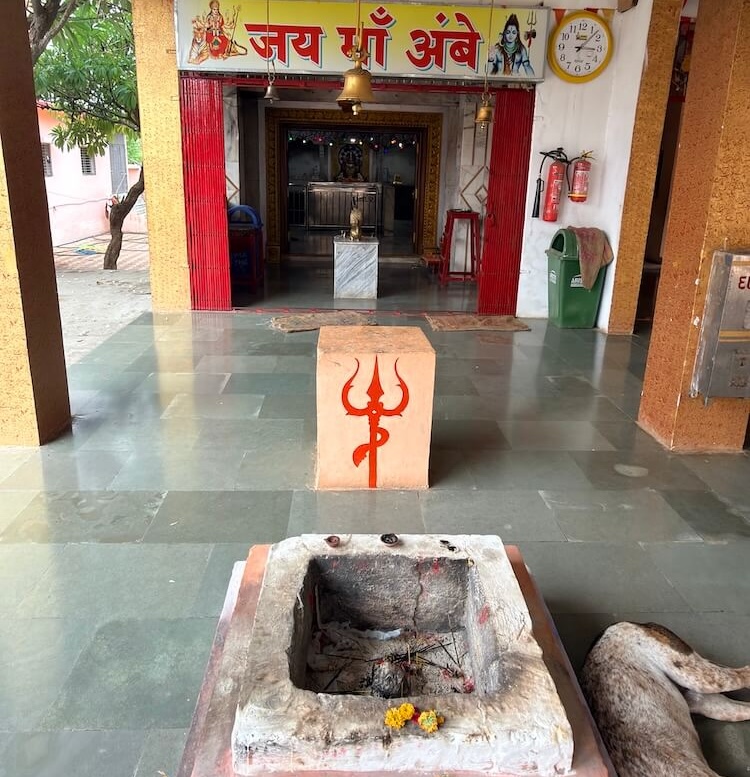 Furthermore, the complex integrates a dedicated stage for religious and cultural performances, a permanent charitable dining pavilion and residential quarters for the temple attendants.
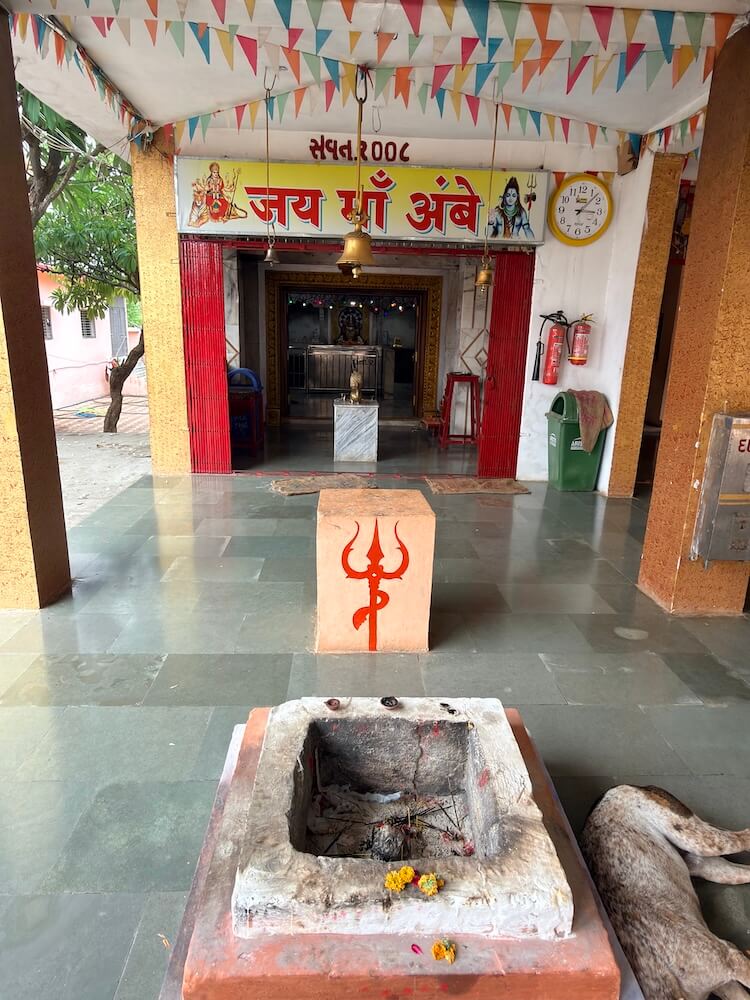
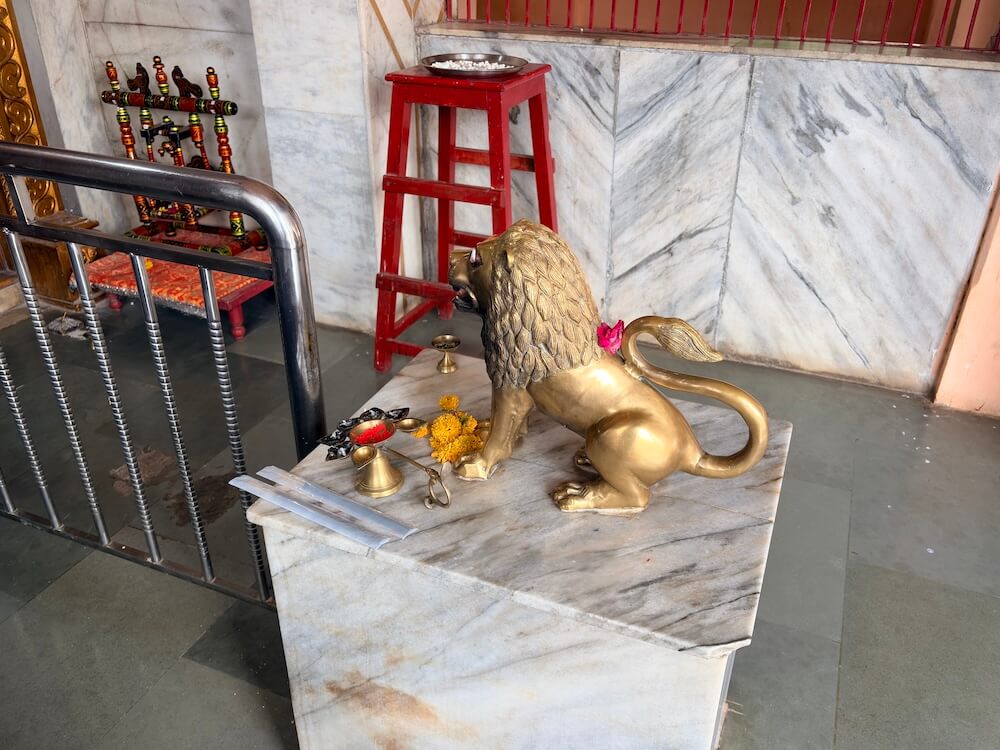
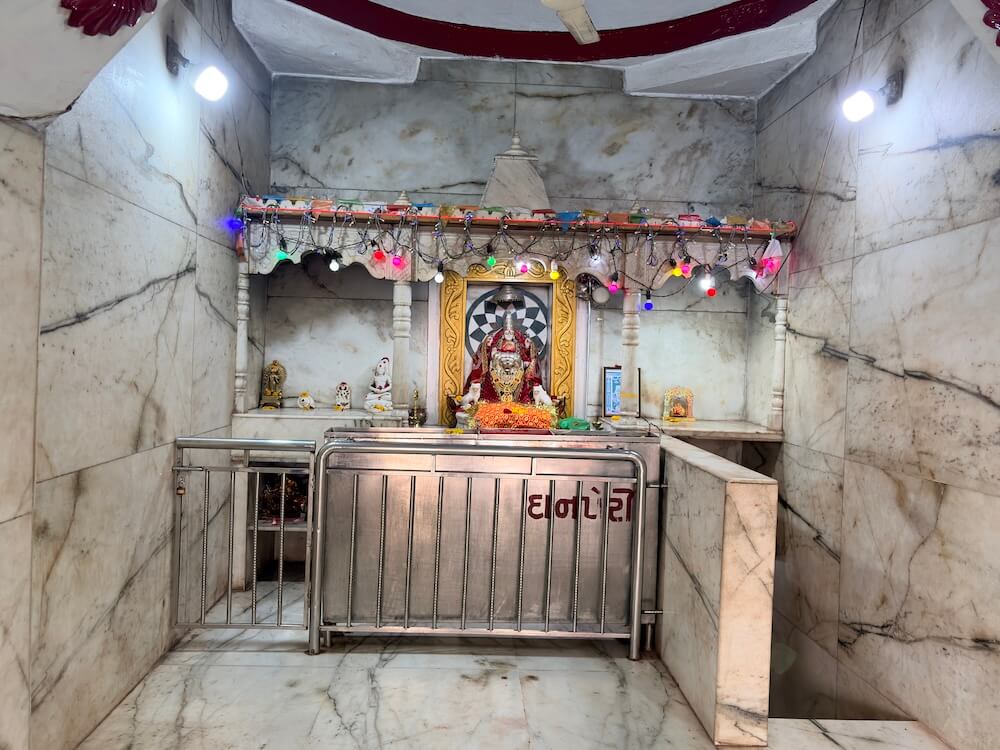
Structurally, the sanctuary features a classical layout comprising a main assembly hall, an antechamber and the primary sanctum sanctorum. The columns supporting the semi-open assembly hall (sabhamandap) are configured in a square design. Elevated immediately before the entrance to the inner sanctum within this hall is a dedicated sacrificial pavilion (Yajnamandap). Beyond this hall lies the integrated antechamber, where an exquisite stone sculpture of a lion (the divine mount of the Goddess) stands consecrated upon a stone pedestal directly fronting the inner doorway. Arranged around this area are numerous wooden cradles presented as votive offerings by the devotees. Embedded within the right and left walls of the antechamber are niches enshrining elegant idols of Lord Ganesha and Lord Maruti.
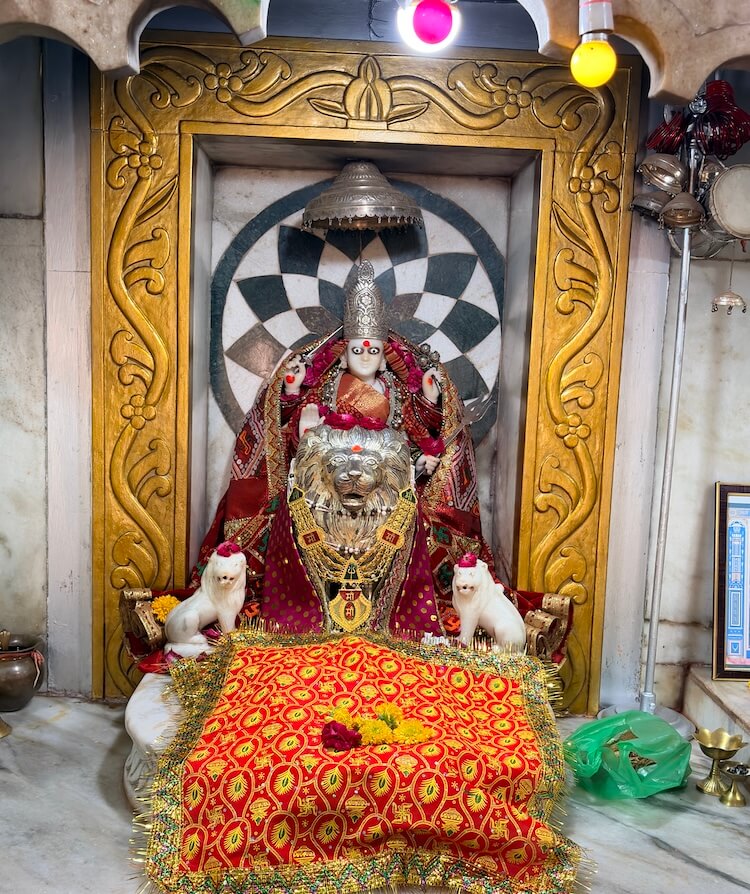
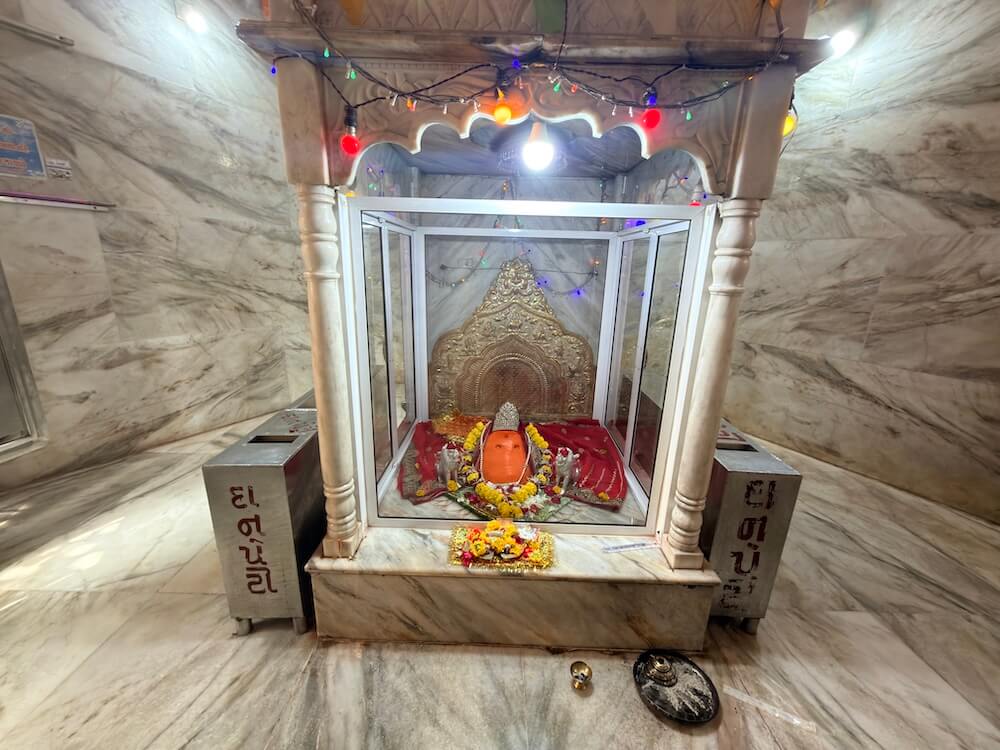 The timber doorframes of the primary sanctum sanctorum display detailed relief carvings of intertwining foliage and delicate floral creepers. A fine sculpture of Lord Ganesha graces the central lintel (lalatabimba). The entrance is fitted with ornately carved wooden doors. Enshrined upon a sacred pedestal inside the primary sanctum is a magnificent idol of the Goddess Nani Ambaji seated majestically upon a lion. Adorned in fine vestments and precious ornaments, a polished silver crown rests upon Her head, backed by a beautifully carved halo displaying intricate botanical motifs. Positioned on the lower altar directly before the main deity are smaller marble representations of lions alongside traditional symbolic representations of divine energy.
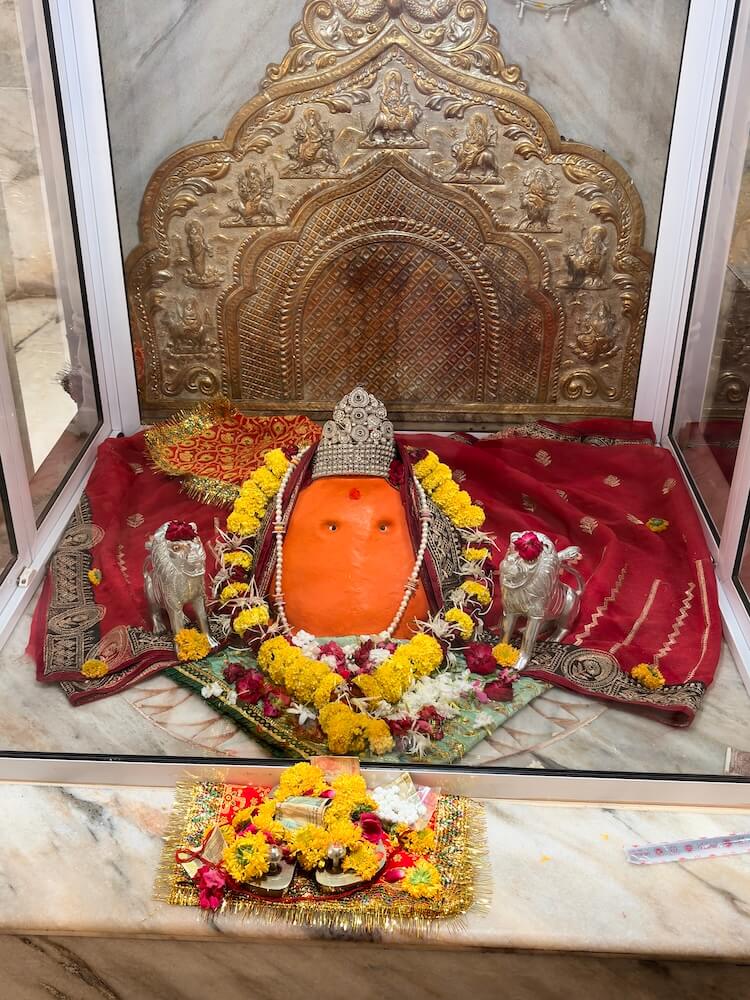
 From this principal sanctum, a flight of steps descends into a subterranean chamber that houses an inner lower sanctum. It is here that the primordial, self-manifested stone idol (Swayambhu) of the Goddess, beautifully coated with traditional vermilion (sheendur), is consecrated. Sacred silver footprints (padukas) rest directly before this ancient form, which is revered as the ultimate source and original seat of Nani Ambaji.
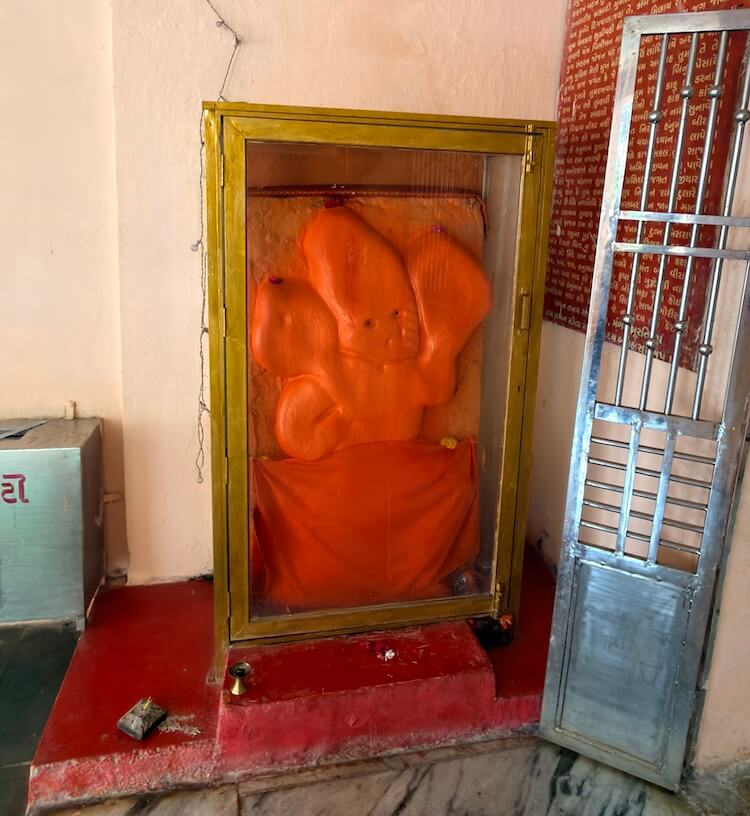
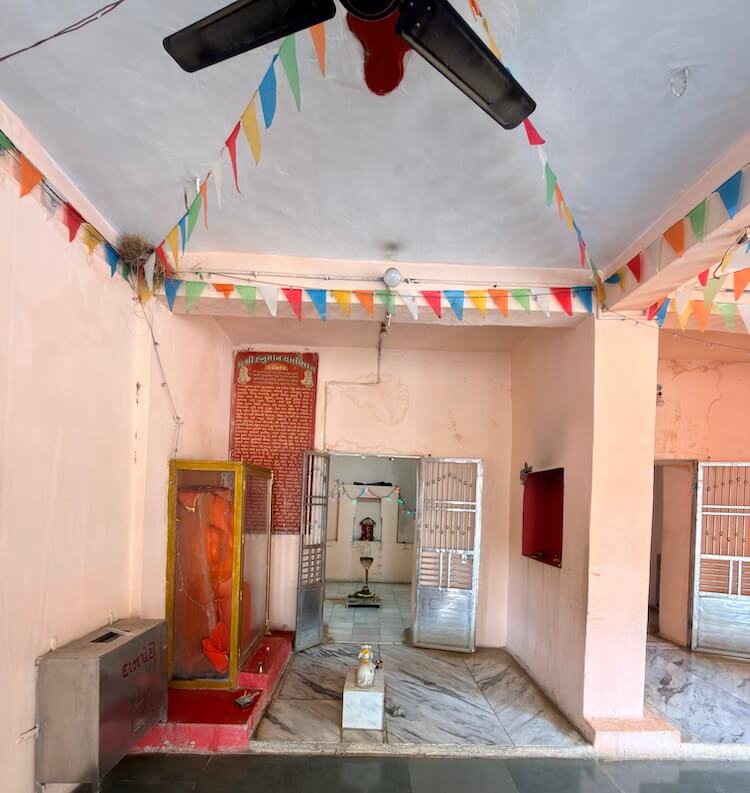
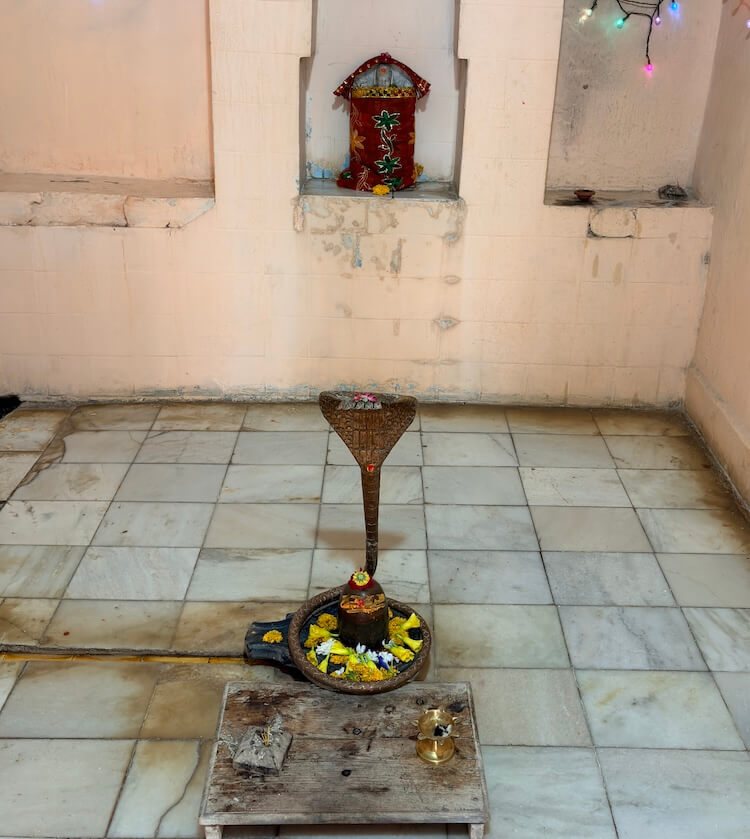
Flanking the main sanctum of Mother Amba is a secondary antechamber leading to an independent sanctum sanctorum. Enshrined within this secondary antechamber is an ancient stone idol of Lord Hanuman coated in vermilion. Consecrated at the exact centre of this adjoining sanctum floor is a holy Shivling, surmounted by a protective five-hooded copper serpent deity (Nagraj). At the same time, a sculpted niche on the rear wall houses an idol of Mother Parvati. Positioned to the right of this Shiva sanctum is a third chamber, where a lifelike memorial sculpture commemorates the late spiritual preceptor of the institution, Mahant Vishwanath Maharaj, upon a stone base.
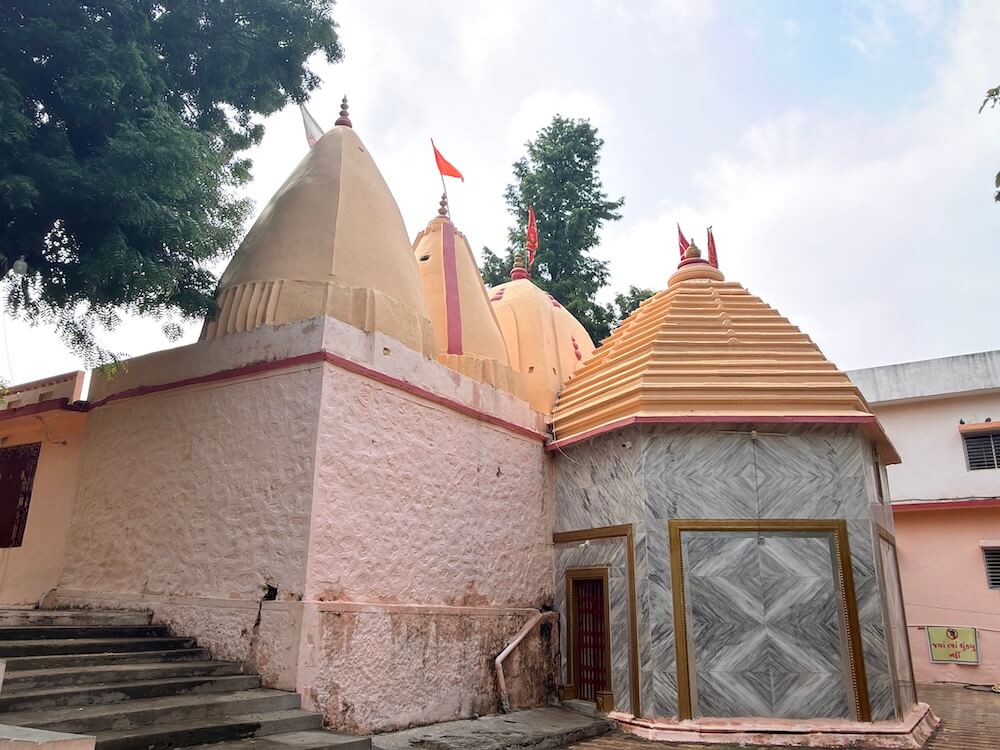
 The individual superstructures surmounting the primary sanctums of Nani Ambaji, Lord Shiva and Mahant Vishwanath Maharaj rise into towering, cone-shaped spires (shikharas). In contrast, the roofline covering the subterranean sanctum of the self-manifested deity features a distinctive pentagonal spire built with stepped tiers. Situated a short distance from the main temple complex, emerging from a natural rocky fissure in the hillside, is a perennial mountain spring. Consecrated immediately adjacent to this pristine water source is the sacred Pataleshwar shivling.
The festivals of Chaitra Navratri and Sharadiya Navratri stand as the pre-eminent annual celebrations observed at the temple. Throughout the ten consecutive days of the Navratri festival, the precincts become intensely animated with cultural and religious activities, including traditional Garba dances, grand fire offerings (Chandi Yajna), nocturnal vigils (Jagrata), congregational singing, scriptural recitals and the distribution of mahaprasad. During these auspicious periods, a vast multitude of pilgrims arrives from across the region to offer prayers and fulfil their vows, presenting the Goddess with fine vestments, precious jewellery, traditional confectionery, simple rustic bread and sacred coconuts. Additionally, the temple calendar meticulously celebrates the holy month of Shravan, Mahashivratri, Hanuman Jayanti, Diwali, Dussehra and Nag Panchami. The temple witnesses a steady influx of devotees throughout the week, particularly on Sundays, Mondays, Tuesdays and Fridays. The temple doors remain open to welcome pilgrims for the darshan of Mother Amba daily from 6:00 am until 8:00 pm.
Useful Information :
- Situated at a distance of 16 km from Naswadi
- Located approximately 77 km away from Chhota Udepur city
- Reliable state transport bus services to the location are available from Naswadi.
- Private vehicles can drive directly up to the temple premises.
- Comfortable lodging and breakfast facilities are not available in the immediate vicinity.
नानी अम्बाजी मंदिर
जीवनपुरा, ताल. नसवाडी, जिला. छोटा उदेपुर
मंदिरे
Temples
मंदिर
મંદિરો
கோவில்கள்
దేవాలయాలు
ക്ഷേത്രങ്ങൾ
ದೇವಾಲಯಗಳು
মন্দিরসমূহ
ਮੰਦਿਰ
-
पंचेश्वर महादेव मंदिर हांडोड, ता. संखेडा, जि. छोटा उदेपूर
अधिक माहितीPancheshwar Mahadev Temple Handod, Tal. Sankheda, Dist. Chhota Udepur
View Detailsपंचेश्वर महादेव मंदिर हैंडोड, ताल. संखेडा, जिला. छोटा उदेपुर
विवरण देखेंPancheshwar Mahadev Temple Handod, Tal. Sankheda, Dist. Chhota Udepur
વિગત જુઓPancheshwar Mahadev Temple Handod, Tal. Sankheda, Dist. Chhota Udepur
விவரங்களைக் காண்கPancheshwar Mahadev Temple Handod, Tal. Sankheda, Dist. Chhota Udepur
వివరాలను చూడండిPancheshwar Mahadev Temple Handod, Tal. Sankheda, Dist. Chhota Udepur
വിശദാംശങ്ങൾ കാണുകPancheshwar Mahadev Temple Handod, Tal. Sankheda, Dist. Chhota Udepur
ವಿವರಗಳನ್ನು ವೀಕ್ಷಿಸಿPancheshwar Mahadev Temple Handod, Tal. Sankheda, Dist. Chhota Udepur
বিস্তারিত দেখুনPancheshwar Mahadev Temple Handod, Tal. Sankheda, Dist. Chhota Udepur
ਵੇਰਵੇ ਦੇਖੋ -
पशुपतीनाथ महादेव मंदिर नसवडी, ता. नसवडी, जि. छोटा उदेपूर
अधिक माहितीPashupatinath Mahadev Temple Naswadi, Tal. Naswadi, Dist. Chhota Udepur
View Detailsपशुपतिनाथ महादेव मंदिर नसवाडी, ताल. नसवाडी, जिला. छोटा उदेपुर
विवरण देखेंPashupatinath Mahadev Temple Naswadi, Tal. Naswadi, Dist. Chhota Udepur
વિગત જુઓPashupatinath Mahadev Temple Naswadi, Tal. Naswadi, Dist. Chhota Udepur
விவரங்களைக் காண்கPashupatinath Mahadev Temple Naswadi, Tal. Naswadi, Dist. Chhota Udepur
వివరాలను చూడండిPashupatinath Mahadev Temple Naswadi, Tal. Naswadi, Dist. Chhota Udepur
വിശദാംശങ്ങൾ കാണുകPashupatinath Mahadev Temple Naswadi, Tal. Naswadi, Dist. Chhota Udepur
ವಿವರಗಳನ್ನು ವೀಕ್ಷಿಸಿPashupatinath Mahadev Temple Naswadi, Tal. Naswadi, Dist. Chhota Udepur
বিস্তারিত দেখুনPashupatinath Mahadev Temple Naswadi, Tal. Naswadi, Dist. Chhota Udepur
ਵੇਰਵੇ ਦੇਖੋ -
बाला हनुमान मंदिर मेरिया, ता. बोदेली, जि. छोटा उदेपूर
अधिक माहितीBala Hanuman Temple Meriya, Tal. Bodeli, Dist. Chhota Udepur
View Detailsबाला हनुमान मंदिर मेरिया, ताल. बोडेली, जिला. छोटा उदेपुर
विवरण देखेंBala Hanuman Temple Meriya, Tal. Bodeli, Dist. Chhota Udepur
વિગત જુઓBala Hanuman Temple Meriya, Tal. Bodeli, Dist. Chhota Udepur
விவரங்களைக் காண்கBala Hanuman Temple Meriya, Tal. Bodeli, Dist. Chhota Udepur
వివరాలను చూడండిBala Hanuman Temple Meriya, Tal. Bodeli, Dist. Chhota Udepur
വിശദാംശങ്ങൾ കാണുകBala Hanuman Temple Meriya, Tal. Bodeli, Dist. Chhota Udepur
ವಿವರಗಳನ್ನು ವೀಕ್ಷಿಸಿBala Hanuman Temple Meriya, Tal. Bodeli, Dist. Chhota Udepur
বিস্তারিত দেখুনBala Hanuman Temple Meriya, Tal. Bodeli, Dist. Chhota Udepur
ਵੇਰਵੇ ਦੇਖੋ