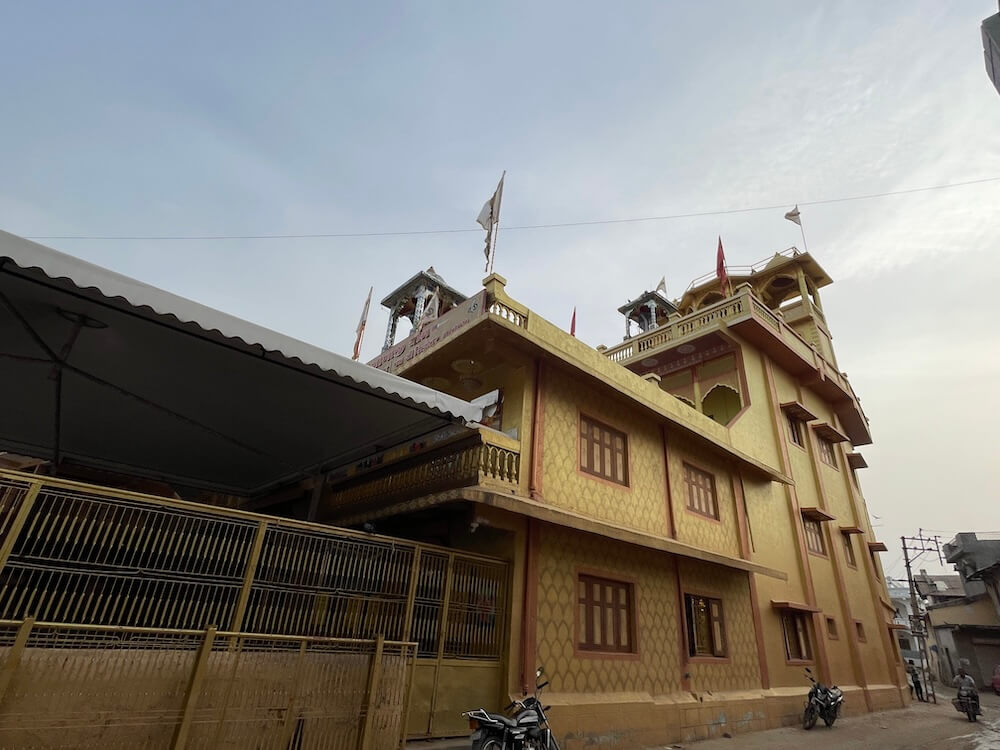
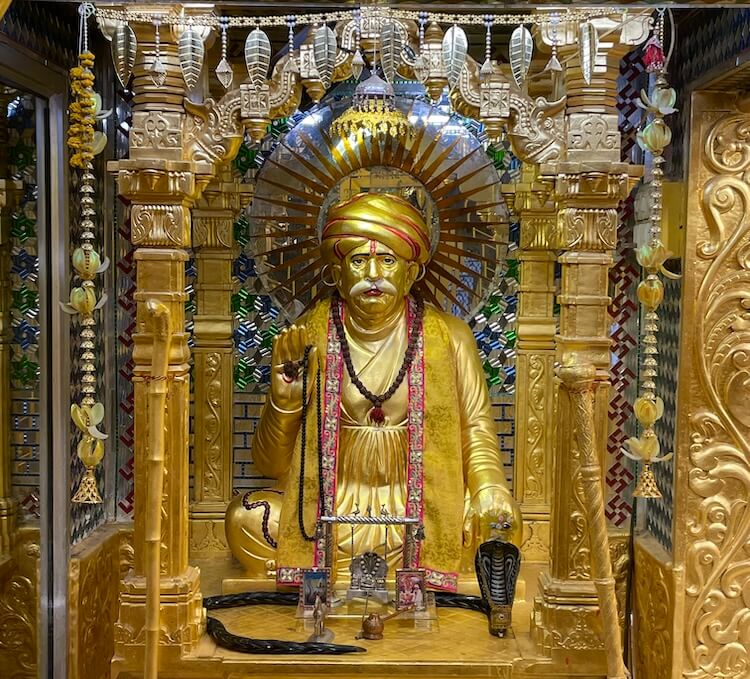
 In the village of Unava in Gandhinagar district stands a revered temple dedicated to Gogaji Maharaj, a warrior-saint who is believed to have sacrificed his life in a battle with Mahmud of Ghazni to protect the sacred Somnath temple. Gogaji Maharaj, born with the blessings of the great Nath yogi Gorakhnath, is venerated not only by Hindus but also by devout followers from the Muslim communities. Worshipped as both a serpent deity and a divine mystic, Gogaji holds a place of deep reverence in the hearts of millions. In the temple of Unava, often referred to as the ‘Golden Temple’, he is enshrined in the form of a Nagadevta. Alongside him, the divine presence of Sikotar Mata is also enshrined, making this temple a unique confluence of faith and legend.
Gogaji Maharaj is known by several names such as Gogaji Chauhan Gurjar, Gugga and Jahir Pir. Historical narratives and folklores trace his origins to Dadrewa (also known as Datkheda) 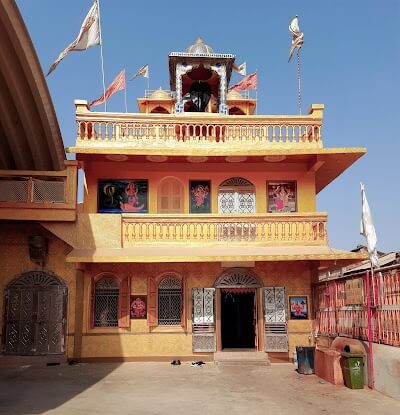 in Churu district, Rajasthan, where he was born on the ninth day of the waning phase of the Bhadrapada month in Vikram Samvat 1003. His father was Jevar Singh Chauhan and his mother was Bachhal. According to one belief, Goga was born with the blessings of Guru Gorakhnath. Many scholars believe that Gogaji was his contemporary disciple.
Following the death of Jevar Singh in a battle, Gogaji was coronated as the ruler. One popular legend tells of a conflict between Gogaji and his cousins Arjan and Sarjan over land, which escalated into a fight in which Gogaji sacrificed his life while protecting his cattle. However, the eminent historian Dr. Satyaketu Vidyalankar holds that Gogaji actually died in battle against the invading forces of Mahmud of Ghazni. Mahmud, the ruler of the Yamini dynasty from Ghazni in Afghanistan, attacked the prosperous port towns of Prabhas Patan and Veraval on 6 January 1026, during which he looted and desecrated the famed Somnath temple. It is said that when Gogaji learned of this impending assault, he sent his son Sajjan and grandson Samant to defend the jyotirlinga at Somnath and himself took to the battlefield.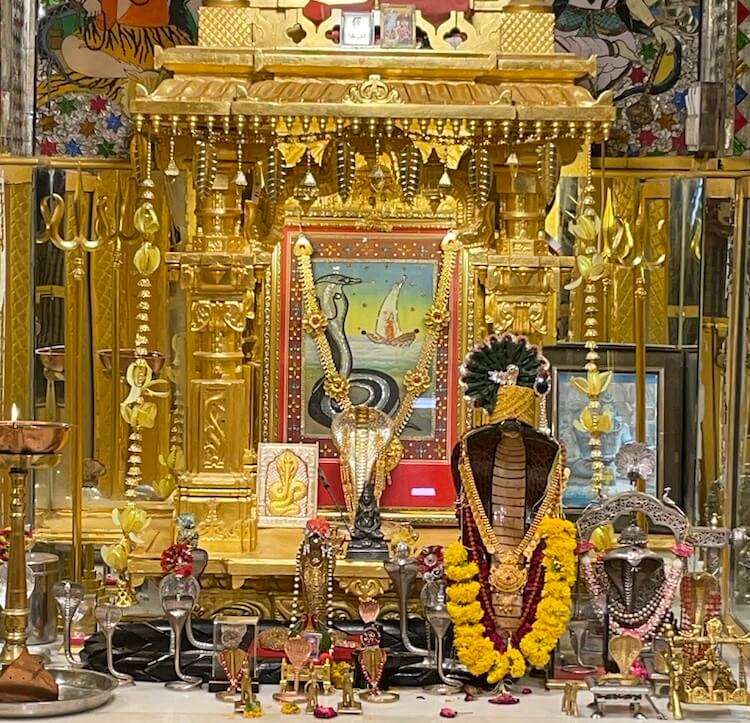 According to the Rajasthani poet Meh’s ‘Gogaji ka Rasavala’, Gogaji attained martyrdom in this battle along with 47 of his sons and 60 nephews.
So valorous was Gogaji’s stand that even Mahmud of Ghazni is said to have been awestruck by his courage, reportedly proclaiming Gogaji to be a Jahir Pir, a divine manifestation. This title became a common name for Gogaji among his Muslim followers. One of his descendants, Karmchand Chauhan, is believed to have embraced Islam, taking on the name Kayam Khan. His descendants, known as Kayamkhani Muslims, belong to the Chayal caste. Gogaji’s samadhi lies in Gogamedi, Hanumangarh, about 15 kilometers northwest of Bhadra and is locally referred to as ‘Dhurmedi’. The temple priests at this shrine belong to the Chayal Muslim lineage and are considered his descendants. Regional traditions even revere Gogaji as an incarnation of Sheshnag and he is thus also worshipped in the form of a serpent deity.
 The origins of the Unava temple are linked to a tale dating back four centuries. Vahjibhai Madhanji Desai, a man who owned many cows and camels, had a herdsman in his service who spent his days chanting the name of Gogaji Maharaj. Vahjibhai, annoyed by this devotion, once beat the herdsman with a stick in a fit of rage. Gogaji, seeking to teach him a lesson, is said to have appeared in the form of a serpent and bit one of his camels. Upon hearing of the incident, Vahjibhai summoned the herdsman and challenged him to prove his guru’s power by reviving the camel. The herdsman prayed earnestly to Gogaji and miraculously, the camel was restored to life. Realizing his mistake, Vahjibhai sought forgiveness and invited a Brahmin to install an eternal flame in Gogaji’s honor within his household. From that moment onward, worship of Gogaji Maharaj began at Unava.
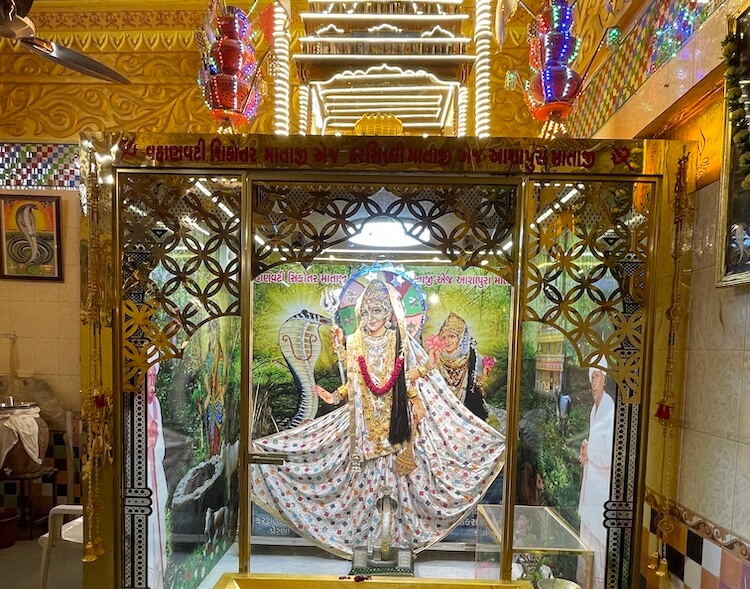 Vahjibhai’s grandson, Karsan Bapa, was a devout follower of Gogaji Maharaj. Once, while herding cows, he became extremely thirsty. At that moment, Sikotar Mata is believed to have appeared and quenched his thirst. Since then, a beautiful idol of Sikotar Mata has also been installed in the temple in her four-armed form and the site became widely known as Goga Sikotar Dham.
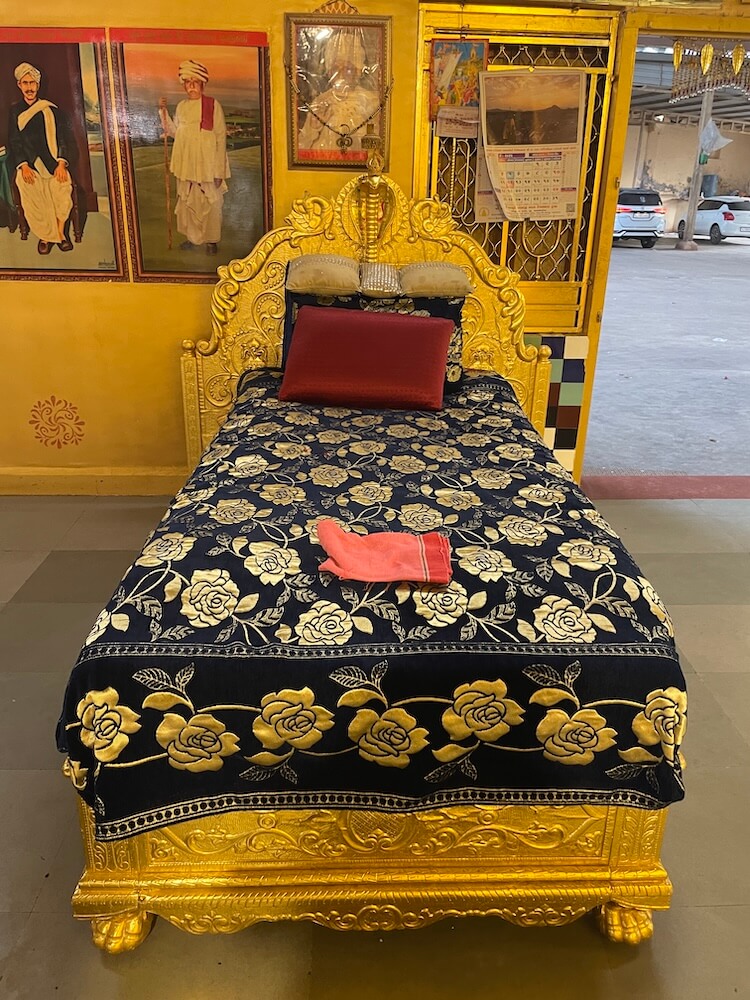
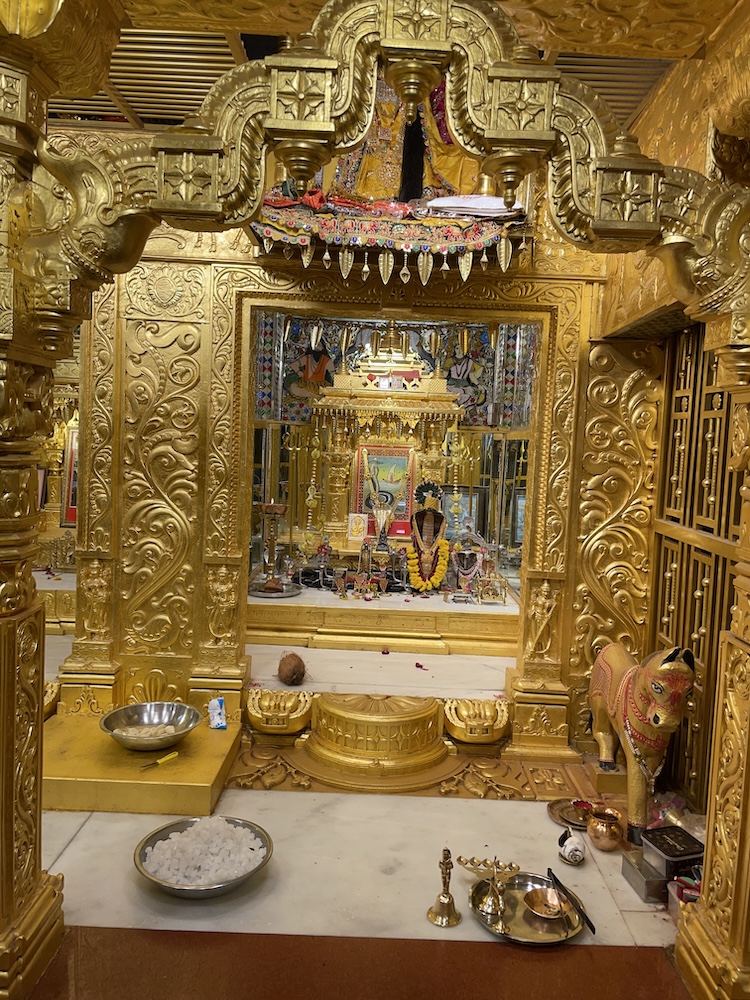
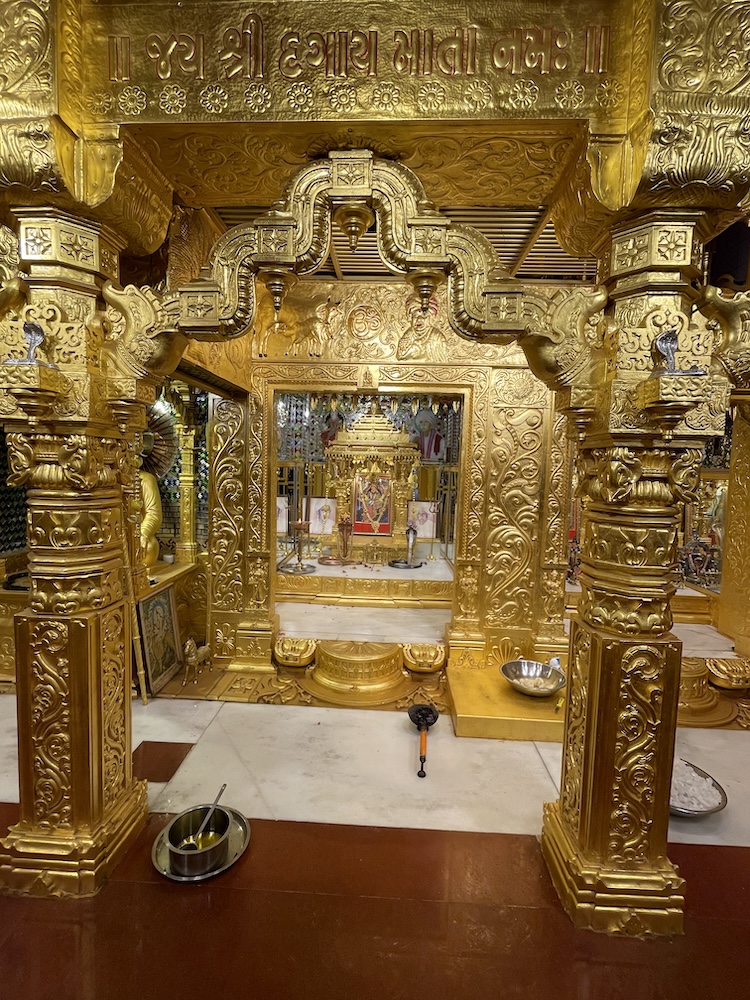
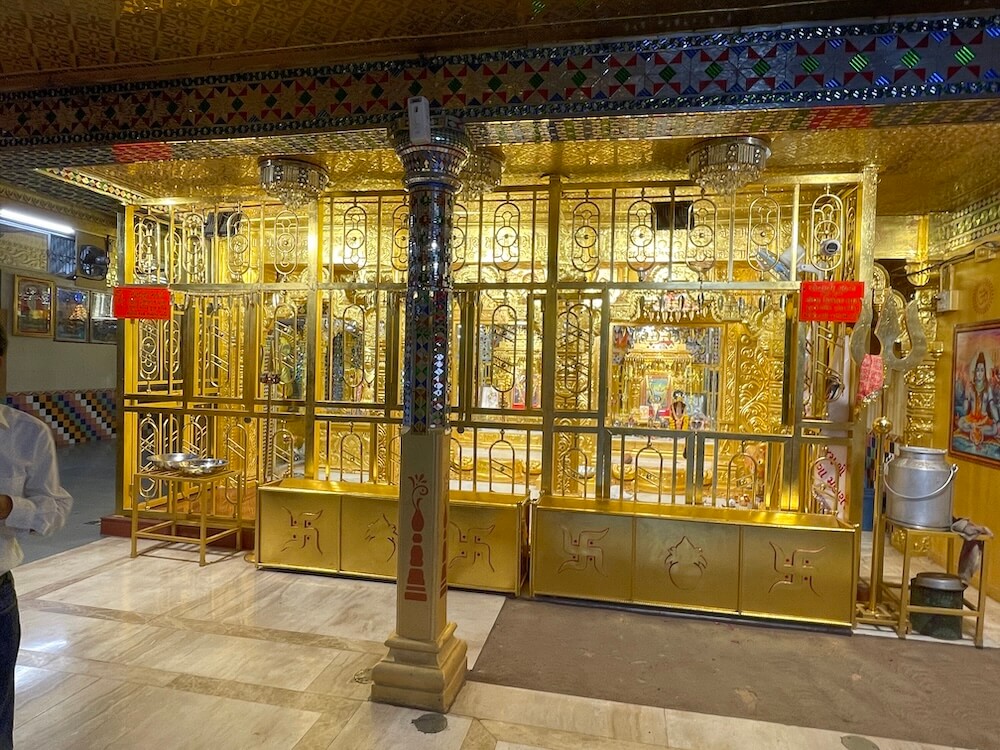
The temple is located just a short distance from the archway at Unava village, around ten kilometers from Gandhinagar. From a distance, the three-storied golden-hued temple catches the eye. The ground floor houses the main shrine of Gogaji Maharaj. The facade features idols of Hanuman and Ganesha. Upon entering, visitors step into a spacious assembly hall supported by square columns connected by ornate arches, decorated with colorful, shiny paper. 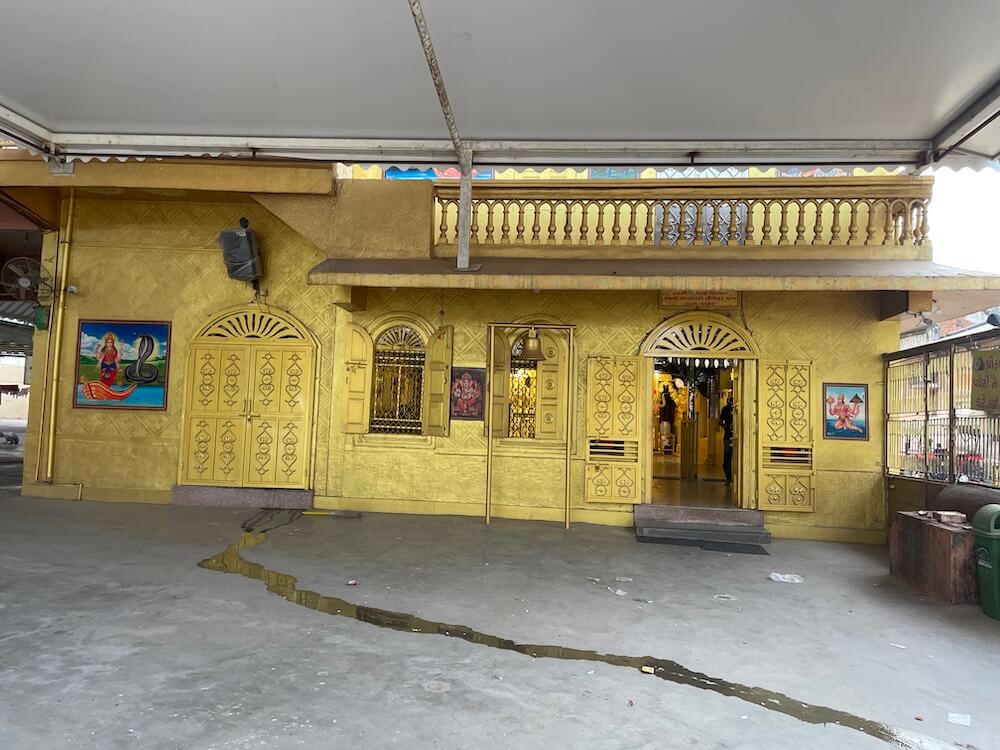 One of the arches features carvings of serpents. Much of the temple’s interior is painted in golden tones, with sections of finely crafted glasswork. The walls of the assembly hall are adorned with depictions of numerous deities. Along the right-hand wall lies a large golden bed.
A stainless-steel grille separates the assembly hall from the sanctum. The temple contains three interconnected sanctums, their entrances intricately decorated. Each sanctum features a sacred altar. In one, Gogaji Maharaj is enshrined in the form of Nagadevta, surrounded by numerous five-metal serpent idols. Adjacent to him is a statue of his ardent devotee, Karsan Bapa. In the second sanctum sits the idol of Sikotar Mata, also flanked by snake idols with raised hoods. Outside the sanctum, to the left in the assembly hall, is a grand idol of Sikotar Mata housed in a separate shrine.
Devotees from near and far visit this sacred place, offering prayers and fulfilling vows. It is widely believed that Gogaji Maharaj grants all sincere wishes. Within the temple premises, there is a hall where mahaprasad (blessed food) is served to the devotees. Daily rituals including puja and aarti are performed with great devotion. A grand celebration is held during Chaitra Ashtami and Nag Panchami is also observed with great enthusiasm.