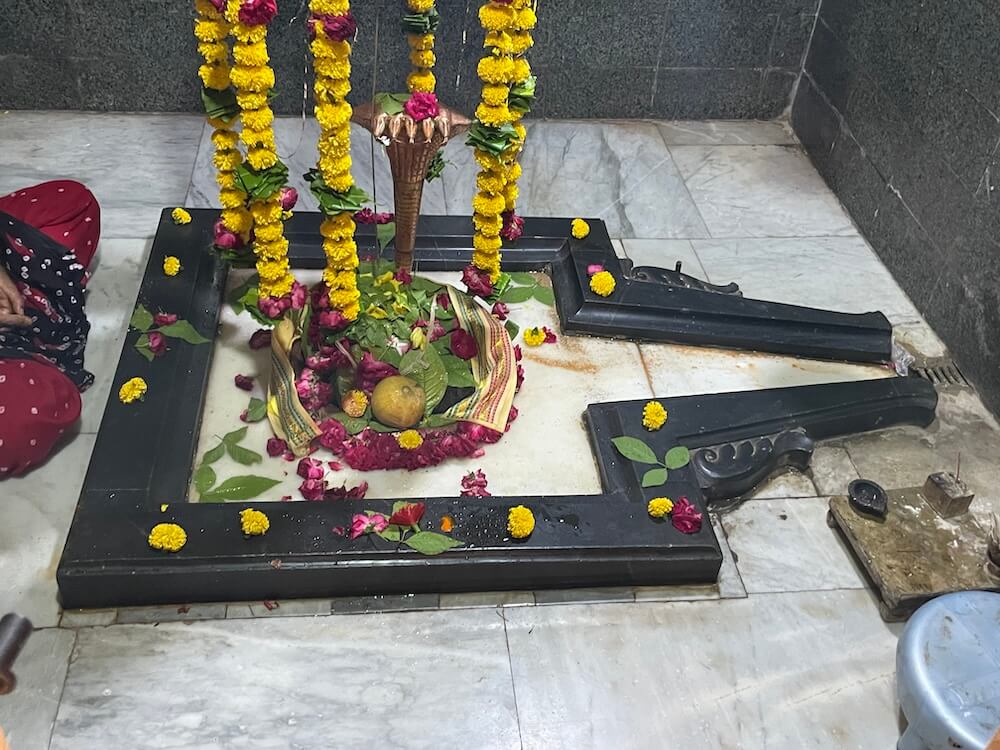
 The ancient town of Chanod, once known as Chandipur, is often referred to as the ‘Southern Prayag’. Located nearby in Bhimpura is the revered Gangnath Mahadev Temple, also famous as Kalhori Tirtha. The Shivling here is considered Swayambhu (self-manifested) and awakened (jagrut). Devotees believe that a glimpse of this deity absolves one, of all sins. Legend has it that the Ganga River comes to this sacred place once a year to bathe in the holy Narmada River. This temple is a significant stop for those on the Narmada Parikrama, as well as for general devotees.
According to ancient legends, this region was once a hub for sages and ascetics. A Shivling discovered deep in the Narmada Riverbed was consecrated here. The Shiva at this site is known as Kalhorinath or Gangnath. 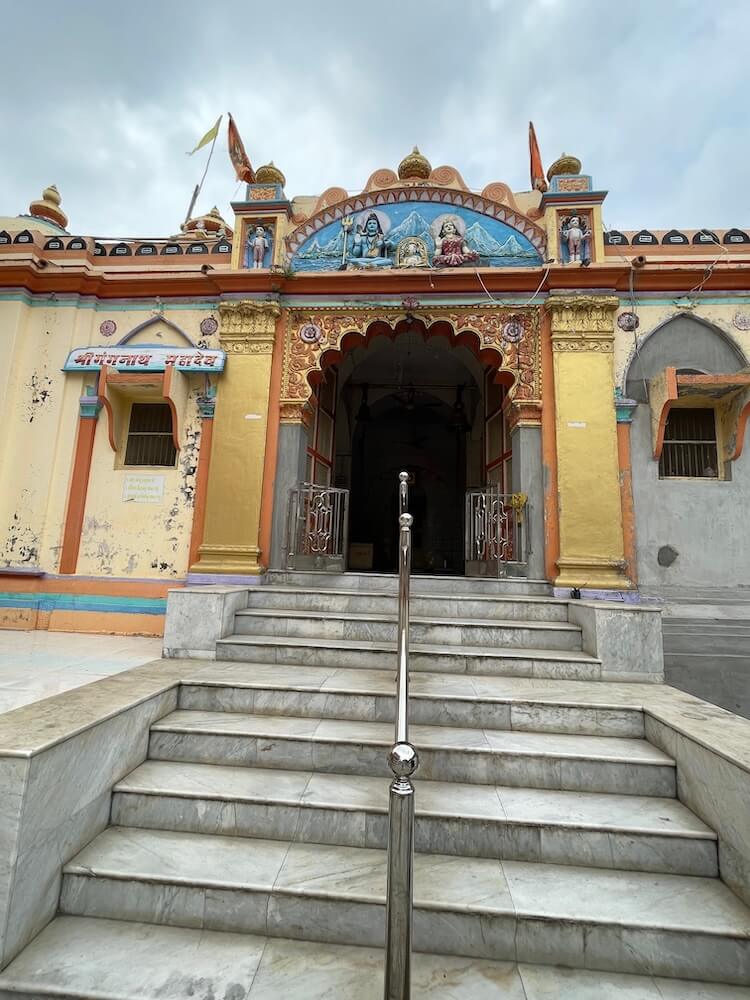 It is mentioned in the Puranas that during the Mahabharata era, Sage Markandeya advised Yudhishthira, the eldest Pandava, to visit this tirtha to atone for his sins. It is believed that a hidden stream of the Ganga meets the Narmada here at a site called Ganga Khadi (Ganga Creek). A grand gathering takes place here every year on Vaishakh Shukla Saptami.
Another legend related to this says that King Sagar of the Ikshvaku dynasty had sixty thousand sons. One day, these sons insulted Sage Kapila, who, enraged by their behavior, cursed them and reduced them to ashes. Grief-stricken, King Sagar approached Sage Kapila for forgiveness. The sage told him that if the celestial river Ganga touched the ashes of his sons, they would be brought back to life.
To fulfill this, Bhagirath, a descendant of King Sagar, performed intense penance to please Goddess Ganga. She agreed to descend from heaven to earth, but her powerful current threatened to destroy the planet. Bhagirath then prayed to Lord Shiva to absorb Ganga’s mighty flow. Shiva granted the request and caught her on his matted locks.
However, at that time, Ganga became proud of her power. To humble herself, she prayed to Lord Shiva again. He instructed her to perform penance at the place where Goddess Chandika had slain the demon Chand, near the banks of the Narmada River, in Chandipur (Chanod). 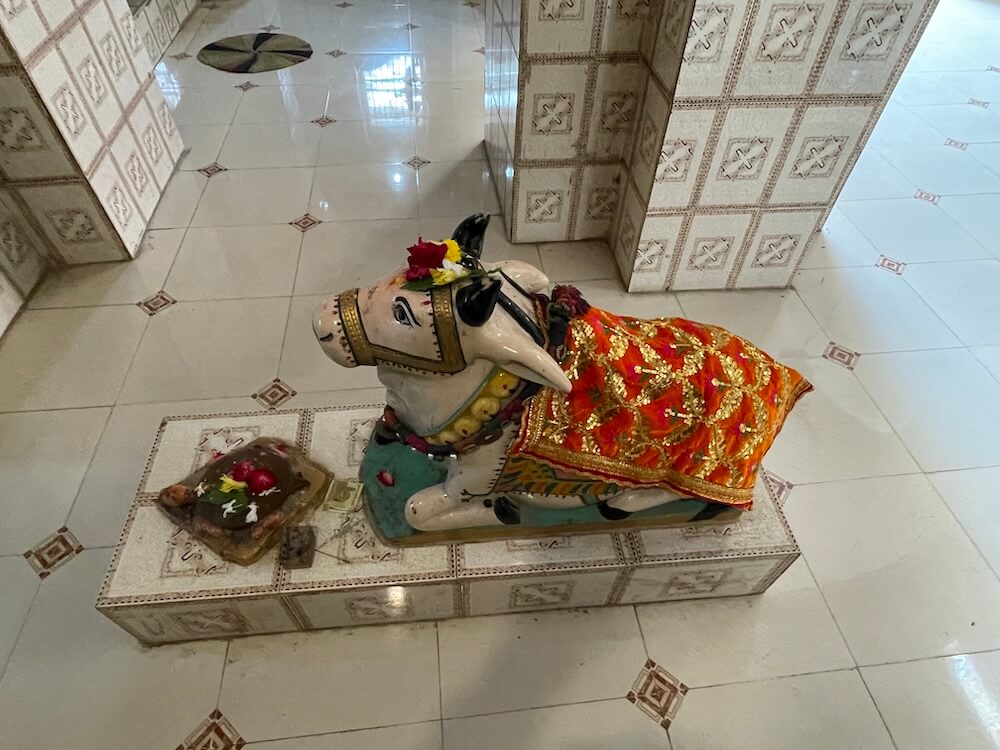 While Ganga was performing penance there, Lord Shiva appeared before her. This divine appearance occurred on the auspicious day of Vaishakh Shukla Saptami. After blessing Ganga, Shiva disappeared into a Shivling, which came to be known as Gangnath Mahadev.
Within the temple complex is the Shri Gangnath Mahadev Ashram, transformed through the efforts of Brahmanand Maharaj, who settled here after completing the Narmada Parikrama. He reportedly lived here for 80 years and attained spiritual enlightenment at this site. Brahmanand Maharaj initiated major development works, including a dharmashala for pilgrims and saints, steps from the river to the temple, a gaushala (cow shelter), an Ayurvedic dispensary and charitable services.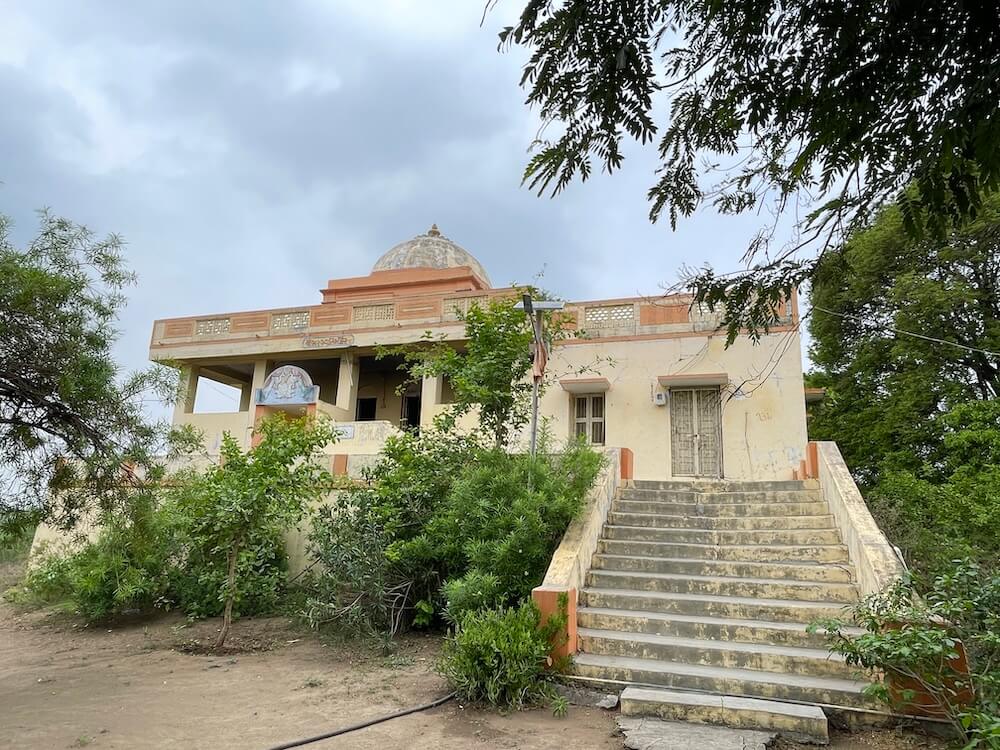 During famines, he generously helped those in need. He meditated in a cave called Saraswati Gufa. He was visited by royalty, including Maharaja Sayajirao Gaekwad of Baroda and his wife Yamunabai and also by Sri Aurobindo, a renowned philosopher who later became Sayajirao’s secretary.
Maharaj supported the Indian freedom struggle by sheltering revolutionaries, hosting secret meetings in the ashram. When the British learned of this, they temporarily seized the ashram. Brahmanand and his disciples fought a legal battle and regained it. Some rare manuscripts and books from the ashram’s library were taken by British officers. Among his chief disciples were Balanand, Keshavanand, Nityanand and Prithvinand. He attained mahasamadhi in a meditative state on Magh Purnima in 1906.
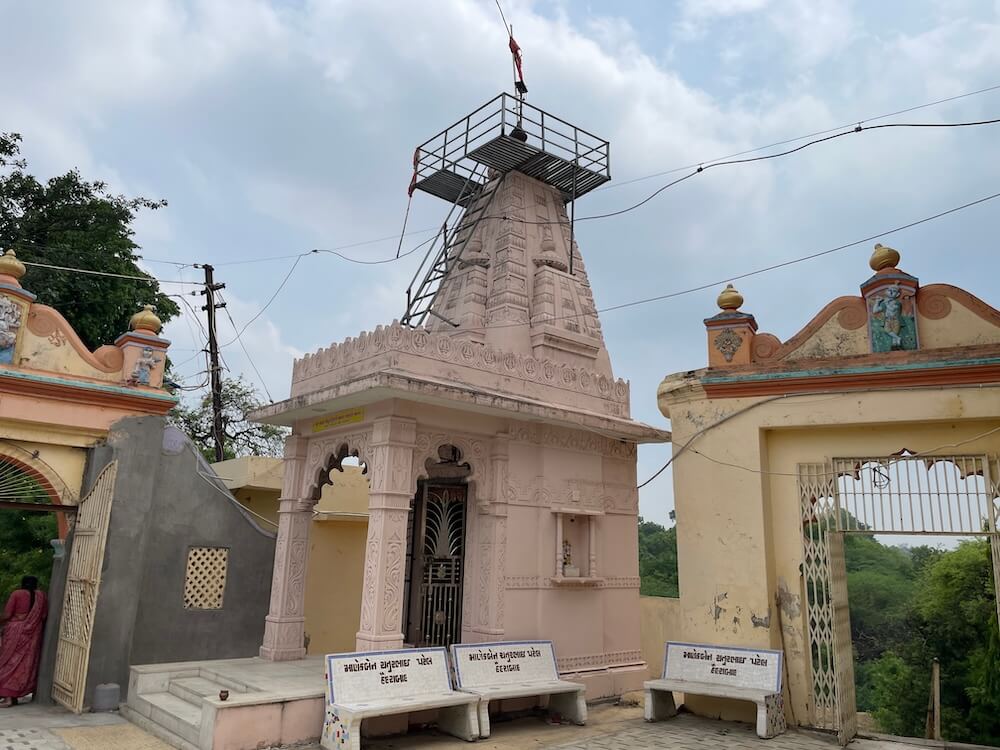
 Located on a high hillock along the Narmada, the temple offers views of the Vindhya mountain range. It is enclosed within a high compound wall and accessed through a grand arched entrance adorned with a sculpture of Lord Ganesha, flanked by figures of sages. Seven steps lead up to the main courtyard.
To the left is a temple dedicated to Tripurasundari Mata (Bahuchara Mata), the goddess of wealth and prosperity, consecrated on 19 February 2018.
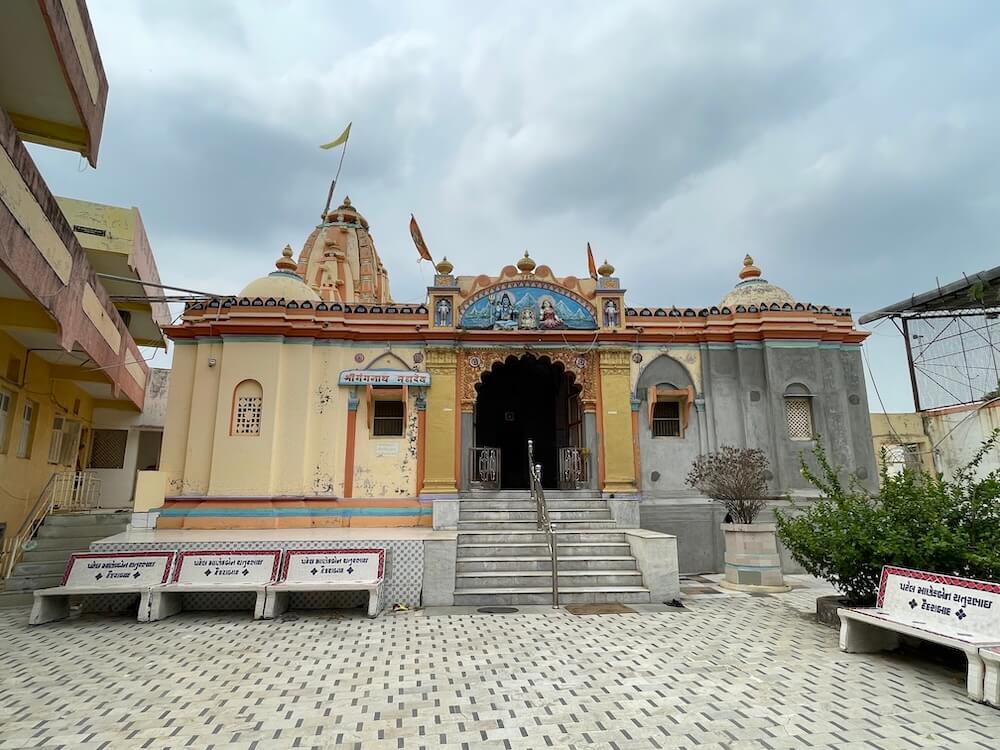
Straight ahead, on a raised platform, stands the Gangnath Mahadev Temple, consisting of an assembly hall, sanctum and subsidiary shrines. Eight steps lead to the intricately carved arched entrance. Above it is a relief of Shiva, Parvati and Ganesha and smaller sculpted figures of batu (young sages). The sanctum features a tall Urushringa-style spire with a broad amalaka and a kalash at the top.
Inside, to the left, is a platform with an idol of Gauri Shankar, seated on Nandi, holding a trident with the Ganga flowing from his hair. Beside him is Parvati and nearby, a vermillion-smeared idol of Hanuman.
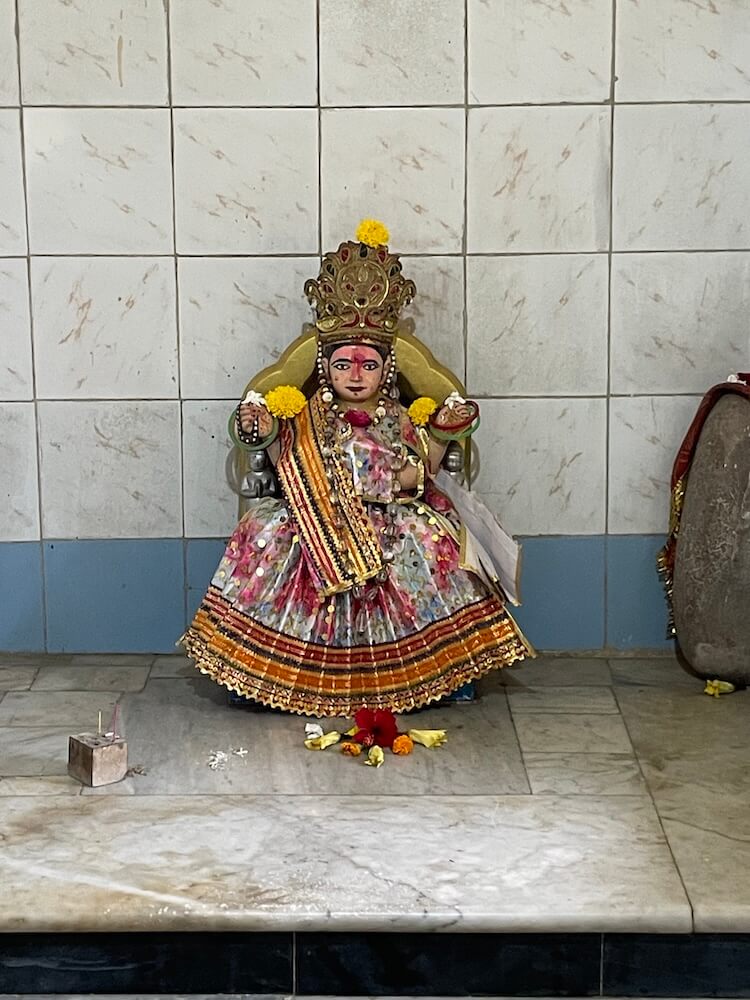
In the subsidiary shrines, one houses Surya Narayan and another contains a marble idol of Brahmanand Maharaj with his padukas (sacred sandals). Outside the sanctum is a shrine of Dattatreya. 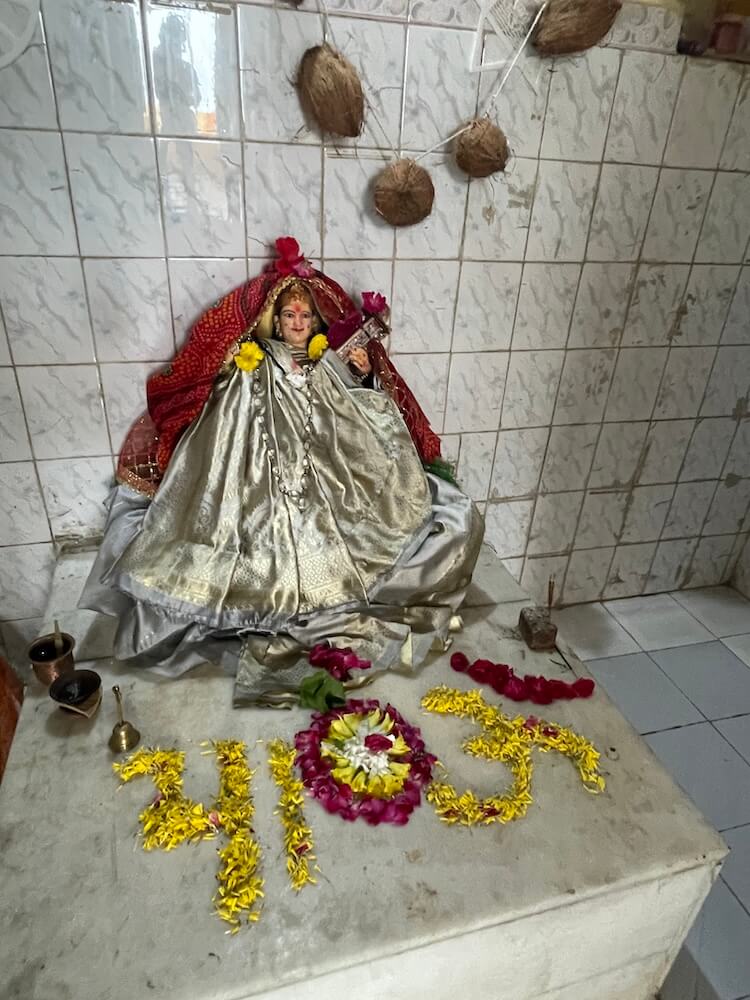 A nearby shrine features a marble idol of Vishnu. Next to it is a shrine of Vishwakarma. There are also beautiful idols of Ganga Mata and Narmada Mata consecrated on Phalgun Shukla Trayodashi in 1928. An eternal flame burns in one of the subsidiary shrines in the main hall.
Outside the main sanctum, on a marble platform, sits Nandi. To the right are two small shrines with seated Ganesha idols, one of which is vermillion-smeared. The sanctum enshrines the ancient Shivling of Gangnath Mahadev, with a brass serpent canopy and an ornamental spout above. Behind it, a shrine houses an idol of Parvati Mata.
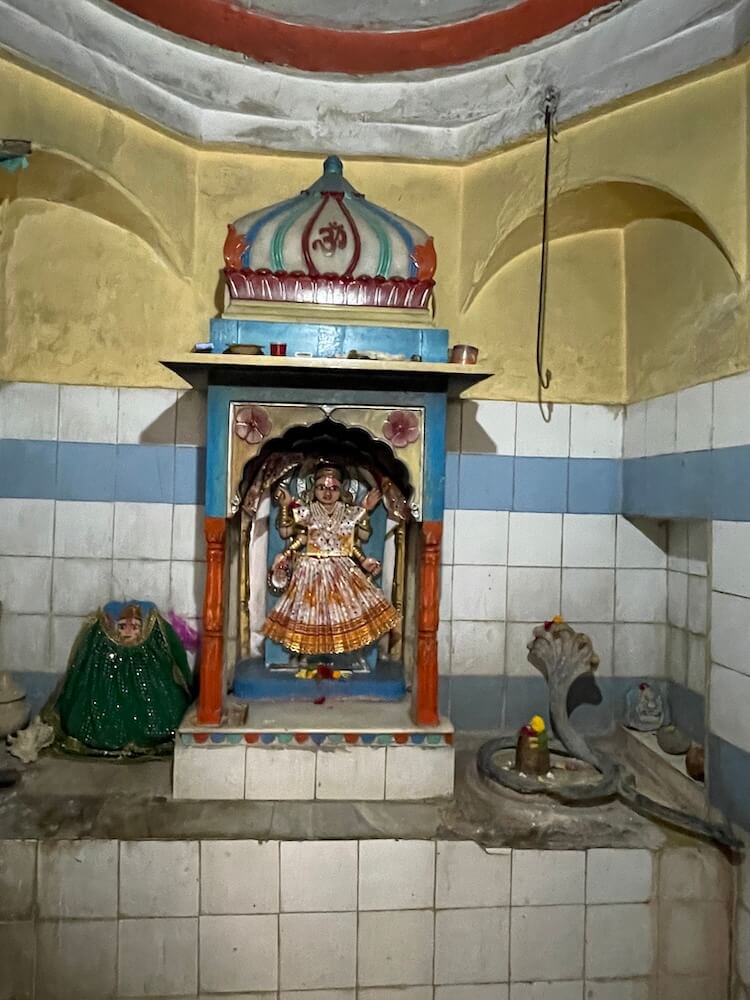
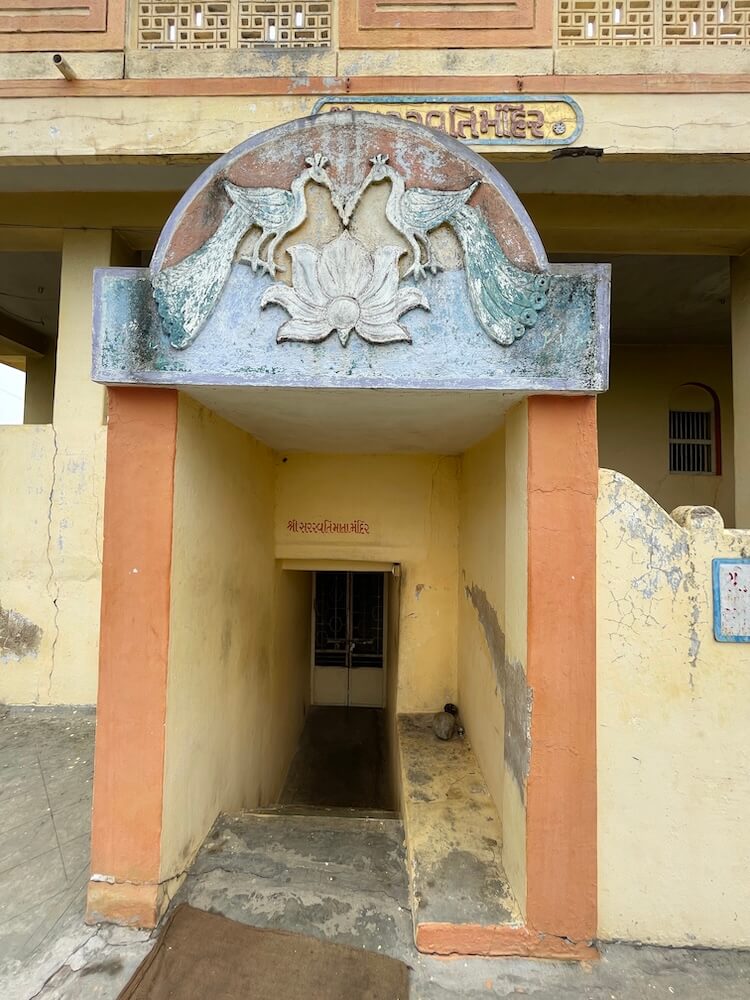
Away from the main complex, on an elevated platform, stands the Saraswati Temple, a two-storied structure. The lower floor has a cave temple for Goddess Saraswati, while the upper floor houses the Brahmeshwar Mahadev Temple. In the sanctum, on a marble pedestal, there is a stone idol of Goddess Saraswati. Beside it, on another pedestal, there is an idol of Veena-holding Saraswati. Upstairs, a Shivling of Brahmeshwar Mahadev is under a tall brass serpent canopy, with a brass abhishek vessel above. Behind the sanctum is Parvati and nearby shrines have idols of Ganesha and Hanuman.
At the Gangnath Mahadev Temple, devotees can have darshan from 7:00 AM to 8:00 PM. Daily rituals and worship (puja-archana) are performed regularly. The Shivling is offered bel leaves, flowers, water and milk as a part of the abhishek (ritual bathing).
Festivals such as Mahashivratri and many others are celebrated here with great enthusiasm. During the month of Shravan, hundreds of devotees visit the temple every Monday. Various religious rituals are performed here, including Laghu Rudra, daily Shodashopachar Puja and Saptashati recitations.
The ashram includes a Gaushala, a community kitchen for pilgrims and saints, facilities for havan, guest accommodation and a charitable allopathic clinic. It also provides financial aid to the needy and educational scholarships, including uniforms, books and school supplies.