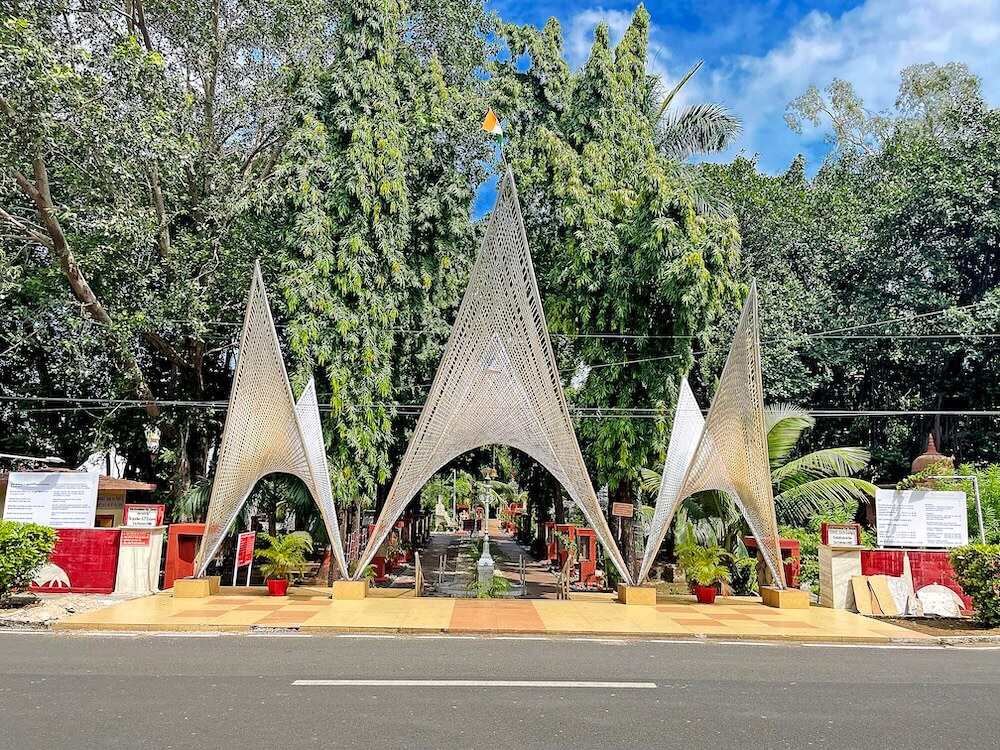
 Nestled in Vadodara’s Fatehgunj area within the military cantonment, the EME Temple stands as a striking confluence of spirituality, patriotism and modern design. Dedicated to Lord Shiva in his Dakshinamurti form, this temple is not merely a place of worship but a symbolic representation of India’s religious unity, embracing elements from Hinduism, Islam, Christianity, Zoroastrianism, Jainism and Buddhism. Managed by the Indian Army, the temple is both a devotional site and an architectural marvel that attracts not only devotees but also historians, archaeologists and students of architecture.
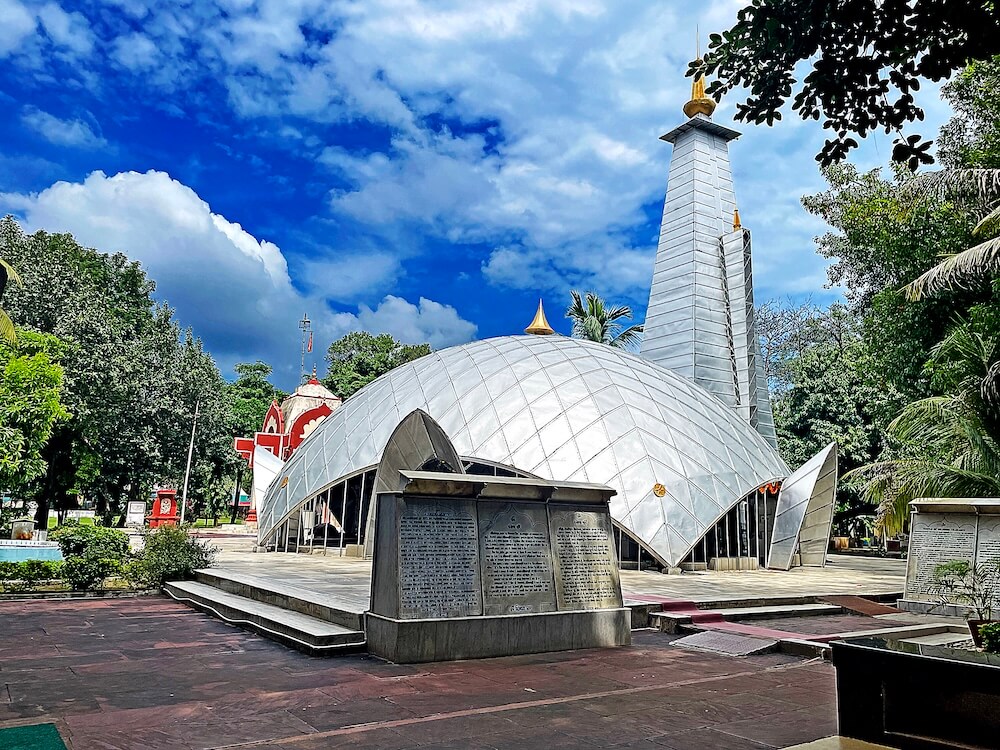
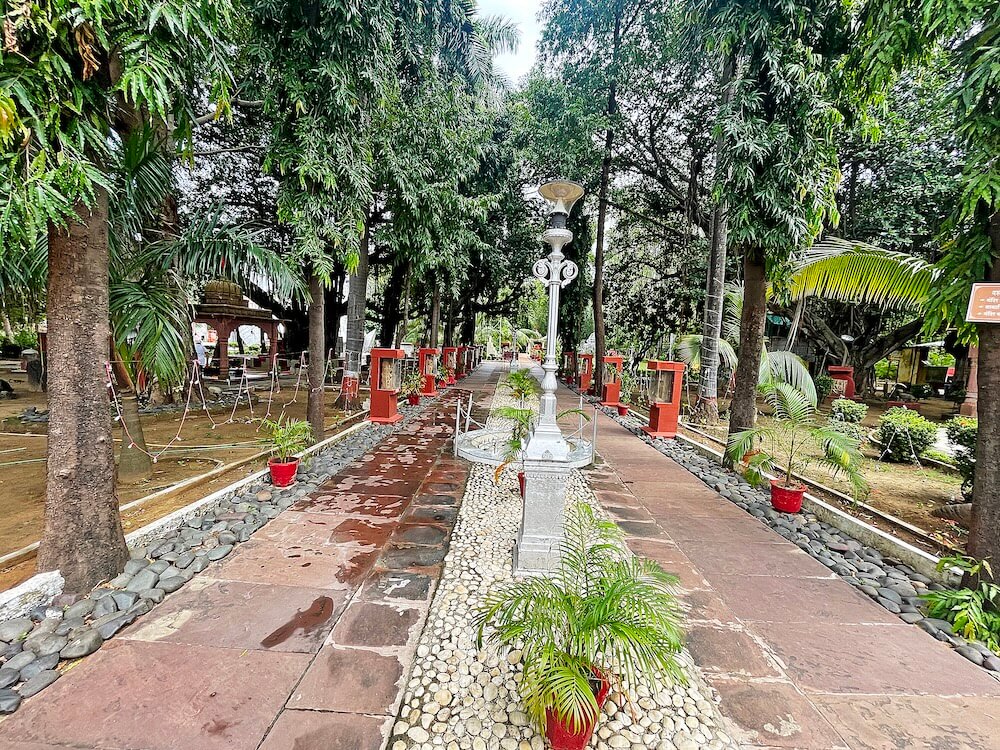
The temple lies within the campus of the Electronics and Mechanical Engineers (EME) School, from which it derives its name. Built in February 1966 under the leadership of Brigadier A.F. Eugene – the school’s first Christian Commandant – the temple’s design reflects a bold, modernistic vision. Constructed using aluminium sheets over a geodesic dome, a structural concept made famous by American architect Buckminster Fuller, the temple stands out for its innovative blend of form and symbolism.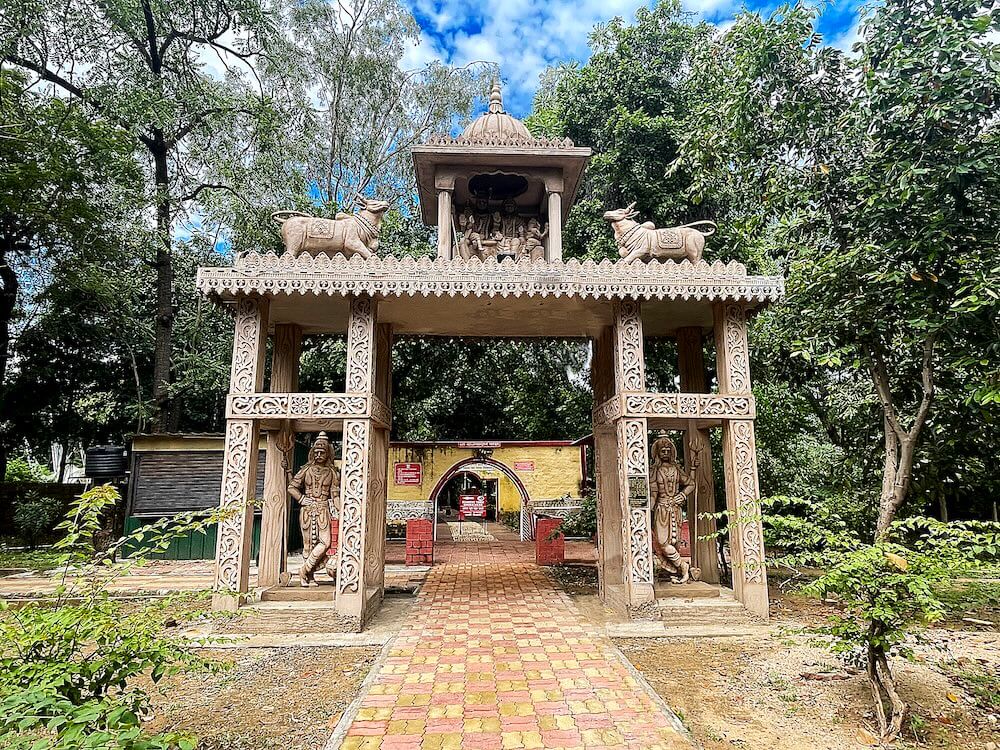 As one enters through the EME main gate, a pair of cannons greets visitors, followed by a tank stationed near the parking area. A short walk leads to the eye-catching temple entrance, flanked by standing sculptures of Lord Shiva and adorned with carvings of Nandi above. In the central niche sits a beautiful statue of Shiva and Parvati, holding baby Ganesha. Just beyond the entrance, rectangular gates having stone slabs welcome visitors into the courtyard, which is lined with gardens and towering trees. Among these are seven banyan trees, each symbolically named after the Sapta Rishis and their consorts.
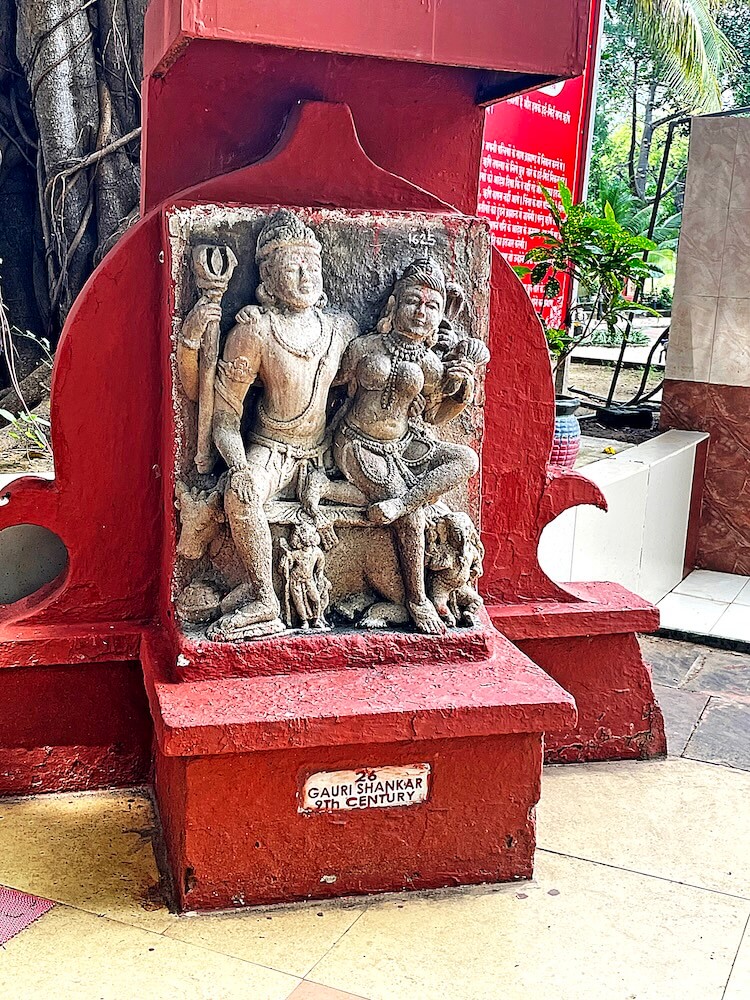
The temple premise houses 108 ancient sculptures dating back to the 6th to 16th centuries, noteworthy among them is are remarkable depictions of Surya and Brahma.
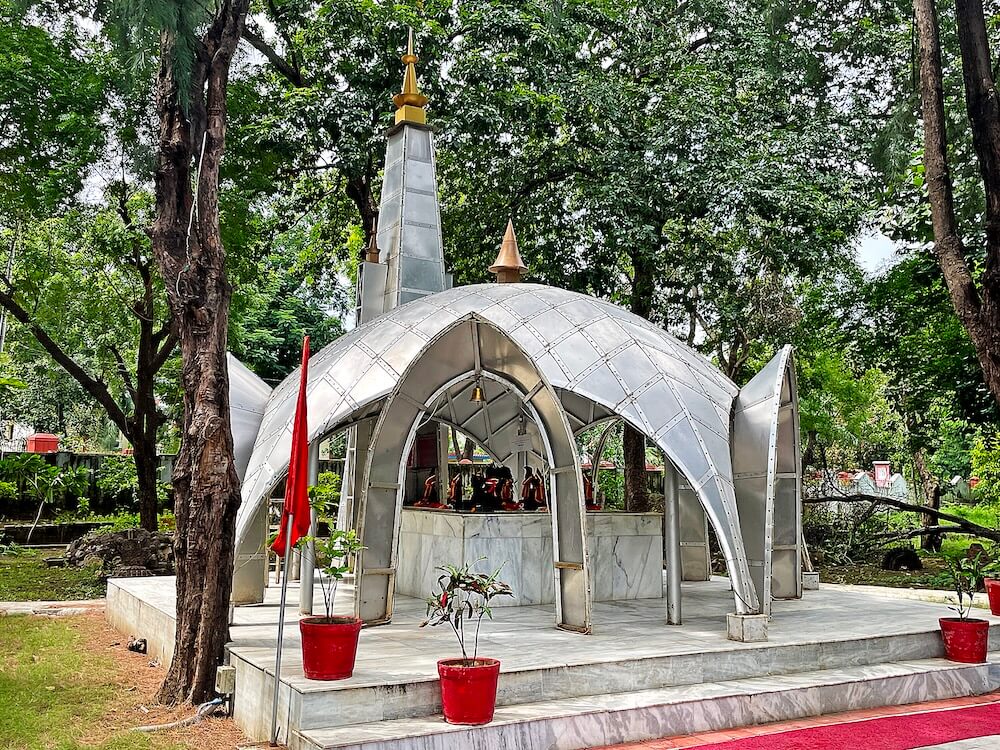 Situated on a 75-by-75-foot pedestal the temple features a sabhamandap (assembly hall) built in geodesic dome style and a 70-foot shikhara rising above the sanctum. The dome, crafted from aluminium-covered wooden frames with iron ribs and supported by five iron pillars, combines strength and grace. The iron-framed shikhara is also covered in aluminium, enhancing its futuristic appearance. Religious inclusivity is built into the temple’s very design. The kalasha atop the dome represents Hinduism, while the dome itself reflects Islamic architectural elements. The 22-meter minaret near the dome symbolizes Christianity, crowned by a golden structure that signifies Buddhism. The arched entrance mirrors Jain traditions and the sacred fire within the temple denotes the Zoroastrian faith.
 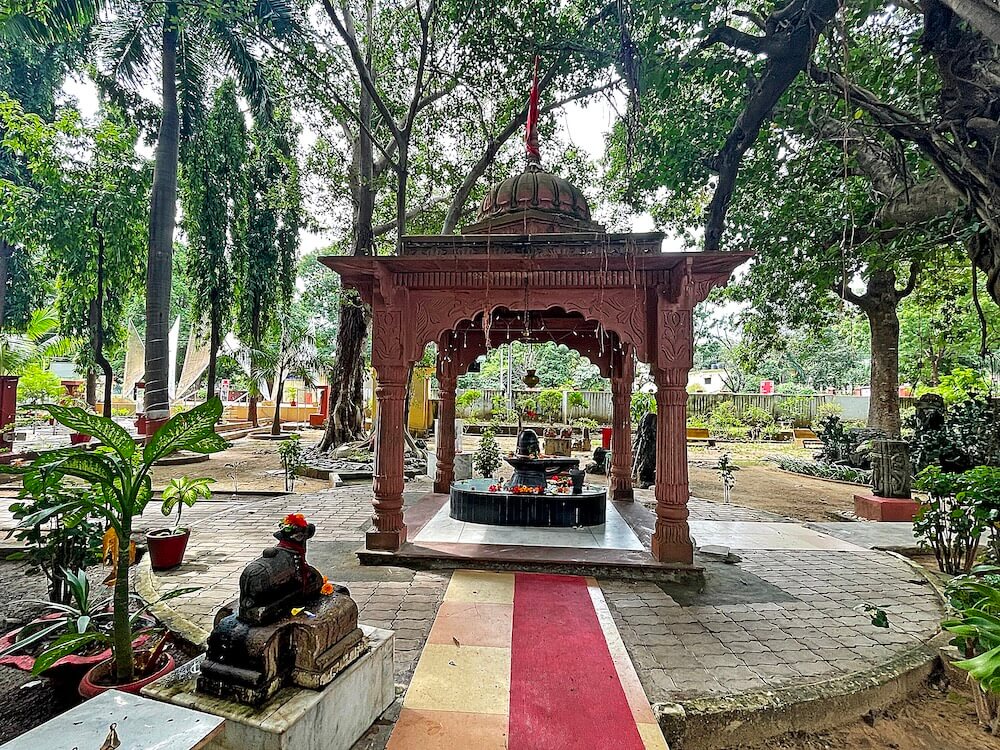 This architectural harmony makes the dome a stunning emblem of India’s secular spirit. Inside, hundreds of devotees can gather in the large sabhamandap.
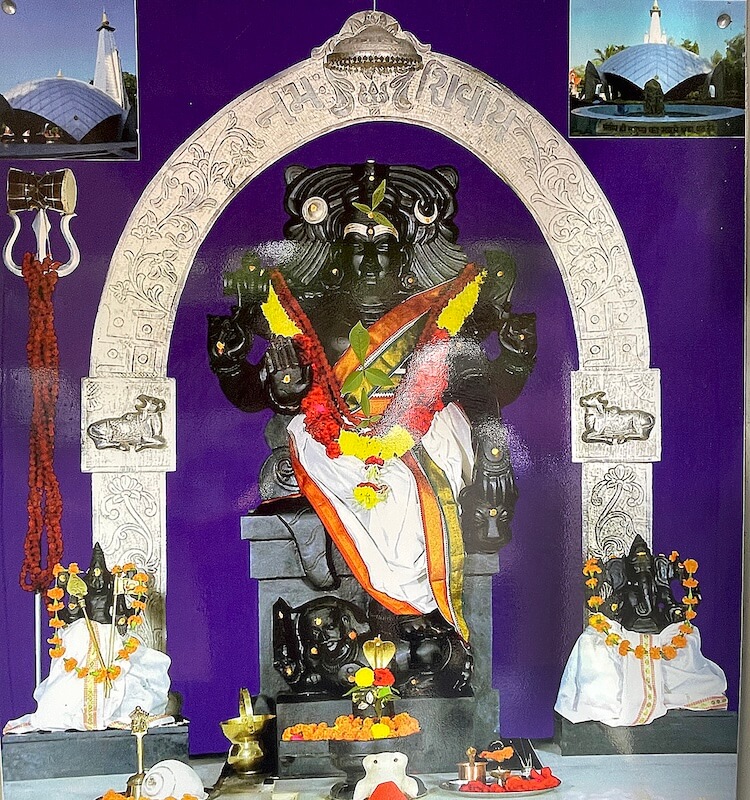
In the sanctum, the black stone Dakshinamurti idol sits regally on a marble pedestal. The deity, depicted with four arms holding serpents and posed in a blessing gesture, stands over a demon symbolizing ignorance. The temple celebrated its 50th anniversary on February 5, 2016, with pujas and havans. However, the grand event was held on February 22, 2016, according to the Hindu calendar. On that day, in the presence of Vadodara’s royals and dignitaries, the idol was ceremonially anointed and adorned with a 5.8 kg silver arch (prabhavali) engraved with images of Nandi, Matsya and Hindu symbols. The words “Om Namah Shivaya” are inscribed at the top.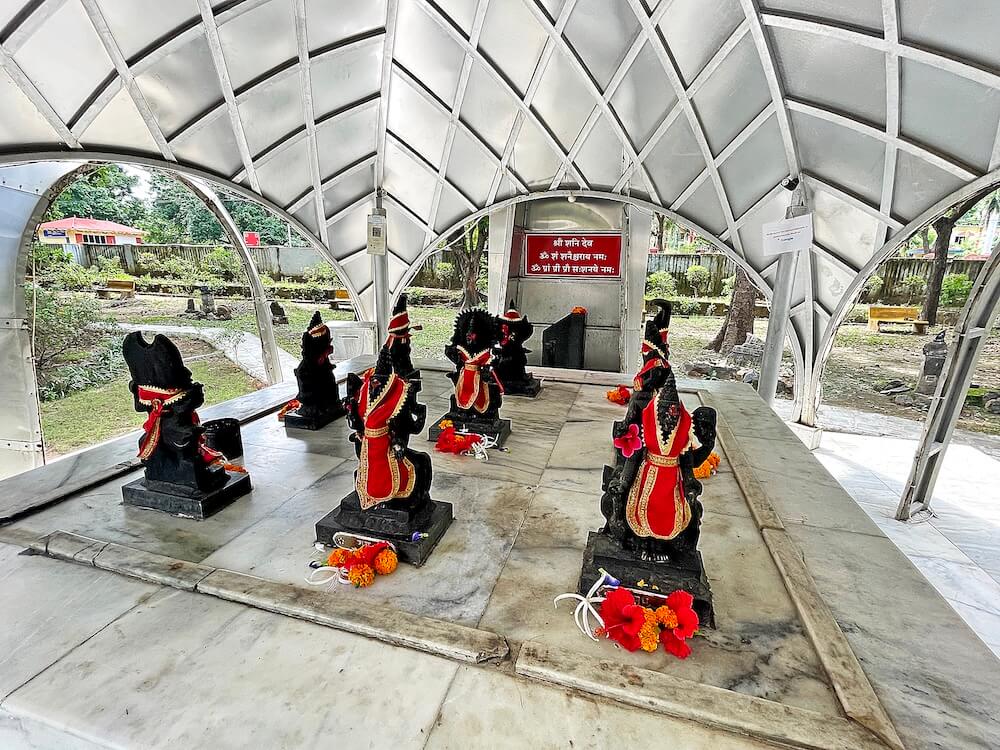 On either side of the idol are statues of Ganesha and Kartikeya from Mahabalipuram, while a black stone Shivlinga lies in front. Idols of Lord Vishnu and Lord Ram also grace the sanctum.
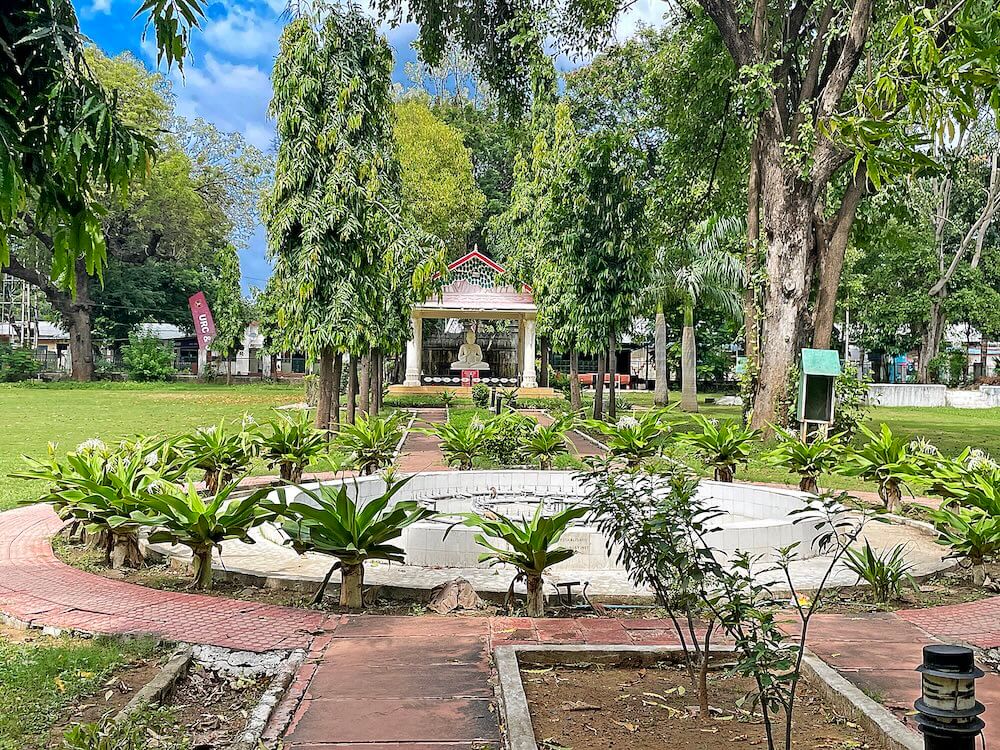
Surrounding the main temple are smaller shrines dedicated to Siddhivinayak, Radha-Krishna, Durga Mata, Sai Baba, Shri Ram-Sita-Lakshman and Hanuman, as well as a serene statue of Gautam Buddha. A mini Amarnath cave replica houses a Shiva linga made of ice and a meditative Shiva statue on Mount Kailash. The temple complex also features a Navagraha temple. Initially, the nine planetary deities were placed under a tree in an open space. After assuming charge as the 32nd Commandant of EME School on November 3, 2022, Major General Neeraj Vashistha noticed their exposed state and initiated the construction of a new temple to house them.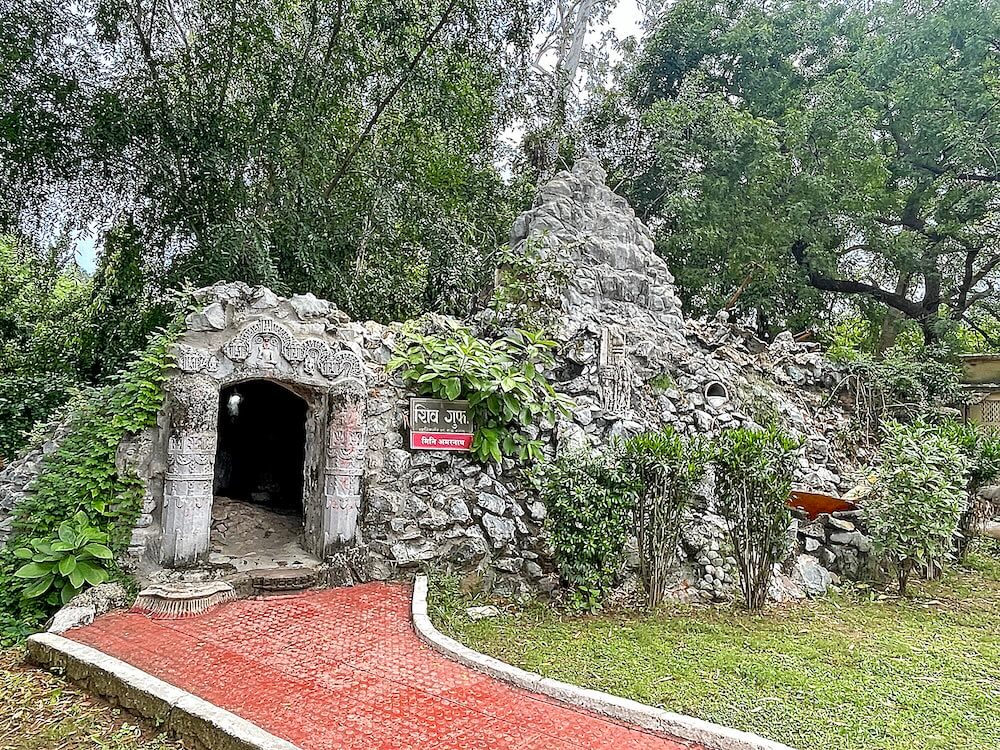 The new Navagraha shrine was completed in a few months and inaugurated on Ram Navami in 2023. The marble platform and structure were built under the guidance of 83-year-old Ratibhai Mistry, a member of the original design team from 1964. The temple also includes a Shani shrine and a red-stone canopy dedicated to Vishwakarma, alongside several ornamental fountains.
The EME Temple remains open daily from 6:30 in the morning to 8:30 at night. Devotees can witness regular puja and aarti rituals held every morning and evening. A special aarti takes place every Tuesday at 6:30 PM, drawing many devotees. The temple also becomes a vibrant hub of celebration during major Hindu festivals. On occasions like Mahashivratri and Janmashtami, hundreds of devotees gather here to offer prayers and participate in the festivities. Entry into the premises requires a valid photo ID such as an Aadhaar card and photography is strictly prohibited due to the sensitive military zone.