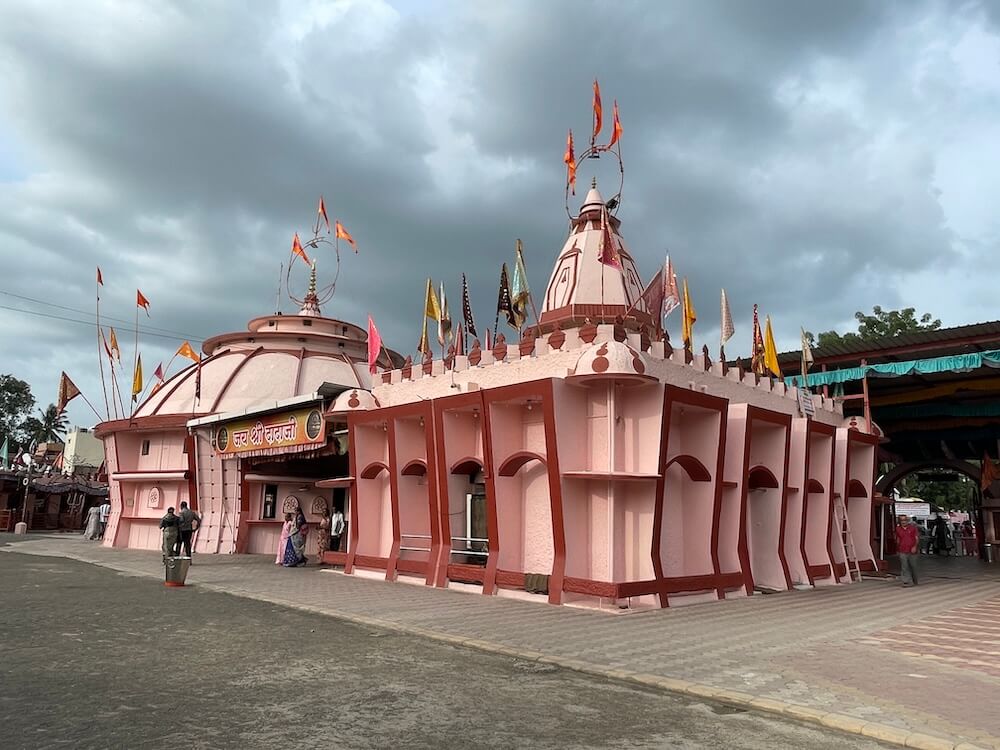
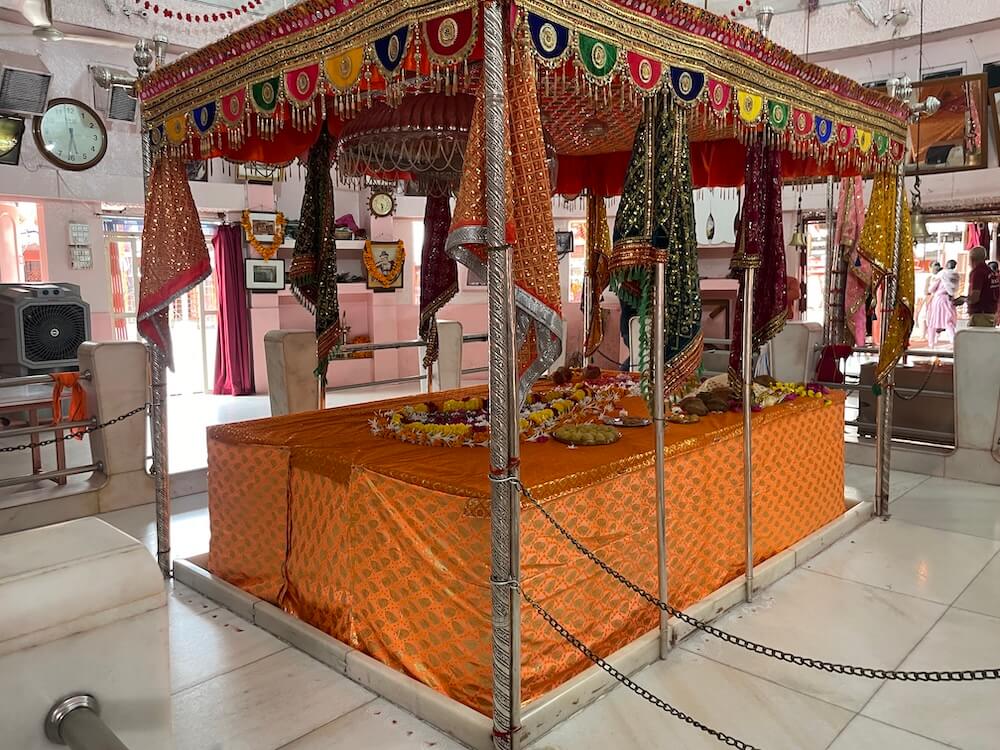
 In the ancient city of Khandwa, whose history stretches back to the times of the Mahabharata, stands the grand memorial of the revered saint Dadaji Dhuniwale Baba. This shrine, known as Dadaji Dhuniwale Dham or Dada Darbar, houses the samadhis of Dadaji Dhuniwale Maharaj and his disciple, Chhote Dadaji. Dadaji Dhuniwale was revered as a miraculous saint and even today devotees firmly believe that they continue to experience his divine miracles. At this temple, the eternal sacred fire, regarded as a symbol of his divine presence, burns continuously day and night without ever being extinguished.
Very little is known about the early life of Dhuniwale Baba. His real name was Swami Keshavanand Maharaj and he was also known as Bade Dadaji.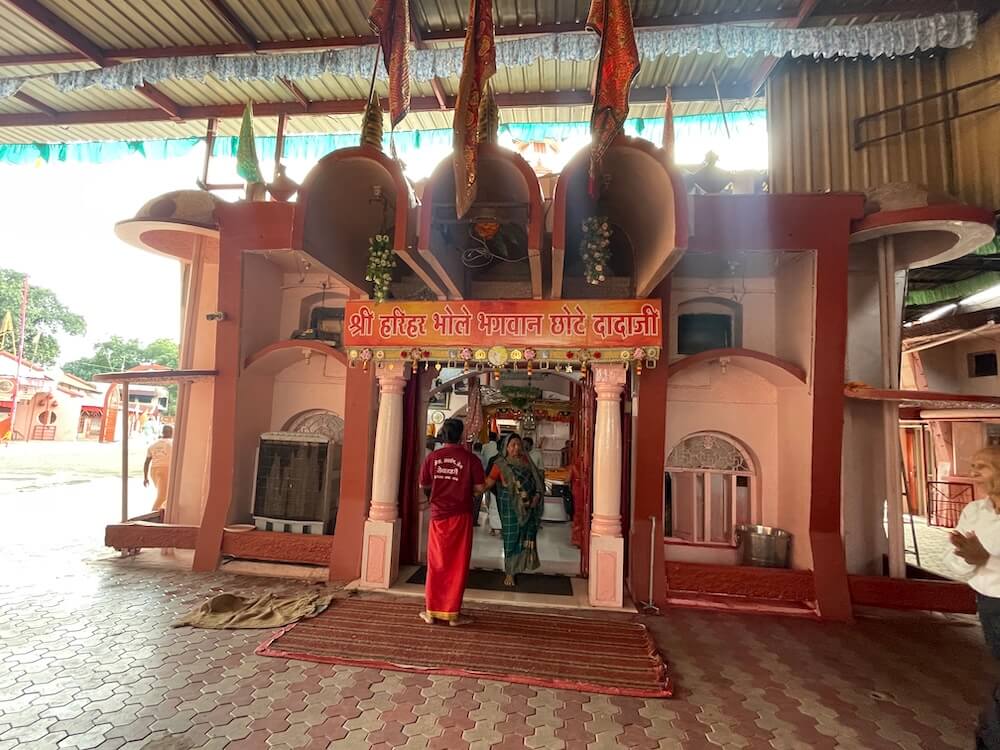 It is said that wherever he traveled, he would kindle a sacred fire (dhuni) and immerse himself in meditation. It was because of this practice that people began addressing him as Dhuniwale Baba. He lived in Saikheda, in the Narsinghpur district, for nearly thirty years. Many legends are associated with his stay there, telling of miraculous healings where people were freed from diseases through his grace. He was also believed to have transformed chickpeas and pulses into gold and silver, cured the ill and even restored eyesight to the blind. For a time, he resided in Badwah, in Khargone district, before finally arriving in Khandwa in 1930.
Just a few days after his arrival in Khandwa, on the day of Margashirsha Shukla Trayodashi, December 3, 1930, he took his mahasamadhi. At that very spot, his devotees later built the Dada Darbar. Immediately after his passing, a 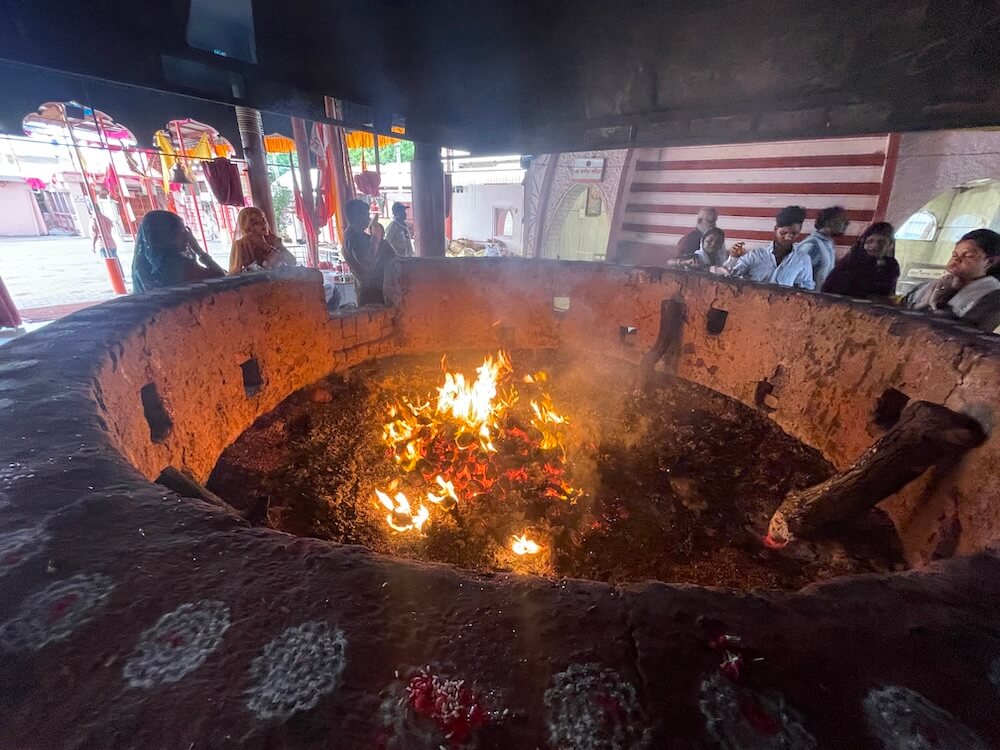 sacred fire was lit near his samadhi and that fire has continued to burn ceaselessly ever since. Chhote Dadaji Maharaj, his disciple, was originally from Dindwana village in Rajasthan and his birth name was Bhurilal. He lost his parents at a young age and set out in search of a guru. During this quest, he heard of the great fame of Bade Dadaji and finally met him in Saikheda. Bade Dadaji gave him the name Hariharanand and over times, people came to know him as Chhote Dadaji. On February 5, 1942, during the Phalguna Shukla Panchami, he took samadhi at the Kumbh Mela in Prayagraj. His remains were then brought to Khandwa, where a samadhi was built beside that of his guru.
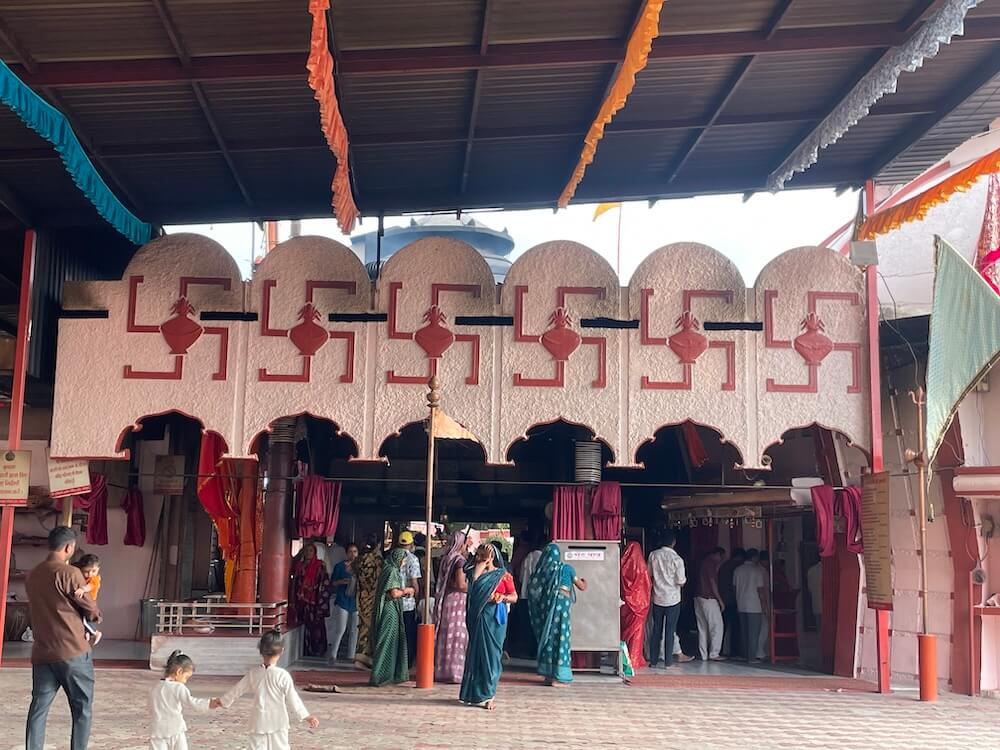
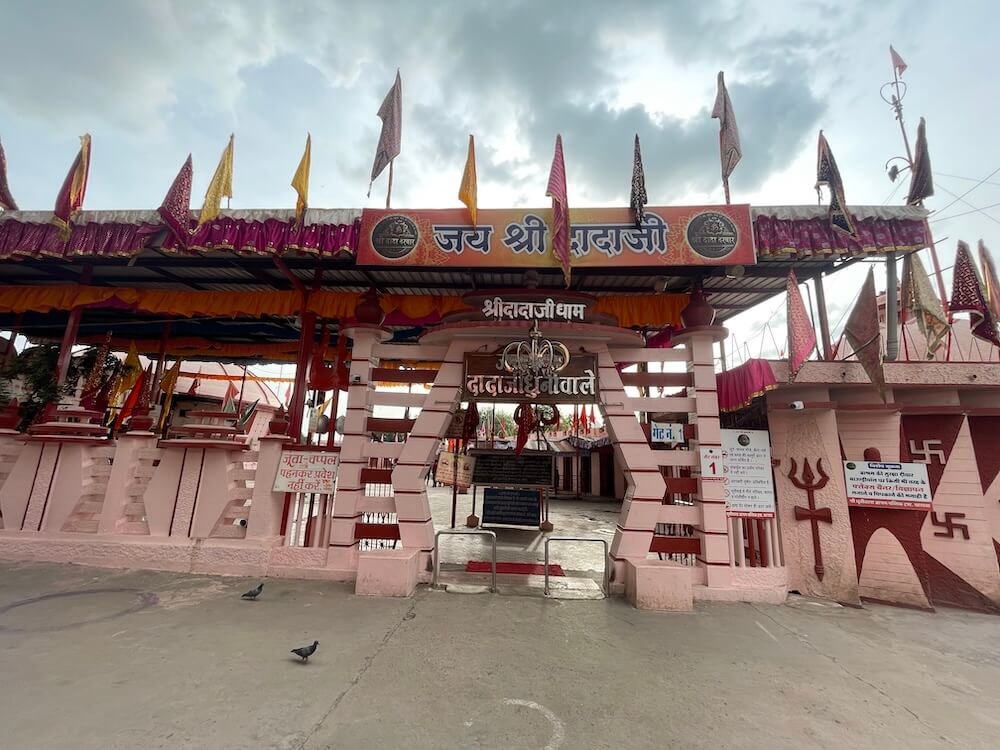
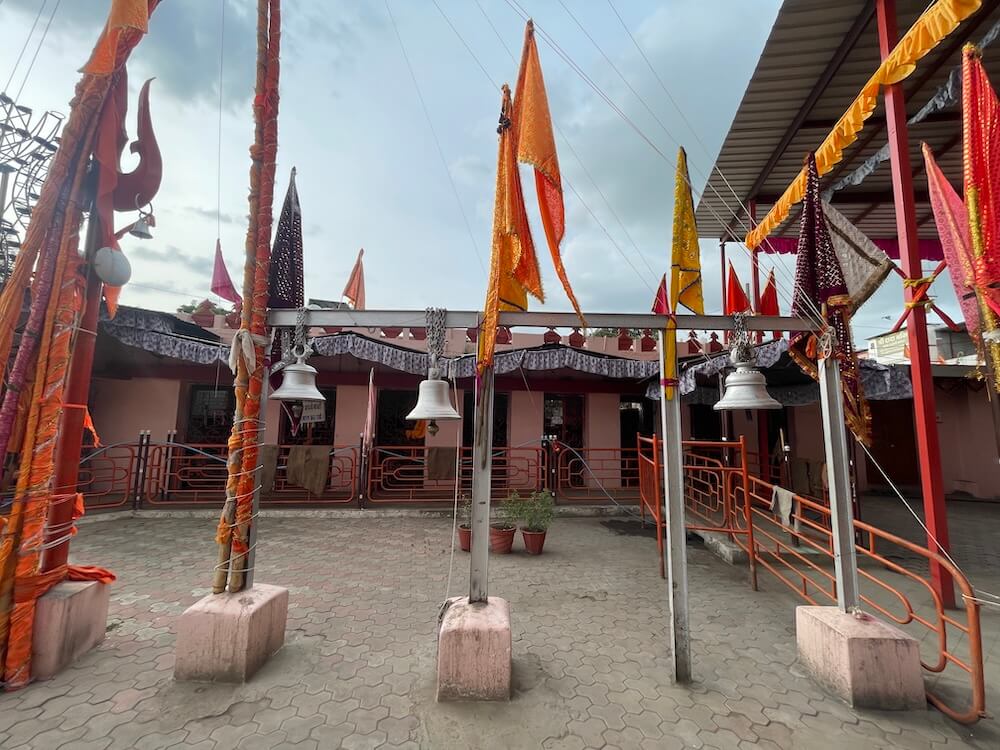
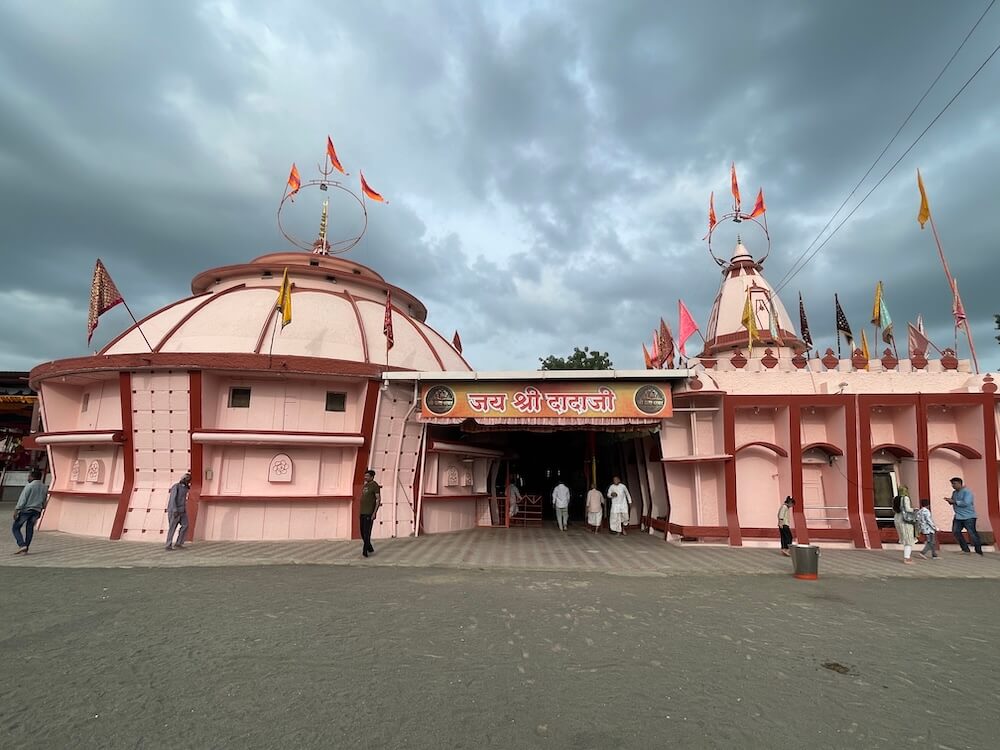
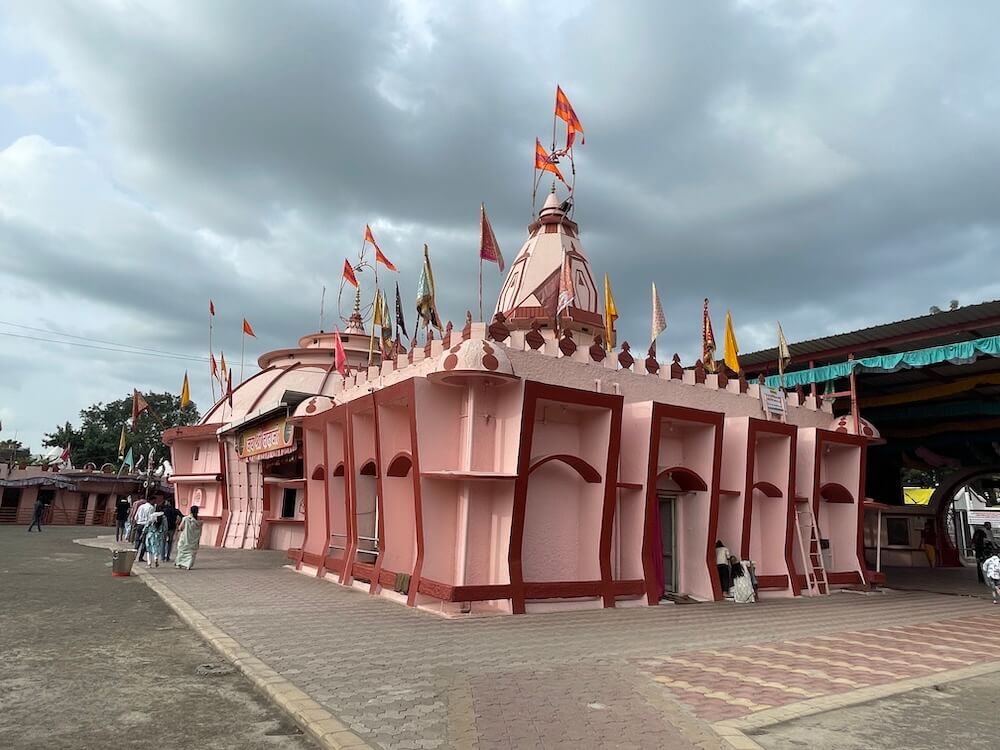
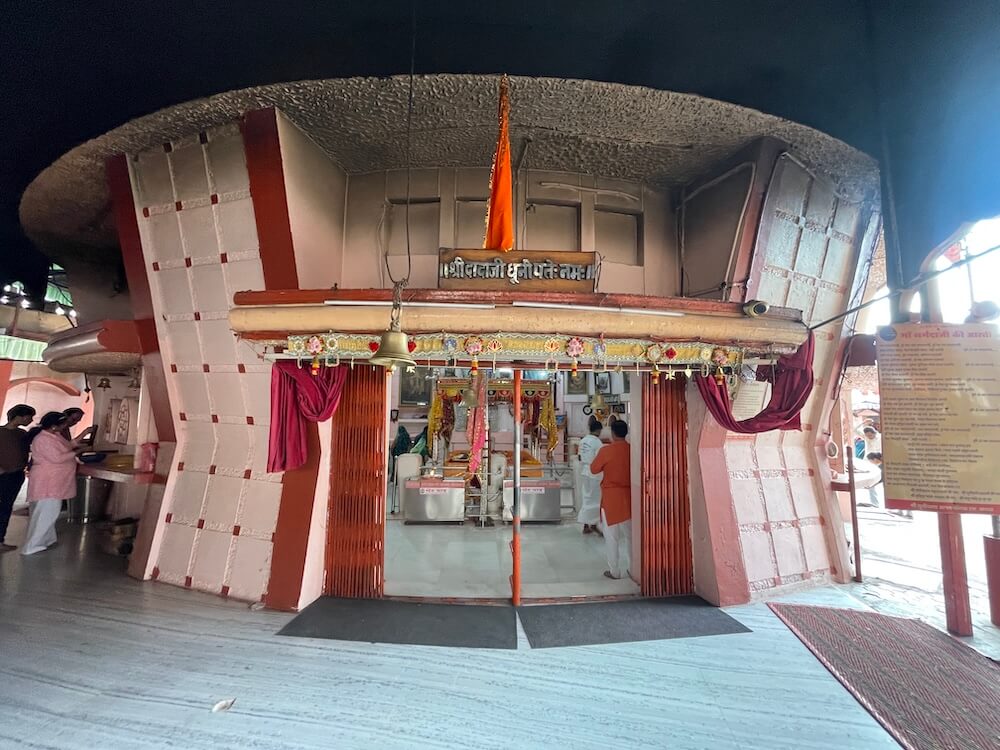
Spread across a vast area in Khandwa, 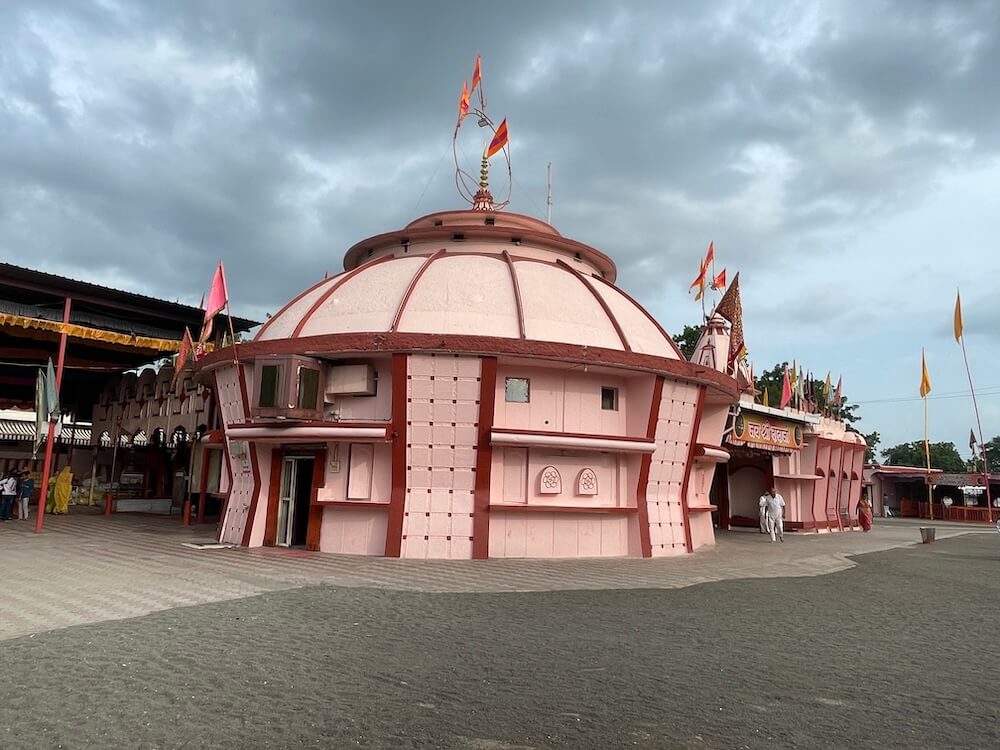 the Dada Darbar complex is encircled by tall boundary walls and within them are numerous grand gateways, each unique in design. The inner courtyard is neatly paved with stone tiles. At the center stands the circular, double-storied samadhi temple of Bade Dadaji, topped with a dome, an amalaka structure and a golden pinnacle. Beside it stands the square-shaped samadhi temple of Chhote Dadaji, its roof adorned with a tall tapering spire on all four sides.
Outside Bade Dadaji’s temple is a large hall housing the sacred dhuni, burning ceaselessly through every day of the year. Facing it is the grand entrance to the samadhi shrine. Inside, the walls are adorned with portraits of Dadaji Maharaj. At the center lies the samadhi, covered with cloth under a small pavilion. 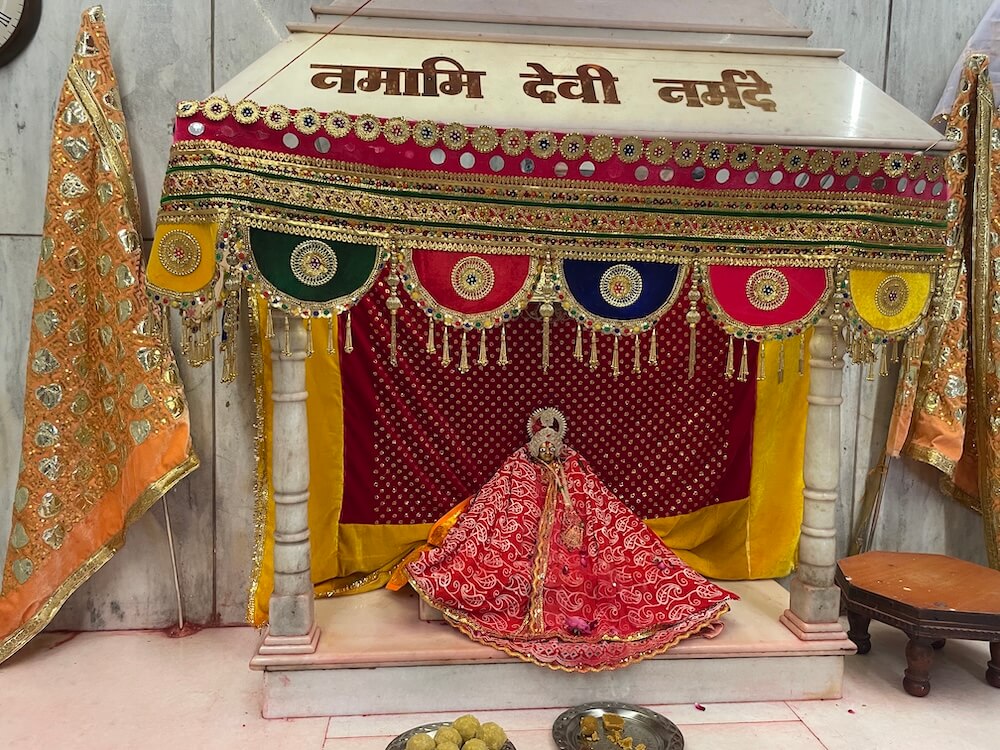 During aarti, offerings and ritual ablutions are performed at the samadhi and the consecrated charanamrit flows into a reservoir outside, from where devotees collect it. A short distance away is the samadhi temple of Chhote Dadaji, built in a modern style, with high arches, large windows and an impressive entrance. At the center lies his samadhi and like the first shrine, a charanamrit reservoir lies outside for devotees.
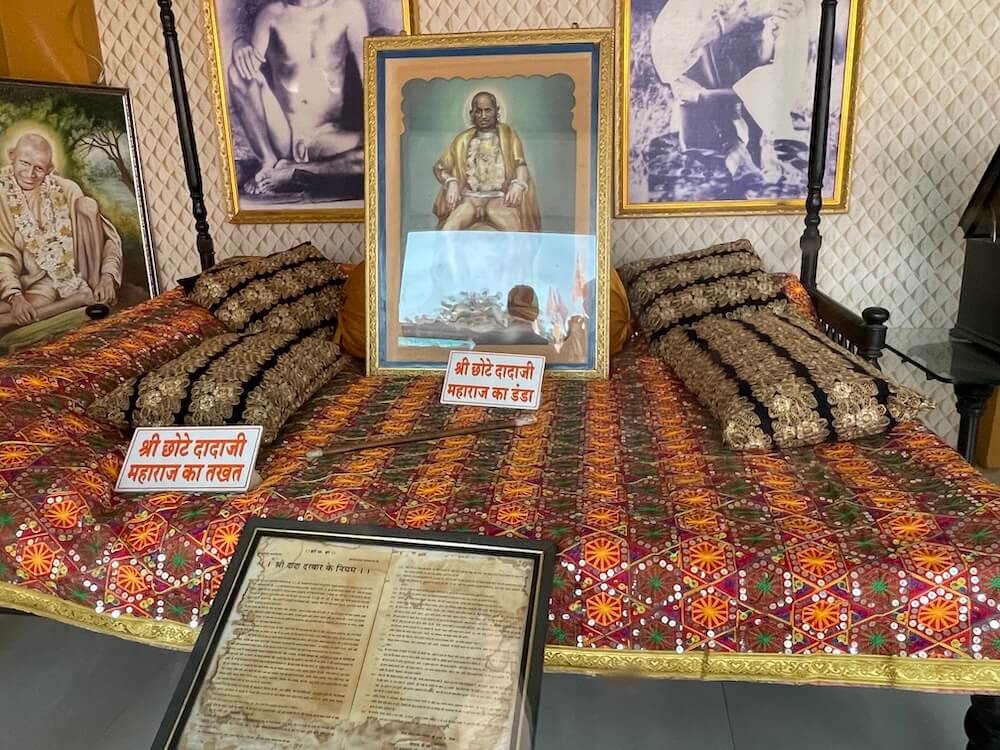
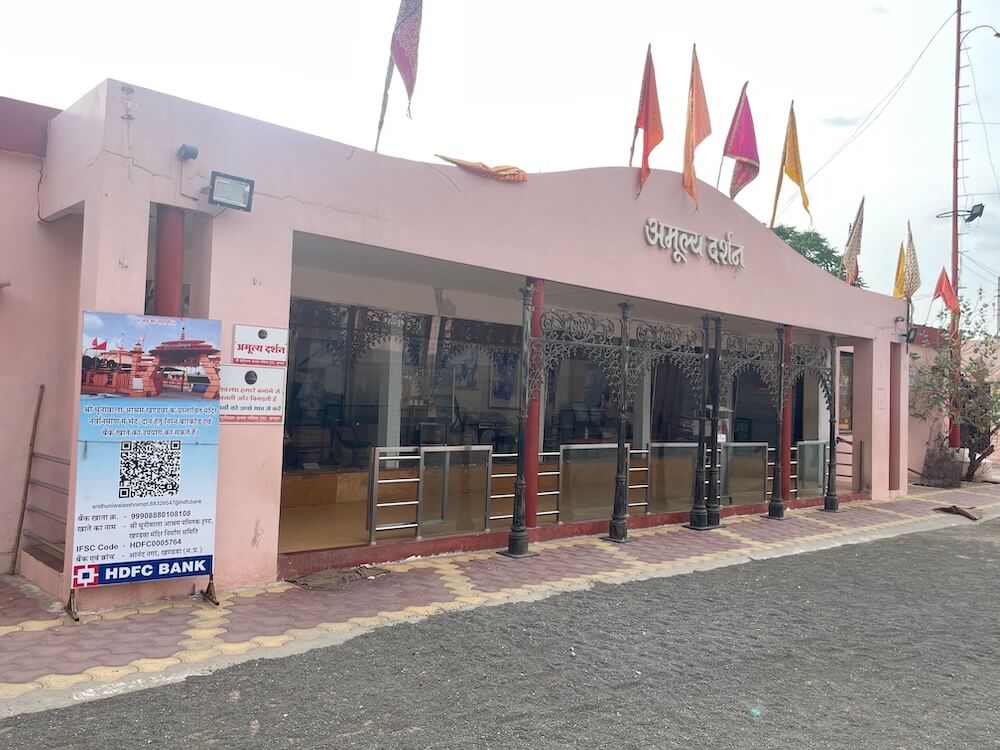
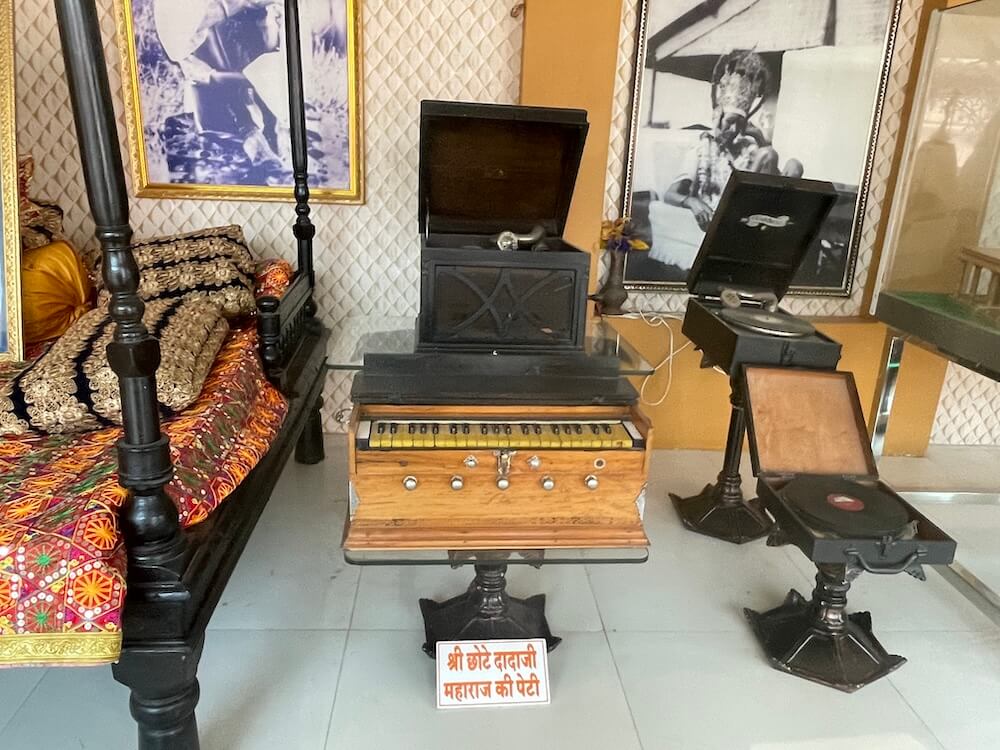
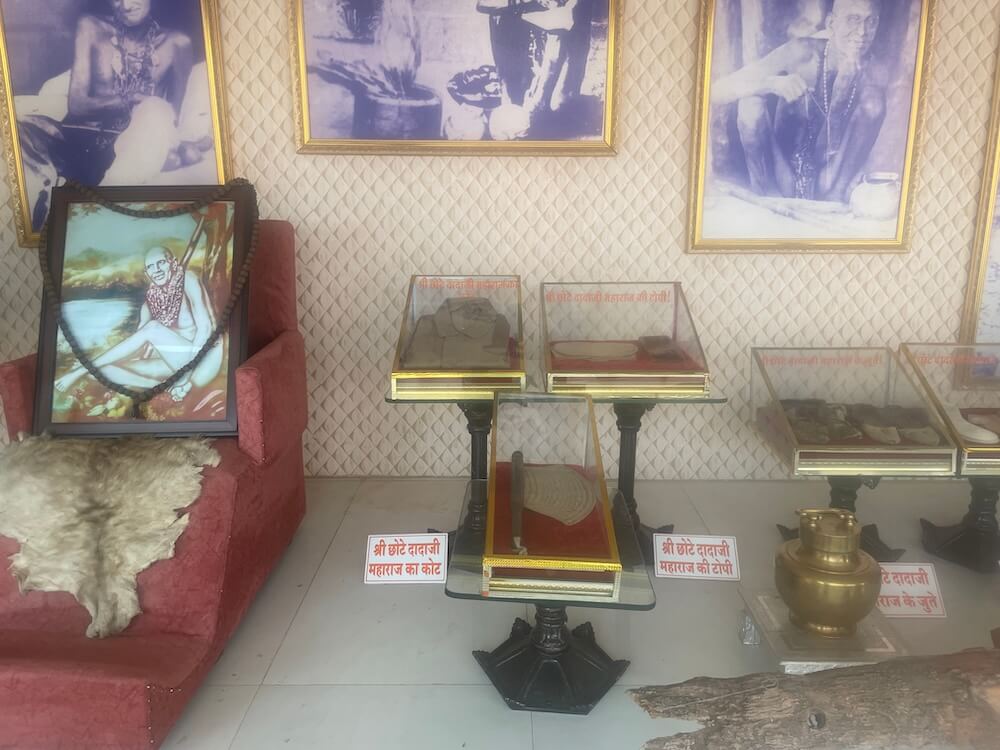
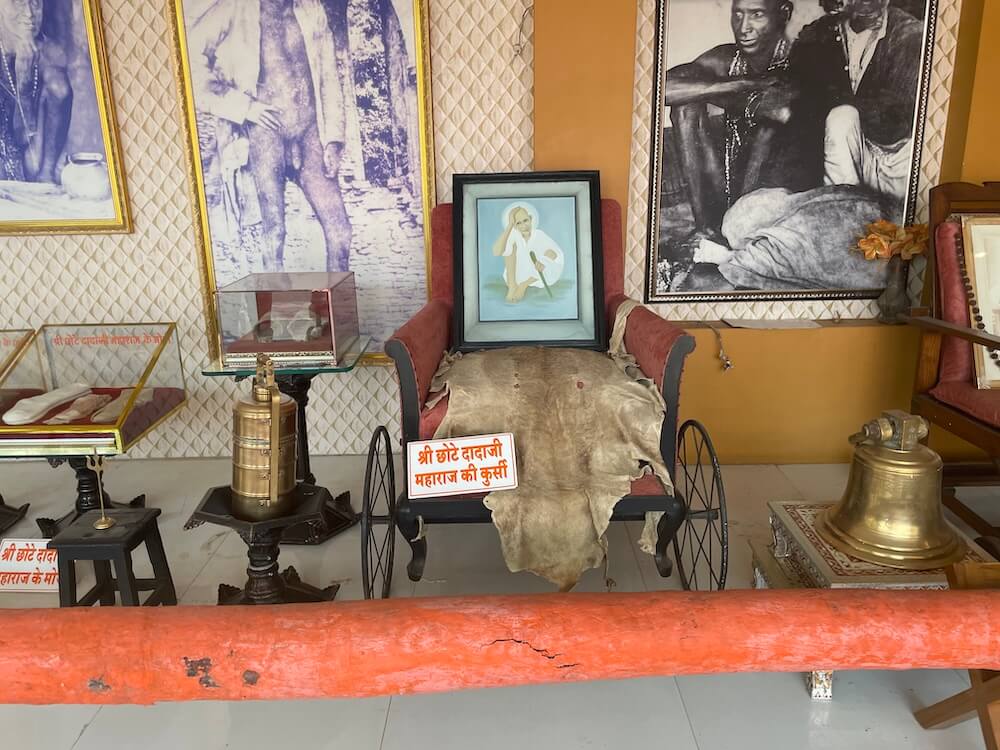
Apart from these main shrines, the temple complex also houses a temple dedicated to Mother Narmada. Both Bade Dadaji and Chhote Dadaji were ardent devotees of the goddess. Her idol, beautifully placed upon a marble pedestal, graces this temple. Behind the samadhi shrines lies the structure called Amulya Darshan, where objects once used by Bade Dadaji and Chhote Dadaji are displayed. Among these are their throne, staff, coat and even a gramophone. Visitors can also view a Ford and a Plymouth car from the 1920–1930 period, as well as a traditional horse-drawn carriage, all gifted to Dadaji by his devotees. The temple premises include two kitchens – Chhota Bhandar and Bada Bhandar. The smaller one prepares daily offerings and tea, while the larger is used to cook grand feasts during festivals. Meals are also arranged daily for devotees and ascetics undertaking the Narmada Parikrama. The temple additionally maintains a dharmashala and a cowshed.
Dada Dham remains open to devotees at all hours, day and night. The greatest festival celebrated here is Guru Purnima. Since 1931, the year after Bade Dadaji’s samadhi, this celebration has been held with unmatched fervor, drawing lakhs of devotees. Pilgrims from Maharashtra often arrive in processions carrying torches. The entire complex transforms into a grand fair during this time. Diwali is also celebrated with enthusiasm, when the entire premises are decorated with flowers and illuminated with lamps, consuming nearly 150 containers of oil.
In the coming years, the temple is set for a massive reconstruction. With an estimated cost of around 100 crores, a magnificent new temple will be built here in white Makrana marble from Rajasthan. The new temple will feature 108 pillars and rise to a height of 101 feet. Its foundation ceremony was held on June 30, 2025, attended by saints, devotees, ministers of Madhya Pradesh and central ministers. The Chief Minister himself visited in the evening to offer floral tributes on that auspicious day.