 Renowned across Gujarat, the Dabhodia Hanuman Temple is known as the site where the highest quantity of oil is offered in abhishek (ritual bathing) to Lord Hanuman. This ancient shrine houses a self-manifested idol of Hanuman discovered in the forest during the 14th century, around the time of Alauddin Khilji’s invasion of Gujarat. Every year, on the day of Narak Chaturdashi, more than five thousand devotees gather here to perform oil abhishek on this awakened idol. A popular legend even claims that the British once performed an oil offering here and ever since, the temple has been seen as a place where the mighty Hanuman removes sufferings and grants wishes.
The story goes that in 1297 CE, Sultan Alauddin Khilji of Delhi sent his brother Alaf Khan and minister Nusrat Khan to conquer Gujarat with a massive force of one lakh cavalry, thirty thousand infantry, fifteen hundred elephants and forty-five officers. At that time, the Vaghela king Karna ruled from Anhilwad Patan. When Khilji’s army captured the fort, King Karna fled south, leaving behind his family. He sought refuge with King Ramdevrai of Devagiri and is believed to have resided for some time in the region now known as Dabhoda. It was here that he came upon the self-manifested idol of Hanuman.
According to the legend, this area, then known as Devgad Van, was frequented by cowherds. One of their cows, named Tildi, would mysteriously release milk at a particular spot. The herders reported this to the king, who, following the royal priest’s advice, ordered excavation at the site. During the digging, the idol of Hanuman emerged. 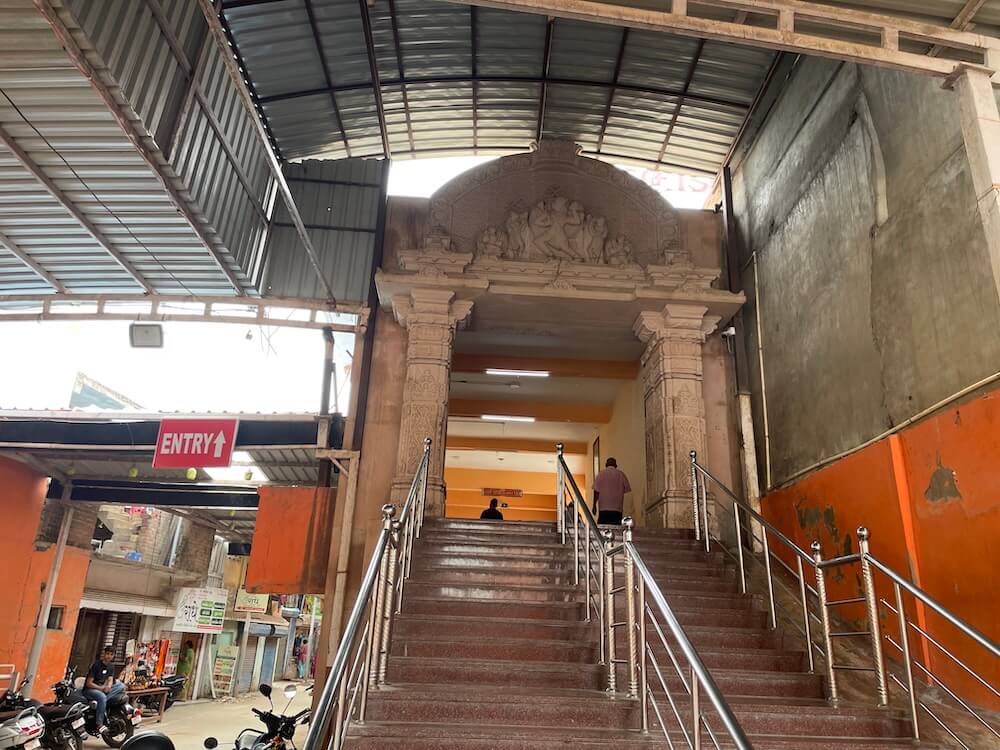 A great yagna was held to install the idol with full rituals and the deity became known as Dabhodia Hanuman. Another tale from the British era tells of a train that stalled near the village. Despite numerous efforts, it wouldn’t move. Locals suggested offering oil abhishek to Dabhodia Hanuman. When British officers complied, the train reportedly started running again. Since then, even today, a tin of oil is sent every year by Western Railways for ritual offerings. Though established in the 14th century, the temple was renovated in recent years. During that time, a saint named Jugardas blessed the village, proclaiming that locusts would never plague the region. Since then, locals say, their crops have remained untouched.
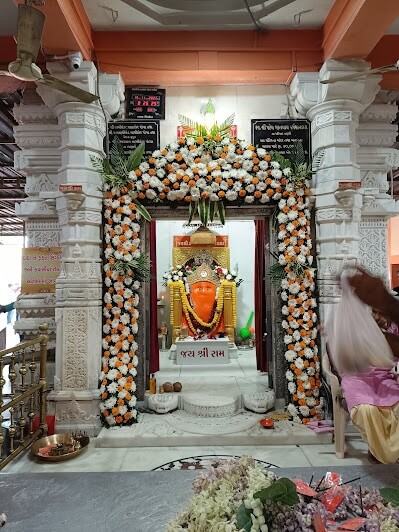
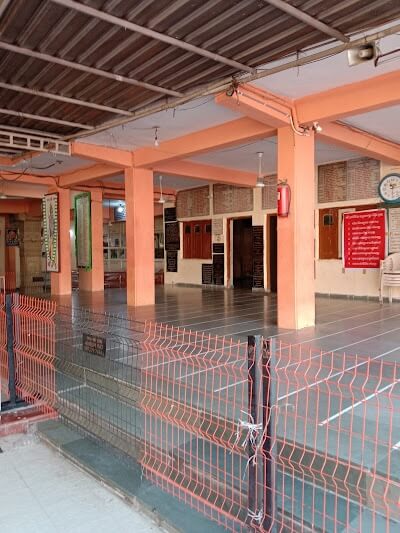
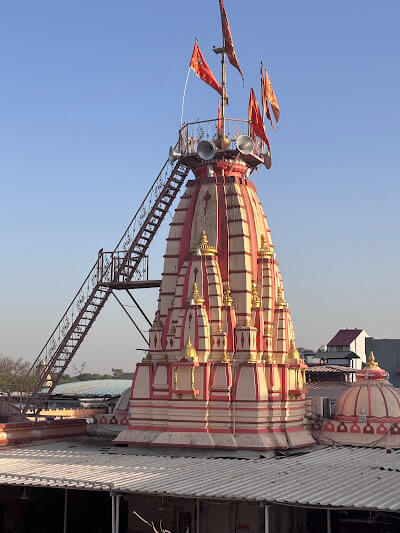
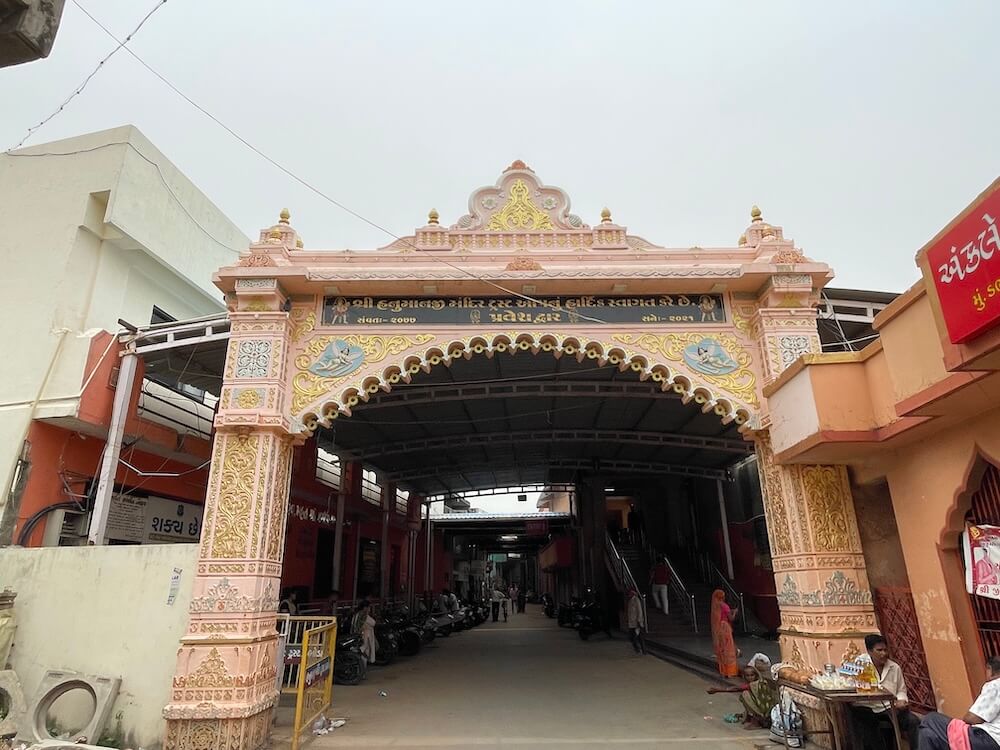
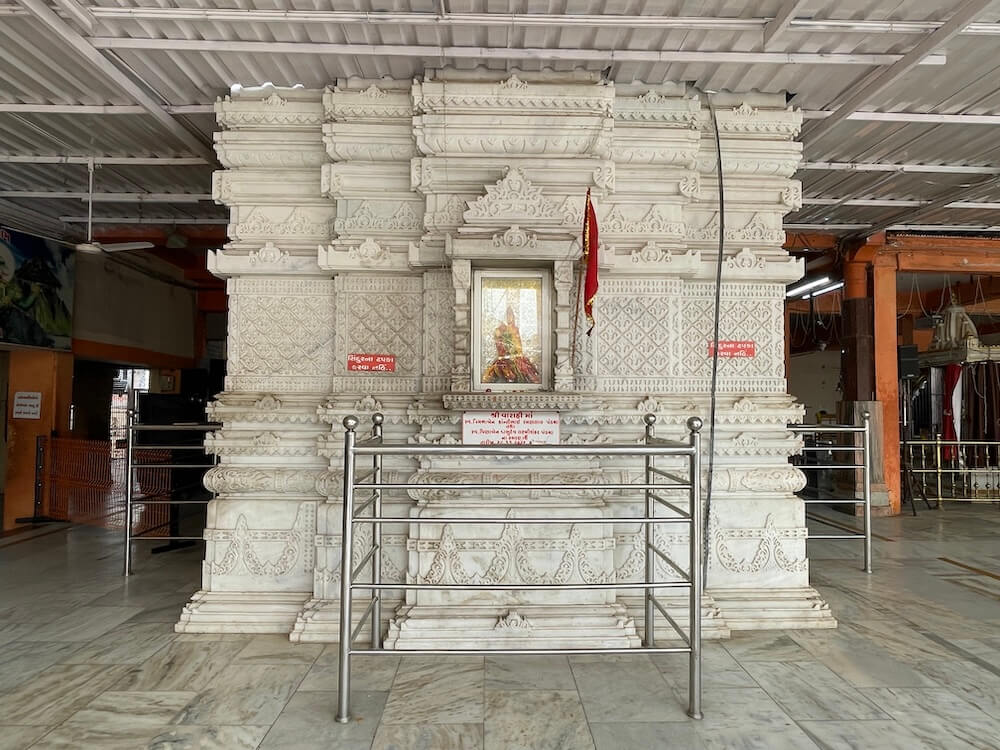
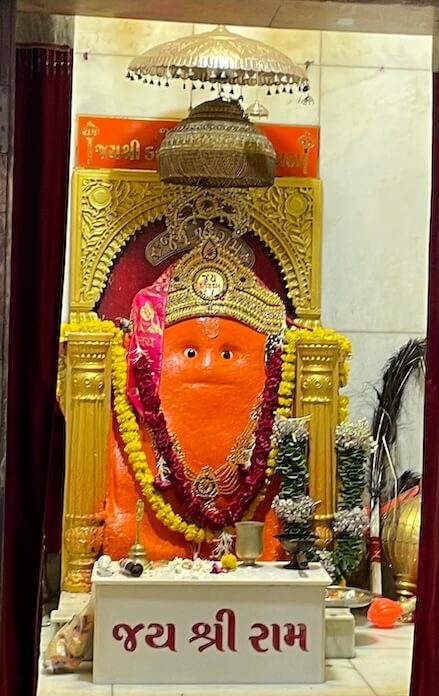
Situated on elevated ground with a spacious courtyard, the temple has two entrances, one in the front and one in the back. 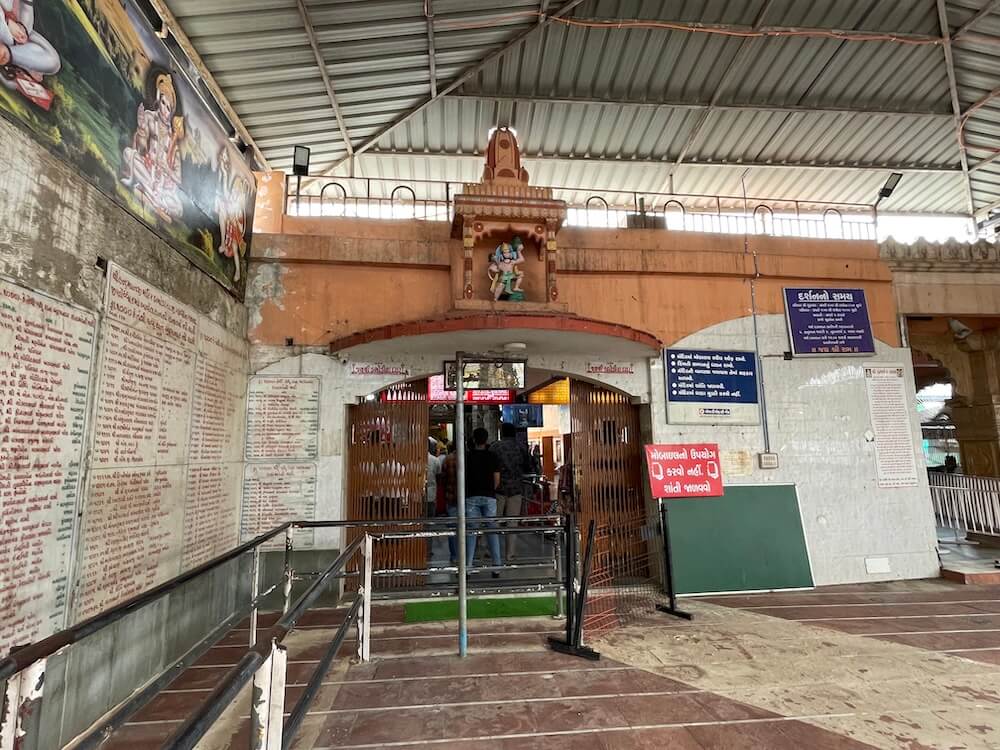 The main entrance is built from pink sandstone, with intricately carved columns and a relief sculpture of Hanuman above the gateway. After climbing 18 steps, one enters the complex, where a large assembly hall houses the white marble temple of Hanuman in the center. Stainless steel railings have been installed to manage the long queues of devotees. The temple walls, pillars of the viewing mandap and sanctum doorway all feature exquisite carvings. The spire is built in the urushringa style. The outer niches house idols of Ganesha, Baliyadev and Goddess Varahi. Within the sanctum, seated in a gold-plated canopy, is the self-manifested idol of Hanuman, smeared with shendur (vermilion). The idol wears a golden crown and necklace and a golden parasol shades his head. To the right of the main entrance lies the temple of Ankleshwar Mahadev.
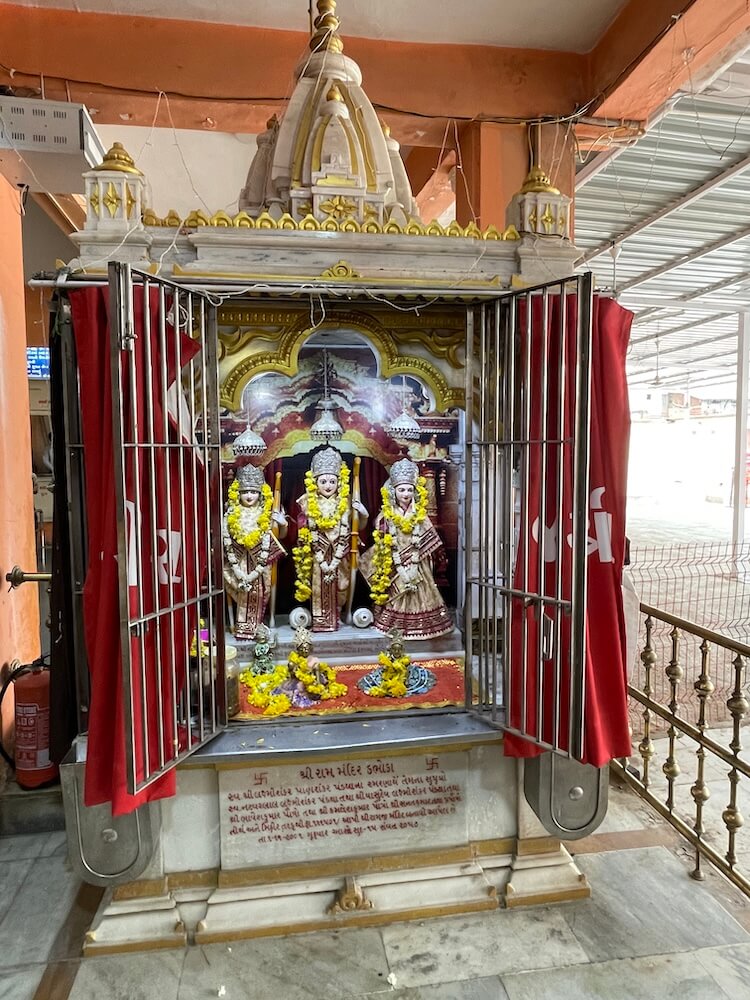
 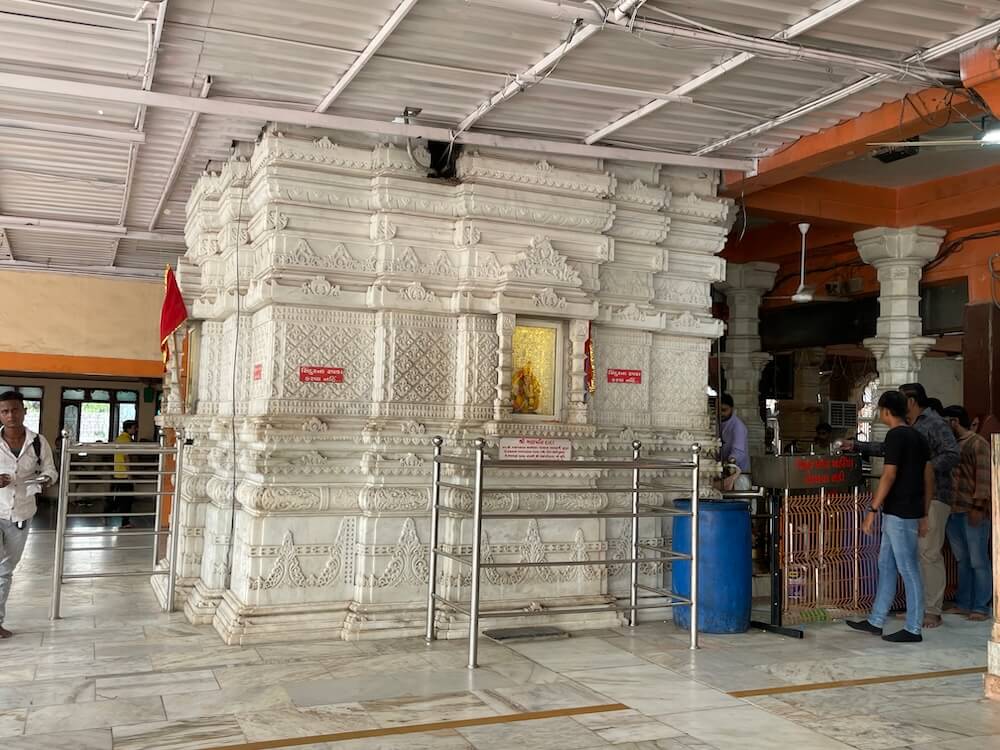 Behind the temple are shrines of Shani Dev, Shri Ram and Sai Baba. Shani Dev is depicted riding a buffalo, with his sacred stone below.
The temple complex includes the Mahant Garibdas Bhavan, where an annakshetra (community kitchen) offers meals from 11 AM to 2 PM for a token of ₹30. To the left of the main temple are counters selling sukhdi (a sweet made from jaggery, flour and pure ghee) which is given as prasadam. There is also a dharamshala for devotees who wish to stay overnight. Managed by the Dabhodia Hanuman Trust, the temple is open from 5 AM to 9 PM, Sunday through Friday and until 10 PM on Saturdays. Hundreds of devotees visit daily for darshan and oil abhishek. A special tank and motor system have been installed to collect the oil used in rituals. Tuesdays and Saturdays witness particularly large crowds.
Hanuman Jayanti is celebrated here with great devotion. The temple is decorated with flowers and a mangal aarti is held around 5 AM. A grand Maharudrabhishek follows and at 9 AM, a festive procession is taken out. From 10 AM to 3 PM, mahaprasad is served. Around 11:30 AM, a flag is hoisted atop the spire, followed by a maha aarti at noon and a symbolic cake-cutting ceremony to mark Hanuman’s birth. A shower of flowers is also done via helicopter on this auspicious day. Festivals like Vasant Panchami and Diwali are also celebrated here with enthusiasm. On Narak Chaturdashi, believed to be a time when evil forces grow stronger, devotees seek strength from Hanuman to overcome them. A grand midnight Aarti is held and more than 350 tins of oil are used in the abhishek.