 While the term Chudail typically conjures up images of a malevolent spirit believed to possess people, in Gandhinagar’s Chehar Chudail Mata Temple, this figure is worshipped as a deity. Situated in a modest yet deeply revered shrine over 125 years old, Chudail Mata resides alongside Chehar Mata, believed to be her sister. According to local legend, the two sisters manifested near a neem tree on this very site. Devotees even believe the neem leaves here have a sweet taste due to the divine emergence of the goddesses at its base. Worship at this temple centers around an ever-burning flame symbolizing the presence of the deities.
An intriguing reference to this tradition appears in R. E. Enthoven’s 1923 British-era work ‘The Folklore of Bombay’, which compiles stories of deities, spirits, demons and local beliefs from across Bombay and Gujarat. According to this book, Gujarati folklore features nearly 48 distinct types of spirits or supernatural beings, Chudail being one of them, also known as vantri. These spirits are said to dwell near tamarind, shami, babool or kerado trees, or by lakes, rivers, wells and desolate grounds.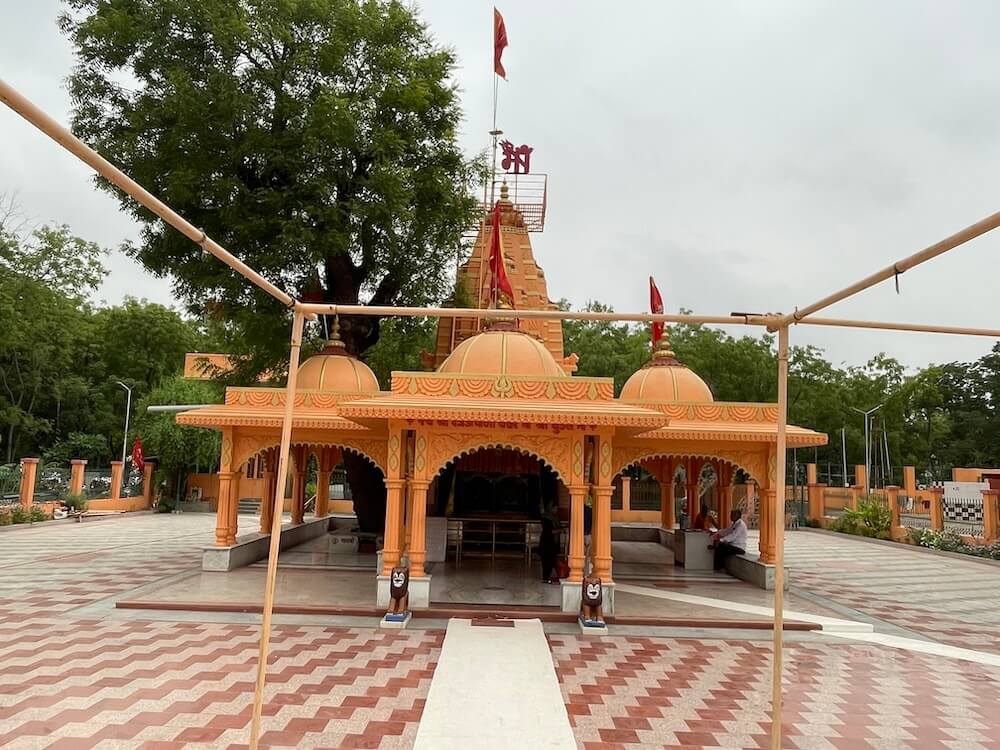 Some believe battlefields soaked in the blood of many also attract Chudails. There are three recognized types of Chaudails – Poshi, Soshi and Toshi.
Poshi Chudails are believed to be the spirits of women who died without fulfilling their earthly desires. These spirits are said to care for widowers and bond with young children. Soshi Chudails originate from women who suffered cruel abuse at the hands of their families; after death, they haunt and torment those same families, draining the lifeblood of men. Toshi Chudails are thought to be born from deep love – women who had immense affection for their husbands and bring peace and happiness to them even after death. R. E. Enthoven notes that in some regions of Gujarat, such as Nainpur village in Kheda district and Lambasi village near Ahmedabad, Chudails are actually revered as divine figures. 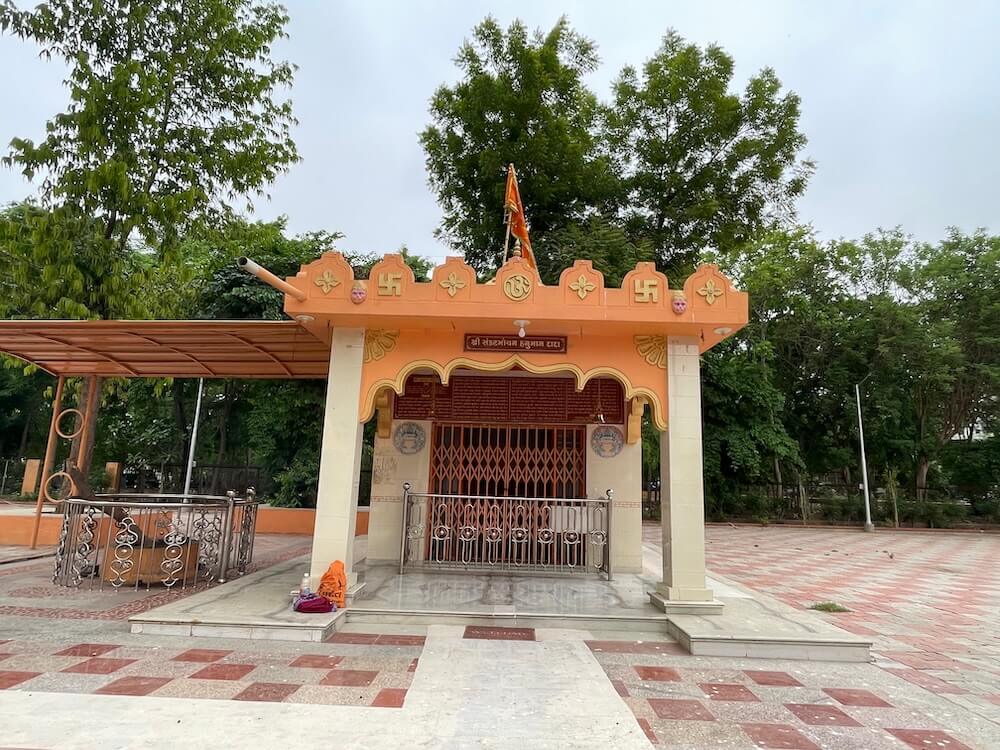 Gandhinagar’s Chehar Chudail Mata Temple is one of these rare places where the feared becomes the sacred.
Legend has it that about 125 years ago, the area around the current temple was dense forest spanning nearly four square kilometers. A massive neem tree stood at the site and every morning and evening, a man named Govindbhai Darji from the nearby village of Rawal would come to light a lamp at its base. One day, as he came to offer his usual devotion, he discovered a mysterious aghori sadhu named Premdasbua performing penance under the tree. Alarmed by his strange presence, Govindbhai informed the villagers. They learned that Premdasbua was a master of yogic arts who spoke to no one. His enigmatic behavior made villagers uneasy and they began avoiding the area, except for Govindbhai, who continued his daily lamp ritual. 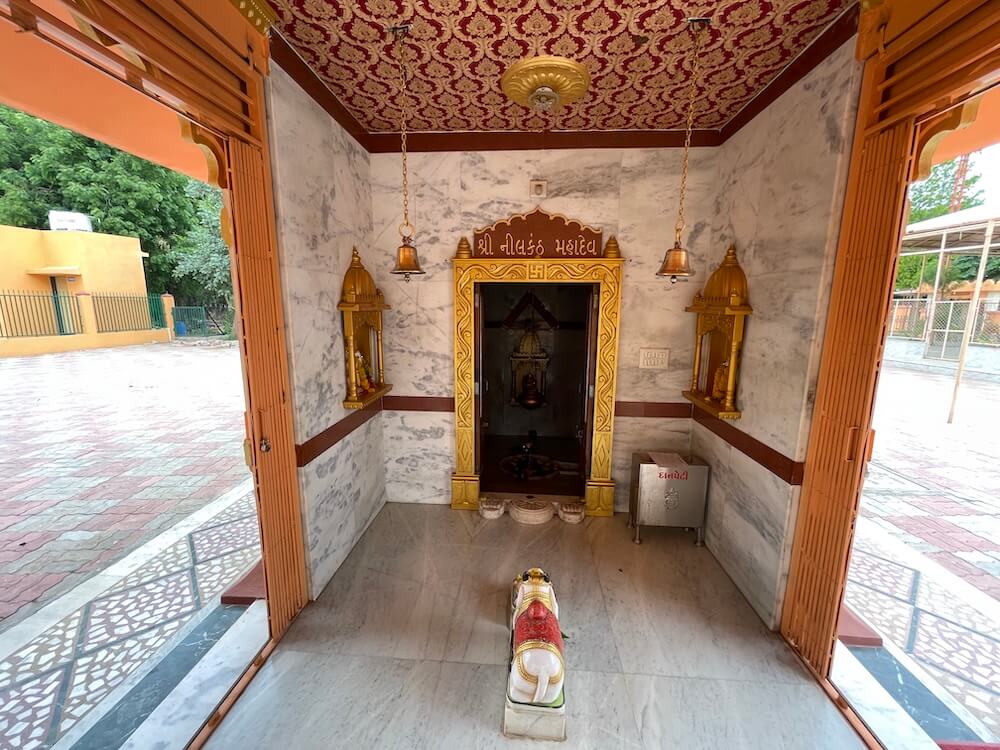 Over time, the power of Premdasbua’s penance led to the manifestation of Chudail Mata beneath the neem tree. Shortly thereafter, her sister Chehar Mata also revealed herself nearby. A few months later, a four-foot platform was built in their honor. Around 21 years ago, a businessman from Rawal village funded the restoration of the temple.
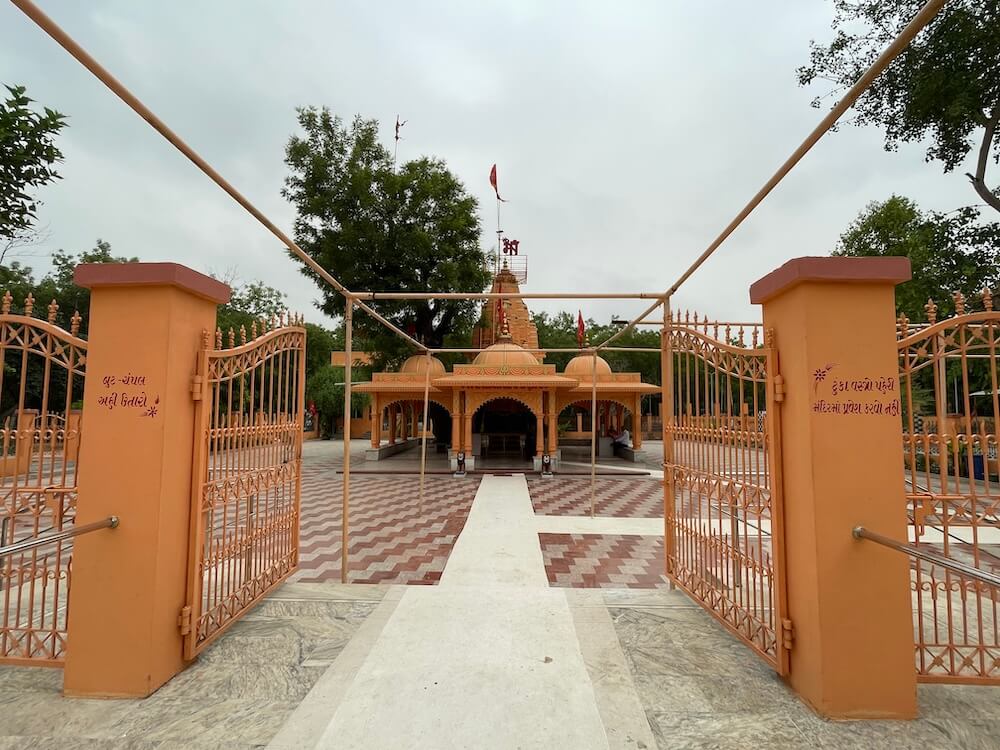
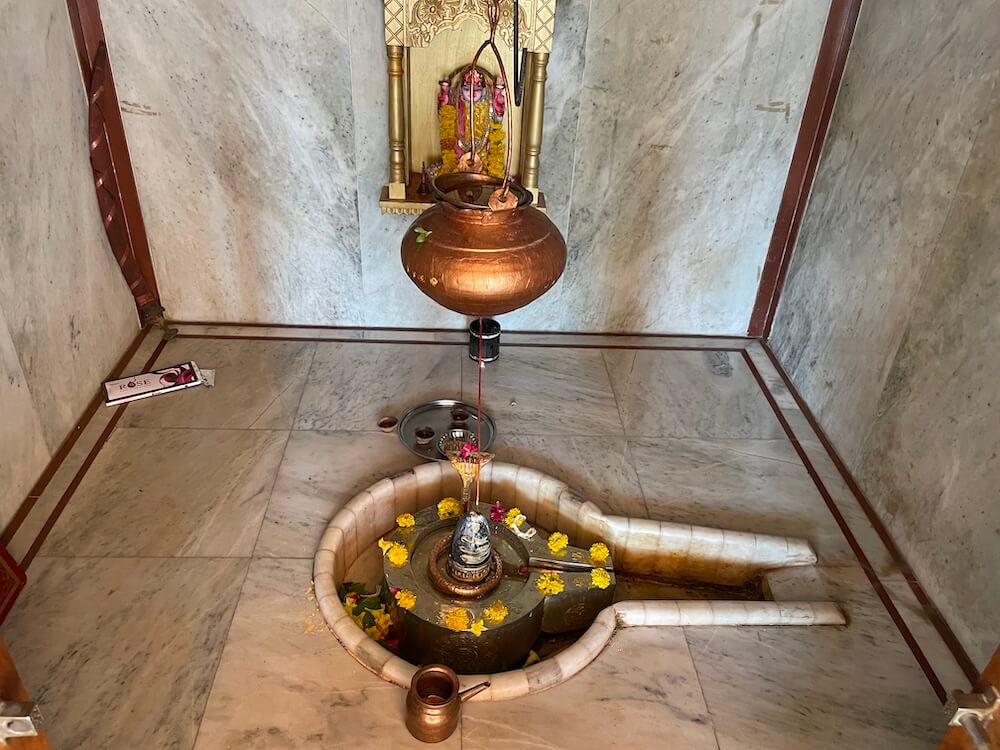
The temple complex is set within a large open courtyard. Upon entering through the iron gates, one finds the Neelkanth Mahadev Temple to the left. Inside its hall, a stone sculpture of Nandi faces the sanctum, accompanied by a marble Nandi beside it. The Shivling, housed in a five-metal (panchdhatu) vessel, is oval-shaped and crowned with a coiled snake. Behind the Shivling is a small shrine to Goddess Parvati. To the right within the complex is a yajna shala, where sacred fire rituals are performed. Nearby, there is a sheltered rest area with benches for devotees.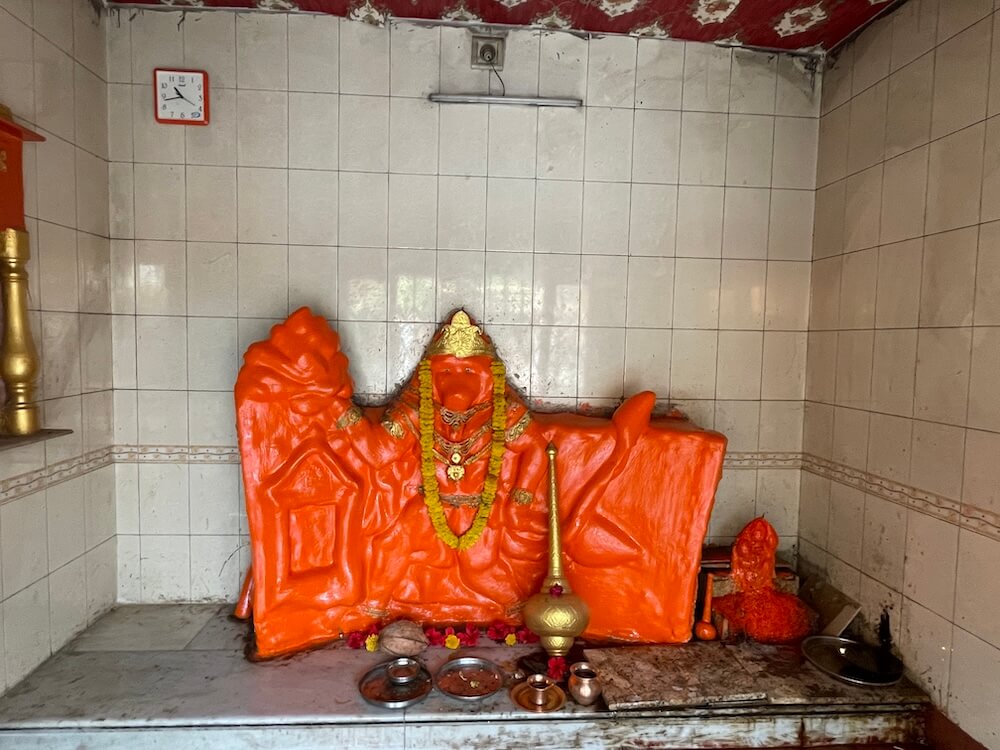
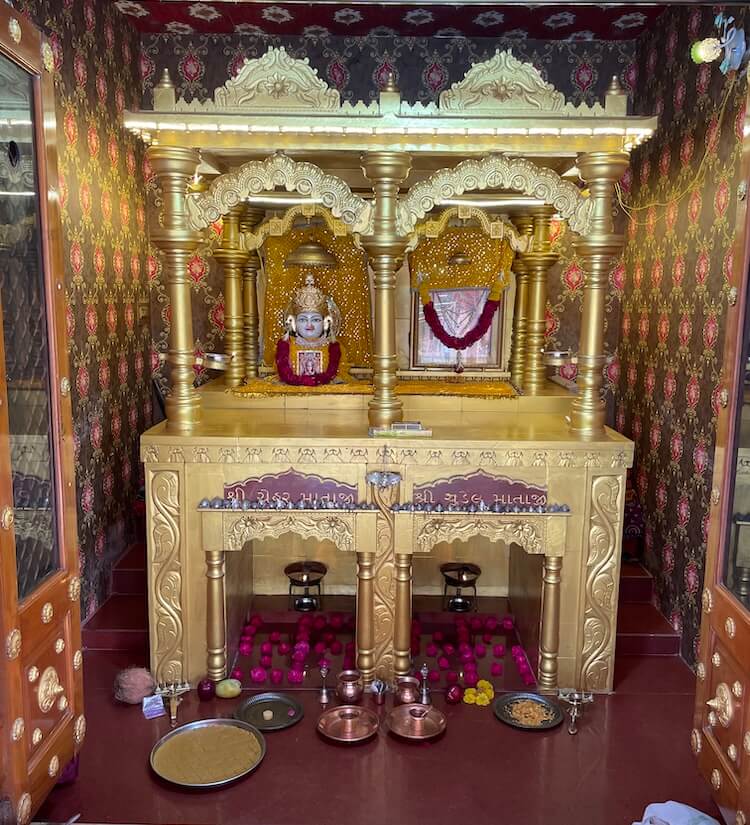
At the center of the courtyard stands the grand Chehar-Chudail Mata Temple. Its open prayer hall is flanked on all three sides by viewing galleries and leads to the sanctum. Domes crown the galleries and hall, while the sanctum features a towering urushringa spire in the traditional Nagara architectural style, topped with a double-tiered amalaka and an ornamental finial. Lion sculptures guard both sides of the main entrance. Inside, golden shrines house the idols of Ganesha and Hanuman. On a raised platform in the sanctum stands a two-tiered golden frame. On the upper tier, the marble mask of Chehar Mata sits on the left, adorned with a golden crown and parasol. On the right is the image of Chudail Mata. Below, two eternal flames burn, one for each goddess. Only priests are allowed inside the sanctum.
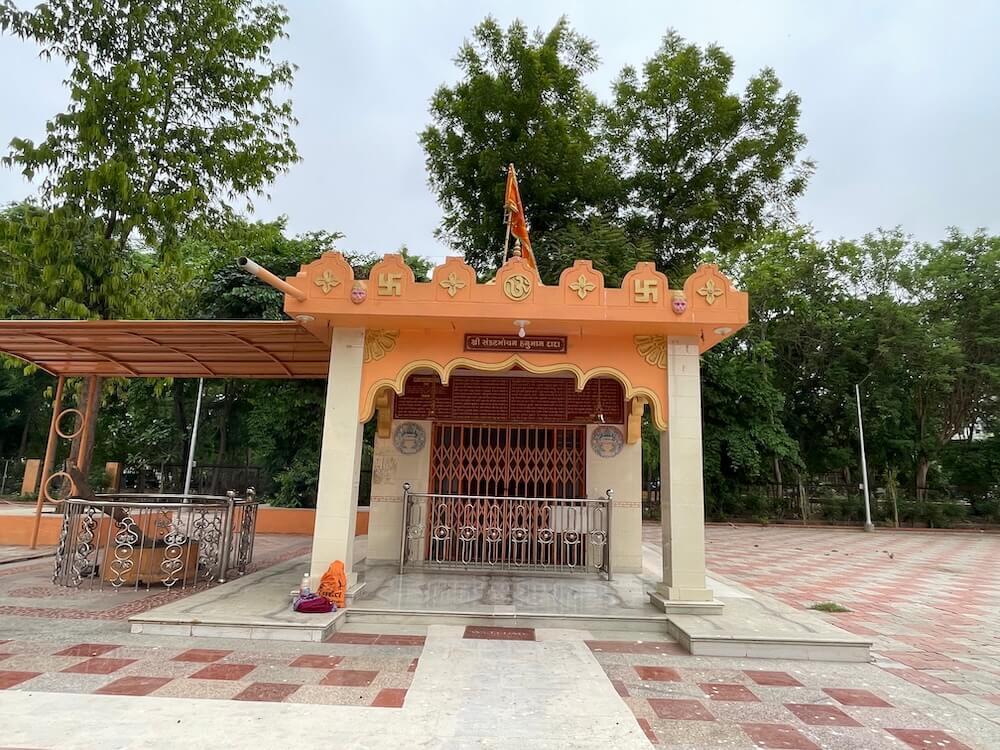
Beside the sanctum stands the ancient neem tree, its leaves believed to be sweet due to Premdasbua’s spiritual power. To the left of the temple is the Sankatmochan Hanuman Mandir, featuring an idol carved from a single stone and coated in vermillion. This shrine sees a rush of devotees, especially on Tuesdays and Saturdays. A massive peepal tree grows nearby. On the right side of the Hanuman shrine is Premdasbua’s sacred fire pit and his final resting place. The courtyard also houses small temples to Sheetala Mata and Baliya Dev. Many devotees make vows here, returning to fulfill them with reverence. The temple observes daily worship rituals and celebrates various Hindu festivals with great fervor.