 In India, the worship of the Saptamatrikas has been practiced since the time of the Indus Valley Civilization, dating back approximately five thousand years. The Matrikas are considered manifestations of the Adi Shakti, the primordial energy. These seven divine forms are known as Vaishnavi, Aindri, Chamunda, Maheshwari, Kaumari, Varahi and Brahmani or Brahmi. Among them, Brahmani Devi is worshipped under the name Brahmani. She is the family deity (Kuldevi) of the Dodia Rajput, Nagar Brahmin, Weaver and Tailor communities. The ancient shrine of Brahmani Devi is located in the village of Dingucha. She is the presiding goddess of this village, which is believed to have been founded by a shepherd named Dingo.
Brahmani Devi is considered a form of Saraswati and is regarded as the shakti or divine energy of Lord Brahma.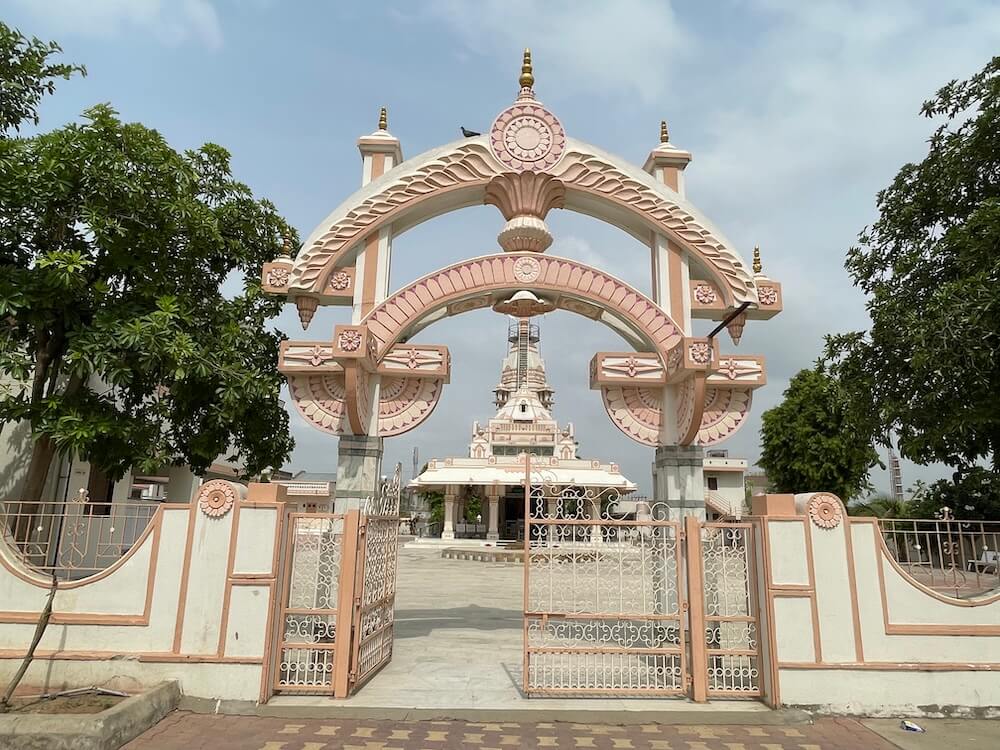 According to religious scriptures, she is depicted as four-faced and rides a swan. Many temples dedicated to her exist in states such as Gujarat, Rajasthan, Uttar Pradeshand Himachal Pradesh. The temple in Dingucha is one of them.
A legend about the temple’s origin states that in ancient times, a few members of the Dodia Rajput community had gone to the hilly areas of Idar in Sabarkantha district to gather materials for house construction. While returning, they lost their way and one of their bullock carts got stuck on a rough, unpaved road. No matter what they tried, the cart wouldn’t budge. In desperation, they began to invoke the goddess. After some time, two sisters with sharp, gray-green eyes appeared and asked to be allowed to ride in the cart for a short distance. 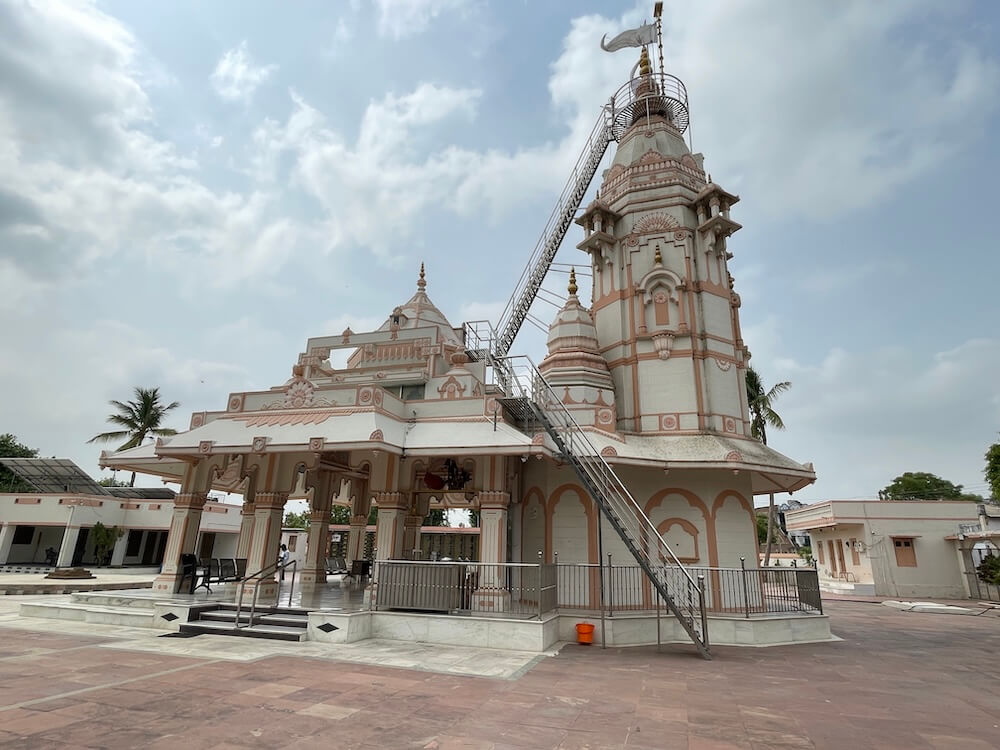 Since the bulls were already exhausted, the driver initially declined to help. The sisters then said, “If we sit in the cart, everything will be fine.” As soon as they sat in the cart, the bulls suddenly began moving swiftly, almost miraculously. Everyone was amazed. During the journey, one sister quietly disembarked near a pond called Rayan Talavadi on the road to Dingucha and sat by a tree. The other sister also disembarked near a thorny bush close to the eastern entrance of the village.
Once the travelers safely reached their village, they noticed that both sisters had vanished. The cart driver tried to find them but was unsuccessful. That very night, the goddess appeared to him in a dream and said, “Mata Karhariji (Klesh Harini Mata) has taken the form of the elder sister and resides at Rayan Talavadi. 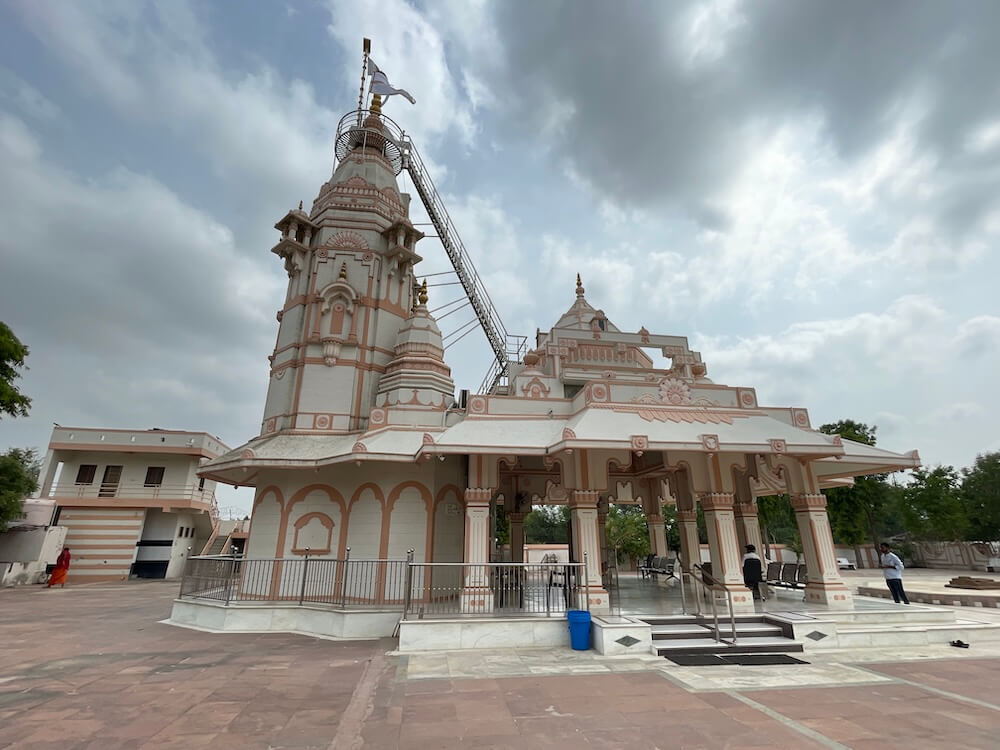 The other is Brahmani Devi, who now resides in Dingucha. Build a temple for her there.” Following this divine instruction, the villagers constructed a small temple for Brahmani Devi at the eastern entrance of Dingucha.
About eighty years ago, the temple underwent its first renovation. According to a popular legend, in 1930, some members of the Patel community had traveled to Rangoon in then-Burma (Myanmar) for business purposes. On December 22 of that year, the people of Rangoon, under the leadership of Saya San, launched an armed rebellion against British rule. The rebellion soon spread throughout the country. Due to the violent conditions in Rangoon, the Gujarati businessmen were forced to flee. In order to save their lives, they traveled through dense bamboo forests, but eventually lost their way.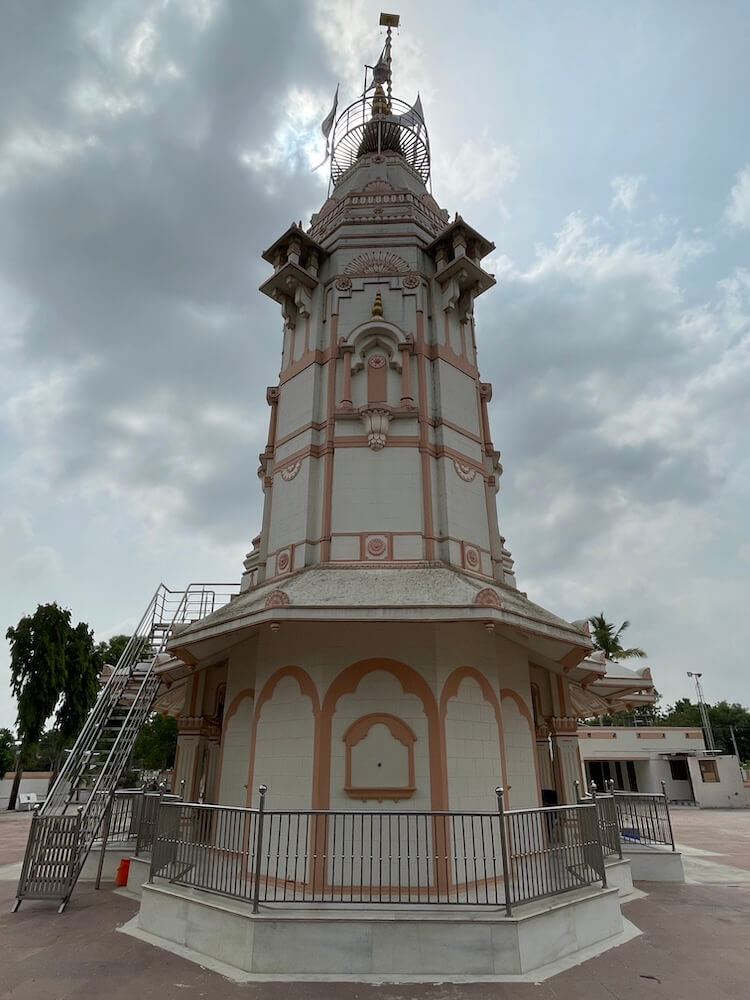 At that moment, they began praying to the goddess for help. Shortly after, they saw a little girl with white hair who guided them safely out of the forest. Upon returning home, they felt convinced that it was none other than Brahmani Mata herself who had come to their aid in the form of a child. In gratitude, they undertook the renovation of the temple.
A second major renovation of the temple took place in 1996. Through the efforts of the Brahmani Mataji Charitable Trust, significant funds were raised for the restoration. From February 2 to February 4 of that year, a three-day consecration ceremony (Pran Pratishtha) was organized, which was attended by more than thirty thousand devotees.
The village of Dingucha is believed to have been founded around a thousand years ago by a shepherd named Dingo, whose descendants still live there today. Later, two brothers from the Patidar community arrived and settled in the village. The area where the elder brother’s descendants lived came to be known as ‘Moto Bhag’, and the area of the younger brother’s descendants as ‘Chhoto Bhag’. Over time, people from other communities such as Solanki, Brahmin, Baniya, Thakur Lohar and Weaver also settled in the village. Eventually, the Dodia and Vaghela Rajputs came to manage the village administration.
In earlier times, agriculture was the main occupation and it continues to be practiced by many even today. 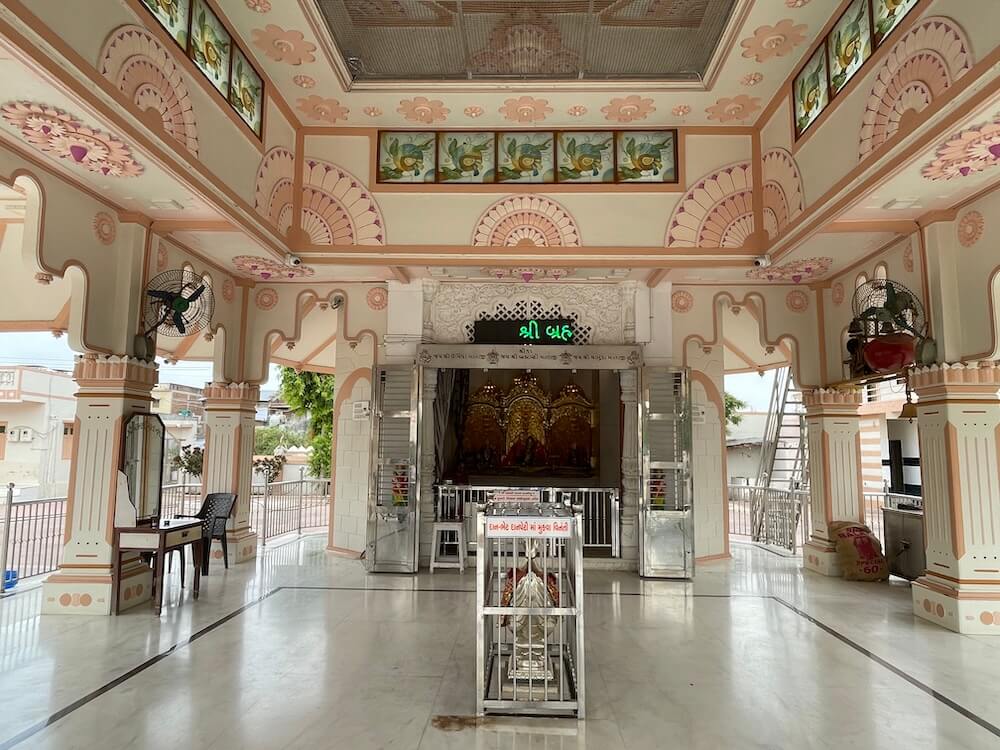 After the 1970s, many young people from the village migrated abroad. At present, more than half the population of Dingucha lives overseas. Their financial contributions have led to significant improvements and modernization in the village. A beautiful entrance gate has been constructed on the western side of the village. To the east are two ponds named Gambho and Suthariyo. Near Suthariyo pond stands a temple dedicated to Chamunda Mata, while on the opposite bank is the temple of Brahmani Mata.
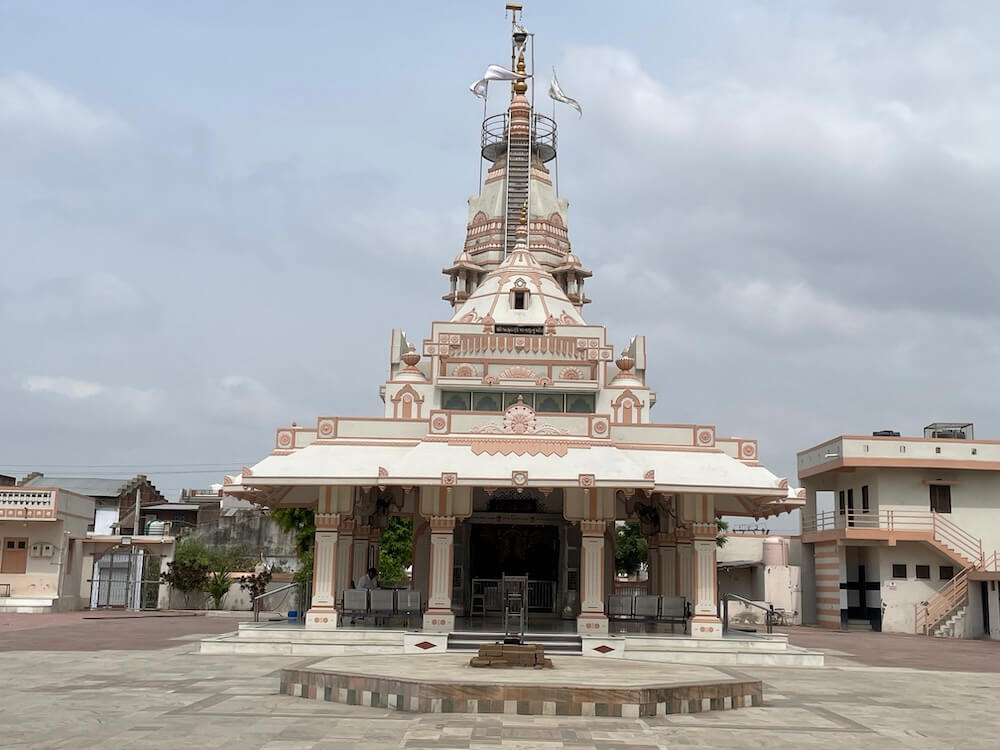
The temple is situated a short distance from the village’s main road, with a specially constructed path leading to it. At the entrance to this path stands a decorative gateway. The temple compound itself is enclosed on all sides by a boundary wall. 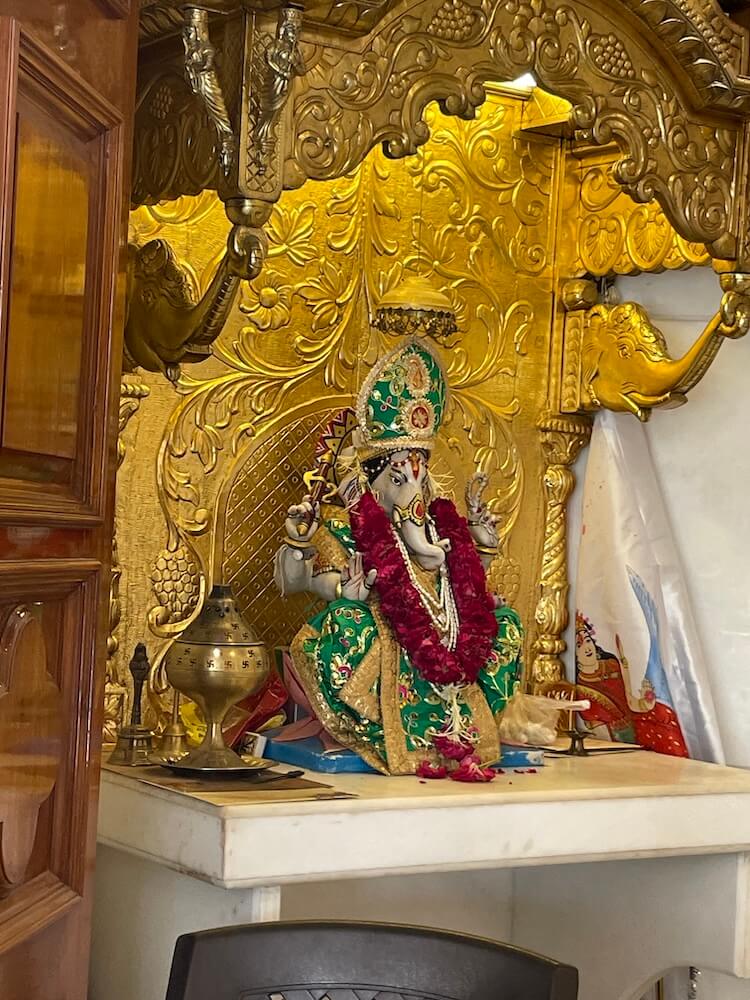 Inside the courtyard, there is a large, circular fire pit (yagna kund) and directly ahead stands the grand temple structure. The temple consists of a darshan mandap (viewing hall), an open sabha mandap (assembly hall), an antechamber (antaral), the sanctum sanctorum (garbhagriha) and a circumambulatory path (pradakshina marg).
The sabha mandap is topped with a conical spire, while the sanctum sanctorum features a tall, tapering shikhara that narrows as it rises. At the base of this spire are four small domes. At its summit are a two-tiered amalaka and a four-tiered kalash. Temple flags wave proudly atop the shikhara.
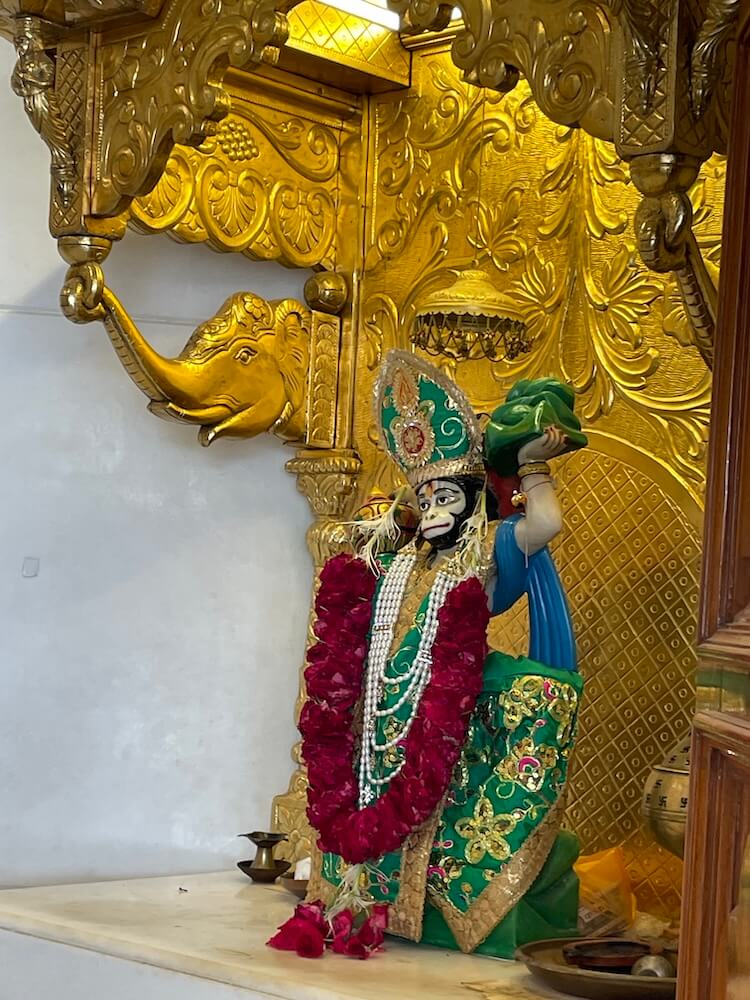
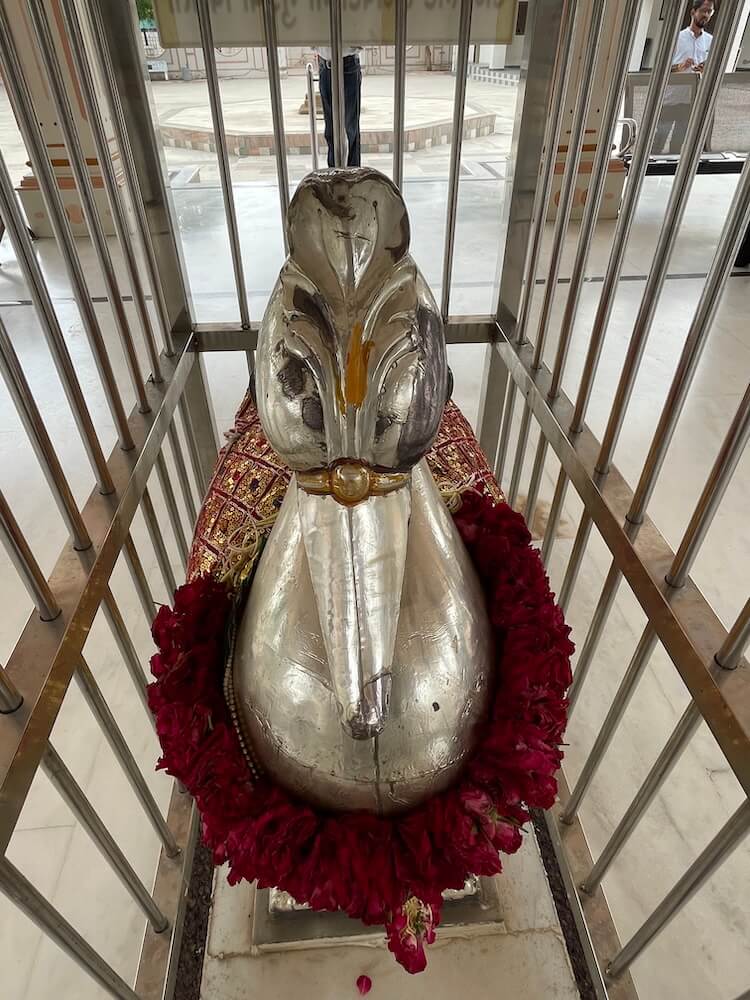
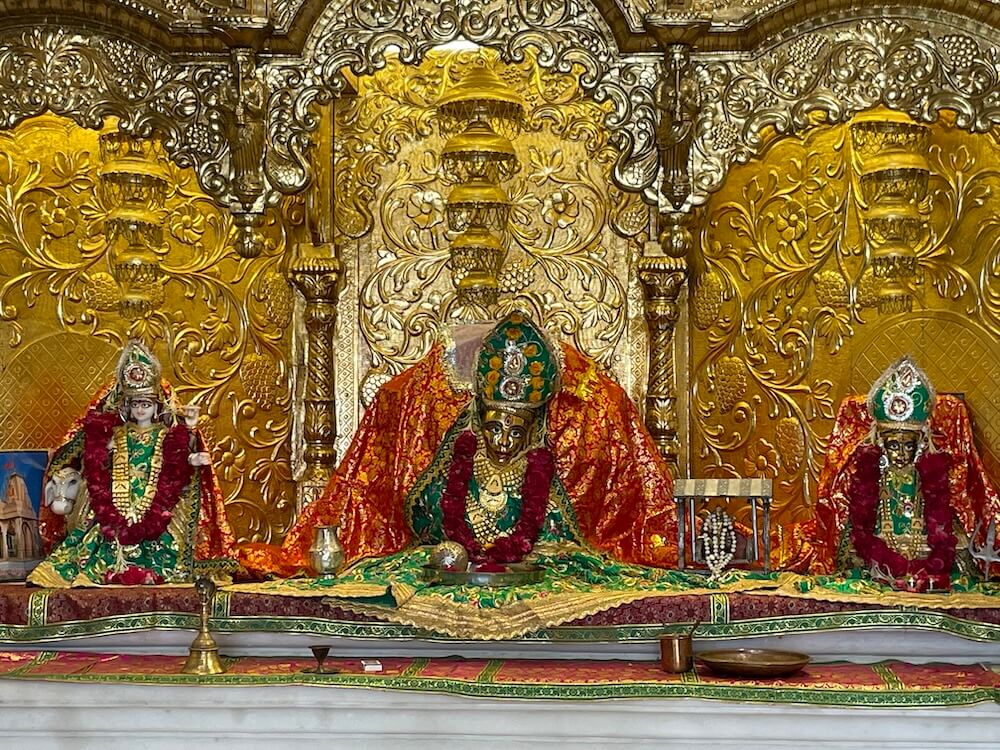
Inside the sabha mandap is a silver idol of a swan, the vehicle of the goddess. At the entrance to the antechamber are statues of temple guardians (dwarpalas) on either side of the pillars. To the left inside the antechamber is an idol of Ganesha within a golden shrine and to the right is an idol of Hanuman. The sanctum features a large marble pedestal intricately carved with images of a cow, swan and lion. Upon this pedestal rests a finely crafted and gold-plated shrine containing the central idol of Brahmani Mata. On her left is Umiya Mata and on her right is Chamunda Mata. All three goddesses wear ‘Mukhavata’ (face masks) and are adorned with golden crowns.
The temple is managed by the Brahmani Mataji Charitable Trust. Daily aarti takes place at 6:00 in the morning and 7:00 in the evening. A ritual fire ceremony (havan) is performed every full moon day. During the Sharad Navratri festival, nine days of Garba and Dandiya are celebrated with devotion. During Diwali, Garba is held for three nights and the traditional community feast known as Annakut is also organized.