 Savli, situated on the banks of the Mahi River, is an important pilgrimage site for the Pushtimarg sect of Bhaktimargi Vaishnavas. In this religiously significant village stands the temple of Bhimnath Mahadev. It is believed that this sacred site has existed since even before the time of Adi Shankaracharya. Devotees believe the Shiva Lingam here is awakened and spiritually potent. On the day of Mahashivratri, thousands of worshippers gather here to perform abhishek on the Shiva Lingam. According to a legend, the nine Nath yogis of the Nath sect once spent a night here together.
 The exact time of the temple’s founding remains undocumented, but local traditions trace its significance back to the 7th or 8th century. Legend has it that many years ago, a local devotee of Shiva received a divine vision that revealed the presence of a Shiva Lingam at this spot, leading to the temple’s construction. Another tale recounts that around 350 years ago, a Nath yogi named Gaibinath Maharaj performed intense penance here. According to the scripture ‘Bhaktamanjirimala’, which chronicles the lives of the Navnaths in the lineage after Saint Dnyaneshwar, Gaibinath (locally known as Gebinath) was revered for his mystical ability to appear simultaneously in multiple places. It is believed that he took ‘jivant samadhi’ at this very site.
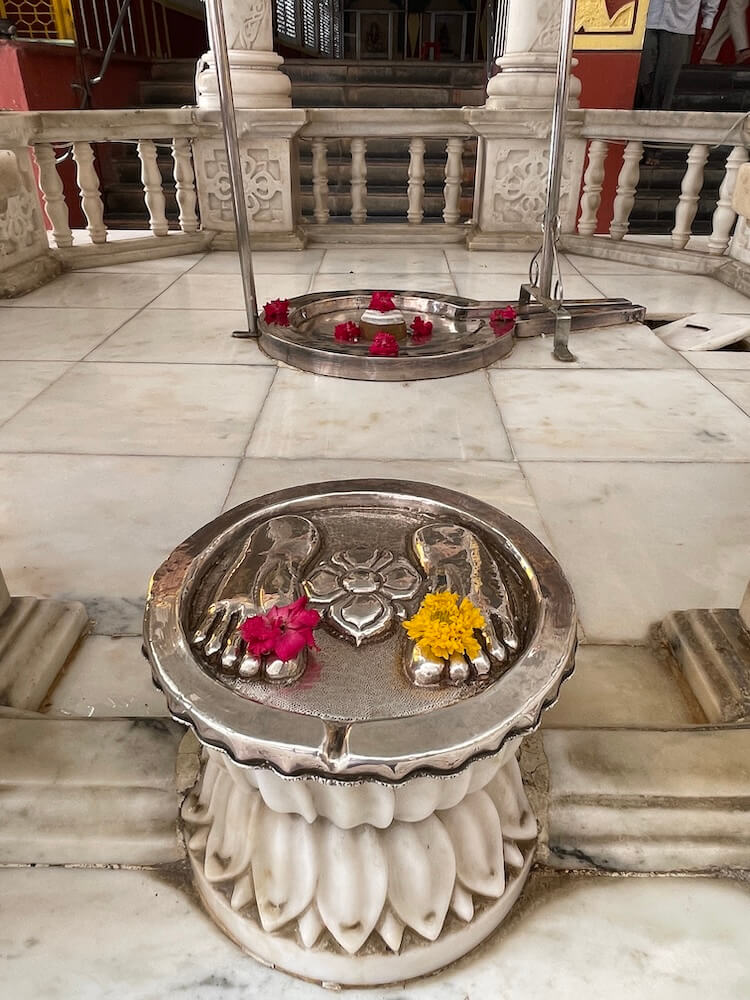
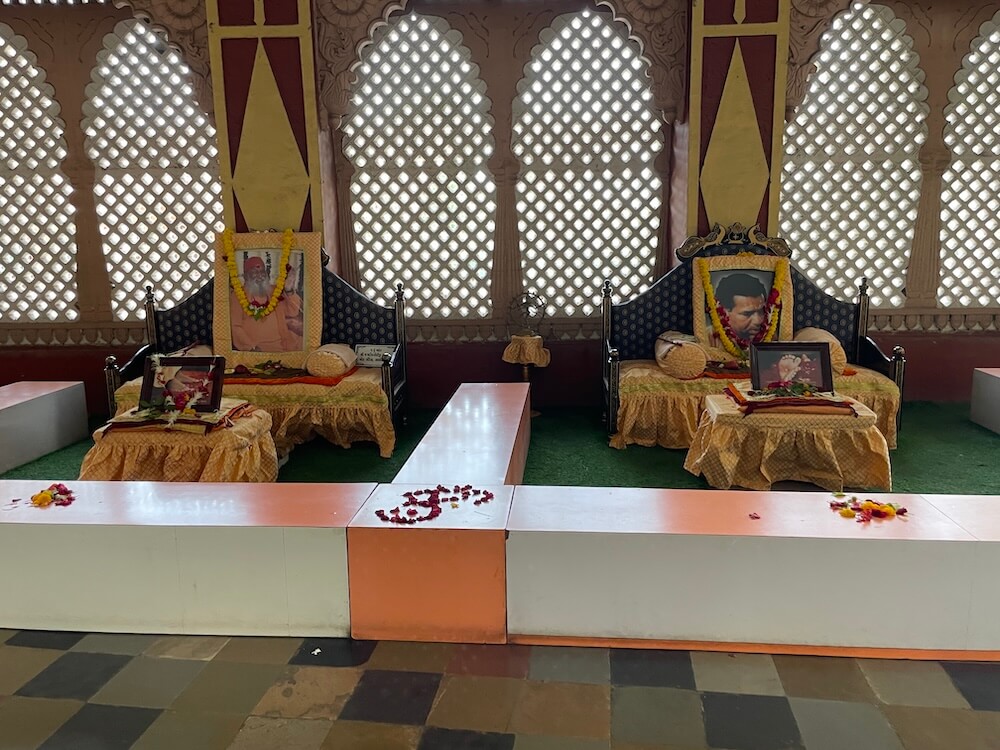
On the day of Rishi Panchami in Samvat 2015 (Monday, 7 September 1956), a revered spiritual teacher arrived in the village and came to be known as ‘Savlina Swamiji’. He transformed the temple’s surroundings by clearing dense vegetation and restoring order to the grounds. 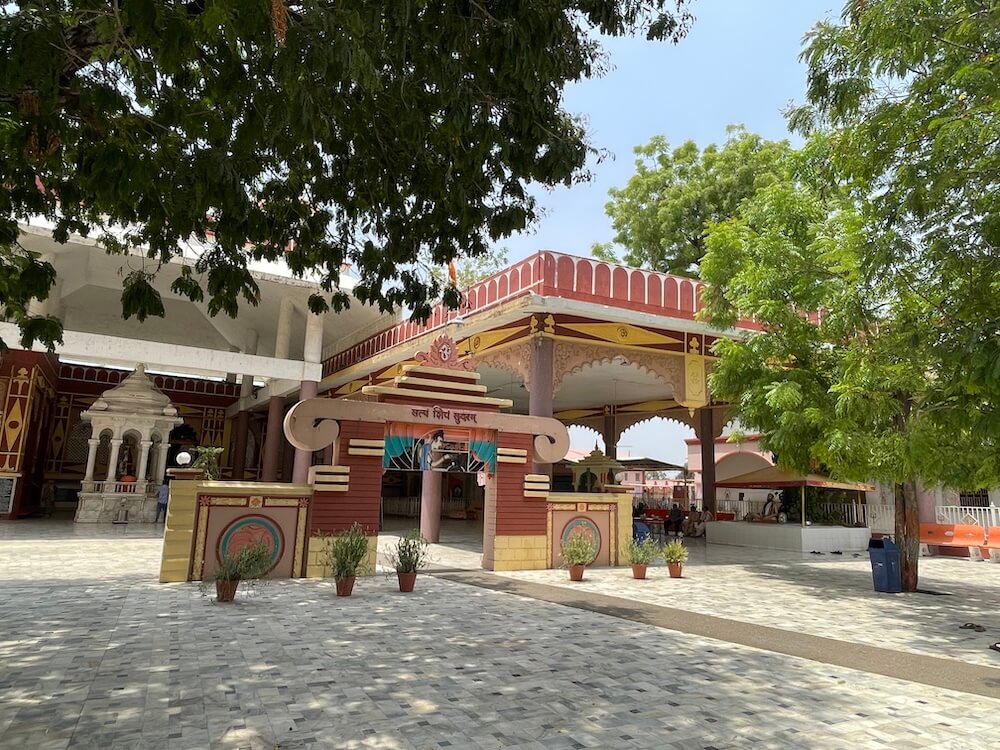 Over time, he renovated the dilapidated temple and also rebuilt the samadhi of Gaibinath Maharaj. With a vision that extended beyond religion, Swamiji also prioritized education and service, establishing schools, colleges and health centers in the surrounding region. He supported the poor, funded the weddings of underprivileged girls and became a beloved spiritual and social leader. People began to refer to him by the village’s name ‘Savliwale Swamiji’. Tragically, in 1991, while returning from the Kumbh Mela in Ujjain, Swamiji met with a fatal accident. His samadhi was later built beside that of Gaibinath Maharaj. Today, Savliwale Swamiji is revered by lakhs of devotees across India and abroad. After his passing, the Swamiji Janseva Trust, comprising his followers and the temple’s caretakers, undertook the renovation of both samadhi shrines.
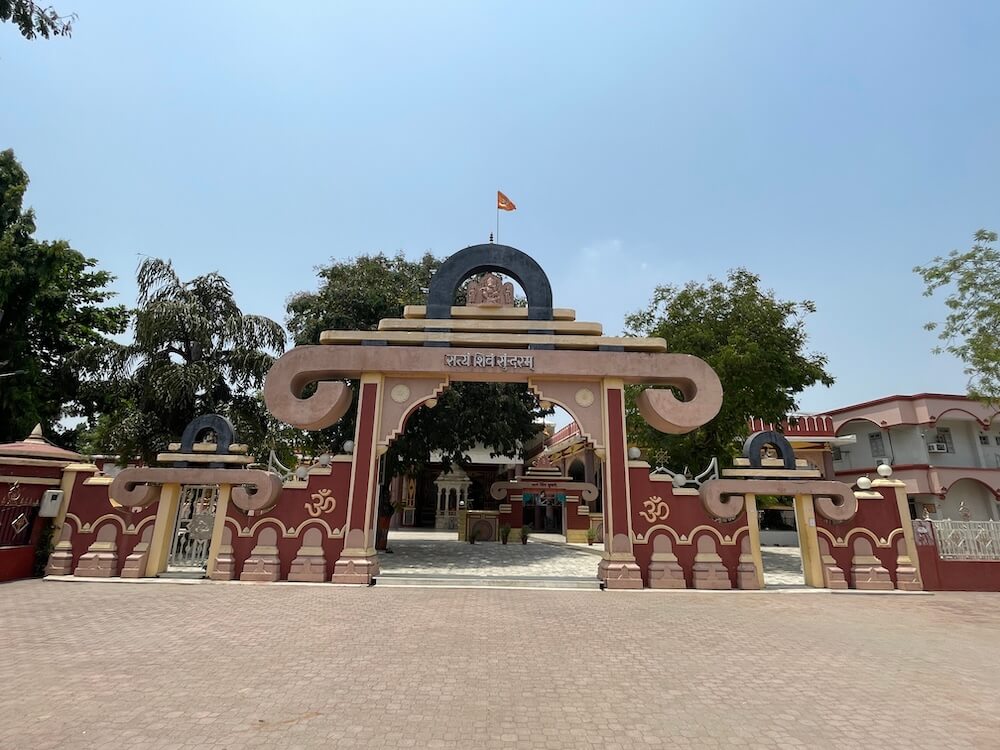
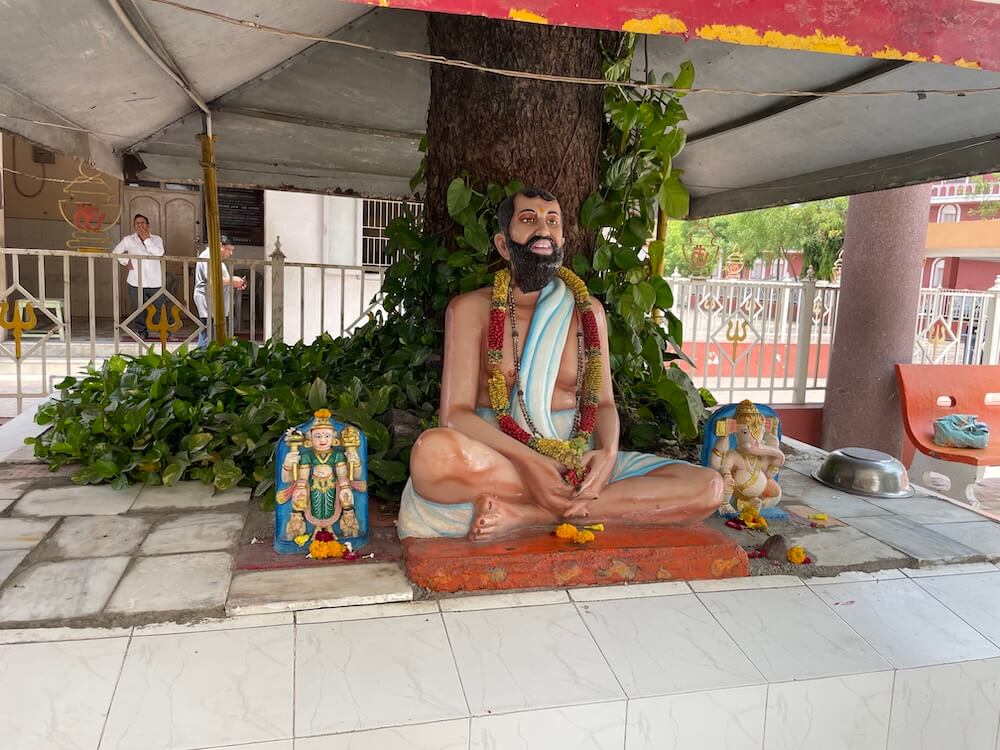
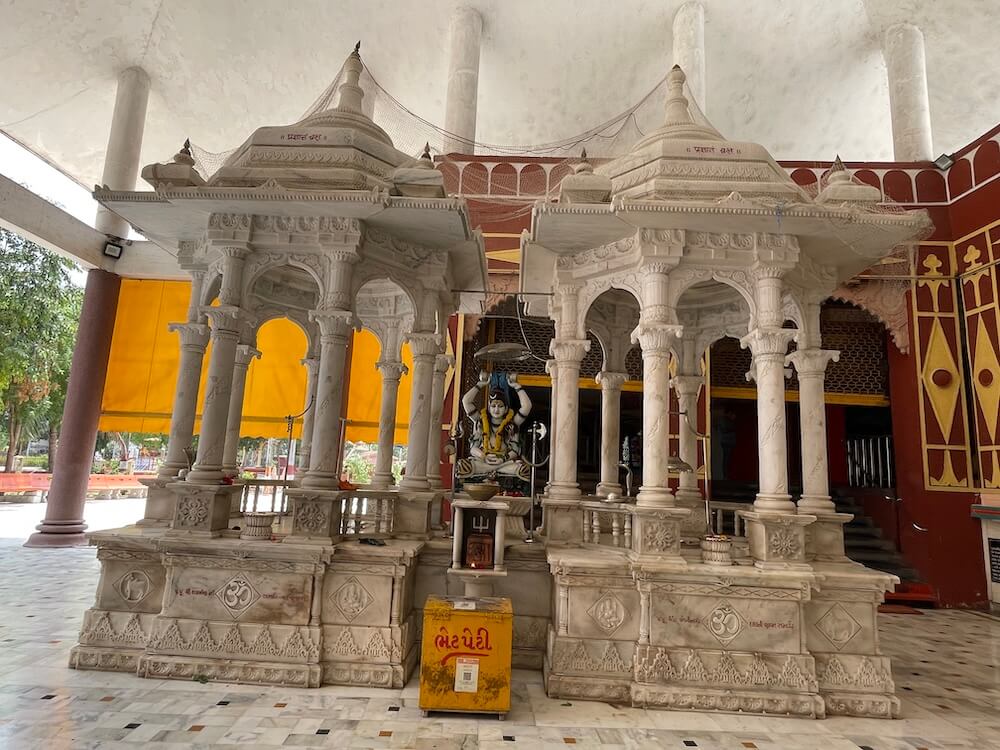
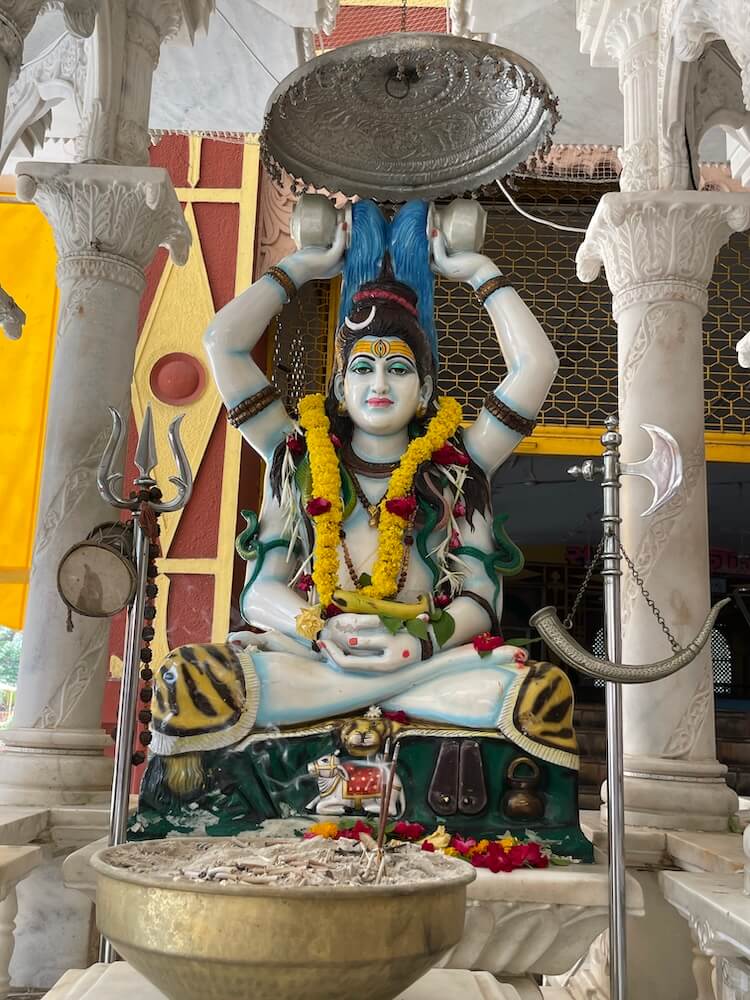
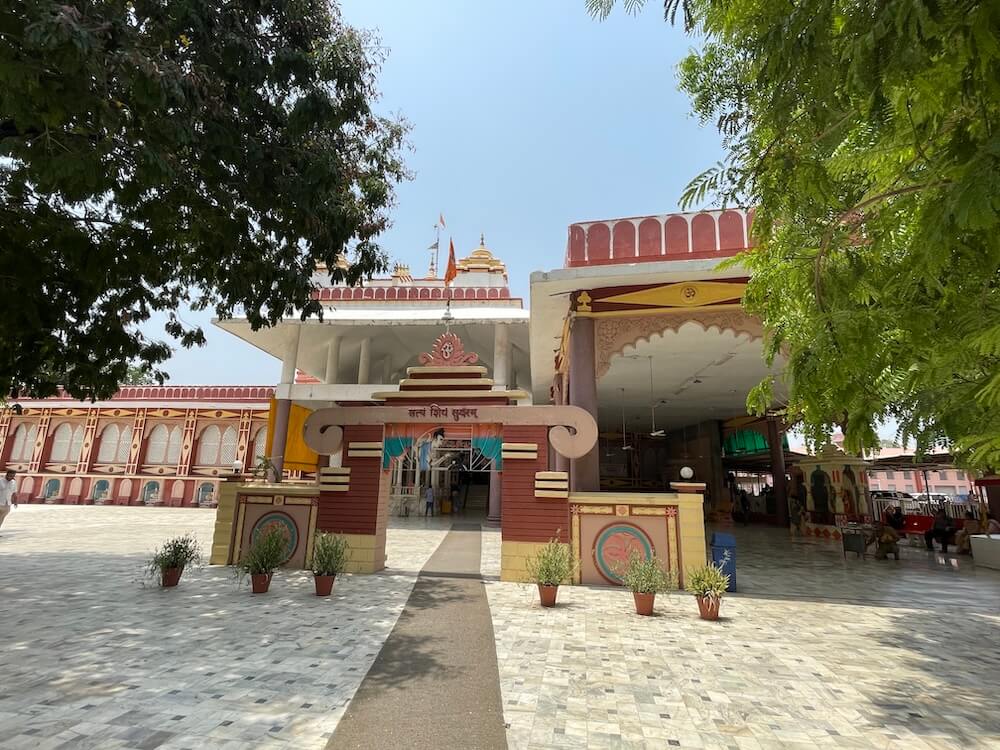
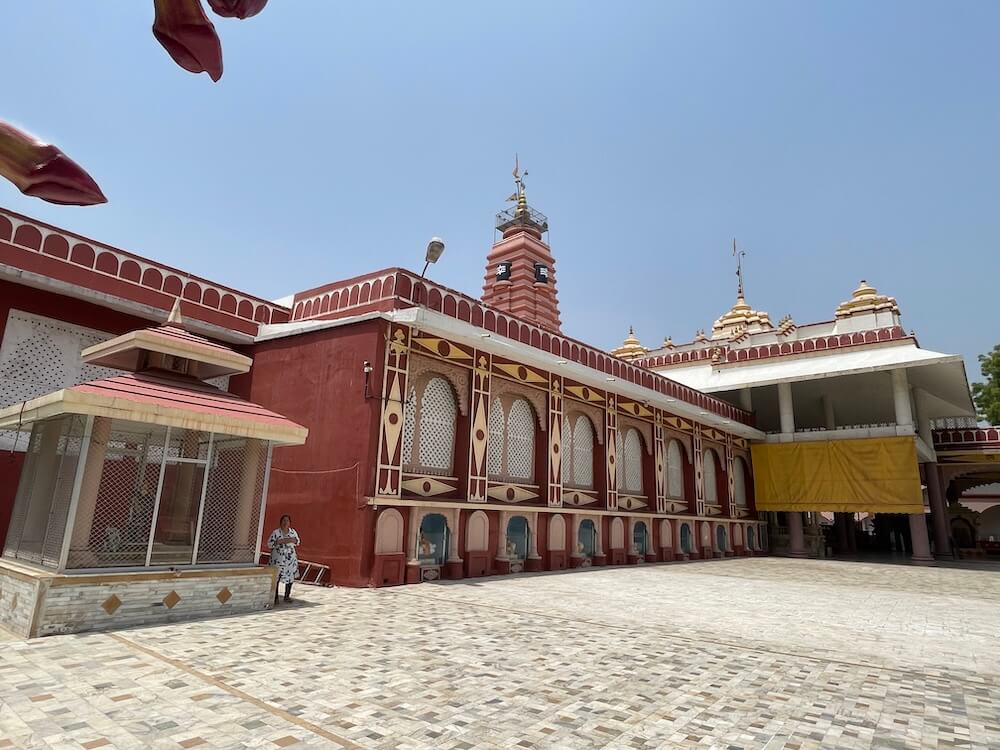 The temple is set within a spacious, walled compound. A large main gateway greets visitors with the inscription ‘Satyam Shivam Sundaram’ carved on a horizontal beam and an image of Ganesha above it in a semicircular niche. A little ahead, a smaller replica of the gateway leads toward the main temple path, adorned with a metal image of Lord Ram worshipping a Shiva Lingam. Lush with flowering trees and sacred plants, the temple ground also feature statues of Swami Vivekananda, Gaibinath Maharaj and other saints, sages and ascetics. Nearby are sculpted scenes from the Ramayana and Mahabharata. Close to the main temple are the marble-canopied samadhi sites of Savliwale Swamiji and Gaibinath Maharaj. A distinctive idol of Shiva is also located here – depicted in a meditative posture with four arms. Two hands rest in samadhi mudra, while the upper arms hold
  vessels from which sacred water flows onto Shiva’s head in a symbolic Gangadhar form.
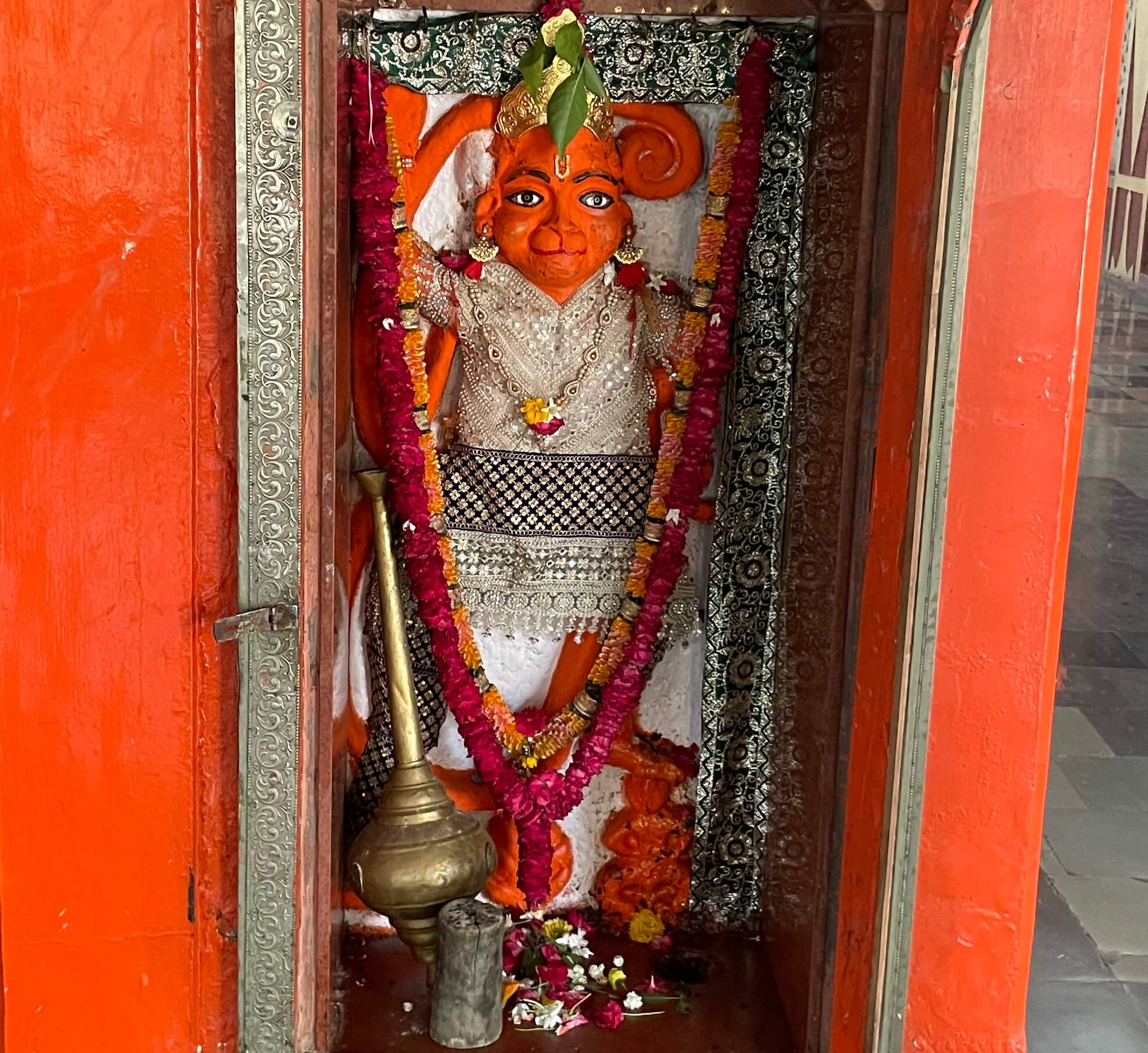
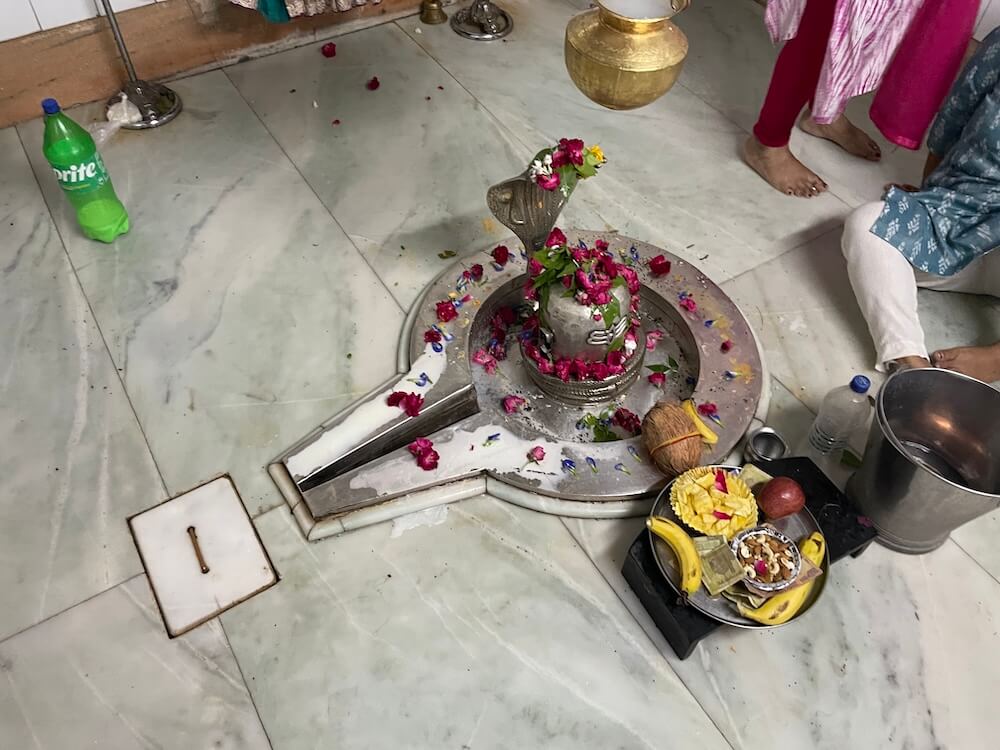
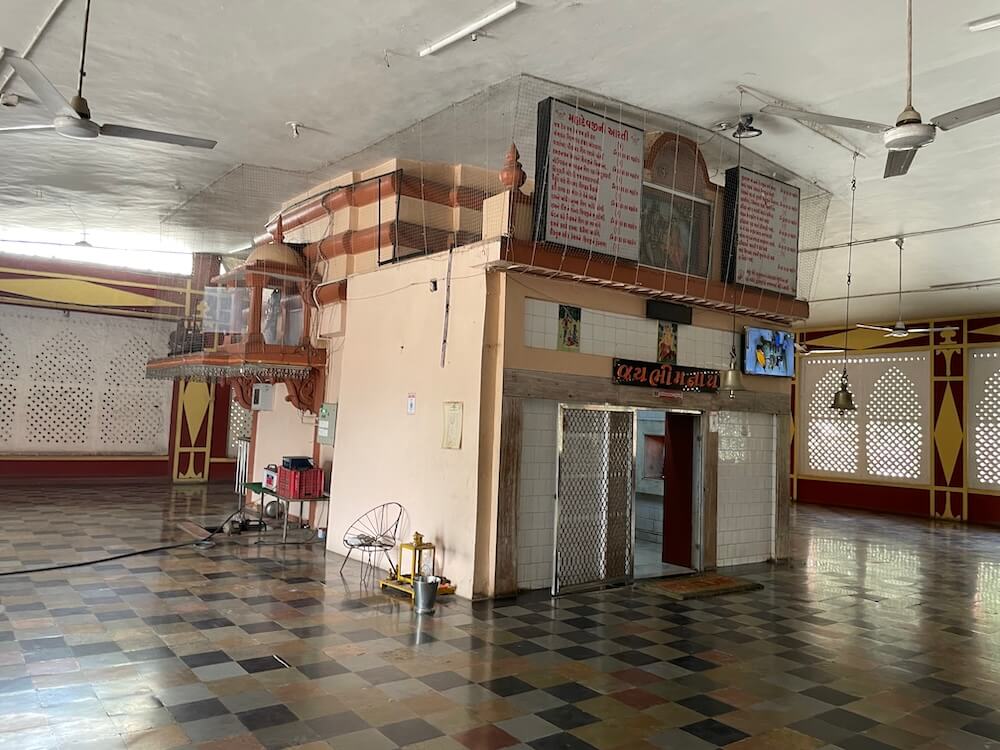
Ascending a few steps leads to the Bhimanath Mahadev temple. The temple’s elegant architecture features intricate carvings, ornate idols and detailed sculptural reliefs. Upon entering the grand assembly hall, a central stage faces the sanctum, where various music and devotional programs are held. To the left of the stage stand statues of Lord Shiva and Vishwakarma and nearby are the sacred padukas of Mahant Jagdishgiri Maharaj. Above the main entrance of the temple, the lintel displays figures of child Ganesha and Shiva-Parvati. Within the hall are the sacred bull Nandi and a turtle idol. The vestibule houses shrines to Ganesha and Hanuman. 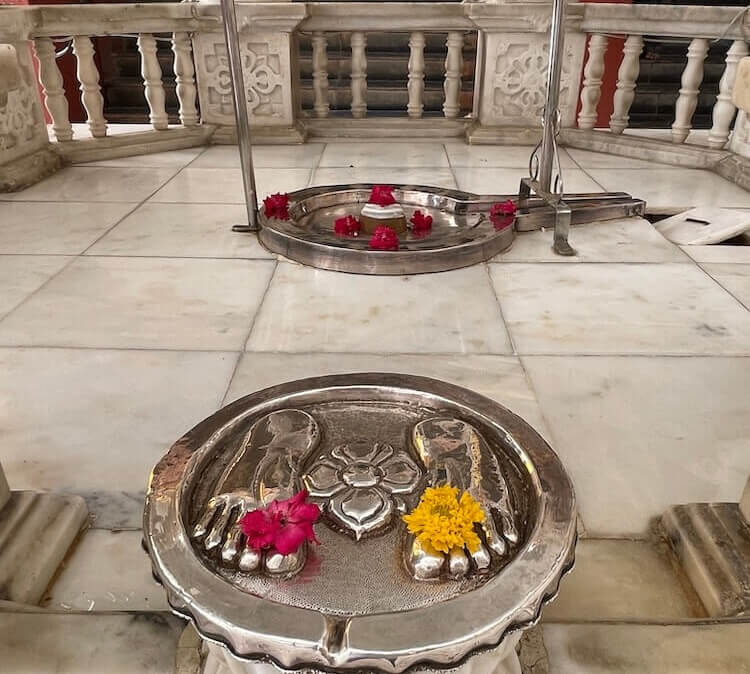 At the heart of the sanctum, the Shiva Lingam is covered by a silver cobra forming a canopy. Behind the Lingam, on the wall, is a shrine to Goddess Parvati, above which is a large image of Lord Shiva. The temple’s exterior walls are decorated with carvings of sages such as Vishwamitra and Atri, among others. Behind the temple stands a wooden Gurumandir, where various religious rites are conducted in the ‘Gebinath Yagyashala’. Near Swamiji’s image, two vehicles used by him are preserved. Within the temple complex, devotees also find the ‘Shri Annapurna Bhavan’ and a prasada griha, offering lodging and meals.
A wide range of religious activities takes place year-round at Bhimanath Mahadev temple. Each day begins with bhajans and chanting of mantras, followed by abhishek of the Shiva Lingam with scented flowers, sandal paste and sacred water. The deity is then adorned with ornaments. On Mahashivratri, thousands of devotees come to offer their prayers. The temple is decorated with flowers and festivities include shehnai music, bhajans and sacred rituals. Devotees are served maha-prasad late into the night. The holy month of Shravan sees heavy footfall, including kanwar yatras. Swamiji’s death anniversary is observed with devotional programs. Major festivals like Holi, Navratri and Diwali are also celebrated here with great fervor.