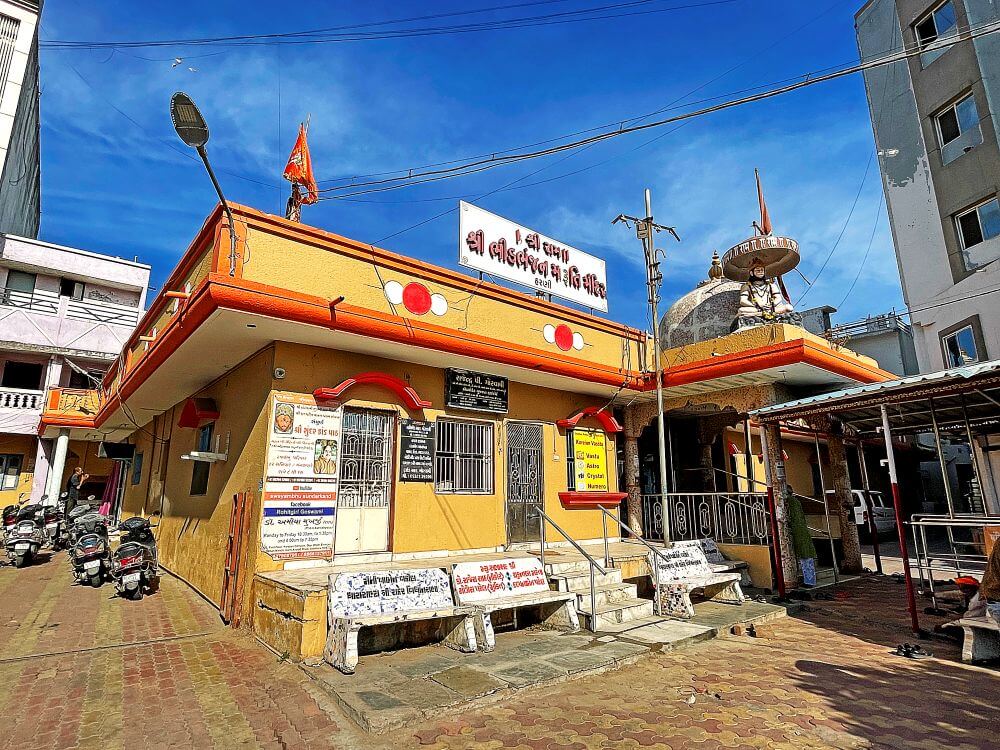
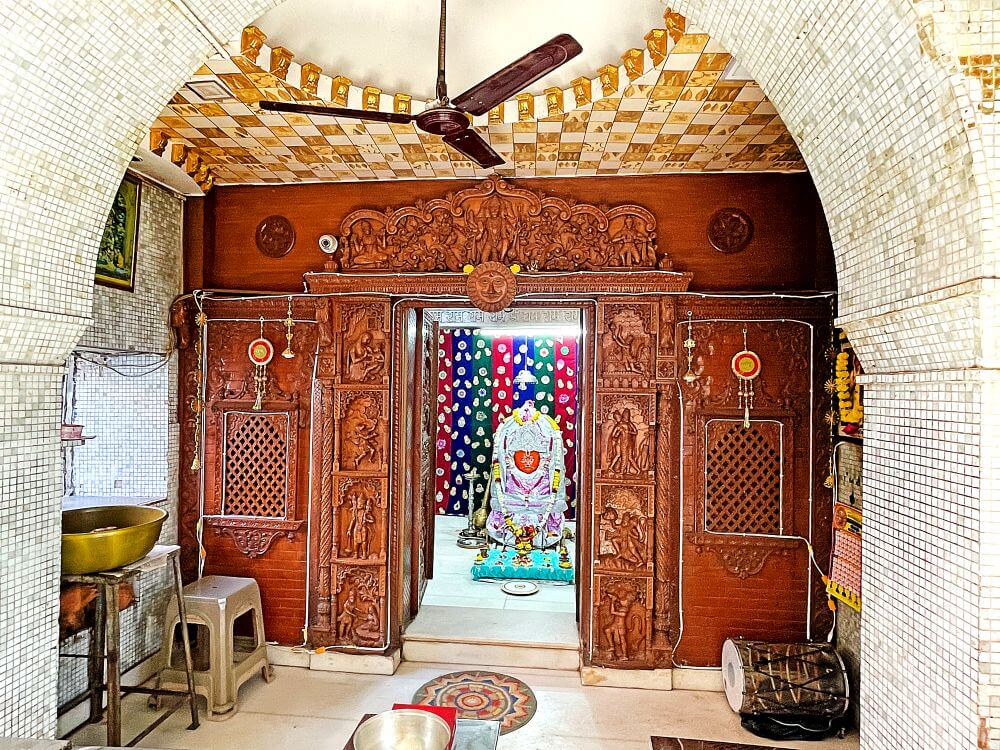
 Hanuman, the devoted servant of Lord Ram, is typically worshipped in his monkey form. However, there are some temples in India where he is revered in human form and one such ancient temple is located in Harni. According to devotees, ‘Bhidbhanjan Hanuman’ at this temple is the remover of devotees’ troubles. As per legend, after subduing the demon Hiranyaksha, who had received the boon of immortality, Hanuman began residing here in human form as per Lord Ram’s command. On the last Saturday of the Shravan month, a massive pilgrimage fair is held here, drawing over 200,000 devotees.
According to the legend, the demon Hiranyaksha ruled this area in ancient times, with Hirni (now Harni) as his capital. On their return to Ayodhya after slaying Ravana, Lord Ram, along with Sita,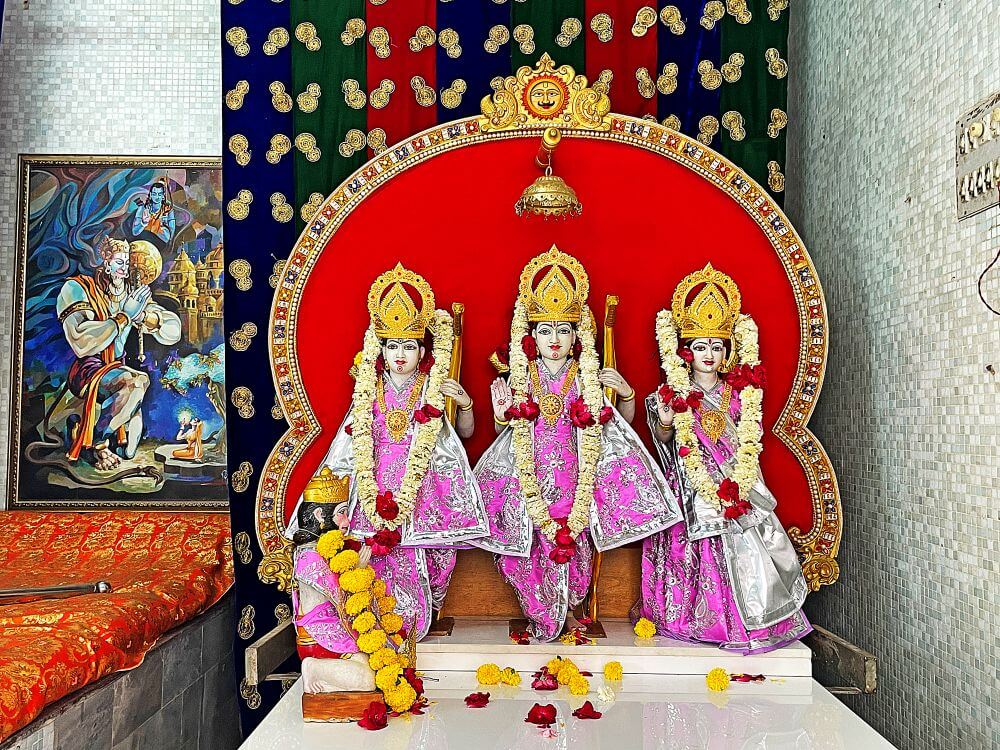 Lakshman and Hanuman, flew over this region in the Pushpak Vimana. They noticed that sages meditating by the Vishwamitri River were suffering due to Hiranyaksha’s tyranny. Responding to their plea, Lord Ram engaged in battle with the demon, but since Hiranyaksha was granted immortality by Brahma, he couldn’t be killed. Therefore, Ram commanded Hanuman to fight him. Taking on a giant form, Hanuman lifted Hiranyaksha, slammed him to the ground and pinned him beneath his left foot.
Lord Ram then instructed Hanuman, “Since this demon cannot be killed, subdue him beneath your foot and stay here permanently for the welfare of humanity. But adopt a human form, as your giant monkey form may frighten people.” Since then, Hanuman resides here in human form.
During the Chalukya rule in Gujarat, a spiritually accomplished saint built this temple in 1146 CE. I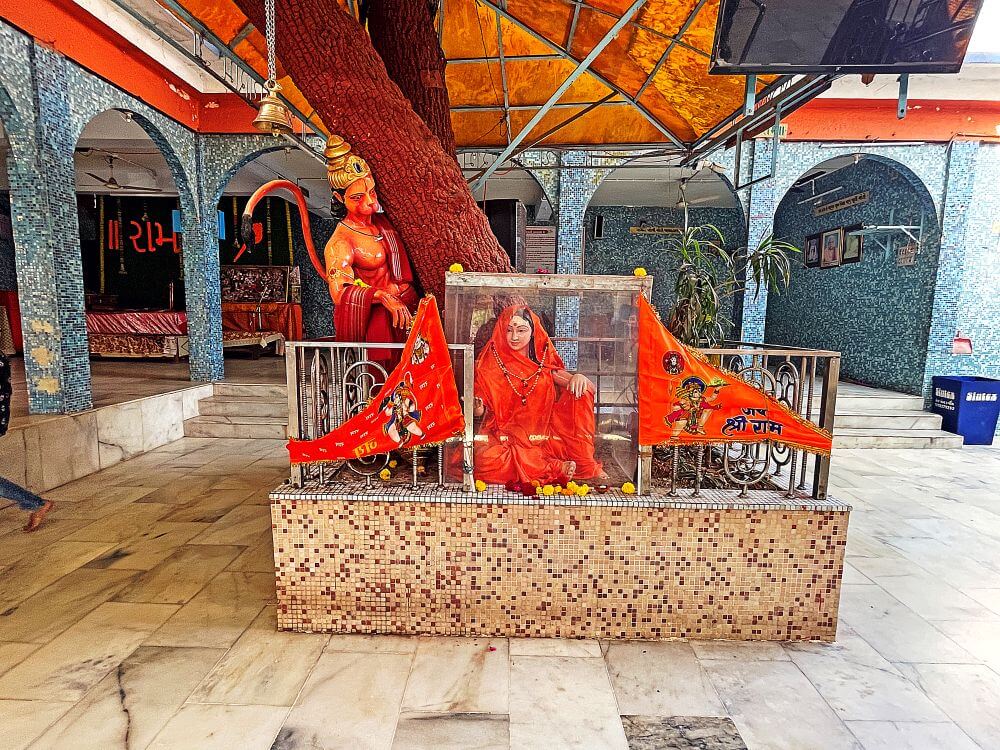 t was renovated again in 1449 CE. During the reign of Khanderao Gaekwad and Sayajirao Gaekwad III (1850–1949), the Gaekwad State provided an annual grant of ₹82 for the temple’s upkeep and priest salaries. The temple acquired its current form after a recent renovation.
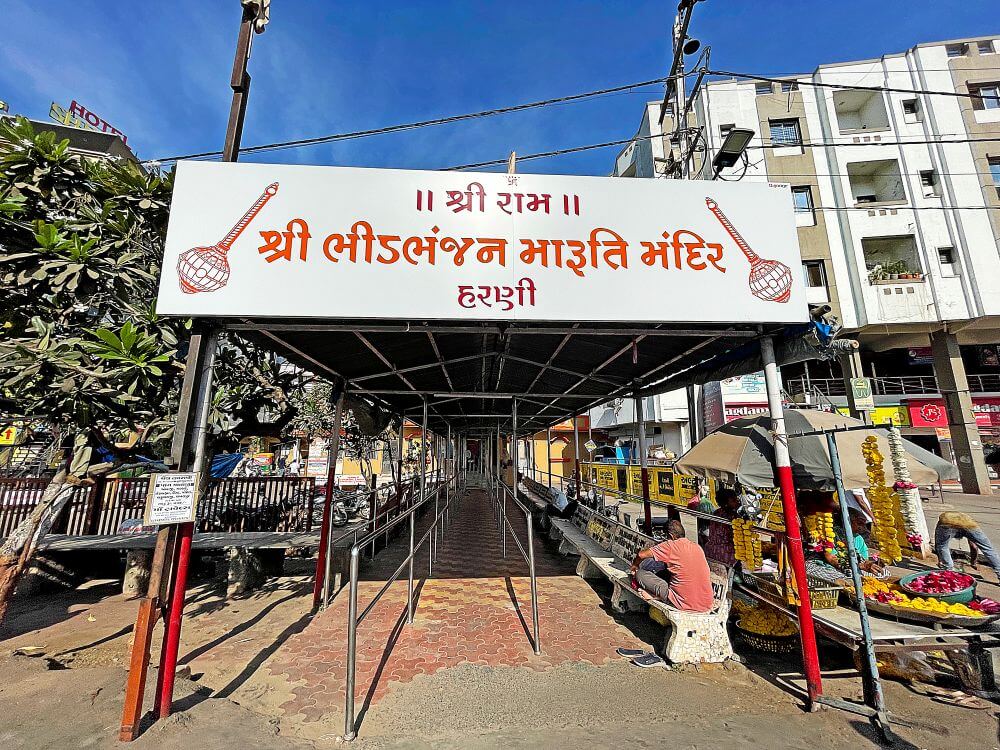
Located around 10 km from Vadodara city on Airport Road, the village of Harni is home to the temple. Numerous stalls selling flowers and offerings line the way. A roofed walkway with benches leads to a dome-shaped pavilion housing a meditative idol of Hanuman. From here, visitors enter the temple courtyard, surrounded by corridors on all sides, with the Bhidbhanjan Hanuman Temple at the center.
The temple consists of an open assembly hall (sabhamandap), an antechamber (antaral) and a sanctum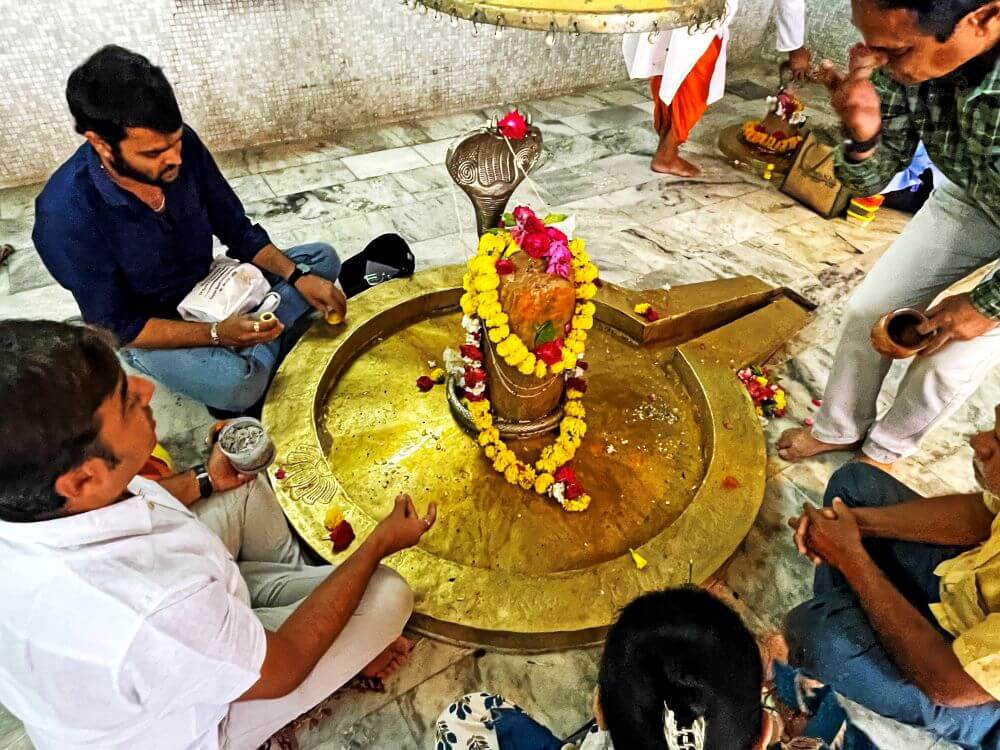 (garbhagriha). The sabhamandap has a flat roof, while the sanctum is crowned with a dome-shaped spire, topped by a silver disc and golden finial. The open hall has entrances on three sides. On the left of the main entrance, there is a sculpture of Lord Ram embracing Hanuman and on the right, a large standing idol of Hanuman.
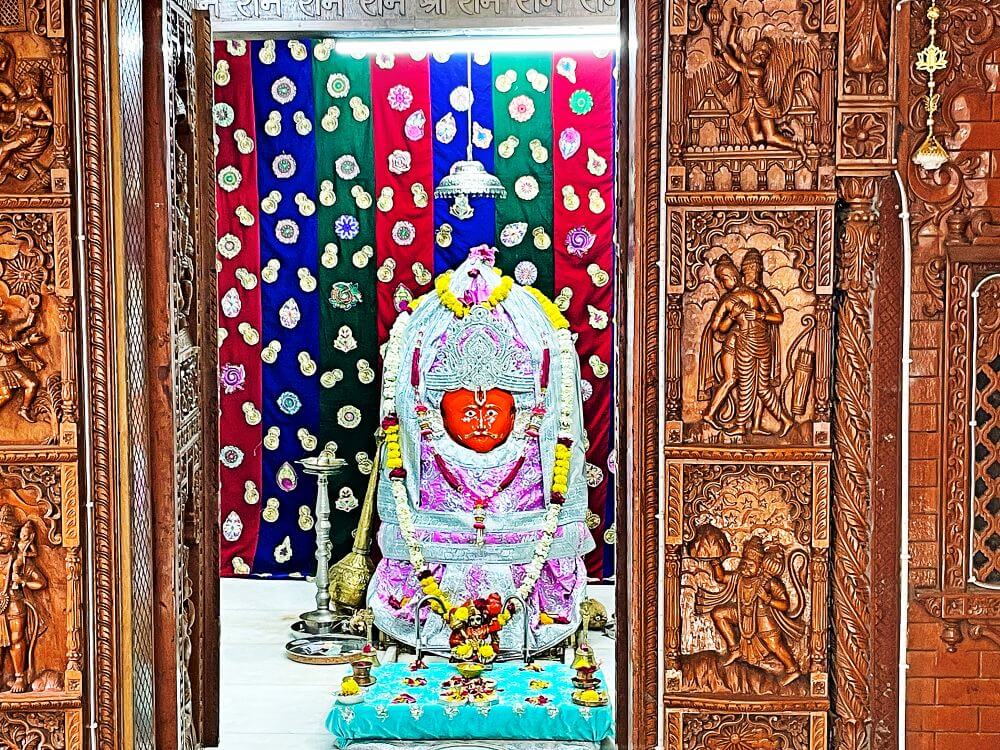
The wooden doorframe of the sanctum features carvings of Hanuman in various postures and scenes. Above the door is an image of Surya Narayan (Sun God). In the upper lintel, a carved image of Panchmukhi Hanuman is flanked by scenes showing Hanuman chanting Ram’s name and tearing his chest open to reveal Ram.
Inside the sanctum, the idol of Bhidbhanjan Hanuman has a human face with a mustache, coated in vermilion and the body painted golden. The left hand is placed on the chest and the right hand is raised to the head.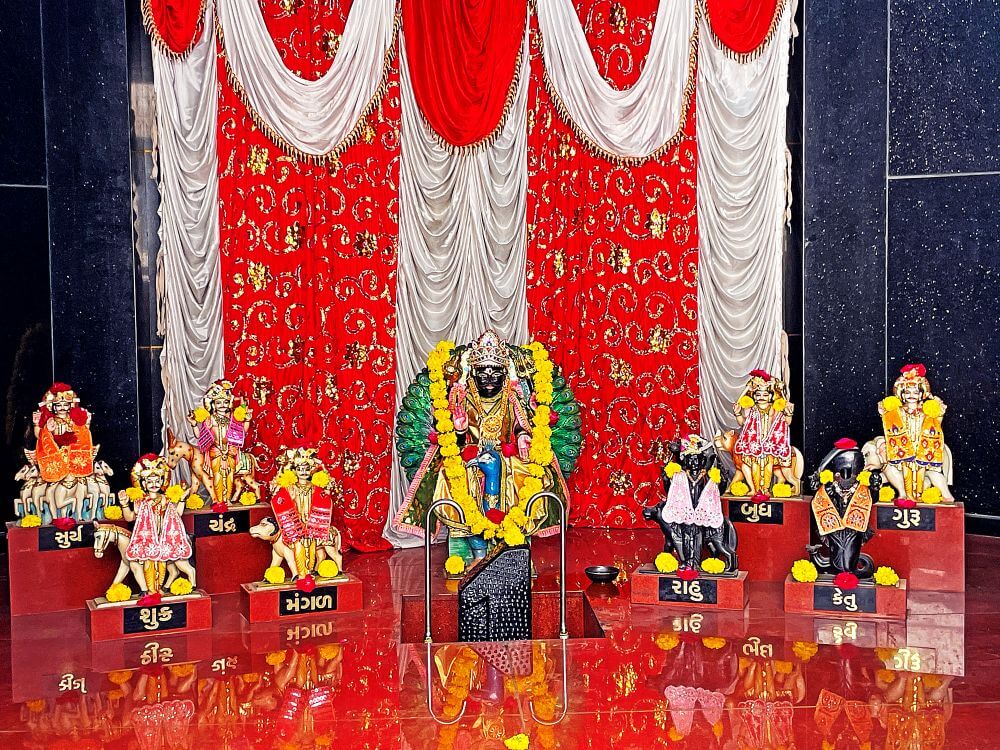 He wears a silver crown, garlands of pearls and carries a mace (gada) on the left.
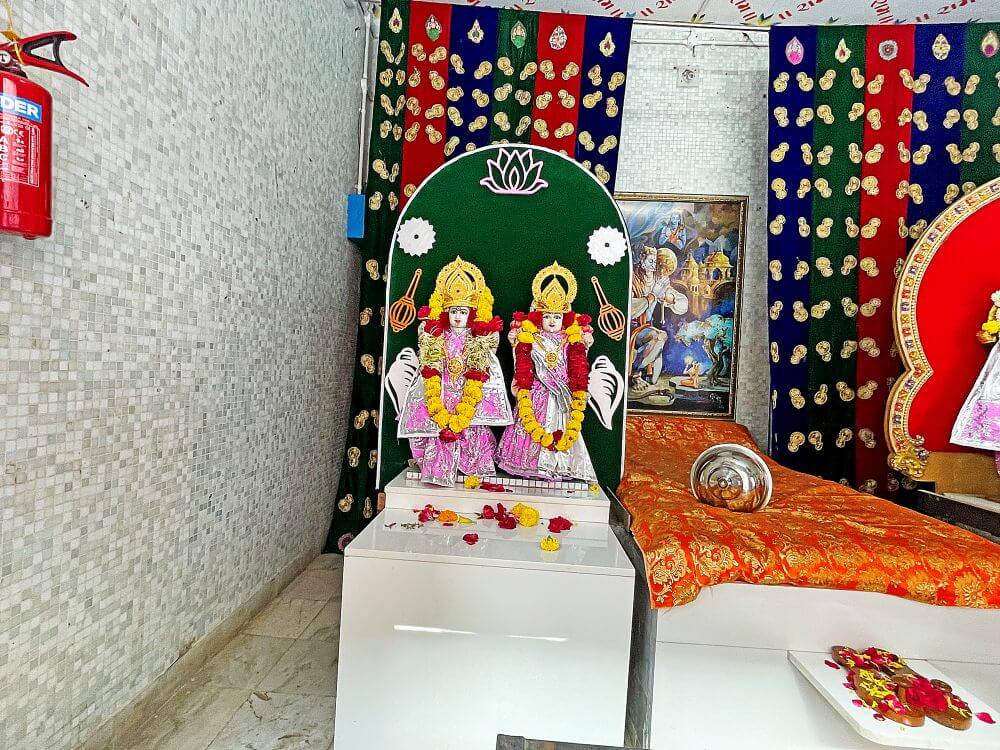
In front of the temple, a scene from Ashok Vatika -the meeting between Sita and Hanuman – is depicted with life-sized statues near an ancient tree. On the left side of the courtyard, there’s a shrine with a marble idol of Lakshminarayan and next to it, the Ram Darbar featuring beautiful idols of Ram, Lakshman and Sita, with Hanuman bowing to Lord Ram. These idols were consecrated about 25 years ago.
Next to these shrines is the Pancheshwar Mahadev Temple. Outside its sanctum is a small Nandi idol and inside are five Shivalingas, the central one being large and elliptical, topped by a silver serpent canopy. 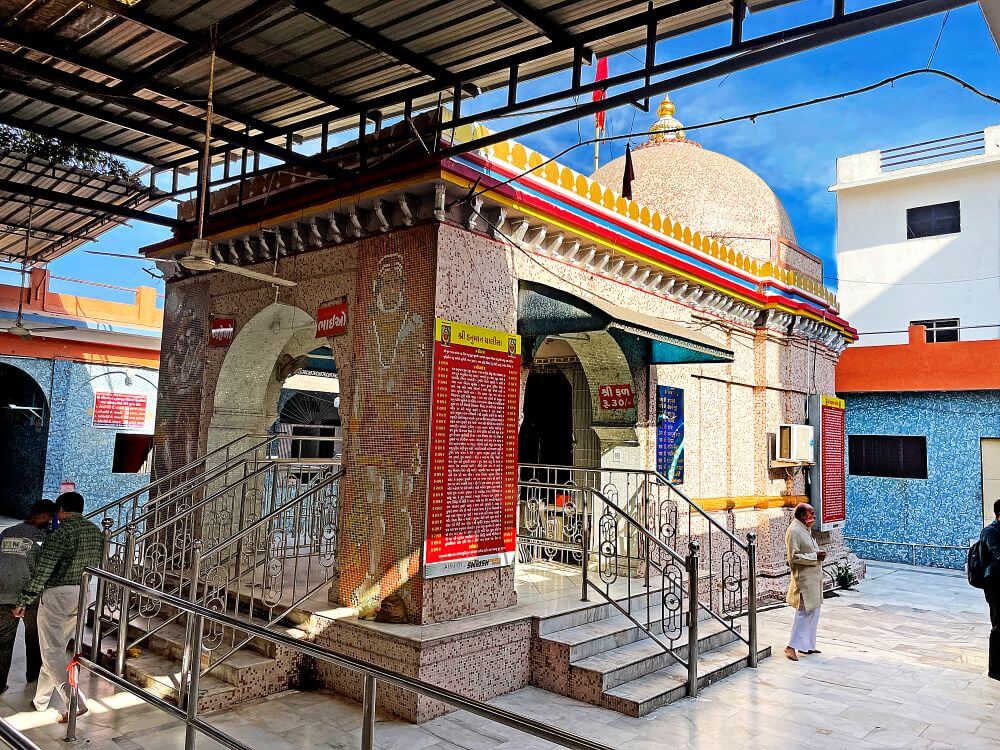 Behind is a shrine housing an idol of Goddess Parvati. Devotees believe worshipping Pancheshwar Mahadev brings relief from ailments and he is also called Mrityubhanjan Mahadev (Destroyer of Death).
There is also a Shani Temple in the premises, featuring Shani Dev seated on a peacock with spread feathers. In front is Shani’s sacred stone (Shila), flanked by idols of the other eight planets (Navagrahas). These idols were installed on February 14, 2022. The temple complex also houses shrines for Sheetala Devi and Baliyadev.
Daily worship and evening and morning aartis take place at the Bhidbhanjan Hanuman temple. Many devotees come for darshan on Tuesdays and Saturdays. On both these days, recitations of the Sundarkand are held in the temple premises. On Hanuman Jayanti, thousands of devotees stand in line to have darshan. A fair is held on the last Saturday of the month of Shravan. This is called ‘Bada Mela’ (Big Fair). This fair began during the reign of Baroda King Rajarshi Sayajirao Gaekwad III. Sayajirao Gaekwad himself used to come riding on an elephant for darshan of Bhidbhanjan Hanuman on this day. There are records of many saints and holy men, including Bhagwat storyteller Sant Dongre Maharaj, who have visited this Hanuman temple for darshan.