 In the seventeenth century, when the city of Burhanpur was known as the ‘Gateway of the Deccan’, a miraculous temple of Balaji Maharaj stood tall and continues to do so today. Known as Bade Balaji, this temple is said to have a history spanning nearly 500 years. The descendants of Swami Ratnakar Maharaj installed the idol of Balaji here, an idol that devotees revere as miraculous. Faith holds that worshipping this idol with devotion leads to the fulfillment of all wishes. Because of this reputation, countless devotees flock to the temple for darshan.
According to the ‘Encyclopaedia Britannica’, Burhanpur was founded in 1399 on the banks of the Tapti River, in the shadow of the Asirgarh Fort, by Nasir Khan of the Faruqi dynasty of Khandesh. It is said that he named the city after the Sufi saint Burhanuddin.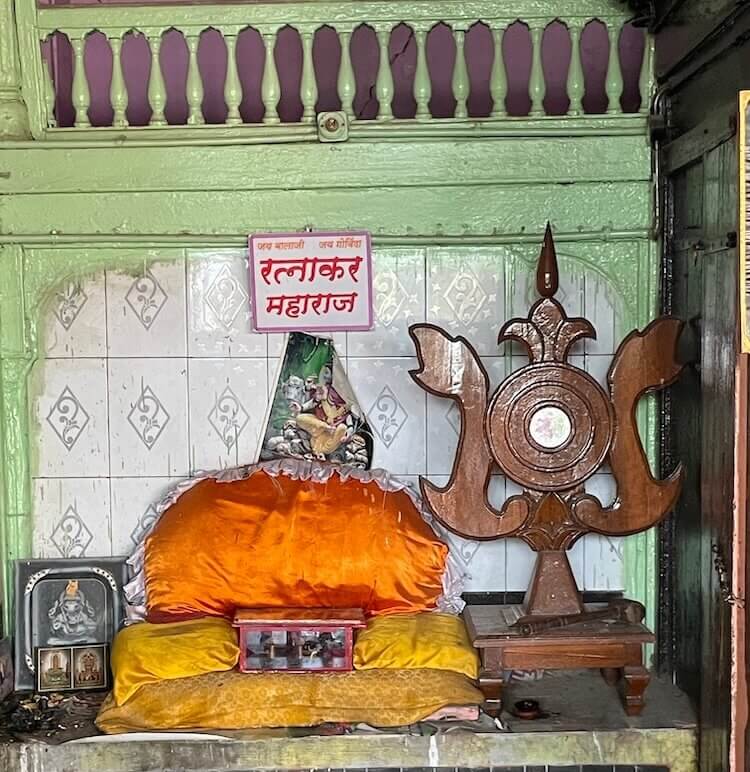 In 1601, Mughal emperor Akbar captured it and from then until 1636, Burhanpur remained the southern headquarters of the Mughal empire. Later, during the Maratha Peshwa period, it came under Maratha control. The city, situated just about 20 kilometers from the Jalgaon district border in Maharashtra, has a large Marathi-speaking population. Alongside its mosques and historic structures, Burhanpur is home to many Hindu temples, among which the Bade Balaji Mandir holds a special place of devotion.
The temple has an origin story that is deeply cherished. Around 500 years ago, Swami Ratnakar Maharaj traveled to Tirupati to have darshan of Lord Balaji. During that visit, he had a vision of an idol of Tirupati Balaji appearing in his dream. In the dream, he was shown the location of this idol. The next day, he visited the place and indeed found a Panchdhatu (five-metal) idol of Balaji there. Taking this idol with him, he returned to Maharashtra. Later, he took samadhi at Pankheda in Dhule district. After that his descendants continued their journey and eventually, they arrived in Burhanpur. It was here that they established this temple.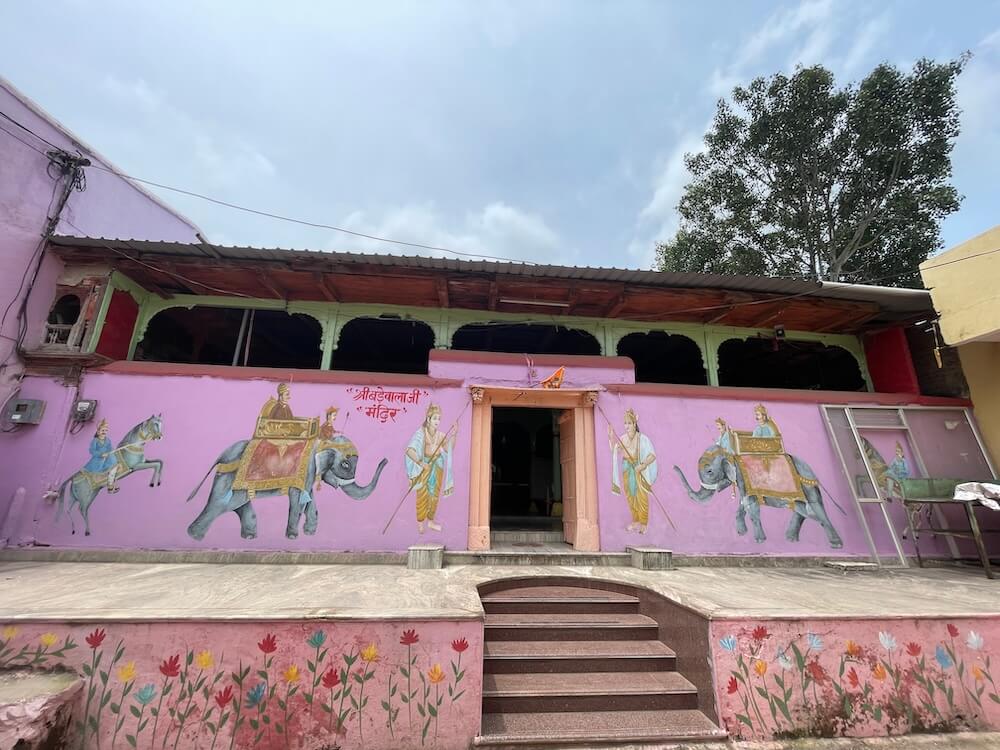 The temple building resembles an old mansion and through periodic renovations, it has acquired its present form.
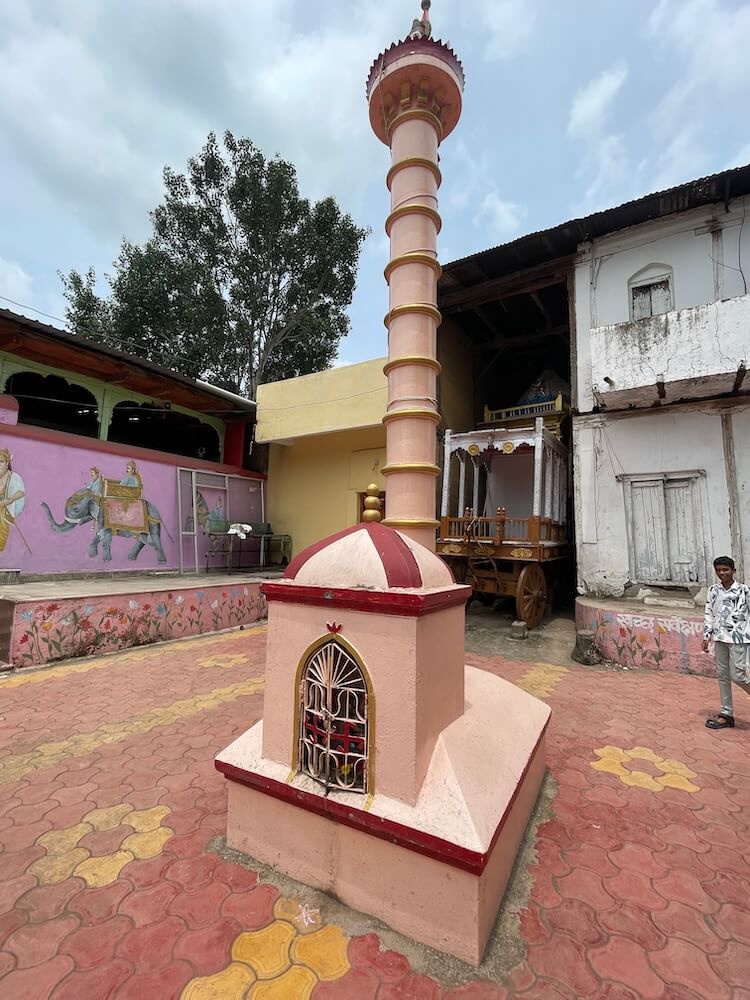
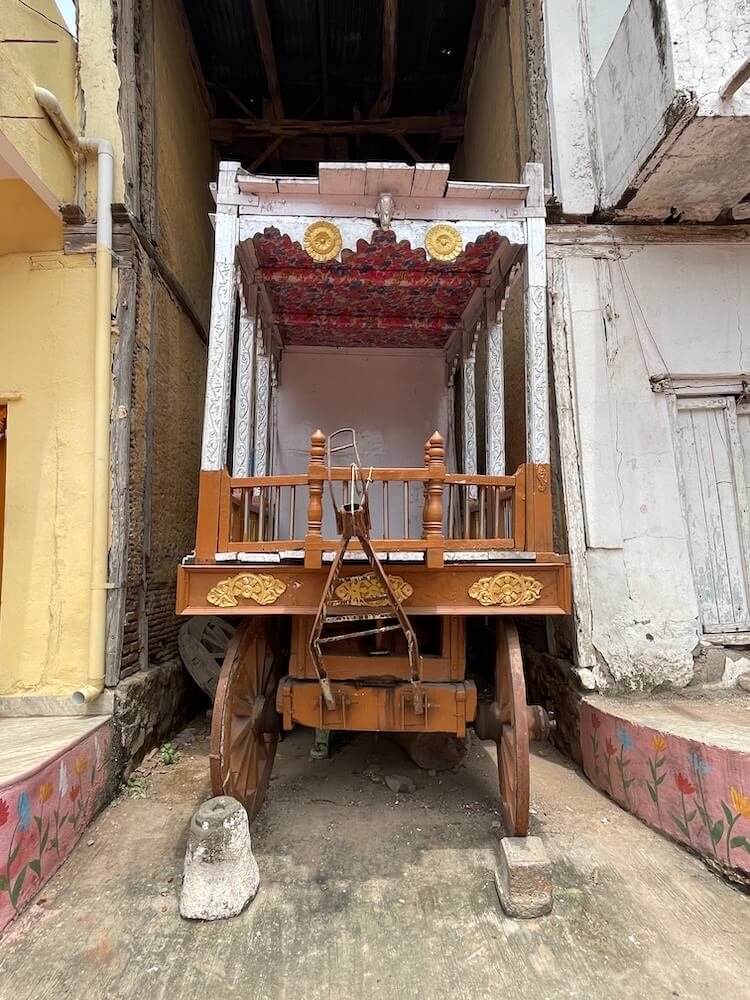
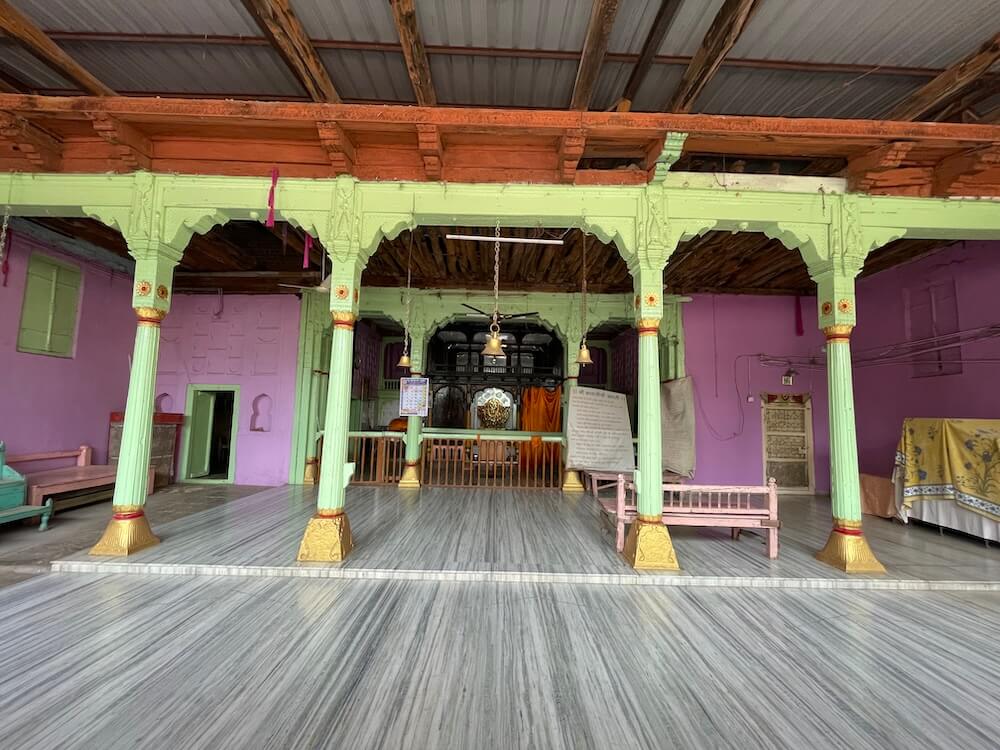
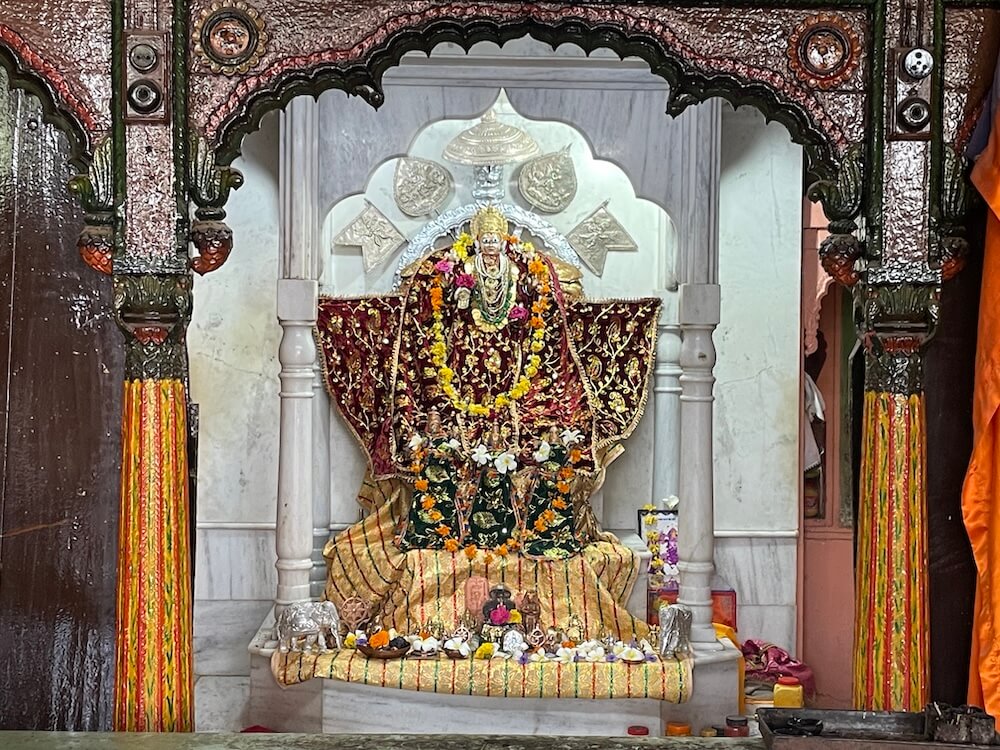
The temple has a large courtyard, in which a tall Garuda pillar stands, with the idol of Garuda seated on its summit. In front, under a shed, lies a large wooden chariot. The temple itself is built on a raised platform. The entrance is a simple wooden gateway, on either side of which are painted figures of gatekeepers, as well as warriors mounted on elephants and horses. Passing through the entrance, a spacious assembly hall comes into view. The wooden pillars, with their carved supports at the top andstone bases at the bottom, reflect the antiquity of the temple. Within the niches of the assembly hall, stone idols of Hanuman are enshrined. 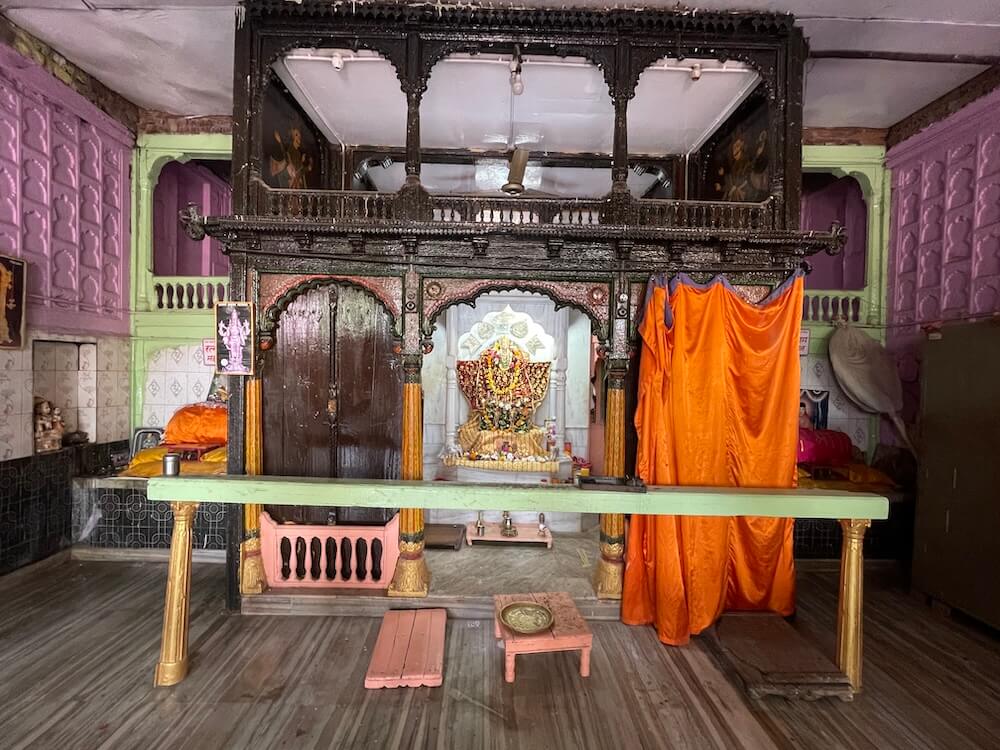 Directly ahead lies the distinctive sanctum, supported on wooden pillars, evoking the memory of an old haveli. The sanctum has an open doorway, flanked by tall windows and above it, three more windows resembling a balcony. Inside, upon a high marble pedestal, rests the Panchdhatu idol of Balaji, adorned with garments and ornaments. Before this idol, the idols of Shri Krishna, Subhadra and Balaram are also installed.
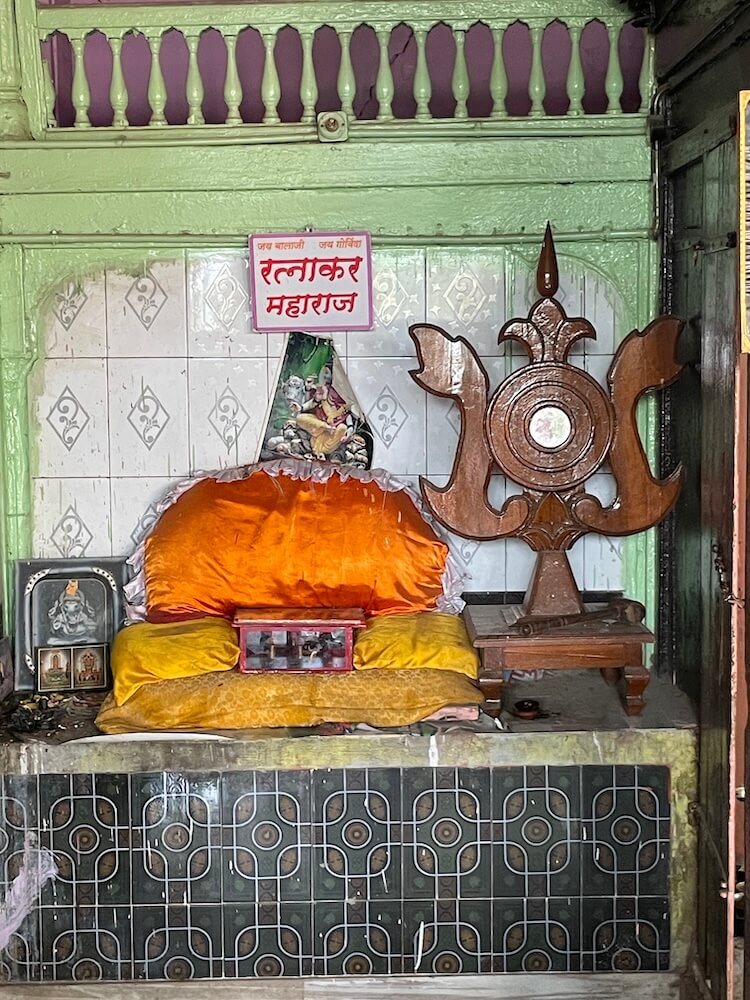
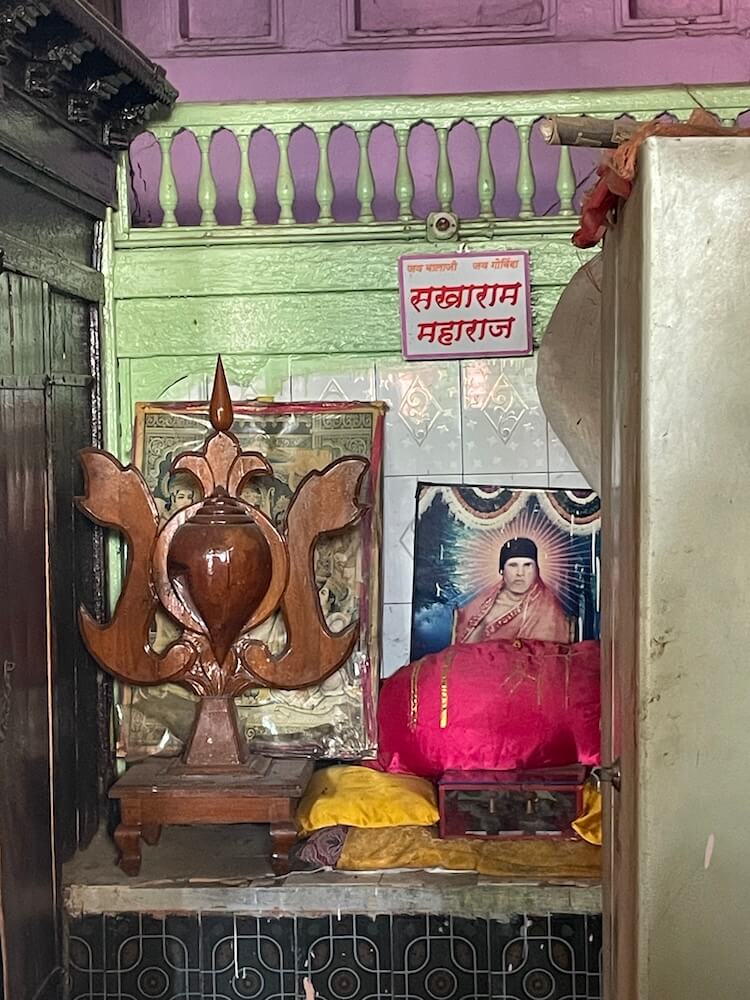
To one side of the sanctum lies the sacred seat of Ratnakar Maharaj, where his wooden padukas are preserved. These padukas are believed to be about 400 years old. Every year, on Dhantrayodashi, a special worship and abhishek ritual is performed for these padukas, drawing hundreds of devotees. On the other side of the sanctum lies the seat of Sakharam Maharaj, a descendant of Ratnakar Maharaj, with his portrait displayed there.
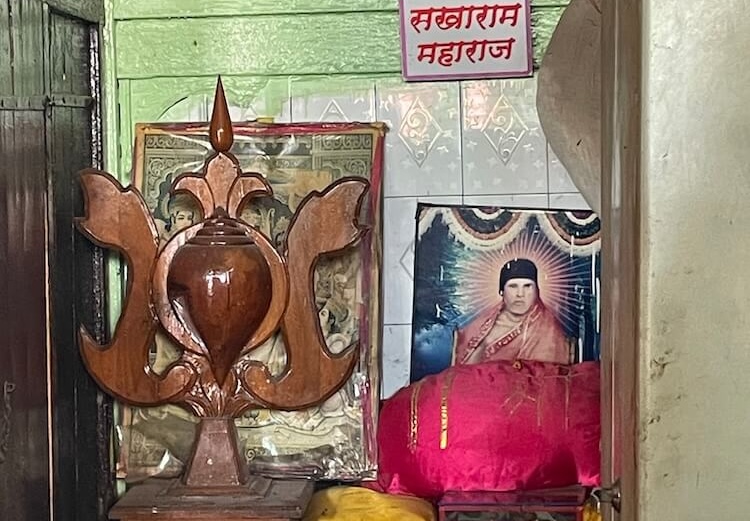 Sakharam Maharaj is said to have started the annual fair of the Balaji Mandir about three and a half centuries ago. During the Sharadiya Navratrotsav, the temple becomes the center of grand festivities lasting for fourteen days. Thousands of devotees gather to witness the Rath Yatra of Balaji, which is carried out with great enthusiasm. The chariot procession moves towards the Satiyara Ghat on the banks of the Tapti River, where a three-day festival is held in honor of Balaji Maharaj. It is said that lakhs of devotees come for darshan from across Maharashtra and other districts of Madhya Pradesh. During this festival, the sacred offering of ‘daraba’, made from semolina, ghee and sugar, is distributed to devotees. Alongside the Navratrotsav, many other Hindu festivals are also celebrated here with equal fervor.