 The Asudev Mahadev Temple, located in Jamla village, is one of the five ancient self-manifested (Swayambhu) Shiva temples of North Gujarat. Unlike other Shiva temples that enshrine a Shivalingam, this temple features a naturally emerged stone idol resembling Lord Vishnu or Ranchhodrai. This is why the temple is also locally known as ‘Vasudev Mahadev’. The temple’s architecture resembles that of a royal palace. It is designed in such a way, that the first rays of the rising sun fall directly on the idol in the sanctum.
According to a local legend, in ancient times, this area was dense forest. Shepherds would bring their cattle here to graze. One of the cows consistently released milk at a particular spot but gave no milk at home. 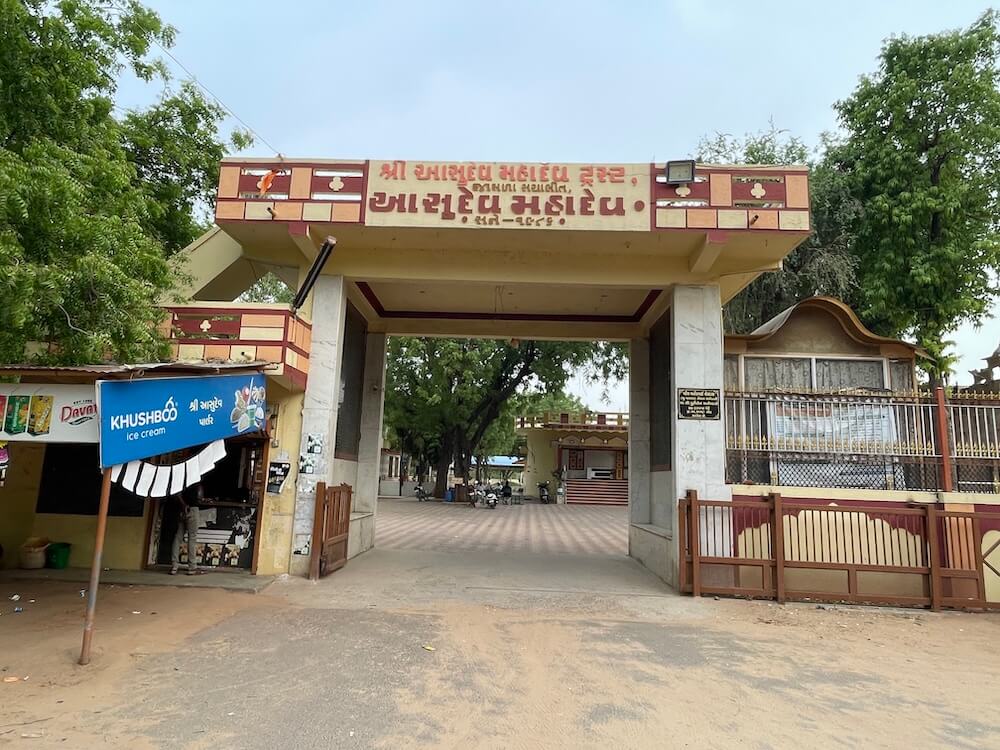 Curious, the shepherd observed her and discovered that she let down her milk at a specific location daily. One day, as he approached that spot, the earth cracked open and a stone idol began to emerge. Startled and unable to recognize the deity, the shepherd exclaimed, “Aa su dev?” (Which god is this?). At that very moment, the idol stopped emerging and only the upper half appeared above the ground. Since then, the deity has been known as Asudev Mahadev.
A small shrine was constructed at the site. Another legend suggests that the lower half of the idol is located in the Neelkantheshwar Mahadev Temple in Jamda (60 km away in Vijapur taluka, Mehsana district). It is believed that abhishek performed on the idol at Jamla reaches the Shivling at Jamda and even the sound of bells from Asudev Mahadev Temple can be heard there. Although the exact date of the temple’s origin is unknown, 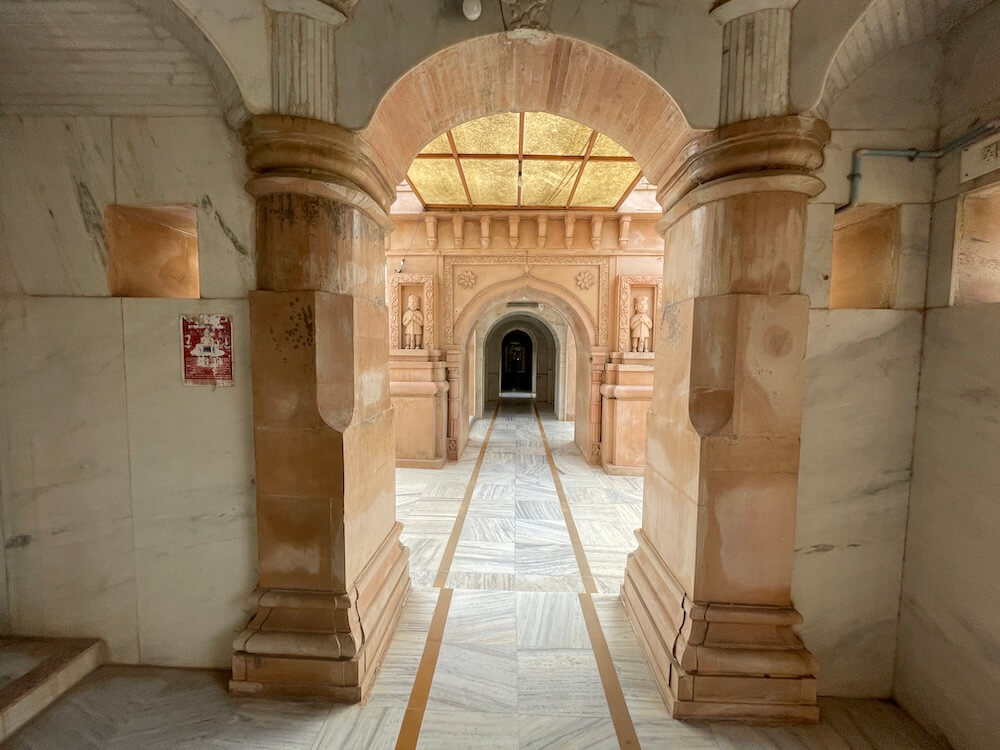 an inscription near an ancient idol on the temple’s third floor bears the date Samvat 1356 (approx. 1300 CE), indicating an early renovation. The temple was more recently restored in 1985, giving it its current form.
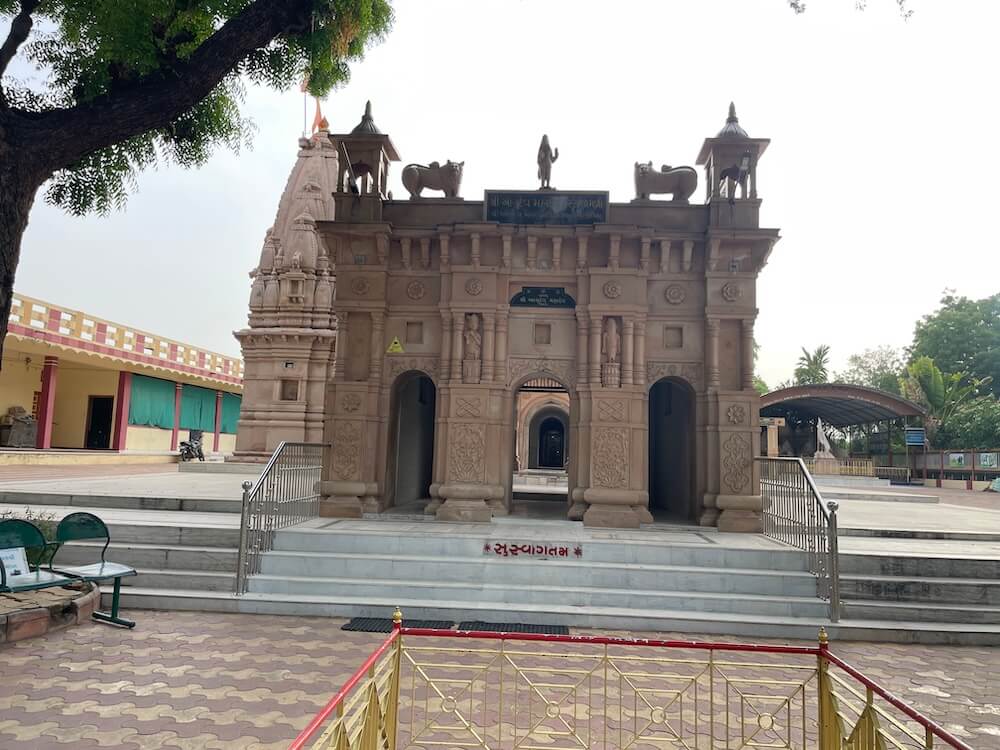
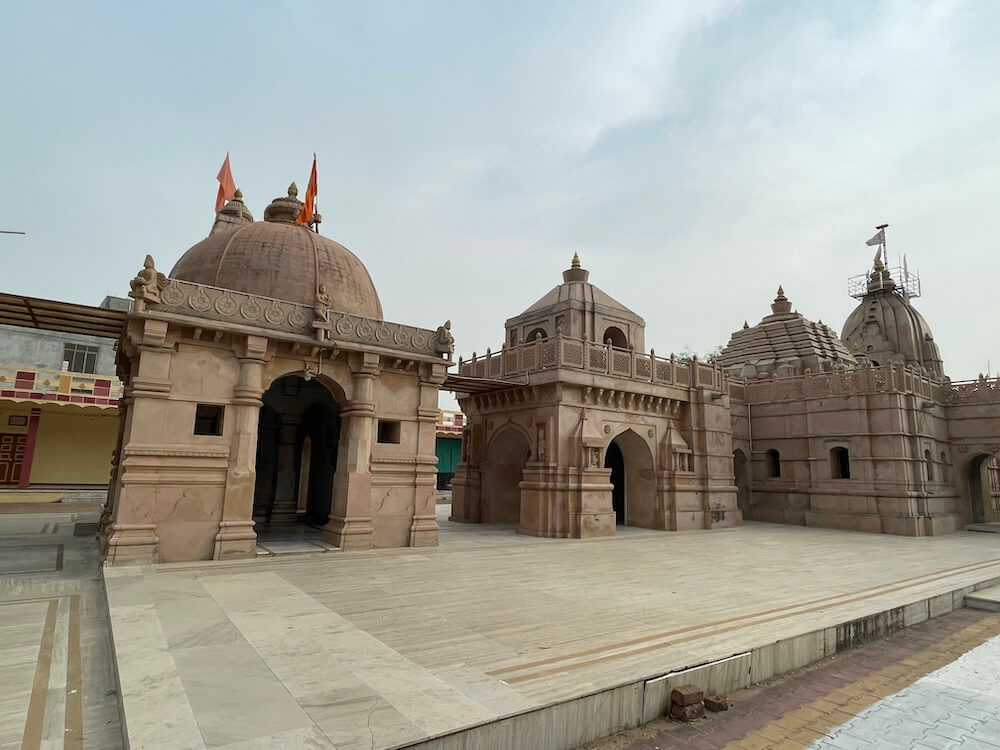
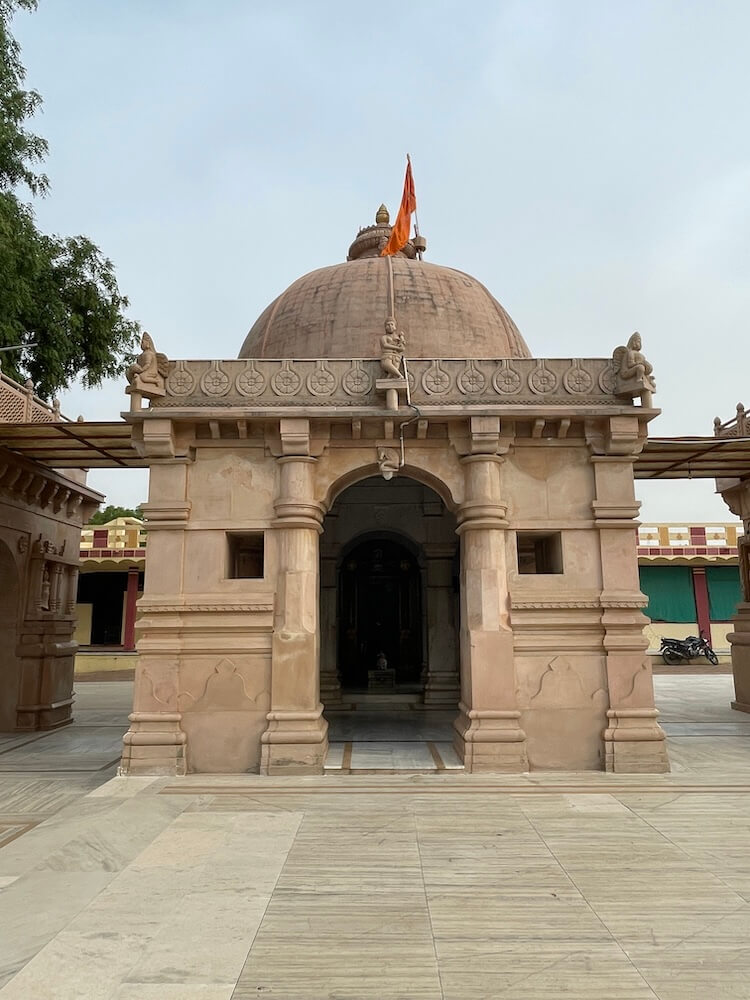
Entering through the grand rectangular gate, one arrives at a spacious courtyard with numerous trees and cement benches for devotees. Near the entrance is a tall glass-walled room where Lord Shiva’s ceremonial chariot (rath) is kept. To the right lies the main temple building, which resembles a pink Rajasthani haveli (mansion), made of stone. It stands on a raised platform of four steps and reaches a height of about 60 feet. Its unique features include 32 domes and 76 doors.
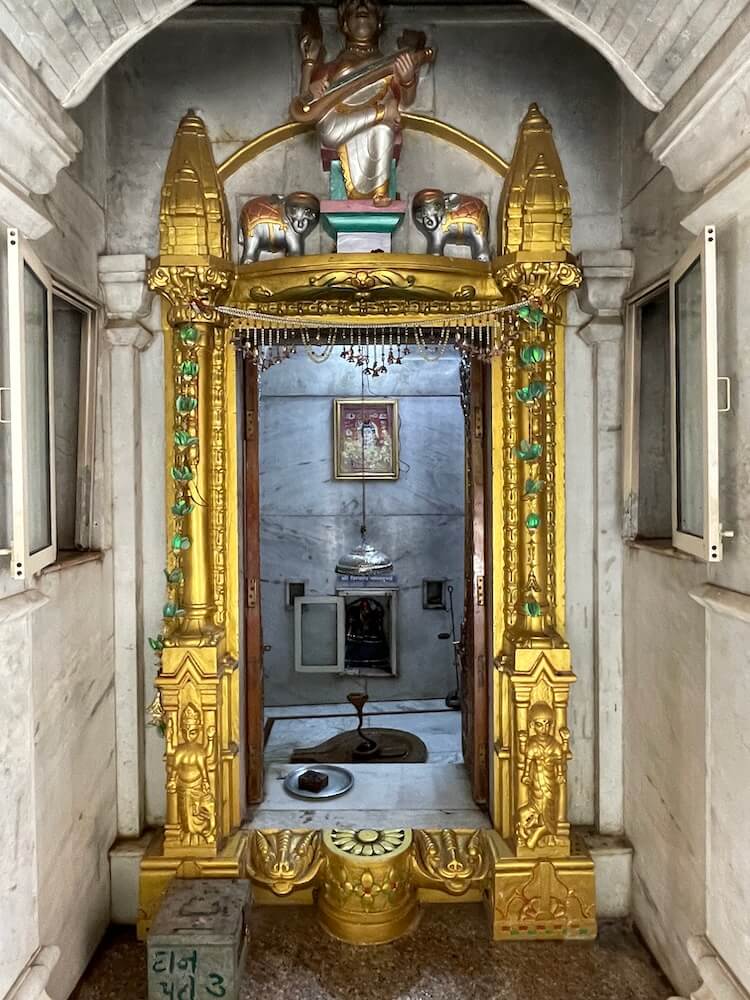
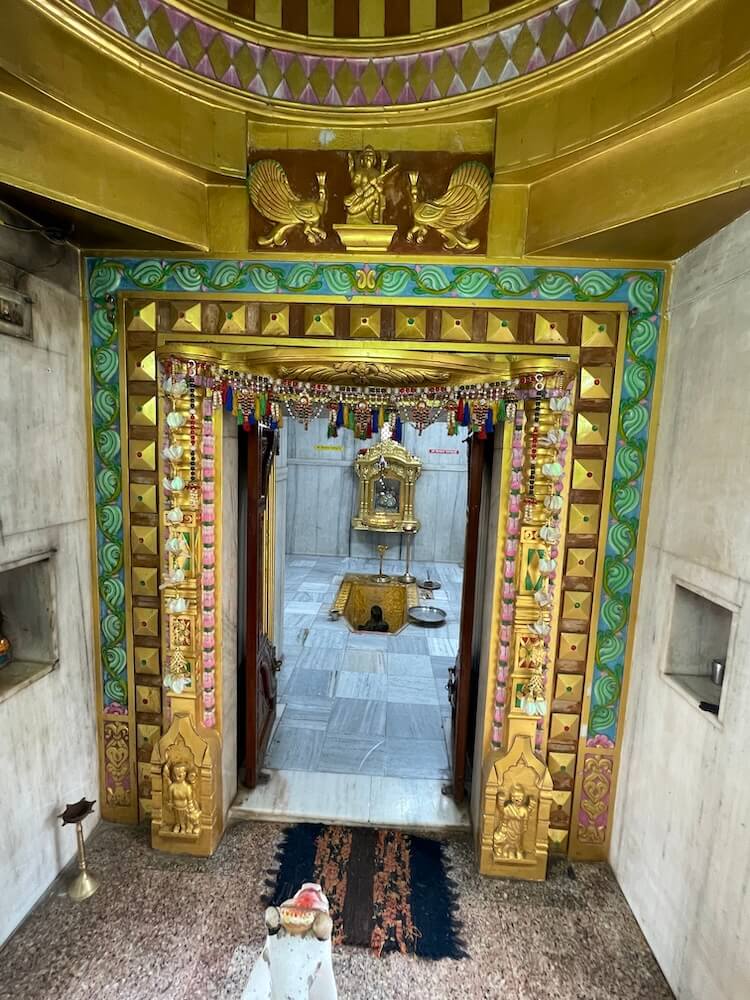 There are three cylindrical arched entrances in front of the temple, each around four feet high. The central entrance has carvings of Murli Manohar Krishna and a sage on the pillars. The ceiling above shows a meditating ascetic with lions on either side and cloud-shaped motifs at the corners. Upon entering through the central gate, one walks through a long, narrow corridor formed by carved pillars, walls and arches leading directly to the sanctum. To the left is a small temple of Nishkalank Mahadev, with Nandi’s idol in front and a golden-colored sanctum door. The doorway features sculptures of gatekeepers and above it is an idol of Saraswati, flanked by two elephants.
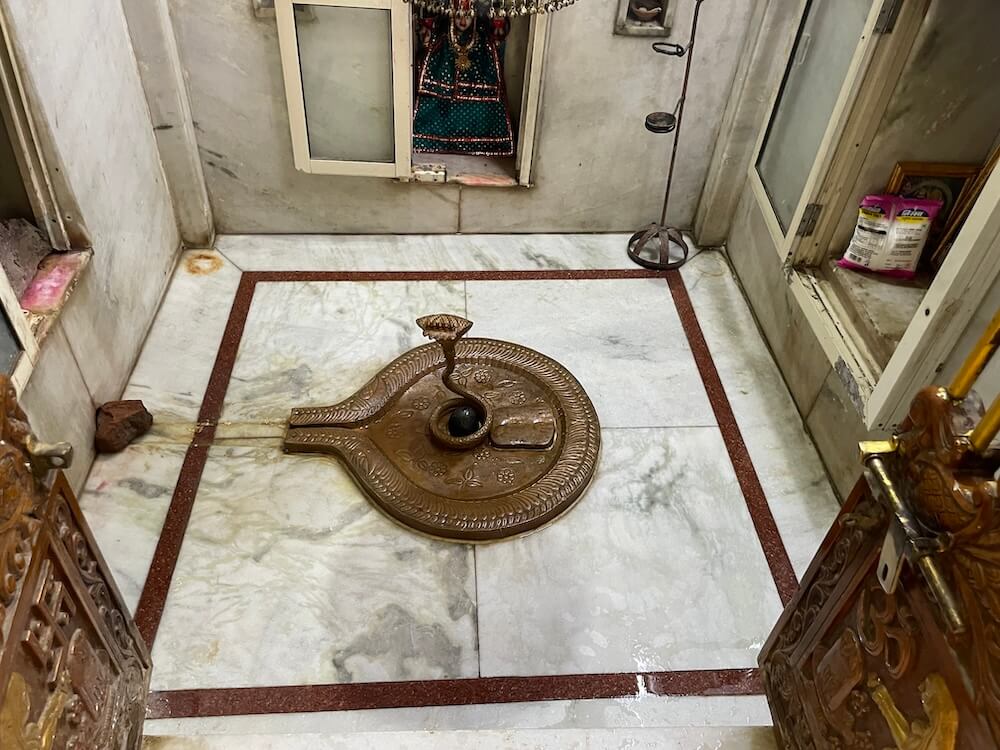
Inside, there is a Shivaling (Nishkalank Mahadev) in the sanctum. Continuing along the corridor toward the main sanctum of Asudev Mahadev, one sees many doorways. In front of this sanctum stands a Nandi idol and the door is intricately decorated. Sculptures of gatekeepers adorn the lower parts of the pillars and above the door is an idol of Goddess Saraswati, flanked by peacocks, her vahanas (mounts).
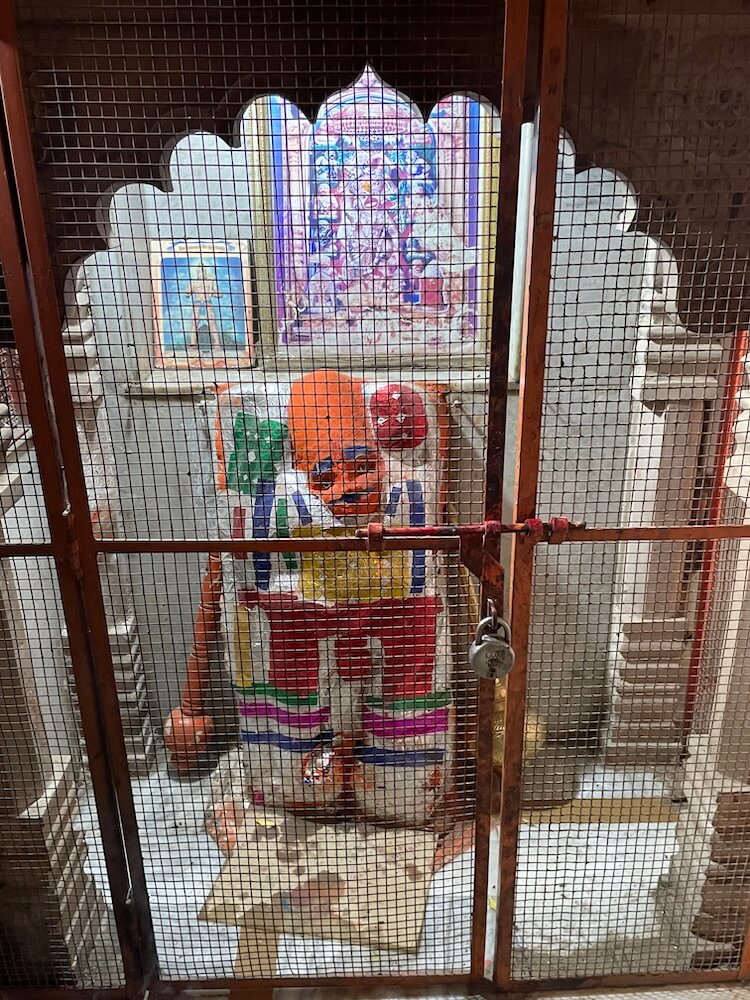
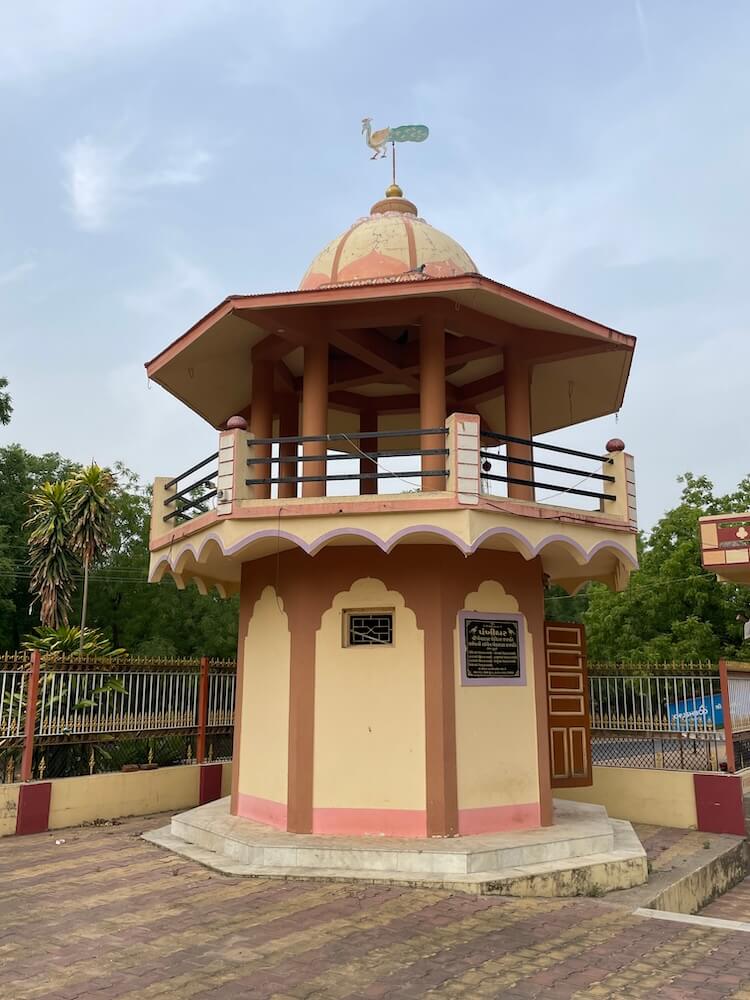
In the center of the main sanctum, within a gold-plated deep cavity, sits the self-manifested stone idol of Asudev Mahadev. The idol is somewhat worn with age. It is sheltered by a golden umbrella (chatra). On the rear wall, within an ornate shrine, resides an idol of Goddess Parvati. 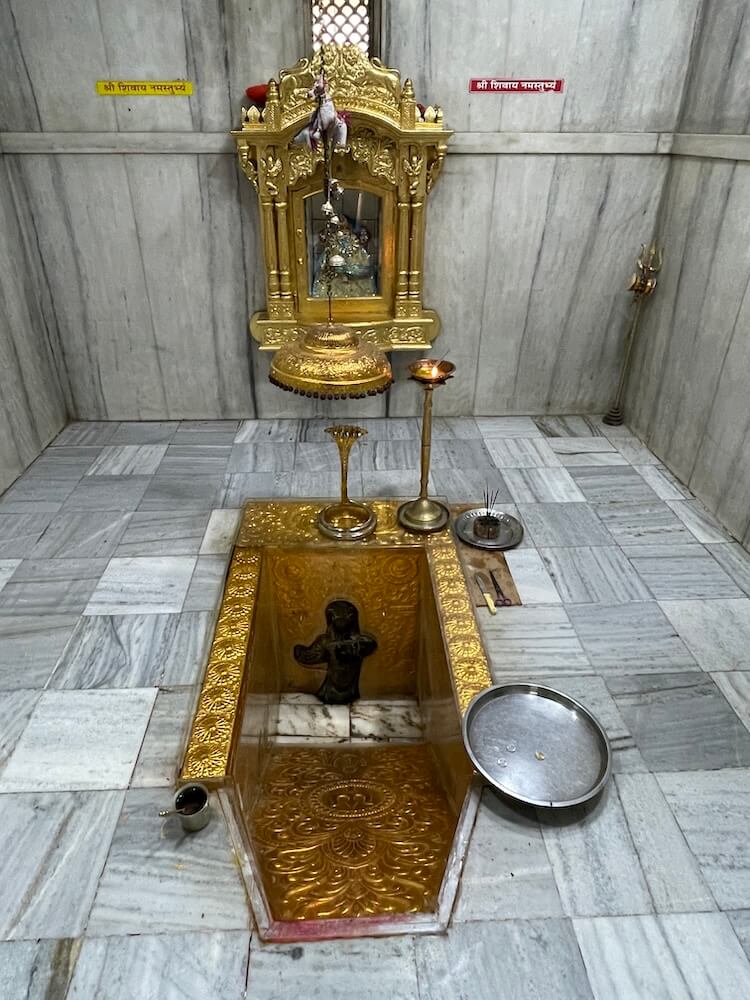 The sanctum has a tall Nagara-style spire with Urushringa design. Behind the main temple is a small shrine of Kalbhairav, which sees hundreds of visitors on Kali Chaudas (Narak Chaturdashi). Devotees tie black threads on their wrists here for protection against evil forces. Nearby is the shrine of ‘Shetalia Veer’, where people pray for business prosperity.
Close to the complex is a large pavilion named ‘Bharat Darshan’, featuring a map of India that highlights the 12 Jyotirlingas and their replicas. It also includes a model of Mount Kailash, with a meditating Shiva idol at the summit and another in a cave at the base. The temple, managed by the Asudev Mahadev Trust, holds daily rituals and celebrates many Hindu festivals throughout the year. On Mahashivratri, hundreds of devotees come to perform Abhishek with milk and water and offer Belpatra and flowers to Asudev Mahadev and Nishkalank Mahadev. The temple is especially crowded during Shravan month, with large gatherings on every Shravan Monday. A fair is held on Janmashtami and on the last Monday of Shravan, many devotees from Ahmedabad arrive with decorated chariots.
The temple premises include Trust office, bird feeding area, dining hall, children’s play area and a guesthouse with 10 rooms. Weddings and similar ceremonies can be held here at affordable rates. The dining hall offers unlimited vegetarian meals for ₹70. Meals including snacks and sweets are available for ₹100.