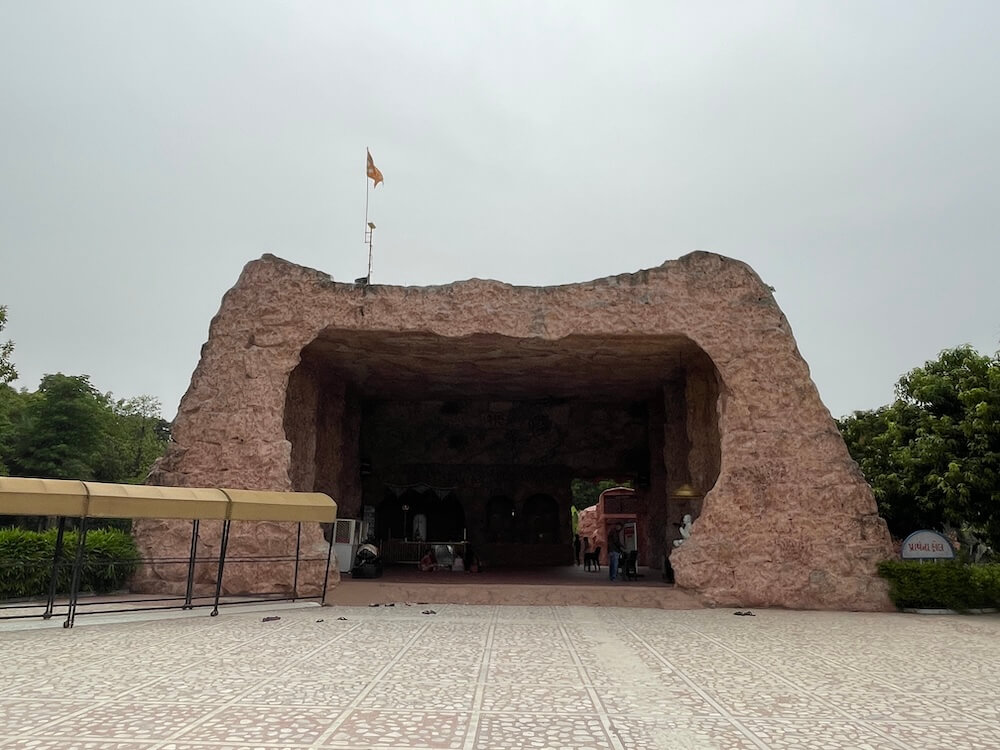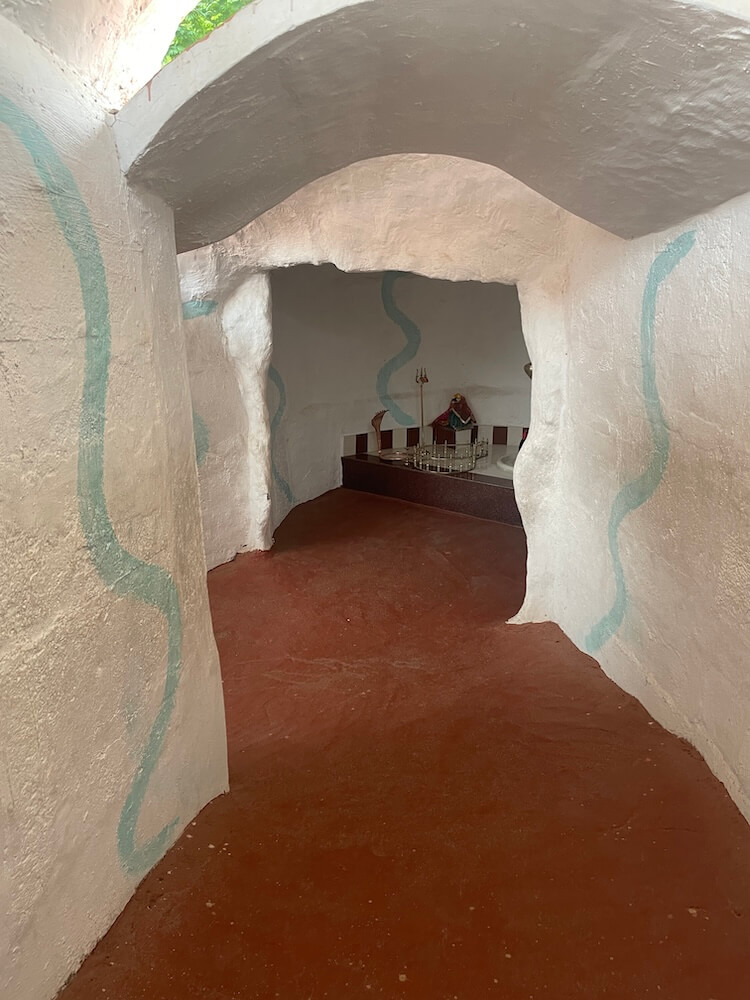
 A replica of the famous Amarnath cave temple in the Himalayas, known for its naturally formed ice Shivling, is located on a hill in Amarapur. Known as ‘Mini Amarnath’, this temple enshrines a white Shivling, installed ceremonially over sacred white ash sourced from near the original Amarnath lingam. Within the man-made cave, visitors can also see replicas of the 12 Jyotirlingas. This temple was built so that devotees unable to travel to Amarnath for various reasons can still receive darshan of the divine lingam. Devotees from across Gujarat arrive here chanting ‘Har Har Mahadev’.
According to legend, in a secluded cave in the Himalayas, Lord Shiva narrated the secret of immortality to Goddess Parvati. 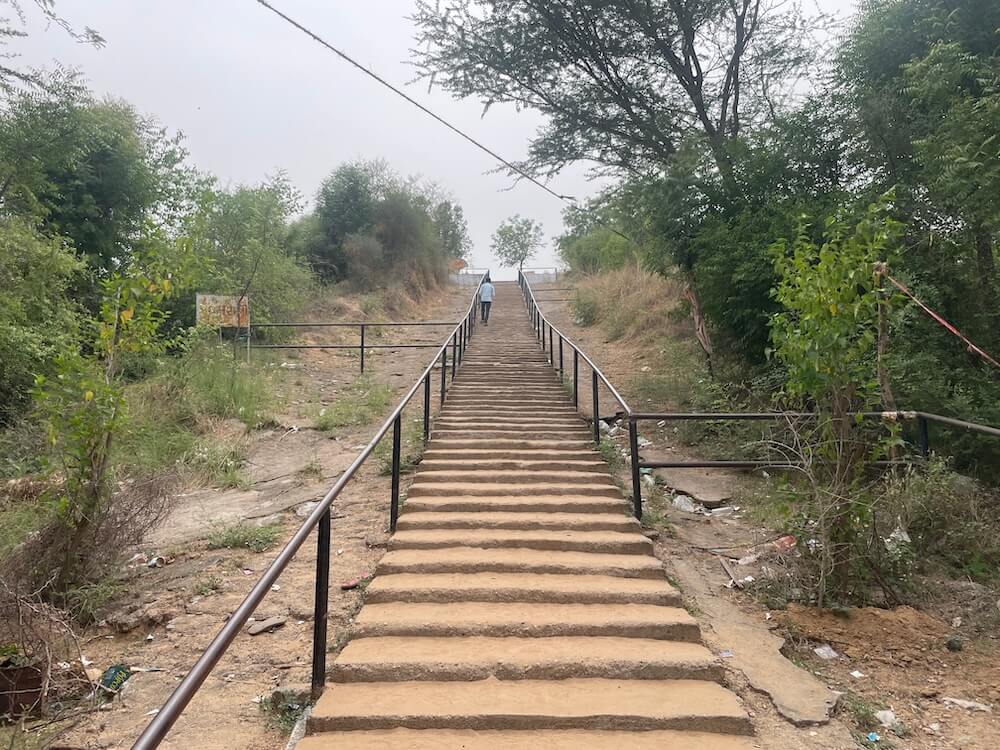 This cave is now known as Amarnath Cave, where each year, a 14-foot-tall ice Shivling miraculously forms. It is considered as a wonder of nature. Devotees affectionately call this lingam ‘Baba Barfani’. As per the Amarnath Shrine Board’s official website, while the place is mentioned in scriptures, it was rediscovered in modern times by Buta Malik, a Kashmiri shepherd. It is said that a sadhu gave Buta Malik a bag of coal, which turned out to be gold coins. When he went back to thank the sadhu, he found the holy cave with the Shivling instead, which led to its widespread worship.
The Amarnath pilgrimage lasts around 45 days, but due to the arduous, high-altitude trek and unpredictable weather, many devotees cannot complete it due to illness, lack of funds, or time.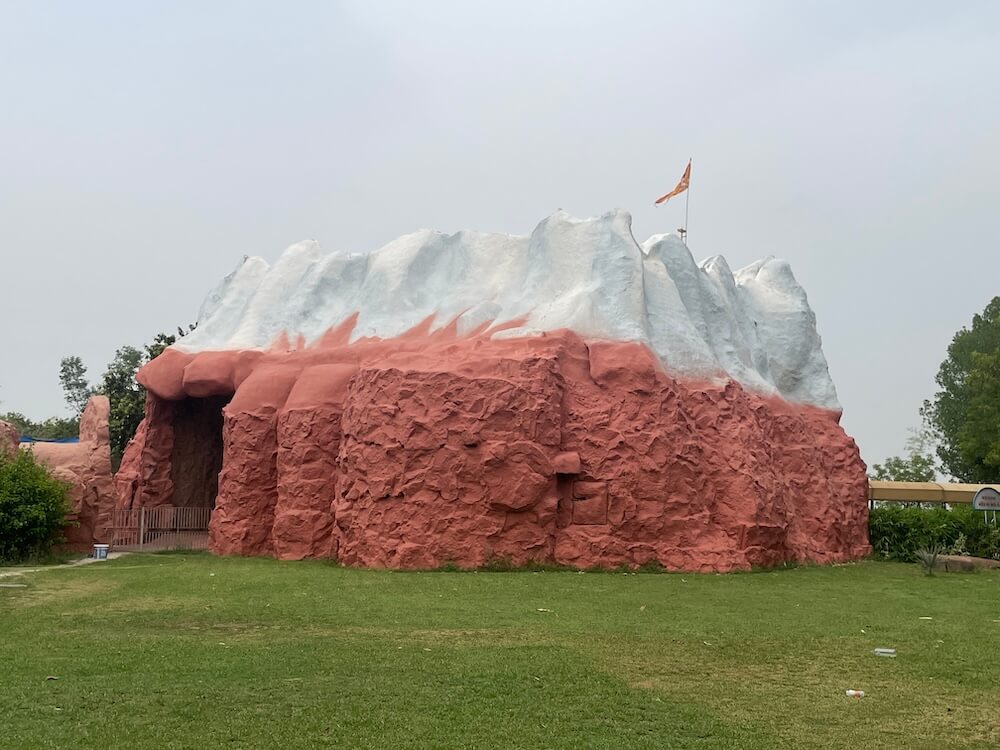 To provide an easier way to experience the divine power, this replica temple was built in Amarapur.
The concept was envisioned by Prahlad Patel, a professor, writer of 20 religious books and agricultural researcher. Inspired by difficulties faced by his family during the actual Amarnath Yatra, the temple was built in 2003. The current temple trustee is Deepak Patel, son of Prahlad Patel.
Located near Swapnasrushti Water Park in Amarapur, there is open parking space a short distance away from the temple. From there a mud road leads to the temple. On the way, one passes shops selling prasadam, toys and snacks. After climbing about 150 steps, visitors reach the temple courtyard. There are resting areas along the path.
A few steps into the paved courtyard of the temple, 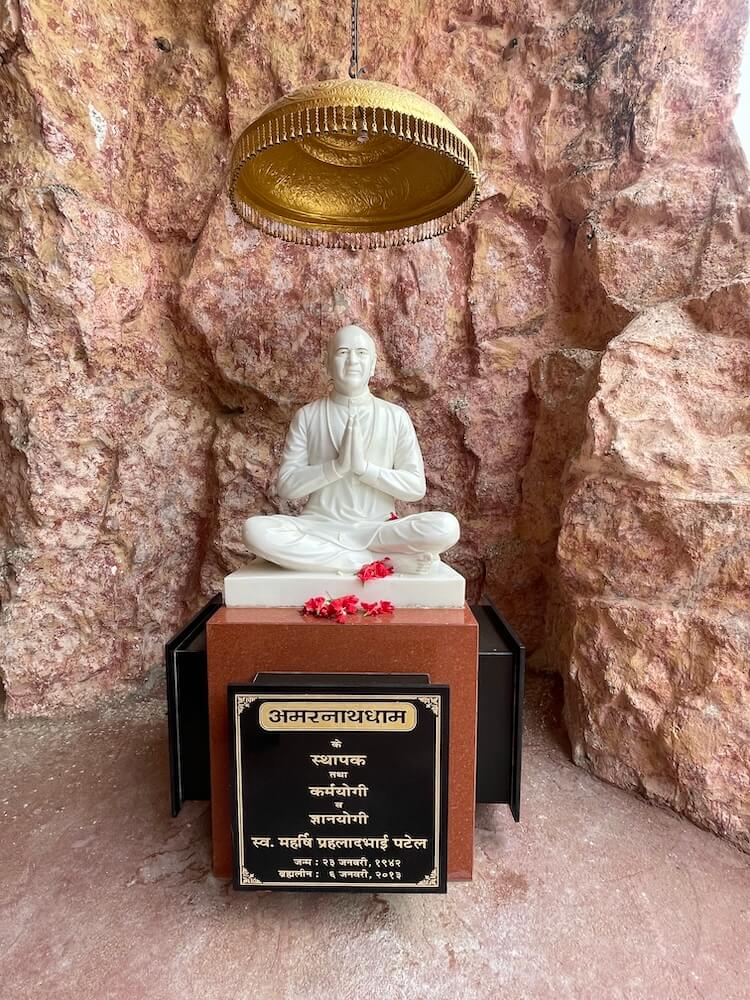 there is a plaque displaying information about the temple. Directly ahead, one can see the man-made cave. It is said that this cave was constructed using the world’s finest rock-cutting techniques, with around 200 types of stones brought from Maharashtra, Rajasthan and Madhya Pradesh.
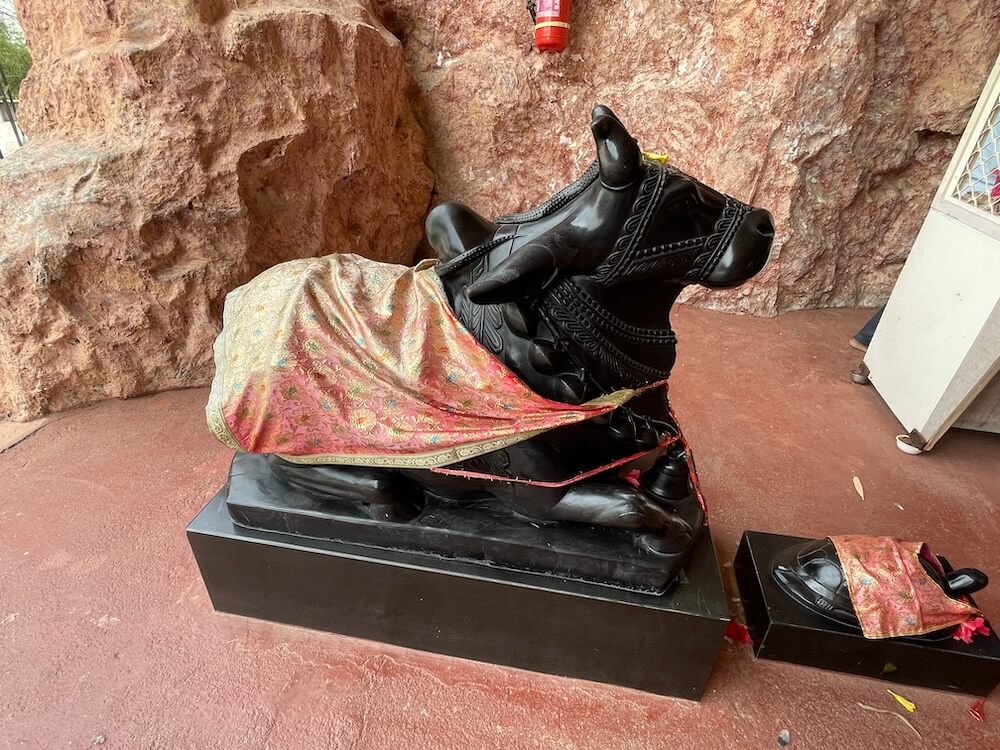
At the rear of this grand cave, several small shrine-like caves have been constructed. In the left corner of the main cave, in front of one such shrine-like cave, there is a black stone idol of Nandi and facing it is an idol of Kurma (the tortoise incarnation of Vishnu).
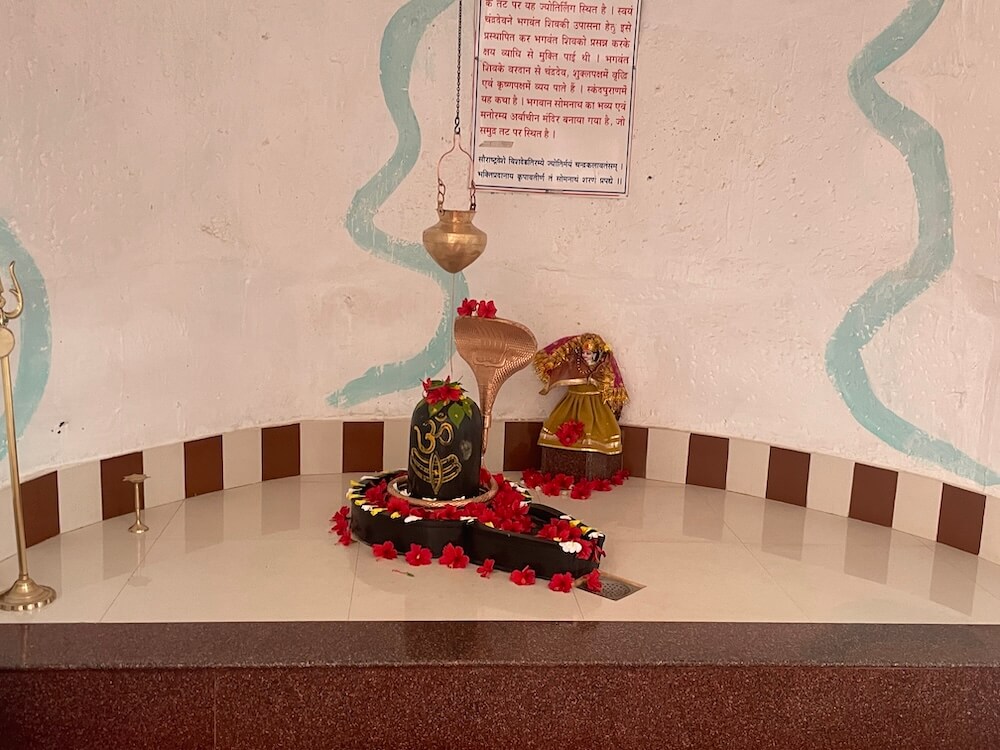
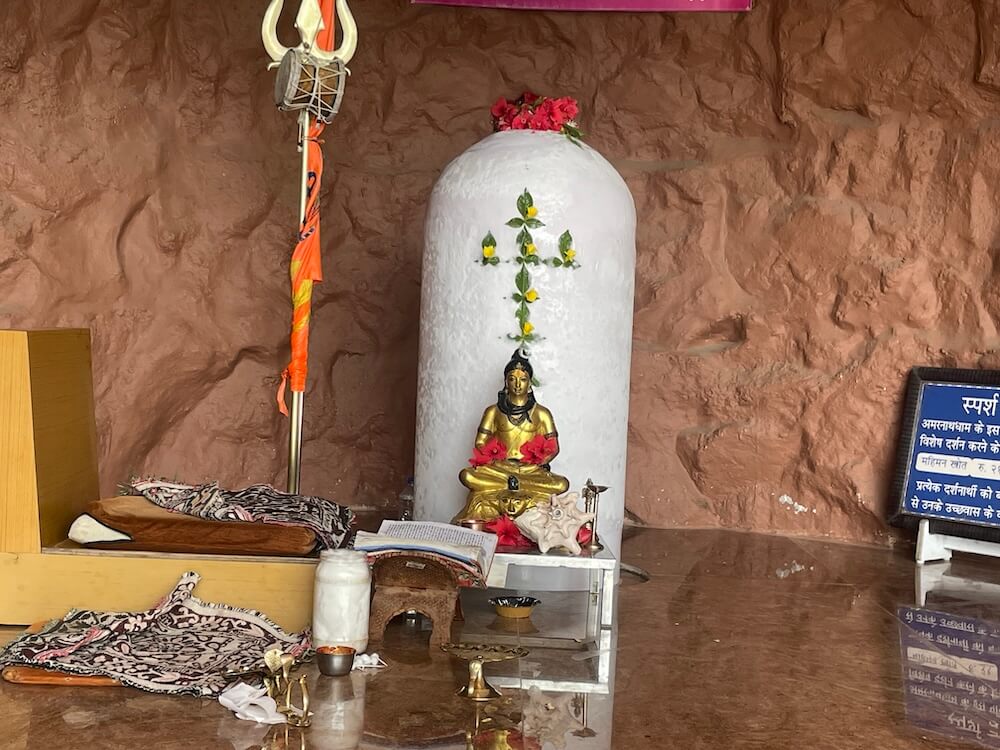
Inside, on a marble-floored pedestal, stands a 5-foot tall cylindrical white Shivling, made of panchadhatu (five-metal alloy) with a layer of ice maintained at -13°C using technology – allowing devotees to have darshan of the icy Shivling all year round.
In front of the lingam is a small Panchadhatu idol of Shiva and behind it is an idol of Parvati. A large trident (trishul) also stands in front of the lingam. A small fee is charged for direct touch (Sparsh darshan) of the lingam. Bel leaves and flowers are available at a nearby counter for ₹10 and Mahaprasad can be purchased for ₹50.
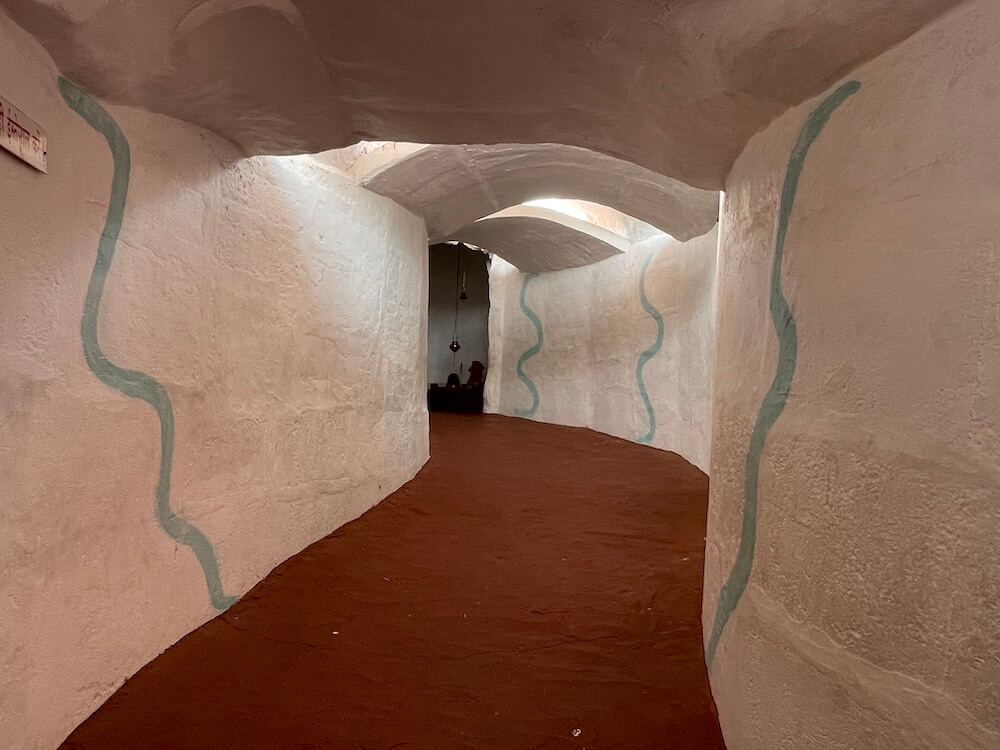
Next to the main Shivling cave are two smaller caves housing symbolic forms of Parvati and Ganesha. Behind the main cave is a large artificial cave with shrines to Ganesha and Hanuman at the entrance. 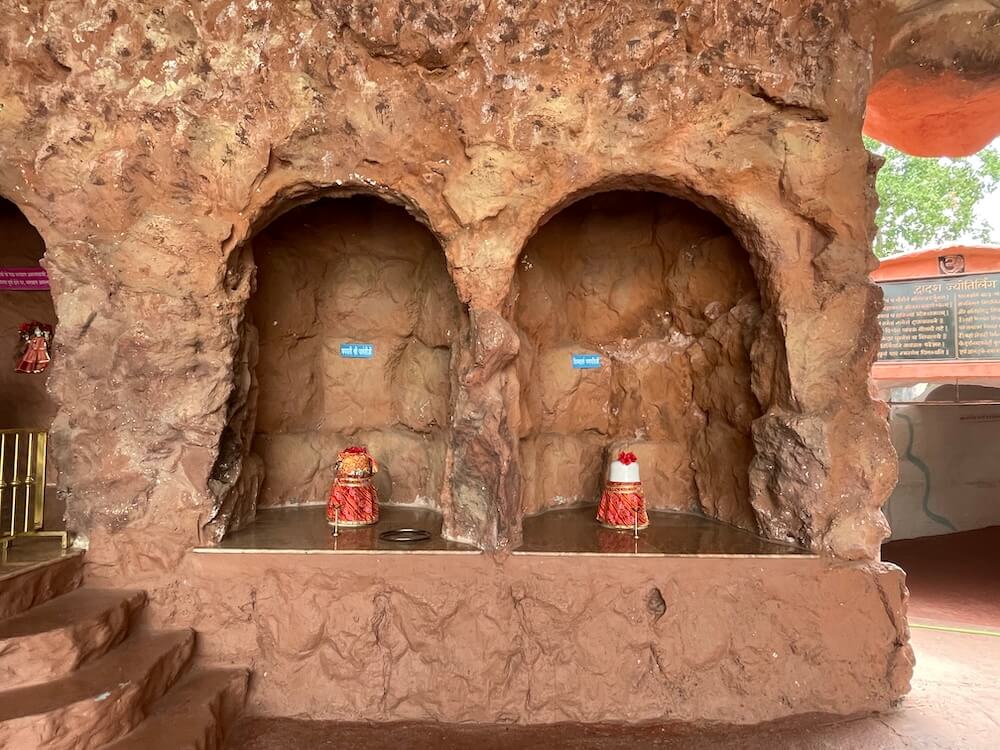 In this cave replicas of all 12 Jyotirlingas are placed, with informative panels beside them. After exiting this Jyotirlinga cave, there are gardens, a food court and children’s play area. A statue of Lord Shiva wearing a tiger skin and a nearby Nandi idol enhance the spiritual environment.
The area also includes an Adventure Park and a hi-tech exhibition providing insights into Hinduism, culture and science. The Krishna Darshan section showcases the Bhagavad Gita’s teachings from Lord Krishna to Arjuna using robotic animation.
Devotees from various parts of Gujarat visit this place for darshan. Saturdays, Sundays and public holidays see large crowds. Daily aartis are performed at 7:00 AM and 6:15 PM for the main Shivling and the twelve Jyotirlinga replicas. The temple hosts various religious rituals, including Maharudra, Laghurudra, Rudrabhishek, Shodashopachar Puja, Shatchandi Yagna, Kaal Sarp Dosh Nivaran and Mahamrityunjay Yagna. On Maha Shivratri, rituals are performed in all four prahars (time phases). During the holy month of Shravan, a Kanwar Yatra is also organized. Festivals such as Janmashtami, along with many others, are celebrated here with great enthusiasm.