अमरुकंटेश्वर महादेव /
नवग्रह मंदिर
प्रतापुरा, ता. वडोदरा, डिश. वडोदरा
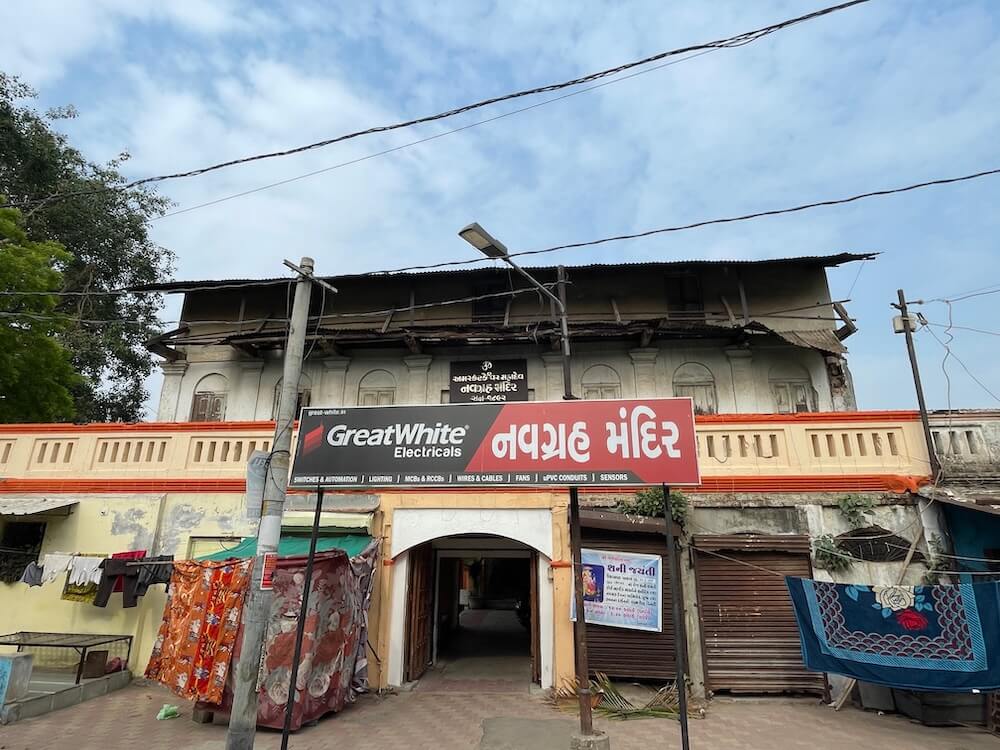
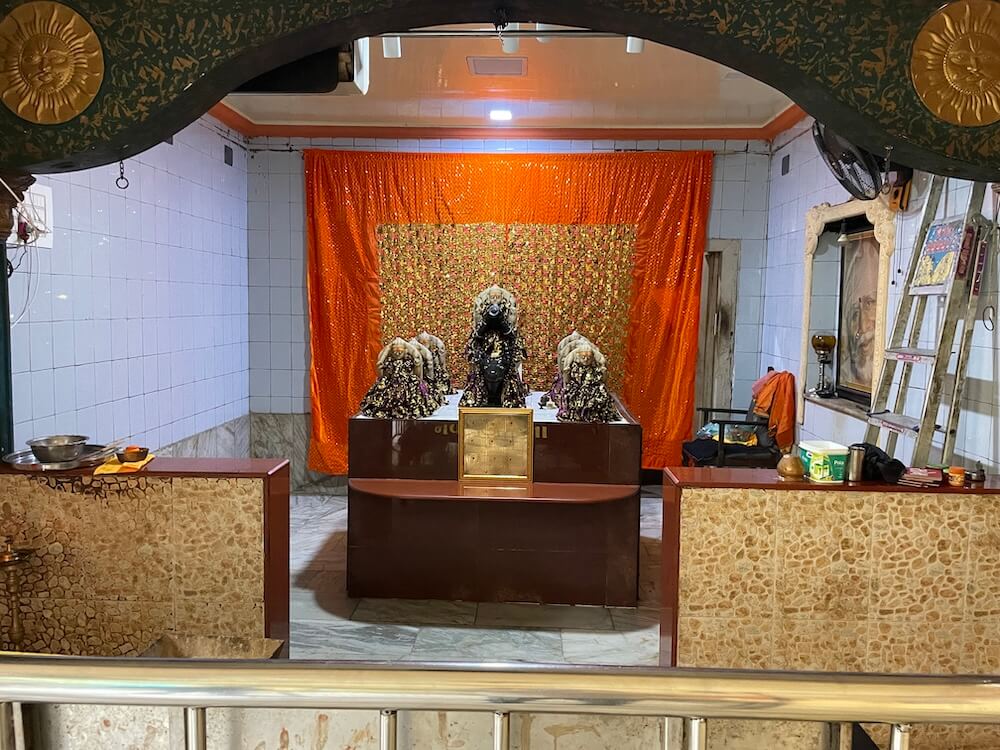 In Indian astrology, the entire living world is believed to be under the influence of the nine celestial bodies. They are the Sun, Mars, Rahu, Ketu, Jupiter, Venus, Moon, Mercury and Saturn. Ritualistic worship of these Navagrahas has been part of astrological traditions since ancient times. As a result, temples dedicated to these nine planets have been constructed across India over centuries. One such prominent temple is located in Vadodara city. Uniquely, all nine planetary deities reside here on a single platform. Each day, hundreds of devotees visit this sacred site to perform rituals, especially for relief from planetary afflictions, with a special focus on remedies for Saturn’s negative influence. Adjacent to this shrine is also the ancient Amarkanteshwar Mahadev temple.
 In India, astrology or phaljyotish is regarded as a scientific method to predict a person’s future. The planetary positions and constellations at the time of a person’s birth and their subsequent transitions, are used to forecast life events. It is believed that favorable planetary alignment brings success and happiness, while unfavorable configurations can lead to various problems and struggles. Among the nine celestial bodies, some are considered beneficial, while others are perceived as malefic. Mars, Rahu and Ketu, when occupying specific positions in a birth chart, are often blamed for negative impacts on one’s life.
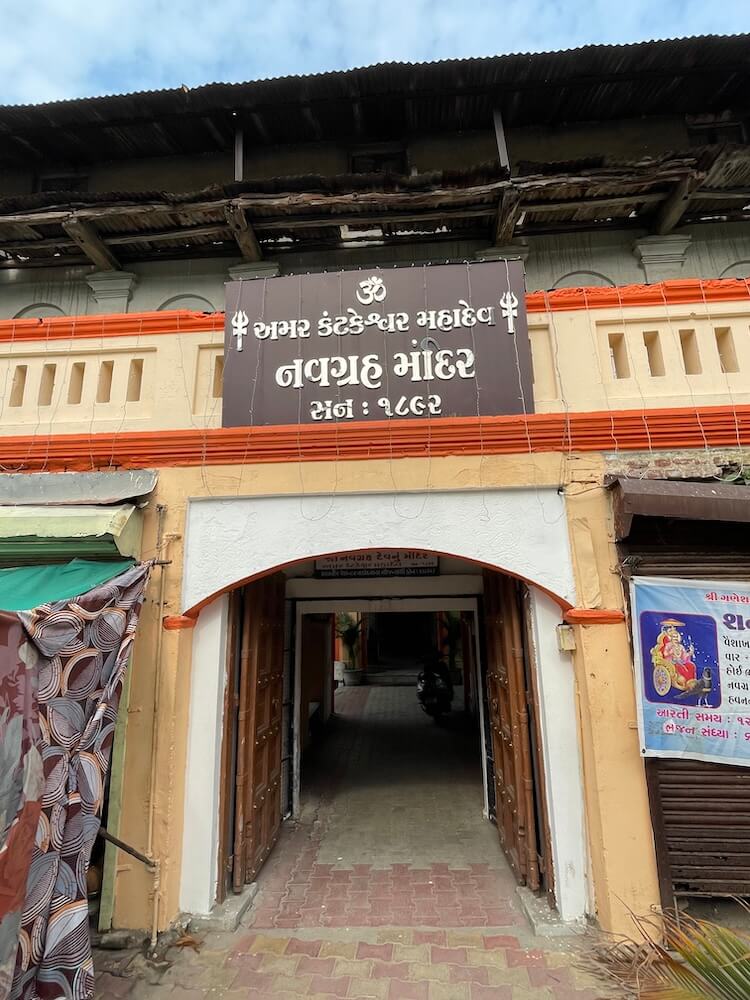
To ensure a favorable alignment of these planets in one’s horoscope, sacred texts prescribe rituals known as Navagrah Shanti Pooja. In this type of astrological worship, it is customary to offer prayers to symbolic idols of the planets. Saturn, in particular, is known for his fierce and punitive nature and hence, temples dedicated solely to Saturn are found in many parts of India. Likewise, there are individual and collective shrines for other celestial bodies. The Navgrah temple in Vadodara, established in 1892, holds the distinction of being Gujarat’s only standalone temple dedicated to all nine planets together. These idols of Saturn, Rahu, Ketu, Jupiter, Venus, Mercury, Mars, Moon and Sun are installed facing west on a common platform.
Upon entering through an old, mansion-like gateway that resembles a heritage structure, 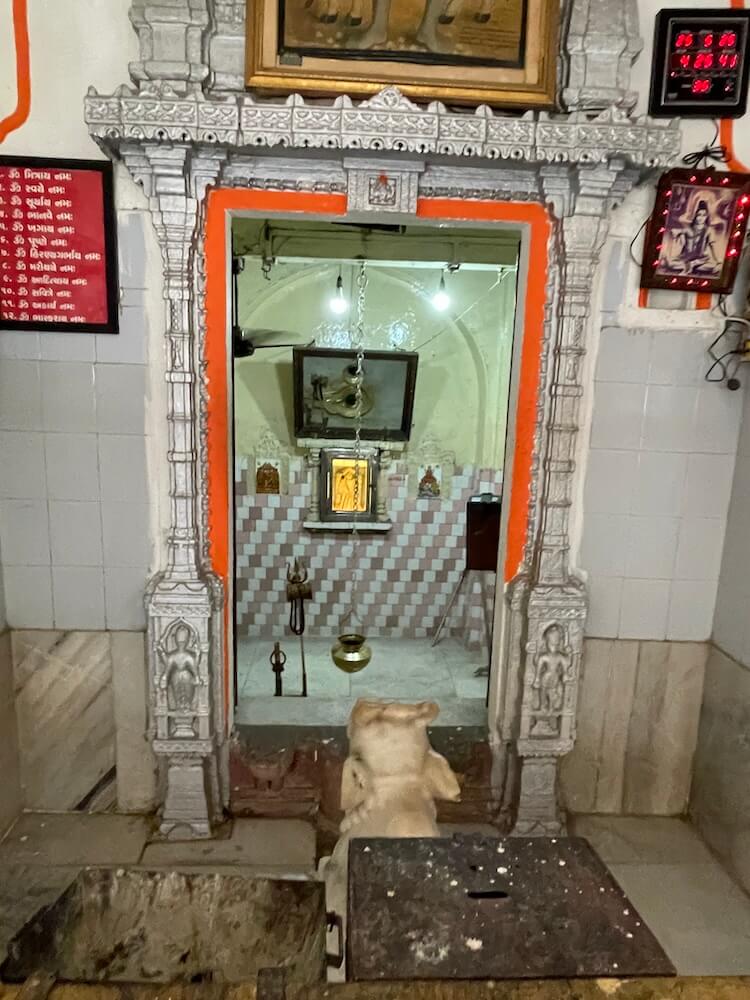 one steps into a peaceful temple courtyard. Right in front stands the ancient Amarkanteshwar Mahadev temple and to its left is the Navgrah Mandir. Constructed using sandstone brought from the city of Dhrangadhra in Gujarat, the temple remains sturdy and intact even today. The temple’s dome-shaped spire and paved hall reflect classic temple architecture. Inside the spacious assembly hall, the walls are adorned with plaques displaying Navagrah verses, Hanuman Chalisa and Shani Chalisa. The inner walls also feature idols of Ganesh and Hanuman. In the sanctum sanctorum, all nine planetary idols are enshrined on a single pedestal, beneath which their respective yantras (mystic diagrams) are embedded.
The legend of the Amarkanteshwar Mahadev temple narrates that during the reign of the Baroda princely state, plans were made to create a garden in this area. During excavation, a naturally formed Swayambhu Shiva Lingam was discovered. It was ceremoniously installed right there and thus the temple came into being. The structure, now 143 years old, has retained its original form, with only minor repairs over the years.
Inside the temple, in front of the sanctum, stands a marble statue of Nandi. The temple’s entrance is intricately carved. Below the doorway lies a Kirtimukh (demonic face motif), while above, on the lintel, resides Lord Ganesh. 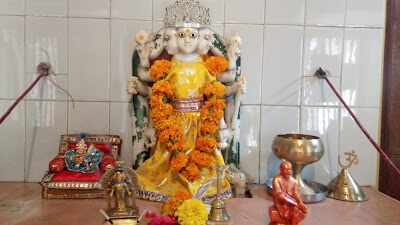 Within the sanctum, the central focus is a small Shiva Lingam housed in a shalunka (base) made of panchadhatu (five-metal alloy). Around this base, the mantra ‘Om Namah Shivaya’ and auspicious symbols are inscribed. A cobra, carved in stone, is seen coiled protectively around the lingam. On the rear wall of the sanctum, a niche houses the idol of Goddess Parvati. Also within the temple premises are shrines dedicated to Goddess Kali and Lord Dattatreya.
With the belief that worshipping the Navagrahas can bring favorable changes in one’s horoscope, many devotees visit this temple throughout the week. All rituals meant to pacify planetary afflictions are performed here. Many offer lemons and chilies as part of their rituals. Tuesdays, Wednesdays, Fridays and especially Saturdays witness large crowds. Devotees, seeking to appease Saturn and mitigate his wrath, observe vows for 5, 11 or 21 consecutive Saturdays. On these days, offerings such as black cloth, coconuts, sesame oil and iron items are donated. Lighting oil lamps in fulfillment of vows is also a widespread practice. The temple hosts grand festivities on the Amavasya (new moon) of the Vaishakh month and on Shani Jayanti, during which rituals like abhishekam, special worship and havans (sacred fire offerings) are performed.
Adjacent to the temple is a small building constructed by G.V. Vakil. On its upper wall, a marble plaque bears an inscription in Gujarati language titled “Three Visits to Europe by His Highness Sayajirao Maharaj.” The inscription mentions that Sayajirao Gaekwad III of Baroda was the first ruler among Indian princely states under British rule to undertake three visits to Europe for the benefit of his kingdom and the larger Indian nation. He studied the political systems, education, commerce, arts and administration of those countries. Queen Victoria of England honored him and his queen during one such visit. The plaque, dating back to 1892–93, features an engraved likeness of Maharaja Sayajirao Gaekwad III.
मरकण्टेश्वर महादेव/
नवग्रह मंदिर
प्रतापपुरा, ताल. वडोदरा, जिला. वडोदरा