
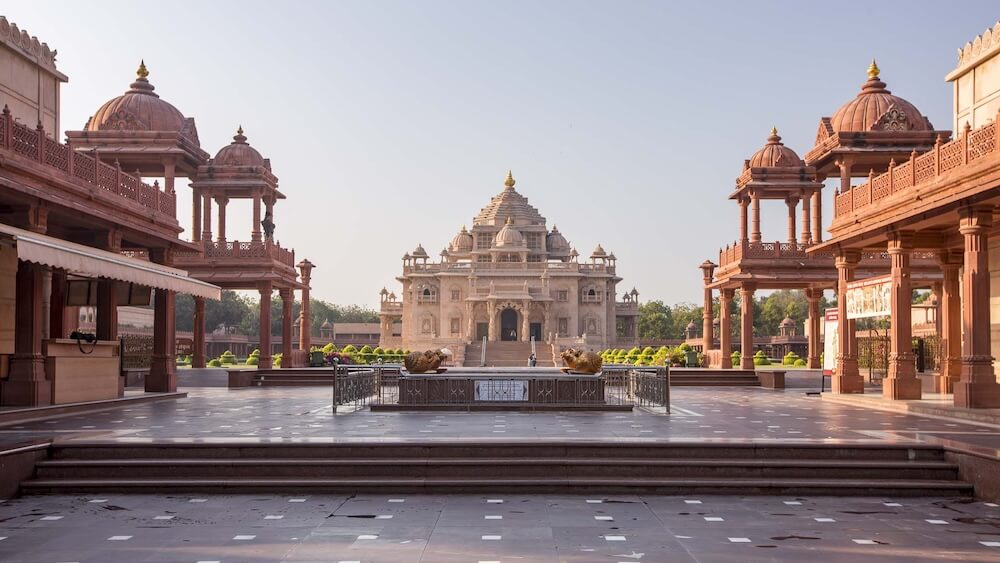
 Dedicated to the teachings of Bhagwan Swaminarayan, the founder of the Swaminarayan tradition, the Akshardham Temple in Gandhinagar is one of the most renowned temples in India. This is the first Swaminarayan temple in India built by the BAPS (Bochasanwasi Akshar Purushottam Swaminarayan Sanstha). Constructed on 23 acres of land as per Vedic architectural principles, the temple stands as a symbol of peace, spirituality and devotion. In 2002, the temple was the target of a terrorist attack. In response, the then spiritual leader Pramukh Swami Maharaj appealed for peace, reaffirming the organization’s steadfast commitment to the teachings of Swaminarayan.
 Swaminarayan is a prominent spiritual tradition in India, founded by Swami Sahajanand, born in 1781 in Chhapaiya near Ayodhya. His birth name was Ghanshyam Pande. He undertook intense ascetic practices in the Himalayas and became known as Nilkanth Varni. Due to this, the temple is also referred to as Nilkanth Dham. In 1800, he arrived in Saurashtra, where he received initiation from Guru Ramanand of the Ramandi sect, who gave him the name Sahajanand. He travelled extensively, spreading the Swaminarayan mantra and is worshipped as an incarnation of the divine. He attained nirvana on June 1, 1830.
 Before this, he established two seats of leadership (gadis), that is Nar Narayan Dev Gadi in Ahmedabad and Lakshmi Narayan Dev Gadi in Vadtal. He appointed his nephews as Acharyas and decreed that leadership be passed down hereditarily. Later, in 1905, Shastriji Maharaj (Shastri Yagnapurushdas) founded a separate institution in Bochasan, which became known as BAPS. BAPS believes that Bhagwan Swaminarayan continues to exist on earth through the lineage of Gunatit Gurus.
 Under Pramukh Swami Maharaj, from 1971 onward, BAPS expanded globally. Today, the organization has 2 grand Akshardham temples (including one in Delhi, among the largest in the world), 150 shikharbaddh temples and 1700+ temples worldwide. The Akshardham Temple in Gandhinagar was the first ever BAPS Swaminarayan temple and was constructed under Pramukh Swami Maharaj’s guidance. Spread across 23 acres, this temple constructed using six thousand tons of pink sandstone, took a full 13 years to build. The foundation stone ceremony was held on December 14, 1979.
  Under the guidance of renowned architect Chandrakant Sompura, the work was carried out by more than 600 artisans and over 4,000 volunteers from around the world, who together contributed more than 800,000 man-hours. The temple was completed on November 2, 1992. Designed in accordance with Vedic architecture and inspired by ancient Indian temples, not a single piece of steel was used in its construction.
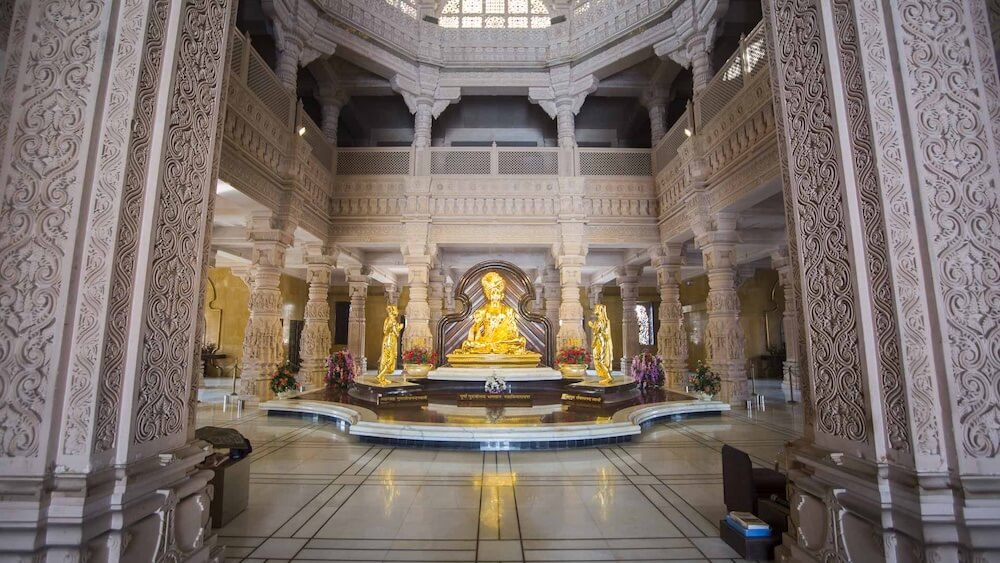
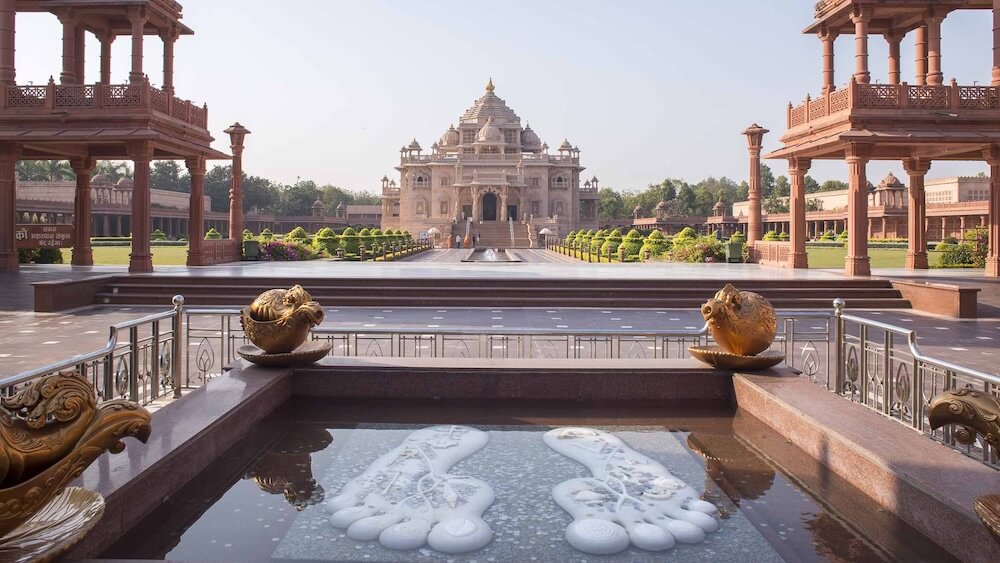
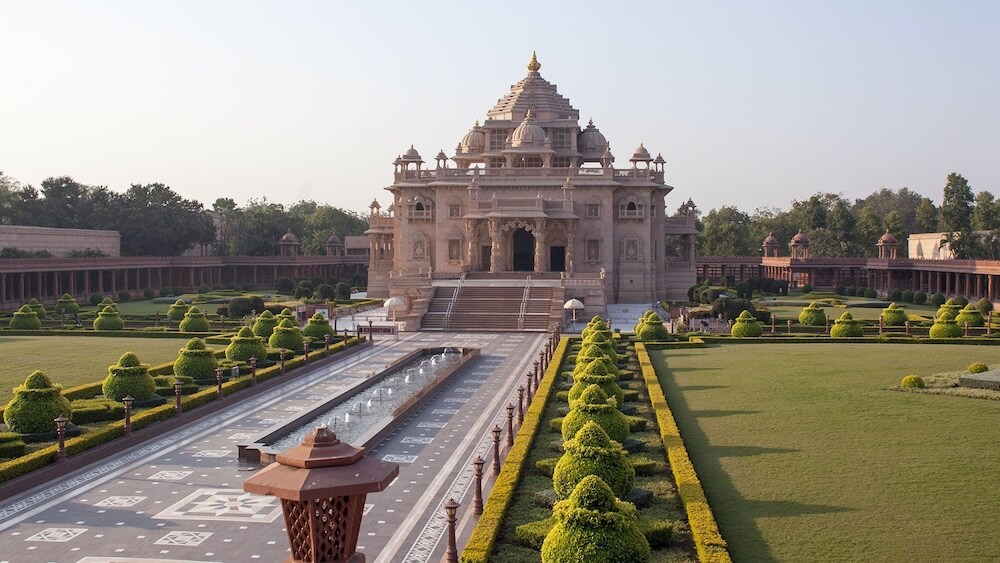
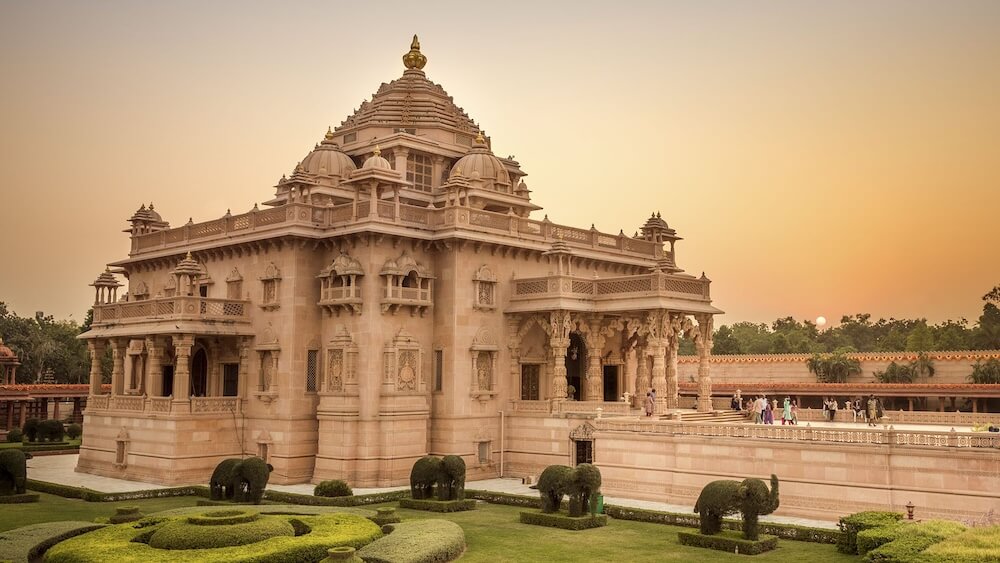
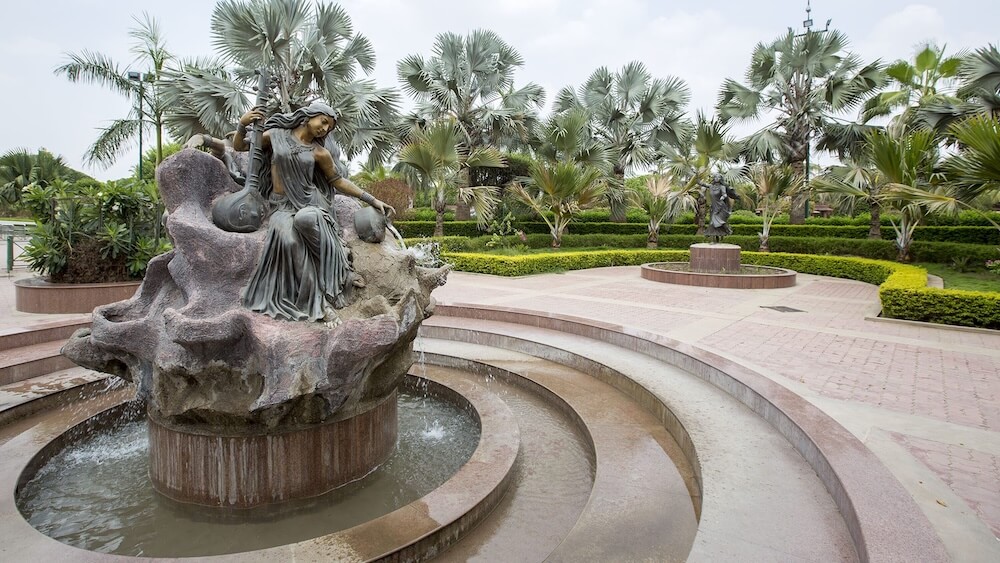 As one enters the temple premises, the first sight is of the sacred footprints (padukas) of Lord Swaminarayan. At the center of the vast courtyard stands the grand structure of the temple. On both sides of the pathway leading to the temple are beautifully landscaped gardens. Along this path, there are also elegant fountains. A few steps from here lead up to the majestic entrance of the temple.On all four sides of the temple are tall minarets and domes. The temple itself is 108 feet high, 240 feet long, and 13 feet wide. It features 97 intricately carved pillars, 17 ornate domes, 220 stone beams, and 256 idols. The walls and every pillar are delicately carved. The pillars are adorned with sculptures of deities, animals, birds, and mythological scenes.
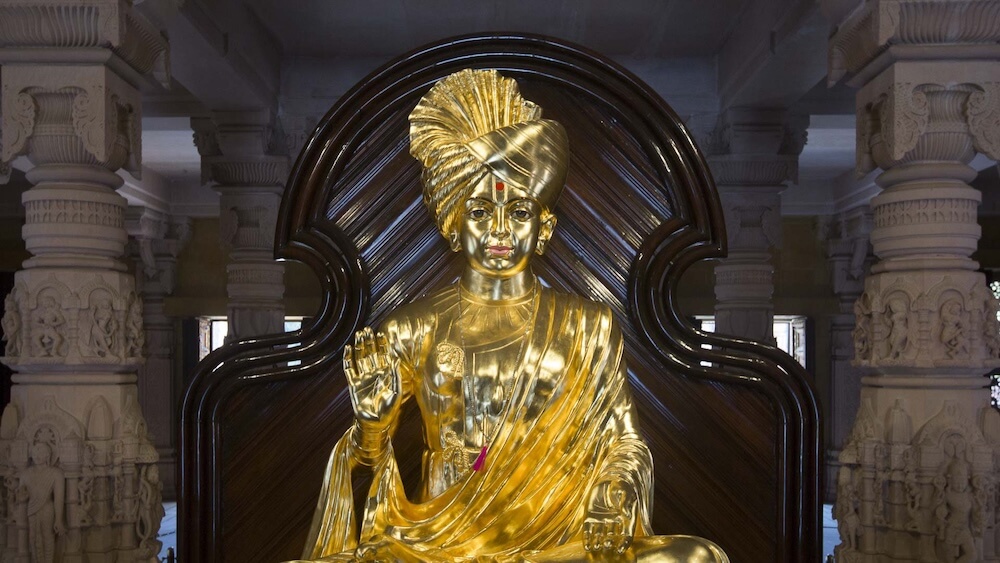
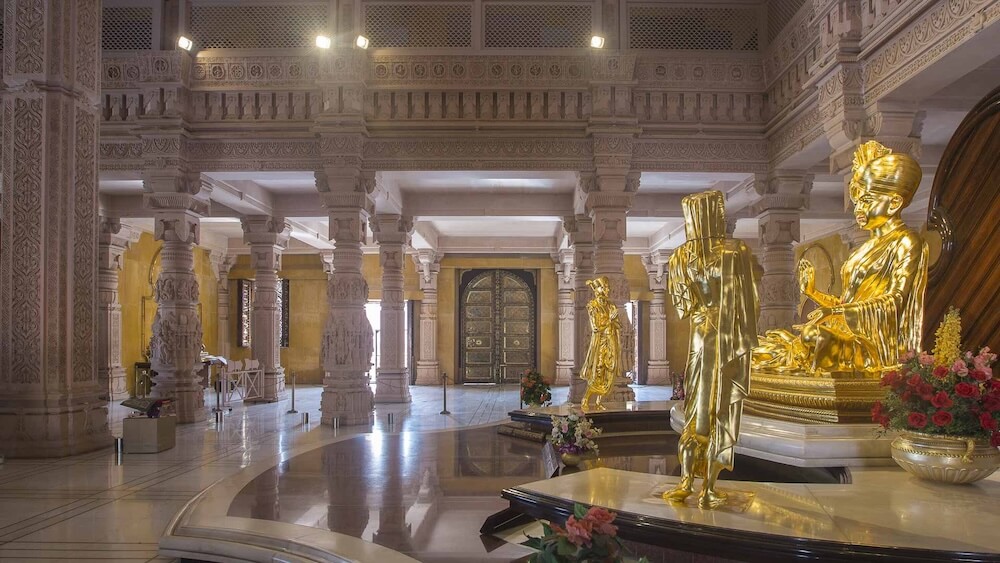
 The sanctum sanctorum of this temple is known as the ‘Harimandap’. Here stands a 7-foot tall, 1.2-ton gold-plated idol of Lord Swaminarayan in a seated posture, with his right hand raised in a gesture of blessing (‘abhaya mudra’). To the left of this idol is a standing statue of his disciple Swami Gunatitanand, and to the right is a statue of Swami Gopalanand.. In addition, the temple houses idols of key figures from the Swaminarayan tradition, including Bhagatji Maharaj, Shastriji Maharaj, Yogiji Maharaj, Mahant Swami Maharaj, and Pramukh Swami Maharaj. Alongside them are also idols of Radha-Krishna, Lakshmi-Narayan, Ram-Sita, and Shiva-Parvati.
 On the ground floor of the temple is the Prasad Mandapam, where Lord Swaminarayan is worshipped in his divine manifest form. Several items used by him are also preserved here. On the upper floor of the temple, in the Darshan Gallery, devotees can witness depictions of the life and teachings of Lord Swaminarayan. In the Abhishek Mandap within the temple premises, devotees can perform abhishek (ritual bathing) of the idol of Neelkanth Varni. The ritual begins by tying a sacred thread on the devotee’s wrist.
  This is followed by the chanting of Sanskrit shlokas, during which devotees pour water over the idol of Neelkanth Varni using a small vessel. While the shlokas are chanted, devotees pray for the well-being of their families.
There are five exhibition halls in the complex. In one of these halls, an IMAX theater screens a documentary based on the journeys of Bhagwan Swaminarayan. A major attraction for both devotees and tourists is the Sat-Chit-Anand Water Show held in the temple complex after sunset. This show presents the story of Nachiketa as mentioned in the Katha Upanishad, using animation, lasers, and live performances by artists.
 The temple complex also offers various games for children. In addition, there are several restaurants where visitors can enjoy dishes like puri-bhaji, Swaminarayan khichdi, and many other delicacies. Within the complex, the Akshardham Center for Applied Research in Social Harmony (AARSH) houses a spacious library with over 7,000 books in Sanskrit, Hindi, Gujarati, Tamil, and other languages, as well as many ancient manuscripts. The center also includes a study center, an archive, and a research facility. Various social topics are studied at this center. The spiritual center within the temple premises regularly organizes workshops, yoga classes, and meditation camps.
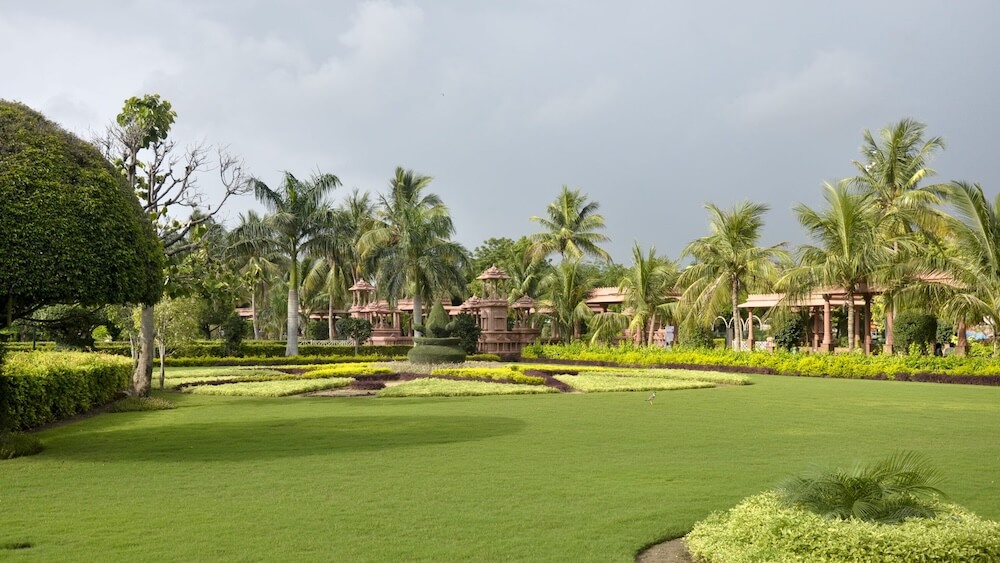
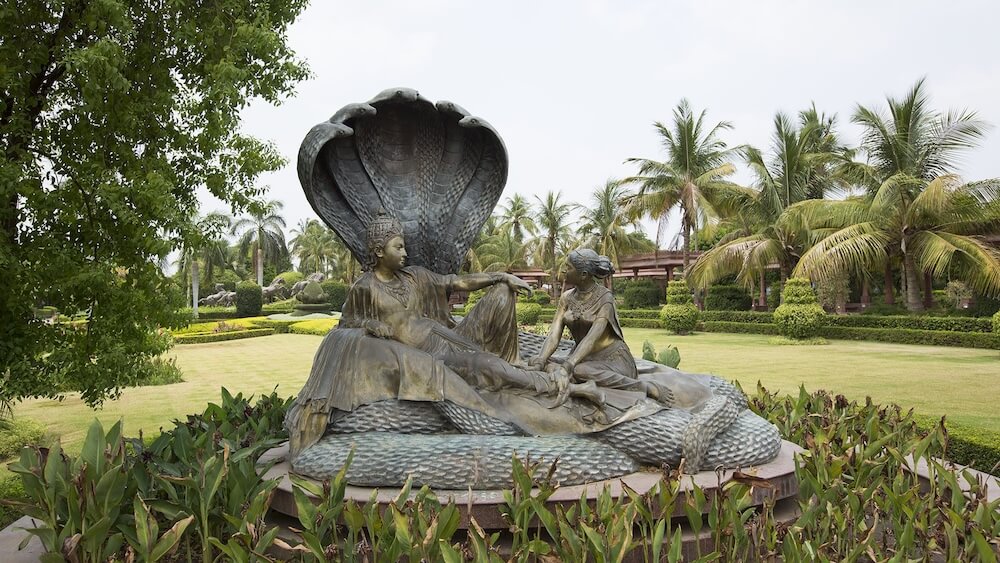
Surrounding the temple on all four sides, across 15 acres of land, is a garden known as Sahajanand Van. It features over 57,000 trees, flowering plants, and fountains. Beautiful sculptures include Bhagwan Swaminarayan on his beloved horse Manki, Lakshminarayan seated on Sheshnag, the Sun Chariot, and a depiction of the churning of the ocean (Samudra Manthan). There is also a vegetarian eatery within the Sahajanand Van premises.
Except Monday, on other days the temple is open for darshan from 10 AM to 7 PM. During Navratri festival and other Hindu festivals, special poojas and religious programs are organized here. Thousands of devotees participate in these events. During Diwali, a grand festival of lights is held here. The entire temple premises are illuminated with the light of more than ten thousand earthen lamps.
This temple, one of the major religious tourist destinations in the country, was attacked by two terrorists on the evening of 24th September 2002 at around 4:45 PM. Thirty people, including two police officers and two commandos, lost their lives, and at least 80 people, including 23 police officers, were injured. Notably, after this attack, the chief Swami Maharaj immediately appealed to the public for peace. The BAPS organization provided significant financial assistance to the families of the deceased and the injured. After this attack, security at the temple was tightened considerably. Mobile phones, cameras, and other electronic devices are not allowed inside the temple. These devices must be kept in the cloakroom near the temple entrance.