
BAPS स्वामीनारायण मंदिर
कॉलेज रोड, बोदेली, ता. बोदेली, जि. छोटा उदेपूर
BAPS Swaminarayan Temple
College Road, Bodeli, Dist. Chhota Udepur
 The BAPS Swaminarayan Temple is situated in Bodeli town within the Chhota Udepur district. Located in the fertile basin of the Orsang River, Bodeli serves as a commercial center for textile trade, cement pipe manufacturing, and sugar processing. The town is home to diverse communities and houses several temples and mosques, among which the BAPS Swaminarayan Temple stands out as a prominent religious site. Erected near Amrut Garden on College Road in March 2011, it has become a landmark for the district. The construction of the complex reflects a combination of voluntary community service (‘shramdan’) and institutional planning.
The historical trajectory of the Swaminarayan Sampradaya spans approximately two centuries. Its roots are deeply embedded in the profound spiritual reforms initiated by Bhagwan Swaminarayan on the soil of Gujarat. Born on 3 April 1781 in Chhapaiya village, Uttar Pradesh, he was named Ghanshyam Pande. During his childhood, he completed a thorough study of the sacred Vedas and Dharmashastras. At the tender age of eleven, he renounced his home to embark upon a historic pilgrimage across India barefoot. He attained absolute mastery over the disciplines of Ashtanga Yoga, earning the name Nilkanth Varni. Following a rigorous seven-year foot journey, he met Muktanand Swami at Loj on 21 August 1799. Subsequently, on 18 June 1800, he met Ramanand Swami at Piplana. 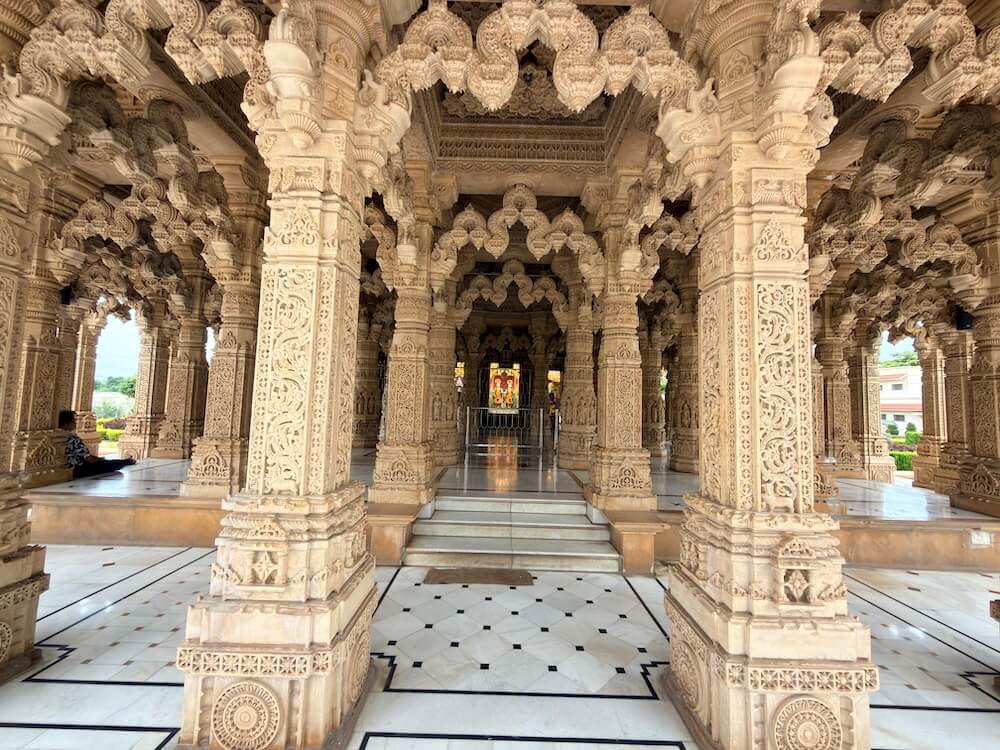 This brought him into close communion with such saints as Ramanand Swami and Gunatitanand Swami. His Guru formally initiated him into the holy order, bestowing the name Sahajanand Swami. He later became universally revered by the name Swaminarayan.
The subsequent century witnessed an immense expansion of this spiritual fraternity. Brahmaswarup Shastriji Maharaj assumed the leadership of this legacy. On 5 June 1907, he established the very first traditional pinnacled temple at Bochasan village in the Anand district. He also officially announced the inception of the ‘Bochasanwasi Shri Akshar Purushottam Swaminarayan Sanstha’ (BAPS). At present, this global organisation oversees more than 3,850 centers and manages over 1,550 temples worldwide. 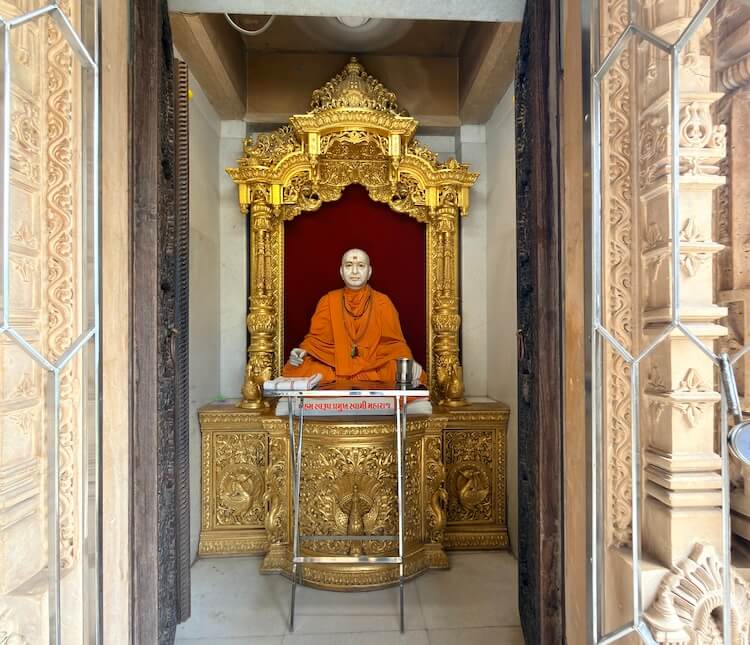 According to some statistical registries, the count stands at over 1,300 temples and 3,300 international centers. The institution commands a dedicated global following of over five hundred thousand devotees. As an extension of this tradition, the grand sanctuary at Bodeli was successfully erected. The formal consecration ceremony (‘Prana Pratishtha’) of the deities was performed in March 2011. This corresponded to the holy festival of Phalguna Shuddha Saptami in the Vikram Samvat year 2067. The rituals were conducted amidst Vedic chants by the sacred hands of Pramukh Swami Maharaj.
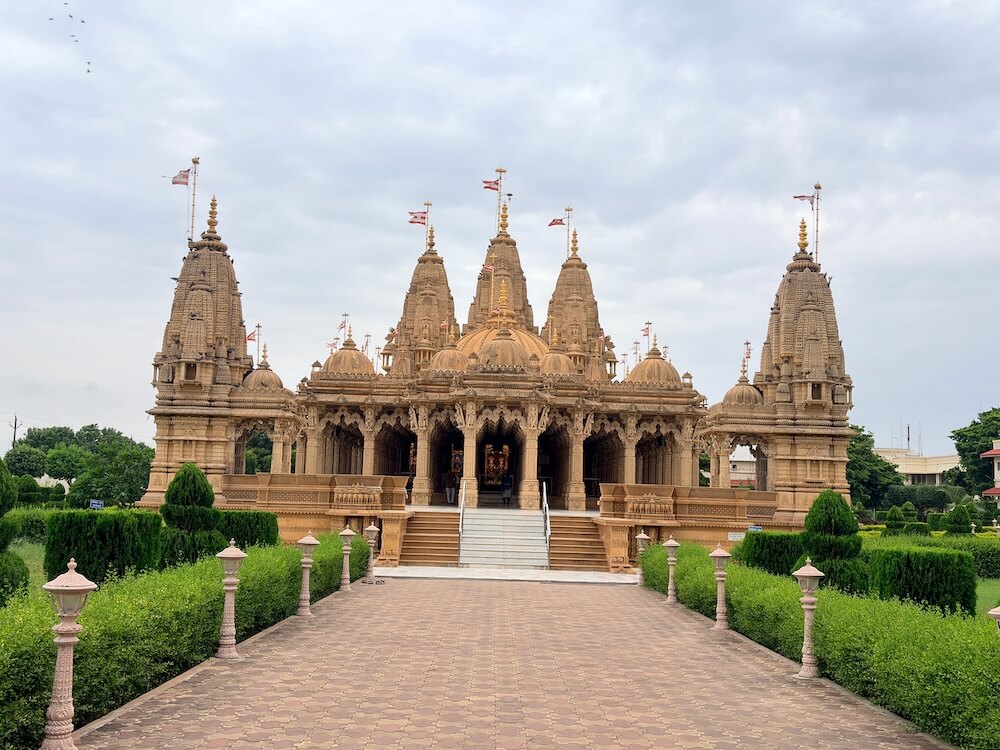
Situated adjacent to the city thoroughfare, the temple complex is enclosed by a defensive perimeter wall. Access to the inner grounds is gained through grand gateway structures set into this wall. The expansive campus integrates dedicated parking lots, modern educational complexes and gardens stretching across several acres. 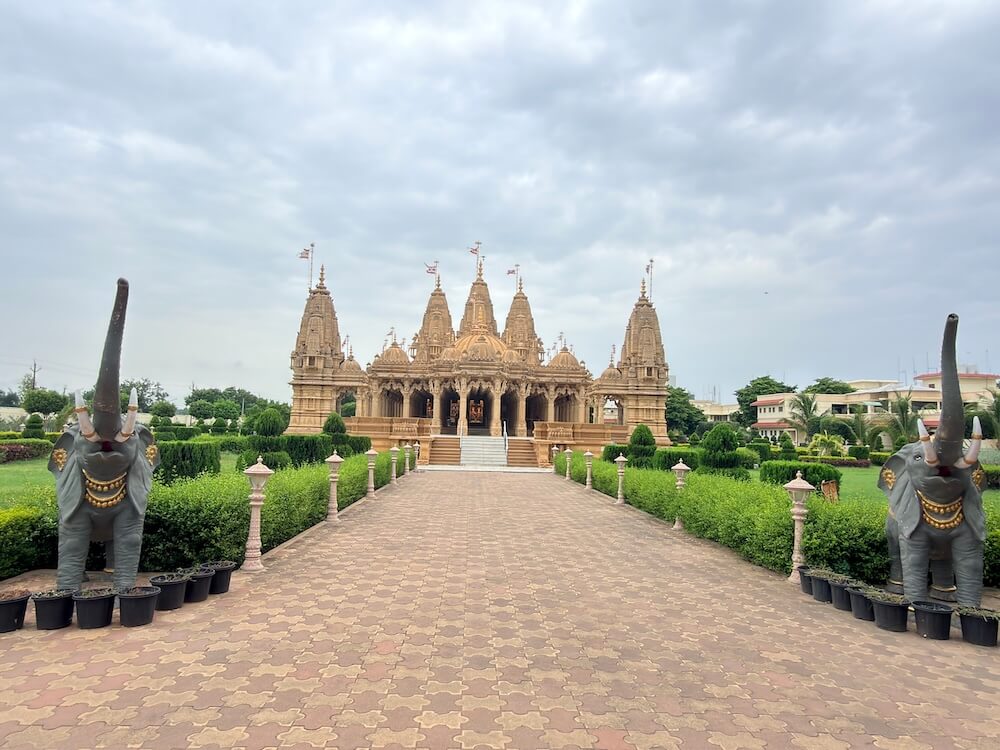 The landscaped grounds feature diverse ornamental flora and green lawns. Furthermore, the complex includes a traditional residential Gurukul, a Vedic school (‘Veda Pathshala’), a charitable food pavilion (‘annachhatra’) and a community kitchen. It also houses guest accommodation (‘Bhakta Nivas’) alongside private residential quarters for the ascetics and the presiding Mahant. A vast cultural hall stands built for public welfare assemblies. A paved arterial pathway leads visitors from the primary gateway toward the main shrine. The approach path is fronted by two colossal elephant sculptures, bordered by manicured lawns. From this walkway, an ascent of nine ceremonial steps leads into the elevated front portico of the temple. Flanking the primary shrine on either side are two exquisite subsidiary temples. One houses the divine assembly of the Shiv Darbar, while the other enshrines the Ram Darbar.
 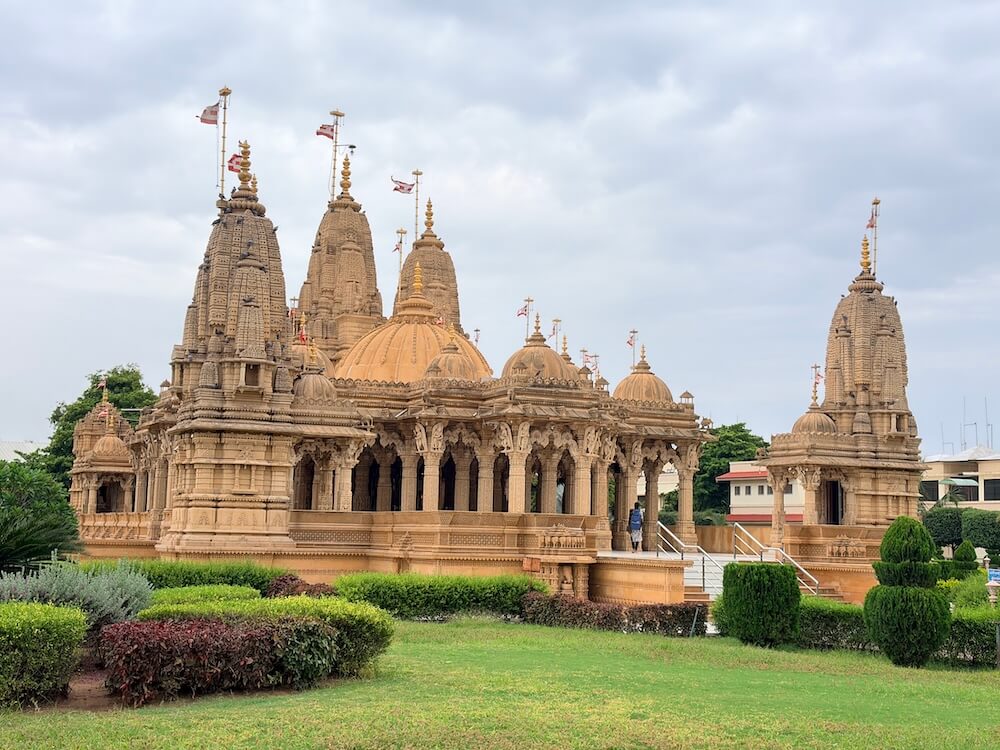 Both subsidiary temples are crowned with soaring spires and golden finials.
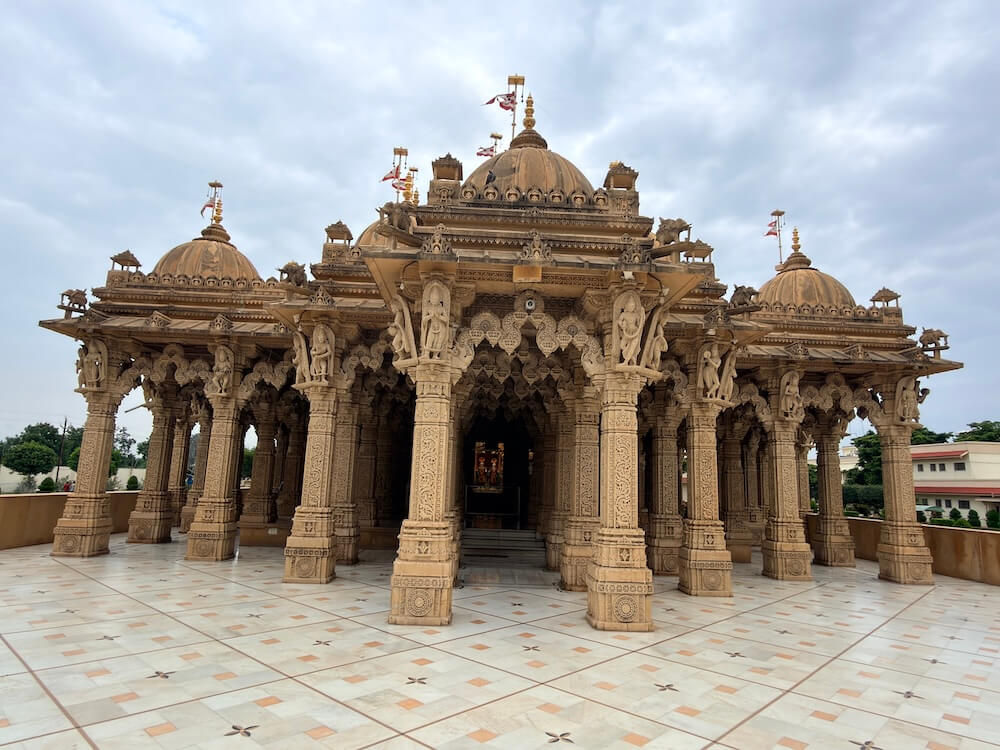
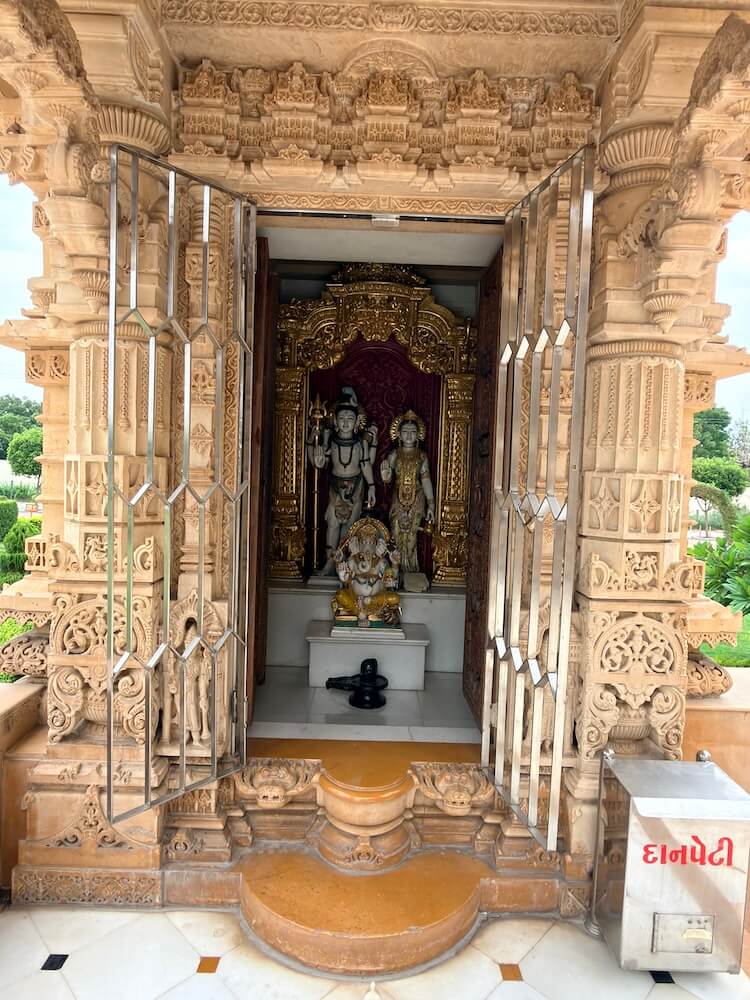
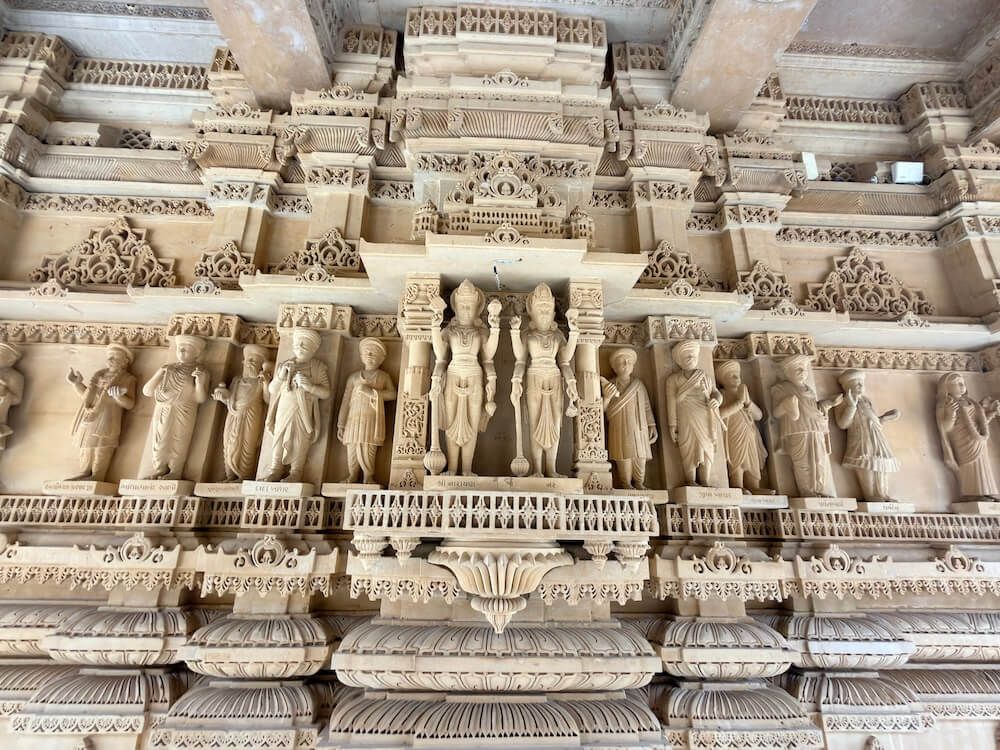
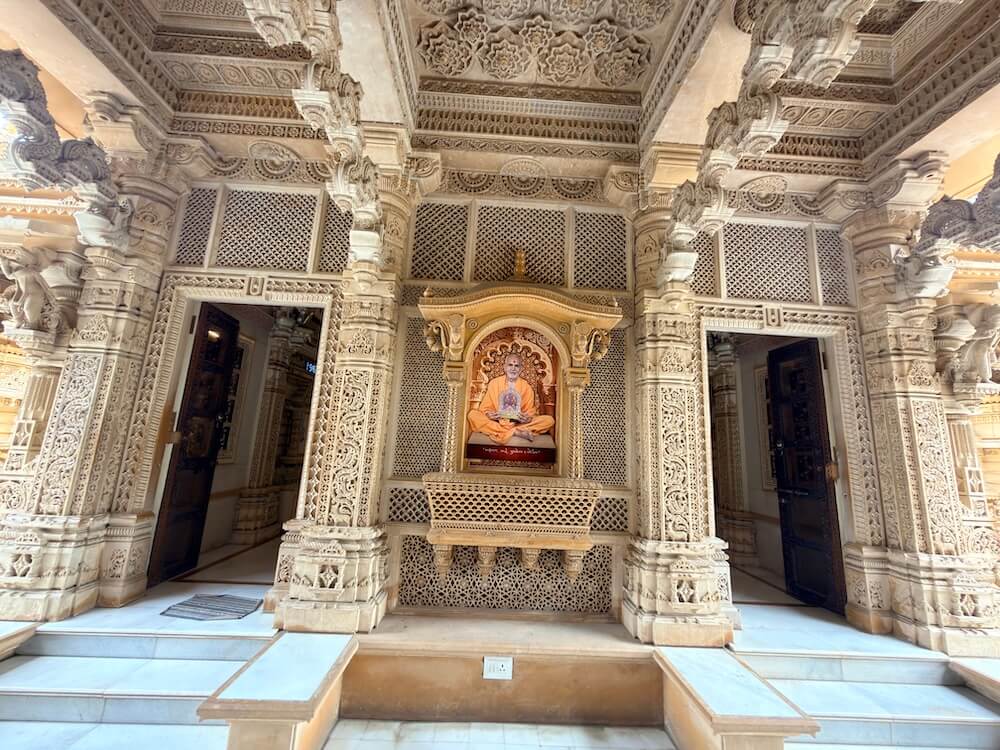
This traditional pinnacled temple is built in strict accordance with the classical rules of Indian iconography and architecture. The structural configuration comprises a triple front portico, a central assembly hall and three inner sanctum sanctorums. The front porticos and the assembly hall (‘sabhamandap’) are supported by carved columns. These columns rise from square bases and are seamlessly integrated via decorative cusped arches. The pillar shafts are deeply embellished with traditional geometric motifs and auspicious symbols. The upper sections culminate in capital brackets that bear detailed relief sculptures. 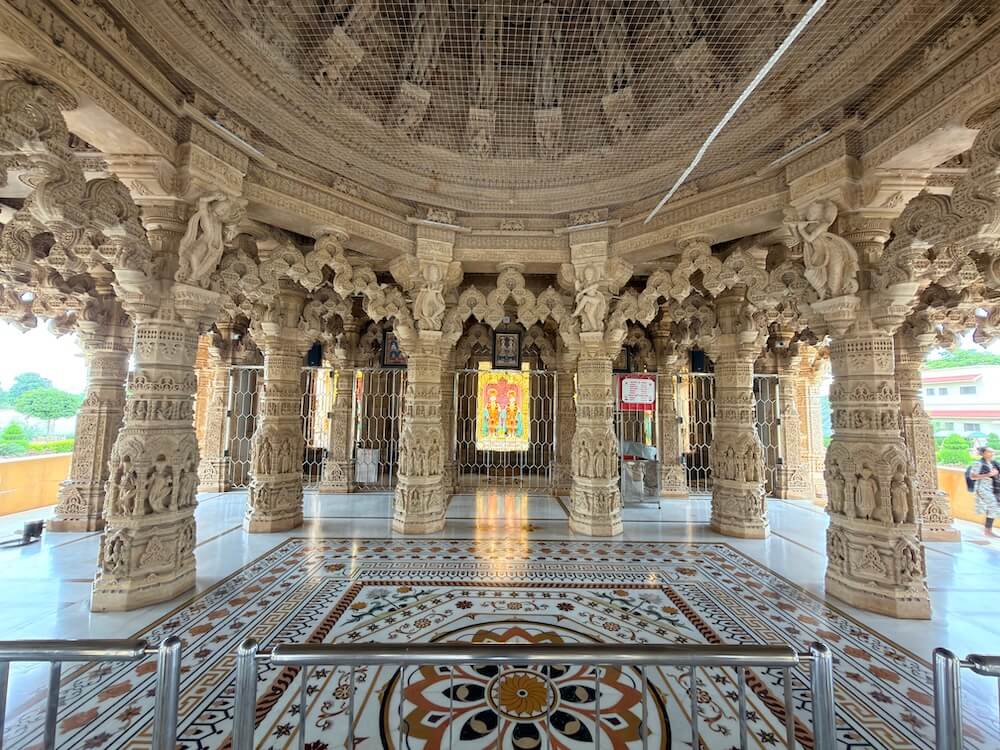 The heavy load-bearing beams and complex ceilings display intricate stone craftsmanship. The entire temple structure features refined artistry across its internal and external facades. The columns supporting the vaulted dome of the assembly hall feature brackets carved with celestial maidens (‘surasundaris’), deities and ascetics. The stone canvas exhibits depictions of sacred lotuses, elephants and peacocks. It also showcases legendary narratives from the life of Bhagwan Swaminarayan alongside sculptures of dedicated devotees.
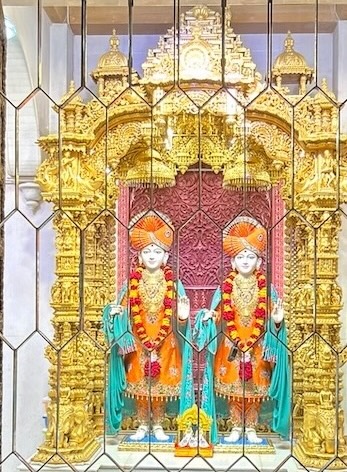
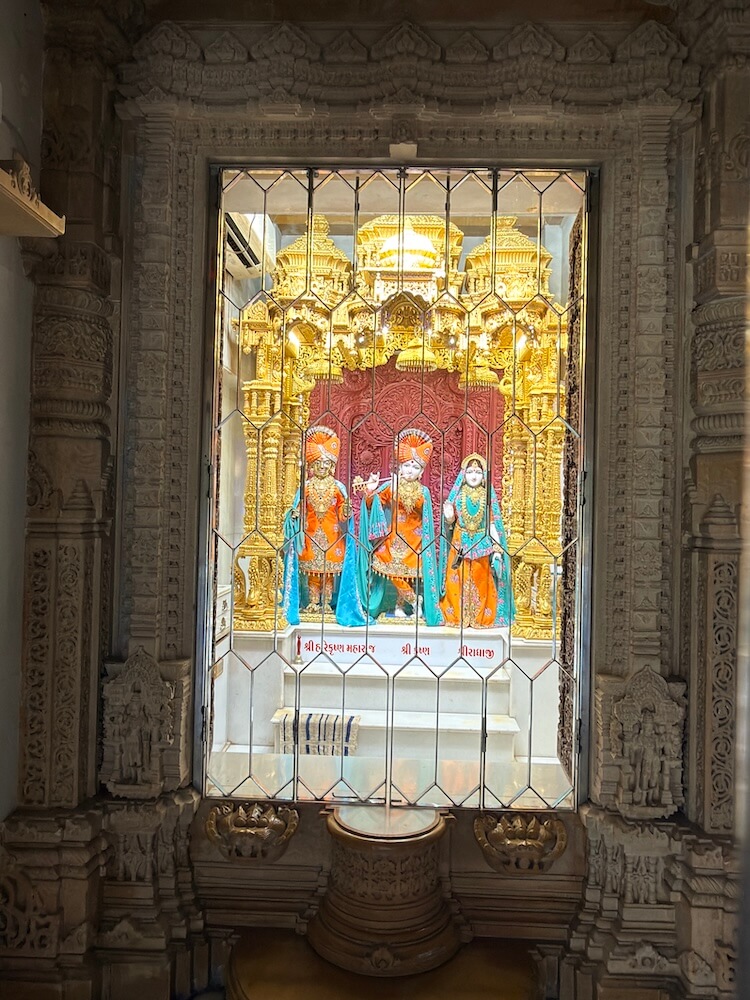
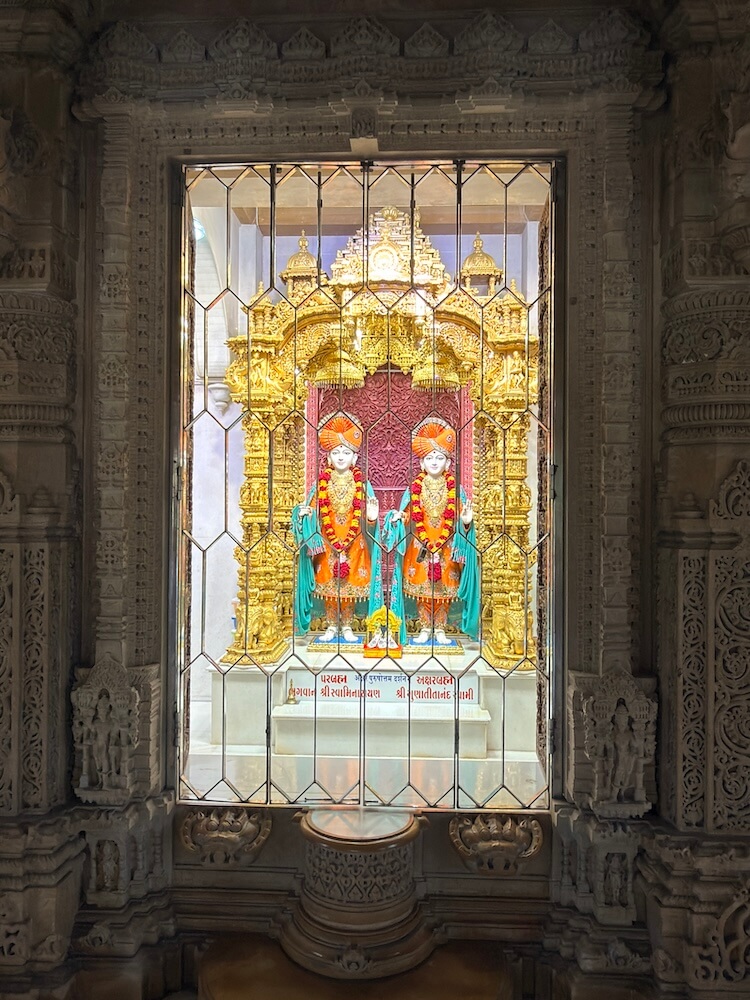
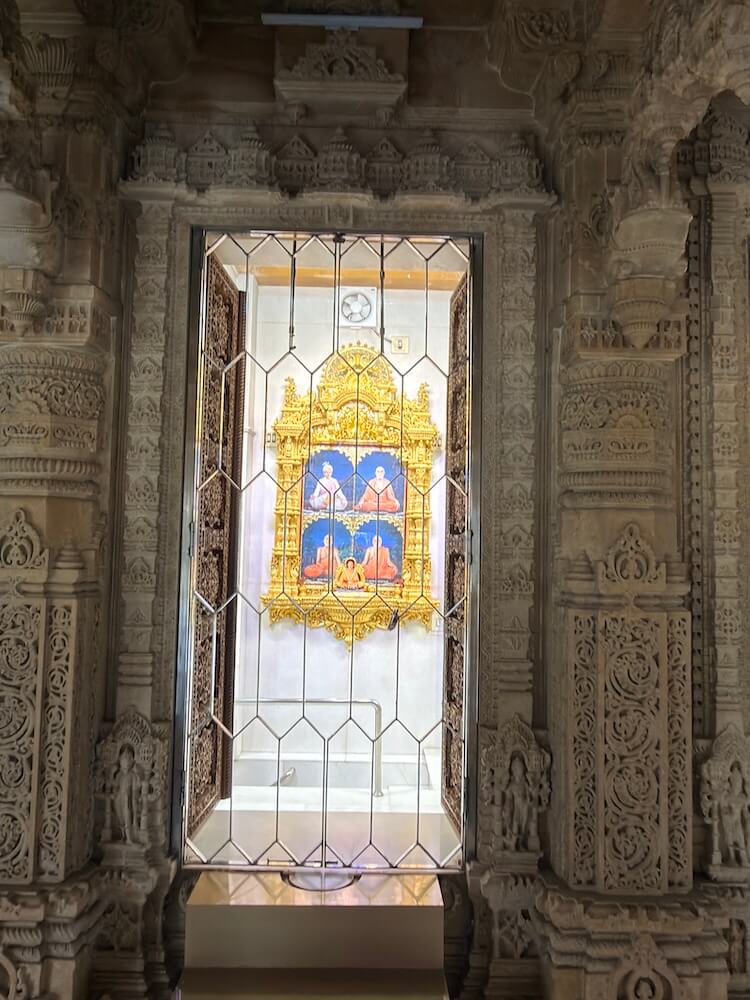
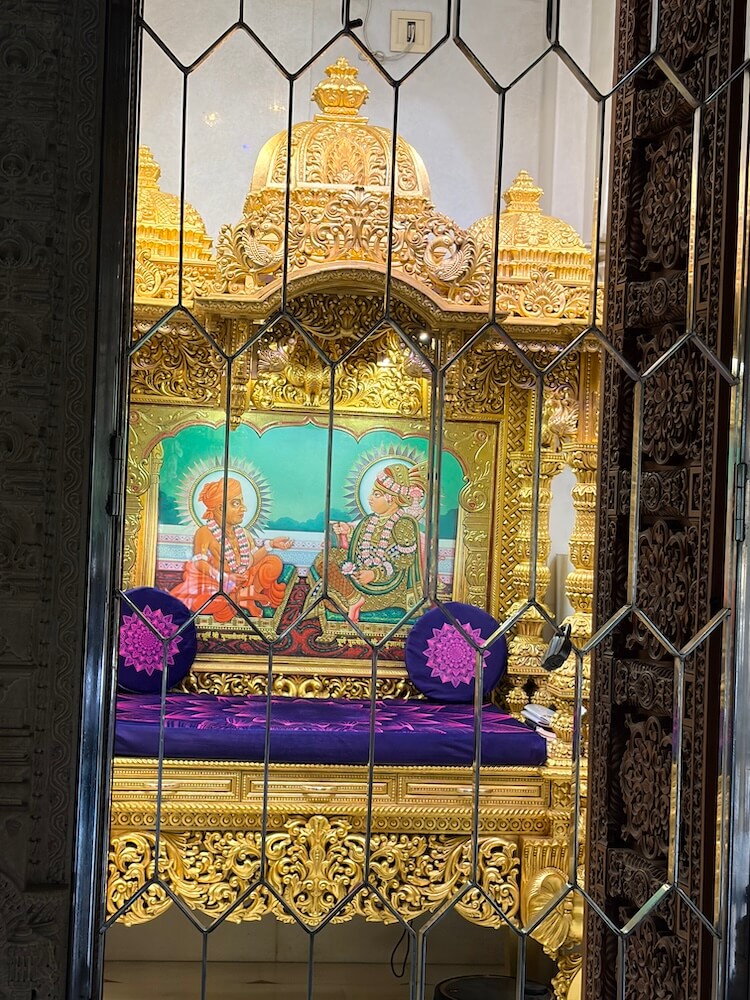
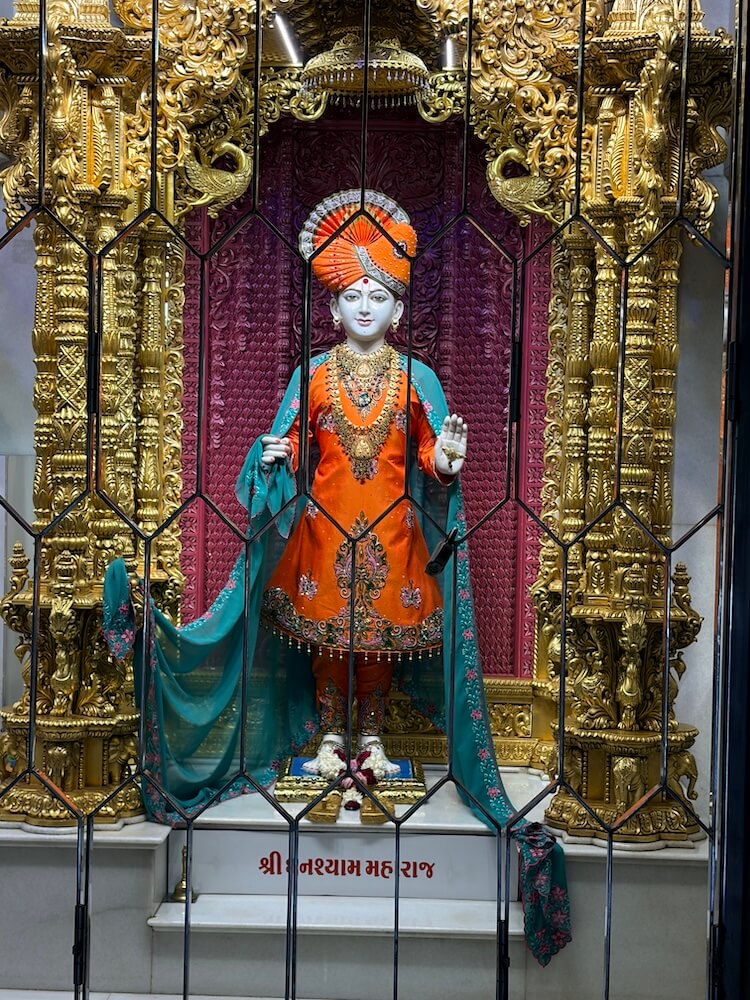
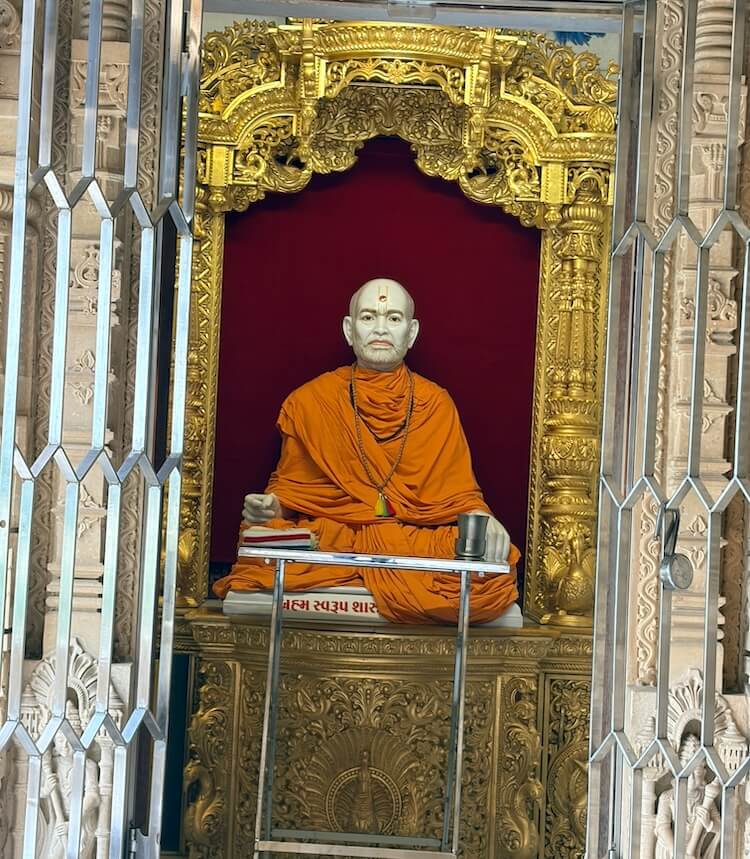
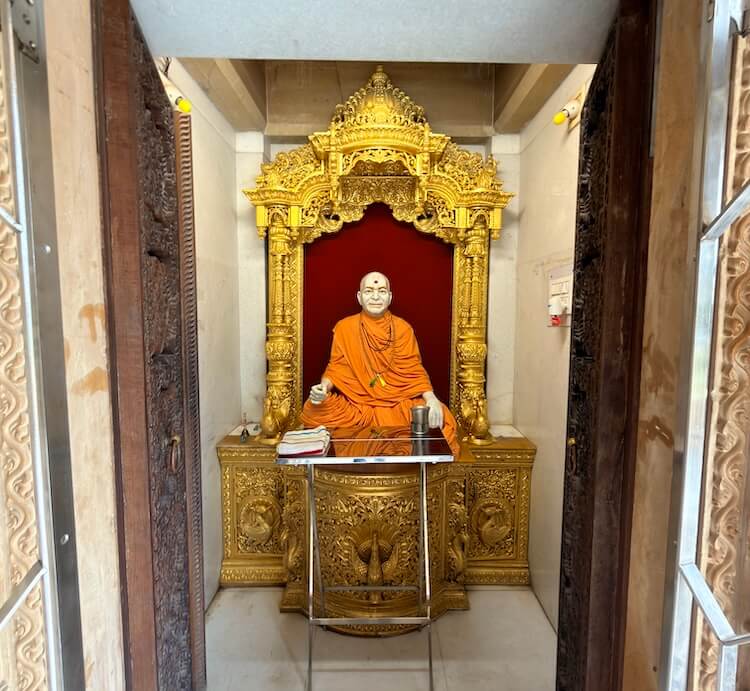
Beyond the assembly hall lies an antechamber leading to the three sanctum sanctorums. The door jambs of all three sanctums display delicate botanical relief carvings of intertwining foliage and creepers. The central lintels (‘lalatabimba’) are adorned with fine sculptures of the presiding deities, 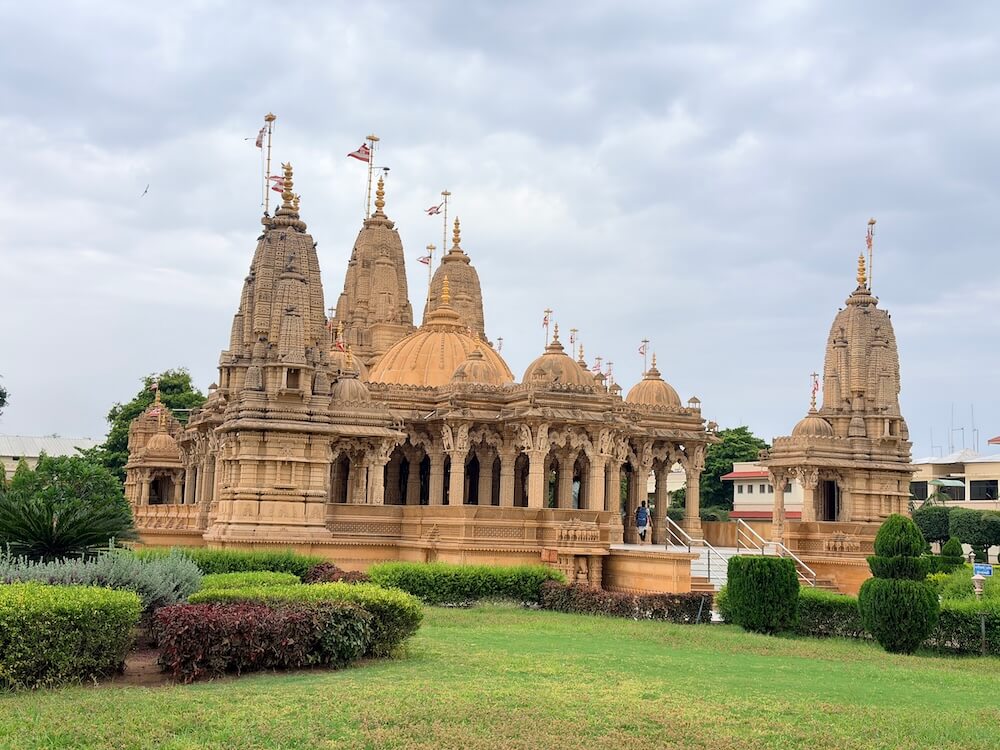 while the thresholds feature traditional moon-stones (‘chandrashila’). Consecrated within a splendidly ornate canopy upon the sacred stone altar (‘vajrapitha’) inside the principal central sanctum are the central idols of Bhagwan Swaminarayan and Gunatitanand Swami. The matching altars within the right and left sanctum sanctorums house the beautiful idols of Harikrishna Maharaj, Radha-Krishna and Ghanshyam Maharaj. The external facade of the temple features specially crafted niches housing stone sculptures of numerous Vedic deities. These include Vayu, Kuber, Ishan, Indra, Agni, Yama and Nairriti. Architecturally, dome-shaped spires crown the roofs of the three front porticos. The central assembly hall is surmounted by a massive dome-shaped roof topped with a finial pedestal (‘stupika’) and a golden kalasa.
  The superstructures covering the three primary sanctums rise into towering, square-based spires (‘shikharas’) that taper gradually towards the sky. These principal spires feature structural niches and miniature auxiliary spires (‘angashikharas’) facing all four cardinal directions.
The daily schedule of worship services and ‘aarti’ ceremonies at the temple is systematically regulated with absolute precision. The day commences at 6:00 am with the ‘Mangala Aarti’, followed by the ‘Shringar Aarti’ at 7:30 am. The inner sanctums are closed from 10:15 am to 11:15 am for the presentation of the sacred ‘Rajbhog Thal’. The primary midday offering is marked by the ‘Rajbhog Aarti’ at 11:15 am. Devotees can seek the visual audience (‘darshan’) of Bhagwan Swaminarayan daily from 6:00 am until 12:00 noon and from 4:00 pm until 8:15 pm. In the evening, the traditional food offering is presented from 6:00 pm to 7:00 pm, during which viewing is paused. Evening devotions resume with the
‘Sandhya Aarti’ at 7:00 pm. The daily routine concludes with the ‘Shayan Aarti’ at 8:15 pm, preparing the deities for nightly repose. The temple trust hosts a daily morning assembly (‘Satsang Sabha’) from 8:00 am to 9:00 am, offering scriptural reading and moral discourses. Furthermore, a special weekly assembly is organized every Sunday evening from 5:00 pm to 7:00 pm. 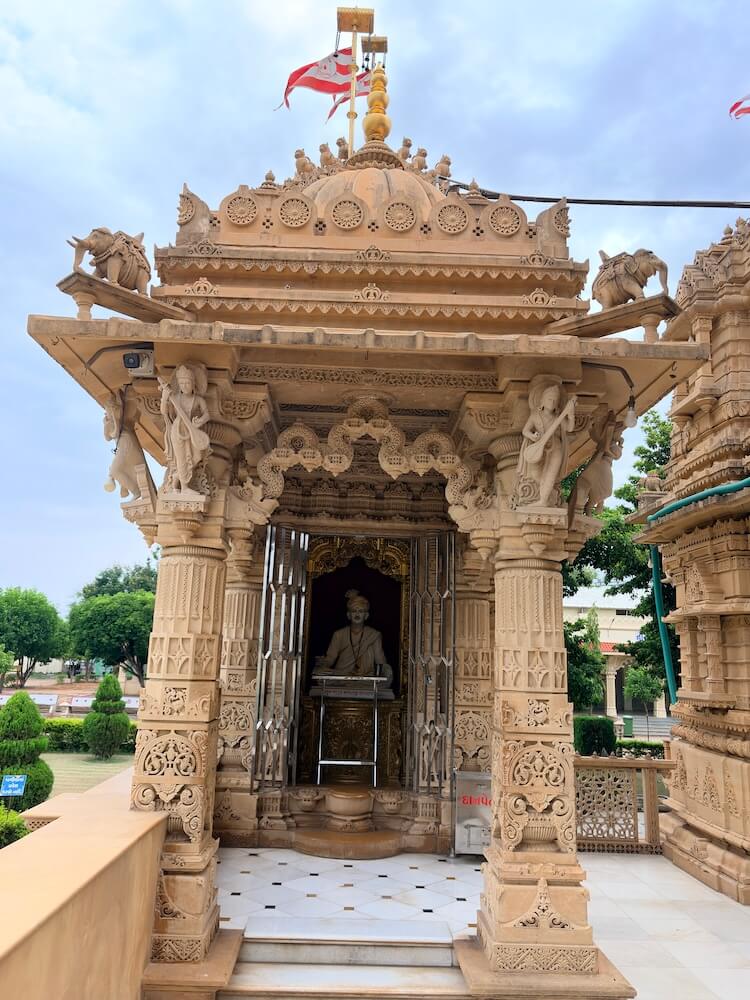 This draws a vast multitude of devotees from Bodeli and its rural hinterlands.
A rich calendar of religious festivals and annual celebrations is meticulously observed at the temple premises. During the summer months, specifically in the holy month of Vaisakha, the unique ‘Chandan Vagha’ festival is celebrated. During this event, the metal idols of Bhagwan Swaminarayan and Shri Harikrishna Maharaj are coated with cooling sandalwood paste for several consecutive days to provide relief from the heat. From the holy month of Ashadha to Shravana during the monsoon season, the traditional ‘Hindola’ festival is celebrated with great devotion. The deities are placed within highly artistic cradles, accompanied by devotional swinging and singing. The religious year culminates in a spectacular celebration during Diwali and the ‘Annakut’ festival. On the New Year day following Diwali, an array of fifty-six distinct delicacies (‘Chhappan Bhog’) is offered to the deities, followed by grand community feasts. The festival of Shri Ram Navami is celebrated with immense fervor as Swaminarayan Jayanti. Additionally, the temple enthusiastically observes Holi, Guru Purnima, Kojagiri Purnima, Dussehra, the holy month of Shravan and the auspicious phases of Ashadhi and Kartiki Ekadashi. During these festive periods, the temple trust organizes congregational singing sessions (‘bhajans’ and ‘kirtans’), scriptural recitals, sacrificial fire rituals (‘hom-havan’) and the distribution of sanctified feasts.
Useful Information :
- Situated at a distance of 2 km from Bodeli bus station
- Located 35 km away from Chhota Udepur city
- Reliable state transport bus facilities to Bodeli operate frequently from numerous urban centers across the district.
- Private vehicles can drive directly up to the designated temple parking grounds.
- Comfortable lodging and breakfast facilities are available in the immediate vicinity.
- Contact: Temple Office, Tel. 02665-222 245
बीएपीएस स्वामीनारायण मंदिर
कॉलेज रोड, बोडेली, ताल। बोडेली, जिला. छोटा उदेपुर
मंदिरे
Temples
मंदिर
મંદિરો
கோவில்கள்
దేవాలయాలు
ക്ഷേത്രങ്ങൾ
ದೇವಾಲಯಗಳು
মন্দিরসমূহ
ਮੰਦਿਰ
-
पंचेश्वर महादेव मंदिर हांडोड, ता. संखेडा, जि. छोटा उदेपूर
अधिक माहितीPancheshwar Mahadev Temple Handod, Tal. Sankheda, Dist. Chhota Udepur
View Detailsपंचेश्वर महादेव मंदिर हैंडोड, ताल. संखेडा, जिला. छोटा उदेपुर
विवरण देखेंPancheshwar Mahadev Temple Handod, Tal. Sankheda, Dist. Chhota Udepur
વિગત જુઓPancheshwar Mahadev Temple Handod, Tal. Sankheda, Dist. Chhota Udepur
விவரங்களைக் காண்கPancheshwar Mahadev Temple Handod, Tal. Sankheda, Dist. Chhota Udepur
వివరాలను చూడండిPancheshwar Mahadev Temple Handod, Tal. Sankheda, Dist. Chhota Udepur
വിശദാംശങ്ങൾ കാണുകPancheshwar Mahadev Temple Handod, Tal. Sankheda, Dist. Chhota Udepur
ವಿವರಗಳನ್ನು ವೀಕ್ಷಿಸಿPancheshwar Mahadev Temple Handod, Tal. Sankheda, Dist. Chhota Udepur
বিস্তারিত দেখুনPancheshwar Mahadev Temple Handod, Tal. Sankheda, Dist. Chhota Udepur
ਵੇਰਵੇ ਦੇਖੋ -
पशुपतीनाथ महादेव मंदिर नसवडी, ता. नसवडी, जि. छोटा उदेपूर
अधिक माहितीPashupatinath Mahadev Temple Naswadi, Tal. Naswadi, Dist. Chhota Udepur
View Detailsपशुपतिनाथ महादेव मंदिर नसवाडी, ताल. नसवाडी, जिला. छोटा उदेपुर
विवरण देखेंPashupatinath Mahadev Temple Naswadi, Tal. Naswadi, Dist. Chhota Udepur
વિગત જુઓPashupatinath Mahadev Temple Naswadi, Tal. Naswadi, Dist. Chhota Udepur
விவரங்களைக் காண்கPashupatinath Mahadev Temple Naswadi, Tal. Naswadi, Dist. Chhota Udepur
వివరాలను చూడండిPashupatinath Mahadev Temple Naswadi, Tal. Naswadi, Dist. Chhota Udepur
വിശദാംശങ്ങൾ കാണുകPashupatinath Mahadev Temple Naswadi, Tal. Naswadi, Dist. Chhota Udepur
ವಿವರಗಳನ್ನು ವೀಕ್ಷಿಸಿPashupatinath Mahadev Temple Naswadi, Tal. Naswadi, Dist. Chhota Udepur
বিস্তারিত দেখুনPashupatinath Mahadev Temple Naswadi, Tal. Naswadi, Dist. Chhota Udepur
ਵੇਰਵੇ ਦੇਖੋ -
नानी अंबाजी मंदिर जीवनपुरा, ता. नसवडी, जि. छोटा उदेपूर
अधिक माहितीNani Ambaji Temple Jeevanpura, Tal. Naswadi, Dist. Chhota Udepur
View Detailsनानी अम्बाजी मंदिर जीवनपुरा, ताल. नसवाडी, जिला. छोटा उदेपुर
विवरण देखेंNani Ambaji Temple Jeevanpura, Tal. Naswadi, Dist. Chhota Udepur
વિગત જુઓNani Ambaji Temple Jeevanpura, Tal. Naswadi, Dist. Chhota Udepur
விவரங்களைக் காண்கNani Ambaji Temple Jeevanpura, Tal. Naswadi, Dist. Chhota Udepur
వివరాలను చూడండిNani Ambaji Temple Jeevanpura, Tal. Naswadi, Dist. Chhota Udepur
വിശദാംശങ്ങൾ കാണുകNani Ambaji Temple Jeevanpura, Tal. Naswadi, Dist. Chhota Udepur
ವಿವರಗಳನ್ನು ವೀಕ್ಷಿಸಿNani Ambaji Temple Jeevanpura, Tal. Naswadi, Dist. Chhota Udepur
বিস্তারিত দেখুনNani Ambaji Temple Jeevanpura, Tal. Naswadi, Dist. Chhota Udepur
ਵੇਰਵੇ ਦੇਖੋ