
गंगा देवी मंदिर
सोळसुंबा, ता. उमरगाम, जि. वलसाड
Ganga Devi Temple
Solsumba, Tal. Umargam, Dist. Valsad
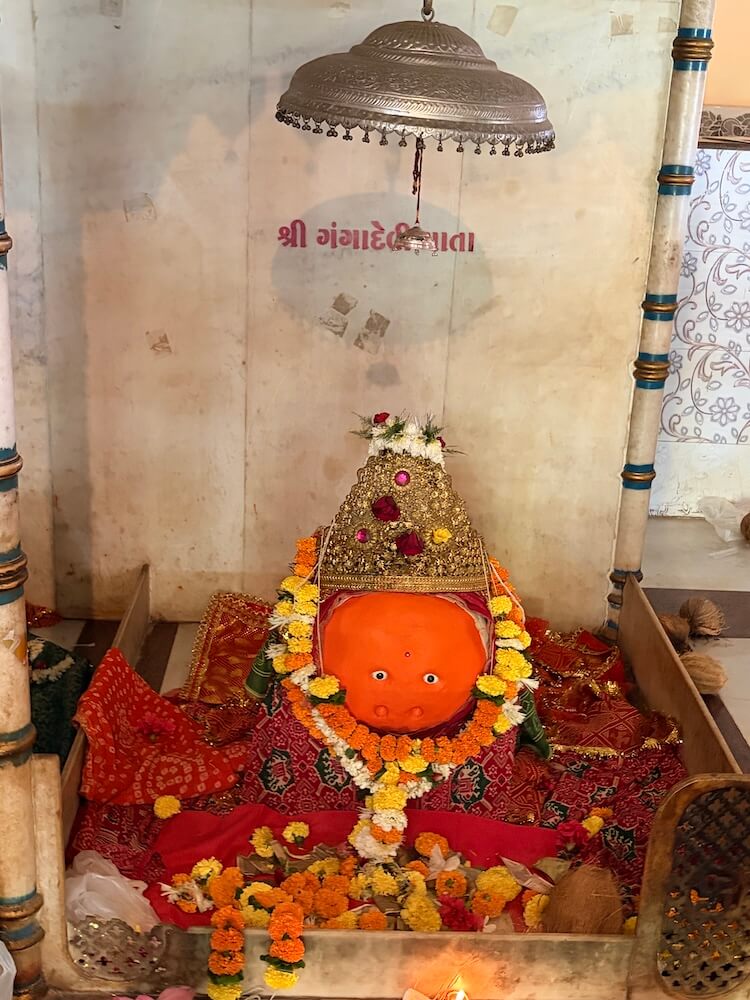 Situated in Solsumba village of Valsad district is the Ganga Devi Temple, which boasts a history spanning approximately five centuries. In this temple, Goddess Ganga is revered as the human manifestation of the River Ganges. It is a firm belief among the visiting devotees that the Goddess liberates them from all accumulated sins and curses.
The resident Ganga Devi is considered the sister of Goddess Mahalakshmi from Dahanu in the neighbouring state of Maharashtra. Consequently, this holy site has transformed into a centre of faith that bridges the cultural ties between the states of Gujarat and Maharashtra. Owing to this traditional relationship, a custom has long been observed where the annual fair and festival of both these deities are celebrated simultaneously during the month of Chaitra.
In sacred Hindu scriptures such as the ‘Vishnu Purana’, ‘Padma Purana’ and ‘Bhagavata Purana’, Ganga is referenced in the form of a river. From a geographical perspective, the river originates at Gangotri in the Himalayas. The length of this riverbed spans nearly two thousand five hundred kilometres. The river irrigates an expanse of roughly eight thousand square kilometres. Approximately 35 per cent of India’s population resides within the Ganges basin. 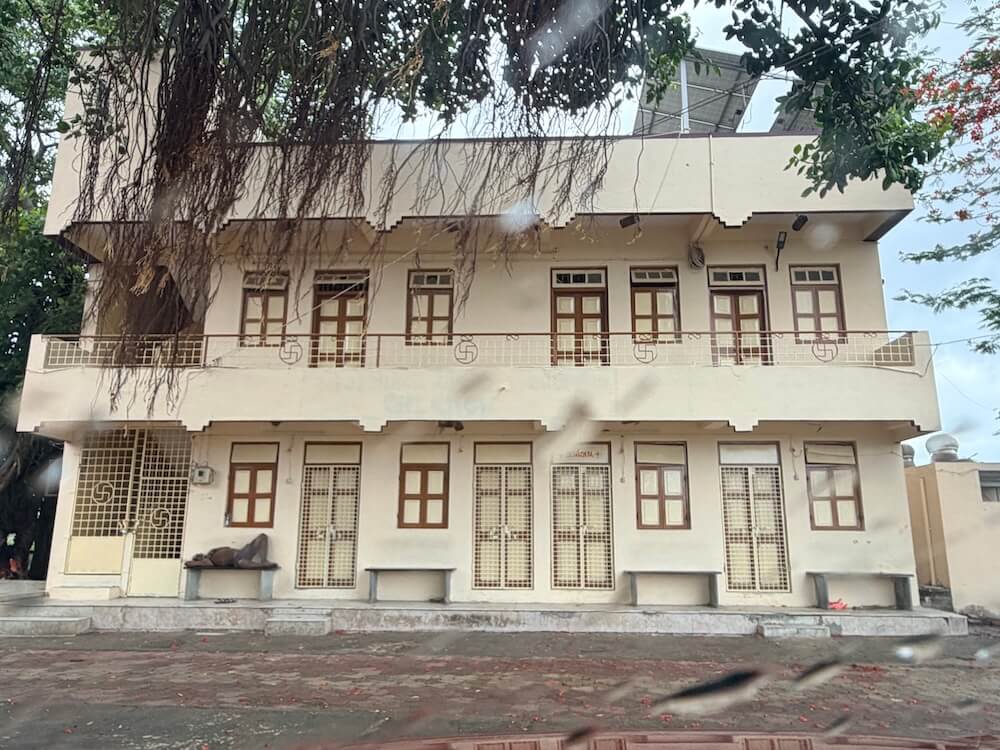 At the confluence where this river merges into the Bay of Bengal, it forms the ‘Sundarbans’, the largest delta region in the world. The Sundarbans region is universally celebrated for its rich biodiversity.
Conversely, references to Ganga in her divine goddess form are encountered in the ‘Mahabharata’ and the ‘Devi Bhagavata Purana’. The ‘Adi Parva’ volume of the Mahabharata provides detailed accounts of Ganga’s human incarnation. According to these scriptures, there lived a king named Mahabhisha in the era preceding the Mahabharata. He had performed a hundred Ashvamedha sacrifices alongside various other holy yagnas. By virtue of the spiritual merit gained from these sacrifices, he attained residence in heaven. Once, while Lord Indra’s court was in session in the celestial realm, Ganga arrived there. 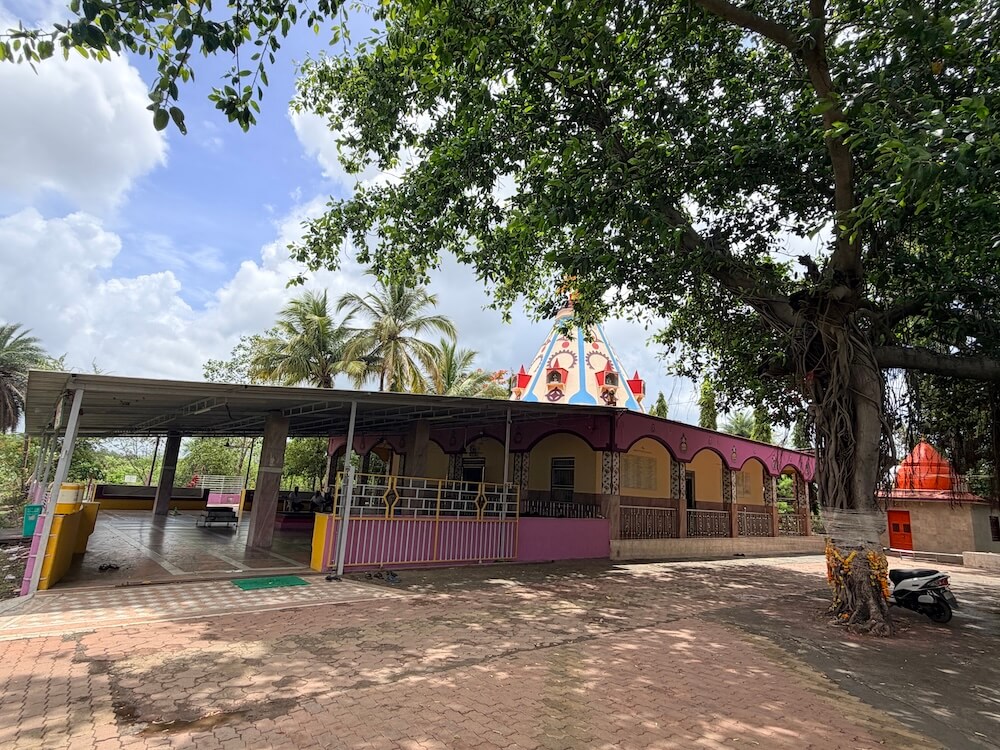 At that moment, a gust of wind displaced Ganga’s vesture. While all the other gods lowered their gaze, King Mahabhisha continued to look intently at Ganga. Ganga, too, felt attracted towards King Mahabhisha. Lord Brahma took notice of this occurrence. As the decorum of the divine assembly had been compromised, Lord Brahma cursed both of them to take birth on Earth in human form.
Driven by this curse, King Mahabhisha was reborn as King Shantanu. Whilst Shantanu was out hunting along the banks of the Ganges, he saw Ganga in her human form and the two subsequently wedded. At the time of their marriage, Ganga imposed a strict condition upon King Shantanu. According to this condition, the king was never to question her actions regarding any matter whatsoever. 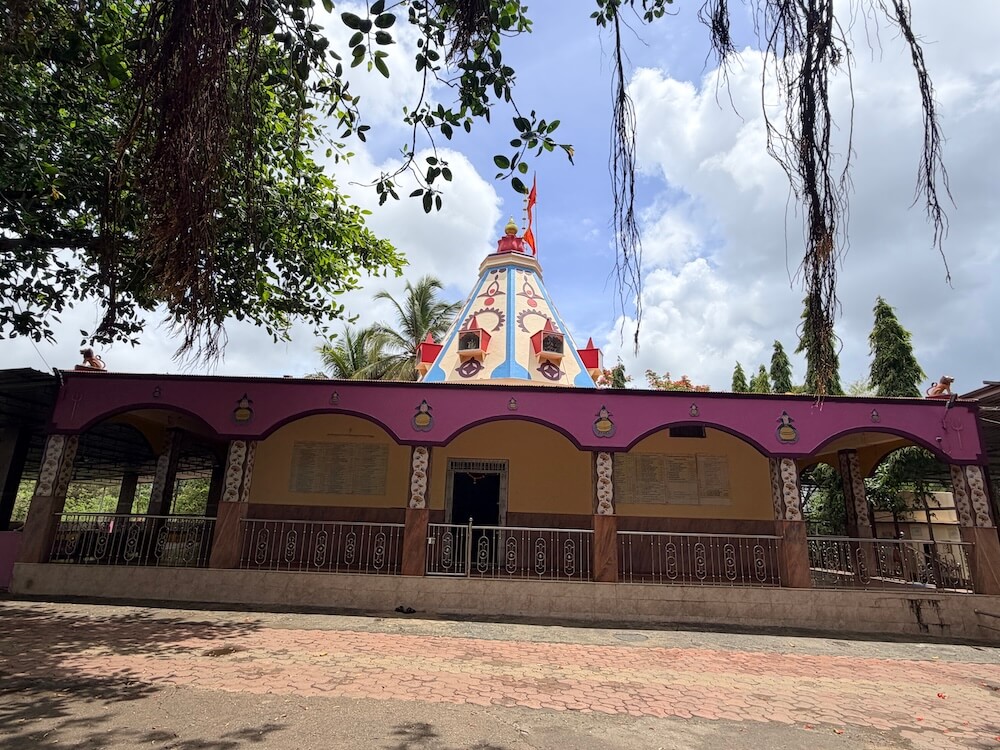 It was decreed that should he ever question her, she would abandon the palace instantly. In the course of time, King Shantanu and Ganga were blessed with seven sons. Upon the birth of each son, Ganga would cast the infant into the flowing waters of the river. Bound by his solemn pledge, King Shantanu refrained from questioning her. However, upon the birth of their eighth son, Shantanu intercepted Ganga. He retrieved the child from Ganga’s grasp into his own custody and demanded, “Why do you drown your own sons in the river?” In response, Ganga clarified that these infants were the ‘Vasus’, who had been cast down to the earthly realm due to a curse pronounced by the sage Vasishtha. Their liberation from the curse could only be achieved through a human birth.
 As the king had breached his vow, Ganga surrendered the eighth son to King Shantanu and returned to the heavens. This eighth son later came to be renowned by the name Devavrata (Pitamah Bhishma).
Temples dedicated to Mother Ganga are established at various locations across India. One such temple is located at Gangotri in the Uttarkashi district of Uttarakhand. At the dawn of the nineteenth century, the Nepali Gorkha commander Amar Singh Thapa constructed this temple. Later, in the twentieth century, Maharaja Madho Singh II of Jaipur restored this shrine. The architecture of this temple conforms to the North Indian Nagara style and the structure is crafted entirely from white granite. 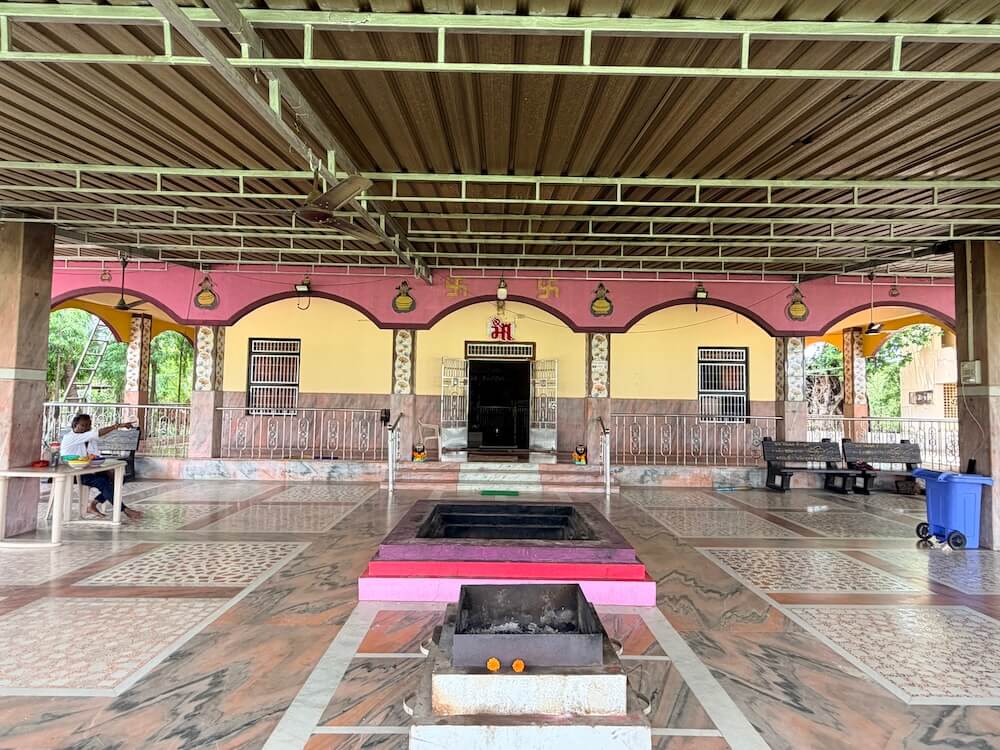 The Ganga Temple at Bharatpur in Rajasthan is equally renowned. Maharaja Balwant Singh initiated the construction of this temple in the year 1845. It took a span of 92 years for this temple to reach completion. The idols were formally consecrated during the reign of Maharaja Brijendra Singh. This temple has been fashioned through a blend of South Indian, Mughal and Rajput architectural styles. Housed within this temple is an idol of Mother Ganga mounted upon a crocodile. Aside from these, shrines dedicated to Mother Ganga also exist in Jaipur and at Haridwar in Uttarakhand. An integral constituent of this network of shrines is the temple located at Solsumba in the Valsad district.
Situated a short distance away from Solsumba village, this temple features a dedicated parking lot at its front. 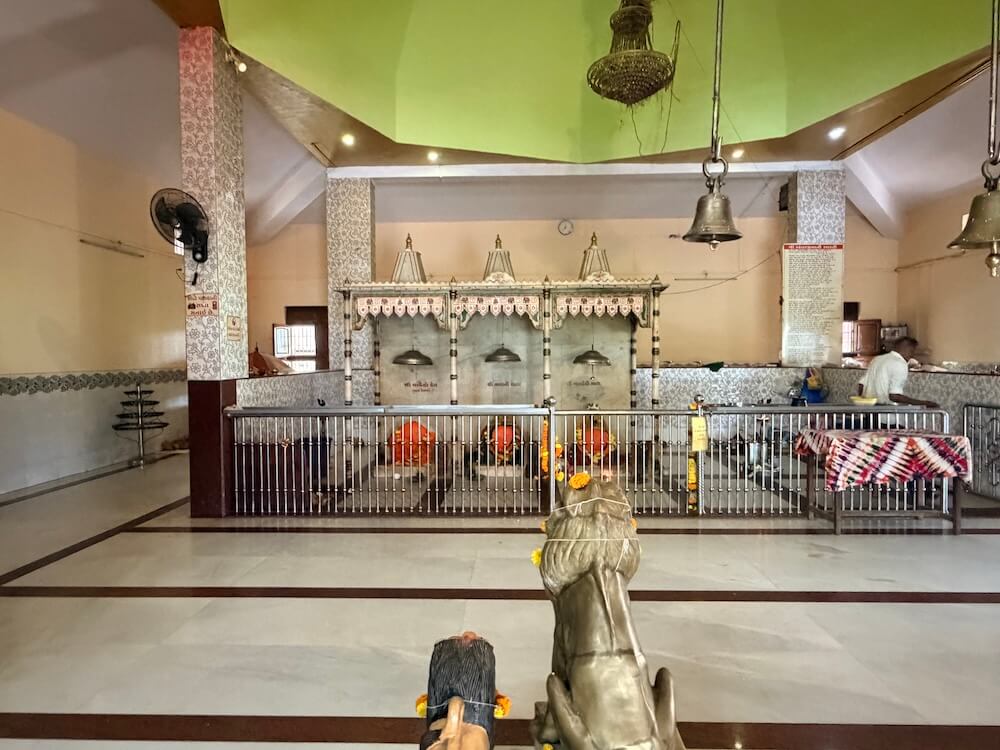 The architectural layout of the temple comprises an Ardhamandapa (half-porch), a Sabhamandapa (assembly hall) and a Garbhagriha (sanctum sanctorum). Positioned in the middle of the Darshanmandapa facing the temple is a Yagnakunda (sacrificial fire pit). The Ardhamandapa stands somewhat elevated in comparison to the Darshanmandapa. Beyond the Ardhamandapa lies the main entranceway to the Sabhamandapa.
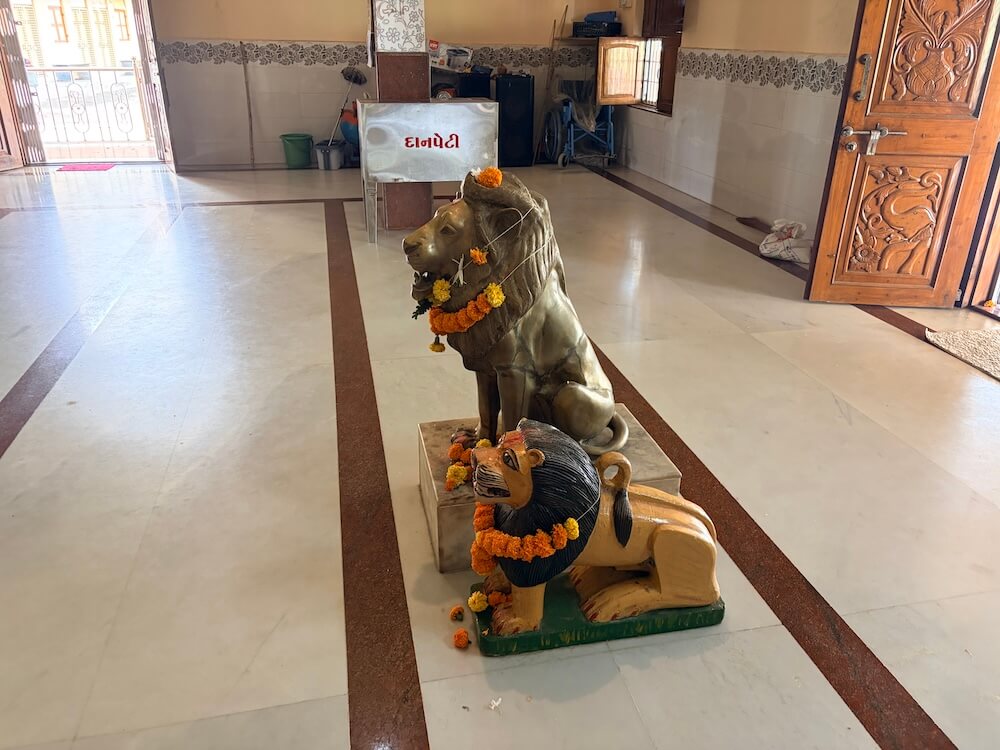
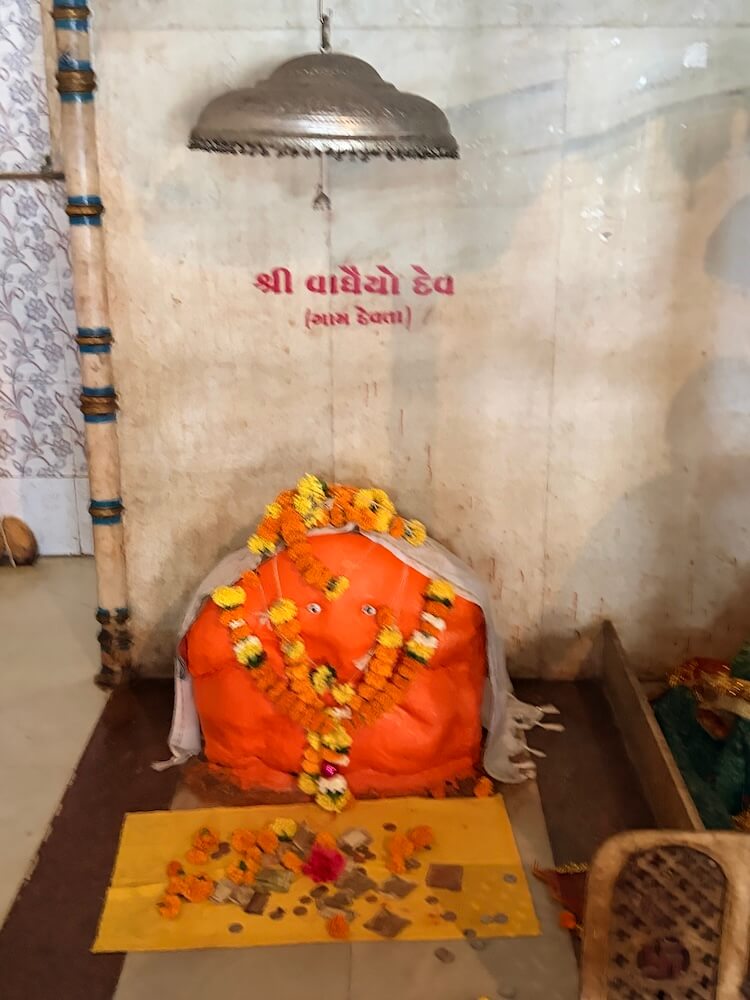
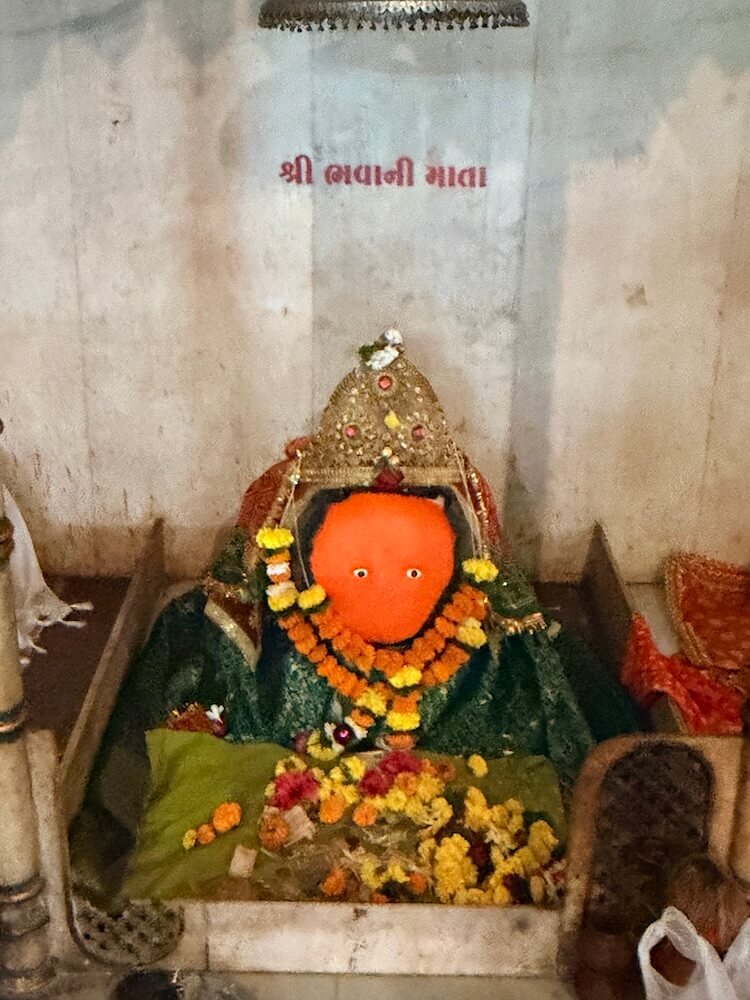
This enclosed assembly hall is fitted with windows to facilitate ample natural light and ventilation. Installed upon the raised stone pedestal inside the Sabhamandapa is a stone sculpture of the lion, which serves as the mount of Mother Bhavani. The Sabhamandapa also houses a shrine platform dedicated to Goddess Durga, upon which a framed photograph of the deity is reverently placed.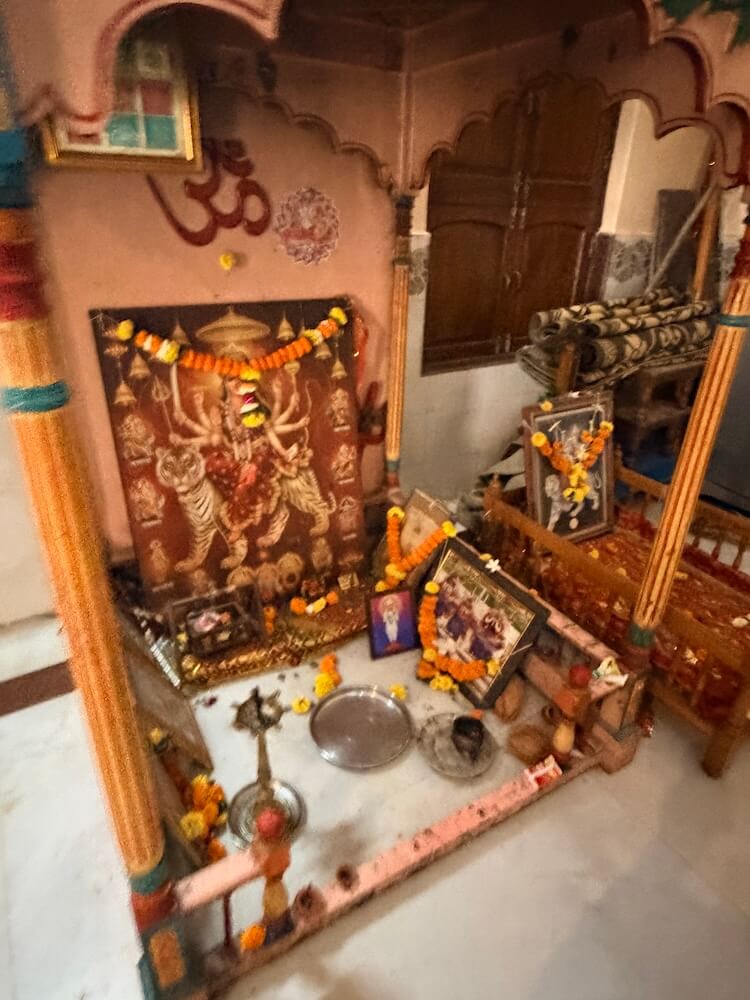 fff A stainless-steel railing has been installed within the assembly hall to delineate the structure of the inner sanctum. Adjacent to the rear wall inside the Garbhagriha stands a marble canopy. Sheltered within this canopy, from left to right, are the self-manifested (Swayambhu) stone idols of the village deity Waghayya Dev, Mother Bhavani and Ganga Devi, all smeared with holy vermilion. During festive occasions, these idols are adorned in fine vestments and ornaments and are embellished with silver masks and golden crowns.
A Pradakshinapatha (circumambulatory path) encircles the exterior of the temple structure. A hexagonal shikhara (spire) crowns the roof of the Garbhagriha. The walls across all six sides of this spire feature Devakoshtas (divine niches) containing sculpted idols of various gods and goddesses.
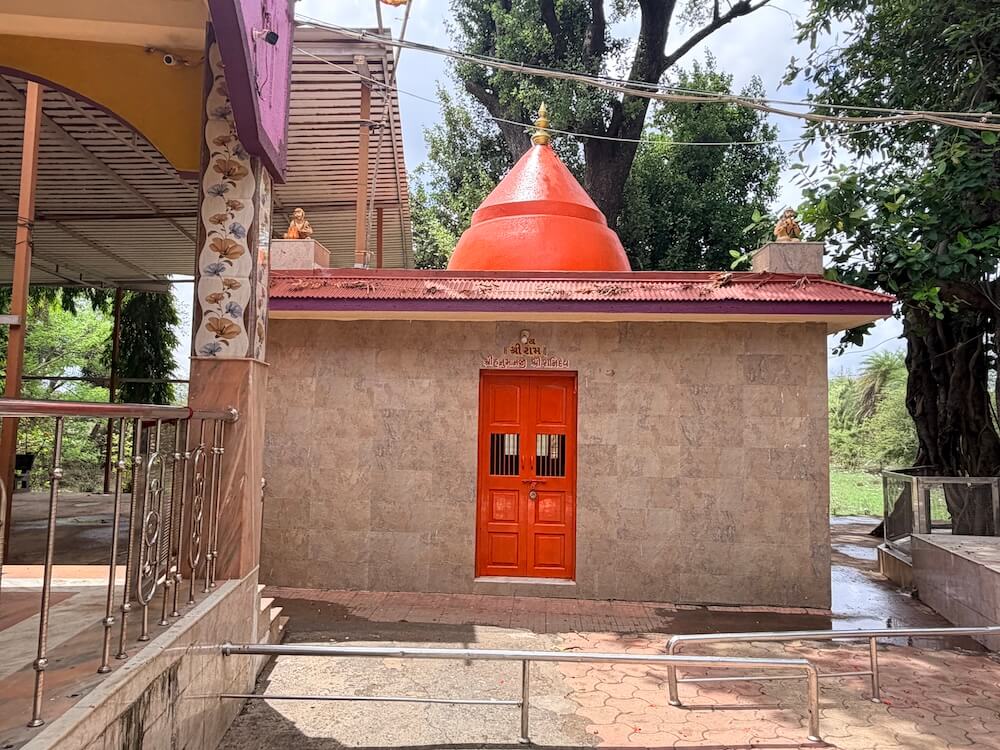
Located in the courtyard at the rear side of the main temple is a shrine dedicated to Lord Hanuman and Lord Shani. This structure comprises solely a sanctum sanctorum. A marble idol of Lord Hanuman is consecrated upon the Vajrapitha here. Near the back wall of this shrine, resting upon another pedestal, is a black stone idol of Lord Shani seated upon a crow. The roof of this secondary shrine is topped with a dome-shaped spire.
For the convenience of the visiting devotees, a two-storey Dharamshala (rest house) building has been constructed within the courtyard premises. This rest house provides lodging facilities for pilgrims travelling from distant towns for the annual pilgrimage.
An annual nine-day fair and festival is celebrated at the temple, spanning from Chaitra Purnima to Chaitra Krishna Ashtami. Throughout this festive period, the temple organises various religious ceremonies over eight days, including Mahabhisheka, Mahayagna, bhajans, kirtans, scriptural narrations and the distribution of Mahaprasada. During these nine days, devotees from all over the district flock to the temple to catch a glimpse of the Goddess. The temple also joyously observes major festivals such as Ganga Dussehra, Sharadiya Navratri, Dussehra, Diwali, Hanuman Jayanti and Shani Jayanti. A holy yagna is organised at the temple on every Purnima (full moon day). Furthermore, Mahaprasada is distributed to the devotees on Saturdays and Purnima days. The influx of devotees arriving for worship surges significantly on Saturdays, Tuesdays, Fridays, Ashtami and Purnima. Devotees can obtain darshan of Ganga Devi at this temple daily from 6:00 am in the morning until 8:00 pm at night.
Useful Information :
- Situated at a distance of 6 km from Umargam
- Situated at a distance of 60 km from Valsad city
- State Transport (ST) buses and private vehicle facilities are available from Umargam
- Private vehicles can drive directly up to the temple premises
- Accommodation and breakfast facilities are available in the surrounding vicinity
गंगा देवी मंदिर
सोलसुम्बा, ताल. उमरगाम, जिला. वलसाड
मंदिरे
Temples
मंदिर
-
साईबाबा मंदिर तिथळ, ता./जि. वलसाड
अधिक माहितीSai Baba Temple Tithal, Tal./Dist. Valsad
View Detailsसाईं बाबा मंदिर तीथल, ताल./जिला. वलसाड
विवरण देखें -
भाव-भावेश्वर महादेव मंदिर बारुमाळ, ता. धरमपूर, जि. वलसाड
अधिक माहितीBhav-Bhaveshwar Mahadev Temple Barumal, Tal. Dharampur, Dist. Valsad
View Detailsभाव-भावेश्वर महादेव मंदिर बारुमल, ताल. धरमपुर, जिला. वलसाड
विवरण देखें -
दत्त मंदिर पाथरी, ता./जि. वलसाड
अधिक माहितीDatt Temple Pathri, Tal./Dist. Valsad
View Detailsदत्त मंदिर पाथरी, ताल./जिला. वलसाड
विवरण देखें