
कैलास धाम
शंकराचार्य नगर, खेडा, ता./जि. खेडा
Kailash Dham
Shankaracharya Nagar, Kheda, Tal./Dist. Kheda
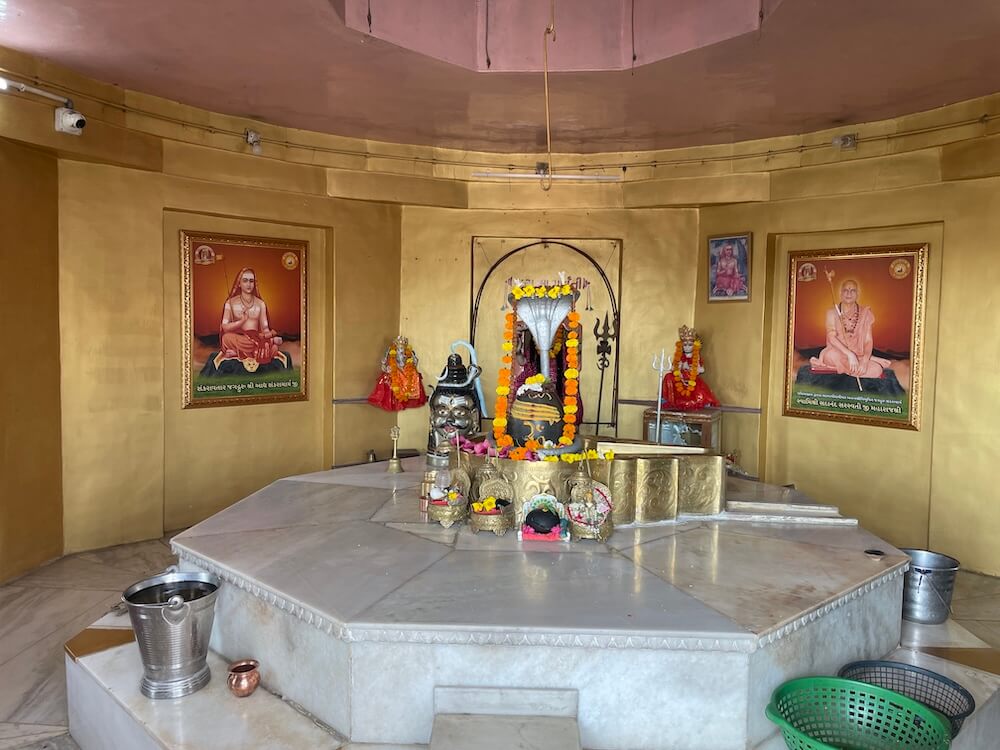 Mount Kailash, nestled within the Tibetan ranges of the Himalayas, alongside the ethereal Lake Mansarovar, is revered as the primordial abode of Lord Mahadev, the God of Gods. This sacred peak finds eminent mention in ancient scriptures such as the Shiva Purana, Skanda Purana, Ramayana and Mahabharata. Standing at an altitude of approximately 6,638 metres, its circumambulatory path extends across 52 kilometres. Devotees, beholding this colossal mountain as a living manifestation of the ‘Shivpinda’ (the iconic symbol of Lord Shiva), traditionally complete this arduous pilgrimage over three days with profound devotion. A symbolic representation of this celestial peak, known as Kailash Dham (Shankaracharya Shiva Temple), is situated at Shankaracharya Nagar within the city of Kheda.
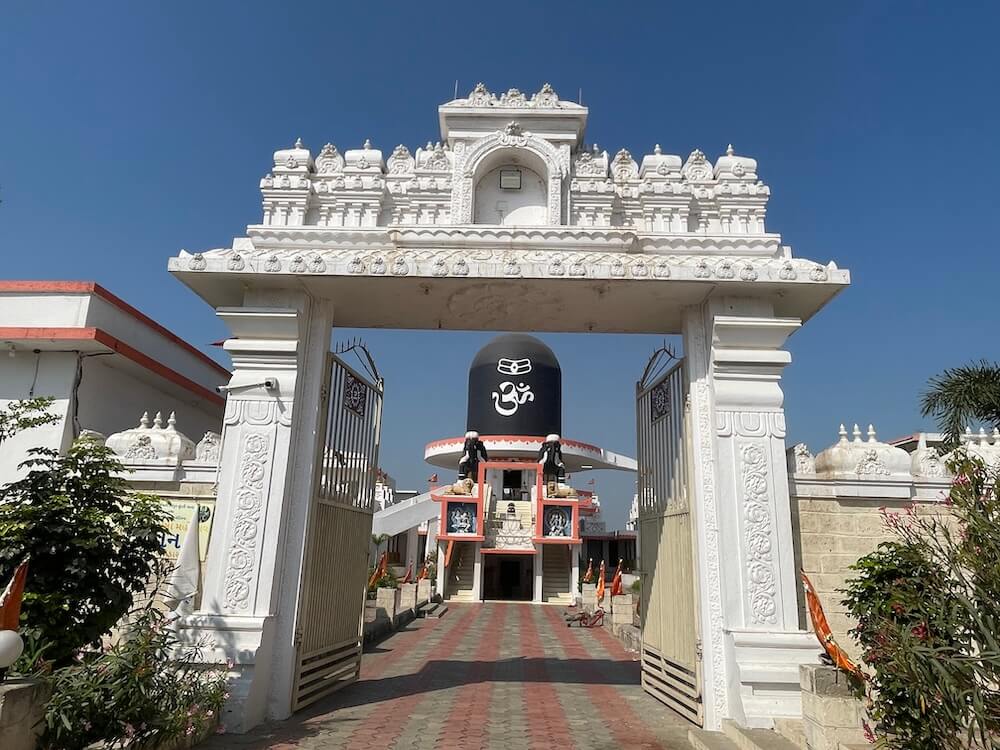 It is the firm conviction of the faithful that offering prayers here bestows the spiritual merit equivalent to performing a physical circumambulation of Mount Kailash itself.
According to the resident priest this temple possesses an antiquity of some seven to eight centuries. While the precise year of its inception remains veiled in history, it is recounted that the first Adi Shankaracharya visited this site in antiquity for ‘Darshan’ (sacred viewing). A particularly touching lore associated with this site tells of a devoted Shiva worshipper from the vicinity who yearned to perform the ‘Parikrama’ (circumambulation) of Mount Kailash and bathe in the holy waters of Mansarovar. As the frailty of age rendered such a rigorous journey impossible, Lord Mahadev, moved by his devotion, granted a divine blessing, that should the devotee circumambulate this temple in Kheda and bathe in its adjoining lake,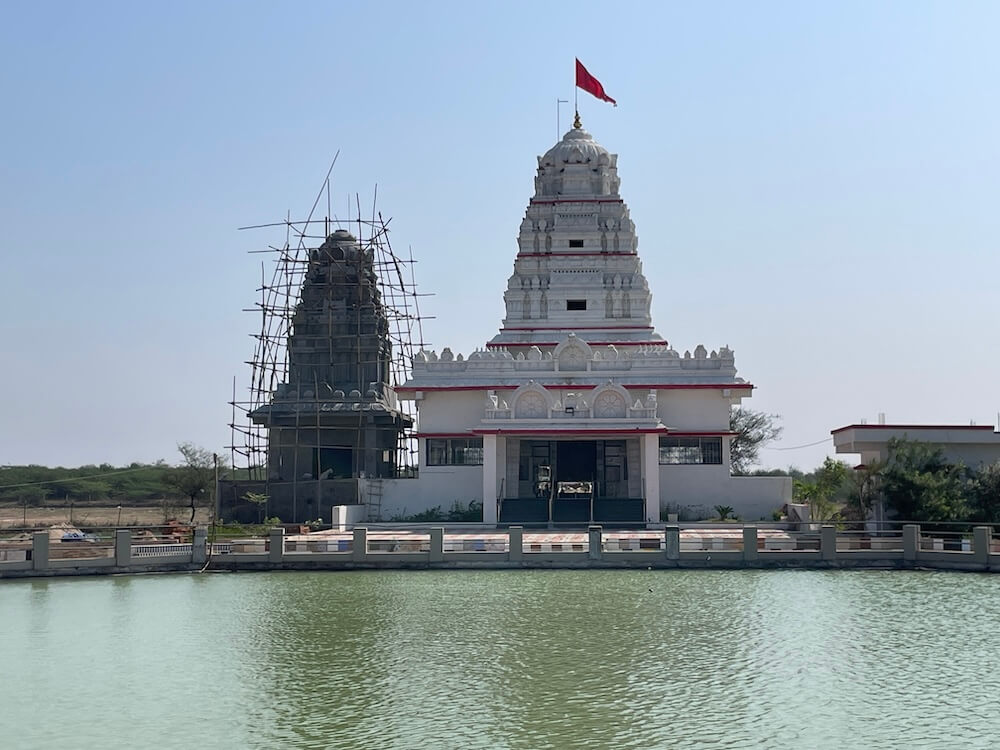 he would receive the sanctity of the Himalayan pilgrimage. Thus, by divine decree, the temple came to be known as ‘Kailash Dham’ and the lake as ‘Mansarovar’.
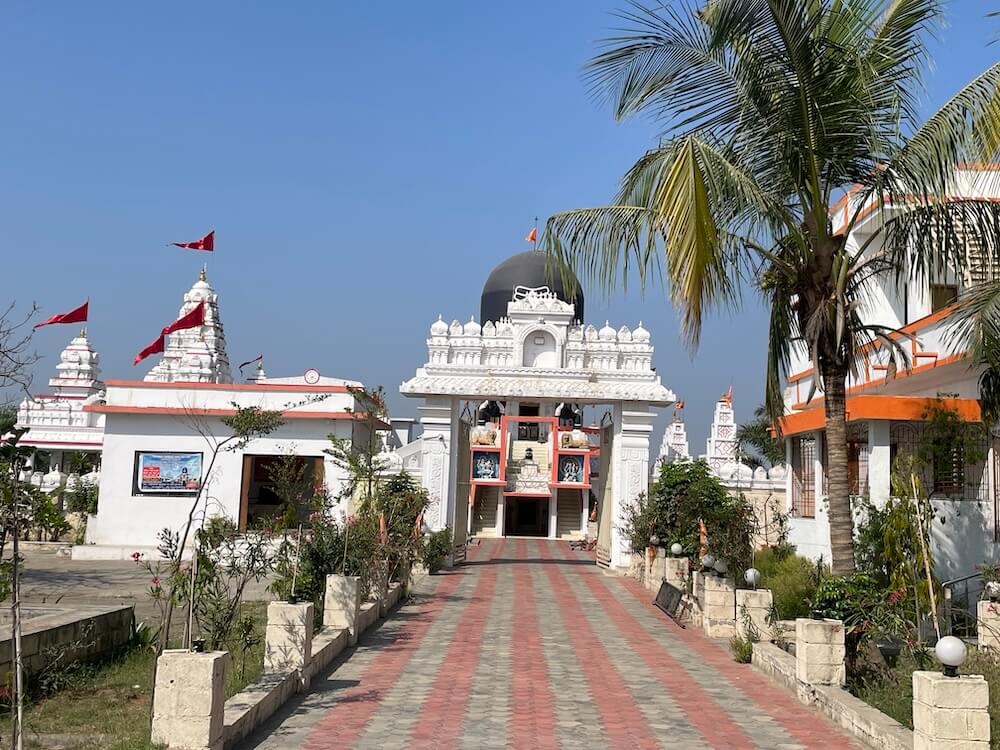
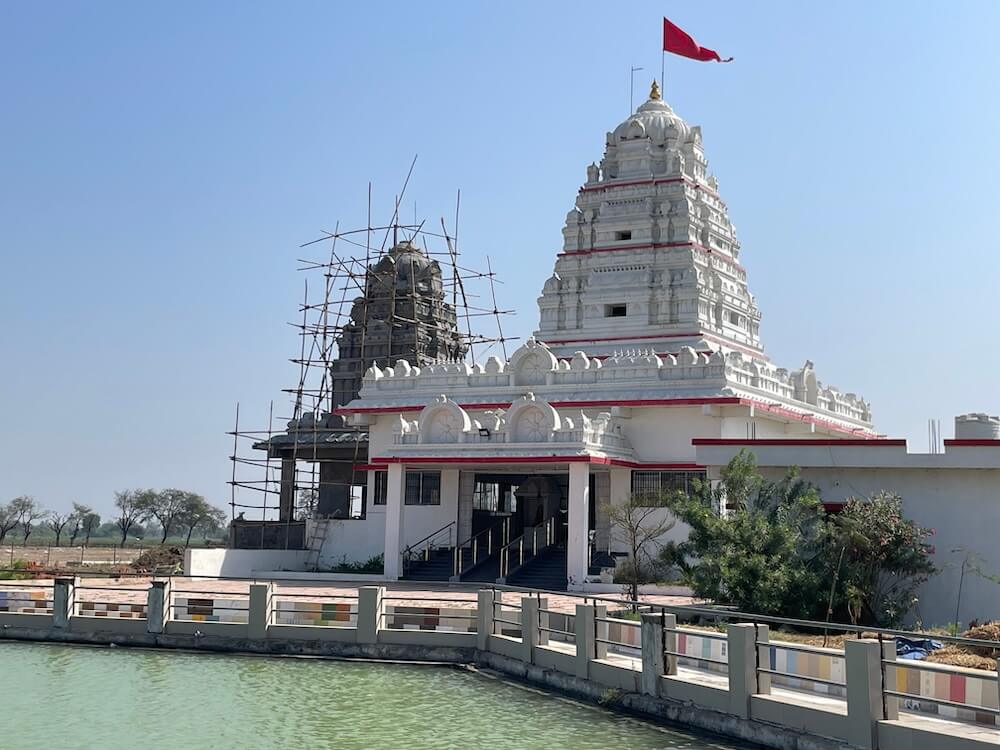
Situated in close proximity to the town and the arterial roads, the temple is fronted by a spacious parking area equipped with seating for the repose of pilgrims. Facing this area is the vast expanse of the lake, reverently called as Mansarovar, which is enclosed by a protective railing and flanked by shrines dedicated to local deities. Purified by the waters of the lake, devotees proceed to the main temple. The primary structure is girded by a defensive rampart, with a grand gateway leading into a paved courtyard. This expansive area features seating, landscaped gardens, 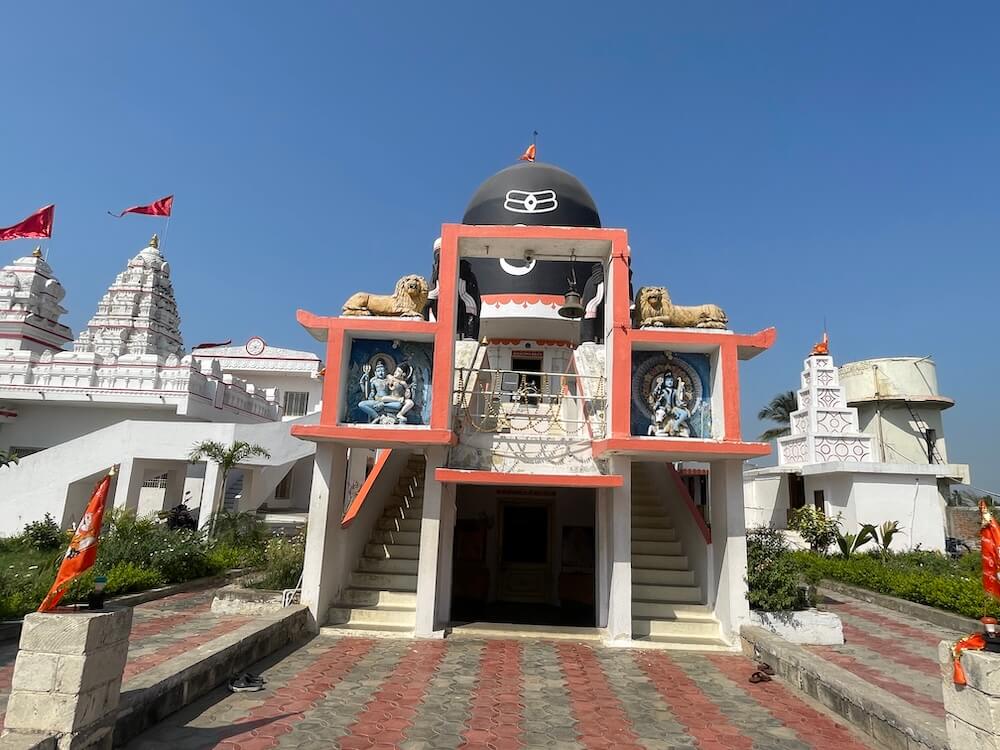 administrative offices, residences for attendants, a ‘Bhaktanivas’ and other auxiliary structures.
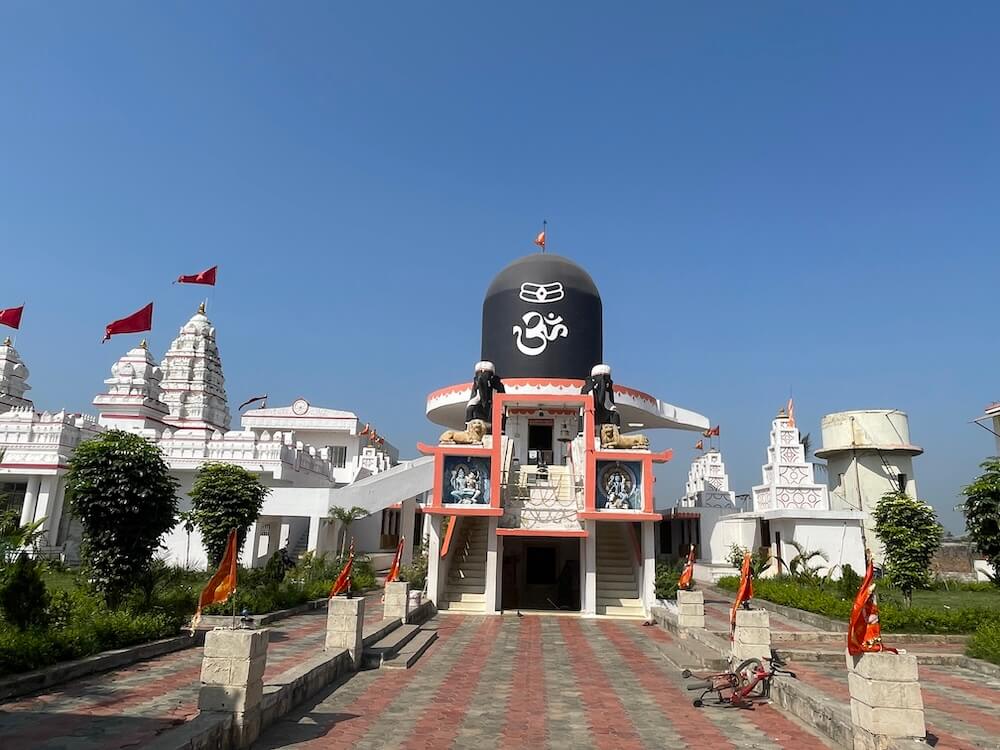
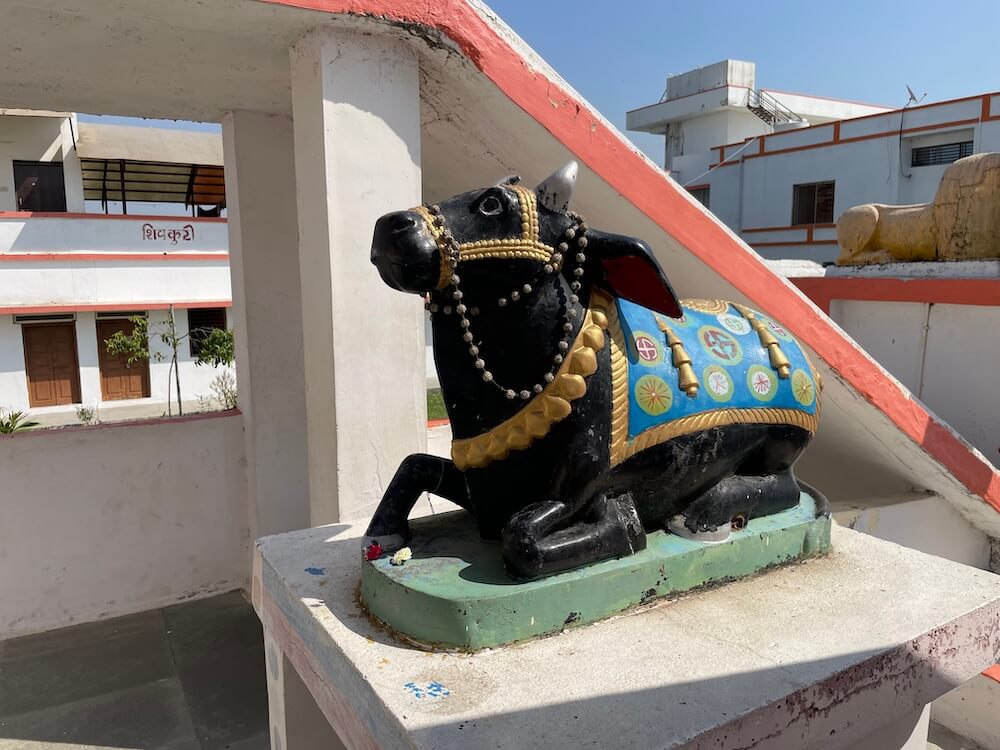
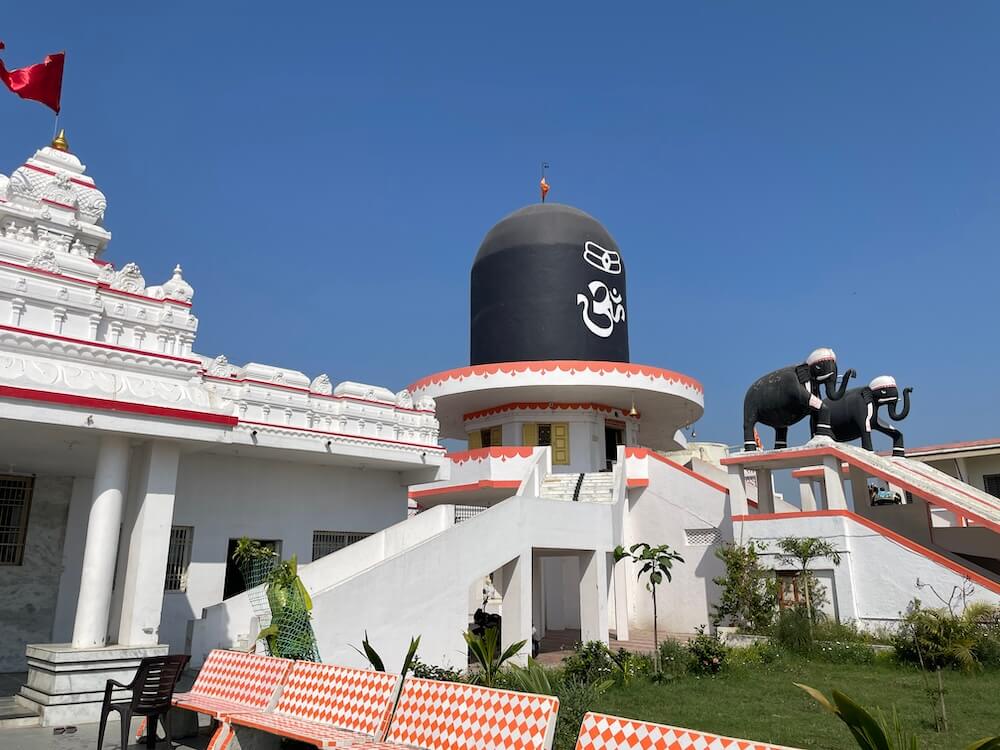
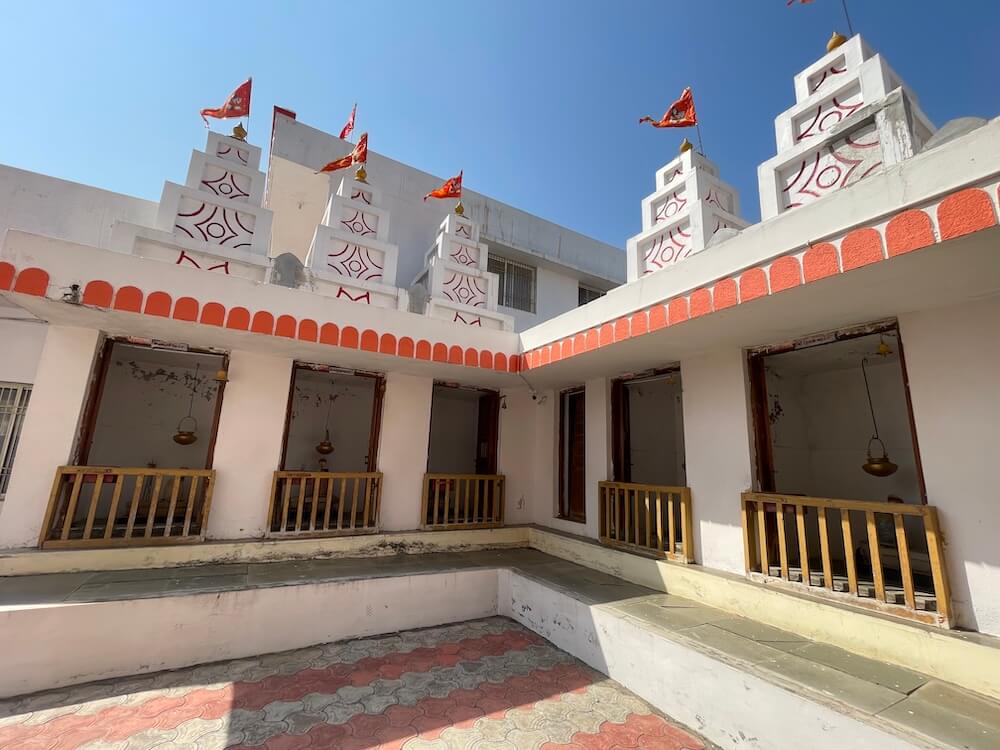
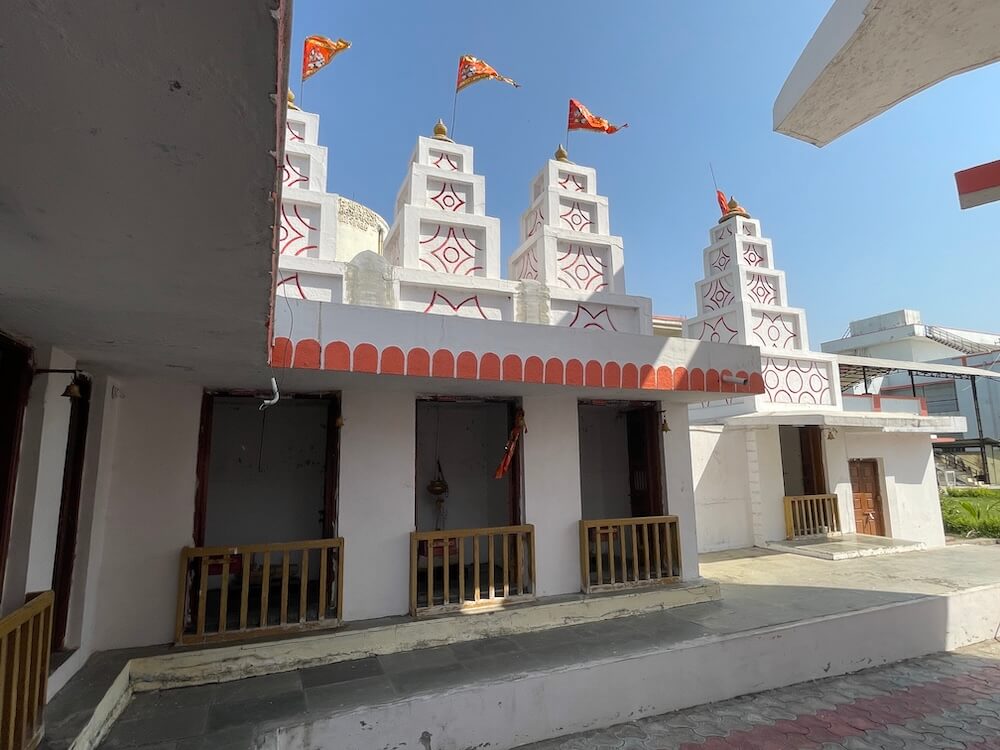
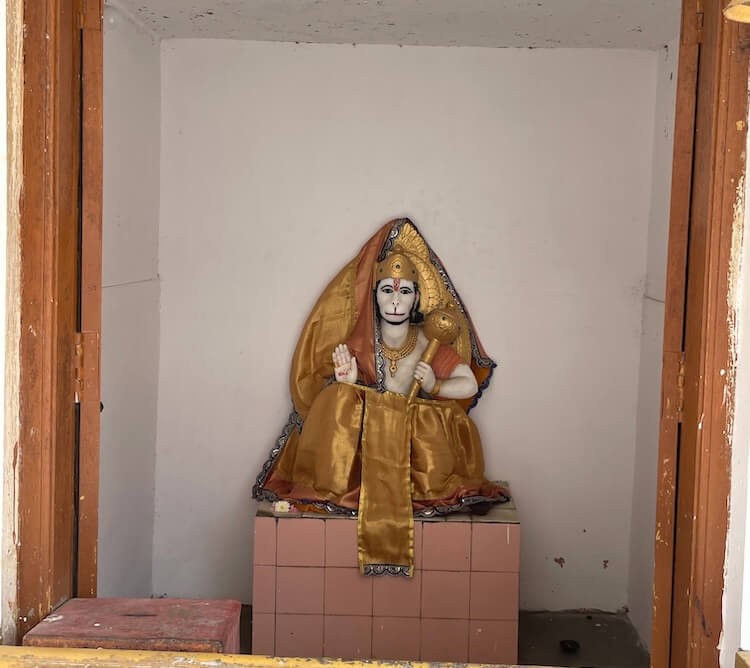
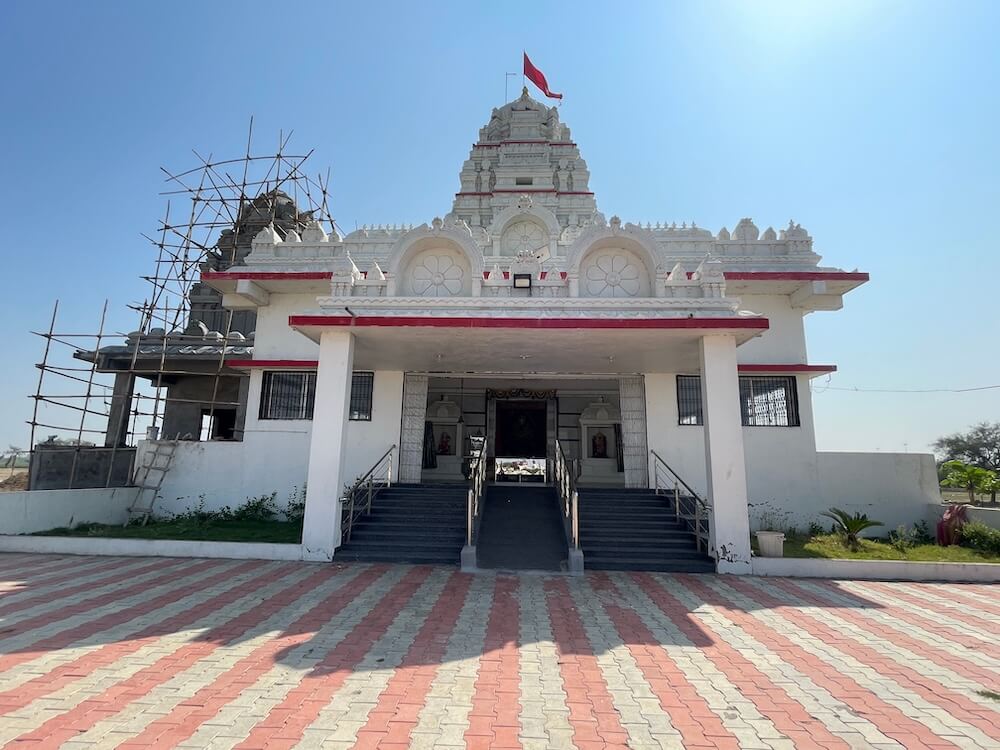
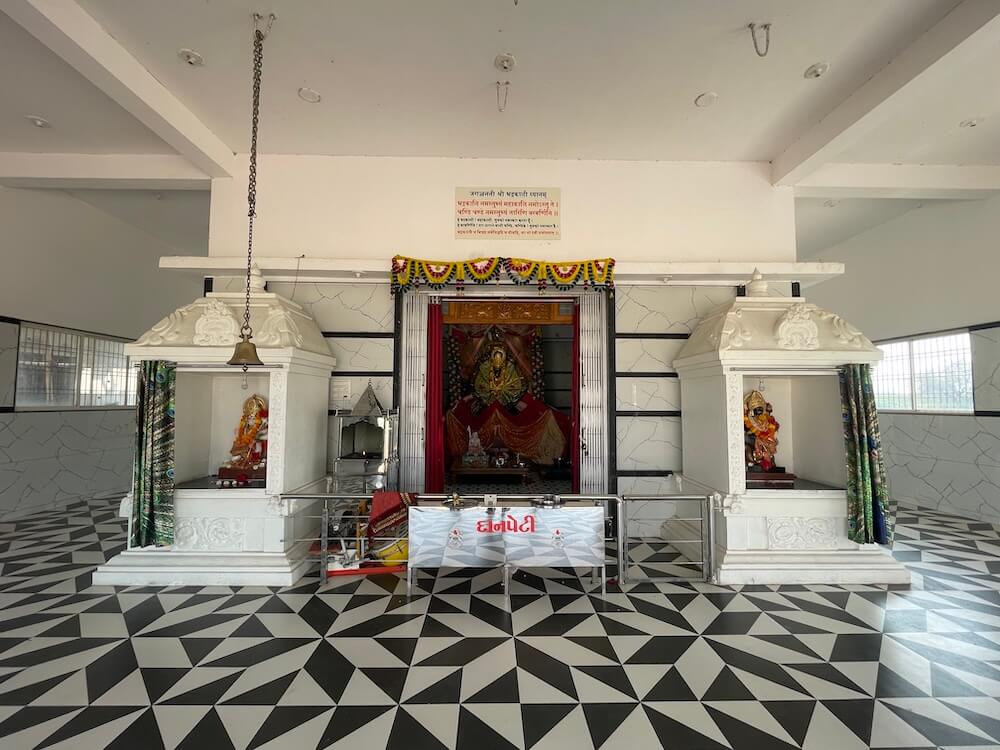
This Mahadev temple is a two-storeyed edifice. The lower level houses the shrine of Adi Shankaracharya, surrounded by meditative idols of the Shankaracharyas of all the established ‘Peethas’. A staircase leads to the upper floor of the temple. Within the frontal wall of the temple, niches are situated to the left and right. The former contains an image of Gauri-Har, while the latter features a high-relief sculpture of Mahadev seated upon Nandi. Both niches are crowned with sculptures of lions. Pedestals along the staircase are adorned with ‘Gajaraj’ (elephant) sculptures and a statue of Nandi rests upon a central platform. After ascending approximately fifteen steps, one reaches the Garbhagriha (sanctum sanctorum). Within this octagonal sanctum, 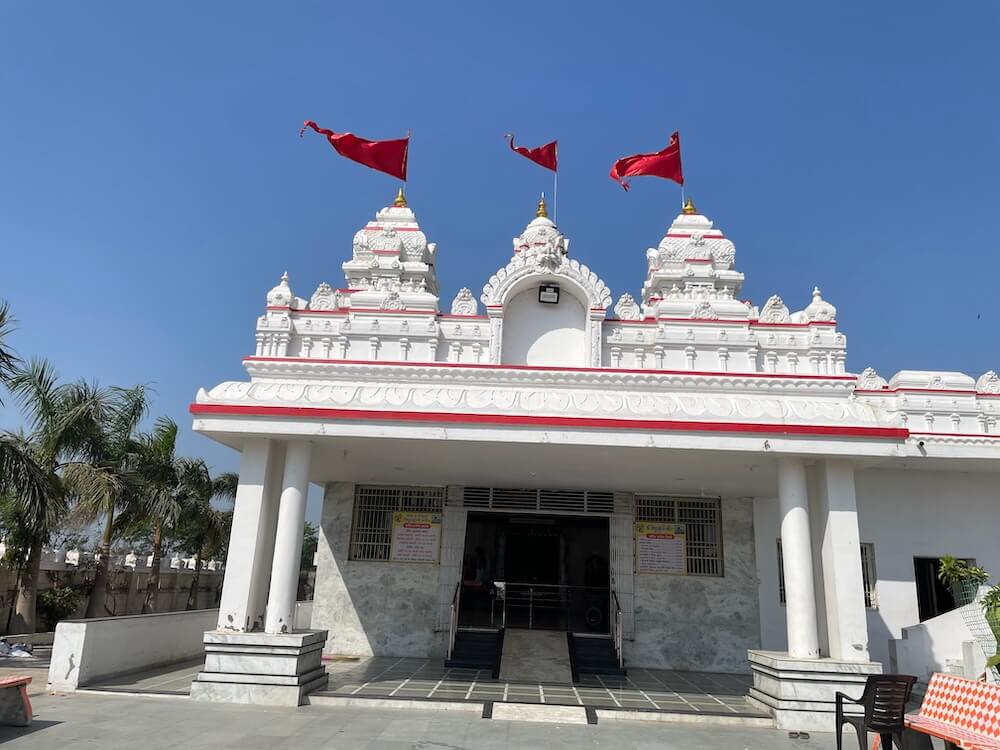 the Shivpinda resides at the centre of the floor, shielded by a silver five-hooded serpent and flanked by a ‘Trishula’ (trident). Marble idols of Ganesha and Hanuman stand to the left and right of the Shivpinda. An idol of Goddess Parvati rests against the rear wall. The circular roof of the sanctum is surrounded by a railing, at the centre of which rises a massive ‘Shikhara’ (spire). It is shaped like a Shivpinda. Along the external circumambulatory path lie twelve shrines dedicated to the ‘Jyotirlingas’, each identical in design with matching spires and Kalashas (finials).
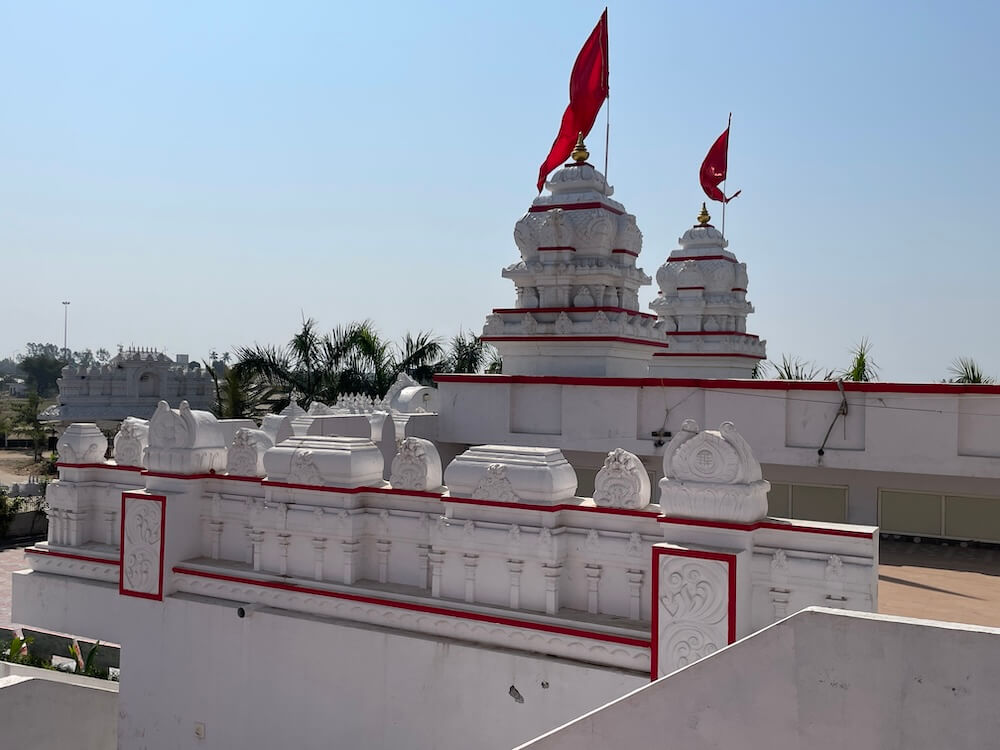
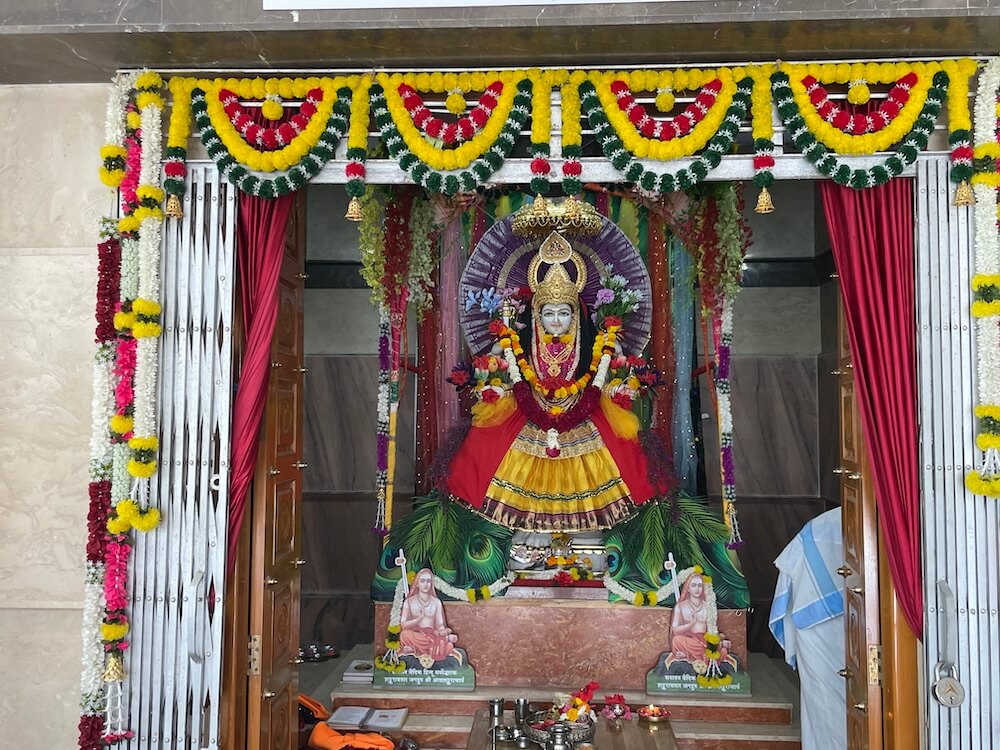
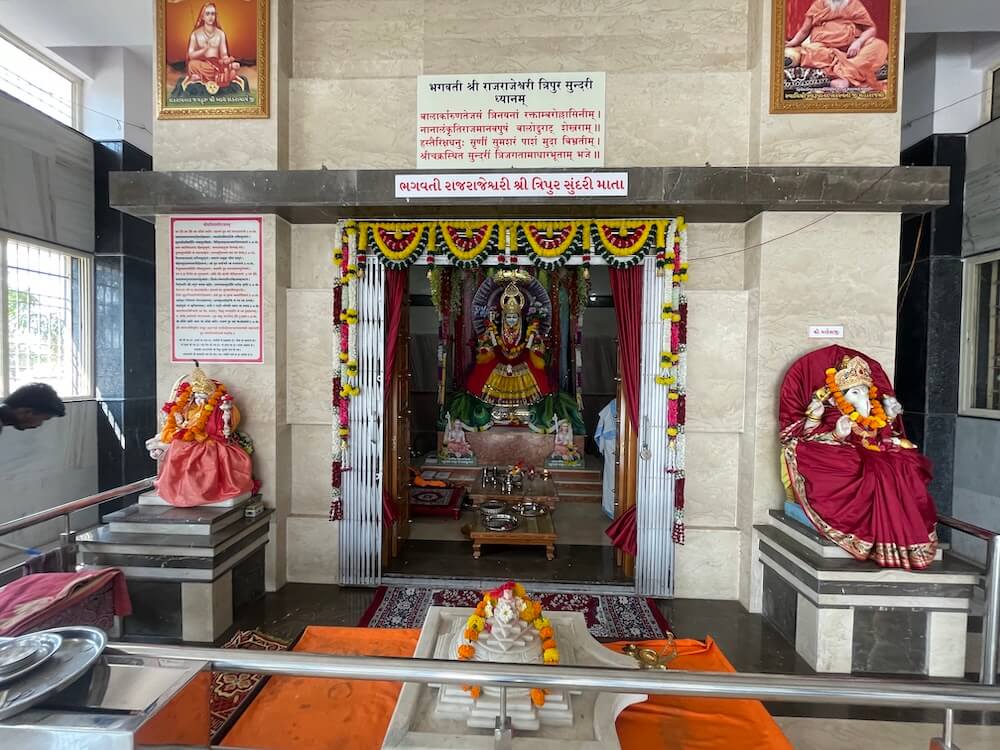
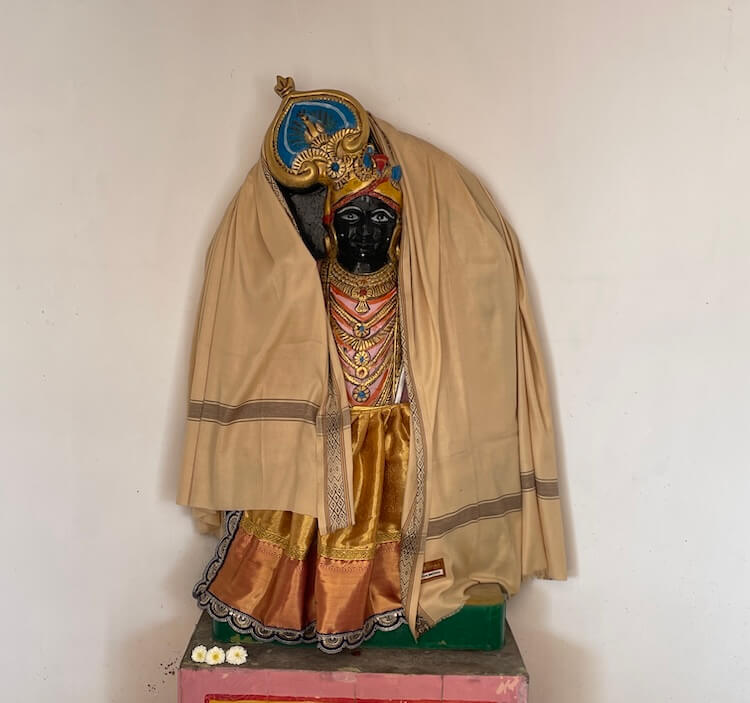
Adjacent to this temple, a new shrine for Goddess Tripurasundari has been erected. Comprising a Sabhamandap (assembly hall), 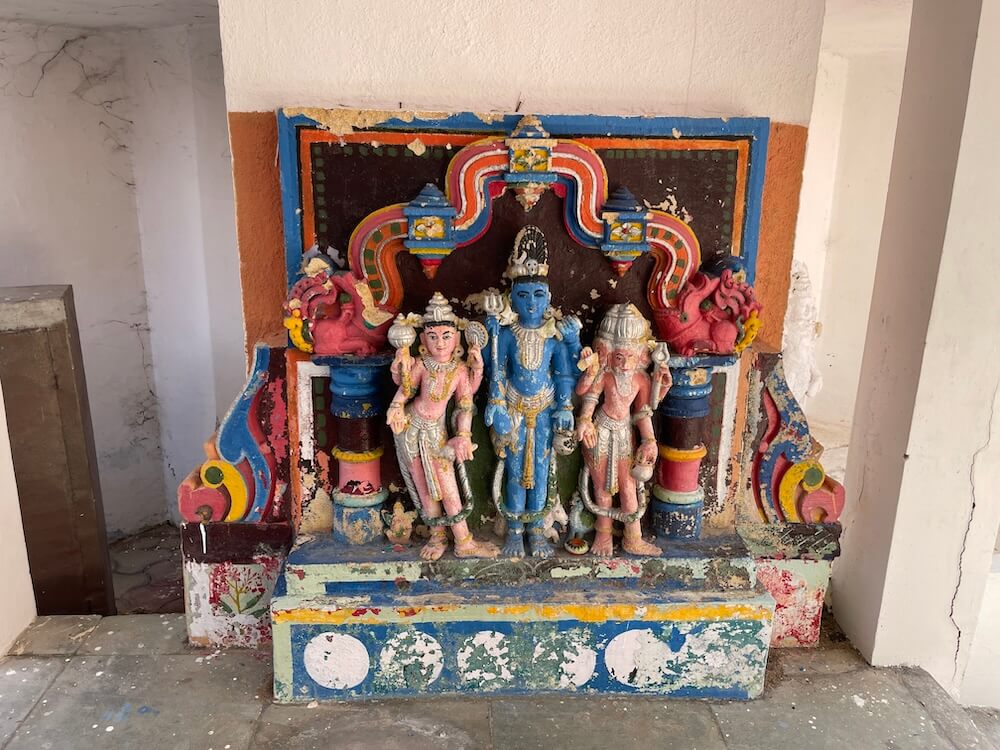 an Antarala (vestibule) and a Garbhagriha (sanctum), this temple is adorned with intricate carvings upon its portals, pillars, walls and spires. The sanctum enshrines an ornamental idol of Goddess Tripurasundari upon a stone pedestal. Throughout the precincts, one finds smaller shrines and canopies housing idols of Ganesha, Bhairavnath, Dhaneshwar Bhagwan and other deities. Furthermore, a new Bhadrakali temple has recently been constructed within the lake vicinity.
Mahashivratri serves as the premier annual festival of this shrine. Additionally, the month of Shravan brings a plethora of festivities, including Nag Panchami, Krishna Janmotsav, Raksha Bandhan and the ‘Shravani Mondays’. The birth anniversary of Shankaracharya is celebrated on ‘Vaishakh Shukla Panchami’. Other significant occasions observed with great devotion include the Chaitra and Sharadiya Navratras, Kartik Purnima and Diwali. During these festivals, the local populace gathers in vast numbers to participate in religious programmes such as Bhajan, Kirtan, Laghurudra, Mahabhishek, the chanting of the Mahamrityunjaya mantra, scriptural readings and Mahaprasad (sanctified feast). The temple is open for devotees daily from 6 am to 12 pm and from 4 pm to 8 PM.
Useful Information
- Located at 6 km from Kheda Bus Station.
- State Transport (GSRTC) bus facilities available to Kheda from various cities in the district.
- Private vehicles can reach the temple’s designated parking area.
- Accommodation and breakfast facilities are available in the vicinity.
कैलाश धाम
शंकराचार्य नगर, खेड़ा, ताल./जिला. खेड़ा
मंदिरे
Temples
मंदिर
-
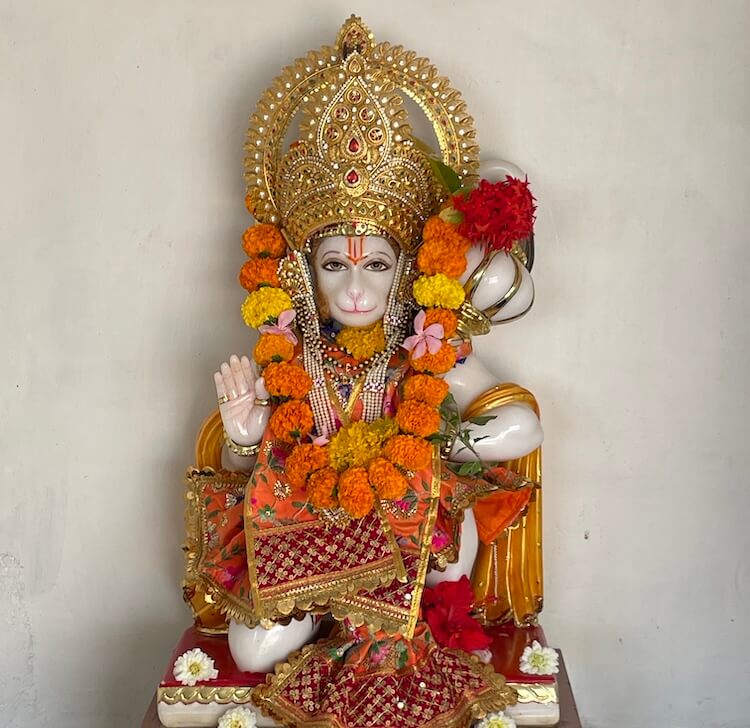
भूमपुरा हनुमान मंदिर भूमापुरा, मोडज, ता. महेमदावाद, जि. खेडा
अधिक माहितीBhumapura Hanuman Temple Bhumapura, Modaj, Tal. Mahemdavad, Dist. Kheda
View Detailsभूमापुरा हनुमान मंदिर भूमापुरा, मोडाज, ताल. महेमदावाद, जिला. खेड़ा
विवरण देखें -
भाथीजी महाराज मंदिर फागवेल, ता. कापडवंज, जि. खेडा
अधिक माहितीBhathiji Maharaj Temple Phagvel, Tal. Kapadvanj, Dist. Kheda
View Detailsभथीजी महाराज मंदिर फागवेल, ताल. कपडवंज, जिला. खेड़ा
विवरण देखें -
केदारेश्वर महादेव मंदिर महादेवपुरा, ता. कठालाल, जि. खेडा
अधिक माहितीKedareswar Mahadev Temple Mahadevpura, Tal. Kathlal, Dist. Kheda
View Detailsकेदारेश्वर महादेव मंदिर महादेवपुरा, ताल. कठलाल, जिला. खेड़ा
विवरण देखें