
इराणशाह आतश बेहराम
उदवाडा, ता. पारडी, जि. वलसाड
Iranshah Atash Behram
Udvada, Tal. Pardi, Dist. Valsad
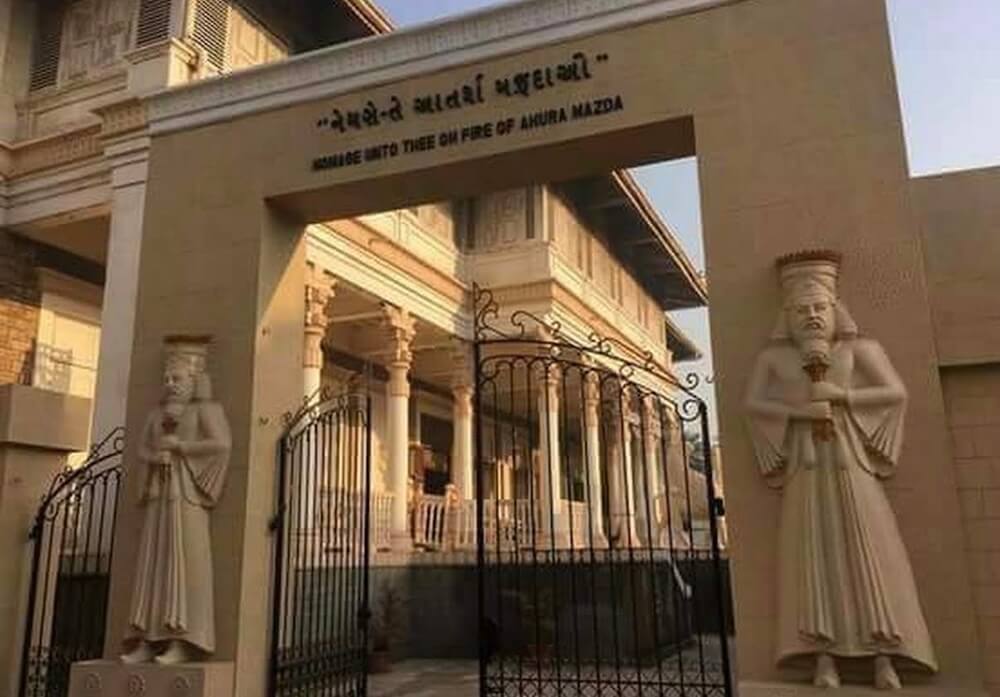
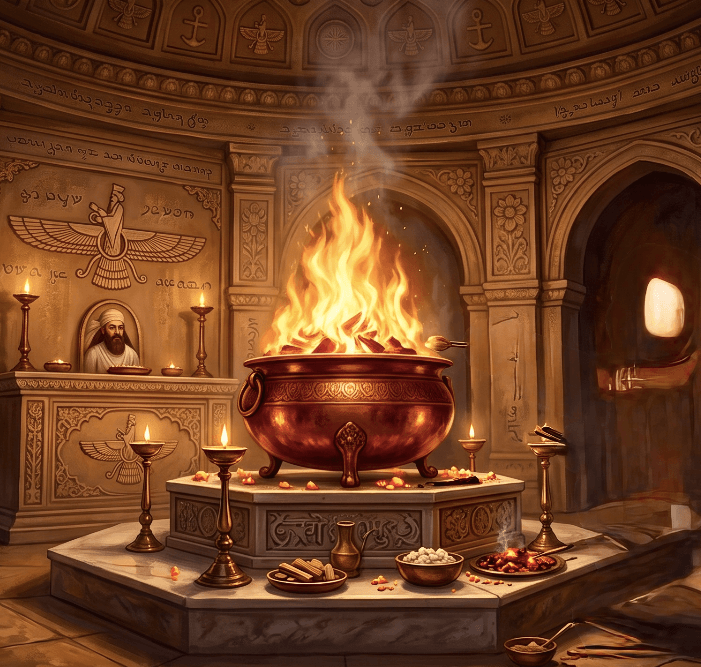 Kashi holds profound spiritual importance for Hindus, Mecca for Muslims, Jerusalem for Jews and Amritsar for Sikhs. In much the same way, the Iranshah Atash Behram at Udvada occupies a unique place in the spiritual life of the Parsi Zoroastrian community as its holiest pilgrimage site. In Zoroastrianism, fire symbolises the light, truth, purity and divine wisdom of Ahura Mazda, the Supreme Lord of Wisdom. At the prayer temple here, a consecrated Atash Behram (highest-grade sacred fire) has been kept burning without interruption. This eternal flame gives the fire temple an exceptional place in the hearts of Parsi devotees across India.
Some faiths in human history have transformed both regional traditions and the wider intellectual heritage of the world and Zoroastrianism stands prominent among them. Though its followers today are few, the religion has left a deep imprint on global religious, ethical and cultural history. The prophet Asho Zarathushtra, known in Greek as Zoroaster, is honoured as the founder of the faith.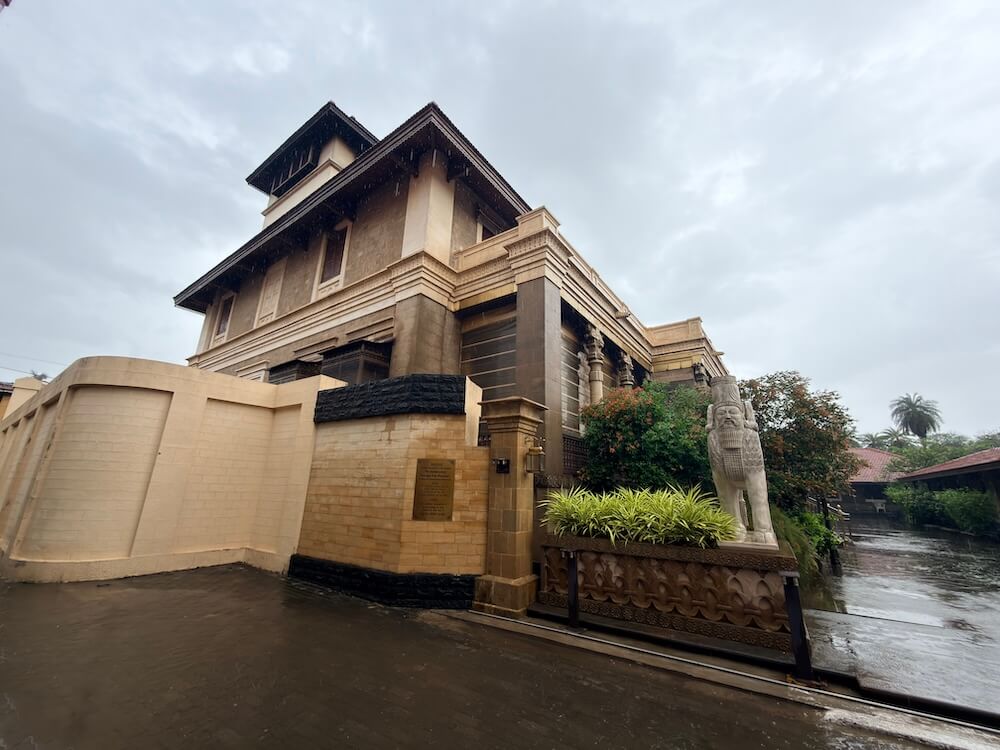 Scholars have not reached a consensus on the period in which he lived. Early Greek accounts placed him in the sixth century BCE, whereas linguistic and archaeological evidence has led many modern scholars to date him much earlier, between 1500 and 1000 BCE.
According to the ‘Encyclopaedia Britannica’, Zoroastrianism has its roots in the ancient Indo-Iranian tradition shared by the ancestors of the Indian Vedic and ancient Iranian cultures. Striking similarities in language and concepts link the ‘Rigveda’ and the Zoroastrian scripture ‘Avesta’, particularly the ‘Gathas’ attributed to Zarathushtra, where Vedic terms such as Mitra, Soma, yajna and rta correspond broadly to the Avestan Mithra, Haoma, Yasna and asha. The Indo-Iranian peoples recognised two categories of divine powers, the daiva and the asura, which evolved in opposite directions. 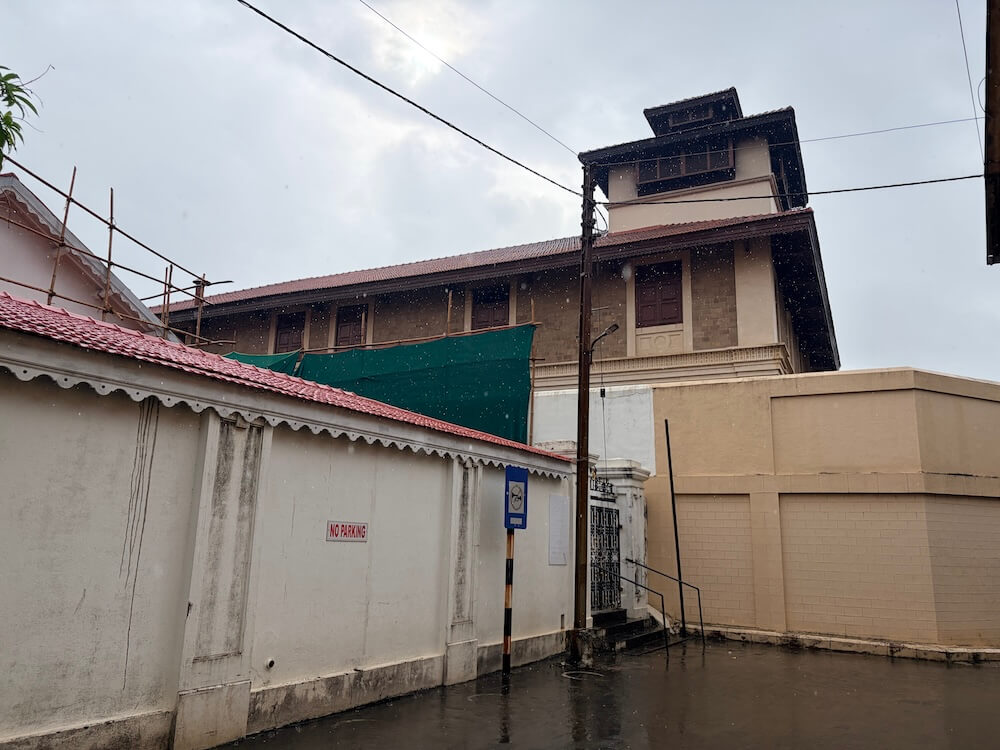 In India, deva came to denote benevolent deities and asura demonic beings, while in Iran, Ahura signified a supreme divine power and daeva malevolent forces. Zarathushtra served as a priest of the Ahura, corresponding to the Sanskrit Asura and the deity was given the epithet Mazda, meaning wise or possessing wisdom.
The ‘Avesta’, also known as the ‘Zend-Avesta’, forms the sacred collection of Zoroastrian religious texts. Ancient tradition holds that the original compilation consisted of 21 nasks (sections), most of which were lost over the course of time. The ‘Avesta’ that survives today comprises the ‘Yasna’, ‘Visperad’, ‘Vendidad’, ‘Yashts’ and ‘Khordeh Avesta’.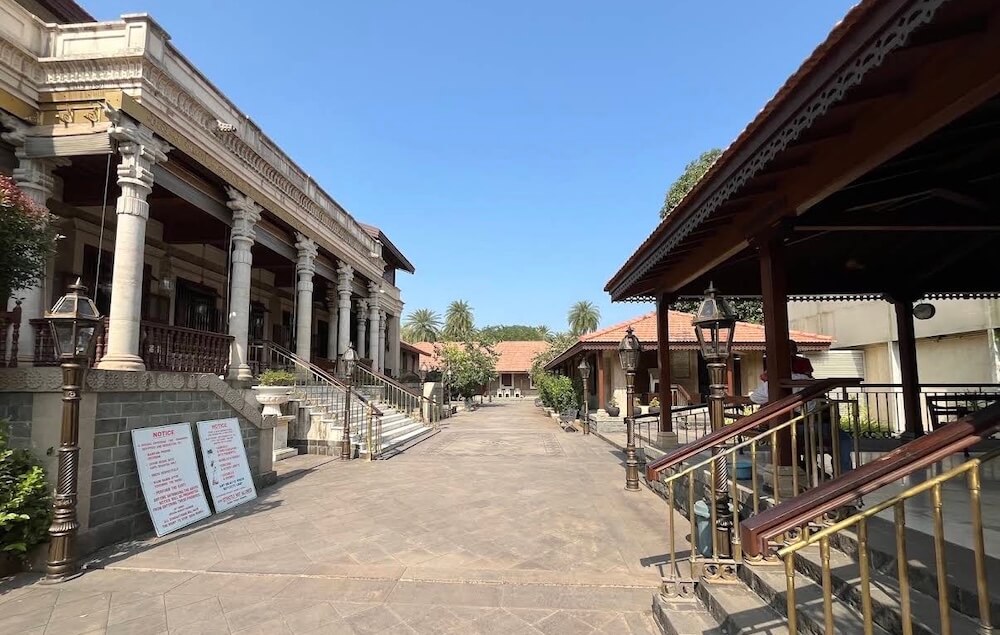 The ‘Yasna’ serves as the principal text and includes the ‘Gathas’, the oldest and most authoritative hymns of Zoroastrian scripture, traditionally composed by Zarathushtra himself. In Zoroastrian theology, Ahura Mazda is the omniscient, supreme and wise Lord, opposed by Angra Mainyu, or Ahriman, the destructive force of evil. Because the faith grants every person the freedom to make choices and holds each individual responsible for their own actions, one of its best-known ethical principles is Humata, Hukhta, Hvarshta, meaning good thoughts, good words and good deeds.
The Sasanian Empire of Iran, which lasted from 224 to 651, is regarded as a golden age of Zoroastrianism. 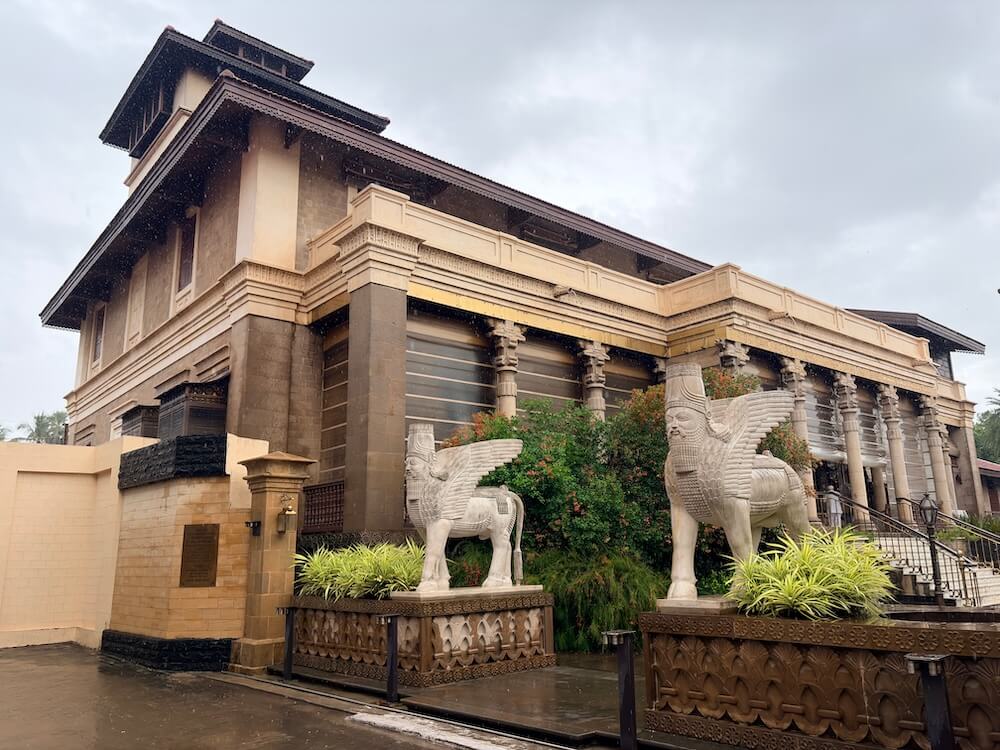 During this period, the faith became the official religion of the empire and numerous fire temples were established. The killing of the last Sasanian emperor, Yazdegerd III, in 651 marked the beginning of Islamic rule in Iran and a gradual decline in the Zoroastrian population. While many people converted to Islam, some communities preserved their ancestral faith and migrated to India by sea. These migrants later came to be known as Parsis and established settlements along the Gujarat coast at Sanjan, Navsari, Udvada, Bharuch, Khambhat and other places.
The ‘Qissa-e Sanjan’, a lengthy Persian poem composed in 1599-1600 by the Navsari Zoroastrian priest Bahman Kaikobad, is one of the most important sources for the history of the Parsi migration.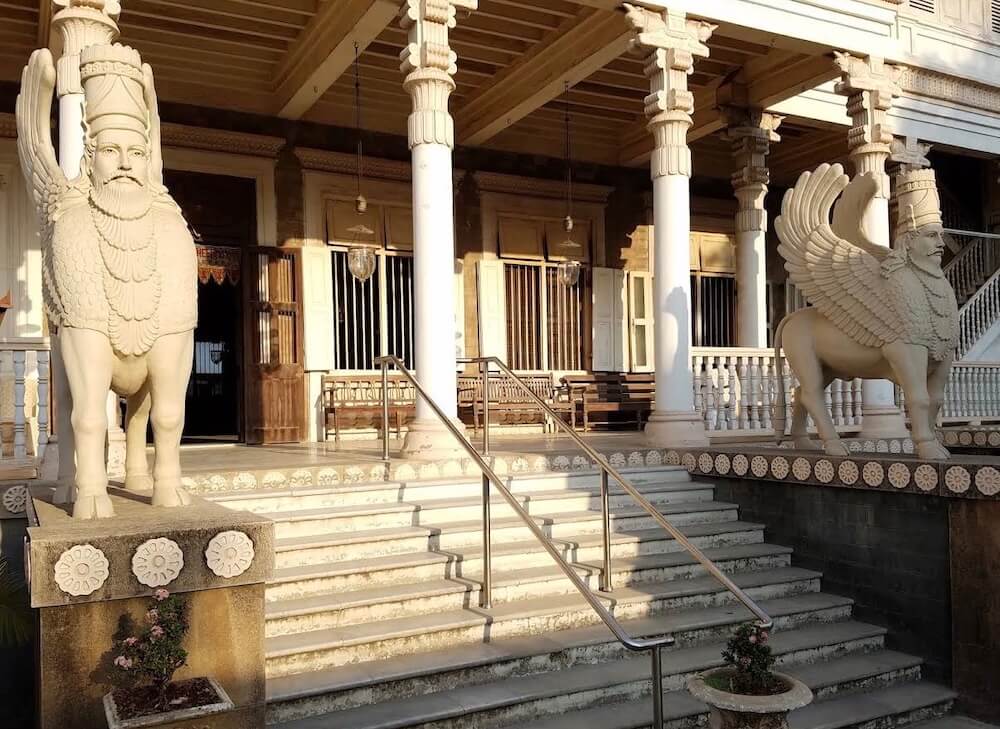 According to Dinyar Firoze Patel, a leading scholar of Parsi history, the ‘Qissa-e Sanjan’ describes how the Parsis left Iran, first reached Diu and then found refuge at Sanjan in Gujarat. The text recounts the traditional story that a violent storm caught the community’s ship while it was sailing eastwards from Diu. At that moment, the dasturs (high priests), respectfully called dasturjis, prayed to Ahura Mazda to save them from the calamity, vowing that if they reached land safely, they would consecrate an Atash Behram in remembrance of his grace. Favourable winds soon calmed the sea as their prayer was heard and the Parsis landed safely at Sanjan, where the local ruler Jadi Rana, identified in the ‘Gazetteer of the Bombay Presidency, Volume XIII, Part II: Thana’ as a Yadava ruler named Jadhav Rana, received them.
 A popular legend is associated with the Parsi settlement at Sanjan. When the leader of the community approached Jadi Rana to seek permission to settle there, a language barrier prevented the two sides from communicating directly. Jadi Rana sent them a vessel filled to the brim with milk as a symbolic indication that there was no room left in the land. In response, the Parsi leader mixed a pinch of sugar into the milk and returned the vessel, conveying that just as sugar dissolves into milk, the Parsis would blend into Indian society. Impressed by the gesture, Jadi Rana granted the Parsi community refuge.
After settling at Sanjan, the dasturjis asked Jadi Rana for land on which to establish an Atash Behram.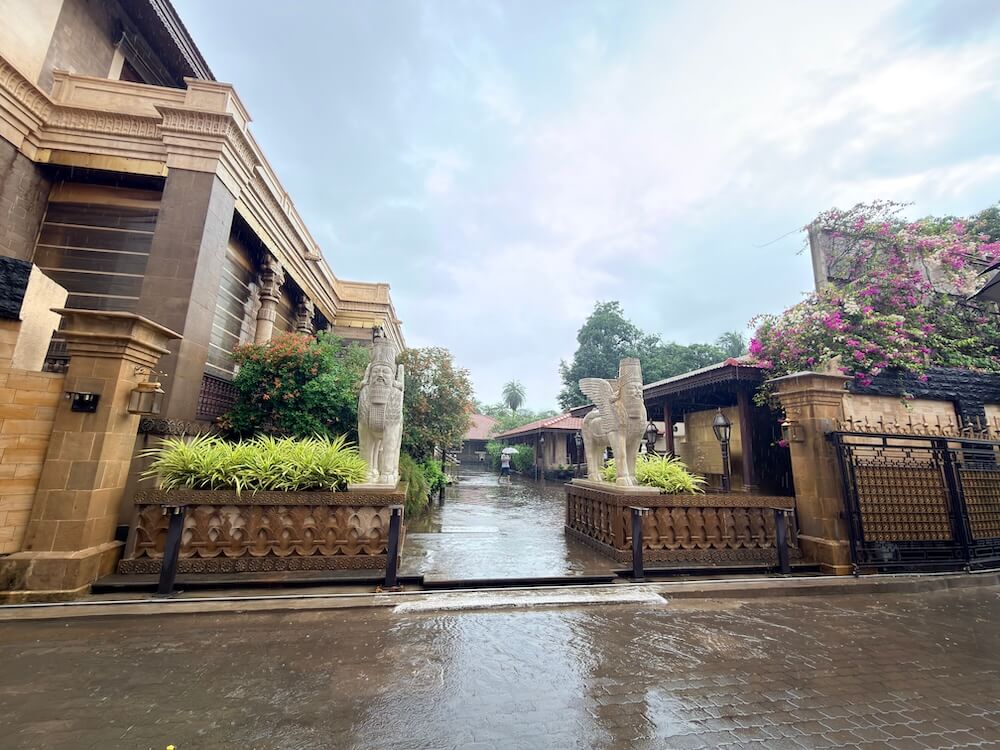 Zoroastrian tradition recognises three principal grades of temple fire: Atash Dadgah (basic temple fire) used for general worship, the higher-grade Atash Adaran (mid-grade temple fire) and the supreme Atash Behram, whose name derives from the Avestan Verethragna, the divinity associated with victory. The consecration of an Atash Behram is one of the most elaborate rituals in Zoroastrianism, involving the collection of fire from 16 different sources, including occupational furnaces, a royal court, a shepherd’s hearth, a household fire and lightning. Each fire is purified through separate religious rites and once consecrated, the flame is never allowed to go out. After Jadi Rana granted land for the fire temple at Sanjan, the necessary ritual implements were brought from the Khorasan region of Iran. Consecrated there according to religious rites, the fire came to be known as Iranshah, meaning King of Iran.
In the fourteenth century, Alaf Khan, the governor of Gujarat under the Delhi Khalji Sultanate, attacked the Yadava kingdom of southern Gujarat. The ‘Gazetteer of the Bombay Presidency, Volume XIII, Part II: Thana’ states that he reached as far as Sanjan between 1312 and 1318. During the attack on Sanjan, the sacred fire was moved for safety to the caves at Bahrot. Located on a hill at Bahrot in Dahanu taluka of Palghar district in Maharashtra, these originally Buddhist rock-cut caves are known locally as Barad. Regarded as the only Parsi caves in India, they remain an exceptionally important pilgrimage site for the Parsi community.
After remaining in the Bahrot caves for 12 years, the fire was kept at Vansda, near Navsari, for 14 years. In 1419, the Muslim authorities appointed a Parsi gentleman named Changa Asa as the Desai of the Navsari pargana and at his invitation, the priests of Sanjan brought the Iranshah Atash Behram to Navsari in 1479. Later, tensions arose between the priests of Navsari and Sanjan over financial matters, reaching a violent climax in 1686 when six Parsi laymen and two priests of the Bhagaria sect in Navsari were killed. As the dispute intensified over the following years, the Nizam of Bharuch had to intervene on several occasions and at one point the Iranshah fire had to be moved to Surat for three years. Finally, after almost three centuries in Navsari, the Sanjan priests obtained permission from the Gaekwad rulers of Baroda and moved the Iranshah fire from Navsari to Valsad in 1740.
After two years in Valsad, the Sanjan priests selected the coastal village of Udvada as the permanent home of Iranshah and the headquarters of the Sanjan panthak (priestly jurisdiction). On 28 October 1742, the fire was brought to the home of the mobed (Zoroastrian priest) Mehernosh Hormuzd Bhathela and was subsequently housed for some time in various residences and buildings. Eventually, in 1894, the Parsi businesswoman Bai Motlibai Wadia funded the construction of the present grand temple at Udvada, giving Iranshah a permanent home. Of the eight Atash Behrams in India today, the Iranshah at Udvada is the oldest and is honoured as the holiest pilgrimage site of the Zoroastrian community worldwide. In recent years, the temple underwent restoration on the occasion of the 1,290th anniversary of the consecration of the fire.
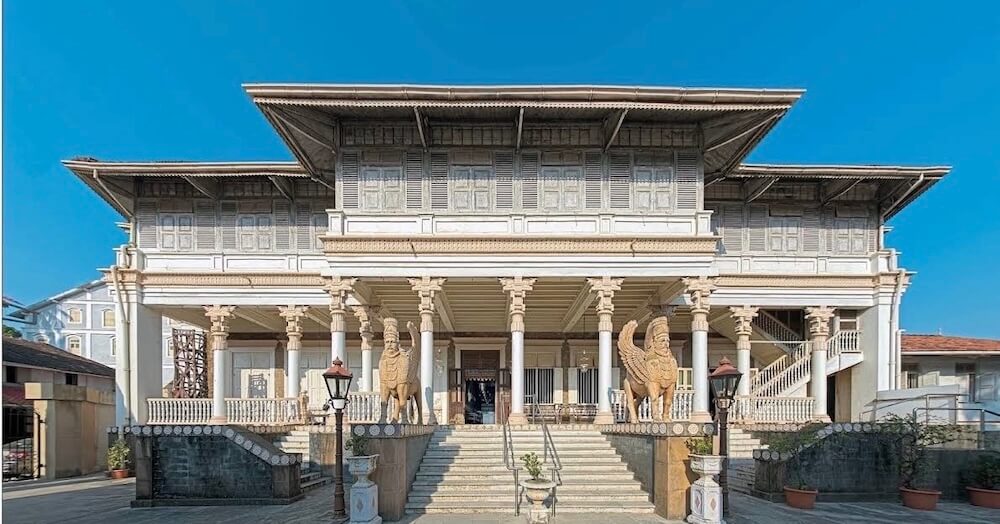
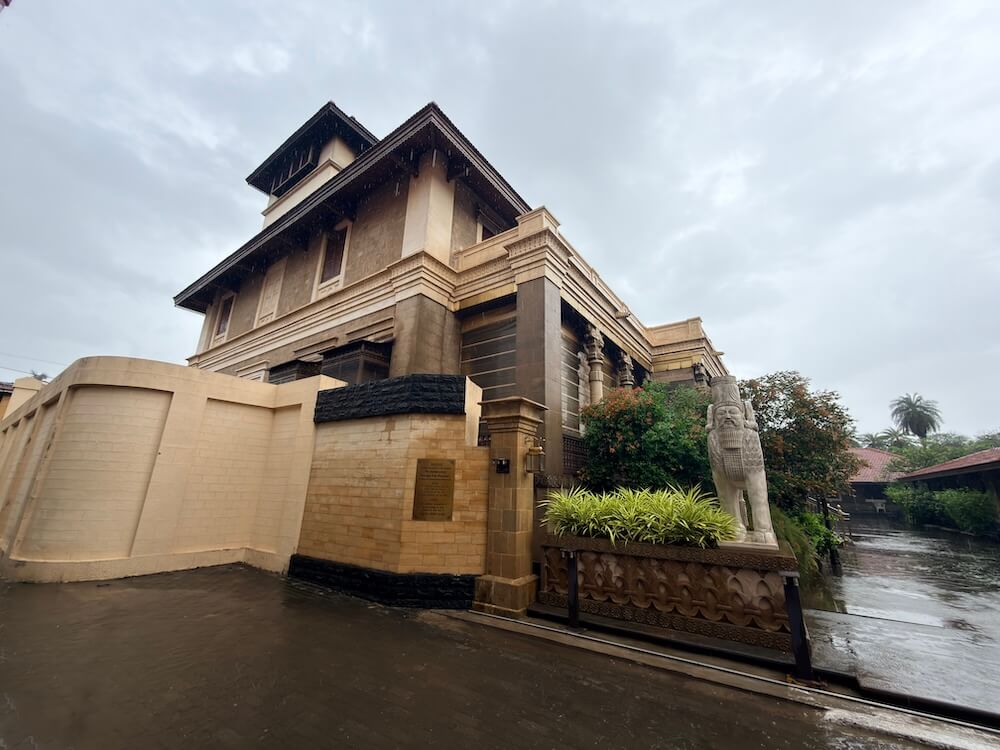
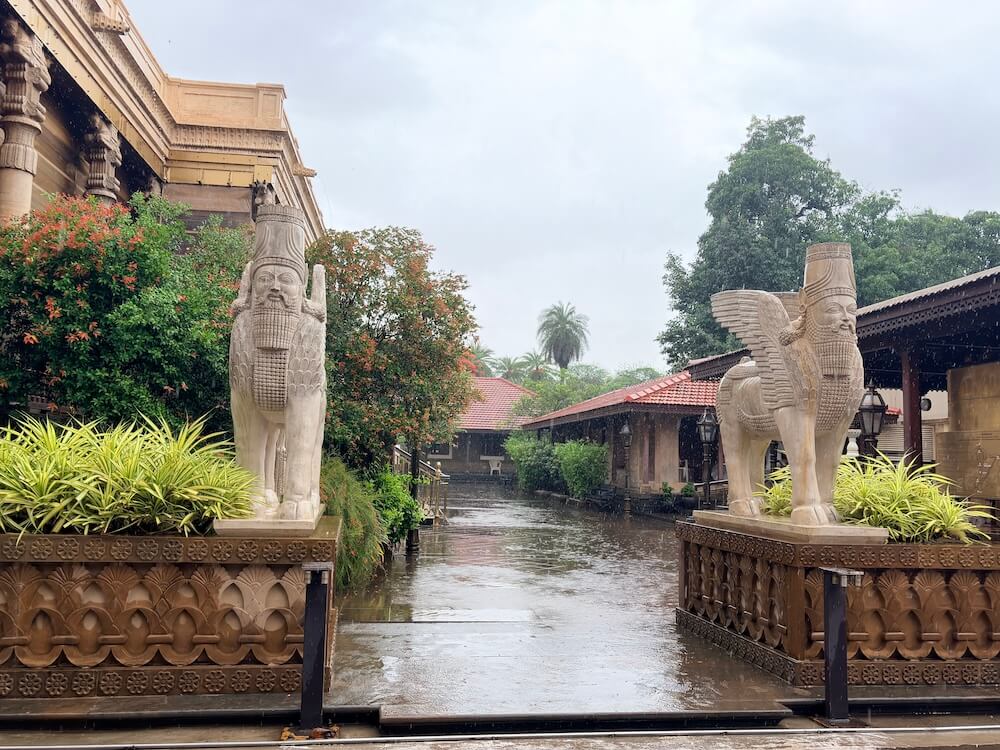
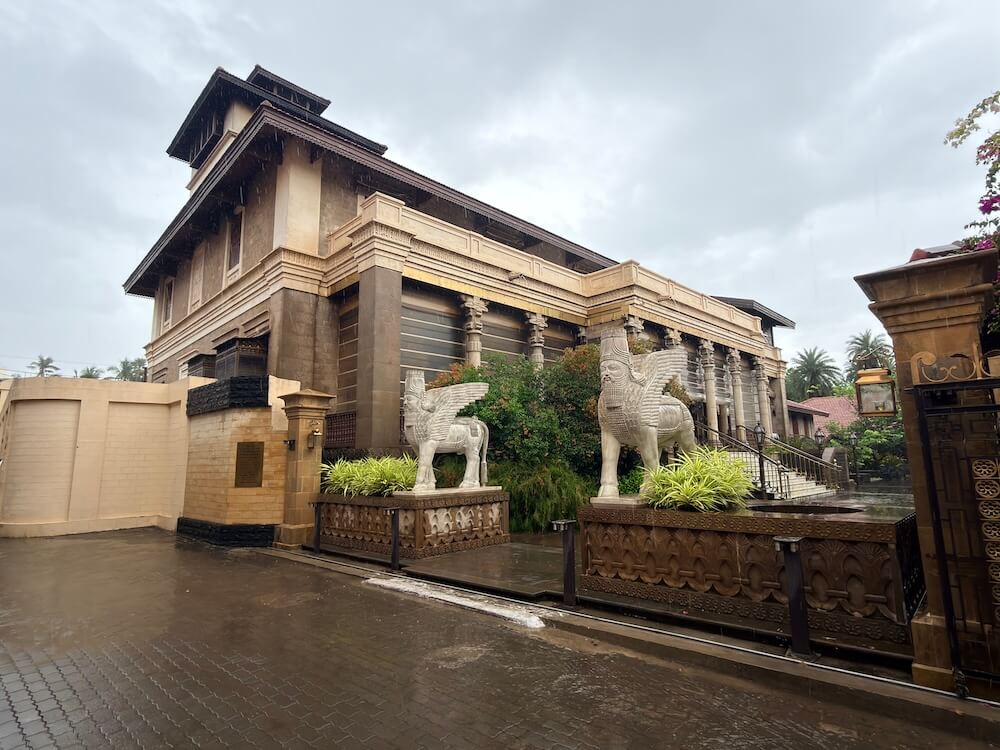
The fire temple stands on a high plinth within a spacious, clean and fortified compound, combining Indo-Persian and colonial neoclassical architectural influences. A flight of steps forms the approach to the front of the building, flanked on either side by carved sculptures of lamassu, the winged human-headed bulls inspired by the ancient architectural tradition of Persepolis. The outer halls display oil portraits of the early Sanjana dasturs and other eminent religious personalities. Beyond these halls lies the spacious prayer hall of the fire temple, where load-bearing stone columns and arched openings reflect a graceful fusion of Persian and British-Indian architectural traditions. Carved teakwood panels decorate the ceiling, Minton tiles cover the floor and a large brass bell hangs in the hall to accompany the daily prayers with its resonant chime. A separate padyab (ritual washing area) provides space for devotees to wash their hands and feet and perform the ritual of tying the kusti (sacred waist cord) before worship.
At the heart of the building lies the inner sanctum, referred to in Parsi tradition as the kebla (inner fire chamber). Entirely free of idols, stone sculptures or symbolic representations of any human or mythological deity, this chamber reflects the Zoroastrian belief that fire is the supreme luminous symbol of the formless divine. Within the kebla stands a large afarganyu (metal fire vessel) placed upon a raised marble takht (stone platform), where the Iranshah fire has been tended continuously for centuries with offerings of fragrant sandalwood, suitable firewood and frankincense. Latticework windows screen the chamber to preserve its sanctity and prevent outsiders from viewing the fire directly. Above the building, a roof laid with sloping Mangalore tiles suited to the local climate rises at the centre, directly over the kebla, into a tall and well-ventilated dome. Designed with a chimney-like vent that allows the smoke inside to escape easily, the summit of the dome is topped with metal protective finials and religious solar symbols.
Maintaining the fire and performing the daily rites around the clock follows a strict discipline. The 24 hours of the day are divided into five gehs (daily prayer periods): Havan, Rapithwin, Uziran, Aiwisuthrem and Ushahin. Ordinary devotees cannot view the fire in the kebla directly, as access is restricted to designated priests. To prevent their breath or saliva from polluting the flame, the priests cover their mouths with a white padan (priestly face-cloth), also called a padam and tend the fire several times a day by cleaning the ash, offering fresh sandalwood, adding fragrant wood and reciting Avestan prayers. At the beginning of each geh, the chief mobed enters the kebla wearing a white ritual robe called a jama and a padan over his mouth to perform the boi (fire-tending ritual). During this ceremony, pure sandalwood is offered to the fire while the temple bell is rung nine times towards the eight directions.
Every year, the temple celebrates its salgiri (annual foundation day) with great enthusiasm according to the Parsi calendar on Mah Adar, Roj Adar and Mah Tir, Roj Mahrespand. Thousands of Parsi and Irani devotees from across India and around the world travel to Udvada for the occasion. In keeping with religious tradition and rules observed for centuries, entry into the main prayer hall and the kebla is restricted to Zoroastrian devotees born Parsi or Irani. Other visitors can explore the village’s historic heritage houses and the nearby Parsi information museum. The fire temple remains open to Parsi devotees every day from 5 am to 9 pm, with special arrangements for darshan during each of the five gehs.
Useful Information :
- Located 12 km from Pardi
- Located 19 km from Valsad city
- State Transport buses are available from Pardi and Valsad
- Private vehicles can reach the temple parking area
- Accommodation and breakfast facilities are available nearby
- Contact : contact@iranshahinitiative.com
ईरानशाह अताश बेहराम
उदवाड़ा, ताल. पारडी, जिला. वलसाड
मंदिरे
Temples
मंदिर
મંદિરો
கோவில்கள்
దేవాలయాలు
ക്ഷേത്രങ്ങൾ
ದೇವಾಲಯಗಳು
মন্দিরসমূহ
ਮੰਦਿਰ
-
माता विश्वंभरी तीर्थ यात्रा धाम रबाडा, ता. वलसाड, जि. वलसाड
अधिक माहितीMata Vishwambhari Tirth Yatra Dham Rabada, Tal. Valsad, Dist. Valsad
View Detailsमाता विश्वम्भरी तीर्थ यात्रा धाम रबाडा, ताल. वलसाड, जिला. वलसाड
विवरण देखेंMata Vishwambhari Tirth Yatra Dham Rabada, Tal. Valsad, Dist. Valsad
વિગત જુઓMata Vishwambhari Tirth Yatra Dham Rabada, Tal. Valsad, Dist. Valsad
விவரங்களைக் காண்கMata Vishwambhari Tirth Yatra Dham Rabada, Tal. Valsad, Dist. Valsad
వివరాలను చూడండిMata Vishwambhari Tirth Yatra Dham Rabada, Tal. Valsad, Dist. Valsad
വിശദാംശങ്ങൾ കാണുകMata Vishwambhari Tirth Yatra Dham Rabada, Tal. Valsad, Dist. Valsad
ವಿವರಗಳನ್ನು ವೀಕ್ಷಿಸಿMata Vishwambhari Tirth Yatra Dham Rabada, Tal. Valsad, Dist. Valsad
বিস্তারিত দেখুনMata Vishwambhari Tirth Yatra Dham Rabada, Tal. Valsad, Dist. Valsad
ਵੇਰਵੇ ਦੇਖੋ -
साईबाबा मंदिर तिथळ, ता./जि. वलसाड
अधिक माहितीSai Baba Temple Tithal, Tal./Dist. Valsad
View Detailsसाईं बाबा मंदिर तीथल, ताल./जिला. वलसाड
विवरण देखेंSai Baba Temple Tithal, Tal./Dist. Valsad
વિગત જુઓSai Baba Temple Tithal, Tal./Dist. Valsad
விவரங்களைக் காண்கSai Baba Temple Tithal, Tal./Dist. Valsad
వివరాలను చూడండిSai Baba Temple Tithal, Tal./Dist. Valsad
വിശദാംശങ്ങൾ കാണുകSai Baba Temple Tithal, Tal./Dist. Valsad
ವಿವರಗಳನ್ನು ವೀಕ್ಷಿಸಿSai Baba Temple Tithal, Tal./Dist. Valsad
বিস্তারিত দেখুনSai Baba Temple Tithal, Tal./Dist. Valsad
ਵੇਰਵੇ ਦੇਖੋ -
भाव-भावेश्वर महादेव मंदिर बारुमाळ, ता. धरमपूर, जि. वलसाड
अधिक माहितीBhav-Bhaveshwar Mahadev Temple Barumal, Tal. Dharampur, Dist. Valsad
View Detailsभाव-भावेश्वर महादेव मंदिर बारुमल, ताल. धरमपुर, जिला. वलसाड
विवरण देखेंભાવ-ભાવેશ્વર મહાદેવ મંદિર, બારુમાળ, તા. ધરમપુર, જિ. વલસાડ
વિગત જુઓபவ-பாவேஸ்வர மகாதேவ் கோவில், பாருமல், தாலுகா தரம்ப்பூர், மாவட்டம் வல்சாடு
விவரங்களைக் காண்கభావ-భవేశ్వర మహాదేవ దేవాలయం, బారుమాల్, తాలూకా: ధరంపూర్, జిల్లా: వల్సాడ్
వివరాలను చూడండిഭാവ്-ഭാവേശ്വർ മഹാദേവ് ക്ഷേത്രം, ബാരുമാൽ, താലൂക്ക്: ധരംപൂർ, ജില്ല: വൽസാദ്
വിശദാംശങ്ങൾ കാണുകಭವ-ಭಾವೇಶ್ವರ ಮಹಾದೇವ ದೇವಸ್ಥಾನ, ಬರುಮಾಳ್, ತಾಲ್ಲೂಕು: ಧರಂಪುರ, ಜಿಲ್ಲೆ: ವಲ್ಸಾದ್
ವಿವರಗಳನ್ನು ವೀಕ್ಷಿಸಿভাব-ভাবেশ্বর মহাদেব মন্দির, বারুমাল, তালুকা: ধরমপুর, জেলা: বলসাদ
বিস্তারিত দেখুনਭਾਵ-ਭਵੇਸ਼ਵਰ ਮਹਾਦੇਵ ਮੰਦਰ ਬਾਰੂਮਲ, ਤਾਲੁਕਾ ਧਰਮਪੁਰ, ਜ਼ਿਲ੍ਹਾ ਵਲਸਾਡ
ਵੇਰਵੇ ਦੇਖੋ