
सोमनाथ महादेव मंदिर
बिलीमोरा, ता. गाणदेवी, जि. नवसारी
Somnath Mahadev Temple
Bilimora, Tal. Gandevi, Dist. Navsari
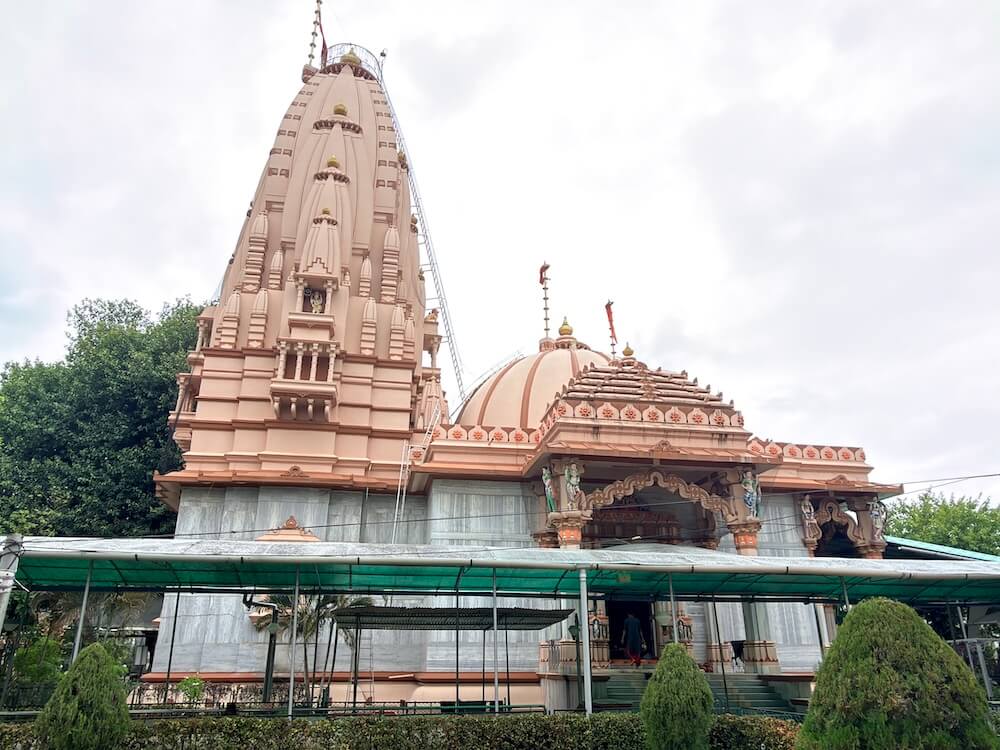
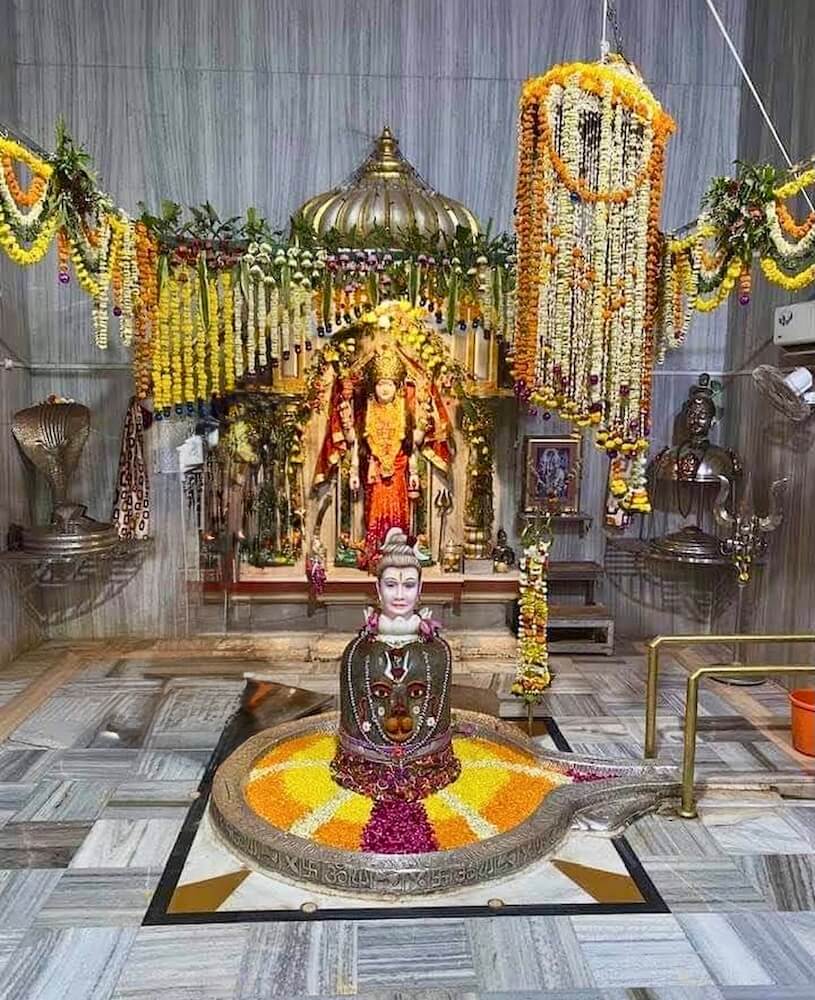 The ancient Somnath Mahadev Temple is located in the historic town of Bilimora, an important centre of trade and cultural exchange in South Gujarat. With its grand shikhar rising to a height of 108 feet, the temple is one of Bilimora’s major religious and tourist attractions. According to local tradition, the temple was established during the Solanki period, often described as the golden age of Gujarat. The shivalinga worshipped here is believed to be swayambhu (self-manifested). Devotees believe that sincere prayers to Somnath Mahadev fulfil their wishes.
Bilimora is situated on the banks of the Ambika River and has seen the rule of several dynasties over the centuries. Historians believe that the town, like many other ports along the South Gujarat coast, was an important trading harbour in ancient times. Goods from the surrounding regions were transported along the Ambika River to the sea and then shipped to Arabia, Africa and other trading centres along India’s western coast. In the late 18th century, the Gaekwad rulers of Baroda State established a naval base here, known as the Bandar Bilimora Suba Armar. This gave the port considerable strategic importance.
 In 1913, Maharaja Sayajirao Gaekwad III, the progressive ruler of Baroda State, commissioned the Bilimora-Waghai narrow-gauge railway line. Today, this historic railway is recognised as one of Gujarat’s heritage railways. The train passes through the scenic forests of the Dangs and remains a popular attraction for visitors. Bilimora, once known for the whistles of steam locomotives, is now also a station on India’s Mumbai-Ahmedabad High-Speed Rail corridor, popularly known as the Bullet Train project. The Somnath Mahadev Temple has remained an important religious landmark throughout the town’s development as a trading port, commercial centre and railway junction.
The name Somnath has its origin in the Puranas. According to a well-known legend, Chandra, the Moon God, married the 27 daughters of Prajapati Daksha. 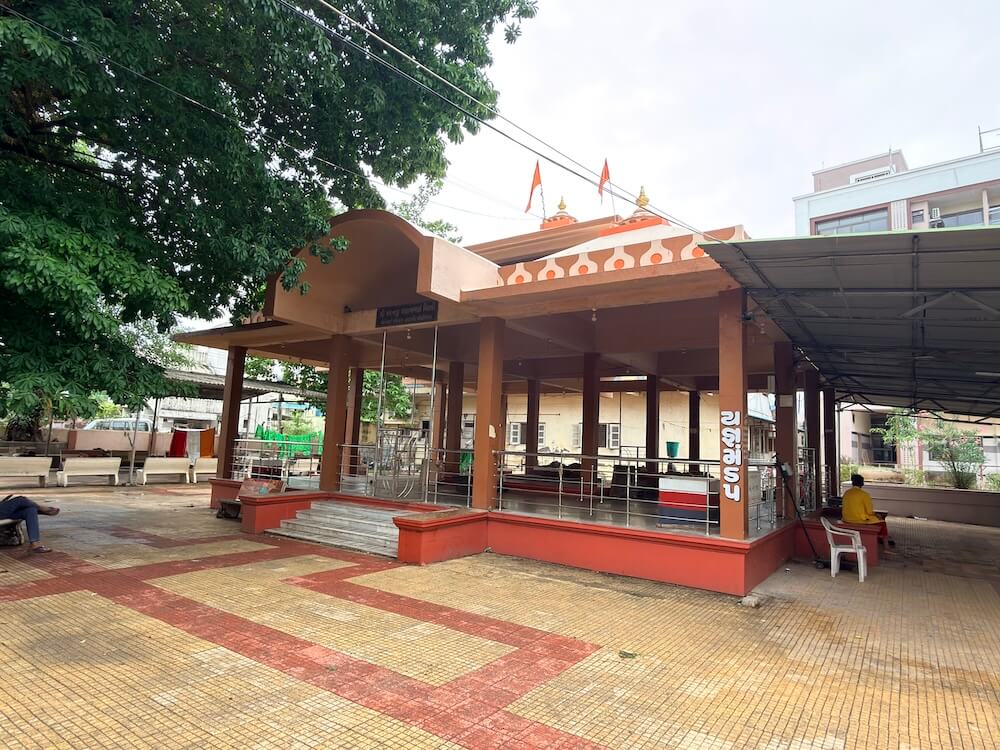 However, he was especially fond of Rohini and spent most of his time with her. Feeling neglected, his other wives complained to their father. Angered by their suffering, Daksha cursed Chandra to lose his brightness. To free himself from the curse, Chandra performed deep penance to please Lord Shiva. Pleased with his devotion, Shiva granted him a boon. As a result, the moon would gradually gain brightness for 15 days and lose it over the following 15 days. The word Soma means the moon. Since Chandra accepted Lord Shiva as his master, Shiva came to be known as Somnath, meaning the Lord of Soma.
The oldest and most famous temple dedicated to Somnath Mahadev is located at Prabhas Patan in Gujarat. 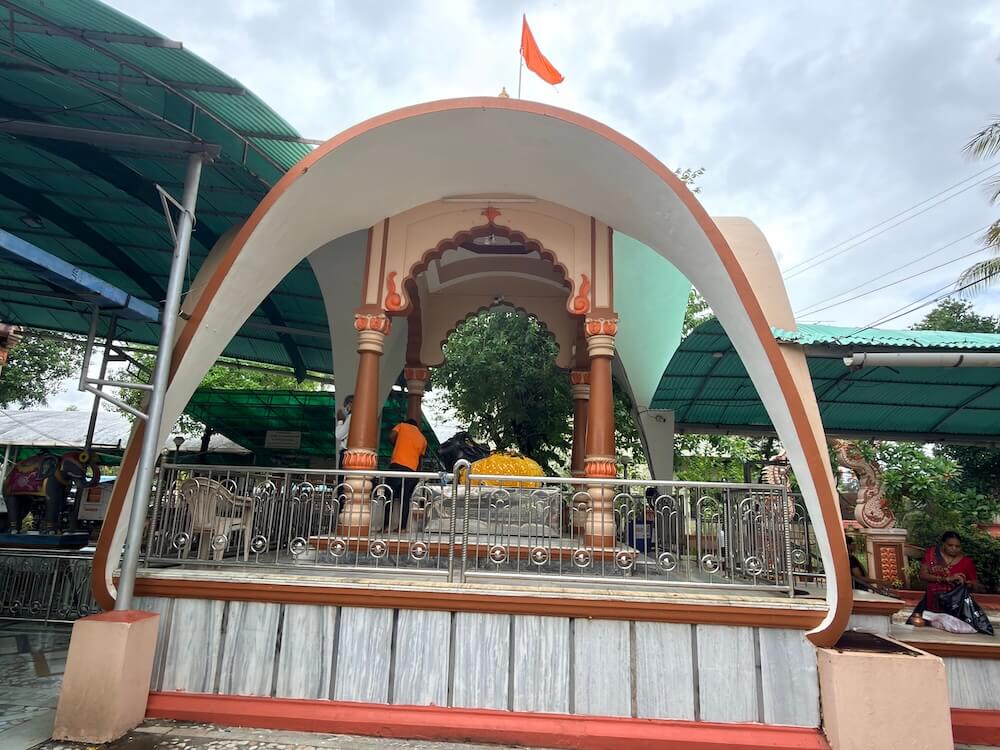 The place is mentioned in the Mahabharata as Prabhasa Tirtha and the Somnath Temple is one of the 12 Jyotirlingas, the sacred shrines of Lord Shiva. According to tradition, the original temple was built during the early centuries of the Common Era. In 1026, Mahmud of Ghazni attacked, looted and destroyed the temple. The Gazetteer of the Bombay Presidency, Volume I, Part I – History of Gujarat records that the earlier structure was built of wood and brick. Soon after Mahmud’s departure, the Chaulukya (Solanki) king Bhima I rebuilt the temple in stone. Local tradition connects the establishment of the Somnath Mahadev Temple at Bilimora with the rule of the same Solanki dynasty.
Like several Shiva temples in Gujarat, the Somnath Mahadev Temple at Bilimora has a local legend involving a cow and a cowherd.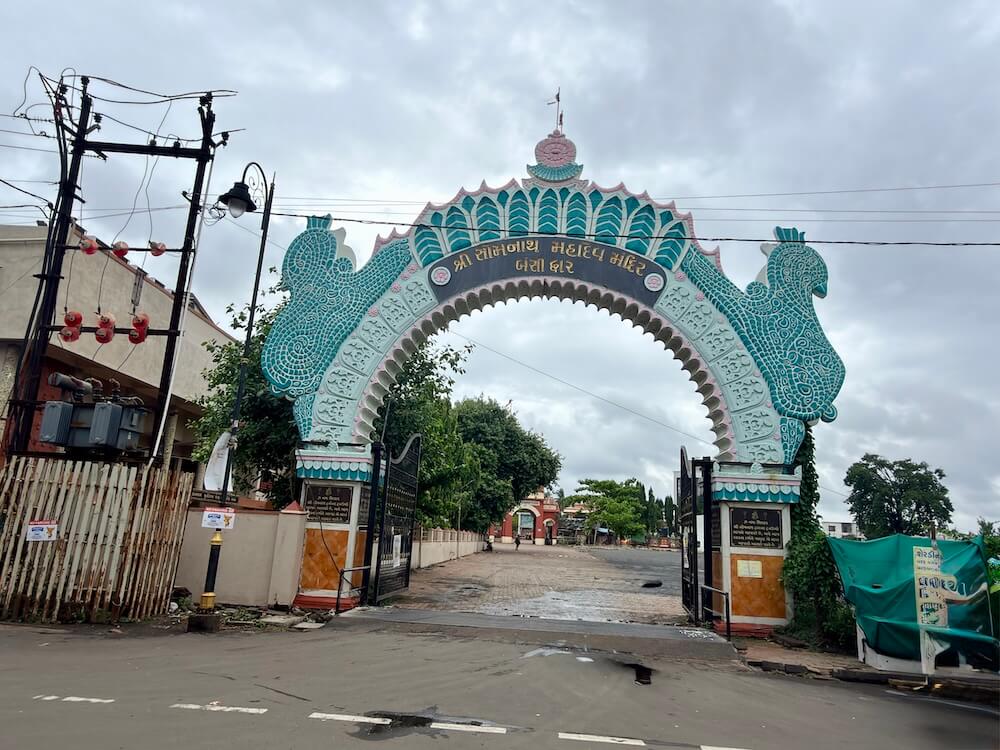 According to this tradition, the area was once covered by a dense forest where a cowherd regularly took his cattle for grazing. Every day, he noticed that one of his cows released a stream of milk over a particular spot. Surprised by this unusual sight, he informed the local Rajput queen. The queen visited the place and discovered a swayambhu shivalinga. Deeply devoted to Lord Shiva, she began visiting the forest every day to offer prayers.
After some time, the king became suspicious of the queen’s daily visits to the forest. One day, he secretly followed her. When he saw her performing puja, he misunderstood the situation. In anger, he drew his sword to kill her. However, the divine power of the swayambhu shivalinga stopped his sword-bearing arm in mid-air. 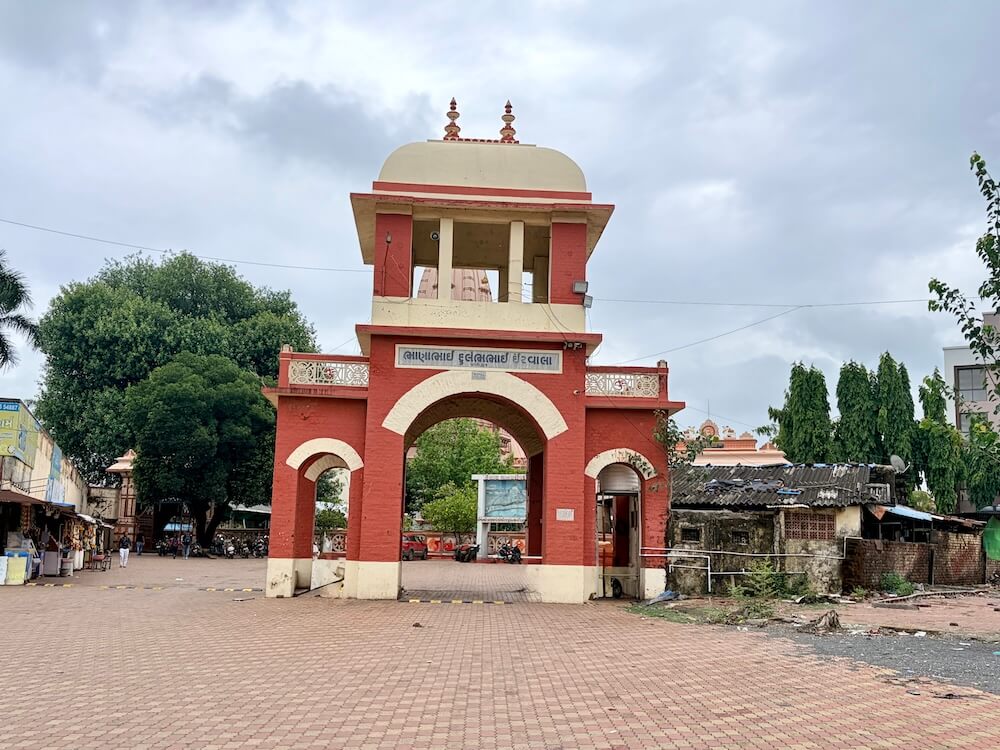 When the queen completed her prayers and opened her eyes, she was terrified to see her husband standing before her with his sword raised. She cried out to Bholenath for protection and embraced the shivalinga. According to the legend, the shivalinga immediately split into two and the queen disappeared within it. The king was filled with regret after witnessing this miracle. He later built a temple at the sacred spot.
Over time, the original temple gradually fell into disrepair. According to local belief, 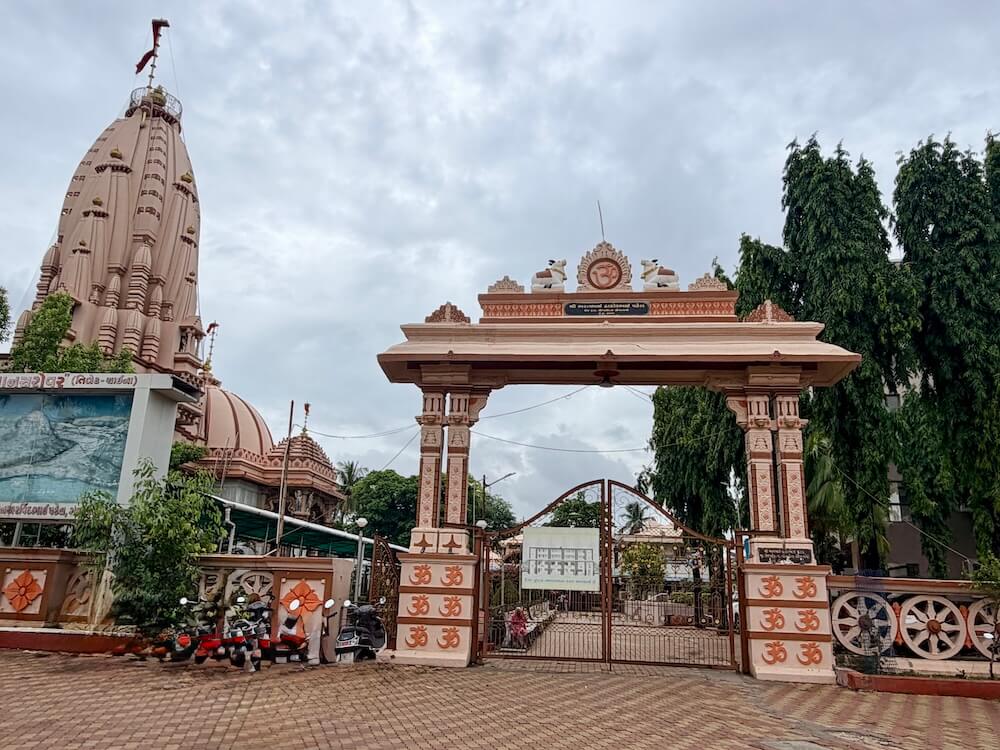 Lord Mahadev appeared in a dream to a member of the Desai family from nearby Gandevi in 1925 and revealed the importance of the sacred site. The family then took the initiative to restore the temple. Another major renovation was carried out in 1975. Photographs of the two earlier temple structures are displayed in the sabhamandap.
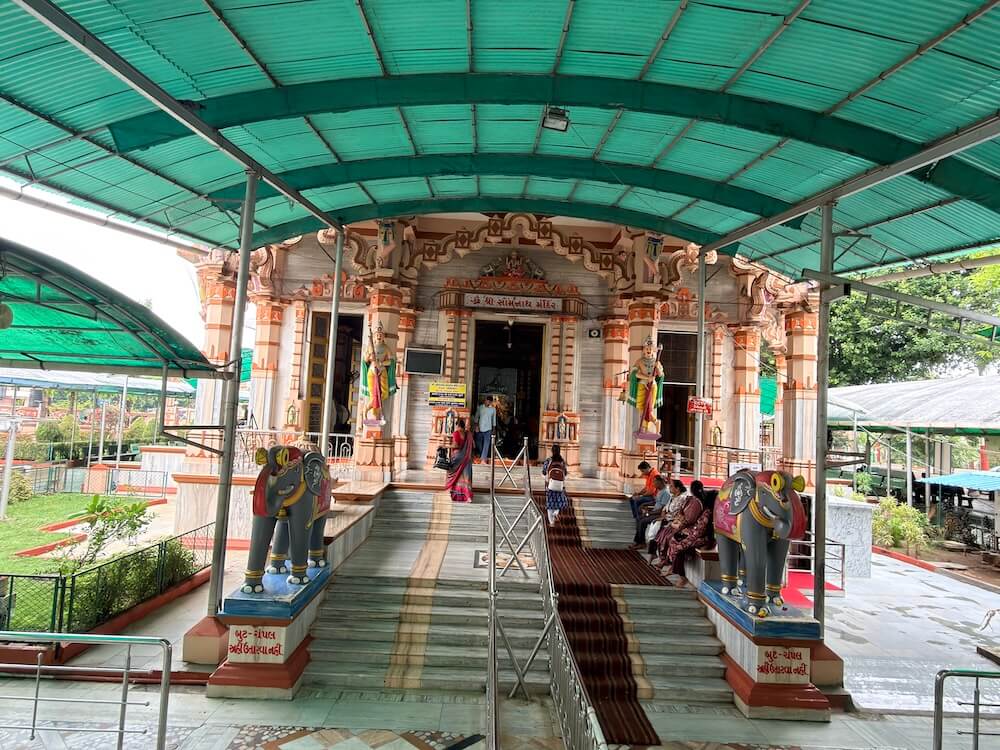
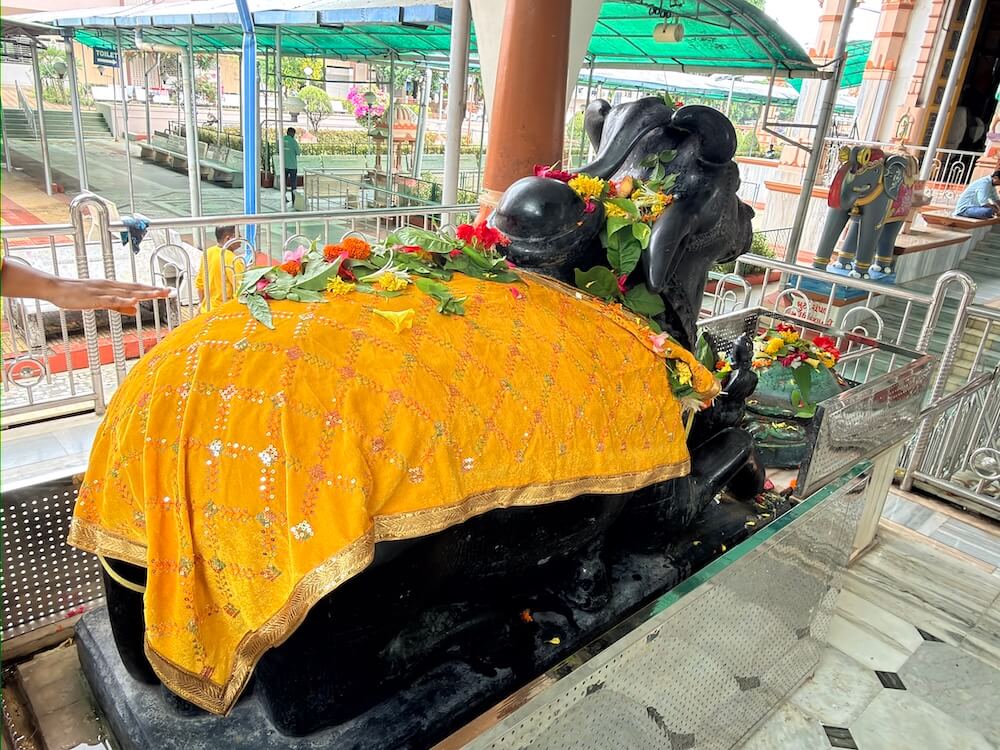
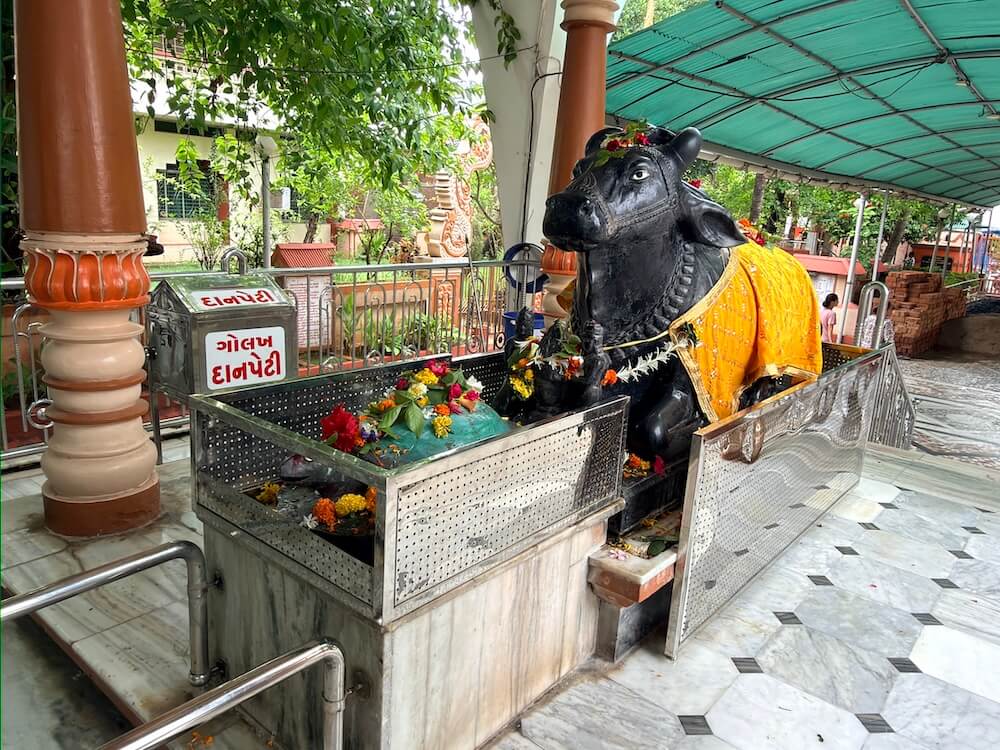
A grand mahadwar (main gateway) in the surrounding enclosure wall leads into the temple courtyard. A yajnashala and a nandi mandap stand directly in front of the main temple. The nandi mandap is built on a raised platform surrounded by a pradakshina path (circumambulatory passage). A large sculpture of Nandi stands between four central pillars, with a stone tortoise placed in front of it. From the nandi mandap, a flight of steps leads down to a lower level. 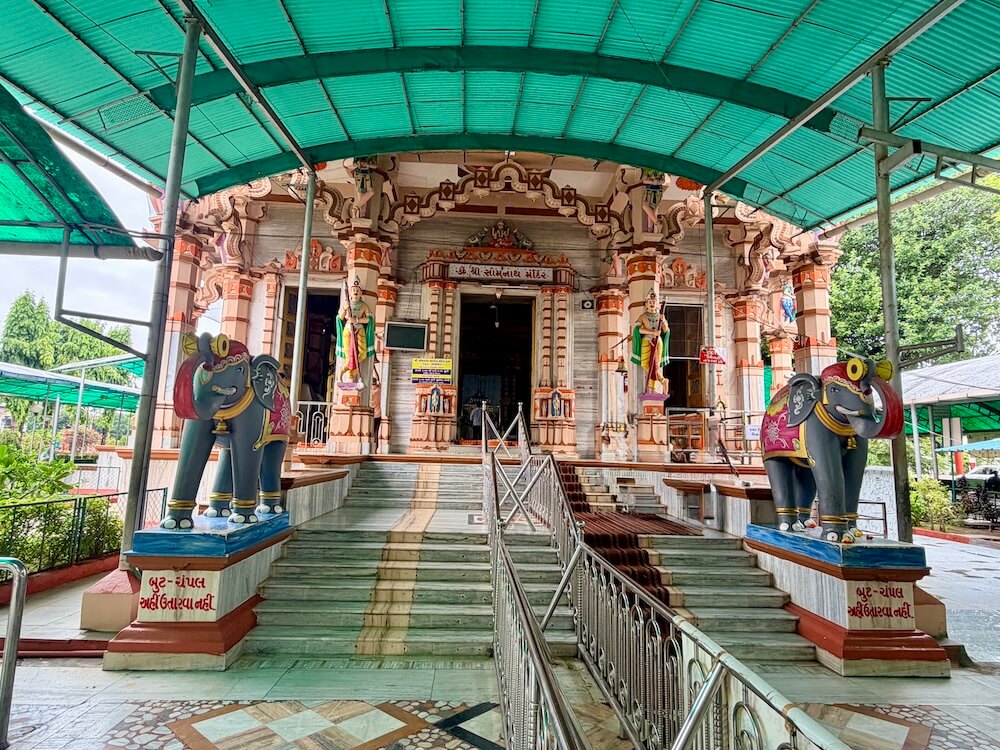 Another 11 steps then lead up to the mukhamandap (entrance porch), which stands on a high stone base. Elephant sculptures are placed on both sides of the staircase, with stone seating arranged behind them.
The semi-open mukhamandap has sculptures of dwarpals (door guardians) on its two entrance pillars. Four pillars along the front are connected by decorative arches. Three doorways, comprising a central entrance and two smaller side doors, lead into the sabhamandap. The pillars beside the main entrance are decorated with detailed carvings of dwarpals and other figures. A sculpture of Gajalakshmi adorns the lintel above the doorway. Inside is the enclosed sabhamandap, which has a stone-paved floor. It leads to the antaral (vestibule) and the garbhagriha (sanctum). 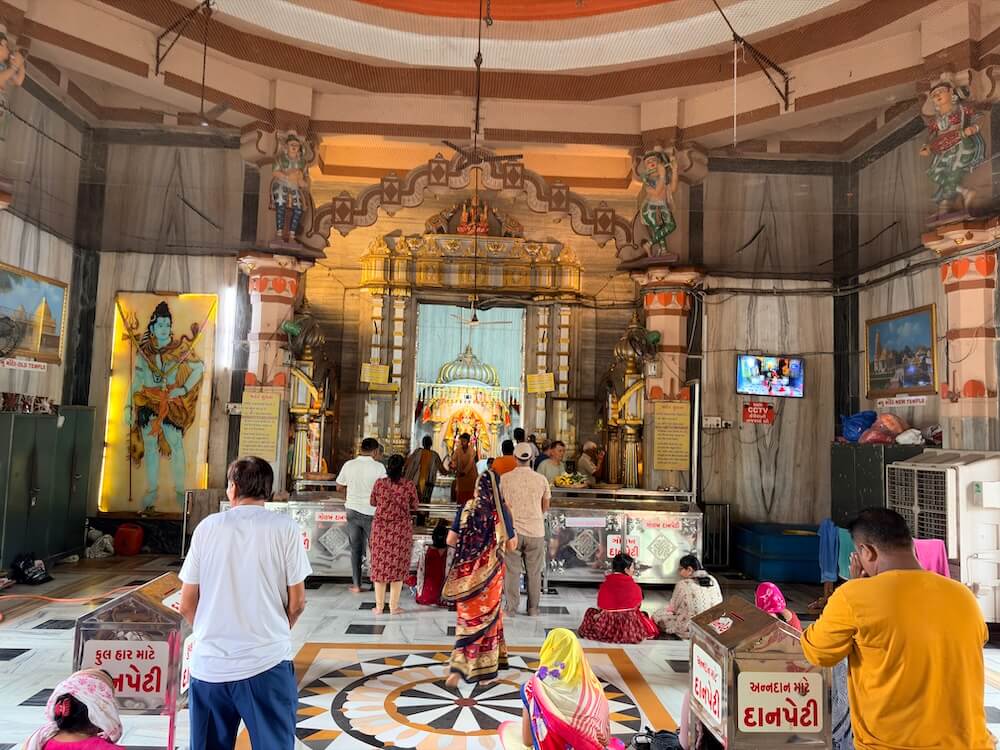 Devkoshtaks (wall niches) in the antaral house murtis of Lord Ganesha and Lord Hanuman.
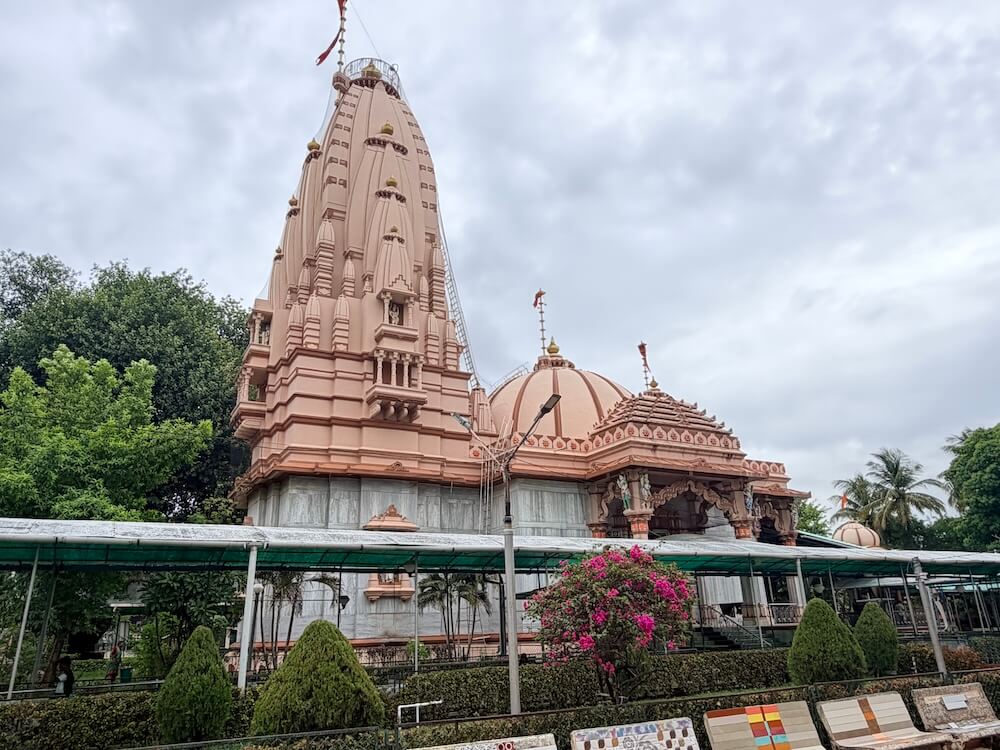
The entrance to the garbhagriha is also decorated with fine carvings and sculptures of dwarpals. At the centre of the sanctum floor is the shivalinga, placed within a silver-clad shalunka (the base of the shivalinga). A shrine in the wall behind it houses a murti of Goddess Parvati. Above the garbhagriha rises the main square shikhar, reaching a height of 108 feet. It gradually tapers towards the top and is decorated with numerous urushrings (smaller decorative spires). The temple complex also has separate shrines dedicated to Lord Hanuman, the Lakshmi Yantra, Badhiya Baba, Jalaram Bapa and Goddess Gayatri.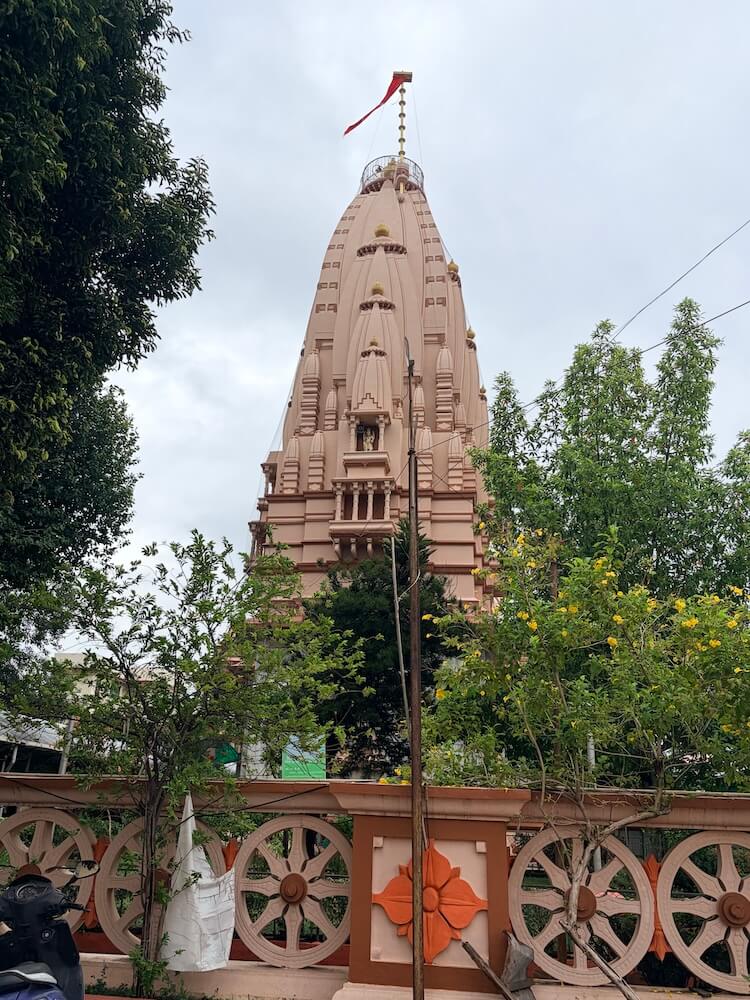
The temple is open for darshan every day from 5 am to 9 pm. Priests perform the daily morning aarti and another aarti at 7 pm. A special aarti is also held every Monday at 12.45 pm. A large annual fair is organised throughout the holy month of Shravan. During this period, thousands of devotees from Surat, Valsad, Navsari and Bharuch districts undertake pilgrimages on foot to seek the blessings of Somnath Mahadev. Special laghurudra and maharudra pujas, involving Vedic chanting in honour of Lord Shiva, are performed every Monday during Shravan.
Mahashivratri is another major festival celebrated at the temple. Large numbers of devotees gather for darshan and special prayers. The ceremonies begin at midnight with the traditional chaar prahar puja, in which Lord Shiva is worshipped during the four watches of the night, followed by maha aarti. The temple also arranges refreshments and mahaprasad for thousands of devotees who visit on this occasion.
Dev Diwali, celebrated on Kartik Shukla Purnima, is observed with great devotion and enthusiasm. Thousands of earthen lamps are lit in the garbhagriha, the sabhamandap and around the 108-foot shikhar, illuminating the entire temple complex. A grand annakut, consisting of a variety of food preparations, is offered to Lord Mahadev. As the complex also houses shrines dedicated to other deities, special pujas, devotional singing and kirtans are organised on Hanuman Jayanti, which falls on Chaitra Purnima, as well as during Ganesh Chaturthi and Navratri.
Useful Information
- Located 8 km from Gandevi and 29 km from Navsari city
- ST bus services are available to Bilimora from several towns in the district
- Private vehicles can reach the temple parking ar
- Accommodation and breakfast facilities are available nearby
- Contact: Temple Office, Mobile: +91 94265 11263
सोमनाथ महादेव मंदिर
बिलिमोरा, ताल. गणदेवी, जिला. नवसारी
मंदिरे
Temples
मंदिर
મંદિરો
கோவில்கள்
దేవాలయాలు
ക്ഷേത്രങ്ങൾ
ದೇವಾಲಯಗಳು
মন্দিরসমূহ
ਮੰਦਿਰ
-
रामजी मंदिर नवसारी, ता./जि. नवसारी
अधिक माहितीRamji Temple Navsari, Tal./Dist. Navsari
View Detailsरामजी मंदिर नवसारी, ताल./जिला. नवसारी
विवरण देखेंRamji Temple Navsari, Tal./Dist. Navsari
વિગત જુઓRamji Temple Navsari, Tal./Dist. Navsari
விவரங்களைக் காண்கRamji Temple Navsari, Tal./Dist. Navsari
వివరాలను చూడండిRamji Temple Navsari, Tal./Dist. Navsari
വിശദാംശങ്ങൾ കാണുകRamji Temple Navsari, Tal./Dist. Navsari
ವಿವರಗಳನ್ನು ವೀಕ್ಷಿಸಿRamji Temple Navsari, Tal./Dist. Navsari
বিস্তারিত দেখুনRamji Temple Navsari, Tal./Dist. Navsari
ਵੇਰਵੇ ਦੇਖੋ -
स्वामीनारायण गुरुकुल सांस्कृतिक गौधाम नवगम पाटिया, चंद्रवासन सुपा, जि. नवसारी
अधिक माहितीSwaminarayan Gurukul Cultural Gaudham Navagam Patiya, Chandravasan Supa, Dist. Navsari
View Detailsस्वामीनारायण गुरुकुल सांस्कृतिक गौधाम नवगाम पाटिया, चंद्रवासन सुपा, जिला। नवसारी
विवरण देखेंSwaminarayan Gurukul Cultural Gaudham Navagam Patiya, Chandravasan Supa, Dist. Navsari
વિગત જુઓSwaminarayan Gurukul Cultural Gaudham Navagam Patiya, Chandravasan Supa, Dist. Navsari
விவரங்களைக் காண்கSwaminarayan Gurukul Cultural Gaudham Navagam Patiya, Chandravasan Supa, Dist. Navsari
వివరాలను చూడండిSwaminarayan Gurukul Cultural Gaudham Navagam Patiya, Chandravasan Supa, Dist. Navsari
വിശദാംശങ്ങൾ കാണുകSwaminarayan Gurukul Cultural Gaudham Navagam Patiya, Chandravasan Supa, Dist. Navsari
ವಿವರಗಳನ್ನು ವೀಕ್ಷಿಸಿSwaminarayan Gurukul Cultural Gaudham Navagam Patiya, Chandravasan Supa, Dist. Navsari
বিস্তারিত দেখুনSwaminarayan Gurukul Cultural Gaudham Navagam Patiya, Chandravasan Supa, Dist. Navsari
ਵੇਰਵੇ ਦੇਖੋ -
आशापुरी माता मंदिर विजलपूर मेन रोड, नवसारी, ता./जि. नवसारी
अधिक माहितीAshapuri Mata Temple Vijalpore Main Road, Navsari, Tal./Dist. Navsari
View Detailsआशापुरी माता मंदिर विजलपोर मेन रोड, नवसारी, ताल./जिला. नवसारी
विवरण देखेंઆશાપુરી માતા મંદિર, વિજલપોર મેઈન રોડ, નવસારી, તા./જિ. નવસારી
વિગત જુઓஆஷாபுரி மாதா கோயில், விஜல்போர் மெயின் ரோடு, நவ்சாரி, தாலுகா/மாவட்டம் நவ்சாரி
விவரங்களைக் காண்கఆశాపురి మాతా దేవాలయం, విజల్పోర్ మెయిన్ రోడ్, నవసారి, తాలూకా/జిల్లా నవసారి
వివరాలను చూడండిആശാപുരി മാതാ ക്ഷേത്രം, വിജൽപോർ മെയിൻ റോഡ്, നവ്സാരി, താലൂക്ക്/ജില്ല നവ്സാരി
വിശദാംശങ്ങൾ കാണുകಆಶಾಪುರಿ ಮಾತಾ ದೇವಸ್ಥಾನ, ವಿಜಲ್ಪುರ ಮುಖ್ಯ ರಸ್ತೆ, ನವಸಾರಿ, ತಾಲ್ಲೂಕು/ಜಿಲ್ಲೆ ನವಸಾರಿ
ವಿವರಗಳನ್ನು ವೀಕ್ಷಿಸಿআশাপুরী মাতা মন্দির, ভিজলপুর মেইন রোড, নবসারি, তালুক/জেলা নবসারি
বিস্তারিত দেখুনਆਸ਼ਾਪੁਰੀ ਮਾਤਾ ਮੰਦਰ, ਵਿਜਲਪੋਰ ਮੇਨ ਰੋਡ, ਨਵਸਾਰੀ, ਤਾਲੁਕਾ/ਜ਼ਿਲ੍ਹਾ ਨਵਸਾਰੀ
ਵੇਰਵੇ ਦੇਖੋ