
स्वामीनारायण गुरुकुल सांस्कृतिक गौधाम
नवगम पाटिया, चंद्रवासन सुपा, जि. नवसारी
Swaminarayan Gurukul Cultural Gaudham
Navagam Patiya, Chandravasan Supa, Dist. Navsari
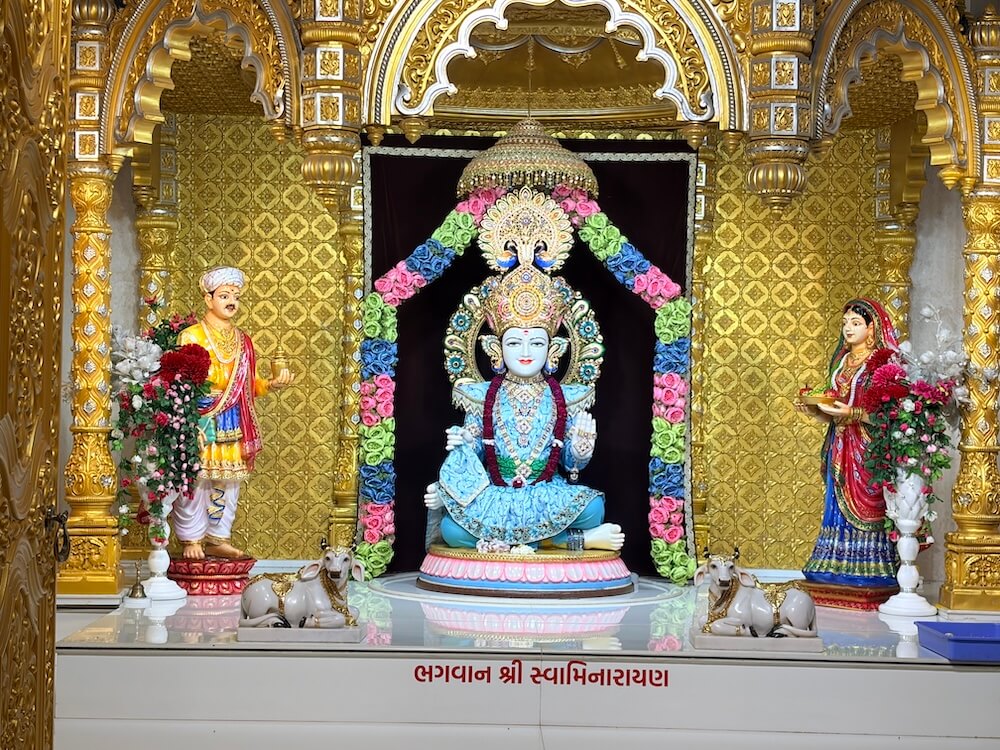 The expansive Swaminarayan Gurukul Cultural Gaudham, established by the Shree Swaminarayan Gurukul Rajkot Sansthan near Navsari, attracts both devotees and tourists. The complex houses a temple dedicated to Shri Nilkanth Prabhu, the Nilkanth Circle with sculptures of cows and an Elephant Gate. Visitors can also explore a round-screen multiplex auditorium, an art gallery, a mirror house and a tunnel walk. With several other attractions on site, this Gaudham has emerged as a popular destination for spiritual tourism.
Swaminarayan Gurukul is a prominent institution within the Swaminarayan sampradaya. According to Raymond Brady Williams’s book ‘An Introduction to Swaminarayan Hinduism’, 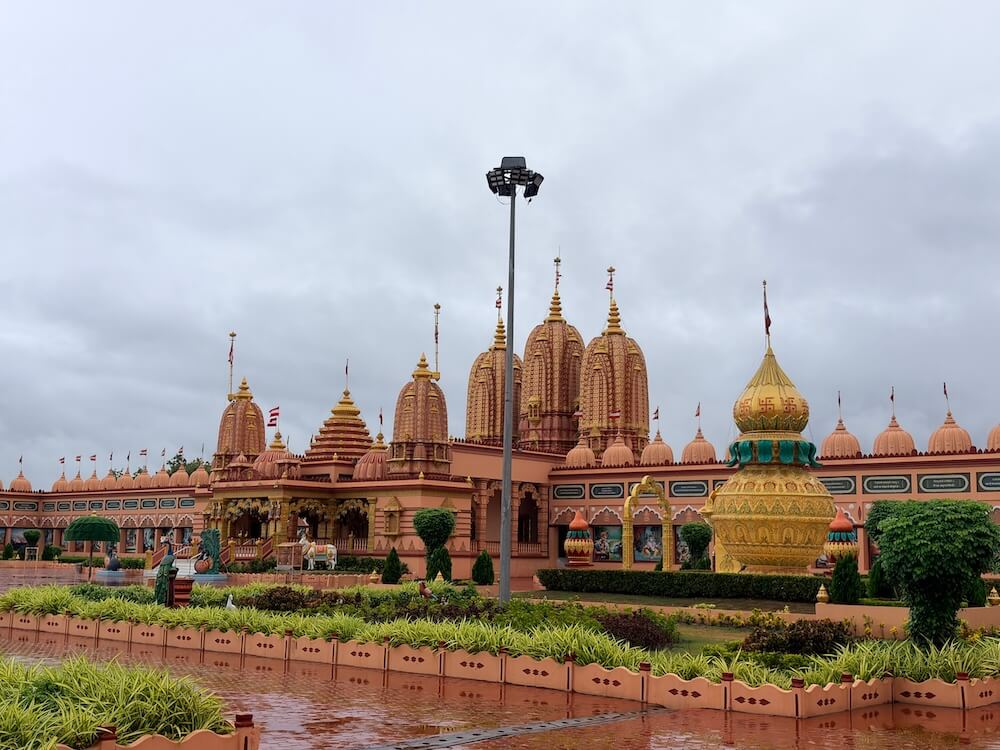 Shastriji Maharaj Dharmajivandasji Swami laid the foundation of the gurukul tradition in Rajkot in 1948. During the final ten years of his life, Bhagwan Swaminarayan (Sahajanand Swami) built nine temples at Ahmedabad (1822), Muli (1823), Bhuj (1823), Vadtal (1824), Dholka (1824), Dholera (1826), Jetalpur (1826), Junagadh (1828) and Gadhada (1828). Dharmajivandasji Swami was associated with the Junagadh temple.
In 1826, Bhagwan Swaminarayan divided his organisation into two administrative seats through a legal document known as the ‘Desh Vibhag no Lekh’. One seat is in Ahmedabad and is known as the Nar Narayan Dev Gadi, while the seat at Vadtal is called the Laxmi Narayan Dev Gadi. He ordained that the office of acharya of the fellowship should pass down through the hereditary line. 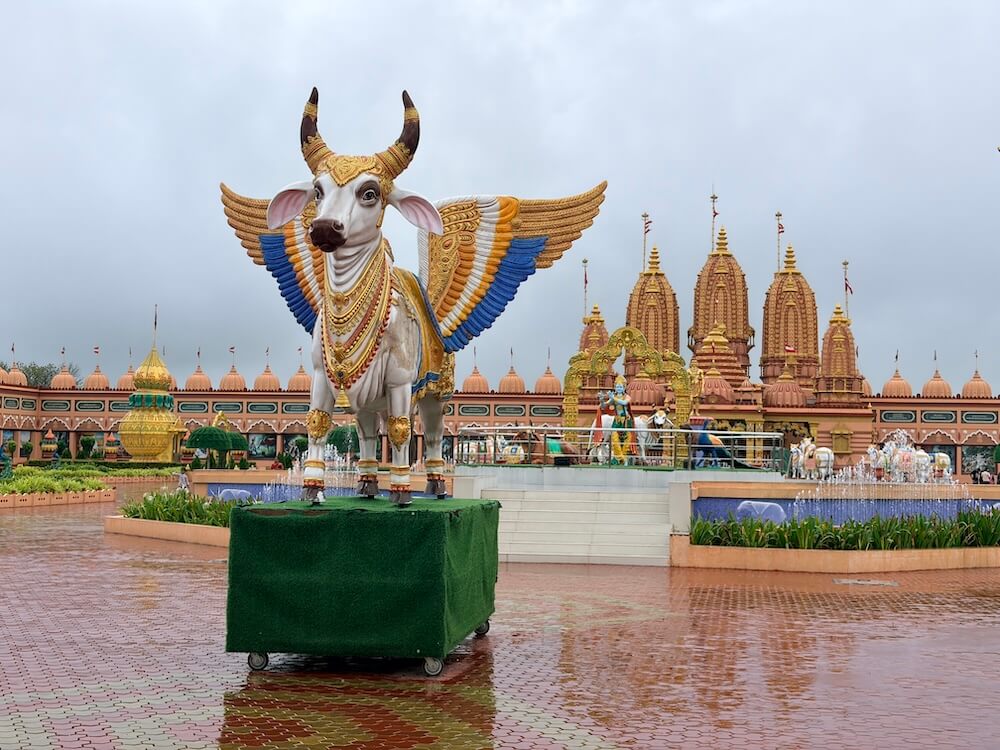 Accordingly, he appointed Ayodhyaprasad, the son of his elder brother Rampratap Pande, to the Nar Narayan Dev Gadi at Ahmedabad and Raghuvir Maharaj, the son of his younger brother Ichcharam, to the Laxmi Narayan Dev Gadi at Vadtal.
Dharmajivandasji Swami was associated with the Vadtal Gadi before stepping away from it in 1947 and establishing the first Swaminarayan Gurukul at Rajkot in 1948. Its purpose was to guide the country towards an education rooted in religious values, revive the ancient Indian gurukul tradition in a modern form and preserve a sense of social responsibility. The institution recognises a lineage of gurus after Swaminarayan, including Gunatitanand Swami, Balmukunddas, Dharmaswarupdas, Gopinathdas, 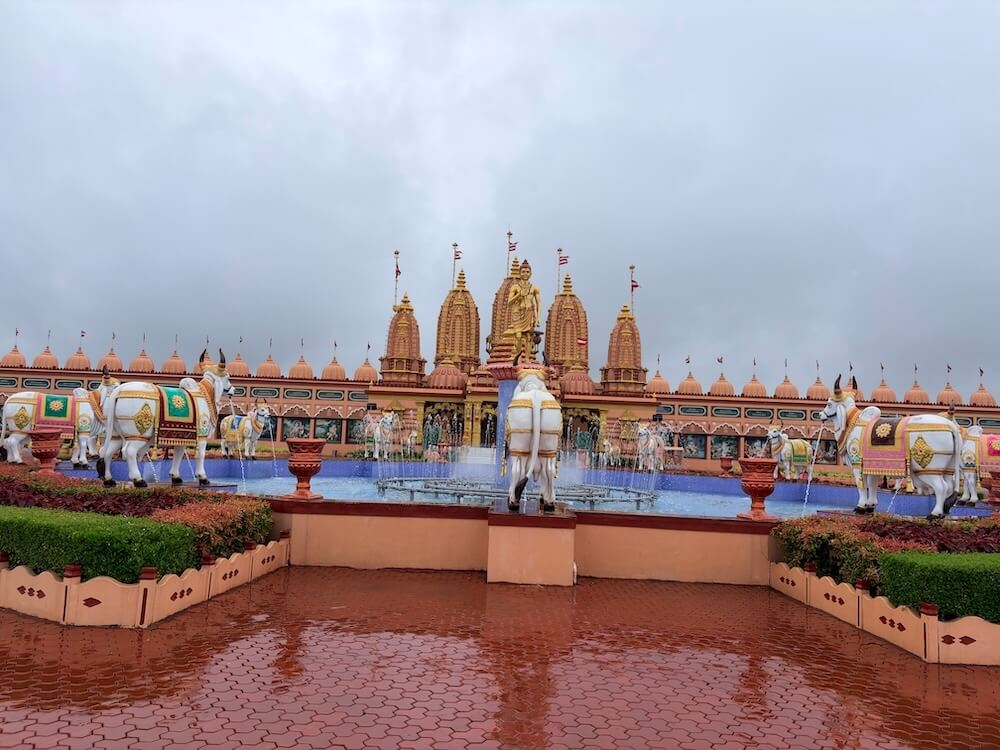 Dharmajivandas and Devkrishnadas. Dharmajivandas Maharaj later entrusted Devkrishnadas Swami with the responsibility of the Gurukul’s work. Under his leadership, the Gurukul expanded its activities beyond India to the United States, the United Kingdom, Canada, Africa and the Dominican Republic, with the Swaminarayan Gurukul Cultural Gaudham at Navsari serving as one of its important centres.
The history of the Navsari Gaudham dates back to 1992, when the Shree Swaminarayan Gurukul Rajkot Sansthan received the land of Shree Ghanshyam Gopalan Gaushala and Ambawadi at Navagam near Navsari as a donation. The Sansthan continued running the gaushala at the site. 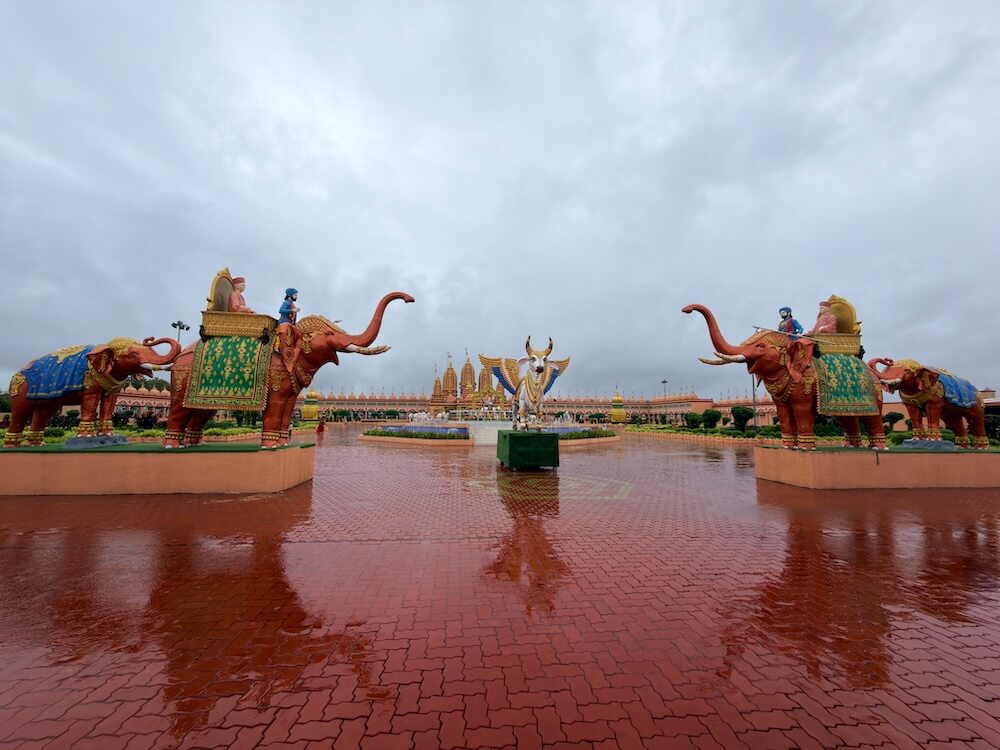 Over time, the vision of developing a large-scale Gaudham here took shape and the complex was inaugurated on 31 December 2024 in the presence of Acharya Rakeshprasad Maharaj, Gurumaharaj and Mahantswami. Around 3,000 devotees and several political leaders attended the ceremony.
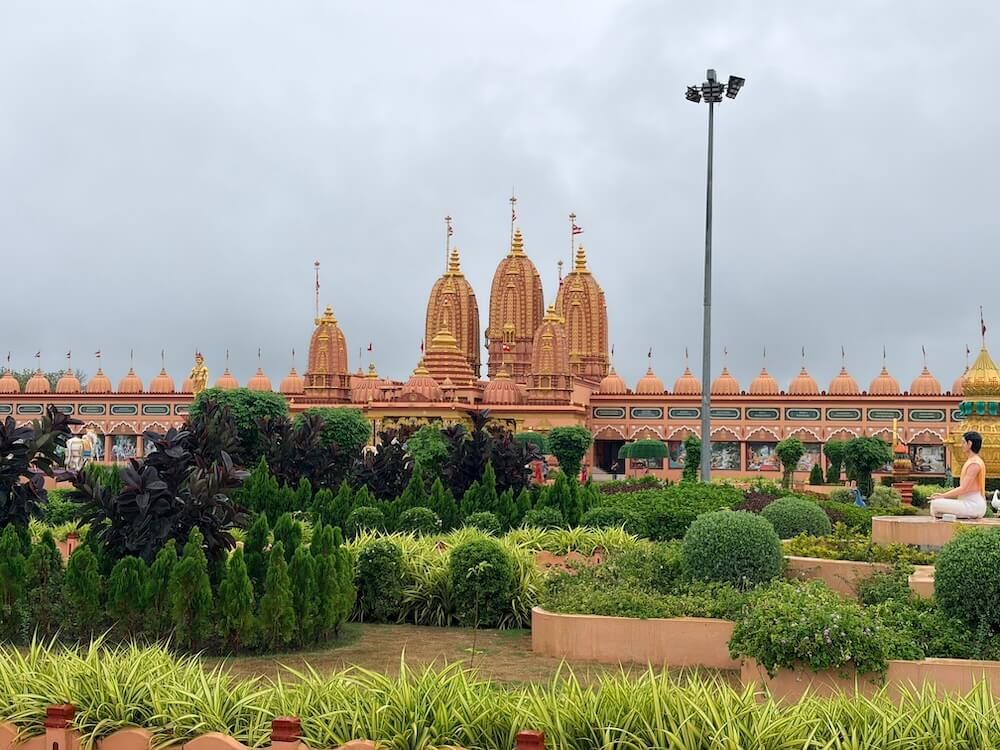
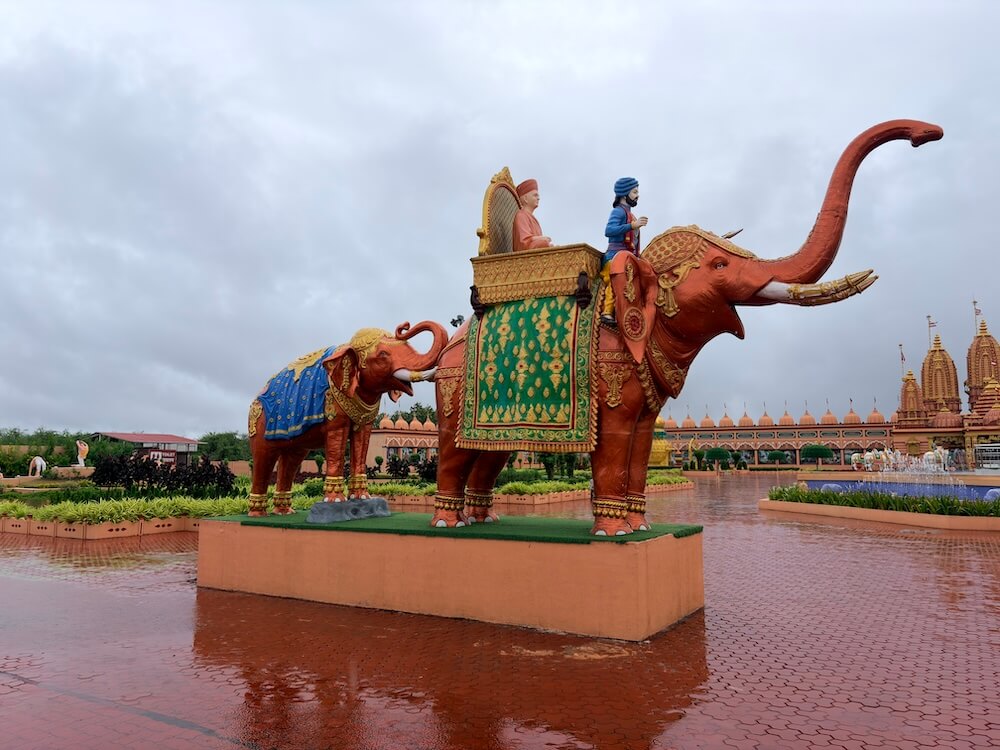
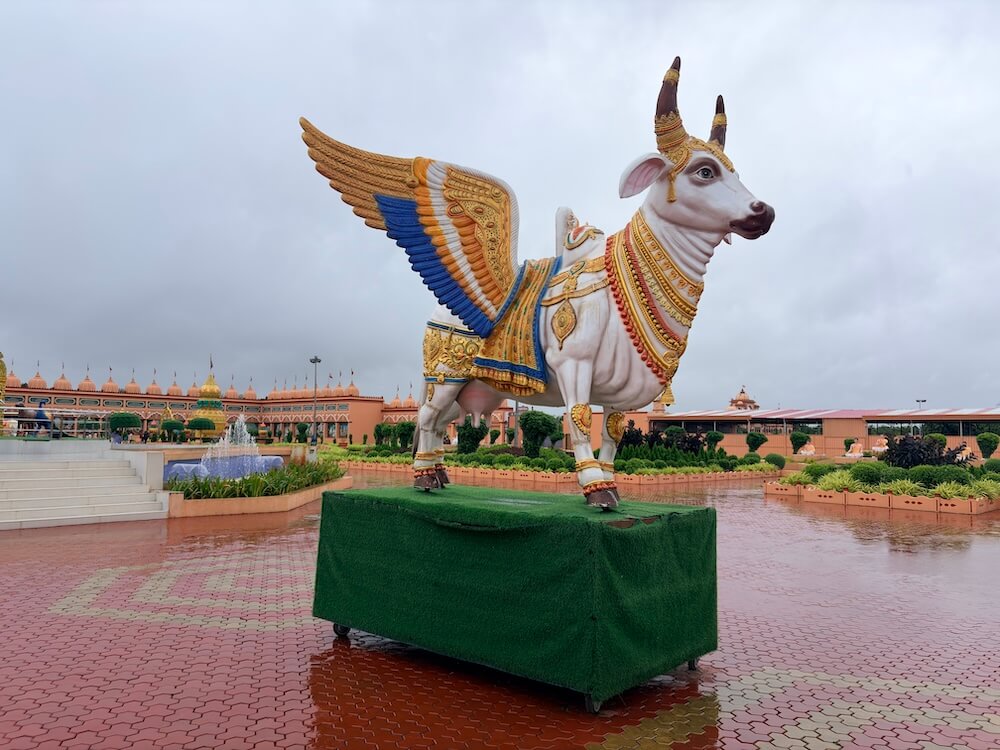
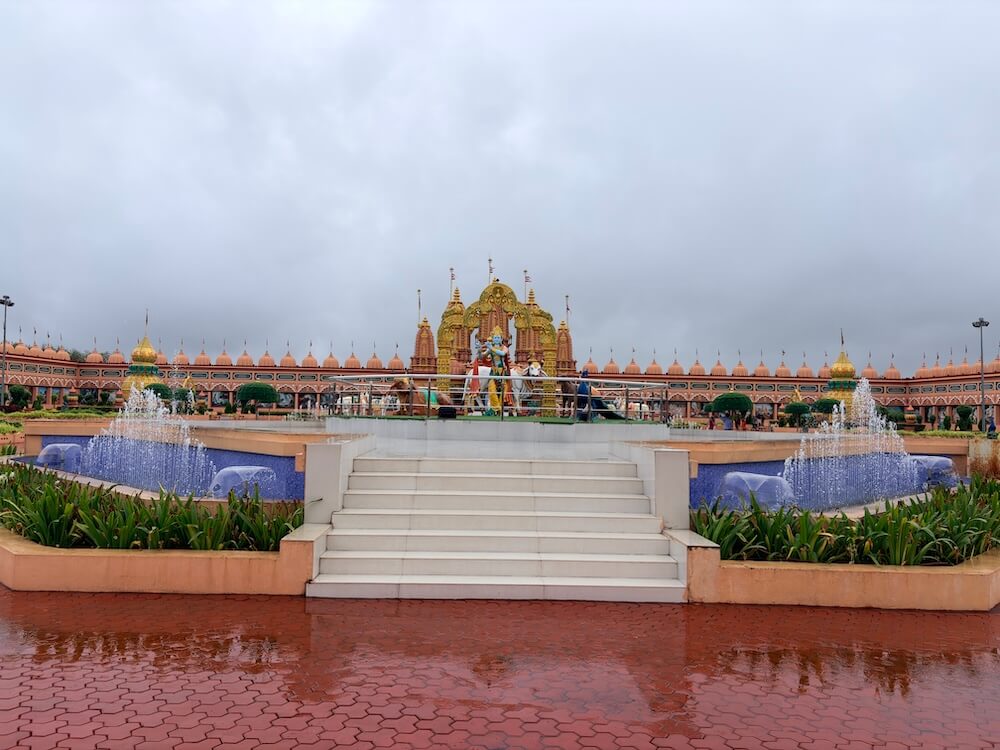
A grand, finely carved gateway marks the entrance to the temple complex, which is divided into four sections that visitors can access by paying the prescribed fee for their ticket category. At the start of the approach to the temple stands a winged sculpture of Kamadhenu, the divine cow, decked with traditional jewellery. Four elephant sculptures stand alongside the cow, with two positioned on either side. The two central elephants carry an ambari (ornamental howdah) with a sculpture of Bhagwan Swaminarayan seated on it. 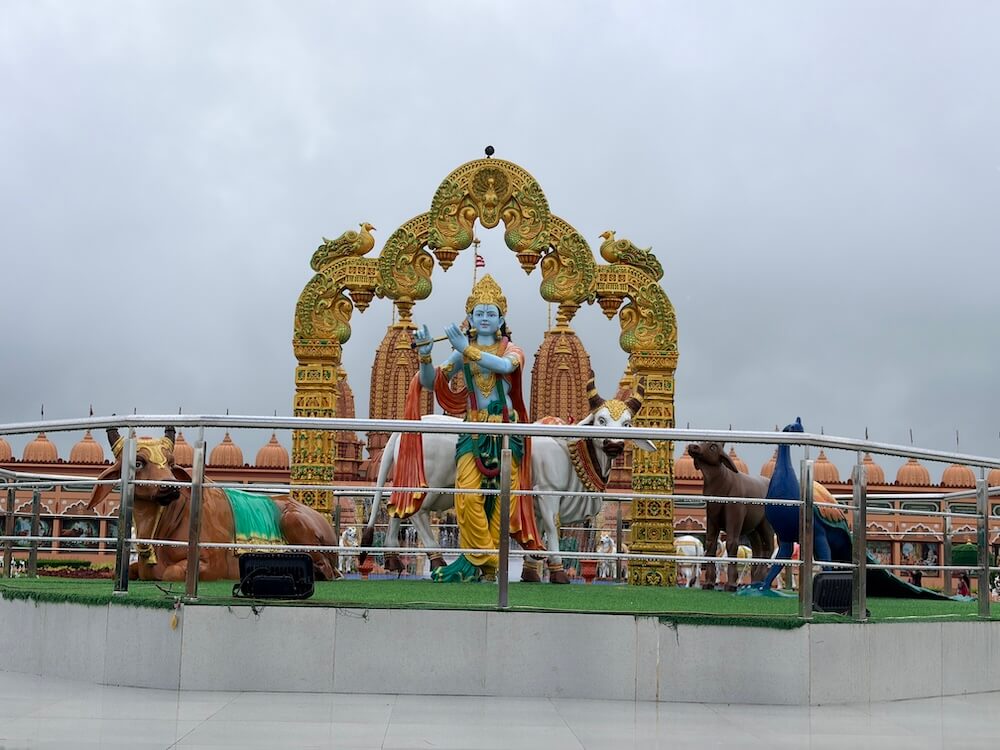 Gardens along the left and right sides of this pathway contain sculptures of yogis seated in meditative postures, while the stretches further ahead are lined with decorative trees on both sides.
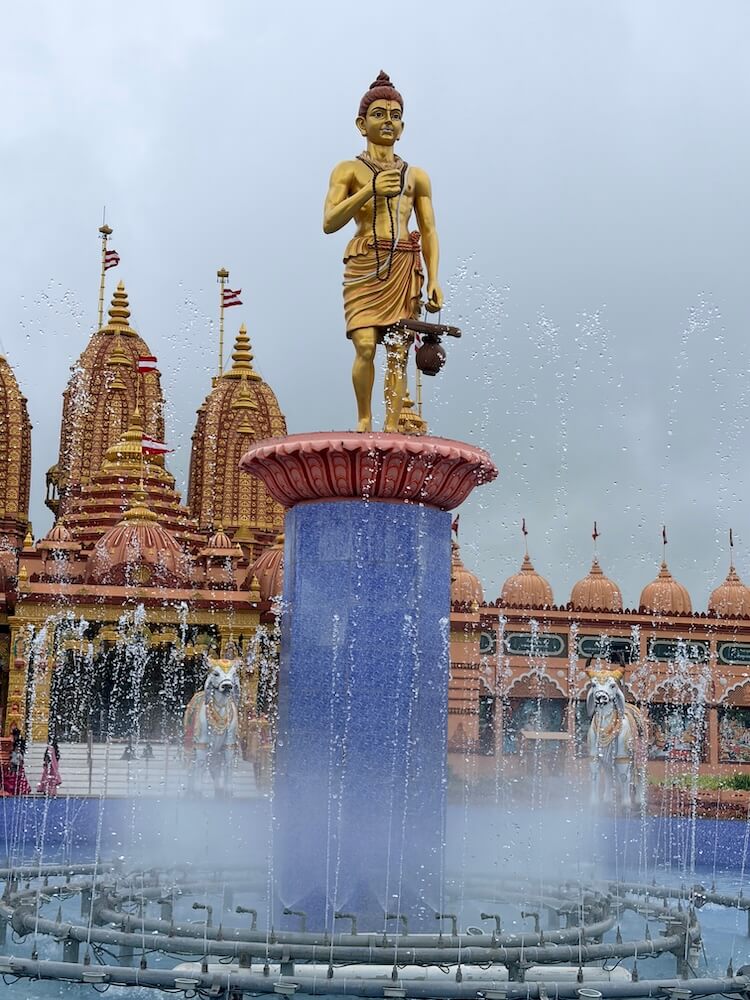
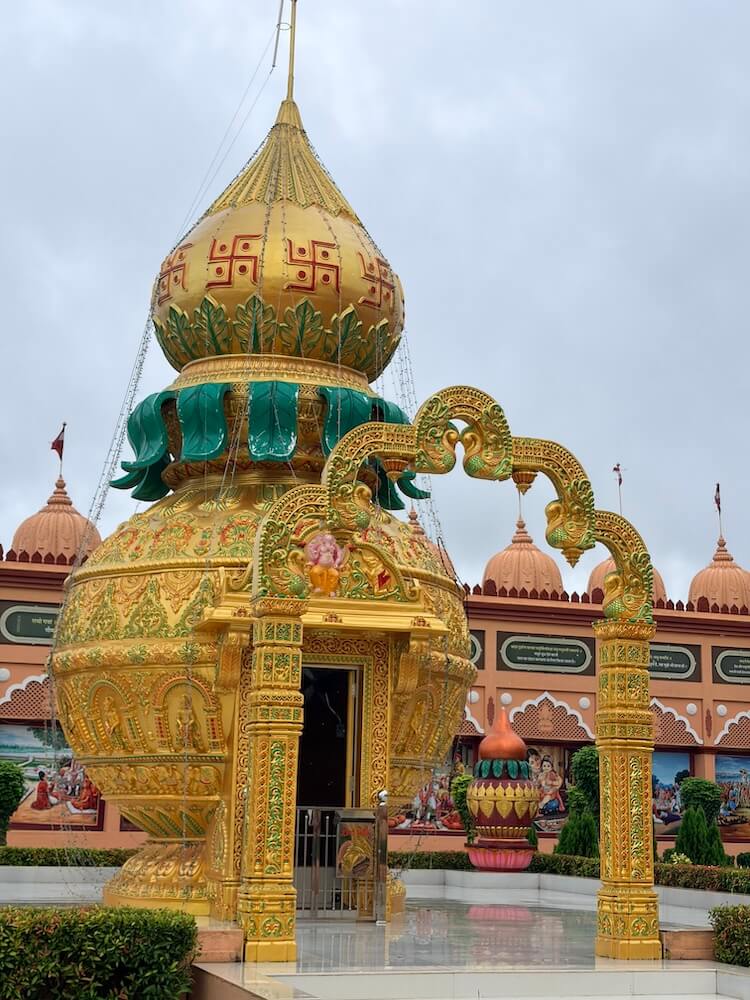
Behind Kamadhenu stands a sculpture of Shri Krishna playing the flute, surrounded by carvings of cows, peacocks and other animals. Several fountains are set around this space, with a sculpture of Bhagwan Swaminarayan in his child form at the centre. Water flows continuously from the mouths of the Kamadhenu cows arranged around the central statue. Further along the path, a landscaped garden houses a seated sculpture of Shri Krishna. Along the same pathway stands a Ganesha temple topped by a kalash-shaped shikhar, which enshrines a standing idol of Ganesha.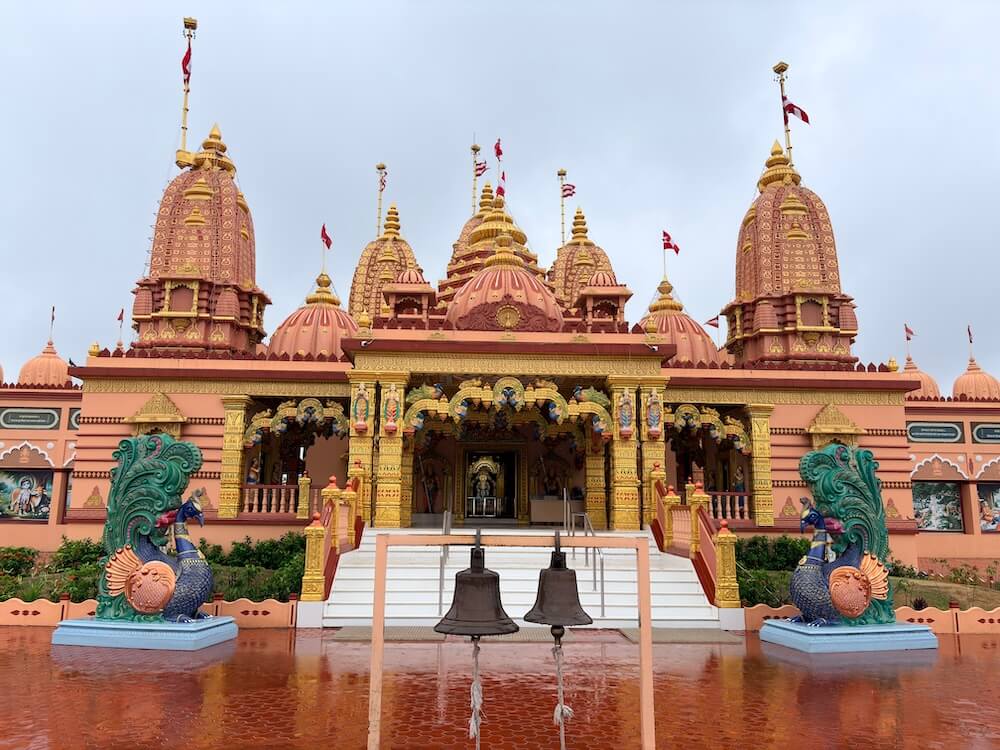 Directly opposite is a Hanuman temple of similar design, housing an idol of Hanuman holding a mace in one hand and a mountain in the other.
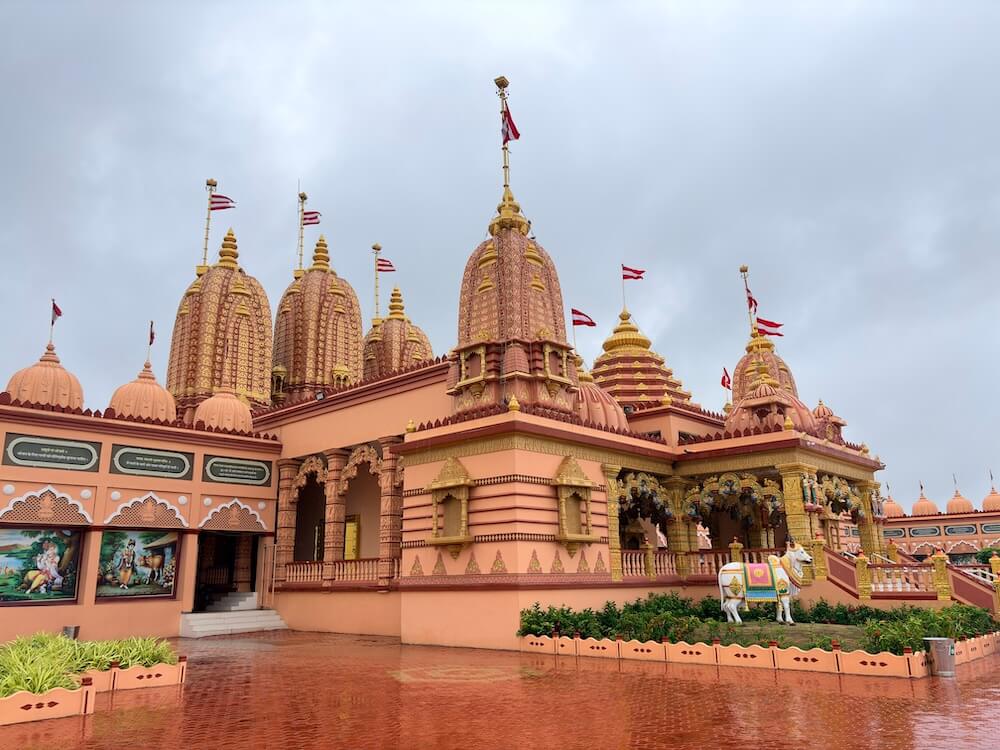
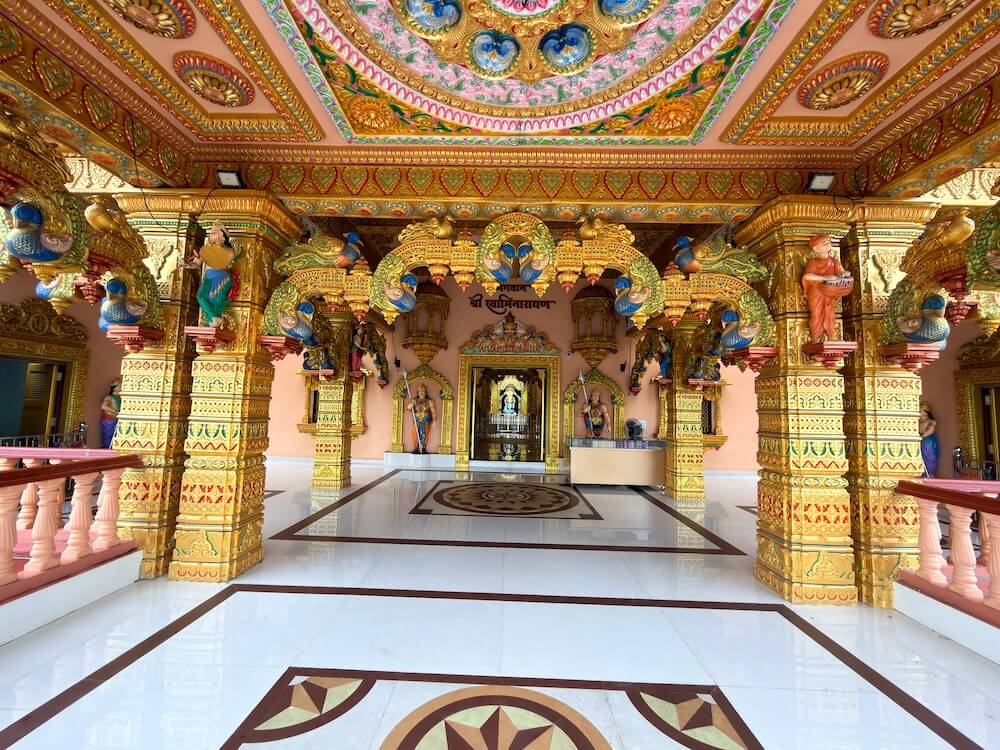
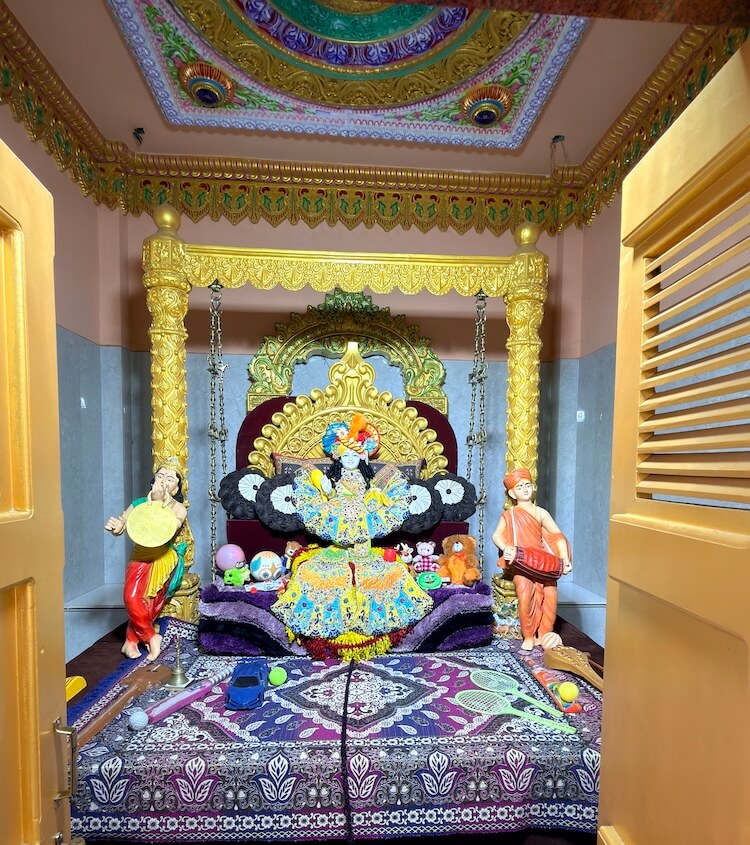
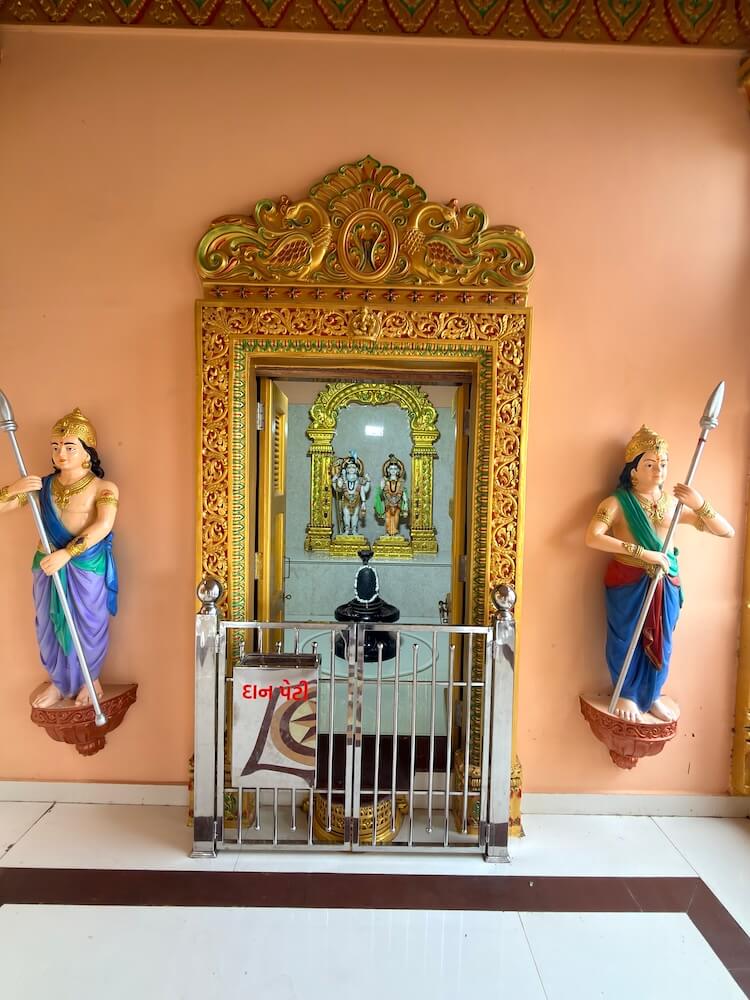
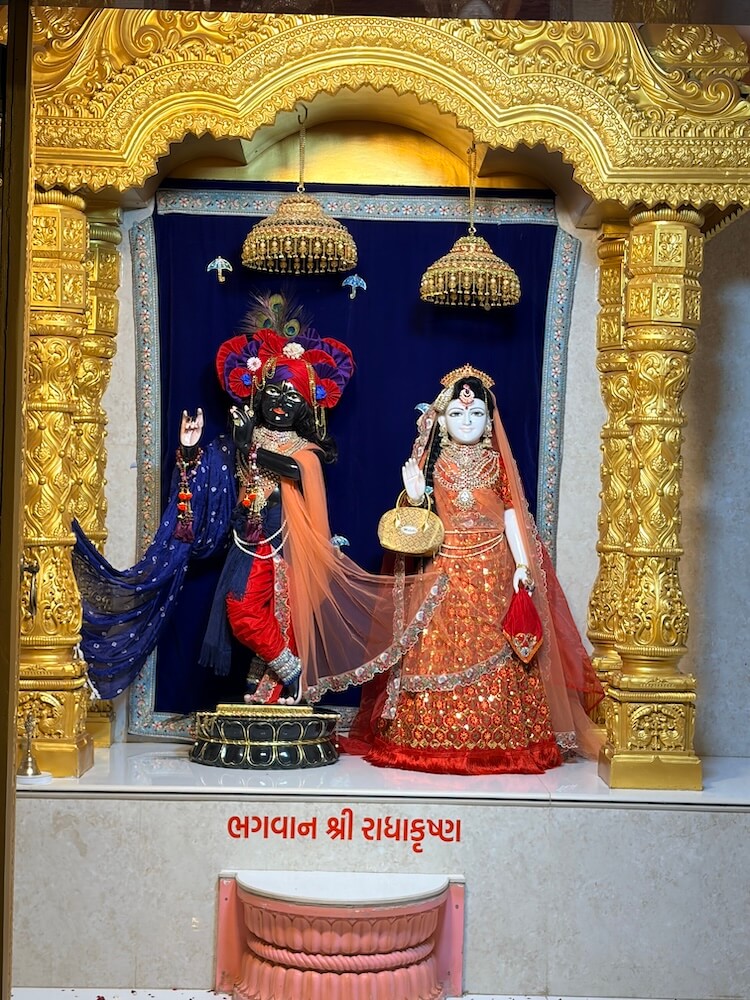
A short flight of steps leads up to the main temple, which rises on an elevated plinth. Detailed carvings mark the entrance and upper exterior, both styled with toran (carved archway) motifs. Inside, the spacious sabhamandap has marble flooring and walls finished with golden decorative work. Peacock motifs and other carvings cover every pillar and wall, while the ceiling combines carved panels with paintings depicting episodes from the life of Bhagwan Swaminarayan. Carvings of kirtimukhs (protective mask motifs) and flanking sculptures of dwarpals (door guardians) stand at the base of the garbhagriha doorway. 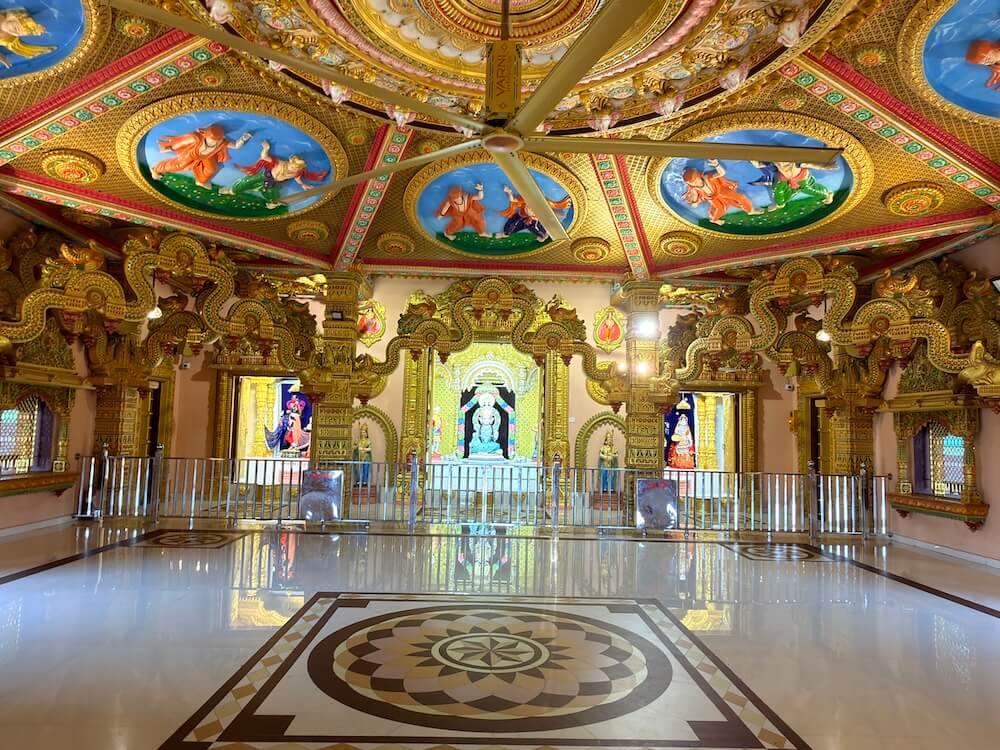 Within the garbhagriha, a graceful seated idol of Bhagwan Swaminarayan rests on a high vajrapith (raised stone pedestal), decked with a golden crown, earrings and neck ornaments alongside idols of Lakshmi Narayan and Radha Krishna.
The temple rises with three large and two small shikhars, along with two domes. Beyond the main shrine, the complex includes an Enjoy Park, a Cultural Exhibition Centre, a Nature Park and a restaurant. Enjoy Park has a variety of rides for both children and adults. In the cultural exhibition galleries, informative displays and a seven- to eight-minute short film present scenes from the life of Bhagwan Swaminarayan, while tableaux portray major episodes from the life of Shri Krishna. The Nature Park conserves birds in natural habitats and the gaushala cares for the cows under a systematic management setup.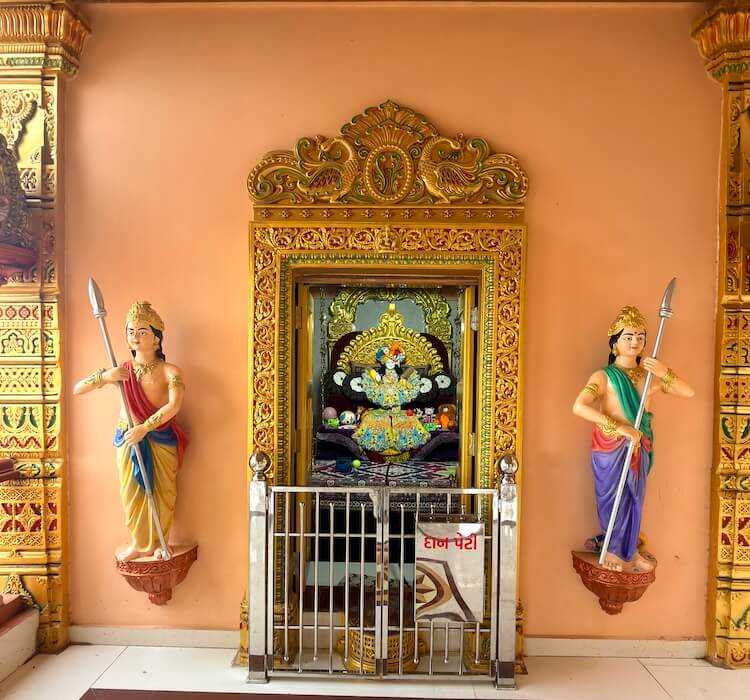
The complex remains open to devotees and tourists from 9 am to 9 pm. Daily worship and rituals at the temple follow traditional Vaishnav practice, beginning at dawn with the Mangala Aarti, followed by the Shringar Aarti and rajbhog (midday meal offering). In the evening, the Sandhya Aarti and Shayan Aarti take place in a peaceful devotional atmosphere. After darshan at the main temple, devotees also visit the gaushala to worship indigenous Indian cattle, including Gir and Kankrej cows and offer them fodder.
Gopashtami, the annakut (festive food offering) celebrations on Diwali and Padwa, Swaminarayan Jayanti, Shri Ram Navami, Shri Krishna Janmashtami and Patotsav are celebrated here with great enthusiasm. During these festivals, the temple organises religious discourses and narratives based on sacred texts. These include expositions on the ‘Vachanamrut’, the ‘Shikshapatri’ and the devotional literature of the Swaminarayan tradition. Regular satsang assemblies are also held at the temple, along with various other festivals of the sampradaya.
Useful Information :
- Located 10 km from Navsari and 73 km from Vapi
- State Transport and private vehicles are available from Navsari
- Private vehicles can reach the temple parking area
- Accommodation and breakfast facilities are available within the complex
- Contact : Temple Office, Mobile : 9099721000
स्वामीनारायण गुरुकुल सांस्कृतिक गौधाम
नवगाम पाटिया, चंद्रवासन सुपा, जिला। नवसारी
मंदिरे
Temples
मंदिर
મંદિરો
கோவில்கள்
దేవాలయాలు
ക്ഷേത്രങ്ങൾ
ದೇವಾಲಯಗಳು
মন্দিরসমূহ
ਮੰਦਿਰ
-
आशापुरी माता मंदिर विजलपूर मेन रोड, नवसारी, ता./जि. नवसारी
अधिक माहितीAshapuri Mata Temple Vijalpore Main Road, Navsari, Tal./Dist. Navsari
View Detailsआशापुरी माता मंदिर विजलपोर मेन रोड, नवसारी, ताल./जिला. नवसारी
विवरण देखेंઆશાપુરી માતા મંદિર, વિજલપોર મેઈન રોડ, નવસારી, તા./જિ. નવસારી
વિગત જુઓஆஷாபுரி மாதா கோயில், விஜல்போர் மெயின் ரோடு, நவ்சாரி, தாலுகா/மாவட்டம் நவ்சாரி
விவரங்களைக் காண்கఆశాపురి మాతా దేవాలయం, విజల్పోర్ మెయిన్ రోడ్, నవసారి, తాలూకా/జిల్లా నవసారి
వివరాలను చూడండిആശാപുരി മാതാ ക്ഷേത്രം, വിജൽപോർ മെയിൻ റോഡ്, നവ്സാരി, താലൂക്ക്/ജില്ല നവ്സാരി
വിശദാംശങ്ങൾ കാണുകಆಶಾಪುರಿ ಮಾತಾ ದೇವಸ್ಥಾನ, ವಿಜಲ್ಪುರ ಮುಖ್ಯ ರಸ್ತೆ, ನವಸಾರಿ, ತಾಲ್ಲೂಕು/ಜಿಲ್ಲೆ ನವಸಾರಿ
ವಿವರಗಳನ್ನು ವೀಕ್ಷಿಸಿআশাপুরী মাতা মন্দির, ভিজলপুর মেইন রোড, নবসারি, তালুক/জেলা নবসারি
বিস্তারিত দেখুনਆਸ਼ਾਪੁਰੀ ਮਾਤਾ ਮੰਦਰ, ਵਿਜਲਪੋਰ ਮੇਨ ਰੋਡ, ਨਵਸਾਰੀ, ਤਾਲੁਕਾ/ਜ਼ਿਲ੍ਹਾ ਨਵਸਾਰੀ
ਵੇਰਵੇ ਦੇਖੋ -
चौसठ जोगणी माता मंदिर माळवाडा, ता. चिखली, जि. नवसारी
अधिक माहितीChausath Jogani Mata Temple Malwada, Tal. Chikhli, Dist. Navsari
View Detailsचौसठ जोगणी माता मंदिर मालवाड़ा, ताल. चिखली, जिला. नवसारी
विवरण देखेंચૌસઠ જોગણી માતા મંદિર, માલવાડા, તા. ચીખલી, જિ. નવસારી
વિગત જુઓசௌசத் ஜோகனி மாதா கோயில், மல்வாடா, தாலுகா சிக்லி, மாவட்டம் நவ்சாரி
விவரங்களைக் காண்கచౌసత్ జోగణి మాతా దేవాలయం, మాలవాడ, తాలూకా: చిఖ్లీ, జిల్లా: నవసారి
వివరాలను చూడండిചൗസത്ത് ജോഗിനി മാതാ ക്ഷേത്രം, മാൽവാഡ, താലൂക്ക്: ചിക്ക്ലി, ജില്ല: നവസാരി
വിശദാംശങ്ങൾ കാണുകಚೌಸಠ್ ಜೋಗಣಿ ಮಾತಾ ದೇವಸ್ಥಾನ, ಮಾಲ್ವಾಡ, ತಾಲ್ಲೂಕು: ಚಿಖ್ಲಿ, ಜಿಲ್ಲೆ: ನವಸಾರಿ
ವಿವರಗಳನ್ನು ವೀಕ್ಷಿಸಿচৌষট্টি যোগিনী মাতা মন্দির, মালওয়াদা, তালুকা: চিখলি, জেলা: নবসারি
বিস্তারিত দেখুনਚੌਸਠ ਜੋਗਣੀ ਮਾਤਾ ਮੰਦਰ ਮਾਲਵਾੜਾ, ਤਾਲੁਕਾ ਚਿਖਲੀ, ਜ਼ਿਲ੍ਹਾ ਨਵਸਾਰੀ
ਵੇਰਵੇ ਦੇਖੋ -
गुप्तेश्वर महादेव मंदिर नंदाई-भैरवी, ता. खेरगाम, जि. नवसारी
अधिक माहितीGupteshwar Mahadev Temple Nandhai–Bhairavi, Tal. Khergam, Dist. Navsari
View Detailsगुप्तेश्वर महादेव मंदिर नन्दई-भैरवी, ताल. खेरगाम, जिला. नवसारी
विवरण देखेंગુપ્તેશ્વર મહાદેવ મંદિર, નંધાઈ–ભૈરવી, તા. ખેરગામ, જિ. નવસારી
વિગત જુઓகுப்தேஸ்வர மகாதேவ் கோவில், நந்தாய்–பைரவி, தாலுகா: கெர்காம், மாவட்டம்: நவ்சாரி
விவரங்களைக் காண்கగుప్తేశ్వర్ మహాదేవ్ ఆలయం, నందై–భైరవి, తాలూకా ఖేర్గామ్, జిల్లా నవసారి
వివరాలను చూడండిഗുപ്തേശ്വർ മഹാദേവ് ക്ഷേത്രം നന്ദായി–ഭൈരവി, താലൂക്ക് ഖേർഗം, ജില്ല നവസാരി
വിശദാംശങ്ങൾ കാണുകಗುಪ್ತೇಶ್ವರ ಮಹಾದೇವ ದೇವಸ್ಥಾನ, ನಂದೈ–ಭೈರವಿ, ತಾಲ್ಲೂಕು: ಖೇರಗಾಂವ್, ಜಿಲ್ಲೆ: ನವಸಾರಿ
ವಿವರಗಳನ್ನು ವೀಕ್ಷಿಸಿগুপ্তেশ্বর মহাদেব মন্দির, নানধাই–ভৈরবী, তালুকা: খেরগাম, জেলা: নবসারি
বিস্তারিত দেখুনਗੁਪਤੇਸ਼ਵਰ ਮਹਾਦੇਵ ਮੰਦਰ ਨੰਦਈ–ਭੈਰਵੀ, ਤਾਲੁਕਾ ਖੇਰਗਾਮ, ਜ਼ਿਲ੍ਹਾ ਨਵਸਾਰੀ
ਵੇਰਵੇ ਦੇਖੋ