
चौसठ जोगणी माता मंदिर
माळवाडा, ता. चिखली, जि. नवसारी
Chausath Jogani Mata Temple
Malwada, Tal. Chikhli, Dist. Navsari
 The Yogini tradition, whose principal objective is the worship of the Divine Feminine, is one of the medieval religious traditions of India. Scholars generally believe that it emerged around the seventh century AD. It belongs fundamentally to the Shakta tradition, while Tantric spiritual practice forms its essential foundation. The Yoginis are regarded as manifestations of the Primordial Goddess (Adi Shakti). Their number is traditionally said to be sixty-four. Temples dedicated to these sixty-four Yoginis, or Joganis, are found in several parts of India. One such distinctive temple stands at Malwada in Navsari District.
The Yogini tradition flourished throughout the Indian subcontinent until about the fifteenth century and also extended into parts of Southeast Asia. Within this tradition, 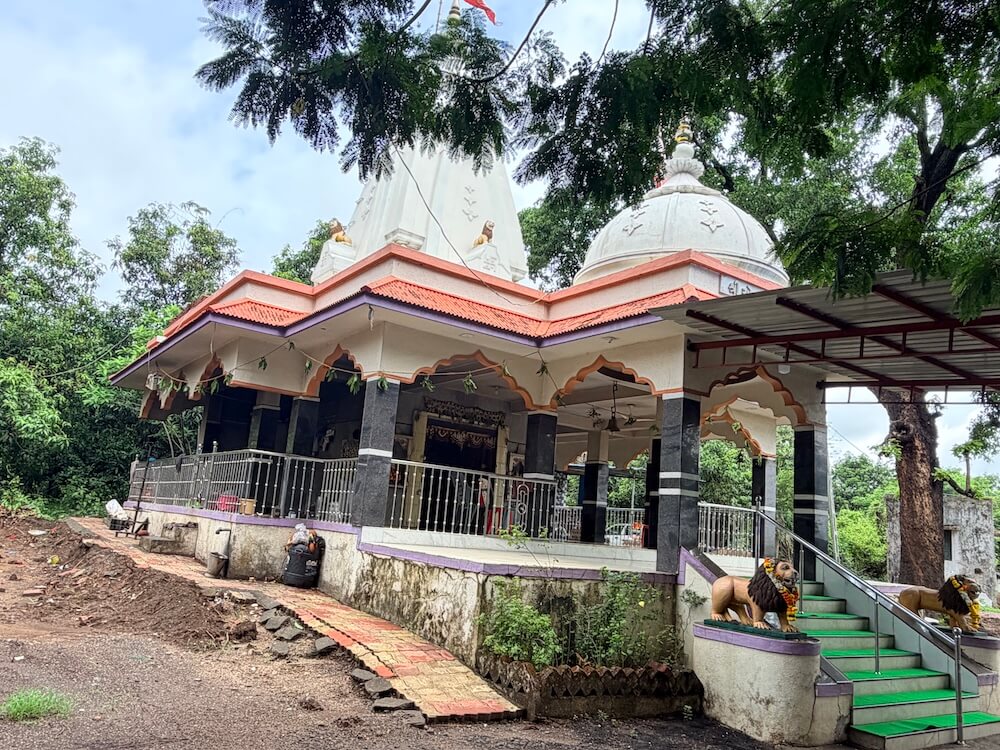 the term ‘Yogini’ is used in two senses. It refers both to the partial manifestations of Goddess Parvati or Adi Shakti and to female practitioners of the tradition who attained mastery over yogic disciplines. The earliest known reference to the concept of Yoginis appears in Chapter 52 of the ninth-century ‘Agni Purana’. The tradition and its spiritual practices are also mentioned in texts dating from the ninth to the thirteenth centuries, including the ‘Chaturvarga Chintamani’, ‘Pratishtha Lakshanasara’ and ‘Mayadipika’. The Yoginis also appear prominently in the narratives of the Shiva Purana. Their worship is further explained in Tantric works such as the ‘Yogini Tantra’, ‘Maya Tantra’ and ‘Kamakhya Tantra’.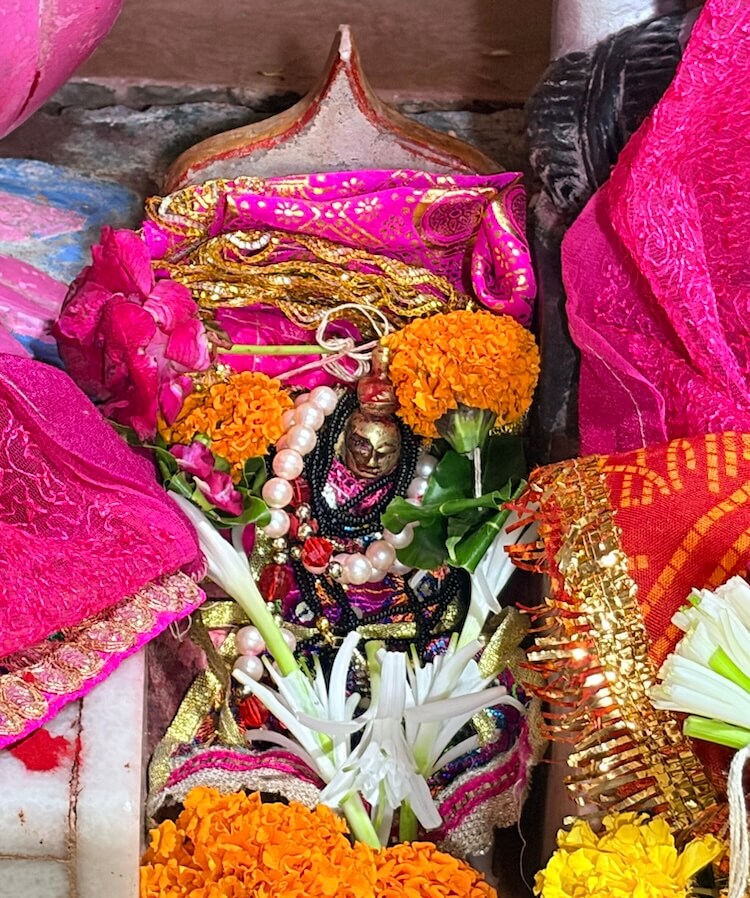
Chapter 45 of the ‘Kashi Khanda’ of the ‘Skanda Purana’ narrates the origin of the Yoginis. It states that in ancient times King Divodasa ruled over Varanasi. His kingdom prospered greatly and the people gradually forgot Lord Vishweshwara, the presiding deity of Kashi. Goddess Parvati was displeased by their ingratitude. She resolved to restore the glory of Lord Vishweshwara. To achieve this, she first had to diminish the influence of King Divodasa. By the power of her yogic energy, she created a host of Yoginis and sent them to Varanasi to influence the minds of its people. After the Yoginis settled there, King Divodasa’s prominence declined and the people’s devotion once again turned towards Lord Vishweshwara.
According to the ‘Markandeya Purana’, the eight Matrikas (Ashta Matrikas) emerged from the anger and divine wrath of the Supreme Goddess, Adi Shakti. Each of these eight Matrikas is attended by eight female companions, making a total of sixty-four Yoginis. Some traditions mention eighty-one Yoginis, while others speak of forty-two.
The tenth-century ‘Kalika Purana’ prescribes the worship of the sixty-four Yoginis for the attainment of prosperity and worldly fulfilment. Their names are – 1. Bahurupa, 2. Tara, 3. Narmada, 4. Yamuna, 5. Shanti, 6. Varuni, 7. Kshemankari, 8. 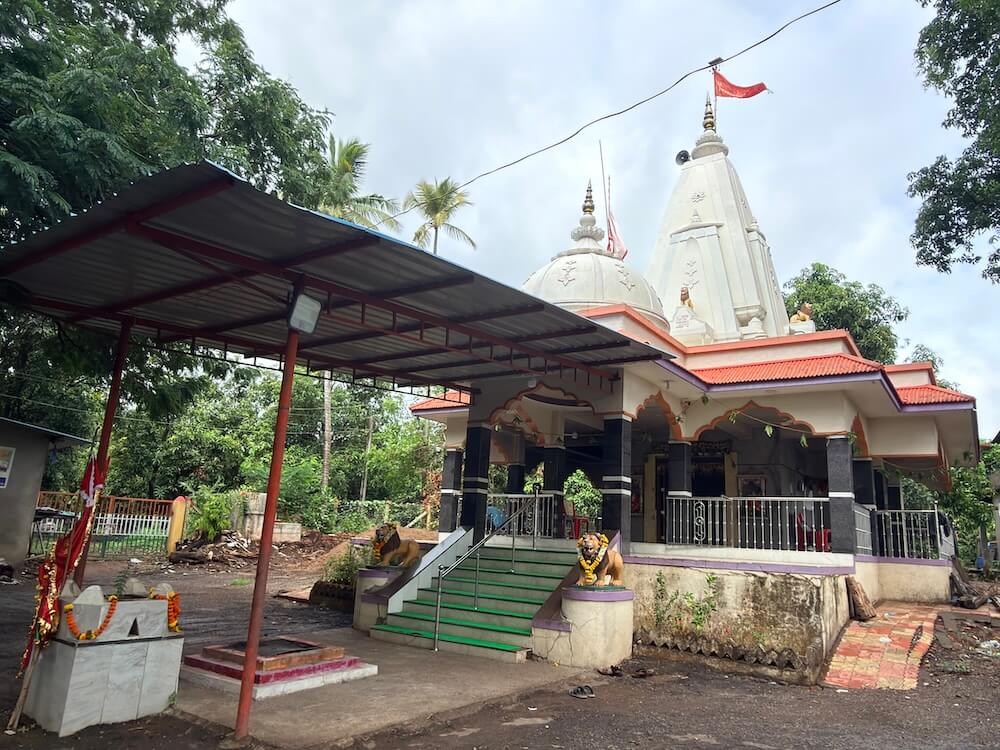 Aindri, 9. Varahi, 10. Ranvira, 11. Vanaramukhi, 12. Vaishnavi, 13. Kalaratri, 14. Vaidyarupa, 15. Charchika, 16. Betali, 17. Chhinnamastika, 18. Vrishavahana, 19. Jwalakamini, 20. Ghatavara, 21. Karakali, 22. Saraswati, 23. Virupa, 24. Kauberi, 25. Bhalluka, 26. Narasimhi, 27. Biraja, 28. Vikatana, 29. Mahalakshmi, 30. Kaumari, 31. Mahamaya, 32. Rati, 33. Karakari, 34. Sarpashya, 35. Yakshini, 36. Vinayaki, 37. Vindhyavasini, 38. Virakumari, 39. Maheshwari, 40. Ambika, 41. Kamini, 42. Ghatambari, 43. Stuti, 44. Kali, 45. Uma, 46. Narayani, 47. Samudra, 48. Brahmani, 49. Jwalamukhi, 50. Agneyi, 51. Aditi, 52. Chandrakanti, 53. Vayuvega, 54. Chamunda, 55. Murti, 56. Ganga, 57. Dhumavati, 58. Gandhari, 59. Sarvamangala, 60. Ajita, 61. Suryaputri, 62. Vayuveena, 63. Aghora and 64. Bhadrakali. (The names of the Yoginis vary across different scriptures and regional traditions.)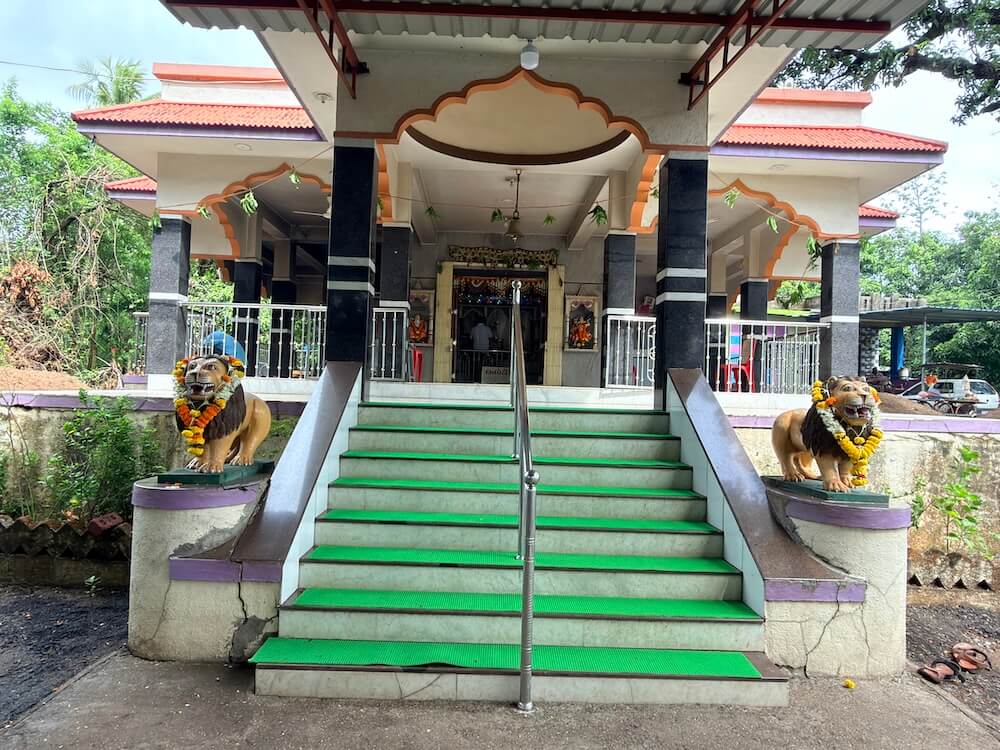
Among the best-known Yogini temples in India are the two shrines at Hirapur and Ranipur in Odisha and the two at Khajuraho and Bhedaghat in Madhya Pradesh. Gujarat also possesses several Yogini temples, of which the Chausath Jogani Mata Temple at Malwada is one of the prominent examples.
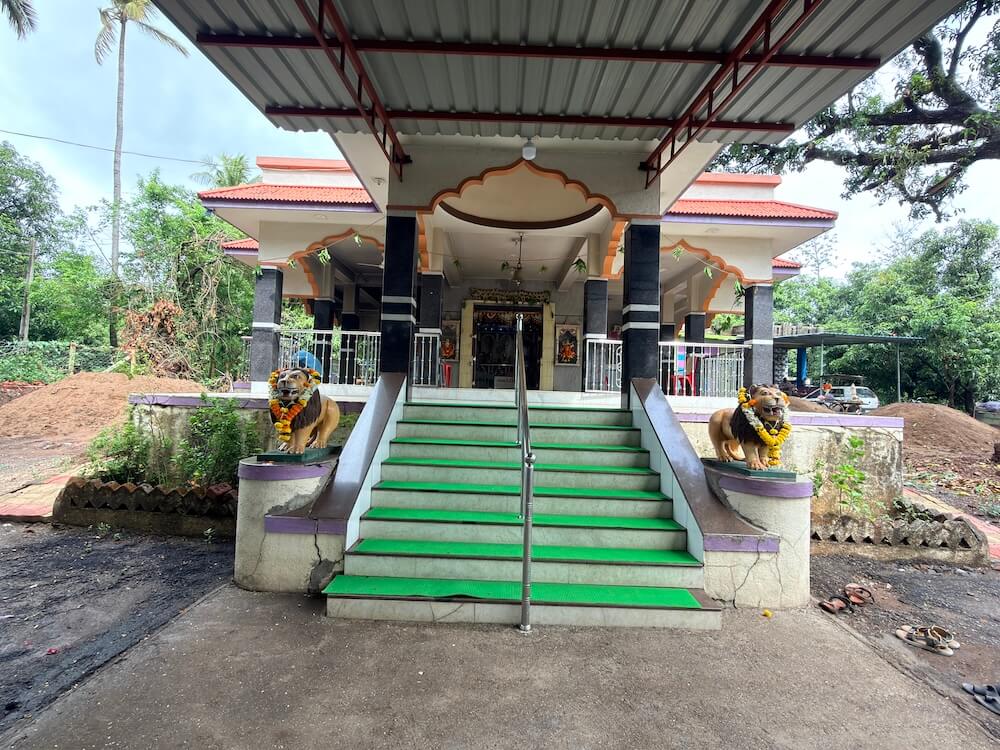
The temple consists of a pavilion, an entrance hall, an assembly hall and a sanctum. A covered pavilion with a metal roof stands in front of the temple. It houses a Tulsi Vrindavan and a Homa Kund. Eight steps lead from the pavilion to the entrance hall, which stands upon a raised plinth. Lion sculptures flank both sides of the staircase. The entrance hall and assembly hall are semi-open in design. 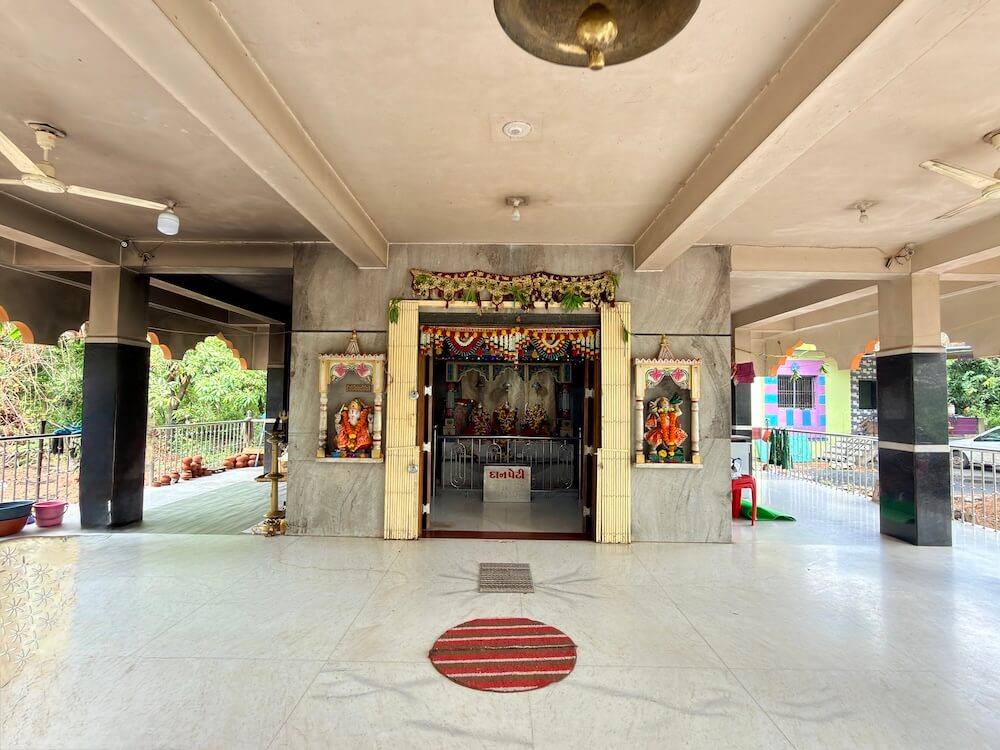 The assembly hall is paved with marble flooring. Beyond it, leaving space for the circumambulatory passage, lies the sanctum.
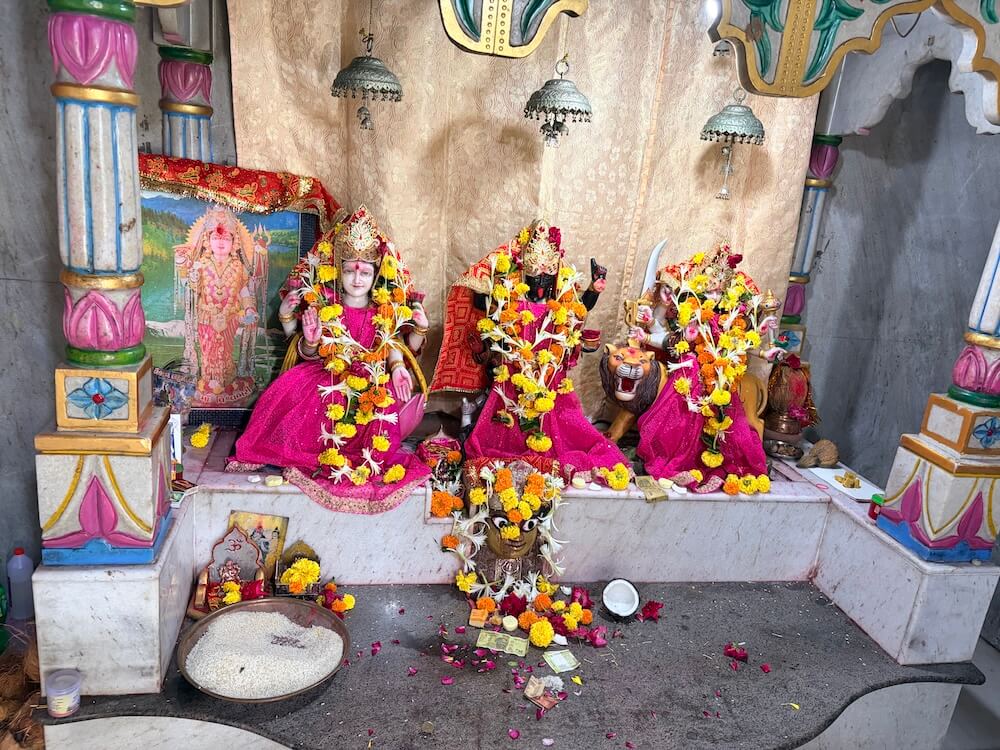
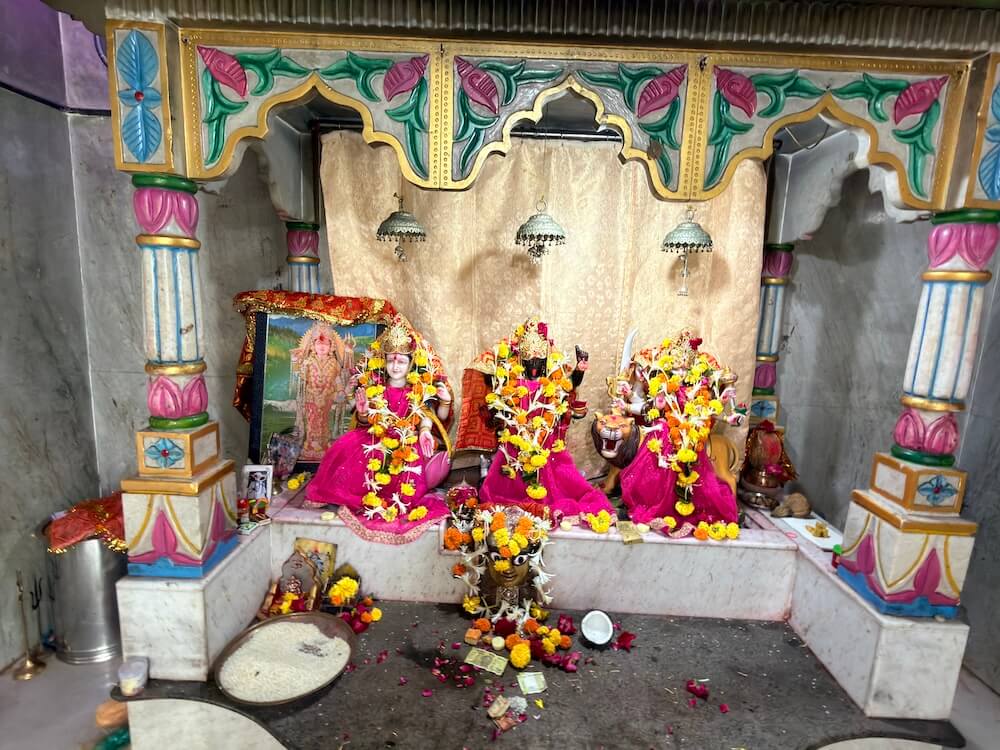
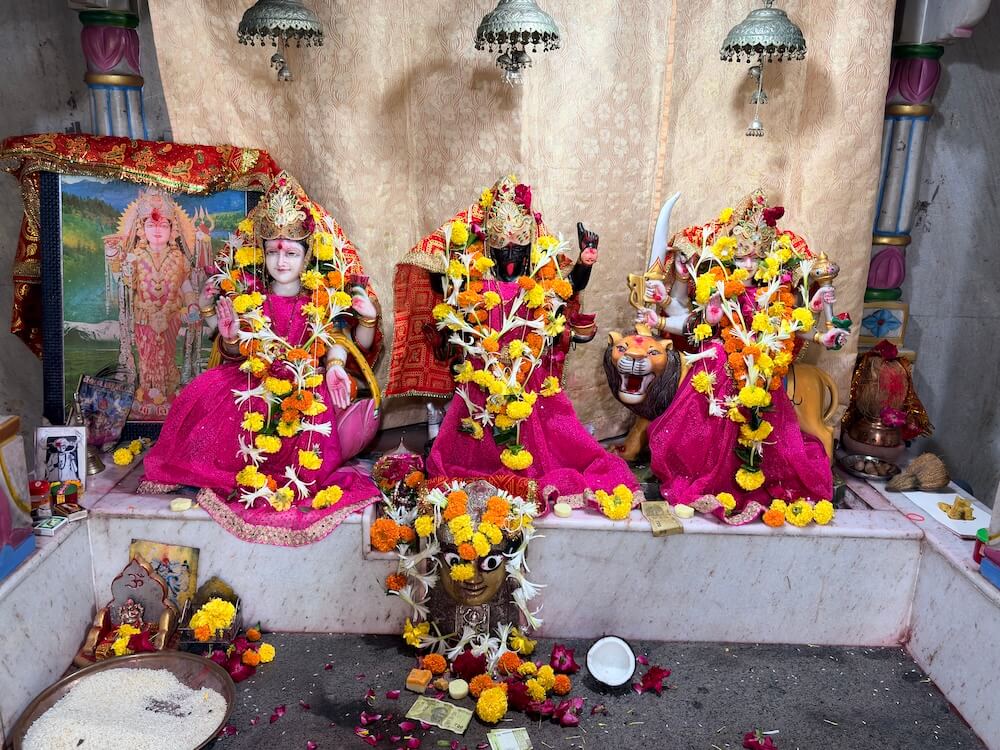
The niches on the front wall of the sanctum contain idols of Lord Ganesha and Lord Hanuman. Within the sanctum, three goddesses are enshrined inside an ornate shrine upon a raised pedestal. To the left is Goddess Mahalakshmi seated upon a lotus. At the centre stands the black-coloured idol of Goddess Mahakali. To the right is the eight-armed Goddess Durga seated upon a lion. Between the idols of Mahalakshmi and Mahakali is a small metal image representing the sixty-four Yoginis.
A local legend explains the origin of both the temple and this sacred image. 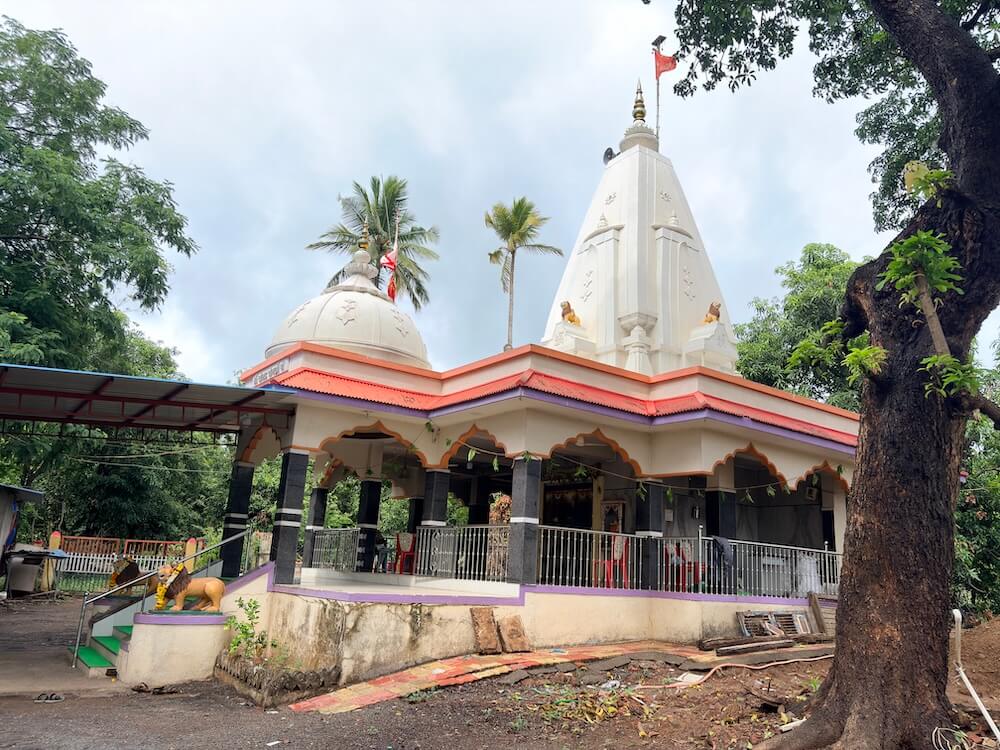 About a century ago, the Goddess appeared in a devotee’s dream and said, ‘I am in the river flowing near the village. Retrieve me from there and establish me in a worthy place.’ The following morning, the devotee searched the river and discovered the idol. It was installed beside the river, at the very site where the present temple now stands and a small shrine was built over it. Over time, the temple underwent renovation and gradually acquired its present form.
The entrance hall is crowned by a domed superstructure, while the sanctum is surmounted by a square Urushringa-style tower tapering gracefully upwards. The tower is ornamented with numerous miniature spires.
 Devotees may have darshan of the Yogini Matas from 7.00 a.m. to 7.00 p.m. every day. The temple celebrates numerous religious and cultural festivals throughout the year. Special worship is conducted during all four annual Navratra festivals : Sharadiya Navratra in the month of Ashwin, Vasantika Navratra in Chaitra and the two Gupta Navratras observed in the months of Magha and Ashadha. During these festivals, the Goddess is adorned with elaborate decorations, while rituals such as Navachandi, Shatachandi and sacred fire offerings are performed.
Another important annual festival is Yogini Ekadashi, observed during the Krishna Paksha of the month of Ashadha. On this occasion, a special Mahapuja and Maha Abhisheka are performed. Owing to the traditional association between the Yoginis and Bhairava, Mahashivaratra is also celebrated here with special devotion. Deepa Pradipana (ceremonial lighting of lamps) and Maha Aarti are performed on Bhadrapada Amavasya, Magha Amavasya and Tripuri Purnima. Tuesdays and Fridays, traditionally regarded as especially sacred to the Goddess, are marked by special worship and rituals.
Useful Information :
- Located at 3 km from Chikhli town and 33 km from Navsari.
- State Transport (ST) buses and private transport are available from Chikhli.
- Private vehicles can reach the temple directly.
- Accommodation and breakfast facilities are available nearby.
- Contact: Temple Office. Mobile: +91 99092 08003, +91 81414 48838.
चौसठ जोगणी माता मंदिर
मालवाड़ा, ताल. चिखली, जिला. नवसारी
मंदिरे
Temples
मंदिर
મંદિરો
கோவில்கள்
దేవాలయాలు
ക്ഷേത്രങ്ങൾ
ದೇವಾಲಯಗಳು
মন্দিরসমূহ
ਮੰਦਿਰ
-
आशापुरी माता मंदिर विजलपूर मेन रोड, नवसारी, ता./जि. नवसारी
अधिक माहितीAshapuri Mata Temple Vijalpore Main Road, Navsari, Tal./Dist. Navsari
View Detailsआशापुरी माता मंदिर विजलपोर मेन रोड, नवसारी, ताल./जिला. नवसारी
विवरण देखेंAshapuri Mata Temple Vijalpore Main Road, Navsari, Tal./Dist. Navsari
વિગત જુઓAshapuri Mata Temple Vijalpore Main Road, Navsari, Tal./Dist. Navsari
விவரங்களைக் காண்கAshapuri Mata Temple Vijalpore Main Road, Navsari, Tal./Dist. Navsari
వివరాలను చూడండిAshapuri Mata Temple Vijalpore Main Road, Navsari, Tal./Dist. Navsari
വിശദാംശങ്ങൾ കാണുകAshapuri Mata Temple Vijalpore Main Road, Navsari, Tal./Dist. Navsari
ವಿವರಗಳನ್ನು ವೀಕ್ಷಿಸಿAshapuri Mata Temple Vijalpore Main Road, Navsari, Tal./Dist. Navsari
বিস্তারিত দেখুনAshapuri Mata Temple Vijalpore Main Road, Navsari, Tal./Dist. Navsari
ਵੇਰਵੇ ਦੇਖੋ -
गुप्तेश्वर महादेव मंदिर नंदाई-भैरवी, ता. खेरगाम, जि. नवसारी
अधिक माहितीGupteshwar Mahadev Temple Nandhai–Bhairavi, Tal. Khergam, Dist. Navsari
View Detailsगुप्तेश्वर महादेव मंदिर नन्दई-भैरवी, ताल. खेरगाम, जिला. नवसारी
विवरण देखेंGupteshwar Mahadev Temple Nandhai–Bhairavi, Tal. Khergam, Dist. Navsari
વિગત જુઓGupteshwar Mahadev Temple Nandhai–Bhairavi, Tal. Khergam, Dist. Navsari
விவரங்களைக் காண்கGupteshwar Mahadev Temple Nandhai–Bhairavi, Tal. Khergam, Dist. Navsari
వివరాలను చూడండిGupteshwar Mahadev Temple Nandhai–Bhairavi, Tal. Khergam, Dist. Navsari
വിശദാംശങ്ങൾ കാണുകGupteshwar Mahadev Temple Nandhai–Bhairavi, Tal. Khergam, Dist. Navsari
ವಿವರಗಳನ್ನು ವೀಕ್ಷಿಸಿGupteshwar Mahadev Temple Nandhai–Bhairavi, Tal. Khergam, Dist. Navsari
বিস্তারিত দেখুনGupteshwar Mahadev Temple Nandhai–Bhairavi, Tal. Khergam, Dist. Navsari
ਵੇਰਵੇ ਦੇਖੋ -
गंगेश्वर महादेव मंदिर कचोली, ता. गाणदेवी, जि. नवसारी
अधिक माहितीGangeshwar Mahadev Temple Kachholi, Tal. Gandevi, Dist. Navsari
View Detailsगंगेश्वर महादेव मंदिर कछोली, ताल. गणदेवी, जिला. नवसारी
विवरण देखेंGangeshwar Mahadev Temple Kachholi, Tal. Gandevi, Dist. Navsari
વિગત જુઓGangeshwar Mahadev Temple Kachholi, Tal. Gandevi, Dist. Navsari
விவரங்களைக் காண்கGangeshwar Mahadev Temple Kachholi, Tal. Gandevi, Dist. Navsari
వివరాలను చూడండిGangeshwar Mahadev Temple Kachholi, Tal. Gandevi, Dist. Navsari
വിശദാംശങ്ങൾ കാണുകGangeshwar Mahadev Temple Kachholi, Tal. Gandevi, Dist. Navsari
ವಿವರಗಳನ್ನು ವೀಕ್ಷಿಸಿGangeshwar Mahadev Temple Kachholi, Tal. Gandevi, Dist. Navsari
বিস্তারিত দেখুনGangeshwar Mahadev Temple Kachholi, Tal. Gandevi, Dist. Navsari
ਵੇਰਵੇ ਦੇਖੋ