
गंगेश्वर महादेव मंदिर
कचोली, ता. गाणदेवी, जि. नवसारी
Gangeshwar Mahadev Temple
Kachholi, Tal. Gandevi, Dist. Navsari
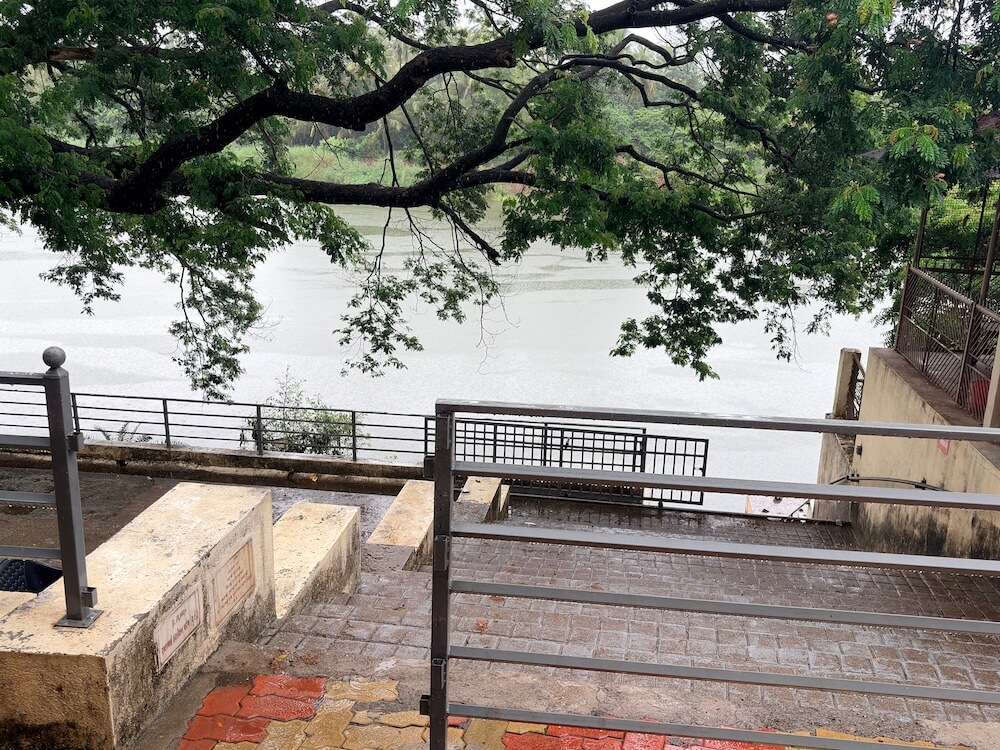
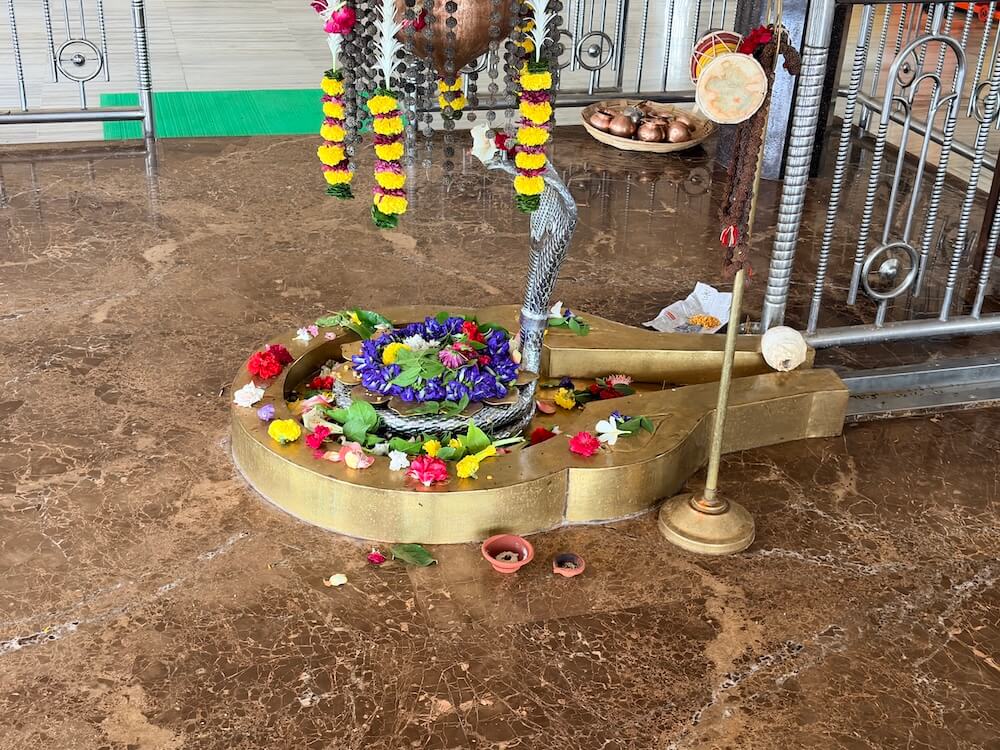 The village of Kachholi, revered as a sacred place of liberation in South Gujarat, is home to the Gangeshwar Mahadev Temple. The shrine stands on the banks of the Ambika River. According to local belief, the sacred rivers Ganga and Ambika meet at this holy place. For this reason, devotees perform Pitru Tarpan and other ancestral rites here. The temple’s most distinctive feature is its Shivalinga, which is believed to resemble a Rudraksha bead. Devotees believe that the darshan of Gangeshwar Mahadev bestows the same spiritual merit as visiting the four sacred Dhams of India. A grand fair is held here every year on Maha Shivaratri.
Lord Shiva is also worshipped by the names ‘Gangeshwar’ and ‘Gangadhar’.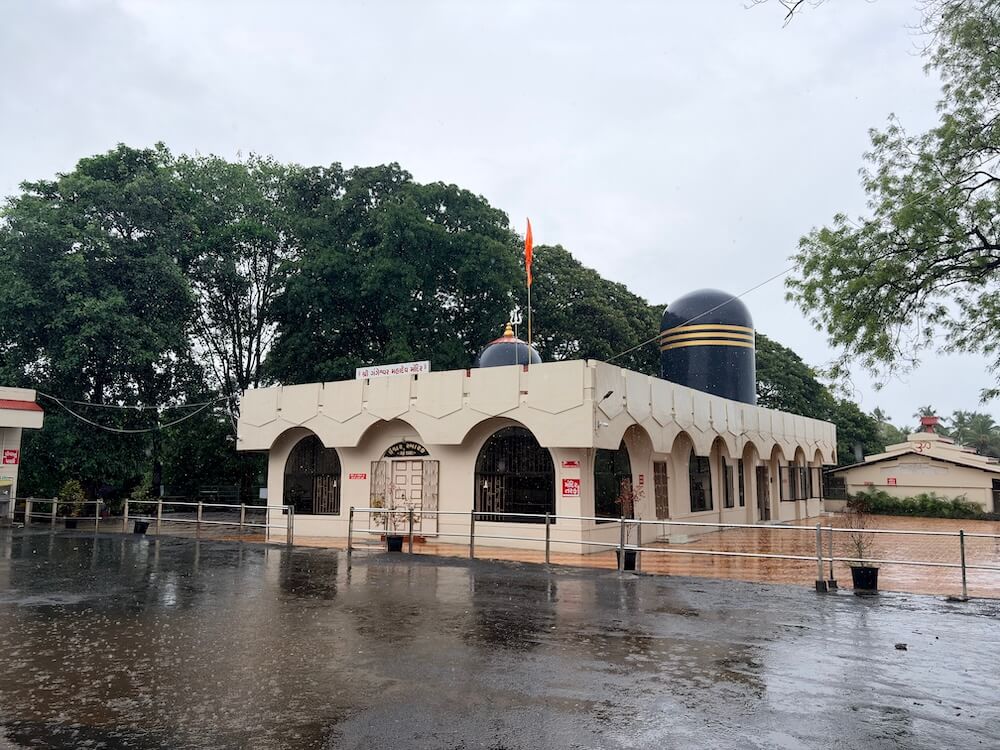 Both names are associated with the legend of the descent of the River Ganga. According to this ancient story, King Sagara of the Ikshvaku dynasty of Ayodhya commenced an Ashwamedha Yajna. Fearing that the successful completion of the sacrifice would threaten his supremacy, Lord Indra stole the sacrificial horse and tied it behind the hermitage of Sage Kapila. While searching for the horse, Sagara’s sons reached the hermitage. Seeing the horse there, they wrongly accused Sage Kapila of stealing it and prepared to attack him. At that moment, Sage Kapila was deep in meditation. Disturbed by the commotion created by the princes, he opened his eyes in anger. A single glance from the sage reduced all of Sagara’s sons to ashes.
When King Sagara learnt of this tragedy, he was overcome with grief. 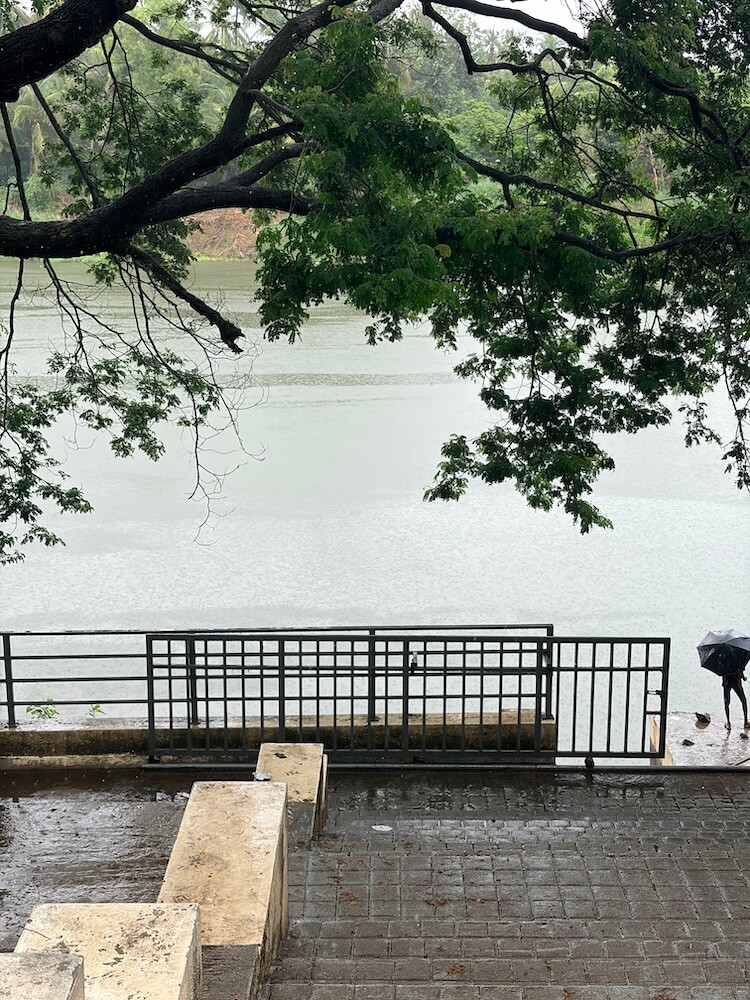 He sent his grandson Anshuman to seek the sage’s forgiveness. Moved by Anshuman’s humility, Sage Kapila offered him two boons. Anshuman first requested the return of the sacrificial horse and then prayed for the restoration of the lives of Sagara’s sons. The sage returned the horse but explained that the time for the liberation of the princes had not yet come. He foretold that they would be redeemed only when the sacred waters of the River Ganga, then held in Lord Brahma’s Kamandalu, touched their ashes.
Generations later, Anshuman’s grandson Bhagiratha performed severe penance and pleased Lord Brahma, who agreed to send the Ganga to earth. However, the river descended with such tremendous force that it would have destroyed all life on earth. Lord Shiva therefore received the mighty current upon his head and confined it within his matted locks. At Bhagiratha’s request, Shiva released a single lock of his hair, allowing the Ganga to flow gently to the earth. Since Shiva bore the Ganga upon his head, he came to be known as ‘Gangadhar’ and ‘Gangeshwar’.
A local legend explains how the Ganga is believed to have manifested at Kachholi. It is said that a devout Brahmin from the village travelled to Haridwar every year to bring back sacred Ganga water for offering to Lord Shiva. In old age, he became too frail to undertake the journey. 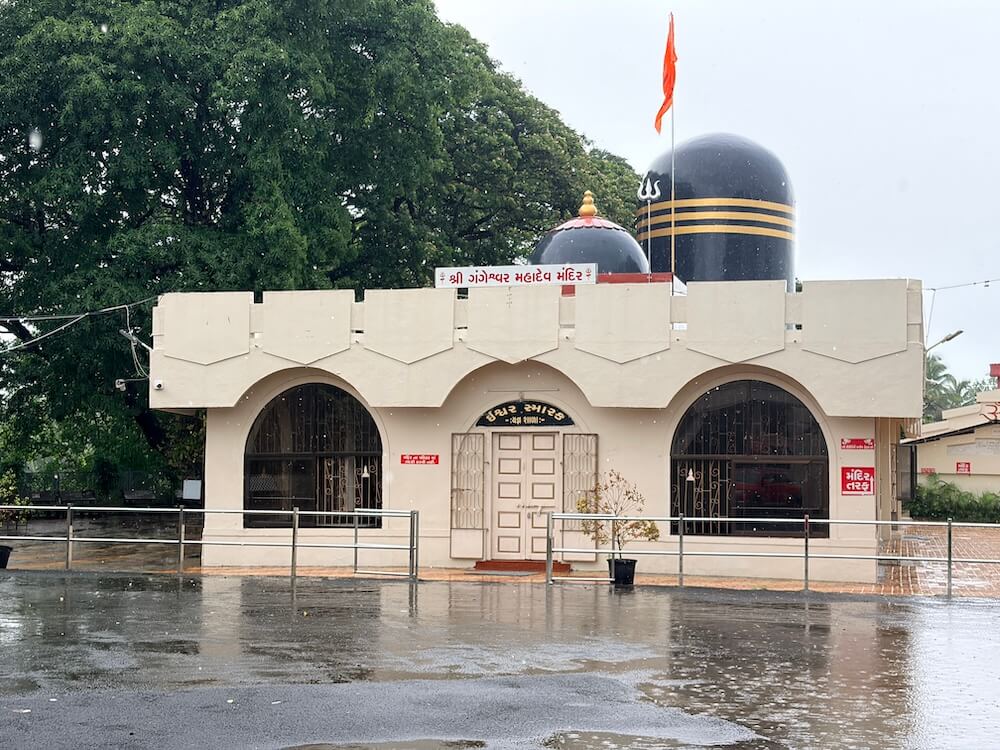 He therefore prayed to Mother Ganga and sought her forgiveness. The Goddess appeared to him in a dream and said, ‘There is no need for you to travel so far. I shall manifest myself on the western bank of the Ambika River in your own village. Leave your wooden sandals at Haridwar. When I appear, there will be a great explosion. Your sandals will emerge first and I shall follow behind them.’ Three years later, according to local belief, Mother Ganga manifested at this very spot. Devotees believe that she continues to flow here in the form of a perennial spring.
The Gangeshwar Mahadev Temple is believed to be about nine hundred years old. Originally, the shrine stood directly within the bed of the Ambika River. During winter and summer, devotees would enter the riverbed to worship the self-manifested Shivalinga.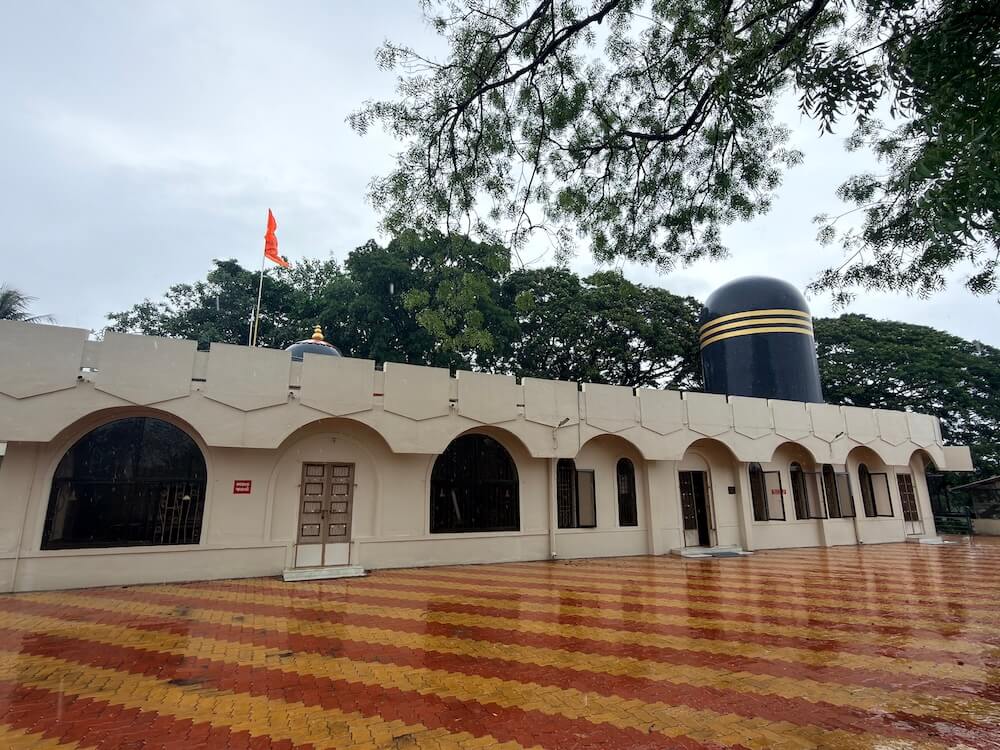 During the monsoon, however, the Linga remained completely submerged beneath the river. In later years, a grand temple was built on the riverbank so that worship could continue throughout the year.
According to local tradition, the history of the temple is associated with the Chaulukya (Solanki) queen Mayanalladevi, better known as Minaldevi. She was the wife of King Karna (reigned 1064–1092) and the mother of Siddharaj Jaysinh. Renowned for her deep religious devotion, she and her son supported the restoration of several temples. It is believed that Minaldevi also contributed to the renovation of the Gangeshwar Mahadev Temple at Kachholi. In recent years, the temple and its surroundings have undergone extensive restoration and redevelopment.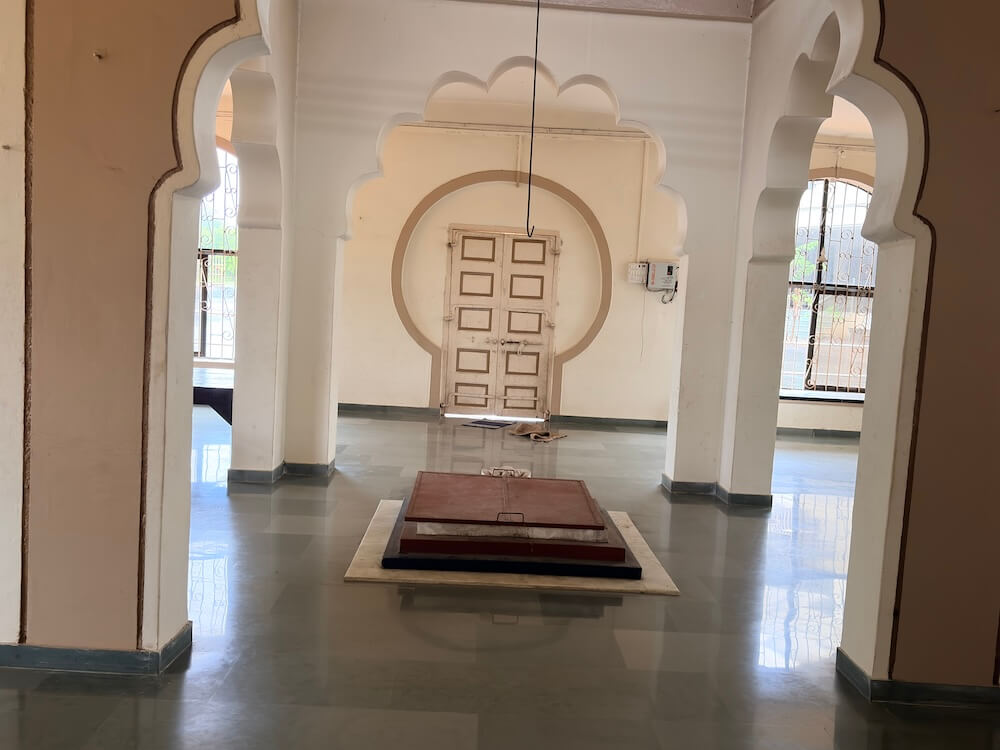
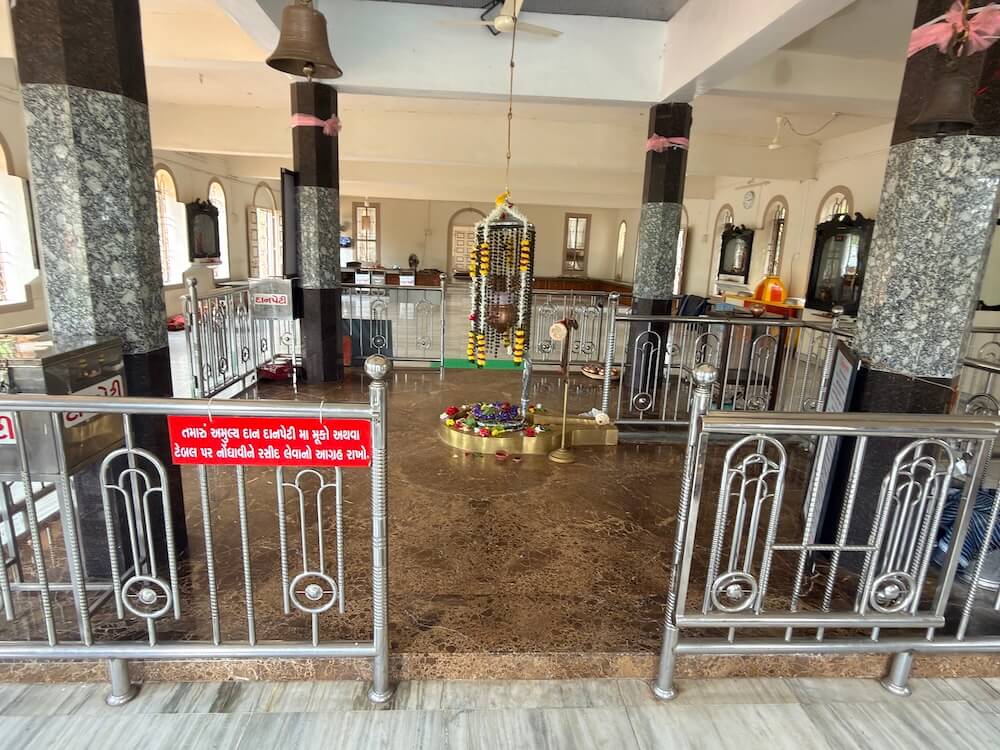
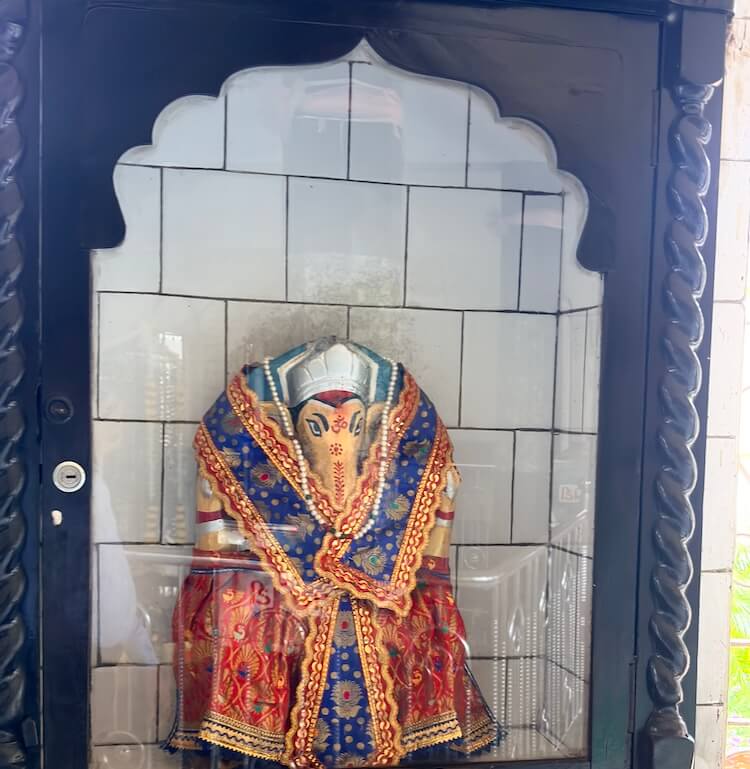
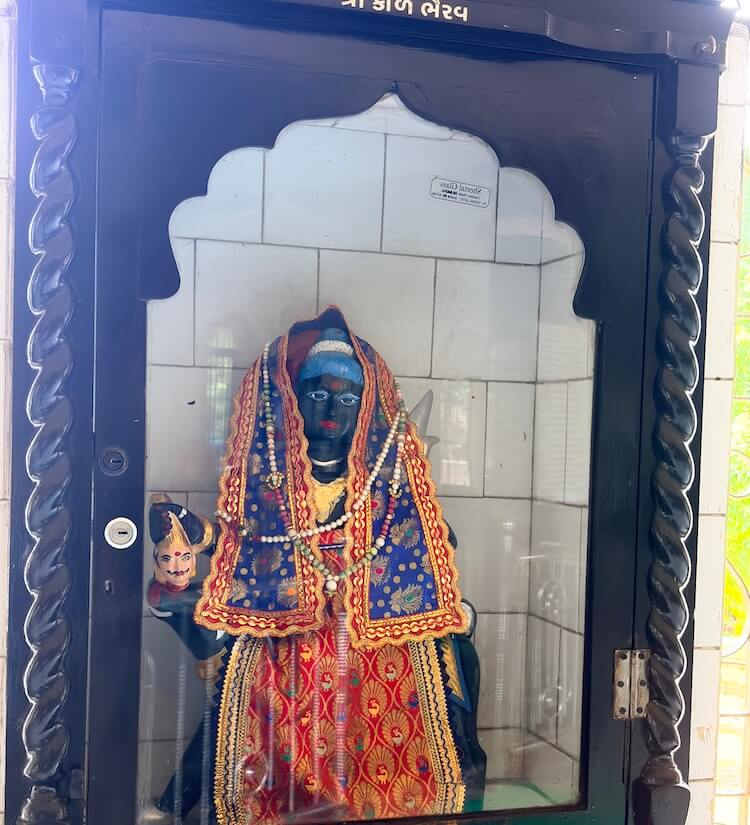
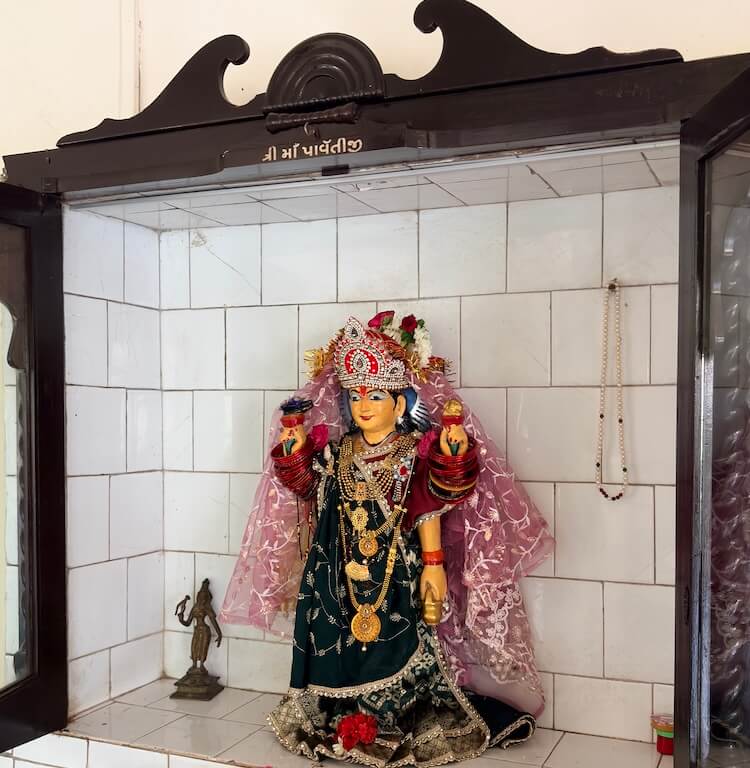
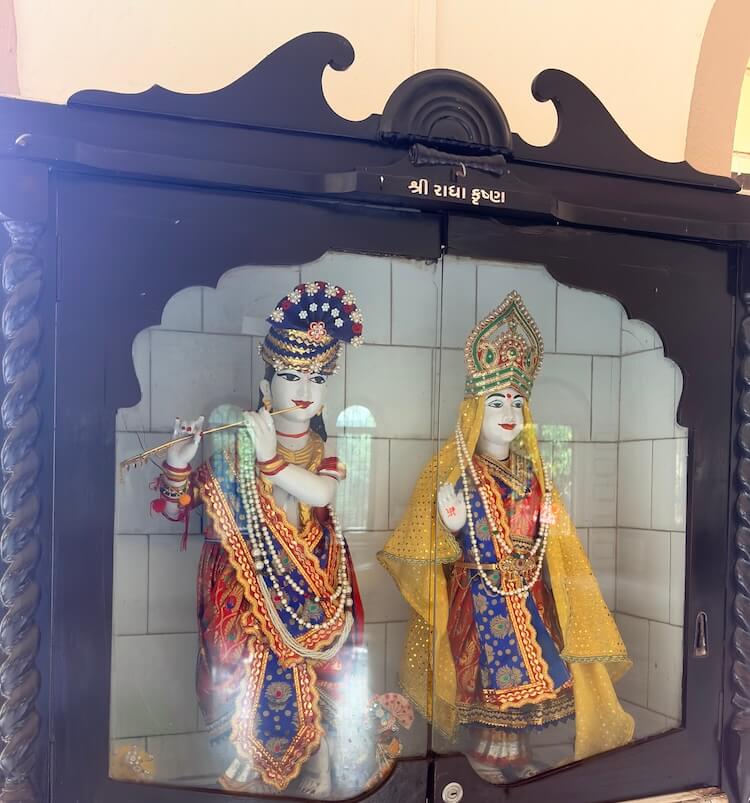
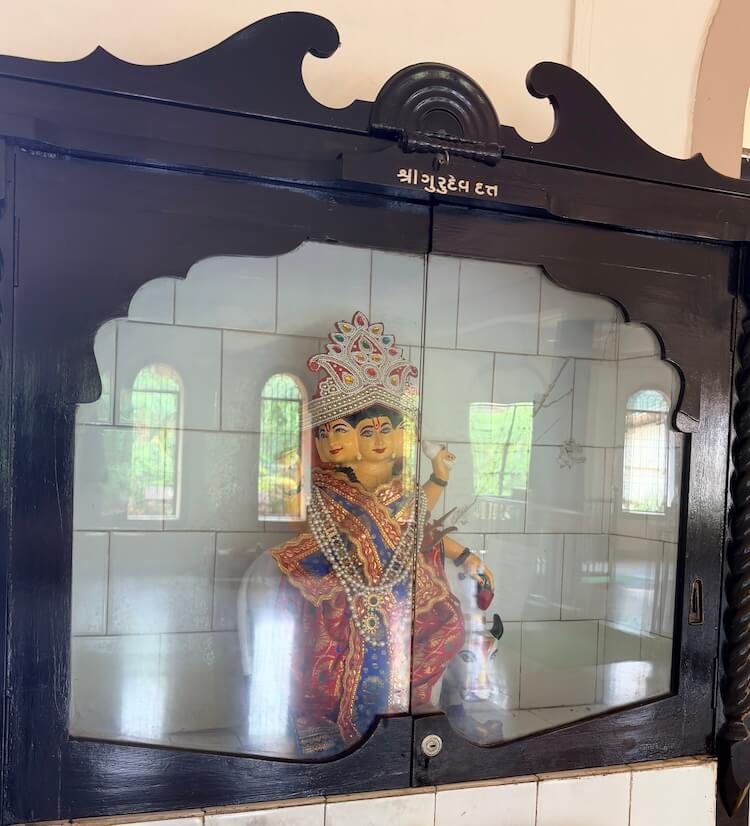
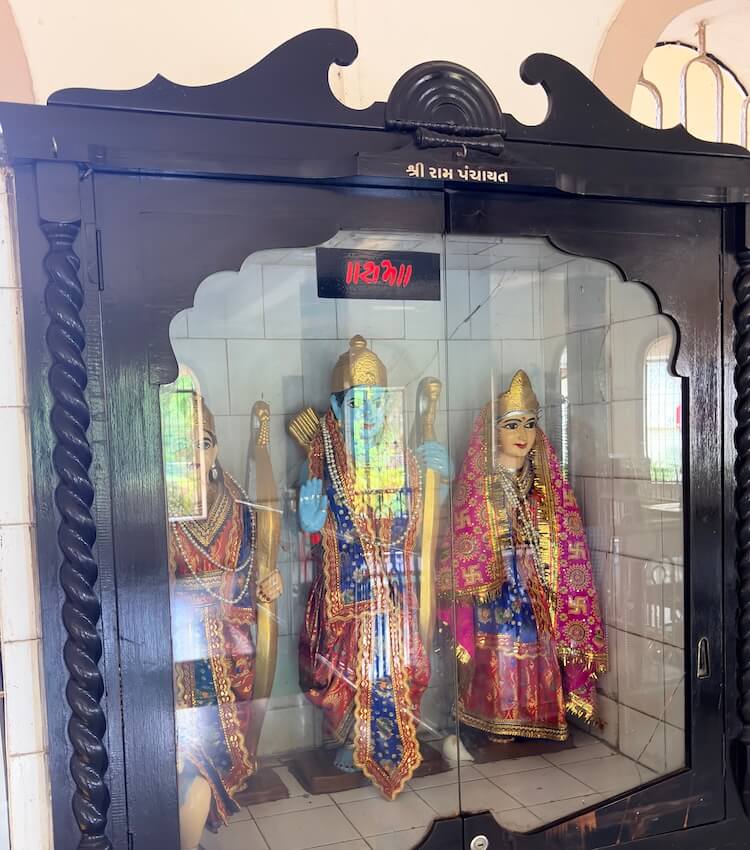
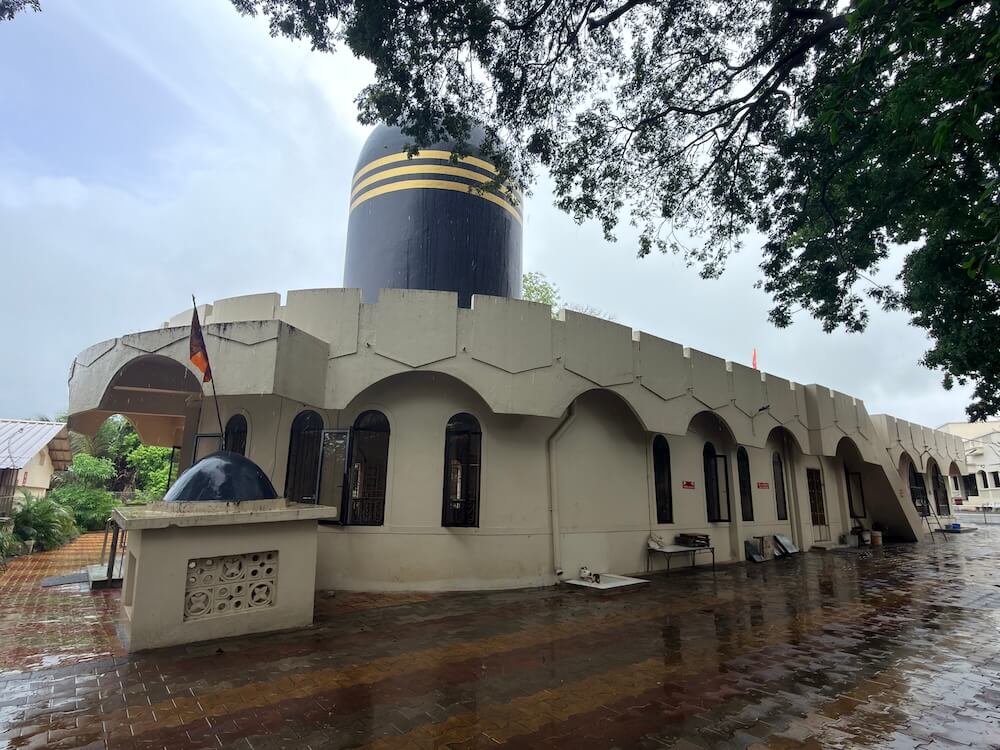
The temple stands within a spacious courtyard on the banks of the Ambika River. Its layout consists of an assembly hall and an open-style sanctum located within it. Devotees enter the assembly hall through the main entrance. Inside is a Yajna Mandap, beside which are photographs of numerous saints and deities. The enclosed hall has large windows on both sides. Niches in its walls contain idols of Lord Shri Ram, Sita, Lakshmana, Radha-Krishna, Lord Dattatreya, Kalabhairava, Goddess Lakshmi, Goddess Ganga with Bhagiratha and Lord Ganesha.
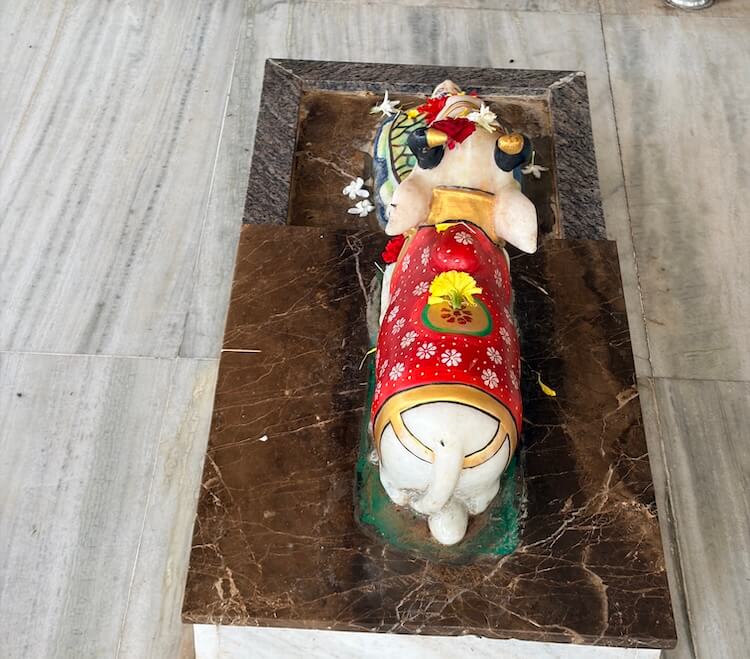
A short distance ahead, the open sanctum is enclosed by stainless-steel railings. Within it, a raised platform holds the idols of Nandi and a stone tortoise. The Shivalinga, clad in brass, is enshrined nearby. 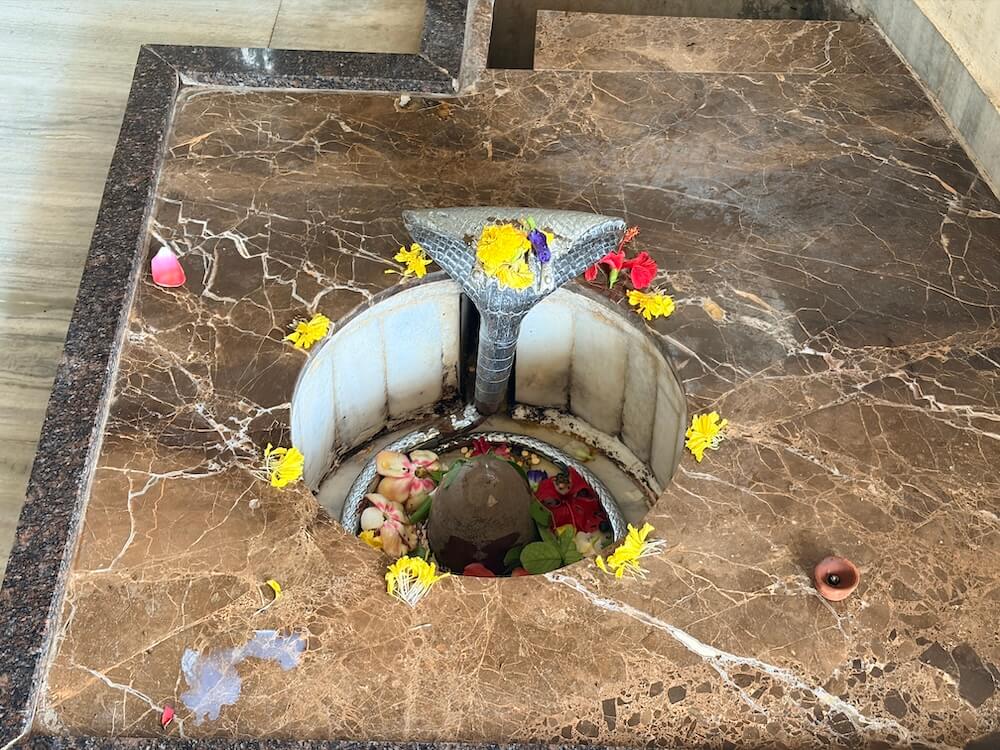 A serpent fashioned from ‘Panchadhatu’ coils protectively around the Linga. A niche in the rear wall houses an idol of Goddess Parvati. As devotees leave through the doorway leading towards the river ghat, they find a Shivalinga of Ardhanarishvara on the left.
The Ardhanarishvara Shivalinga is worshipped mainly by women. The observance known as the ‘Jaya Parvati Vrat’, performed for an ideal husband, a happy married life and the blessing of children, is associated with this shrine. During the bright fortnight of the month of Ashadha, women observing this fast offer worship to the Ardhanarishvara Linga. Unlike the principal shrine, this Shivalinga is situated in a recessed area below ground level.
The temple has a flat roof, above which rises a spire shaped like a Shivalinga over the sanctum.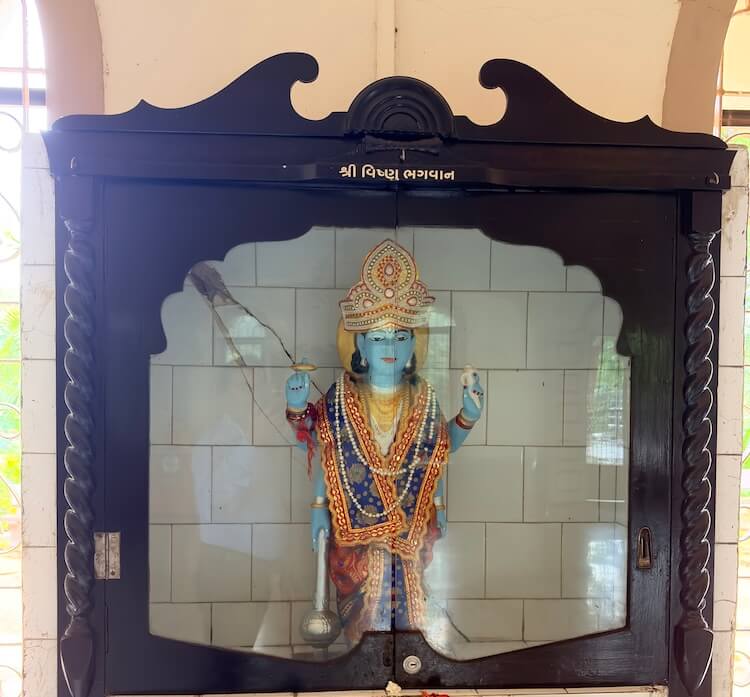 Within the temple complex stands the Gangeshwar Mahadev Cultural Hall. A flight of steps descends from the temple to the river, forming a well-built ghat. Nearby is the Samadhi shrine of the ascetic Narayanswami Maharaj, where his sacred wooden sandals (Padukas) are preserved. According to local tradition, he voluntarily entered Samadhi at this spot several years ago.
Devotees may have the darshan of Gangeshwar Mahadev every day from 6.00 a.m. to 8.30 p.m. During the holy month of Shravan, countless devotees visit the temple. Every Monday of Shravan, the Shivalinga is specially adorned with Rudraksha beads, flowers and sacred leaves. Maha Shivaratri is marked by a grand annual fair. On this day, thousands of devotees gather at the sacred confluence to perform Shraddha and Pitru Tarpan rites for their ancestors. Throughout the four watches of the night, special worship of Lord Shiva is performed in the temple.
The temple also celebrates many other Hindu festivals with great enthusiasm. On Kartik Purnima, celebrated as Dev Diwali, the entire temple complex and the Ambika River ghat are illuminated with thousands of earthen lamps. On this occasion, a grand Annakut offering of a wide variety of food is presented to Lord Mahadev.
Useful Information :
- Located at 8 km from Gandevi and 16 km from Navsari.
- State Transport (ST) bus services are available from Gandevi.
- Private vehicles can reach the temple directly.
- Accommodation and breakfast facilities are available nearby.
- Contact: Temple Office. Mobile: +91 94274 79221.
गंगेश्वर महादेव मंदिर
कछोली, ताल. गणदेवी, जिला. नवसारी
मंदिरे
Temples
मंदिर
મંદિરો
கோவில்கள்
దేవాలయాలు
ക്ഷേത്രങ്ങൾ
ದೇವಾಲಯಗಳು
মন্দিরসমূহ
ਮੰਦਿਰ
-
आशापुरी माता मंदिर विजलपूर मेन रोड, नवसारी, ता./जि. नवसारी
अधिक माहितीAshapuri Mata Temple Vijalpore Main Road, Navsari, Tal./Dist. Navsari
View Detailsआशापुरी माता मंदिर विजलपोर मेन रोड, नवसारी, ताल./जिला. नवसारी
विवरण देखेंAshapuri Mata Temple Vijalpore Main Road, Navsari, Tal./Dist. Navsari
વિગત જુઓAshapuri Mata Temple Vijalpore Main Road, Navsari, Tal./Dist. Navsari
விவரங்களைக் காண்கAshapuri Mata Temple Vijalpore Main Road, Navsari, Tal./Dist. Navsari
వివరాలను చూడండిAshapuri Mata Temple Vijalpore Main Road, Navsari, Tal./Dist. Navsari
വിശദാംശങ്ങൾ കാണുകAshapuri Mata Temple Vijalpore Main Road, Navsari, Tal./Dist. Navsari
ವಿವರಗಳನ್ನು ವೀಕ್ಷಿಸಿAshapuri Mata Temple Vijalpore Main Road, Navsari, Tal./Dist. Navsari
বিস্তারিত দেখুনAshapuri Mata Temple Vijalpore Main Road, Navsari, Tal./Dist. Navsari
ਵੇਰਵੇ ਦੇਖੋ -
चौसठ जोगणी माता मंदिर माळवाडा, ता. चिखली, जि. नवसारी
अधिक माहितीChausath Jogani Mata Temple Malwada, Tal. Chikhli, Dist. Navsari
View Detailsचौसठ जोगणी माता मंदिर मालवाड़ा, ताल. चिखली, जिला. नवसारी
विवरण देखेंChausath Jogani Mata Temple Malwada, Tal. Chikhli, Dist. Navsari
વિગત જુઓChausath Jogani Mata Temple Malwada, Tal. Chikhli, Dist. Navsari
விவரங்களைக் காண்கChausath Jogani Mata Temple Malwada, Tal. Chikhli, Dist. Navsari
వివరాలను చూడండిChausath Jogani Mata Temple Malwada, Tal. Chikhli, Dist. Navsari
വിശദാംശങ്ങൾ കാണുകChausath Jogani Mata Temple Malwada, Tal. Chikhli, Dist. Navsari
ವಿವರಗಳನ್ನು ವೀಕ್ಷಿಸಿChausath Jogani Mata Temple Malwada, Tal. Chikhli, Dist. Navsari
বিস্তারিত দেখুনChausath Jogani Mata Temple Malwada, Tal. Chikhli, Dist. Navsari
ਵੇਰਵੇ ਦੇਖੋ -
गुप्तेश्वर महादेव मंदिर नंदाई-भैरवी, ता. खेरगाम, जि. नवसारी
अधिक माहितीGupteshwar Mahadev Temple Nandhai–Bhairavi, Tal. Khergam, Dist. Navsari
View Detailsगुप्तेश्वर महादेव मंदिर नन्दई-भैरवी, ताल. खेरगाम, जिला. नवसारी
विवरण देखेंGupteshwar Mahadev Temple Nandhai–Bhairavi, Tal. Khergam, Dist. Navsari
વિગત જુઓGupteshwar Mahadev Temple Nandhai–Bhairavi, Tal. Khergam, Dist. Navsari
விவரங்களைக் காண்கGupteshwar Mahadev Temple Nandhai–Bhairavi, Tal. Khergam, Dist. Navsari
వివరాలను చూడండిGupteshwar Mahadev Temple Nandhai–Bhairavi, Tal. Khergam, Dist. Navsari
വിശദാംശങ്ങൾ കാണുകGupteshwar Mahadev Temple Nandhai–Bhairavi, Tal. Khergam, Dist. Navsari
ವಿವರಗಳನ್ನು ವೀಕ್ಷಿಸಿGupteshwar Mahadev Temple Nandhai–Bhairavi, Tal. Khergam, Dist. Navsari
বিস্তারিত দেখুনGupteshwar Mahadev Temple Nandhai–Bhairavi, Tal. Khergam, Dist. Navsari
ਵੇਰਵੇ ਦੇਖੋ