
अरियामकवू भगवती मंदिर
कवलप्पारा, शोरनूर, जि. पलक्कड.
Ariyamkavu Bhagavathi Temple
Kavalappara,Shoranur,Dist. Palakkad.
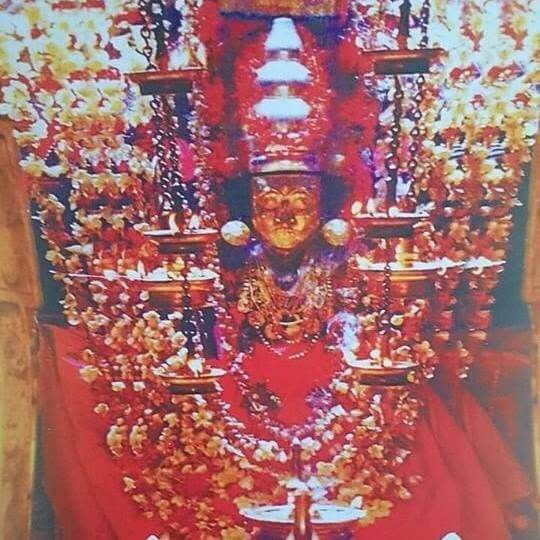 Ariyamkavu Bhagavathi Temple is a prominent Bhagavathi shrine located in the beautiful village of Kavalappara. The presiding deity of the temple is Bhadrakali, who is revered as the Adhidevatha (principal guardian deity) of the Kavalappara Swaroopam. According to local belief, Bhagavathi continues to protect and safeguard all devotees under her divine presence. Its history, traditions, rituals and annual Pooram are closely connected with the former Kavalappara Swaroopam and all desams
Kavalappara Ariyamkavu Bhagavathi Temple is believed to have a history extending back approximately 300 years. During the period when the Kavalappara Swaroopam exercised authority over the 96 desams, the temple was constructed under the patronage of the Kavalappara Mooppil Nair. The temple also preserves evidence of a later renovation. A record relating to the renovation is inscribed behind the Sreekovil. According to this inscription, the temple underwent renovation in Malayalam Era 1116, during the month of Midhunam,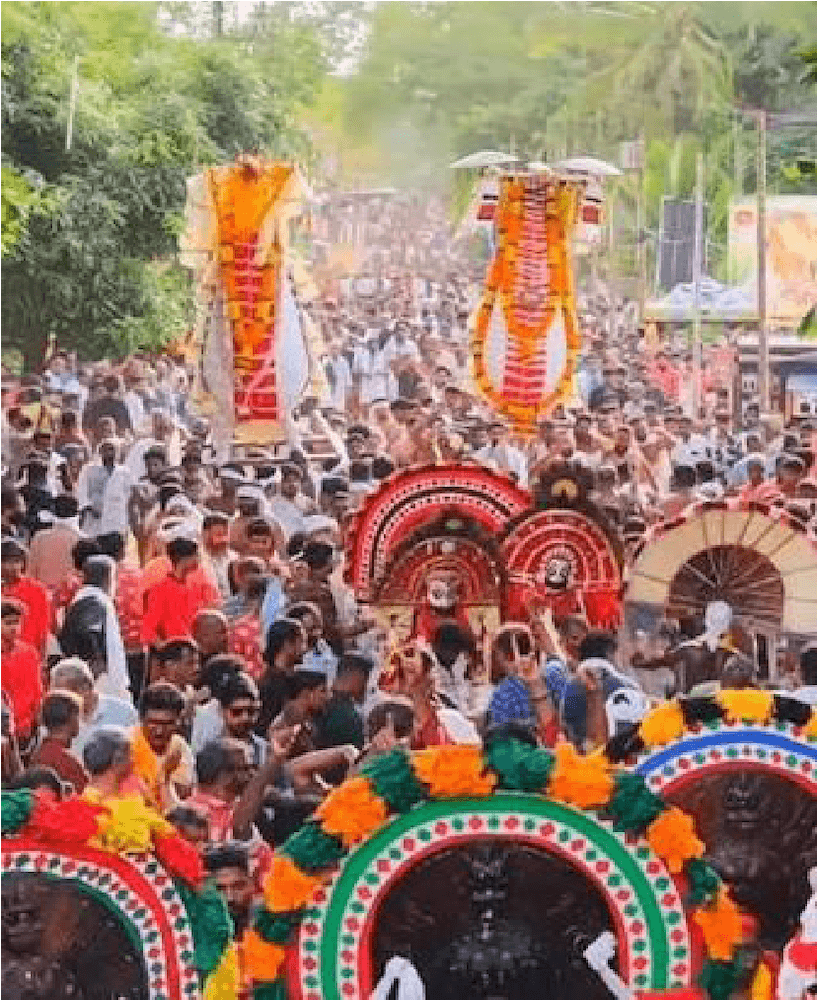 corresponding approximately to 1941 June -July CE. The inscription records concerning this restoration and forms an important historical reference associated with the temple. Historically, The Kavalappara Swaroopam was responsible for the administration of the temple. Following the end of the traditional royal administration, the temple together with the properties associated with the former Swaroopam came under the supervision of a court-appointed receiver. At present, a distinctive administrative arrangement is followed during the annual Ariyamkavu Pooram. For the 21-day Pooram period, the administration of the temple is entrusted to a committee representing the local people. Once the Pooram concludes, the administration again returns to the receiver system. The connection between the Kavalappara Swaroopam and Tholpavakoothu is an important aspect of the temple’s cultural history. Tradition holds that, in order to conduct Tholpavakoothu during the 21-day Pooram, the Kavalappara Mooppil Nair brought members of the Pulavar community from Tamil Nadu and settled them at Koonathara. The community subsequently became associated with the traditional performance of Tholpavakoothu at Ariyamkavu. This tradition continues to form an integral part of the annual Pooram celebrations.
The principal legend associated with Ariyamkavu Bhagavathi is connected with Bhadrakali and the destruction of the Darika asura. According to Hindu tradition, Bhadrakali manifested from the third eye of Lord Shiva for the purpose of destroying Darika, a powerful asura. After defeating Darika, Bhadrakali is believed to have become peaceful and joyful. It is this calm and benevolent form of Bhadrakali, following the destruction of Darika, that is believed to be worshipped at Ariyamkavu. The Bhagavathi is traditionally believed to protect all 96 desams associated with the Kavalappara Swaroopam. Her role as the guardian deity of these regions forms one of the central beliefs surrounding the temple.
Another important tradition connects the temple’s annual Tholpavakoothu with the Ramayana. According to local belief, the battle between Bhadrakali and Darika and vthe battle between Lord Rama and Ravana took place during the same period. As Bhadrakali was engaged in her battle with Darika,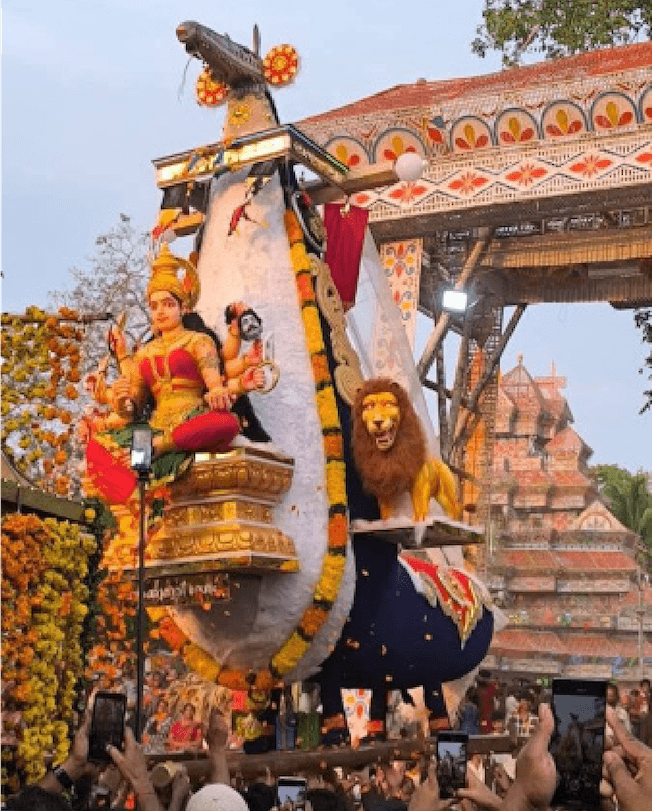 she could not witness the events of the Ramayana directly. The devotees therefore believe that Tholpavakoothu is performed during the Pooram in order to fulfil Bhagavathi’s desire to witness the story of Lord Rama. Consequently, Kamba Ramayanam is presented through Tholpavakoothu over the course of the 21-day Pooram. The performance covers the major events of the Ramayana, beginning with the birth of Lord Rama and extending to his coronation.
The tradition gives the Tholpavakoothu at Ariyamkavu a distinctive religious and cultural significance. A particularly distinctive belief associated with the temple is that Bhagavathi is afraid of elephants. Because of this traditional belief, elephants are not brought into the temple premises or used as part of the temple’s festival processions. This practice gives the Ariyamkavu Pooram a unique character, as it is considered one of the rare Poorams conducted without the customary presence of elephants.
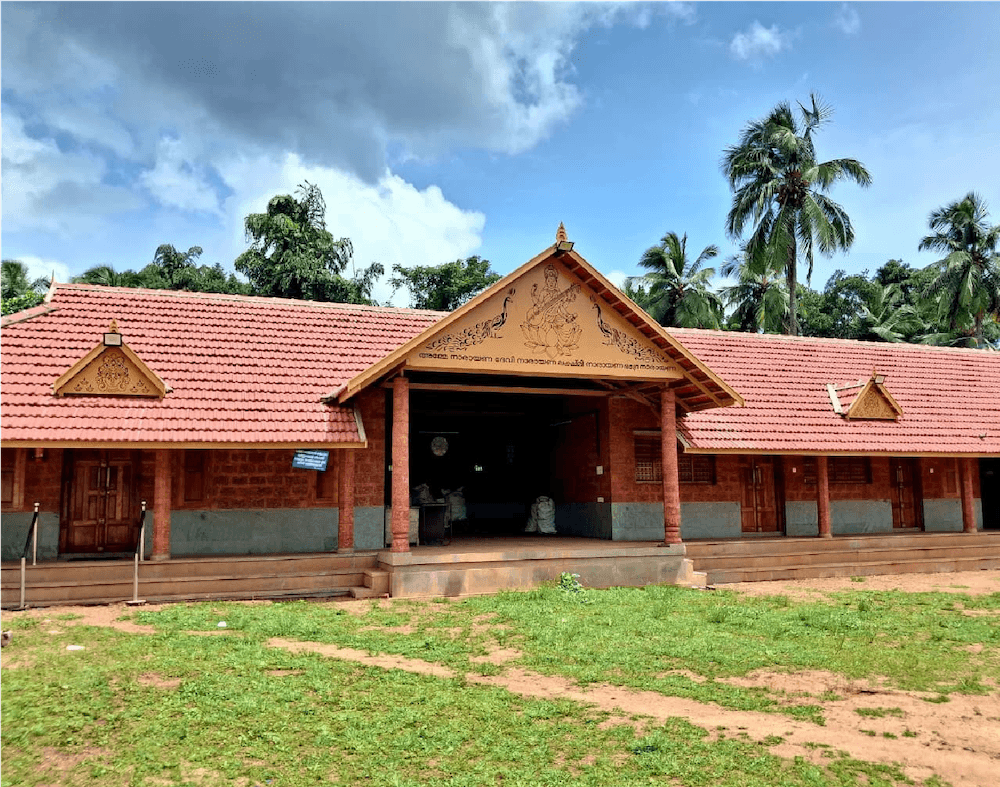
Kavalappara Ariyamkavu Bhagavathi Temple follows the traditional Kerala style of temple architecture. After entering through the surrounding compound wall and proceeding towards the temple courtyard, the Dwajasthambam
(flagstaff) is one of the first prominent features visible.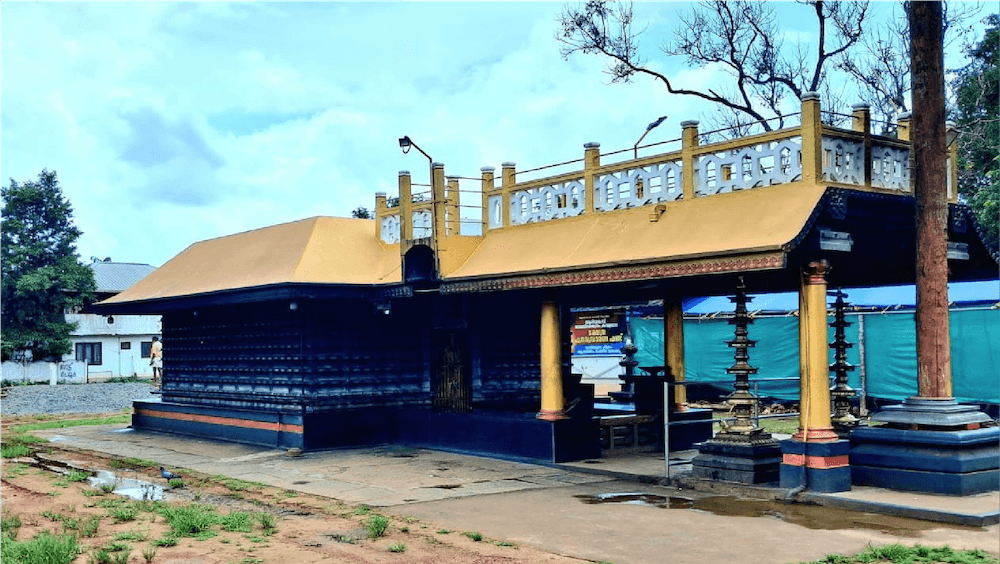 The flagstaff is completely covered with bronze sheeting, giving it a distinctive appearance. Infront of the Dwajasthambam, within the Namaskara Mandapam, stand two large
Deepasthambams. These traditional lamp pillars form an
important visual element of the temple courtyard. The Sreekovil is square in plan and is constructed in the traditional Kerala architectural style. A Namaskara Mandapam is situated directly in front of the Sreekovil. The roof is designed in the characteristic Kerala manner, with the tiled structure sloping downwards towards the edges. Iron lamp holders are installed along the walls of the Sreekovil, allowing numerous traditional oil lamps to be lit around the shrine. 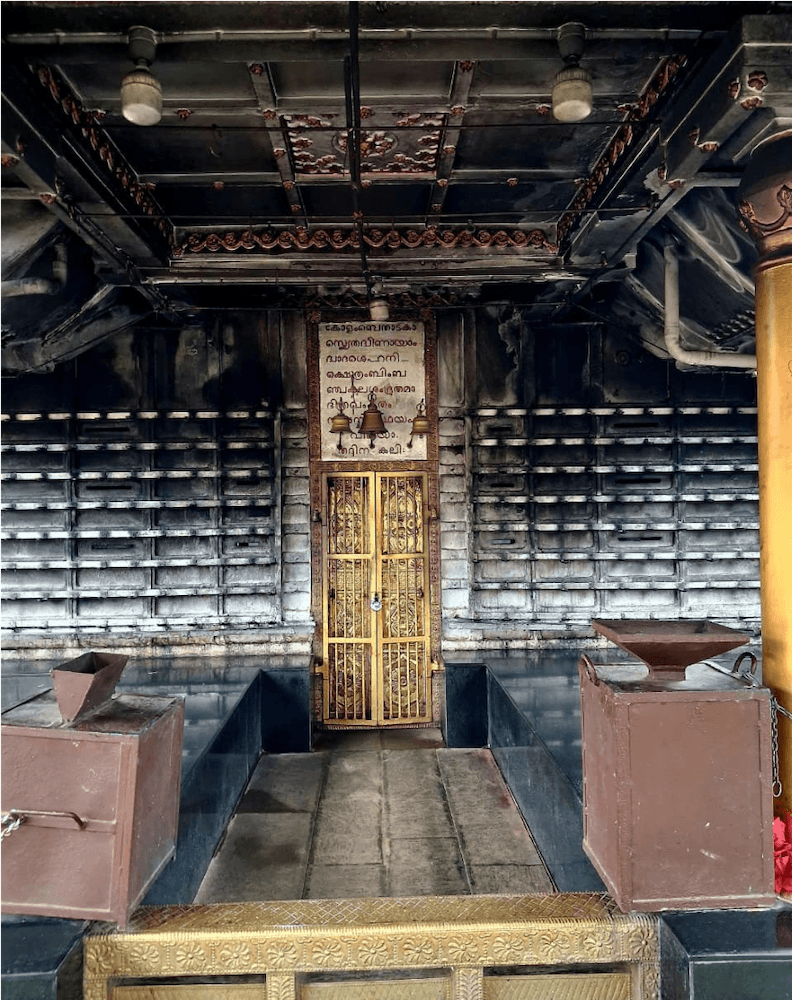 One of the most remarkable architectural features of Ariyamkavu Bhagavathi Temple is the unusual arrangement above the principal deity. The portion of the roof directly above the prathishta is intentionally left open, allowing the deity to be exposed to natural rain and sunlight. Unlike the conventional enclosed sanctum, the roof has not been constructed over the portion directly above the idol.
The principal deity of the temple is Bhadrakali. The stone idol is approximately five feet in height and is depicted with eight arms. The deity faces towards the east. The form of Bhadrakali worshipped here is traditionally understood as the peaceful and benevolent form of the goddess after the destruction of Darika. A notable feature of Ariyamkavu Bhagavathi Temple is the absence of separate Upadevatha shrines within the temple complex. Unlike many traditional Kerala temples where several sub deities are worshipped in individual shrines, Ariyamkavu is distinguished by its principal deity being worshipped without separate Upadevatha shrines.
This distinctive feature is regarded as one of the temple’s most notable architectural and ritual characteristics. Within the temple compound, a Koothambalam is situated facing the Bhagavathi shrine. The Koothambalam is particularly significant because of its association with the Tholpavakoothu performances conducted during the annual Pooram. 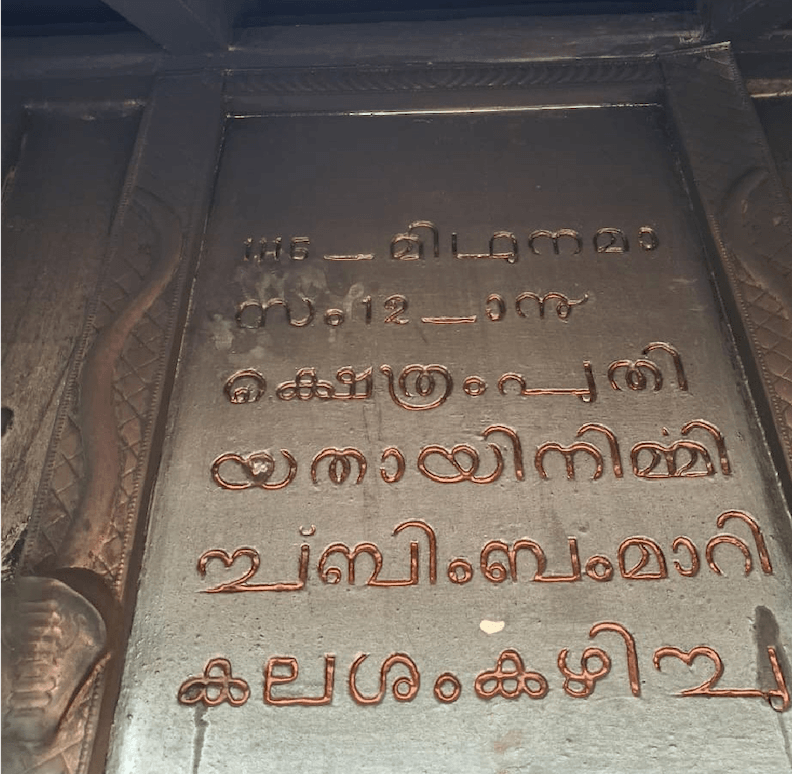 A stone Deepasthambam stands in front of the Koothambalam. The entire temple complex is enclosed by a compound wall, while a temple pond is located towards the southern side of the temple premises.
The Ariyamkavu Pooram is the principal annual festival of the temple and is one of its most significant religious and cultural observances. The festival is conducted from Meenam 1 to Meenam 21 in the Malayalam calendar, extending over a period of 21 days. The entire 21-day festival is closely associated with the traditional performance of Tholpavakoothu and other cultural programmes. The presentation of Kamba Ramayanam takes place throughout the festival, making Tholpavakoothu one of the defining features of the Pooram. The 20th day is observed as Kuthirakali, while the 21st day is celebrated as the principal Pooram. The Ariyamkavu Pooram is traditionally regarded as the Pooram of the 96 desams associated with the Kavalappara Swaroopam.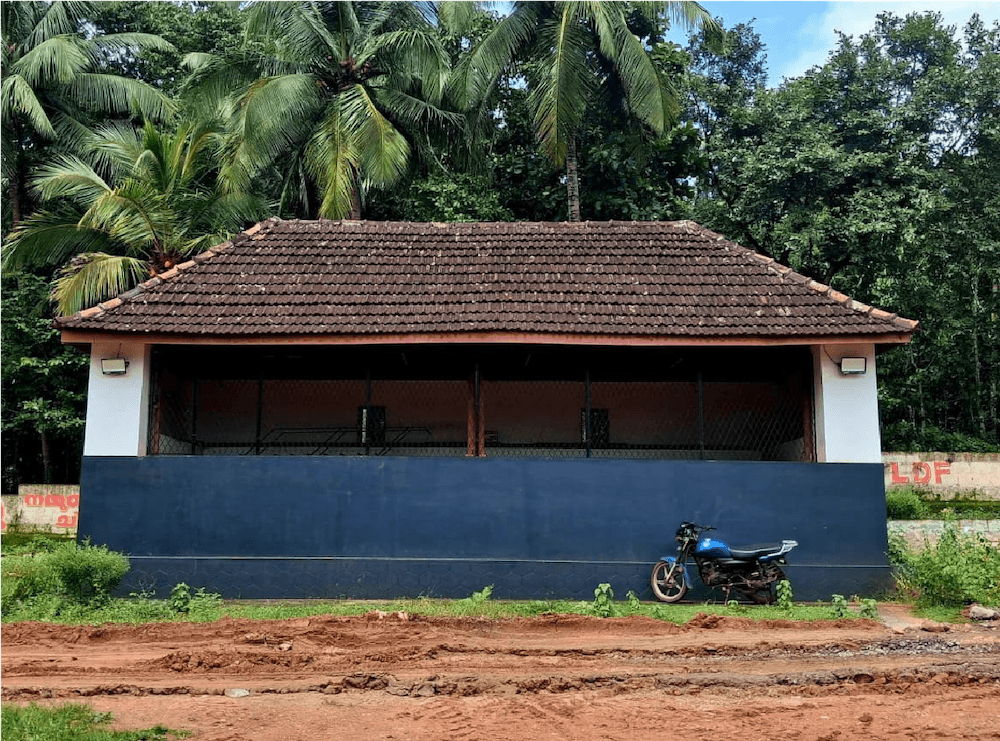
On both Kuthirakali day and Pooram day, desam brings forward and ceremonially presents its Kuthira Kolam. These traditional horse figures form an important part of the festival celebrations and represent the participation of the respective desams in honouring the Bhagavathi. A particularly distinctive ritual occurs at the conclusion of the Pooram, when Mundaya Kodichi, a female horse figure, enters the kavu. This forms one of the notable traditions associated with the festival.
Tholpavakoothu is conducted on all 21 days of the Pooram. The performance is based on Kamba Ramayanam and narrates the story of Lord Rama from his birth through to his coronation. The tradition is not merely an artistic performance but is closely connected with the religious belief that the Bhagavathi wished to witness the events vof the Ramayana. The 21-day Tholpavakoothu therefore represents a distinctive combination of devotion, ritual, traditional performing arts and local heritage. Following of the annual Pooram, another important day in the temple calendar is the Prathishta Dhinam, commemorating the consecration of the deity. The Prathishta Dinam is observed on the Uthrattathi day in the month of Midhunam. Anadhanam is also conducted on the occasion, providing food to devotees and visitors.
Several traditional offerings are performed at Ariyamkavu Bhagavathi Temple. During the annual Pooram, Tholpavakoothu and Nadakakali vazhipadu are among the principal offerings associated with the festival period. These performances form an important part of the temple’s distinctive ritual tradition.
Among the regular offerings conducted at the temple are pushpanjali, rakthapushpanjali , vedi vazhipadu and nirapara etc. Devotees traditionally perform Nirapara vazhipadu as an offering seeking the fulfilment of their wishes and the successful completion of important endeavours.
The temple follows a daily worship schedule in the morning and evening. The temple opens at approximately 4:00 am in the morning. The morning worship includes Nirmalyadarsanam and other regular rituals and poojas. The temple remains open until approximately 10:00 am. In the evening, the temple reopens at 5:00 pm and remains open until approximately 7:30 pm. Deeparadhana is conducted during the evening worship. The timings may be subject to change on festival and special observance days.
Key highlights
- Located from 5 km from Shoranur Town and 10 km from Ottapalam town.
- Shoranur Railway Junction is the nearest Railway station, about 5 km from the temple.
- Private bus facilities are available to the temple from Shoranur and Ottapalam.
- Private vehicles can be parked at the temple designated parking area.
- Accommodation and dinning facilities are available in the nearby town.
अरियामकवु भगवती मंदिर
कवलप्पारा, शोरानूर, जिला। पलक्कड़.
मंदिरे
Temples
मंदिर
મંદિરો
கோவில்கள்
దేవాలయాలు
ക്ഷേത്രങ്ങൾ
ದೇವಾಲಯಗಳು
মন্দিরসমূহ
ਮੰਦਿਰ
-
थ्रिक्कनगोडे रानडुमूर्ती मंदिर थ्रिक्कनगोडे, ओट्टापलम, जि. पलक्कड.
अधिक माहितीThrikkangode RanduMoorthy Temple Thrikkangode, Ottappalam, Dist. Palakkad.
View Detailsथ्रीक्कनगोडे रंडुमूर्ति मंदिर थ्रीक्कनगोडे, ओट्टापलम, जिला। पलक्कड़.
विवरण देखेंThrikkangode RanduMoorthy Temple Thrikkangode, Ottappalam, Dist. Palakkad.
વિગત જુઓThrikkangode RanduMoorthy Temple Thrikkangode, Ottappalam, Dist. Palakkad.
விவரங்களைக் காண்கThrikkangode RanduMoorthy Temple Thrikkangode, Ottappalam, Dist. Palakkad.
వివరాలను చూడండిThrikkangode RanduMoorthy Temple Thrikkangode, Ottappalam, Dist. Palakkad.
വിശദാംശങ്ങൾ കാണുകThrikkangode RanduMoorthy Temple Thrikkangode, Ottappalam, Dist. Palakkad.
ವಿವರಗಳನ್ನು ವೀಕ್ಷಿಸಿThrikkangode RanduMoorthy Temple Thrikkangode, Ottappalam, Dist. Palakkad.
বিস্তারিত দেখুনThrikkangode RanduMoorthy Temple Thrikkangode, Ottappalam, Dist. Palakkad.
ਵੇਰਵੇ ਦੇਖੋ -
थेनकुरिस्सी शिव मंदिर थेनकुरिस्सी, जिल्हा पालक्काड.
अधिक माहितीThenkurissi Shiva Temple Thenkurissi, Dist. Palakkad.
View Detailsथेनकुरिस्सी शिव मंदिर थेनकुरिस्सी, ज़िला पलक्कड़।
विवरण देखेंThenkurissi Shiva Temple Thenkurissi, Dist. Palakkad.
વિગત જુઓThenkurissi Shiva Temple Thenkurissi, Dist. Palakkad.
விவரங்களைக் காண்கThenkurissi Shiva Temple Thenkurissi, Dist. Palakkad.
వివరాలను చూడండిThenkurissi Shiva Temple Thenkurissi, Dist. Palakkad.
വിശദാംശങ്ങൾ കാണുകThenkurissi Shiva Temple Thenkurissi, Dist. Palakkad.
ವಿವರಗಳನ್ನು ವೀಕ್ಷಿಸಿThenkurissi Shiva Temple Thenkurissi, Dist. Palakkad.
বিস্তারিত দেখুনThenkurissi Shiva Temple Thenkurissi, Dist. Palakkad.
ਵੇਰਵੇ ਦੇਖੋ -
थयंकावू भगवती मंदिर थेनकुरीसी, जि. पलक्कड.
अधिक माहितीThayankavu Bhagavathi Temple Thenkurissi, Dist. Palakkad.
View Detailsथायंकावु भगवती मंदिर थेनकुरिसि, जिला. पलक्कड़.
विवरण देखेंThayankavu Bhagavathi Temple Thenkurissi, Dist. Palakkad.
વિગત જુઓThayankavu Bhagavathi Temple Thenkurissi, Dist. Palakkad.
விவரங்களைக் காண்கThayankavu Bhagavathi Temple Thenkurissi, Dist. Palakkad.
వివరాలను చూడండిThayankavu Bhagavathi Temple Thenkurissi, Dist. Palakkad.
വിശദാംശങ്ങൾ കാണുകThayankavu Bhagavathi Temple Thenkurissi, Dist. Palakkad.
ವಿವರಗಳನ್ನು ವೀಕ್ಷಿಸಿThayankavu Bhagavathi Temple Thenkurissi, Dist. Palakkad.
বিস্তারিত দেখুনThayankavu Bhagavathi Temple Thenkurissi, Dist. Palakkad.
ਵੇਰਵੇ ਦੇਖੋ