
त्रिचंबरम श्रीकृष्ण मंदिर
त्रिचंबरम, तळीपरंबा, जि. कन्नूर....
Trichambaram Sree Krishna Temple
Trichambaram, Taliparamba, Dist. Kannur.
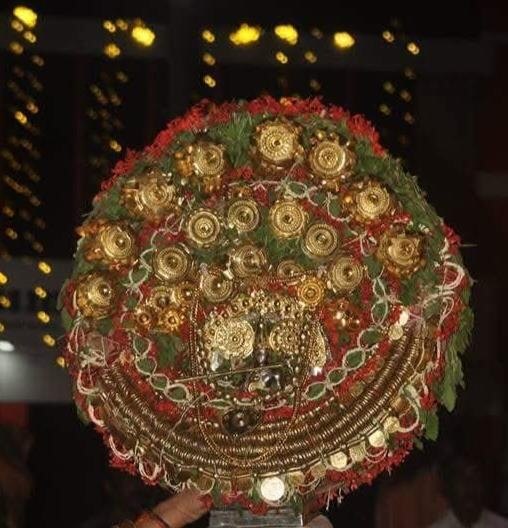 The famous Trichambaram Sree Krishna Temple is located about 20 km from Kannur, the headquarters of Kannur district in Kerala. Situated near the town of Taliparamba, known for its spice trade, the temple is dedicated to Sree Krishna Paramatma, the ninth avatar of Lord Vishnu, one of the Trimurthis. It is one of the important Hindu places of worship in Kannur district and is also known as the Guruvayur of North Kerala. The main deity is Lord Krishna in a fierce and hungry form, believed to be the form he took immediately after killing Kamsa.
According to historical records and archaeological evidence, Trichambaram Sree Krishna Temple is a very old historic monument believed to have been built in or before the 10th century. The temple is clearly mentioned in the 11th-century historical poem Mushikavamsam, written in Sanskrit by the poet Athulan. It was one of the important political and cultural centres of the Mushika dynasty (Kolathunadu), which ruled northern Kerala. One of the main historical records of the temple is the Trichambaram inscription, carved in the Vattezhuthu script on the base of the Sreekovil. 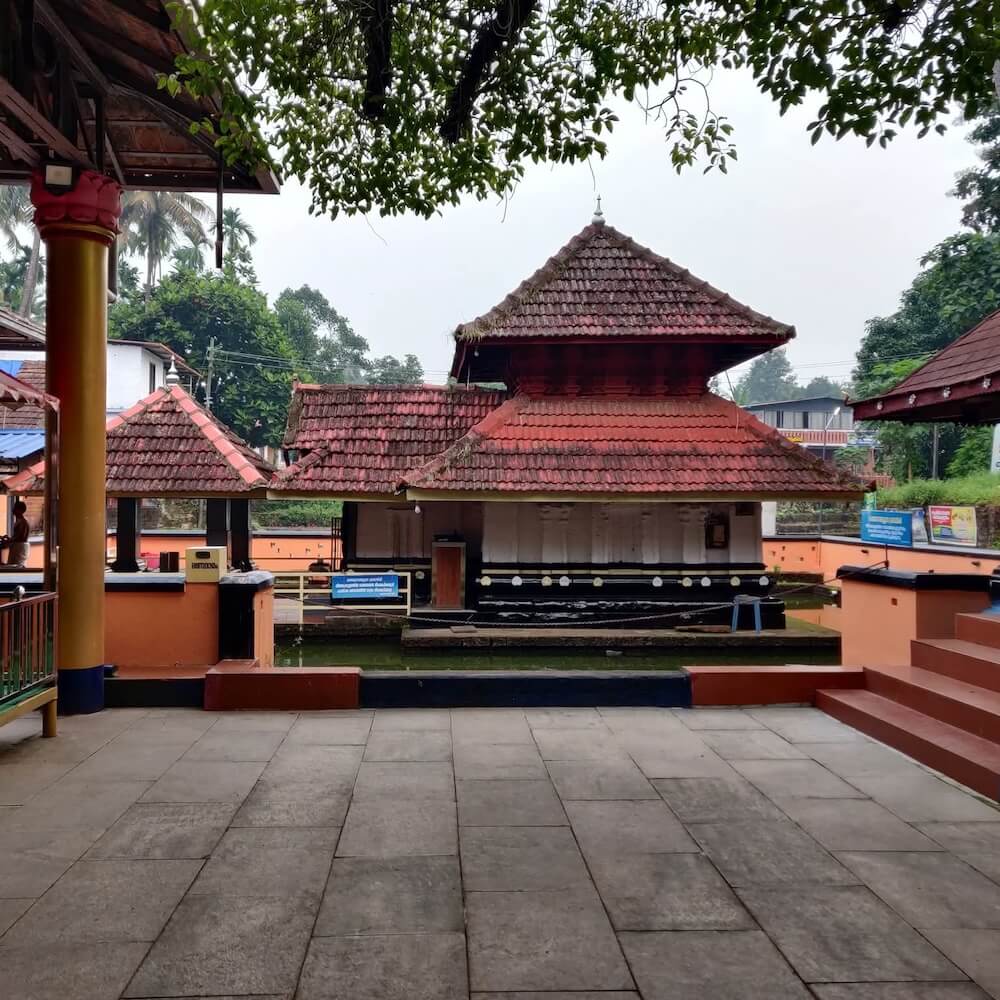 The inscription records a land donation made by Manavepala Manaviyadan, a local ruler of Eranad, which included parts of present-day Malappuram, for buying oil for the sacred lamp at the temple. This inscription also indicates the strong political and cultural links between the rulers of northern Kerala and the local rulers of southern Kerala.
The walls of the square-shaped, two-storey Sreekovil feature beautiful murals and wood carvings from the 15th and 16th centuries. The Archaeology Department gives special importance to these artworks and takes measures to preserve them. The Durga temple located in the middle of the temple pond is recorded by historians as one of the famous 108 Durgalayas of ancient Kerala. In the early period, Trichambaram Temple was under the direct supervision and administration of the Chirakkal dynasty and the Kolathiri kings. Prominent Namboothiri Illams appointed by the king, known as Ooralans, also supervised the temple affairs at the local level. 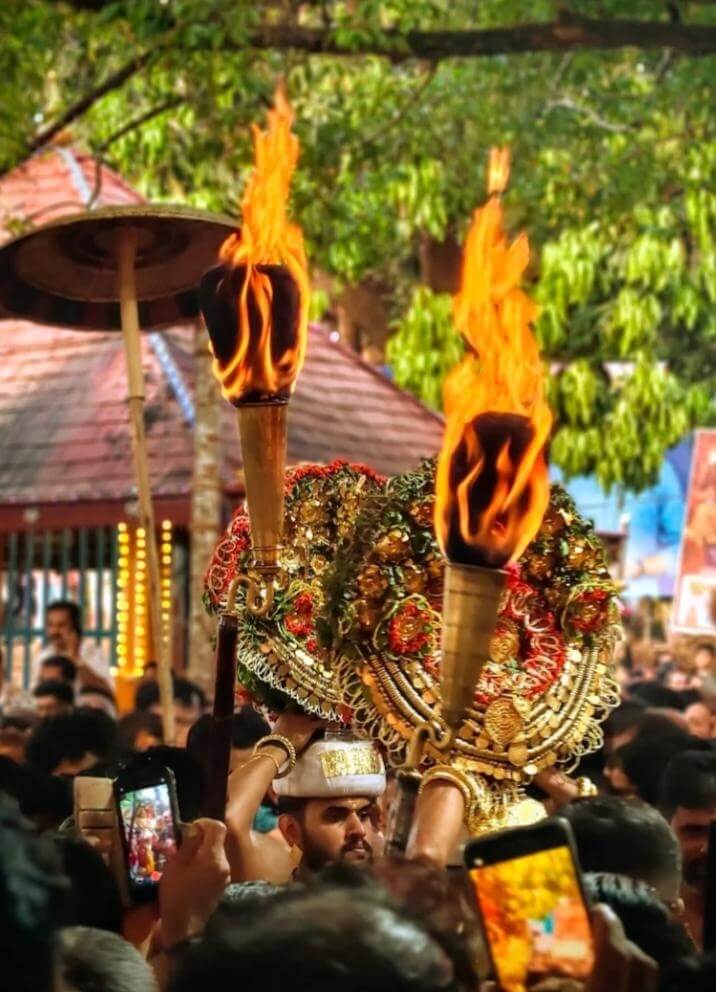 At present, the temple is administered by TTK Devaswom (Taliparamba, Trichambaram and Kanjirangad Devaswom), under the Malabar Devaswom Board of the Government of Kerala.
According to the main legend, the deity here is Lord Krishna in the form he took immediately after killing Kamsa, the king of Mathura. After killing Kamsa, Krishna is believed to have stood in a fierce and angry form, while also being very hungry after the battle. It is said that, in earlier times, houses in front of the temple caught fire because of the intense gaze of the deity. The large temple pond, Surya Pushkarini, is believed to have been built in front of the temple to prevent this, while the nearby Rajarajeshwara Temple at Taliparamba is associated with the peaceful form of Lord Shiva, believed to have been installed to calm Krishna’s fierce mood. Another legend says that when Devaki saw Krishna arriving sweaty, tired and hungry after killing Kamsa, she quickly gave him leftover rice, curd and pickle from the kitchen. In memory of this, the offering known as ‘Vella Nivedyam’, consisting of rice, curd and pickle, is made immediately after the temple opens in the morning. The other rituals, including the Abhishekam, are performed only after this offering.
According to legend, Lord Krishna killed the huge elephant named Kuvalayapeedam, which Kamsa had sent to kill him. Due to this enmity towards elephants, it is believed that Trichambaramthappan does not like seeing elephants. 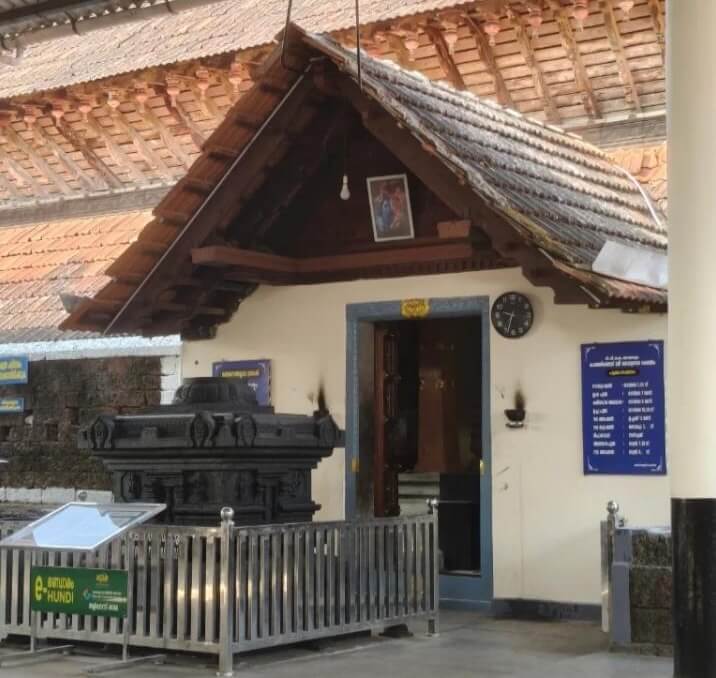 Therefore, elephants are not allowed inside the temple premises and are not used during the temple festival. There is also a legend about the origin of the name ‘Trichambaram’. Sage Shambara is said to have performed severe penance here to receive the darshan of Lord Krishna. After the Lord appeared before the sage, the place came to be known as ‘Sri Shambarapuram’. It is believed that the name ‘Trichambaram’ later developed from ‘Sri Shambarapuram’.
Instead of large gopurams, the temple has a beautiful Kerala-style entrance gateway called a Padippura. A large laterite stone compound wall surrounds the temple. The large pond directly in front of the temple is known as Surya Pushkarini. From a distance, the steep roofs covered with copper sheets on the Nalambalam and Sreekovil can be seen clearly. After passing through the Padippura, visitors enter the large inner courtyard, known as Bahyanganam, where a large Balikkallu stands in front of the entrance to the Nalambalam. The Nalambalam is the square structure surrounding the main shrine.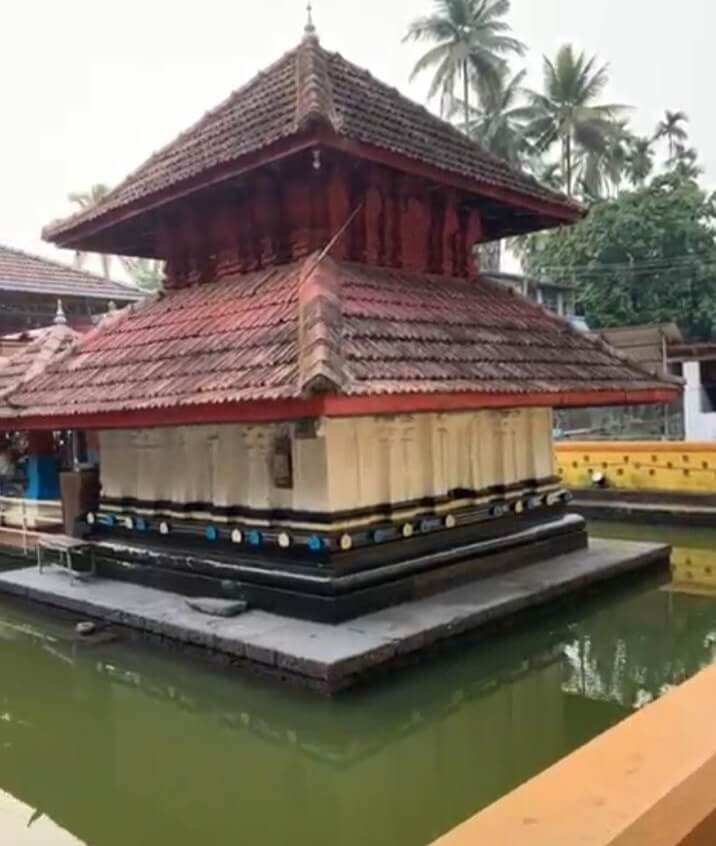 Its outer walls feature rows of wooden oil lamps, forming a traditional Vilakkumadam and adding to the architectural beauty of the temple.
The temple has a large, square-shaped, two-storey Sreekovil. The lower floor is built of granite, while the upper floor is made of wood. The roof is fully covered with copper sheets. The outer walls of the Sreekovil feature ancient murals from the 15th and 16th centuries, depicting scenes from Hindu mythology painted using natural colours. Beautiful wood carvings of deities such as Brahma, Vishnu and Shiva, along with other mythological figures, can be seen on the pillars and under the roof. Directly in front of the Sreekovil is a Namaskara Mandapam made of wood and copper, with fine carvings on its roof. The main deity is Lord Krishna in a fierce form. Although the stone idol is in the four-armed form of Lord Vishnu, the concept is that of Lord Krishna in his fierce form. Trichambaramthappan faces west. A large Surya Pushkarini temple pond is situated directly in front of the Sreekovil, beyond the Namaskara Mandapam.
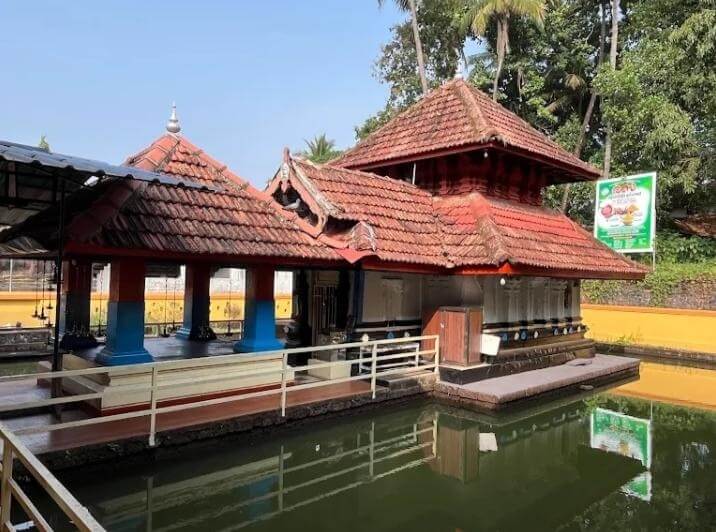
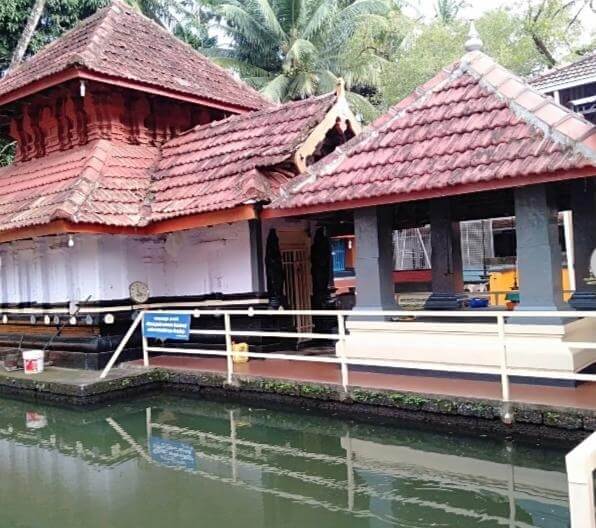
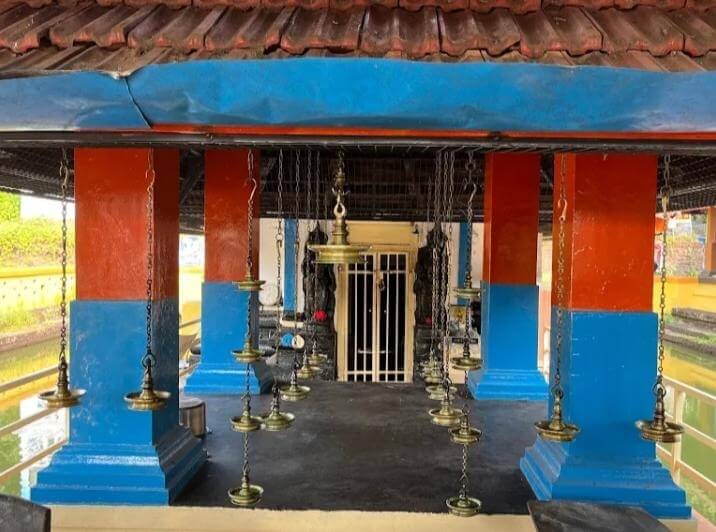
The Jaladurga Temple is situated in the middle of a large pond to the north-west of the Nalambalam.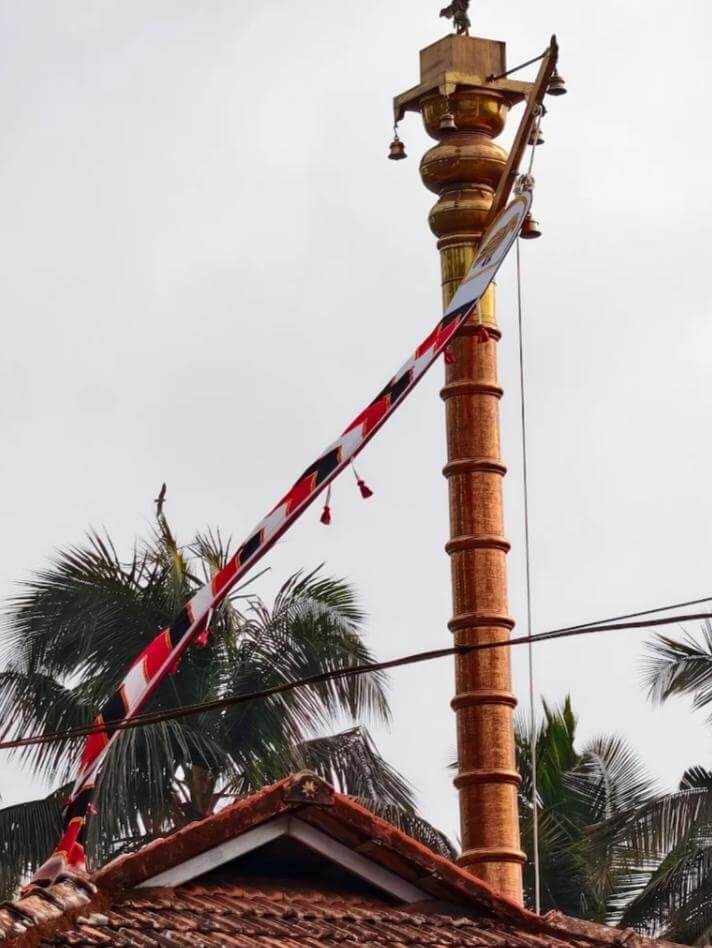 It is one of the famous 108 Durgalayas of Kerala and is known as Jaladurga because it stands in the middle of the water. The shrine of Vishvaksena, facing south, is located near the main Sreekovil. A Shiva shrine is also situated near the main temple, associated with the peaceful aspect that calms the fierce form of Trichambaramthappan. Ganapathy is worshipped at a separate shrine inside the Nalambalam to remove obstacles. A separate shrine dedicated to Shastha is located near the temple complex, while Naga deities are also worshipped in sacred groves along the sides of the temple. Near the temple pond are the Swamiyar Madams, where ascetics are said to have lived in ancient times.
The Trichambaram Festival is one of the well-known annual festivals in Kerala and is held from the 22nd day of Kumbham to the 6th day of Meenam, usually in March. The 14-day festival is notable for having no flag-hoisting ceremony. On the night of Kumbham 22, an idol of Balarama, the elder brother of Lord Krishna, is brought in a ceremonial procession from Mazhur Dharmakulangara Temple to Trichambaram, accompanied by traditional music. This ceremony represents Balarama coming to calm Krishna, who is in a fierce form after killing Kamsa. During the festival, Thidambu Nritham is performed at night at Pookkoth Nada near Trichambaram Kavu, where Brahmins carry the Thidambus of Balarama and Krishna on their heads and dance together, symbolising the reunion of the two brothers.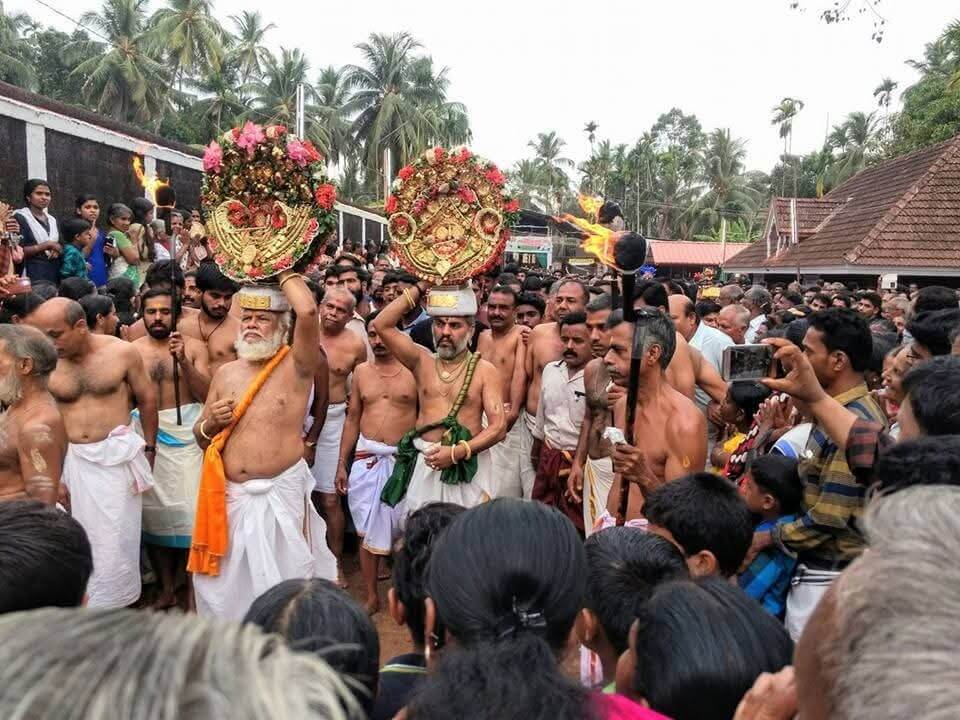 The festival concludes with the Koodipiriyal ceremony on the night of Meenam 6, when the brothers part with sadness and Balarama returns, promising to meet Krishna again the following year. Ashtami Rohini, or Sree Krishna Jayanti, is celebrated on the Ashtami-Rohini day in Chingam (August–September) with special poojas and a large gathering of devotees. On Vishu, the first day of Medam (April), many devotees arrive early in the morning to have the Vishukkani darshan of the deity. Kuchhela Day is observed on the first Wednesday of Dhanu (December–January) to commemorate Kuchhela offering beaten rice to Lord Krishna.
The most famous and important offering at the temple is Ayiram Appam (one thousand appams).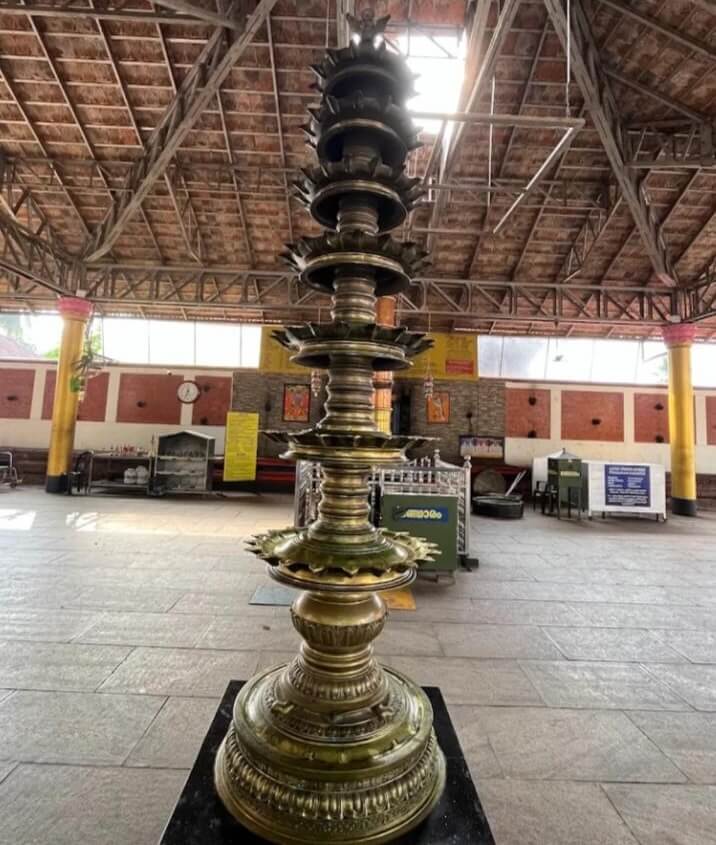 This offering is prepared by Antharjanams, the women of Namboothiri Illams, who come to the temple and prepare it while chanting prayers. It is considered a special temple offering in Kerala. Devotees make this offering for relief from stomach ailments, blessings for children and family prosperity. It usually has to be booked several months in advance. Another important offering is Vella Nivedyam, consisting of rice, curd and pickle, which is offered immediately after the temple opens in the morning, before the Abhishekam. It is offered in memory of the food that Mother Devaki gave Krishna when he returned hungry after killing Kamsa. Devotees offer Vella Nivedyam for relief from severe hunger and digestive problems. Vennai Nivedyam, an offering of butter, which is believed to be a favourite of young Krishna, is made for children’s development and recovery from illnesses. Avil Nivedyam is offered in memory of Kuchhela offering beaten rice to Lord Krishna and is mainly made for relief from poverty and financial prosperity. It is especially popular on Kuchhela Day in Dhanu. Palpayasam, a common offering at Sree Krishna temples, is also an important offering here. Devotees offer Palpayasam for the fulfilment of wishes and good health.
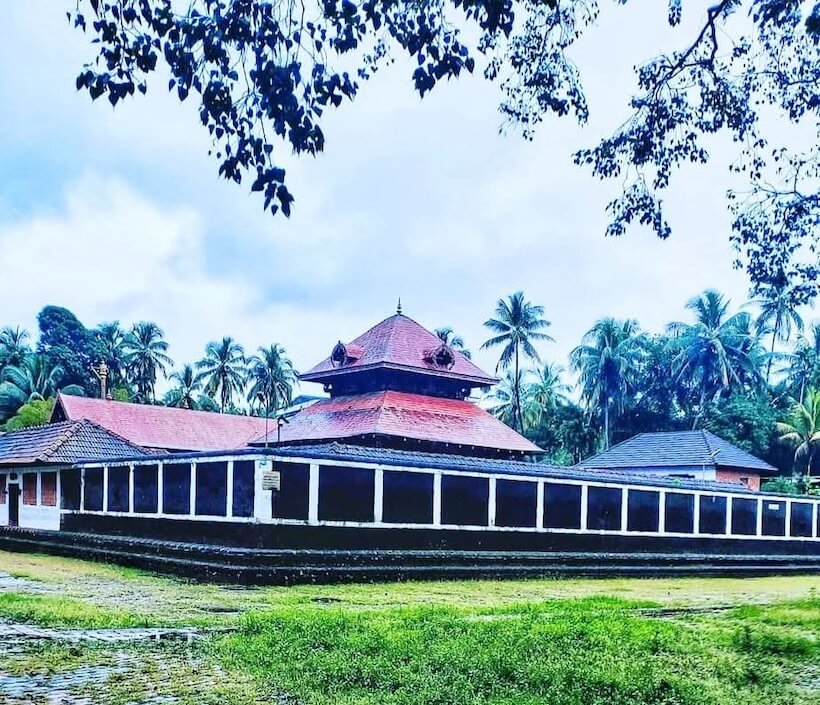 The daily poojas at the temple begin with the opening of the sanctum at 5:00 AM. Vella Nivedyam is offered to the deity immediately after the temple opens. This is followed by Abhishekam at 5:30 AM and Usha Pooja at 6:15 AM. Ucha Pooja is performed at 10:30 AM, after which the temple closes at 12:00 noon. The temple reopens at 5:30 PM, followed by Deeparadhana at 6:30 PM. Athazha Pooja is performed at 7:30 PM, and the temple closes at 8:00 PM. The pooja timings may vary slightly on special festival days and other important occasions.
Men visiting the temple should wear a mundu (dhoti) and melmundu (upper cloth). Shirts, vests and other upper garments must be removed when entering the Nalambalam. Trousers and lungis are not allowed. Women may wear sarees, set mundu or churidar with a shawl. The use of mobile phones and photography is prohibited within the temple premises, especially inside the Nalambalam. As the temple follows traditional customs and practices, only Hindus are allowed to enter the temple. Those observing ritual impurity, such as Pulakuli or Valayma, should not enter the temple and are required to maintain ritual purity.
Key highlight :-
- Located 22 km from Kannur city and 21 km from Payyannur.
- The nearest railway station is Kannur Railway Station, about 22 km away.
- Kannur International Airport is about 38 km from the temple.
- KSRTC and local bus facilities are available to the temple.
- Private vehicles can be parked in the temple’s parking area.
- Accommodation and food facilities are available near the temple.
त्रिचंबरम श्री कृष्ण मंदिर
त्रिचंबरम, तालिपरम्बा, जिला। कन्नूर.
मंदिरे
Temples
मंदिर
મંદિરો
கோவில்கள்
దేవాలయాలు
ക്ഷേത്രങ്ങൾ
ದೇವಾಲಯಗಳು
মন্দিরসমূহ
ਮੰਦਿਰ
-
कलारीवथुक्कल भगवती मंदिर वलपट्टणम, जि. कन्नूर.
अधिक माहितीKalarivathukkal Bhagavathy Temple Valapattanam, Dist. Kannur.
View Detailsकलारीवथुक्कल भगवती मंदिर वलपट्टनम, जिला. कन्नूर.
विवरण देखेंKalarivathukkal Bhagavathy Temple Valapattanam, Dist. Kannur.
વિગત જુઓKalarivathukkal Bhagavathy Temple Valapattanam, Dist. Kannur.
விவரங்களைக் காண்கKalarivathukkal Bhagavathy Temple Valapattanam, Dist. Kannur.
వివరాలను చూడండిKalarivathukkal Bhagavathy Temple Valapattanam, Dist. Kannur.
വിശദാംശങ്ങൾ കാണുകKalarivathukkal Bhagavathy Temple Valapattanam, Dist. Kannur.
ವಿವರಗಳನ್ನು ವೀಕ್ಷಿಸಿKalarivathukkal Bhagavathy Temple Valapattanam, Dist. Kannur.
বিস্তারিত দেখুনKalarivathukkal Bhagavathy Temple Valapattanam, Dist. Kannur.
ਵੇਰਵੇ ਦੇਖੋ -
श्री मदायी तिरुवरकाडू भगवती मंदिर मदयकावू, पऱ्हांगडी, जि. कन्नूर.
अधिक माहितीSree Madayi Thiruvarkadu Bhagavathy Temple Madayikavu, Pazhayangadi, Dist. Kannur.
View Detailsश्री मदायि तिरुवरकाडु भगवती मंदिर मदायिकावु, पझायंगडी, जिला। कन्नूर.
विवरण देखेंSree Madayi Thiruvarkadu Bhagavathy Temple Madayikavu, Pazhayangadi, Dist. Kannur.
વિગત જુઓSree Madayi Thiruvarkadu Bhagavathy Temple Madayikavu, Pazhayangadi, Dist. Kannur.
விவரங்களைக் காண்கSree Madayi Thiruvarkadu Bhagavathy Temple Madayikavu, Pazhayangadi, Dist. Kannur.
వివరాలను చూడండిSree Madayi Thiruvarkadu Bhagavathy Temple Madayikavu, Pazhayangadi, Dist. Kannur.
വിശദാംശങ്ങൾ കാണുകSree Madayi Thiruvarkadu Bhagavathy Temple Madayikavu, Pazhayangadi, Dist. Kannur.
ವಿವರಗಳನ್ನು ವೀಕ್ಷಿಸಿSree Madayi Thiruvarkadu Bhagavathy Temple Madayikavu, Pazhayangadi, Dist. Kannur.
বিস্তারিত দেখুনSree Madayi Thiruvarkadu Bhagavathy Temple Madayikavu, Pazhayangadi, Dist. Kannur.
ਵੇਰਵੇ ਦੇਖੋ -
अणियाराम शिव मंदिर अनियाराम, थलासेरी, जि. कन्नूर.
अधिक माहितीAniyaram Shiva Temple Aniyaram, Thalassery, Dist. Kannur.
View Detailsअनियाराम शिव मंदिर अनियाराम, थालास्सेरी, जिला। कन्नूर.
विवरण देखेंAniyaram Shiva Temple Aniyaram, Thalassery, Dist. Kannur.
વિગત જુઓAniyaram Shiva Temple Aniyaram, Thalassery, Dist. Kannur.
விவரங்களைக் காண்கAniyaram Shiva Temple Aniyaram, Thalassery, Dist. Kannur.
వివరాలను చూడండిAniyaram Shiva Temple Aniyaram, Thalassery, Dist. Kannur.
വിശദാംശങ്ങൾ കാണുകAniyaram Shiva Temple Aniyaram, Thalassery, Dist. Kannur.
ವಿವರಗಳನ್ನು ವೀಕ್ಷಿಸಿAniyaram Shiva Temple Aniyaram, Thalassery, Dist. Kannur.
বিস্তারিত দেখুনAniyaram Shiva Temple Aniyaram, Thalassery, Dist. Kannur.
ਵੇਰਵੇ ਦੇਖੋ