
पेरूर पतेश्वर मंदिर
पेरूर, जि. कोईम्बतूर.
Perur Pateeswarar Temple
Perur, Dist. Coimbatore.
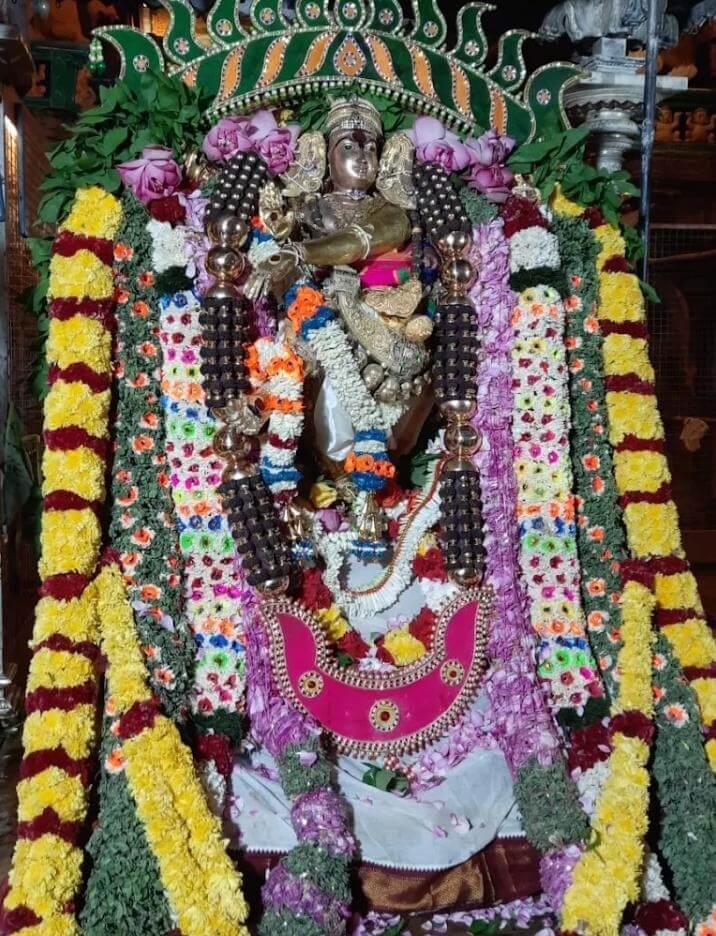 Perur Pateeswarar Temple is an ancient Hindu temple dedicated to Lord Shiva, located at Perur on the western side of Coimbatore, Tamil Nadu, on the banks of the Noyyal River. The temple is traditionally believed to have been built by Karikala Chola in the 2nd century AD. It has historical links with poets such as Arunagirinathar and Kachiyappa Munivar. Pateeswarar (Shiva), along with his consort Pachainayaki (Parvati), is the main deity. The main shrine houses a Swayambhu Lingam, believed to have appeared naturally. A large monolithic Nandi statue, carved from a single block of stone, stands in front of the temple and is one of its notable features. The ancient temple is known for its beautiful carvings and fine Dravidian architecture.
The history of Perur Pateeswarar Temple dates back to ancient times. It is traditionally believed that an ancient shrine dedicated to Pateeswarar existed at Perur during the reign of the Chola king Karikala Chola in the 2nd century AD. Karikala Chola is also traditionally said to have established the Karuvarai (sanctum) of the temple. However, there is no firm historical evidence that the present large temple complex was built entirely by Karikala Chola. Over the centuries, Chola, Pandya and later Nayak rulers expanded the temple and added various mandapams, stone structures and gopurams. 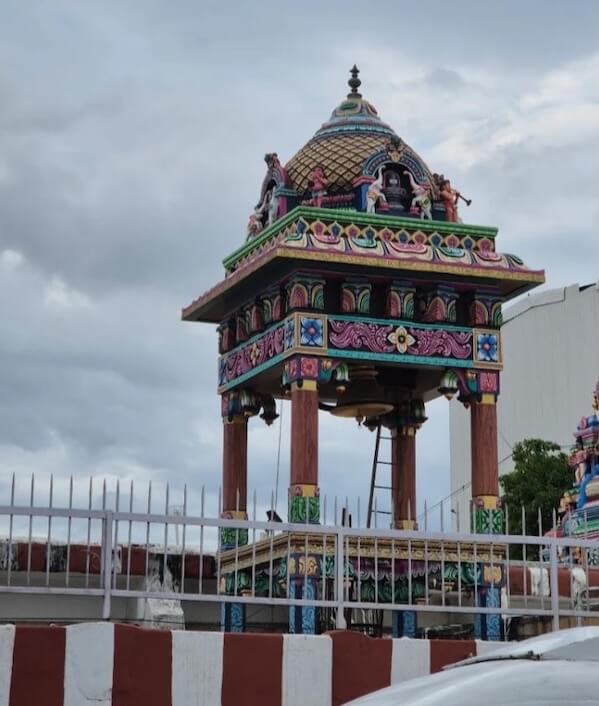 Many of the existing stone structures are associated with the later Chola and Pandya periods. Thus, the temple is regarded as an important Tamil Shaivite temple with a worship tradition dating back more than 2,000 years, which developed over several centuries.
Several findings shed light on the ancient history of the temple and its surrounding areas. Roman coins found in and around the temple suggest that Perur had links with overseas trade in ancient times. Excavations carried out by the Archaeological Survey of India have also uncovered stone axes and other ancient artefacts. The Kongu Chola period played an important role in the development of the temple, with features such as the Ardha Mandapam and Maha Mandapam believed to have been developed between the 11th and 13th centuries. The beautiful Kanaka Sabha was built during the rule of the Madurai Nayaks in the 17th century. Inscriptions on the temple walls record details of land, gold and money donated by rulers, as well as information about the administrative and taxation systems of that period. Perur also holds an important place in Tamil Shaivite literature. Sundarar is traditionally associated with hymns praising Pateeswarar, while later poets, including Arunagirinathar, also recorded the importance of Perur in their works.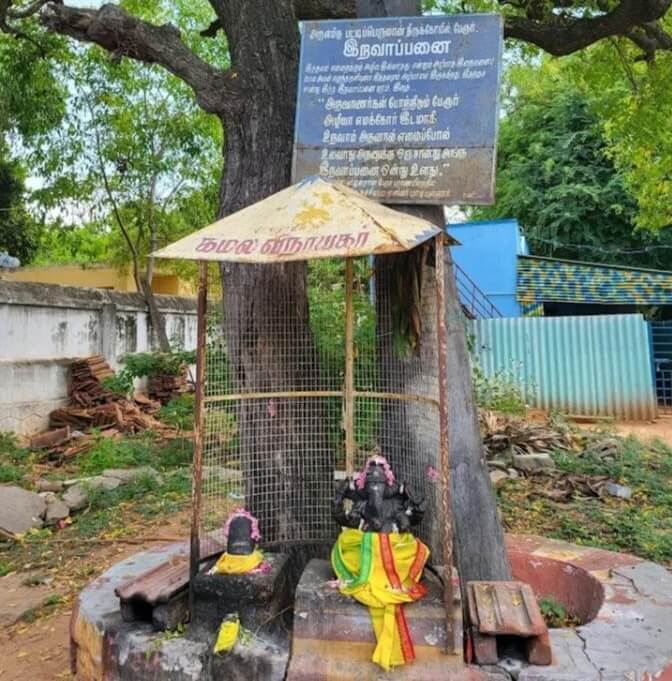
The administration of the temple changed over different periods. It was initially under the Chola kings and later came under the control of various dynasties, including the Pandyas, Hoysalas, Vijayanagara rulers and the Madurai Nayaks. During these periods, the kings or their appointed officials oversaw the temple’s income, tax collection, maintenance and development. As royal rule weakened, local Palayakkarars and prominent families also gained influence over the temple administration. After the fall of Tipu Sultan, the Coimbatore region came under British control and the East India Company managed the temple’s income and administration for a period before handing over its management to local trustees. At present, the temple is under the administrative control of the Hindu Religious and Charitable Endowments (HR&CE) Department of the Tamil Nadu Government. Its day-to-day administration is carried out under the supervision of an Executive Officer appointed by the government.
According to the Sthala Purana of the Tamil tradition, Kamadhenu,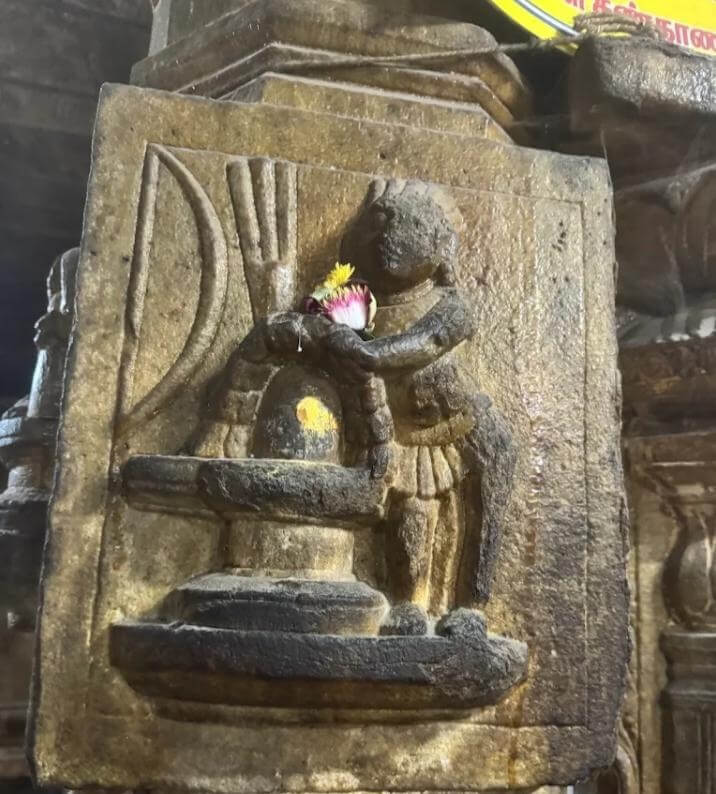 the celestial cow, came to Perur and performed severe penance to attain the position of Brahma, the creator of the universe. It is believed that Kamadhenu worshipped a Swayambhu Lingam hidden inside a large anthill by offering milk to it every day. One day, her calf, ‘Patti’, accidentally stepped on and broke the anthill while playing and its hoof struck the top of the Lingam. When blood began to flow from the Lingam, Kamadhenu sought forgiveness from Lord Shiva. Shiva then appeared and said that he was pleased with Patti’s playful act and held no anger towards the calf. It is believed that the place where Patti worshipped Shiva came to be known as ‘Pattipuri’, while the deity became known as ‘Pateeswarar’. A mark believed to be the hoof mark of Patti can still be seen on the top of the main Lingam. In Tamil Shaivite tradition, Perur is considered a sacred place equal in importance to Chidambaram and is therefore known as ‘Melai Chidambaram’ (Western Chidambaram). The Tamil Sthala Purana also states that in response to the prayers of Sage Patanjali and Sage Vyaghrapada, Lord Shiva performed his cosmic dance, the ‘Ananda Tandava’, at this sacred place.
The temple is associated with important beliefs such as ‘Pirava Puli’ (Birthless Tamarind) and ‘Irava Panai’ (Deathless Palm). 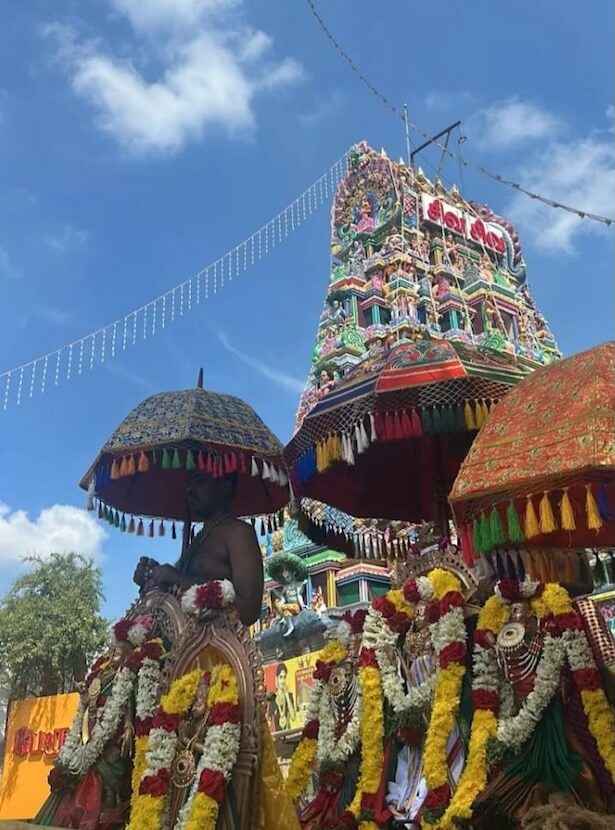 It is believed that the seeds of the tamarind tree in front of the temple will not sprout wherever they are planted, symbolising the belief that the seeds of karma of devotees who pray to Pateeswarar here are destroyed, freeing them from rebirth. The ‘Irava Panai’ in the temple courtyard is also believed never to wither or die. According to Tamil Shaivite tradition, when the Shaivite Nayanar Sundarar came to Perur to worship Pateeswarar, Shiva and Parvati disguised themselves as farmers and hid in a nearby paddy field to test him. When Sundarar could not find the Lord in the temple, Nandikeswarar is believed to have pointed towards the field with his tail. Shiva then appeared before Sundarar in the guise of a farmer and blessed him. To commemorate this legend, the ‘Nattru Nadavu Festival’ (paddy planting festival) is still celebrated on a grand scale. Shaivite tradition also states that other Nayanars, including Tirugnana Sambandar and Tirunavukkarasar, composed Tevaram hymns in praise of Pateeswarar at Perur.
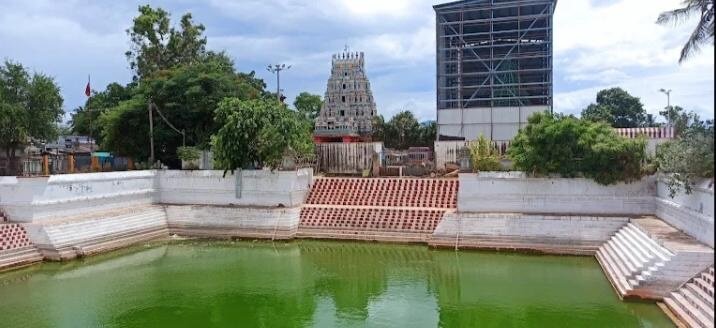
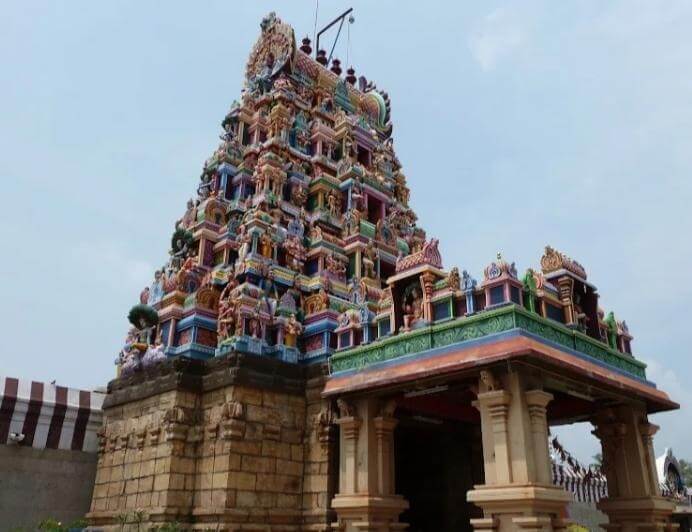
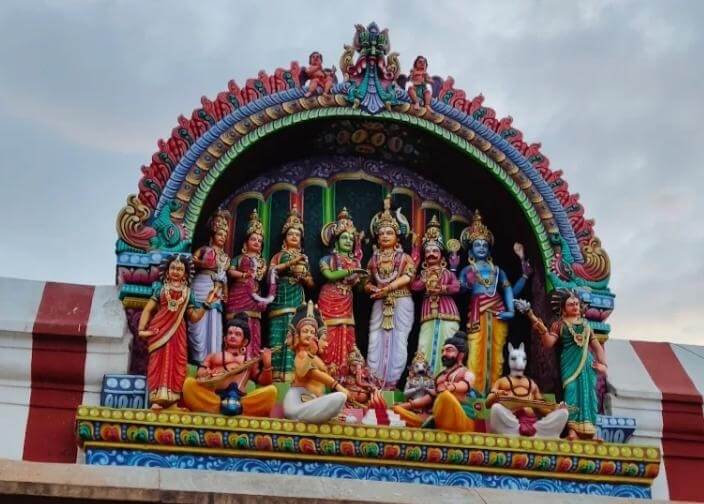
One of the first features to attract attention is the seven-tiered Rajagopuram on the eastern side of the temple. The gopuram is decorated with numerous colourful sculptures of deities from Hindu mythology, adding to the grandeur of the temple. A large temple tank used for rituals is located near the temple, along with fortress-like compound walls built of granite.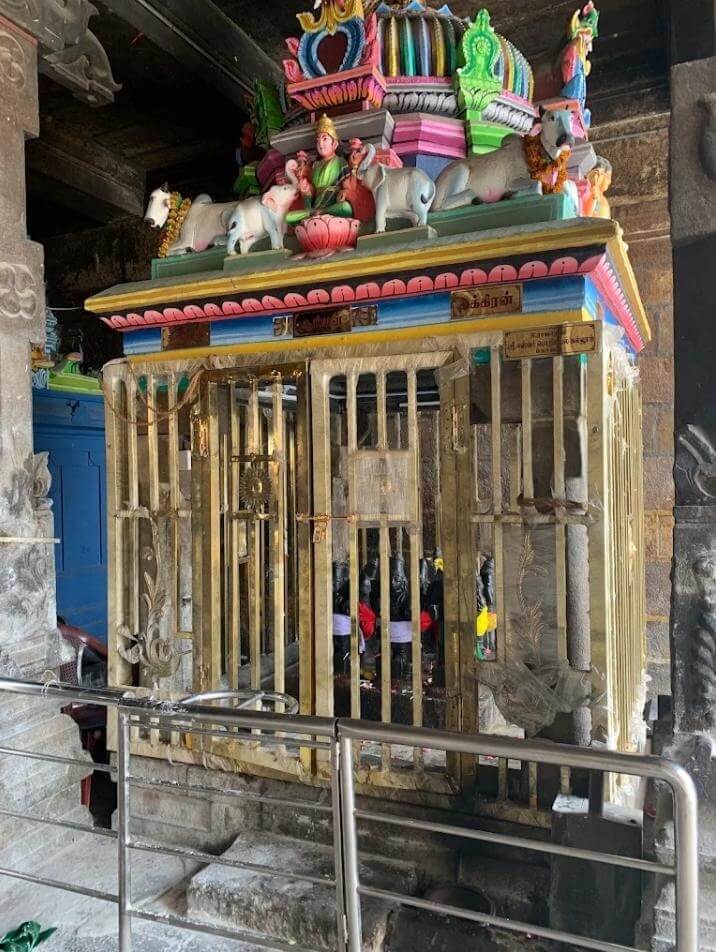 Beyond the Rajagopuram are spacious mandapams with granite pillars and ancient wall paintings. One of the main attractions is the Kanaka Sabha, where monolithic granite pillars are finely carved with various forms of Shiva in dance, Narasimha and Goddess Kali. The intricate details of the sculptures, including their ornaments, can be seen clearly. Stone chains carved from granite are another notable feature of the Kanaka Sabha. In front of the main Karuvarai stand a gold-covered flagstaff and a large granite Nandi sculpture facing Pateeswarar.
The innermost shrine, known as the Karuvarai, is built with black granite. A Vimanam stands above the Karuvarai. In front of it are the Ardha Mandapam and further ahead, the Maha Mandapam, which are believed to have been developed during the later Kongu Chola period. Large granite sculptures of Dwarapalakas stand on either side of the entrance to the Karuvarai. The main deity inside is Pateeswarar in the form of a Shiva Lingam. Worshipped as a Swayambhu Lingam, it is set on a granite Avudaiyar. A mark believed to be the hoof mark of Patti can also be seen on the top of the Lingam. Ghee lamps are mainly used to light the dark inner shrine. A separate shrine dedicated to Pachainayaki Amman (Maragathambikai), the consort of Pateeswarar, is located near the main Karuvarai, where the Goddess is represented in a standing form.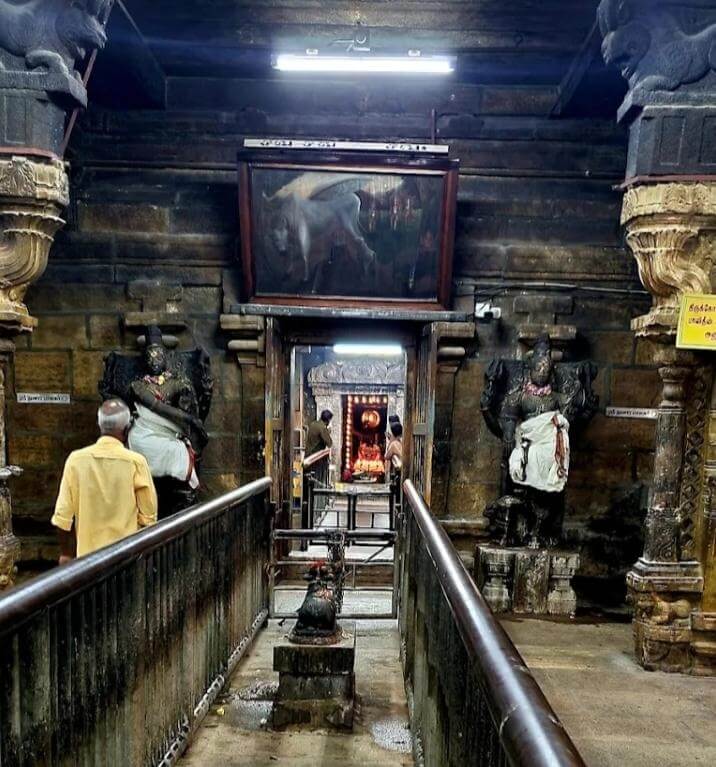
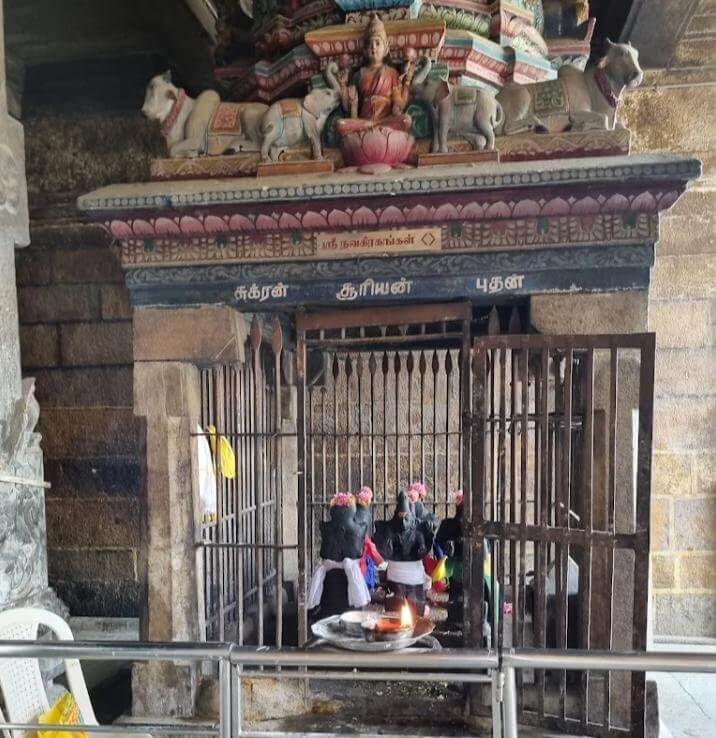
Among the main sub-shrines of the temple, the shrine of Nataraja and Sivakami Amman in the Kanaka Sabha is particularly important. Nataraja, the dancing form of Shiva, is enshrined in the Kanaka Sabha. The shrine of Niruthi Vinayakar, a form of Lord Ganesha, is located at the south-western corner of the inner prakaram. According to Tamil temple tradition, Ganesha is worshipped first while going around the temple. To the west of the main Karuvarai is the shrine of Subramanya Swamy, with his consorts Valli and Deivanai, along with a beautifully carved peacock sculpture. A rare shrine dedicated to Bhima, one of the five Pandavas of the Mahabharata, is located near the goshala in the north-eastern part of the temple, where devotees pray for relief from illnesses. The koshta niches on the outer walls of the main Karuvarai contain Dakshinamurthy on the southern wall, Lingodbhava on the western wall, and Brahma and Goddess Durga on the northern wall. The shrine of Bhairava is located in the north-eastern part of the inner prakaram, while the shrines of Surya and Chandra are found near the eastern entrance. 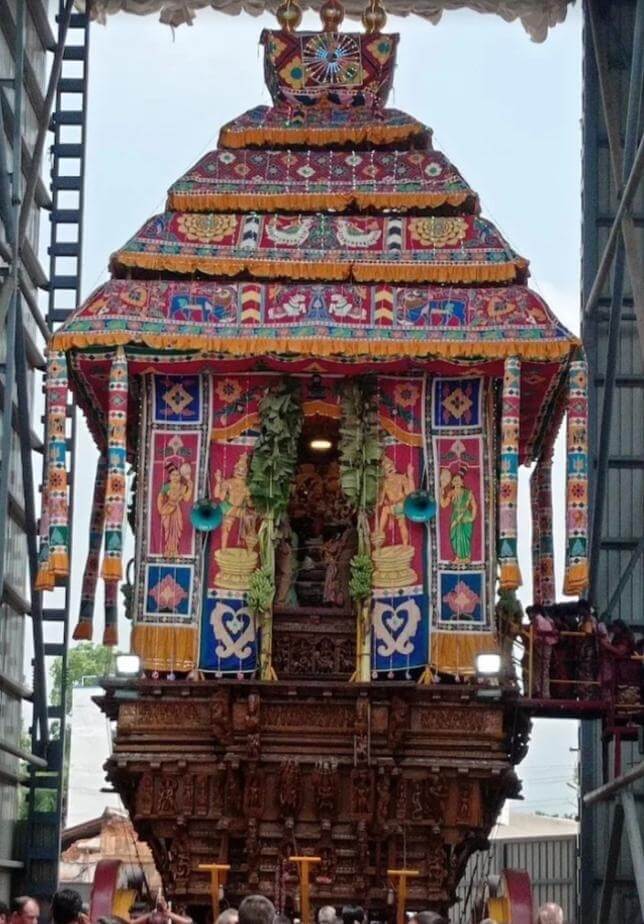 The shrine of Chandikeswarar is located to the north of the Karuvarai, near the channel through which the abhishekam water flows out.
Among the main festivals of the temple, Panguni Uthiram (March–April), celebrated on the Uthiram star in the Tamil month of Panguni, is the main annual festival. As part of the festival, the festival images of Pateeswarar and Pachainayaki Amman are taken in procession on large decorated wooden chariots, which are pulled by devotees through the streets around the temple. The Nattru Nadavu Festival, held in the Tamil month of Aani (June–July), commemorates the legend associated with Sundaramurthy Nayanar. On this day, the festival image is taken in procession to a nearby paddy field, where a symbolic paddy planting ceremony is performed. Maha Shivaratri (February–March) is celebrated with special night-long worship and abhishekams. The Natyanjali Dance Festival is also held in connection with Shiva’s Ananda Tandava, with dancers from different parts of India offering dance performances to Nataraja in the Kanaka Sabha. Arudra Darshan (December–January) is observed on the Thiruvathira star in the Tamil month of Margazhi, with special abhishekam and Deeparadhana for Nataraja in the Kanaka Sabha. In addition, special abhishekam and worship are performed for Nandikeswarar on the Pradosham days that occur twice every month. Aadi Perukku (July–August) is also observed as a special day associated with the waters and prosperity of the Noyyal River.
The main offerings at the temple include Sirappu Abhishekam for Pateeswarar. The main deity is given abhishekam using auspicious items such as milk, curd, tender coconut water, sandalwood paste, sugarcane juice, Panchamritam and Vibhuti. Vilva Archana, performed with sacred Vilva leaves while chanting the names of Shiva, is another important offering. It is believed to remove sins and bring spiritual merit. Women perform Kumkum Archana for Pachainayaki Amman, praying for a long married life and the removal of marriage-related obstacles. Offering a silk saree to the Goddess and green glass bangles for a safe childbirth and fulfilment of wishes are also important Tamil traditions. On the Pradosham days that occur twice every month, special evening abhishekam and worship are performed for Nandikeswarar. Offering Arugampul garlands and Arali flower garlands to Nandi, along with a naivedyam made of rice flour and jaggery, is another important offering, believed to help devotees overcome debts. Annadanam, considered a highly meritorious act in Tamil tradition, is provided to devotees every afternoon. Devotees can contribute money or rice towards the Annadanam. Lighting ghee lamps in earthen lamps at the Kanaka Sabha, where Nataraja is enshrined and at other shrines is also a common devotional practice.
The temple is open every day from 06:00 AM to 01:00 PM and from 04:00 PM to 09:00 PM. The daily worship begins with Kalasanthi Pooja, held from 07:30 AM to 09:00 AM. This is followed by Uchikala Pooja from 11:00 AM to 12:00 PM, Sayarakshai Pooja from 04:30 PM to 06:30 PM and Arthajama Pooja from 08:30 PM to 09:00 PM. Arthajama Pooja is the final pooja before the temple closes. On special days such as Pradosham, Maha Shivaratri, annual festivals and the chariot festival, the pooja and darshan timings may change.
Key highlight :-
- Located 9 km from Coimbatore city, 10 km from Gandhipuram and 13 km from Thudiyalur.
- The nearest railway station is Coimbatore Junction, about 7 km from the temple.
- TNSTC and KSRTC bus services are available to Coimbatore, from where local bus services are available to the temple.
- Paid parking facilities are available near the temple.
- Accommodation and food facilities are available near the temple.
- Contact number 180042531111
पेरूर पाटेश्वर मंदिर
पेरूर, जिला. कोयंबटूर.
मंदिरे
Temples
मंदिर
મંદિરો
கோவில்கள்
దేవాలయాలు
ക്ഷേത്രങ്ങൾ
ದೇವಾಲಯಗಳು
মন্দিরসমূহ
ਮੰਦਿਰ
-
अरुलमिगु कोनियाम्मन मंदिर पूमपुहार नगर, उक्कडम, जिल्हा कोइम्बतूर.
अधिक माहितीArulmigu Koniamman Temple Poompuhar Nagar, Ukkadam, Dist. Coimbatore.
View Detailsअरुलमिगु कोनियाम्मन मंदिर पूमपुहार नगर, उक्कडम, जिला कोयंबटूर।
विवरण देखेंArulmigu Koniamman Temple Poompuhar Nagar, Ukkadam, Dist. Coimbatore.
વિગત જુઓArulmigu Koniamman Temple Poompuhar Nagar, Ukkadam, Dist. Coimbatore.
விவரங்களைக் காண்கArulmigu Koniamman Temple Poompuhar Nagar, Ukkadam, Dist. Coimbatore.
వివరాలను చూడండిArulmigu Koniamman Temple Poompuhar Nagar, Ukkadam, Dist. Coimbatore.
വിശദാംശങ്ങൾ കാണുകArulmigu Koniamman Temple Poompuhar Nagar, Ukkadam, Dist. Coimbatore.
ವಿವರಗಳನ್ನು ವೀಕ್ಷಿಸಿArulmigu Koniamman Temple Poompuhar Nagar, Ukkadam, Dist. Coimbatore.
বিস্তারিত দেখুনArulmigu Koniamman Temple Poompuhar Nagar, Ukkadam, Dist. Coimbatore.
ਵੇਰਵੇ ਦੇਖੋ -
अरुल्मिगु सुब्रमण्य स्वामी मंदिर मरुधामलाई, जि. कोईम्बतूर.
अधिक माहितीArulmigu Subramaniya Swamy Temple Marudhamalai, Dist. Coimbatore.
View Detailsअरुलमिगु सुब्रमण्यम स्वामी मंदिर मरुधामलाई, जिला. कोयंबटूर.
विवरण देखेंArulmigu Subramaniya Swamy Temple Marudhamalai, Dist. Coimbatore.
વિગત જુઓArulmigu Subramaniya Swamy Temple Marudhamalai, Dist. Coimbatore.
விவரங்களைக் காண்கArulmigu Subramaniya Swamy Temple Marudhamalai, Dist. Coimbatore.
వివరాలను చూడండిArulmigu Subramaniya Swamy Temple Marudhamalai, Dist. Coimbatore.
വിശദാംശങ്ങൾ കാണുകArulmigu Subramaniya Swamy Temple Marudhamalai, Dist. Coimbatore.
ವಿವರಗಳನ್ನು ವೀಕ್ಷಿಸಿArulmigu Subramaniya Swamy Temple Marudhamalai, Dist. Coimbatore.
বিস্তারিত দেখুনArulmigu Subramaniya Swamy Temple Marudhamalai, Dist. Coimbatore.
ਵੇਰਵੇ ਦੇਖੋ