अरुल्मिगु सुब्रमण्य स्वामी मंदिर
मरुधामलाई, जि. कोईम्बतूर.
Arulmigu Subramaniya Swamy Temple
Marudhamalai, Dist. Coimbatore.
 Arulmigu Subramaniya Swamy Temple, popularly known as Marudamalai Murugan Temple, located in the Western Ghats near Coimbatore in Tamil Nadu, is one of the most important pilgrimage centres dedicated to Lord Murugan. Believed to have been built in the 12th century CE, this ancient temple is mentioned in the Purananuru, which states that it was established by the Tamil kings of the Sangam period. Regarded as the most significant Murugan temple after the six Arupadai Veedu temples, Marudamalai is revered by devotees as the “Seventh Abode” of Lord Murugan. Situated on a hill about 12 km west of Coimbatore city, the temple offers a peaceful setting surrounded by the natural beauty of the Western Ghats. Unlike most Murugan temples, it is uniquely located on the eastern slope of the hill. Major festivals, including Thaipusam, are celebrated here every year, attracting thousands of devotees from across the region.
The history of Marudamalai Murugan Temple dates back to the Sangam period. The earliest reference to this sacred hill is found in the Purananuru, a Sangam literary work that is around 2,000 years old. Based on this, historians believe that the hill was already a place of worship during the 2nd or 3rd century CE. The main structure of the present temple was built during the 12th century CE under the rule of the Chola kings. Historical records from the nearby Thirumuruganpoondi Temple, the Perur Puranam and stone inscriptions found at the temple confirm this. The inscriptions also mention the names “Marudhan” and “Marudachalam”, showing that these names have been associated with the hill since the 12th century. 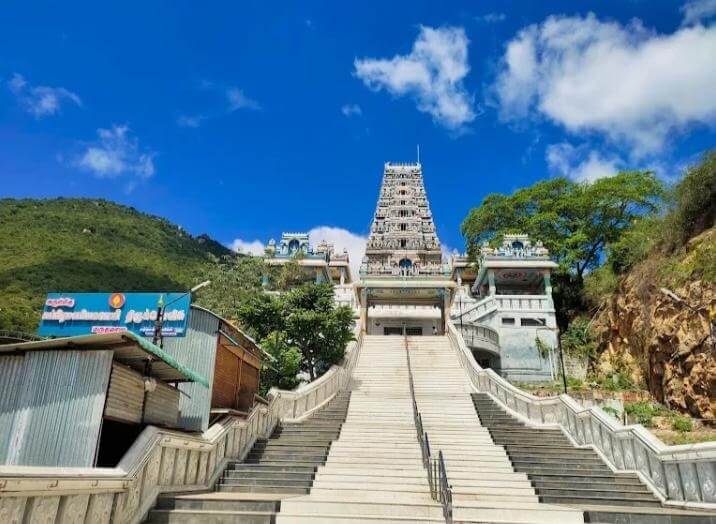 The temple was later expanded by the Pandya kings and the Madurai Nayaks, who added mandapams and beautiful sculptures. In the 15th century, the famous Tamil poet Arunagirinathar praised Lord Murugan of Marudamalai in his Tiruppugazh hymns. Today, the temple is administered by the Hindu Religious and Charitable Endowments (HR&CE) Department of the Government of Tamil Nadu under the supervision of an Executive Officer and a Board of Trustees.
Several legends are associated with Marudamalai Murugan Temple. According to one popular belief, a group of maidens sought refuge on this hill to escape the attacks of the Asura Surapadman and prayed to Lord Subrahmanya for protection. Moved by their prayers, Lord Murugan appeared on the hill, defeated the Asura and saved the maidens. It is believed that the hill came to be known as “Marudachalam” after this event.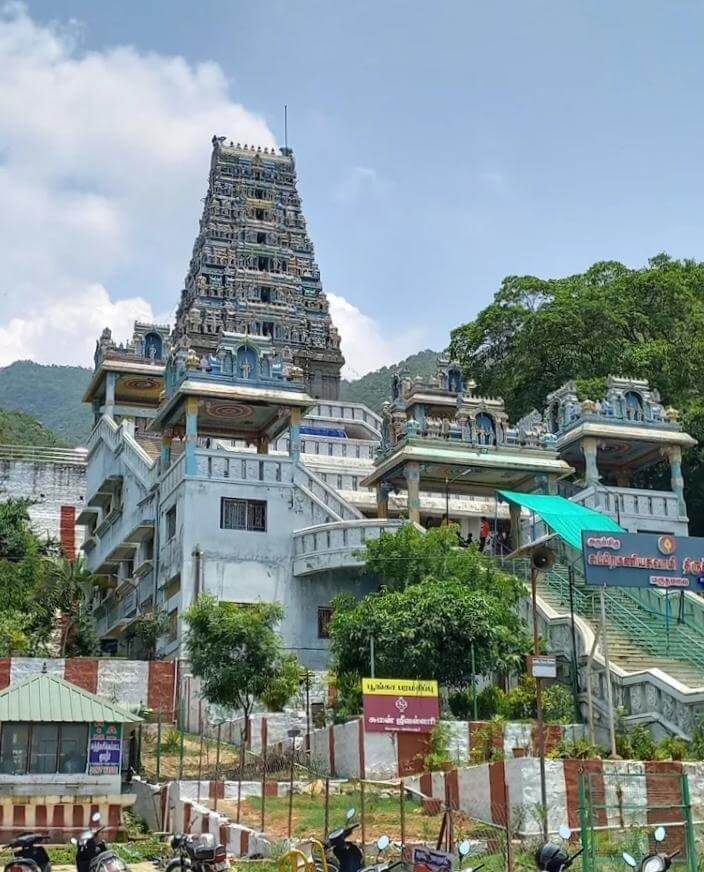 Another well-known legend is connected with Pambatti Siddhar, one of the revered Nava Siddhars of Tamil Nadu, who is believed to have performed penance in a cave on the hill. While searching for a rare Naga, Lord Murugan appeared before him in the form of a young boy and taught him that the true Naga to be conquered was not the one outside, but the inner Naga of ego. The boy then revealed Himself as Lord Murugan and became a self-manifested deity beneath a Marudha tree. The hill is also known for its rich variety of medicinal plants and devotees believe that its air and water possess healing qualities. It is also believed that the nearby Marudha Theertham was created when Lord Murugan struck the ground with His Vel and that its sacred water has the power to cure illnesses.
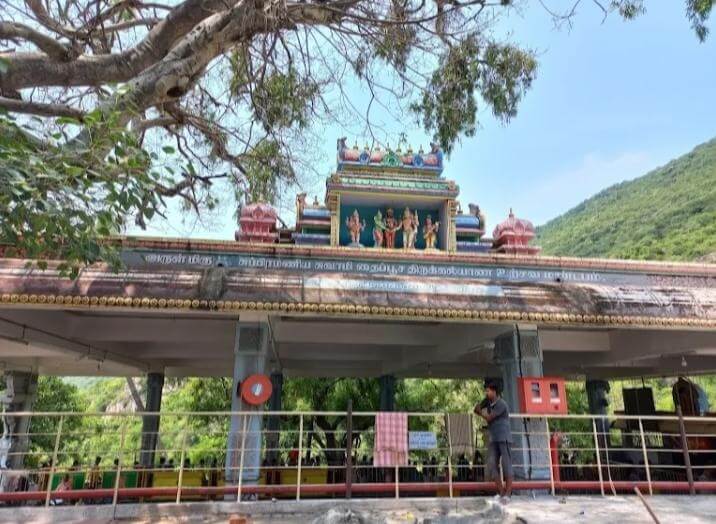
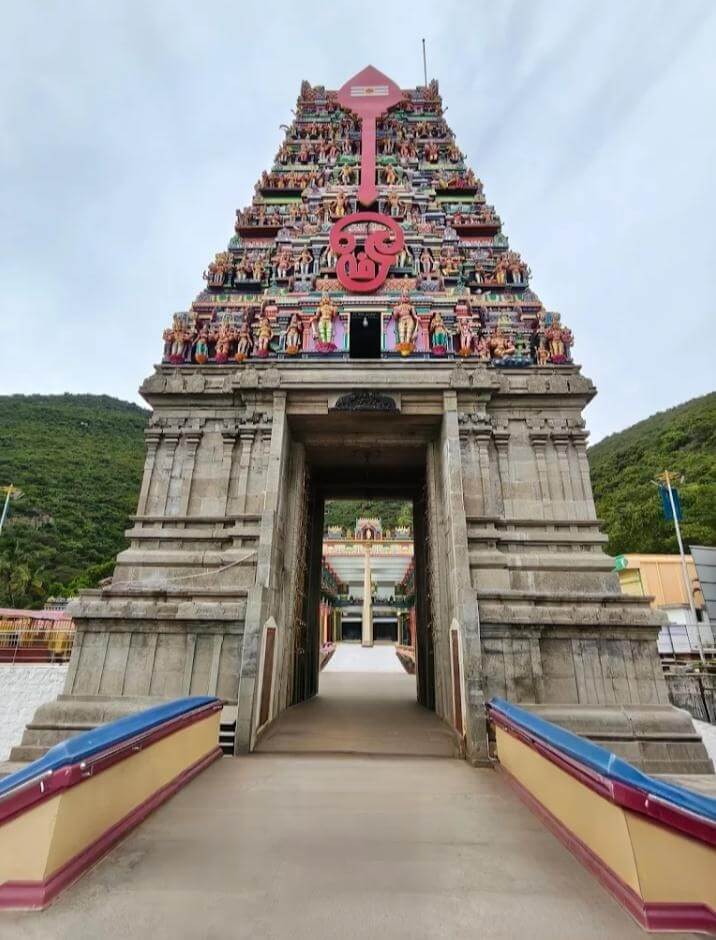
Built in the traditional Dravidian style of architecture, Marudamalai Murugan Temple is situated at an elevation of about 500 feet above sea level in the Western Ghats. The beautifully designed Dravidian-style gopuram at the foothill and the five-tiered Rajagopuram at the hilltop are among the temple’s main architectural features. The Rajagopuram is adorned with colourful sculptures depicting scenes from the life of Lord Murugan and various episodes from Hindu mythology. 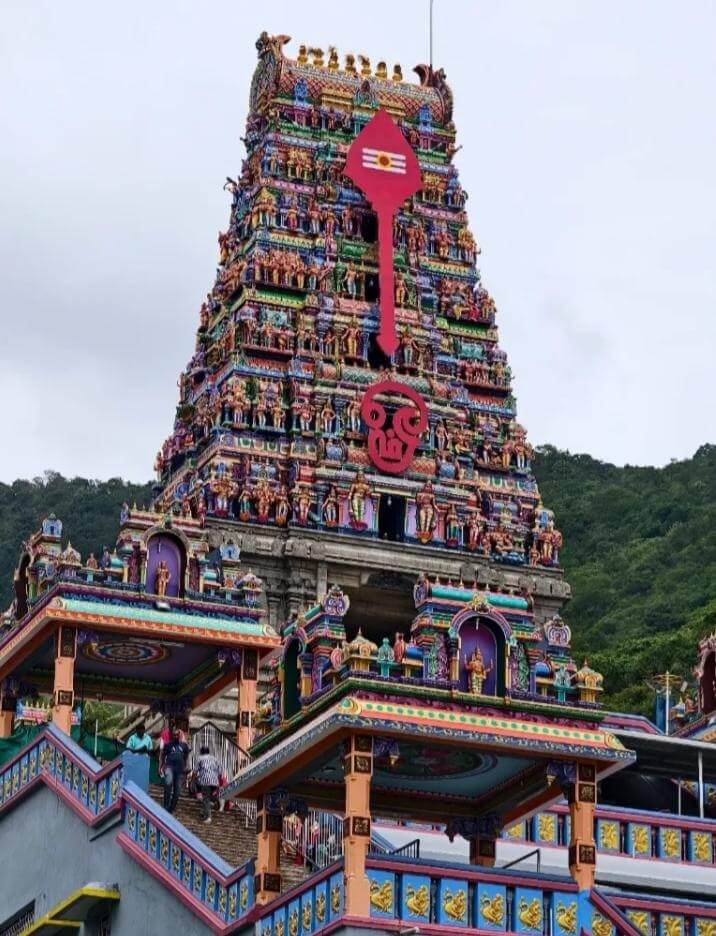 The temple also offers wide panoramic views of Coimbatore city and the surrounding Western Ghats, adding to its unique appeal.
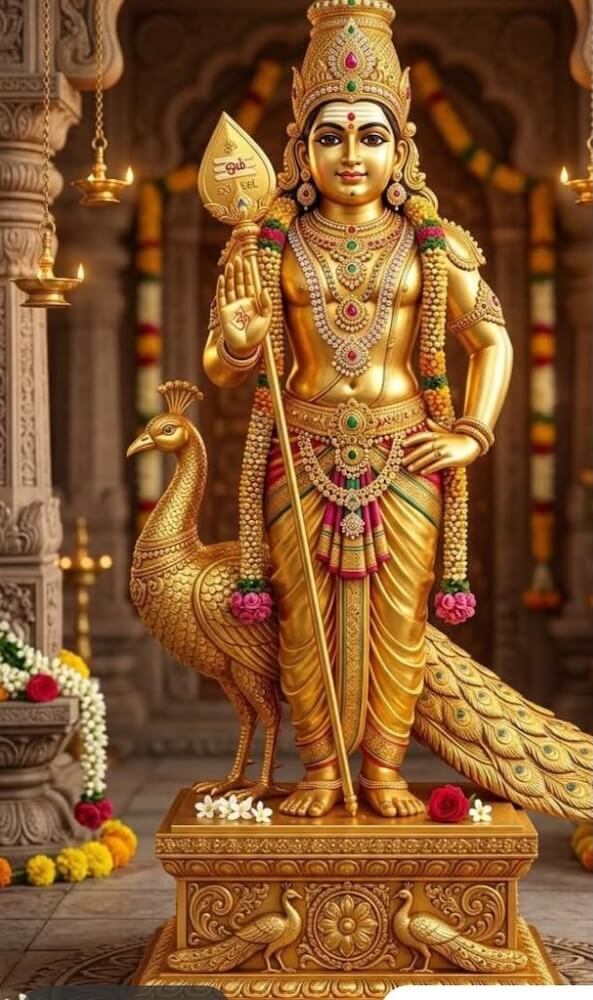
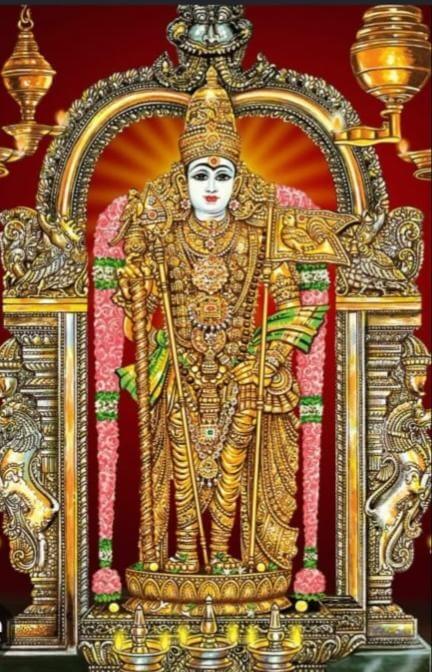
Passing through the main Rajagopuram, devotees enter spacious mandapams supported by beautifully carved granite pillars that display the fine craftsmanship of traditional Dravidian architecture. In front of the Sreekovil are the Dwajasthambam (flagstaff), the Balipeetam (altar) and the sacred peacock, the vehicle of Lord Murugan. The sanctum sanctorum enshrines Lord Subrahmanya as Marudachalamurthy in the form of Dandayudhapani, holding the Vel and facing west. This west-facing sanctum is a rare feature among Murugan temples and is regarded as one of the temple’s unique characteristics. The main Sreekovil has been preserved in its original 12th-century granite Dravidian style.
The shrine of Varasiddhi Vinayakar is located to the left of the main Sreekovil. Behind the Sreekovil is the shrine of Aadhi Murugan, while the idols of the Navaveerars are situated near the entrance. The shrines of Lord Chokkanathar (Shiva) and Goddess Meenakshi Amman are located on the north-western side of the Sreekovil. At the end of the steps leading to the hilltop, just before the temple entrance, is the shrine of Idumban Swamy. 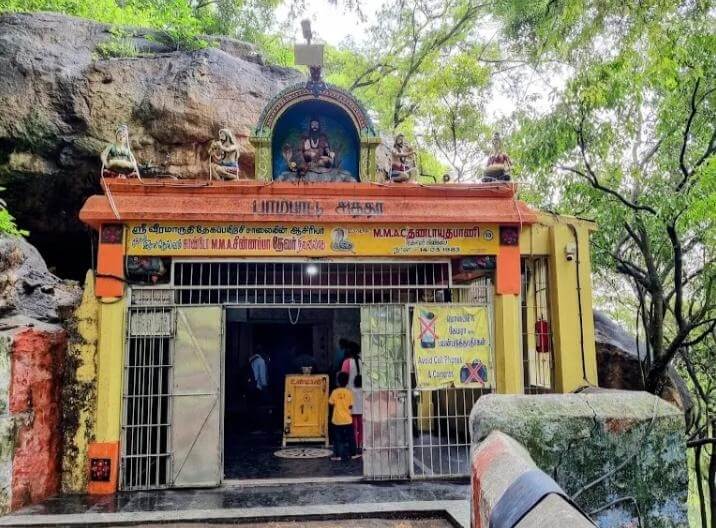 A short walk down the hillside from the main temple leads to the natural cave of Pambatti Siddhar and his Jeeva Samadhi. The cave houses the idol of Pambatti Siddhar along with a sculpture of a Naga, both of which are revered by devotees.
The temple celebrates several festivals throughout the year. The most important among them is Thaipusam, observed on the Pooyam star in the Tamil month of Thai. This ten-day festival attracts hundreds of thousands of devotees, who climb the hill carrying Kavadi and performing acts of devotion such as piercing with the Vel. The Grand Temple Chariot Festival is one of its main highlights. Skanda Sashti, celebrated in the Tamil month of Aippasi, commemorates Lord Murugan’s victory over the Asura Surapadman. 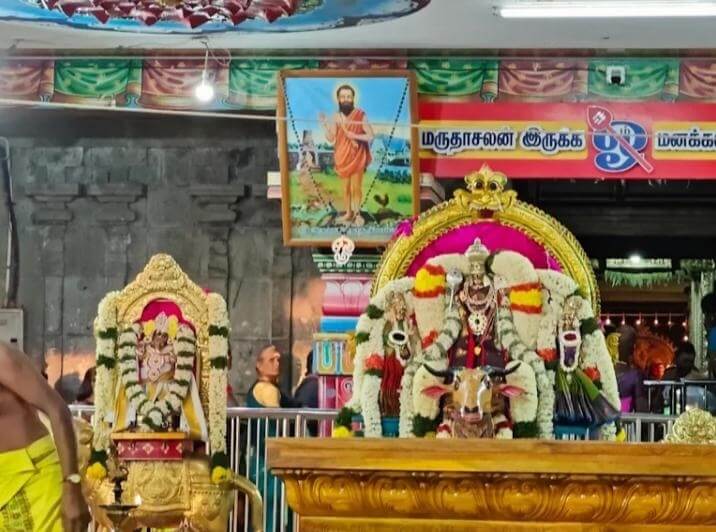 The festival concludes with the enactment of Surasamharam, followed by the Thirukkalyanam (divine wedding) of Lord Murugan and Goddess Valli. Vaikasi Visakam, observed during May–June, marks the birth star of Lord Murugan. Karthigai Deepam, celebrated during November–December, is noted for the lighting of the Mahadeepam on the hilltop and thousands of lamps that illuminate the temple. Aadi Krithigai, observed during July–August, also draws large numbers of devotees carrying Kavadi. In addition, every monthly Sashti and Krithigai are observed with special poojas, abhishekams and Annadanam.
The main offerings at the temple include various forms of Abhishekam, with Milk Abhishekam, Panchamritha Abhishekam and Vibhuti Abhishekam being the most popular. 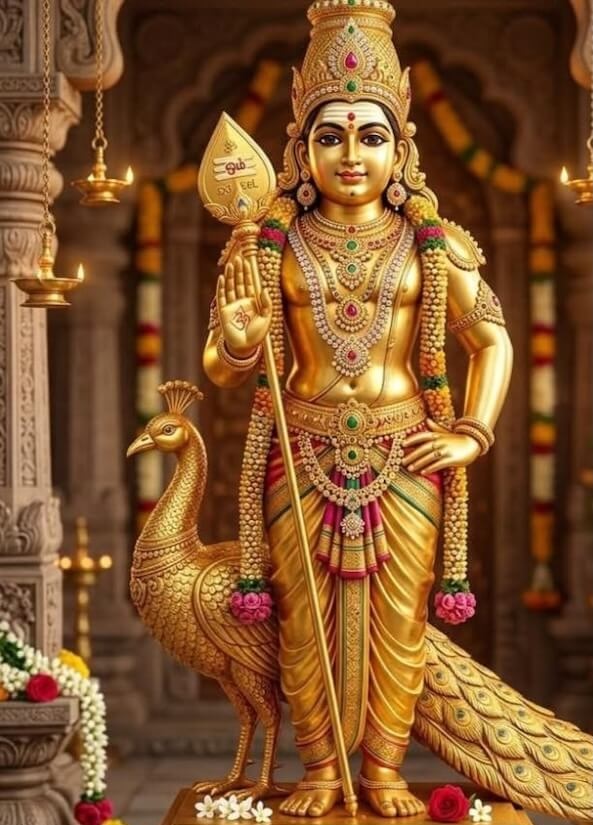 Devotees also offer Kavadi, such as Paal Kavadi, Peeli Kavadi and Pushpa Kavadi, seeking the fulfilment of their wishes and relief from illness. Archana, performed by chanting the names of Lord Murugan, is another common offering for the well-being and prosperity of families. The temple also provides facilities for the first tonsure of children and for devotees offering their hair as part of a vow. Another important offering is the Silver Chariot Procession, in which the festival idol of Lord Murugan is taken around the temple in a silver chariot during the evening. After performing the offerings, devotees can receive prasadam such as Panchamritham, Vibhuti, Kumkum, Puliyodharai (tamarind rice) and Laddu from the temple.
The temple opens daily at 05:30 AM, with the day’s rituals beginning with Go Pooja. This is followed by Vishwaroopa Darshan, Kalasanthi Pooja at 08:30 AM and Uchikala Pooja at 11:30 AM. The temple closes at 01:00 PM and reopens at 02:00 PM. In the evening, Sayaraksha Pooja is held at 04:30 PM, followed by Ardha Jama Pooja at 07:30 PM. Special Abhishekams with milk, rose water and Vibhuti are performed before the main poojas in the morning and evening. The temple closes for the day at 08:30 PM after the Athazha Pooja and Deeparadhana. Although the temple normally remains closed between 01:00 PM and 02:00 PM, it stays open for continuous darshan on festival days.
Key highlight :-
- Located 5 km from Vadavalli, 10 km from Thondamuthur and 12 km from Coimbatore.
- The nearest railway station is Coimbatore Railway Station, about 15 km away.
- TNSTC and local bus services are available to the temple from Gandhipuram and Coimbatore.
- Private vehicles can be parked in the temple’s parking area.
- After parking their vehicles at the foothill, devotees can reach the hilltop by using the shuttle
- buses operated by the Tamil Nadu Government/Temple Administration or by climbing the steps.
- Accommodation and food facilities are available in the nearby town.