
अरुलमिगु कोनियाम्मन मंदिर
पूमपुहार नगर, उक्कडम, जिल्हा कोइम्बतूर.
Arulmigu Koniamman Temple
Poompuhar Nagar, Ukkadam, Dist. Coimbatore.
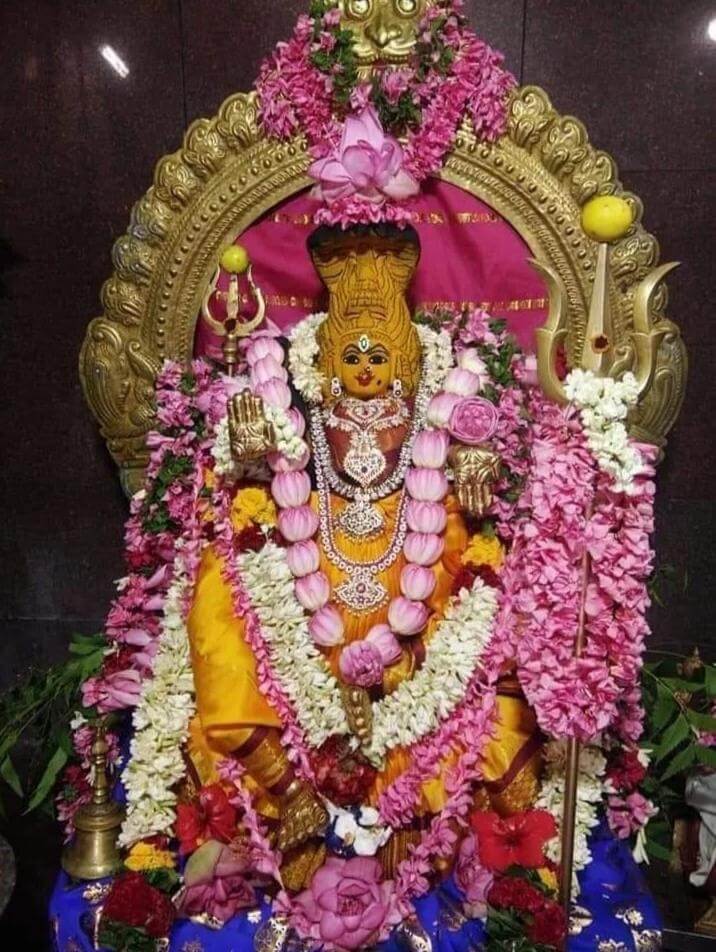 Arulmigu Koniamman Temple is a historic Hindu temple located on the northern bank of the Noyyal River in Coimbatore, Tamil Nadu. Dedicated to Koniamman, a form of Goddess Parvati, the temple is situated in the Town Hall area in the heart of Coimbatore city. Koniamman is worshipped as the guardian deity of the city. It is one of the two historically important temples in Coimbatore; the other is the Perur Patteeswarar Temple.
According to the old Tamil historical record known as the ‘Cholan Poorva Pattayam’, which describes the history of this region, Coimbatore and its surrounding areas were once covered by large forests. Before the 12th century, the area was ruled by the local Irula tribal community. The record states that their leader, Kovan, cleared the forest and developed a small town, which came to be known as ‘Kovanputhur’. The Irulas worshipped a forest deity called ‘Konamma’ by placing a stone as the deity for their protection. Later, in the 13th century, the area came under the rule of the Ilangosar rulers, who built a large mud fort and moat to protect the region from attacks by the Chera kings of neighbouring Kerala. The Konamma worshipped by the Irulas was then installed as the guardian deity of the fort and came to be known as ‘Koniamman’. Historical records state that the fort and temple were not originally located at the present site but stood on the bank of a stream called Sanganur Pallam, 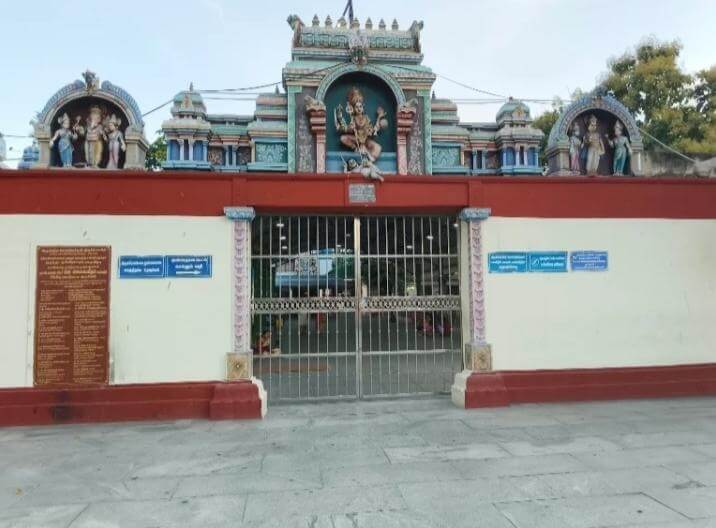 north of Coimbatore.
After the old mud fort was completely destroyed during the Mysore Wars in the time of Hyder Ali and Tipu Sultan, the remaining deity is said to have been moved and reinstalled on Big Bazaar Street, near the present Town Hall area of Coimbatore. In the early period, the temple was managed by the Irula tribal leaders who cleared and developed the area. Later, the kings and local chiefs of the Ilangosar community who ruled the region looked after the temple affairs. After the fort was destroyed, some rulers of the Mysore dynasty renovated the temple and managed it under their supervision. After the temple was moved to Big Bazaar Street, trusts consisting of leading merchants and local Tamil chiefs in Coimbatore managed the temple and its festivals until the 20th century. 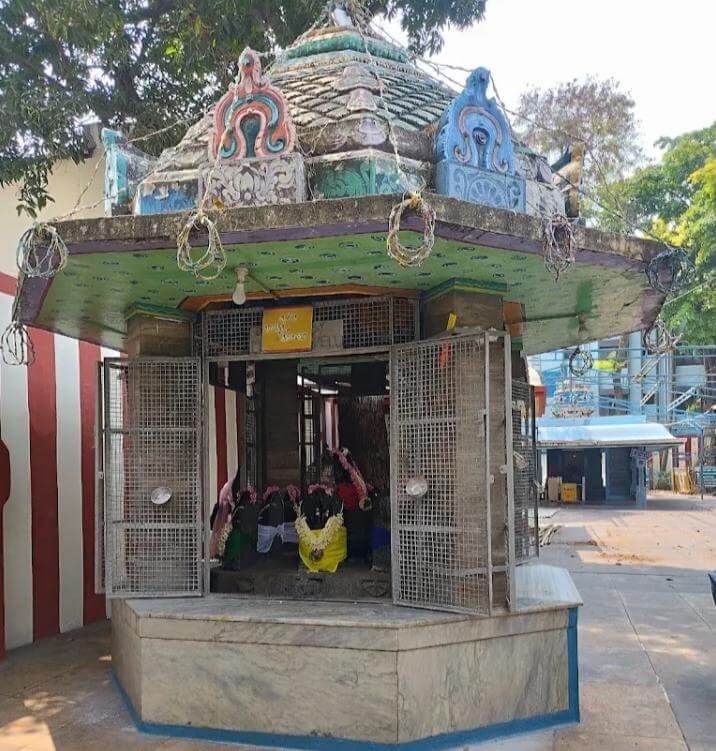 At present, the temple is under the direct control of the Hindu Religious and Charitable Endowments (HR&CE) Department of the Tamil Nadu Government. The daily administration and financial affairs are carried out under the supervision of an Executive Officer appointed by the government.
It is believed that in the past, this region suffered from severe drought and famine. As the lack of rain destroyed the crops and caused great hardship to people and animals, the Irula tribal leader placed a stone in the forest and prayed for the safety of his people. It is said that Goddess Parvati was pleased with his prayers, appeared there and brought heavy rain, making the land green again. The people then began to worship the goddess who saved them as ‘Konamma’. According to Hindu belief, the deity here is worshipped in the Mahishasuramardini form, the fierce form taken by the Goddess to defeat the asura Mahishasura. She is depicted with eight arms, holding various weapons and standing on the head of Mahishasura. 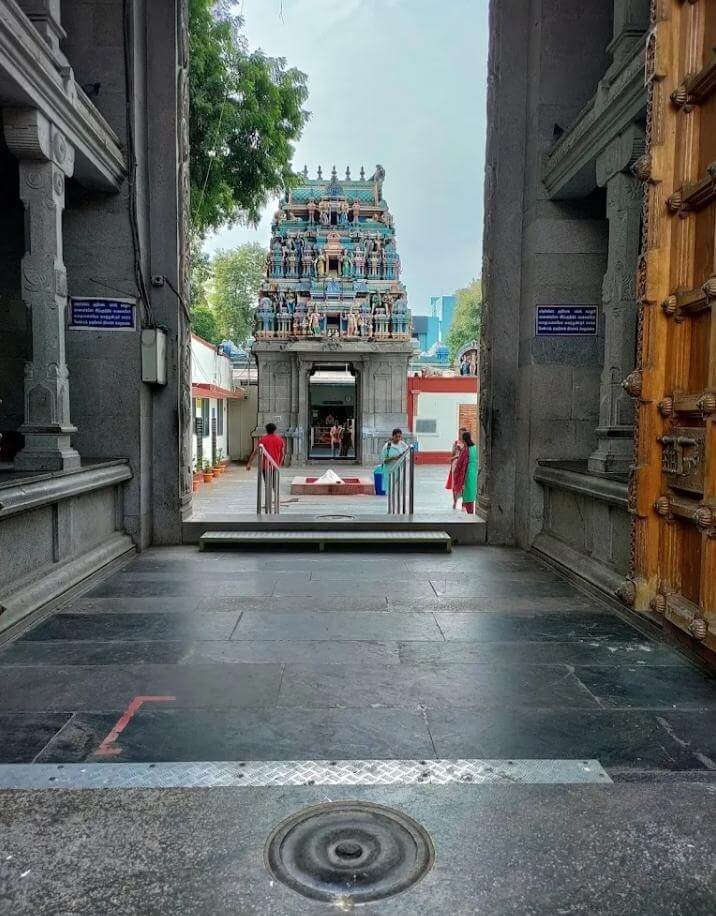 It is locally believed that the Goddess uses her weapons to protect the city from evil and negative forces. Devotees pray here for relief from skin marks, large lumps and long-lasting illnesses. When their prayers are fulfilled, they offer salt and black pepper at the feet of the Goddess. It is believed that just as salt and pepper dissolve in water, the Goddess removes illnesses and hardships from the body.
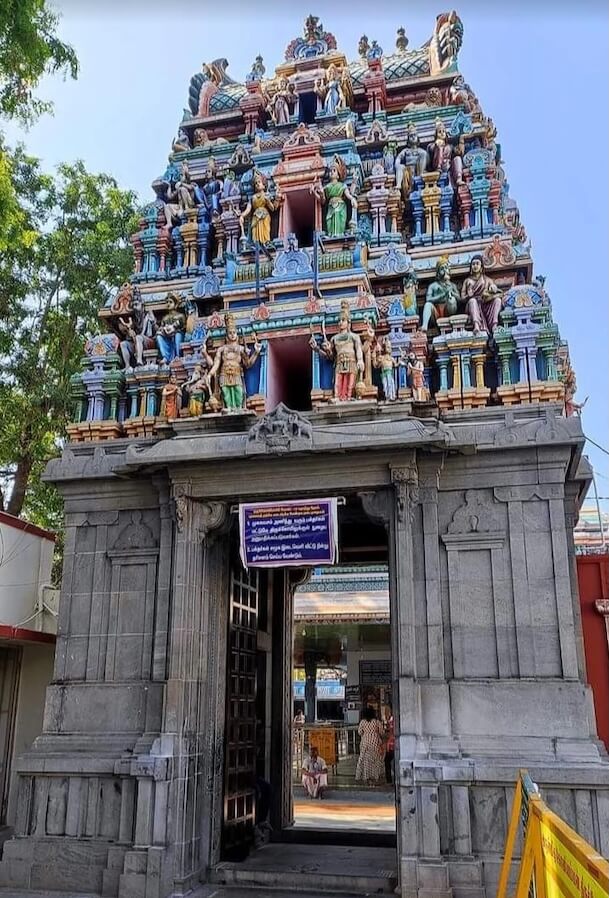
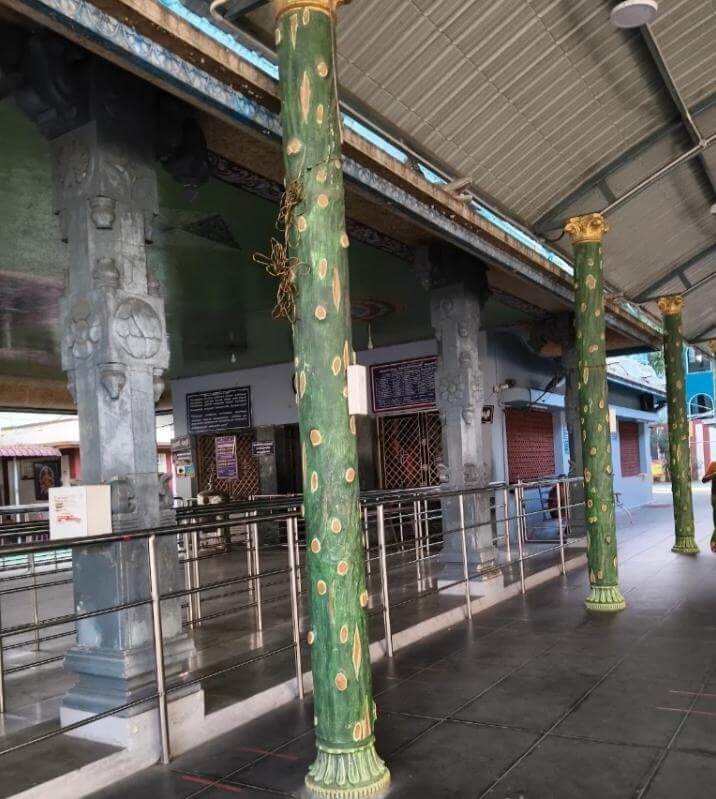
The temple is built in the traditional Dravidian architectural style. The main feature visible from the road is the 84-foot-high, seven-tiered Rajagopuram, completed in 2011. It is decorated with hundreds of sculptures of deities painted in bright colours such as red, blue and yellow. The main entrance has two large wooden doors, above which are large stucco figures of Siddhi-Buddhi Vinayaka, Subrahmanya with Valli and Devasena and Koniamman defeating Mahishasura. After passing through the gopuram, devotees enter a spacious mandapam with painted pillars. A covered area with seating is also provided for devotees during festivals. Near the entrance, beneath a large peepal tree, is the east-facing shrine of Panchamukha Vinayaka, along with shrines for Rahu and Ketu. Unlike many other temples in Tamil Nadu, a notable feature here is that the Navagrahas are installed along with their consorts.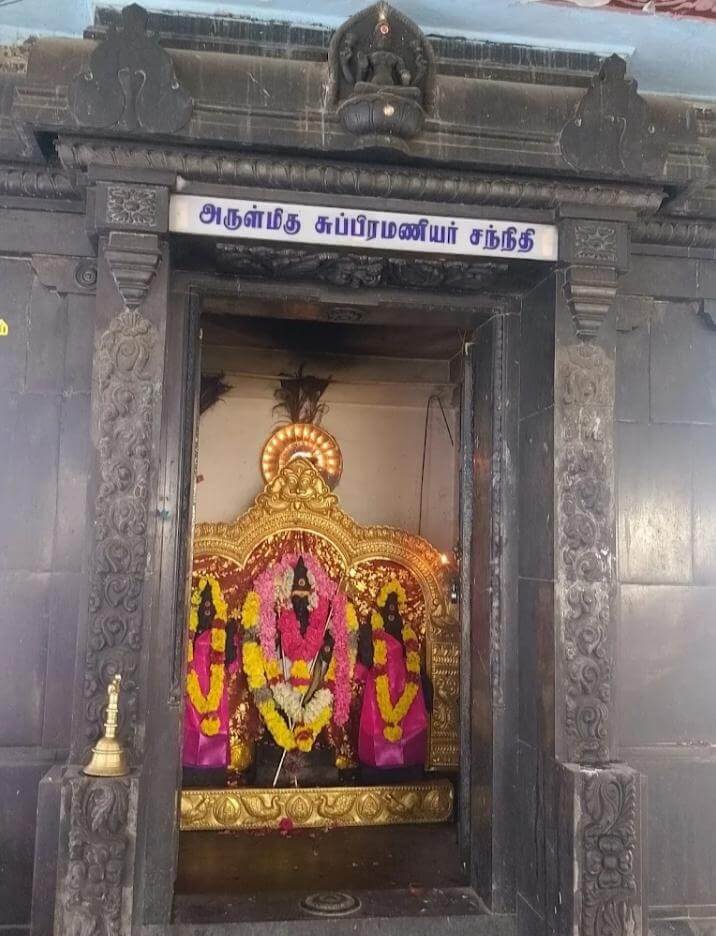
In the Tamil architectural style, the inner part and walls of the Sreekovil, known as the Garbhagriha, are built entirely of granite. The walls feature traditional Dravidian carvings. The Vimanam above the Sreekovil is decorated with sculptures of the Goddess in different forms. Large sculptures of two female Dwarapalakis holding weapons are placed on either side of the entrance to the Sreekovil. Unlike the calm forms of the Goddess commonly seen in temples, Koniamman is worshipped here in the fierce Mahishasuramardini form. The granite idol is about 8 feet tall and has eight arms. The right hands hold a sword, trident, damaru and skull, while the left hands hold a rope, bell, conch and fire. The Goddess is shown with her left leg folded and placed on the seat, while her right leg hangs down and rests on the head of the asura Mahishasura. This represents the victory of dharma over adharma. Another distinctive feature of the idol is its earrings. The right ear has a kundalam traditionally worn by men, while the left ear has a thodu traditionally worn by women. This is believed to represent the Ardhanarishvara form and the unity of Shiva and Shakti.
The Sreekovil of Subrahmanya Swamy (Murugan) is located behind the main Koniamman Sreekovil, on the western side of the circumambulatory path. Murugan is worshipped here in a standing form with his consorts, Valli and Devasena. 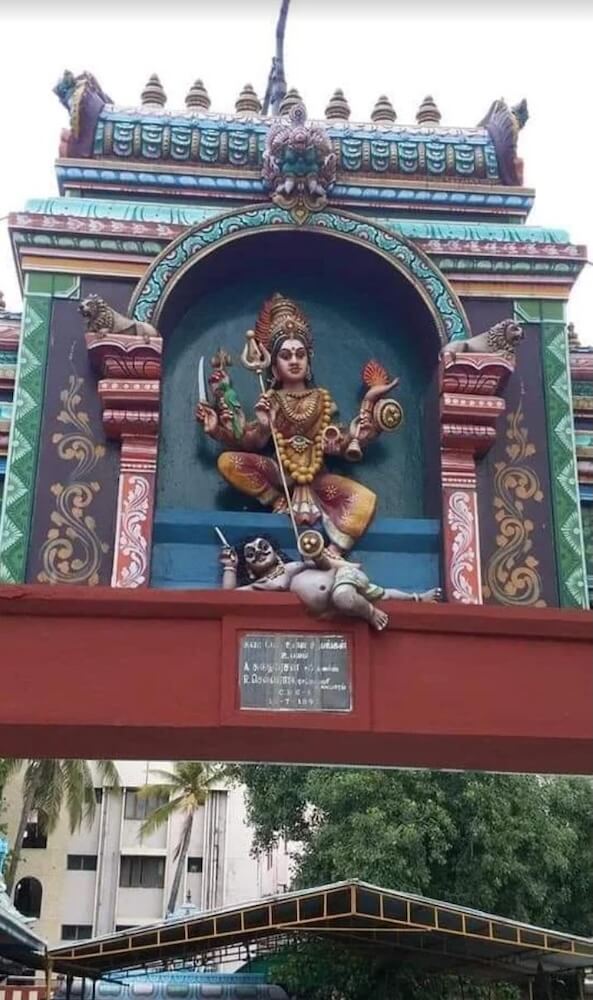 A small and attractive mandapam is situated in front of this shrine. A separate shrine for Anjaneya is located in the north-western part of the temple complex. The shrine of Bhairavamurthy, the guardian deity, is situated on the northern side of the temple, near the Navagraha shrine. A small shrine for Goddess Durga, worshipped as a Koshta Devata, is located against the northern wall of the main Sreekovil. Some Naga shrines are also placed beneath the Vanni tree, the sacred tree of the temple.
The Masi Thiruvizha, held for 14 days during the Tamil month of Masi (February–March), is the temple’s biggest annual festival. The festival begins with Poochattuthal, followed by the hoisting of the festival flag. Thirukalyanam and the chariot procession are the main events. On the day of the chariot procession, devotees pull the large Koniamman chariot through the main streets of Coimbatore city, including Rajaveethi and Big Bazaar Street.
During the Tamil month of Aadi (July–August), every Friday is observed as Aadi Velli, with special abhishekams and decorations for the Goddess. Devotees also offer koozh as a special offering on these days. Aadi Pooram, considered the birth star of the Goddess, is marked by the Valaikaappu ceremony, during which thousands of bangles are offered to the Goddess. Navaratri Vizha is celebrated for nine days during the Tamil month of Purattasi (September–October), with special archanas and poojas. The Mahishasura Vadham ceremony is also held on Vijayadashami. During Thaipusam in the Tamil month of Thai (January–February), special Kavadi dances and abhishekams are performed for Subrahmanya Swamy.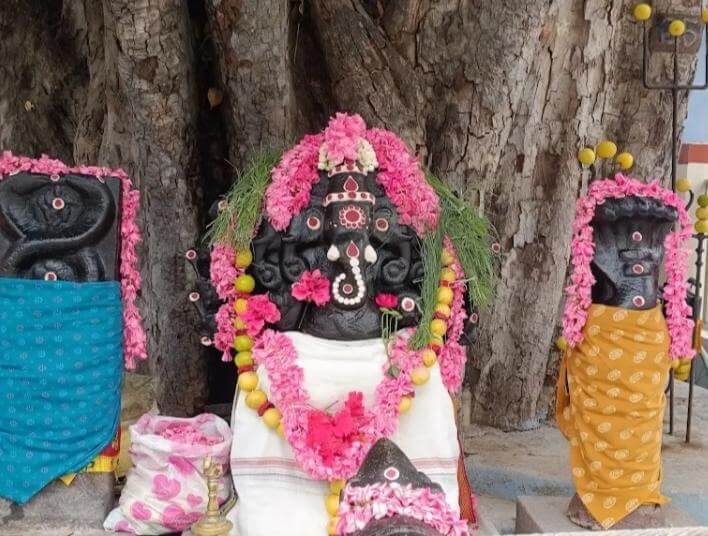 On English New Year and the Tamil New Year, Chithirai Kani, the Goddess is adorned with a golden armour and special darshan is arranged for devotees.
One of the most popular offerings at the temple is Uppu Milagu Samarpana. Devotees offer salt and black pepper beneath the sacred Vanni tree, praying for relief from skin marks, large lumps and long-lasting illnesses. Maavilakku is another important offering in Amman temples in Tamil Nadu. Rice flour, jaggery and ghee are mixed and shaped into a lamp, with a wick placed in it and lit before the Goddess. Devotees prepare and offer it in the mandapam, praying for prosperity in the family. Archanai, especially Kumkum Archanai, is a common offering, while special abhishekams using turmeric, milk, tender coconut water, honey and sandalwood are also performed on behalf of devotees. 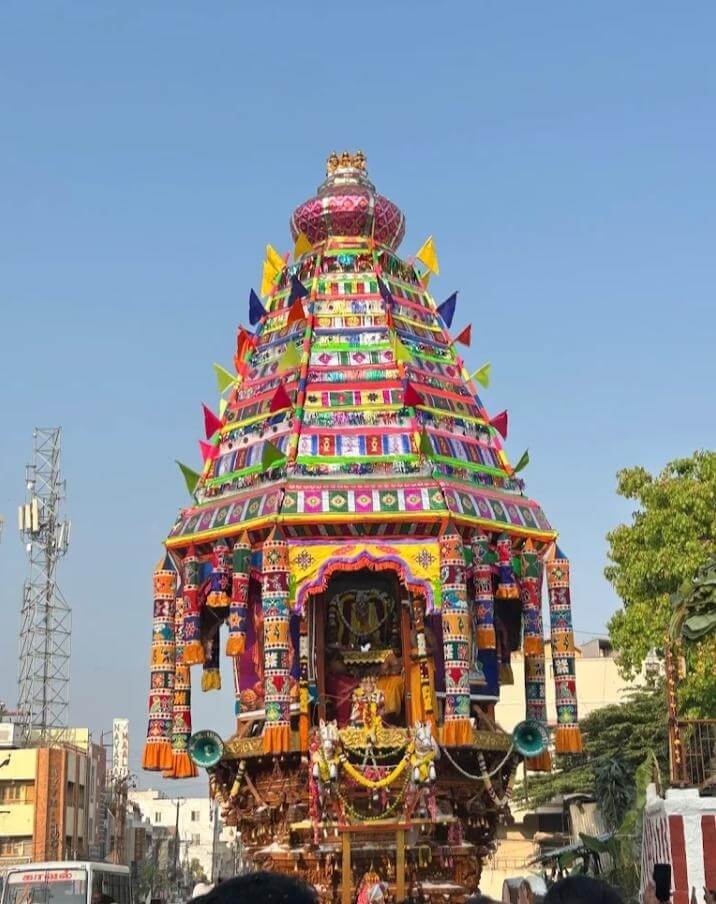 When their prayers are fulfilled, particularly for marriage and family well-being, devotees offer silk sarees to the Goddess, which are worn on Fridays and festival days. Couples praying for children also perform Thottil Kattuthal by tying a small clay or cloth cradle to the branches of the Vanni tree. After the birth of a child, devotees may return to the temple with the child and perform Thulabharam. Small silver or copper Vel or trident offerings are also made at the feet of the Goddess, praying for relief from enemies and other obstacles.
The temple is open every day from 06:00 AM to 12:30 PM and from 04:00 PM to 09:00 PM. After the temple opens in the morning, Kalasandhi Pooja is performed from 07:00 AM to 07:30 AM, during which the Goddess is worshipped with flower garlands. Uchikkala Pooja is performed from 12:00 PM to 12:30 PM, after which the temple closes. During this pooja, Manjackappu is performed for the Goddess. In the evening, Sayarakshai Pooja is held from 07:00 PM to 07:20 PM, during which the Goddess is adorned with ornaments and worshipped with ceremonial lamps. Ardhajama Pooja is performed from 08:30 PM to 08:45 PM, marking the final pooja of the day. Devotees can visit the temple during these pooja timings to witness the abhishekam and Deeparadhana. On Fridays and special days such as those during the month of Aadi, the night closing time may be extended due to the large number of devotees.
Key highlight :-
- Located 20 km from Sulur, 7 km from Perur and 36 km from Mettupalayam.
- The nearest railway station is Coimbatore Junction, about 2 km away.
- TNSTC and local bus services are available to the temple from various parts of Tamil Nadu.
- Paid parking facilities are available near the temple.
- Accommodation and food facilities are available near the temple.
- Contact number +91 4222396821, 4222390150.
अरुलमिगु कोनियाम्मन मंदिर
पूमपुहार नगर, उक्कडम, जिला कोयंबटूर।
मंदिरे
Temples
मंदिर
મંદિરો
கோவில்கள்
దేవాలయాలు
ക്ഷേത്രങ്ങൾ
ದೇವಾಲಯಗಳು
মন্দিরসমূহ
ਮੰਦਿਰ
-
पेरूर पतेश्वर मंदिर पेरूर, जि. कोईम्बतूर.
अधिक माहितीPerur Pateeswarar Temple Perur, Dist. Coimbatore.
View Detailsपेरूर पाटेश्वर मंदिर पेरूर, जिला. कोयंबटूर.
विवरण देखेंPerur Pateeswarar Temple Perur, Dist. Coimbatore.
વિગત જુઓPerur Pateeswarar Temple Perur, Dist. Coimbatore.
விவரங்களைக் காண்கPerur Pateeswarar Temple Perur, Dist. Coimbatore.
వివరాలను చూడండిPerur Pateeswarar Temple Perur, Dist. Coimbatore.
വിശദാംശങ്ങൾ കാണുകPerur Pateeswarar Temple Perur, Dist. Coimbatore.
ವಿವರಗಳನ್ನು ವೀಕ್ಷಿಸಿPerur Pateeswarar Temple Perur, Dist. Coimbatore.
বিস্তারিত দেখুনPerur Pateeswarar Temple Perur, Dist. Coimbatore.
ਵੇਰਵੇ ਦੇਖੋ -
अरुल्मिगु सुब्रमण्य स्वामी मंदिर मरुधामलाई, जि. कोईम्बतूर.
अधिक माहितीArulmigu Subramaniya Swamy Temple Marudhamalai, Dist. Coimbatore.
View Detailsअरुलमिगु सुब्रमण्यम स्वामी मंदिर मरुधामलाई, जिला. कोयंबटूर.
विवरण देखेंArulmigu Subramaniya Swamy Temple Marudhamalai, Dist. Coimbatore.
વિગત જુઓArulmigu Subramaniya Swamy Temple Marudhamalai, Dist. Coimbatore.
விவரங்களைக் காண்கArulmigu Subramaniya Swamy Temple Marudhamalai, Dist. Coimbatore.
వివరాలను చూడండిArulmigu Subramaniya Swamy Temple Marudhamalai, Dist. Coimbatore.
വിശദാംശങ്ങൾ കാണുകArulmigu Subramaniya Swamy Temple Marudhamalai, Dist. Coimbatore.
ವಿವರಗಳನ್ನು ವೀಕ್ಷಿಸಿArulmigu Subramaniya Swamy Temple Marudhamalai, Dist. Coimbatore.
বিস্তারিত দেখুনArulmigu Subramaniya Swamy Temple Marudhamalai, Dist. Coimbatore.
ਵੇਰਵੇ ਦੇਖੋ