
कडुंगल्लूर श्री नरसिंह स्वामी मंदिर
कडुंगल्लूर, जि. एर्नाकुलम
Kadungalloor Sree Narasimha Swamy Temple
Kadungalloor, Dist. Ernakulam
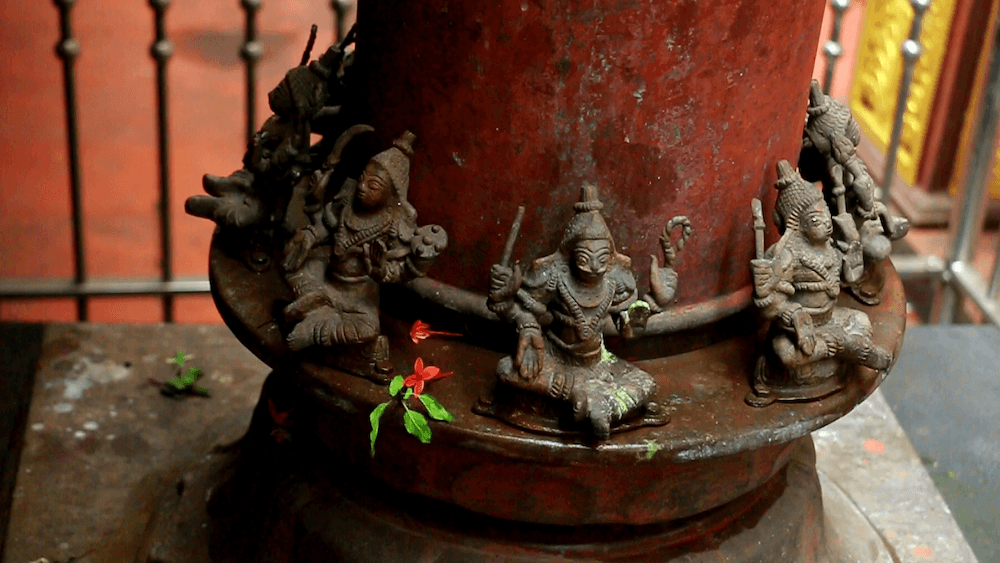 Kadungalloor Sree Narasimha Swamy Temple is situated in Ernakulam district, approximately three kilometres from Aluva town. It lies on the same east–west axis, about three kilometres west of the Aluva Mahakshetra and three kilometres east of the Thiruvaaloor Mahadeva Temple. The temple is distinguished by the Eka Chhatradhipathi Bhava, in which Narasimha Murthy is conceived as the supreme presiding deity, without sub-deities within the principal sacred enclosure.
 Historical records state that, during the reign of Karthika Thirunal Rama Varma, popularly known as Dharma Raja (1758–1798), the Raja of Cochin ceded the regions of Alangad and Paravur to Travancore in return for Travancore’s military assistance in recovering territories occupied by the Zamorin of Calicut. The Kadungalloor Sree Narasimha Swamy Temple is regarded as one of the most ancient temples of the erstwhile Alangad principality and is believed to have been among the temples damaged during the military campaigns of Tipu Sultan. According to tradition, when the administration of a temple at Aikkaranad became difficult for its original proprietors,
 its Ooranma, or traditional custodial rights, was entrusted to four Namboothiri families of the Kingdom of Cochin, following which this renowned Mahavishnu temple, where the deity is worshipped in the form of Narasimha, came to be established.
The arrival of the deity from Aikkaranad is associated with traditions that continue to be reflected in the temple’s customs. The idol is believed to have been ceremonially brought by boat through the waterways, protected from the sun and rain beneath a Manikkuda or Ratnakuda, an ornamental umbrella. Those who carried the sacred umbrella came to be known as Sree Manikkodan, a name which, 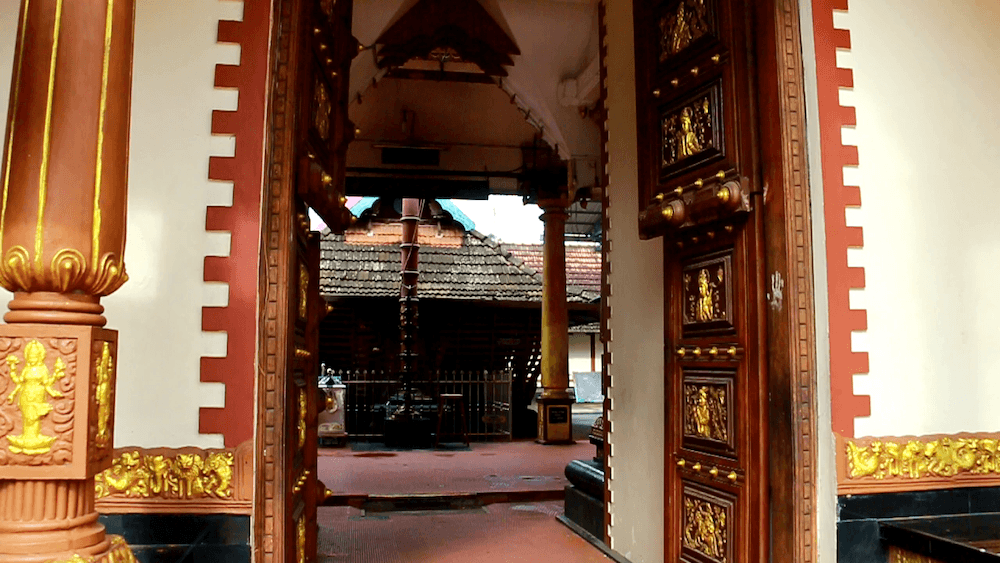 according to local tradition, gradually evolved into Changanikkodan, while those entrusted with transporting the temple treasury by boat came to be known as the Thonikars. Members of these families continue to perform traditional duties connected with the ceremonial umbrella and temple treasury during special rituals and processions. The ancestral houses of the four families entrusted with the temple’s Ooranma—Mavalsseri Mana, Mullappilly Mana, Elappilly Mana and Maveli Mana—are situated close to the temple. The Kadungalloor Devaswom traditionally held lands in Kadungalloor Kara,
 Thottakkattukara, Elookkara, Kayantikkara and Muppathadam, over which the temple is regarded as the Desadhipathi, or territorial deity.
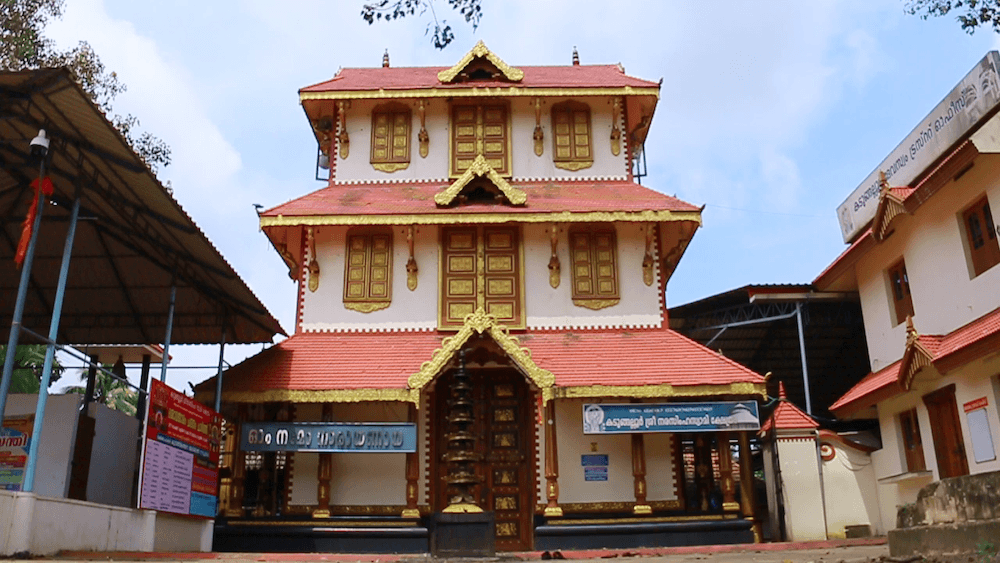
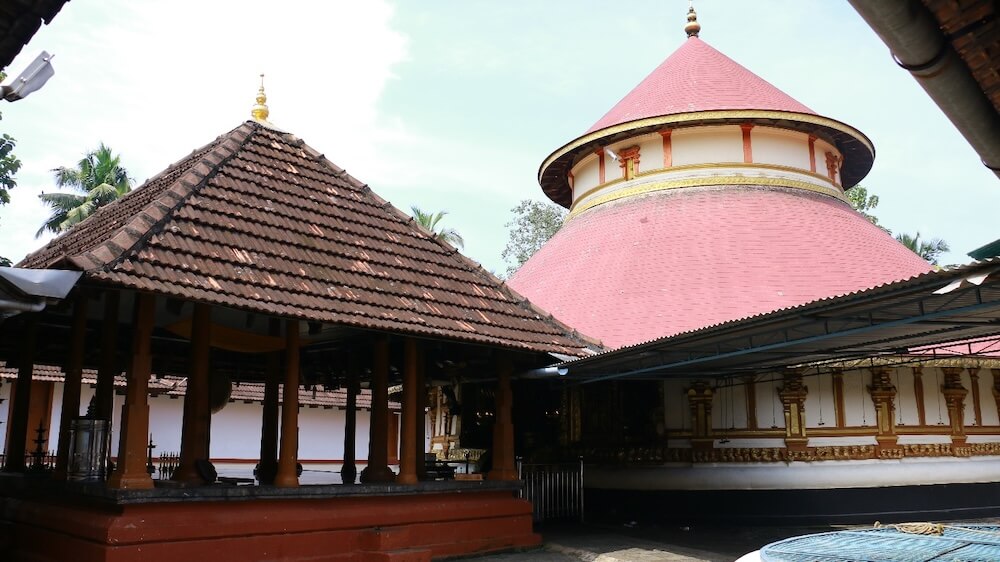
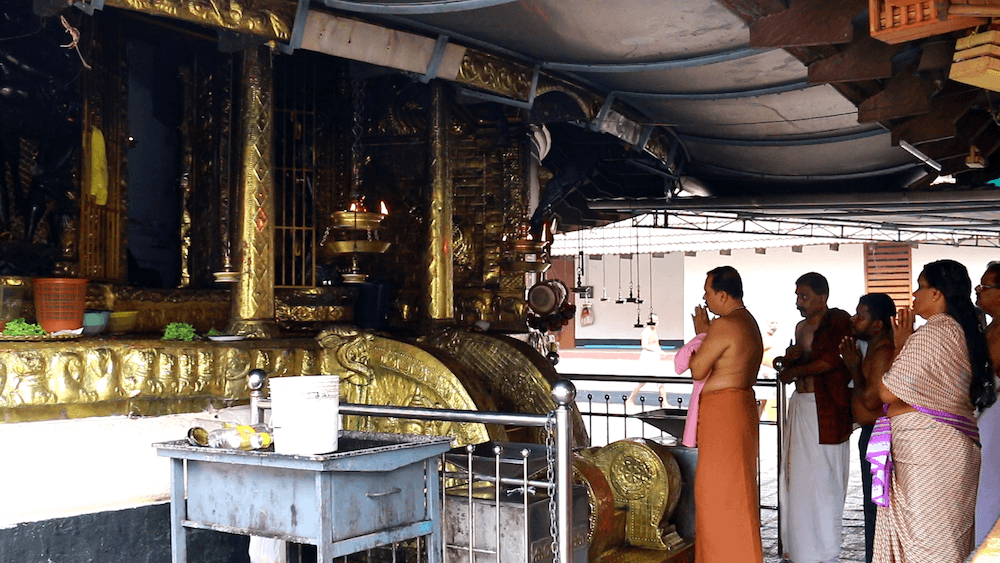
The temple is approached through a multi-tiered gopuram-like entrance structure, characterised by successive sloping tiled roofs, white plastered walls and decorated wooden doors, windows and gable projections. Beyond the compound lies the Nalambalam, a traditional Kerala-style structure arranged around the central sacred area, with long tiled roofs, wooden structural elements and an open inner courtyard. The Balikkallu stands along the approach towards the sanctum, 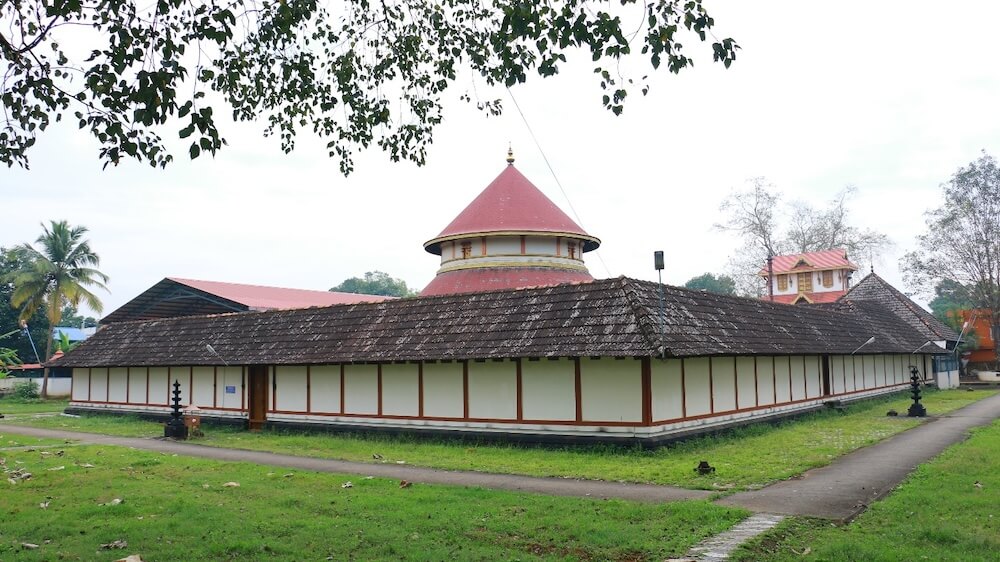 while rows of wooden and decorated pillars define the interior spaces around the central shrine. At the centre stands the large, double-storeyed circular Sreekovil (Vatta Sreekovil), one of the distinctive architectural features of the temple. Its expansive conical roof rises above the two levels and is crowned with a finial. The exterior is articulated with closely spaced pilasters, ornamental bands and decorative mouldings, while sculptural relief work enriches the lower sections. As part of the temple’s renovation, the earlier Sreekovil, constructed of laterite stone and roofed with copper sheets, was dismantled and replaced with the present granite structure, built in accordance with the principles of Thachushastra and traditional Tantric prescriptions. On 15 June 1997 (1 Mithunam 1172 M.E.), a new Darubimbam, or wooden idol, was consecrated on the day of Atham, when the Moon was in Karkidakam. The presiding deity is a six-foot-tall, four-armed (Chaturbhuja) idol of Narasimha.
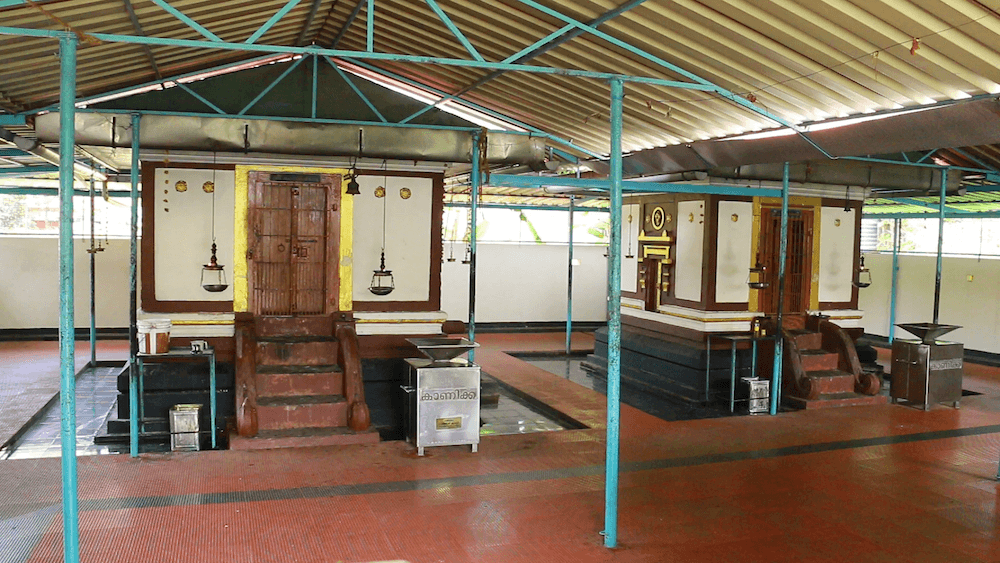
Although there are no separate Upadevata consecrations within the principal sacred enclosure, idols of Mahavishnu and Parthasarathy, accorded equal importance to Narasimha Swamy, are consecrated in separate Sreekovils. In addition, Narasimha and Naga deities are also consecrated as Upadevatas within the temple complex.
The annual festival begins on the evening of the last day of Meenam with the ceremonial hoisting of the temple flag and formally commences after the Vishukkani on the first day of Medam. The Aarattuvaravu from the Thiruvaaloor Temple, followed by the Kodippurathu Vilakku, forms an important part of the seven-day festival. On the eighth day, the deity is taken in procession for the Aarattu at the Aluva River, travelling nearly three kilometres entirely through lands traditionally belonging to the temple. During the festival, 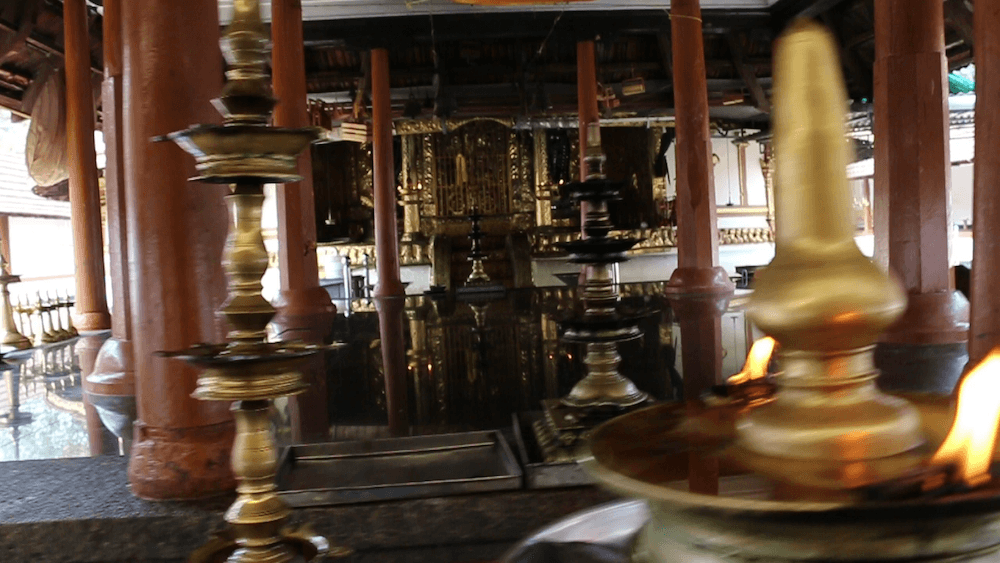 Ahassezhunnallippu and Parayeduppu are also conducted at the Ooranma households. Dhvajaprathishta Dinam, commemorating the consecration of the flagstaff, is observed annually on the day of Makayiram in Meenam. Re-consecration Day is observed on Punartham in Medam, while Illam Nira and Chanthattam are traditionally conducted on the Sunday following Karutha Vavu in Karkidakam. Thiruvonam Oottu is held every month on the day of Thiruvonam, and Narasimha Jayanti is observed on Shukla Paksha Chaturdashi in the month of Vaishakha, with special poojas and offerings.
Muzhukkappu : The idols of Narasimha Swamy, Parthasarathy and Mahavishnu are completely adorned with sandalwood paste. Thrikkadungalloorappan Muzhukkappu: The idol of Narasimha Swamy is completely covered with sandalwood paste. Thrikkadungalloorappan Mukham Charthu: Sandalwood paste is applied specifically to the face of Narasimha Swamy. Thiruvonam Oottu: A special food offering conducted on the day of Thiruvonam. Kalabhabhishekam: Specially prepared Kalabham is ceremonially used for Abhishekam under the chief supervision of the Tantri. Advance booking is required. Udayasthamana Pooja: All eighteen daily poojas are performed over the course of a single day, accompanied by special melams and nivedyams. Advance booking is required.
The temple opens at 4:00 a.m., with Nirmalya Darshan available until 5:15 a.m. The Ucha Pooja is performed at 10:30 a.m., after which the temple closes at 11:15 a.m. It reopens at 4:00 p.m., and Deeparadhana is conducted at sunset. The Athazha Pooja takes place at 7:20 p.m., and the temple closes for the day at 8:15 p.m.
Key Highlights:
- Located 3.5 km from Aluva town.
- About 3.5 km from Aluva Railway Station.
- Local bus services are available.
- Dedicated parking is available for private vehicles.
- Accommodation and dining facilities are available nearby.
कदुंगल्लूर श्री नरसिम्हा स्वामी मंदिर
कडुंगल्लूर, जिला. एर्नाकुलम
मंदिरे
Temples
मंदिर
મંદિરો
கோவில்கள்
దేవాలయాలు
ക്ഷേത്രങ്ങൾ
ದೇವಾಲಯಗಳು
মন্দিরসমূহ
ਮੰਦਿਰ
-
परांदूर भगवती मंदिर पेरांदूर, जि. एर्नाकुलम
अधिक माहितीPerandoor Bhagavathy Temple Perandoor, Dist. Ernakulam
View Detailsपेरंदूर भगवती मंदिर पेरंदूर, जिला. एर्नाकुलम
विवरण देखेंPerandoor Bhagavathy Temple Perandoor, Dist. Ernakulam
વિગત જુઓPerandoor Bhagavathy Temple Perandoor, Dist. Ernakulam
விவரங்களைக் காண்கPerandoor Bhagavathy Temple Perandoor, Dist. Ernakulam
వివరాలను చూడండిPerandoor Bhagavathy Temple Perandoor, Dist. Ernakulam
വിശദാംശങ്ങൾ കാണുകPerandoor Bhagavathy Temple Perandoor, Dist. Ernakulam
ವಿವರಗಳನ್ನು ವೀಕ್ಷಿಸಿPerandoor Bhagavathy Temple Perandoor, Dist. Ernakulam
বিস্তারিত দেখুনPerandoor Bhagavathy Temple Perandoor, Dist. Ernakulam
ਵੇਰਵੇ ਦੇਖੋ -
किझक्के कडुंगल्लूर श्री भुवनेश्वरी महादेवी मंदिर कडुंगल्लूर, जि. एर्नाकुलम
अधिक माहितीKizhakke Kadungalloor Sree Bhuvaneswari Mahadevi Temple Kadungalloor, Dist. Ernakulam
View Detailsकिज़हक्के कडुंगल्लूर श्री भुवनेश्वरी महादेवी मंदिर कडुंगल्लूर, जिला. एर्नाकुलम
विवरण देखेंKizhakke Kadungalloor Sree Bhuvaneswari Mahadevi Temple Kadungalloor, Dist. Ernakulam
વિગત જુઓKizhakke Kadungalloor Sree Bhuvaneswari Mahadevi Temple Kadungalloor, Dist. Ernakulam
விவரங்களைக் காண்கKizhakke Kadungalloor Sree Bhuvaneswari Mahadevi Temple Kadungalloor, Dist. Ernakulam
వివరాలను చూడండిKizhakke Kadungalloor Sree Bhuvaneswari Mahadevi Temple Kadungalloor, Dist. Ernakulam
വിശദാംശങ്ങൾ കാണുകKizhakke Kadungalloor Sree Bhuvaneswari Mahadevi Temple Kadungalloor, Dist. Ernakulam
ವಿವರಗಳನ್ನು ವೀಕ್ಷಿಸಿKizhakke Kadungalloor Sree Bhuvaneswari Mahadevi Temple Kadungalloor, Dist. Ernakulam
বিস্তারিত দেখুনKizhakke Kadungalloor Sree Bhuvaneswari Mahadevi Temple Kadungalloor, Dist. Ernakulam
ਵੇਰਵੇ ਦੇਖੋ -
अवनामकोडे सरस्वती मंदिर नेदुंबसेरी, जि. एर्नाकुलम
अधिक माहितीAvanamkode Saraswathi Temple Nedumbassery, Dist. Ernakulam
View Detailsअवनमकोड सरस्वती मंदिर नेदुम्बस्सेरी, जिला. एर्नाकुलम
विवरण देखेंAvanamkode Saraswathi Temple Nedumbassery, Dist. Ernakulam
વિગત જુઓAvanamkode Saraswathi Temple Nedumbassery, Dist. Ernakulam
விவரங்களைக் காண்கAvanamkode Saraswathi Temple Nedumbassery, Dist. Ernakulam
వివరాలను చూడండిAvanamkode Saraswathi Temple Nedumbassery, Dist. Ernakulam
വിശദാംശങ്ങൾ കാണുകAvanamkode Saraswathi Temple Nedumbassery, Dist. Ernakulam
ವಿವರಗಳನ್ನು ವೀಕ್ಷಿಸಿAvanamkode Saraswathi Temple Nedumbassery, Dist. Ernakulam
বিস্তারিত দেখুনAvanamkode Saraswathi Temple Nedumbassery, Dist. Ernakulam
ਵੇਰਵੇ ਦੇਖੋ