
मन्नार थ्रिक्कुरट्टी महादेवाचे मंदिर
मन्नार, जि. अलप्पुझा.
Mannar Thrikkuratti Mahadeva Temple
Mannar, Dist. Alappuzha.
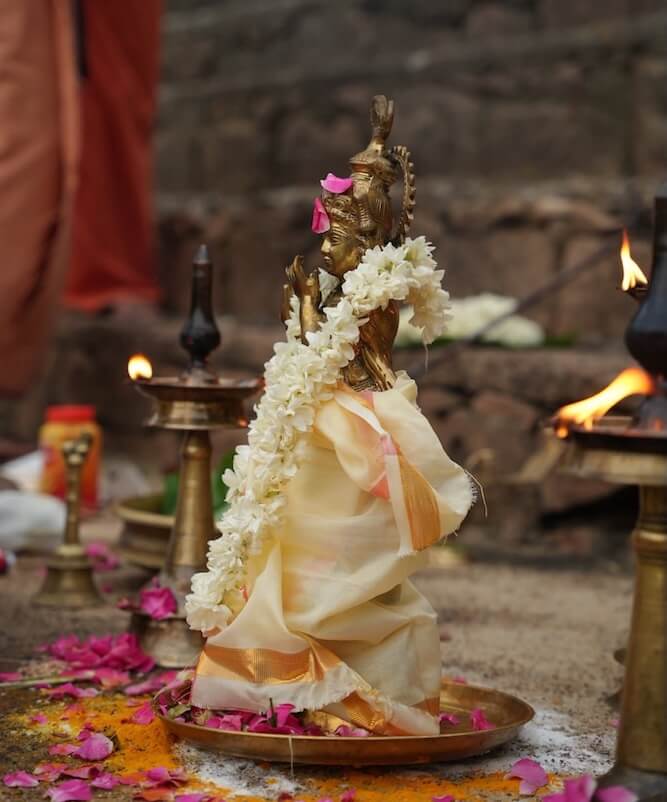 Thrikkuratti Mahadeva Temple is situated on the banks of the Pamba River at Mannar in Alappuzha district, near the Mavelikkara–Thiruvalla Road. The temple has the grandeur of a major temple complex, with its spacious grounds, the ancient outer wall believed to have been built by the Bhoothaganas and the traditional Kerala-style temple structures standing at the centre of the compound. The temple’s tantric rituals are performed under the authority of the Kuzhikkattu Thekkedathu Mana in the Thiruvalla Taluk. The presiding deity, Lord Shiva, is worshipped in an ascetic form. As a result of this concept, women were not permitted to enter the temple in earlier times. However, the temple is now open to all devotees, including women. The temple is currently administered by the Travancore Devaswom Board.
Based on its architectural style, the carvings on the sanctum and other structural features, historians estimate that the temple is between 500 and 1,000 years old. The influence of sixteenth-century architecture can also be seen in the temple’s design. Researchers believe that this large temple complex may have been built under the leadership of local chieftains or village authorities during the period following the decline of the Chera Kingdom or in the early years of the Venad–Travancore dynasty. 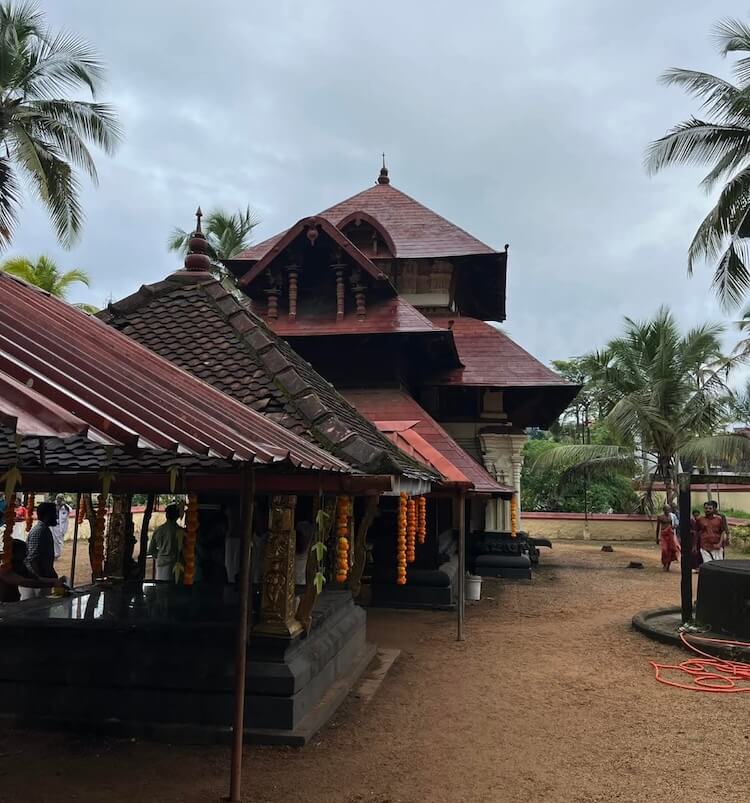 The rare Kinnara Shiva sculpture (A rare, healing manifestation of Lord Shiva that cures fatal illnesses) on the wall of the sanctum is believed to have been created in accordance with the guidelines described in the Shilparatnam, a renowned treatise on sculpture written by Sreekumaran in the sixteenth century AD. Mannar was well known from ancient times as a major centre for the production and trade of bronze vessels and temple bells. Historians believe that this economic prosperity contributed to the development of such a large temple complex. While the main Shiva shrine was built in the traditional Kerala architectural style, the Mahavishnu shrine, constructed later within the same temple compound, reflects the influence of North Indian architecture. This combination of two different architectural styles is regarded as one of the temple’s distinctive features and reflects the cultural influences of different periods.
According to traditional belief, Thrikkuratti Mahadeva Temple is one of the 108 Shiva temples established by Parasurama for the protection of Kerala. It is believed to be the 105th temple among them.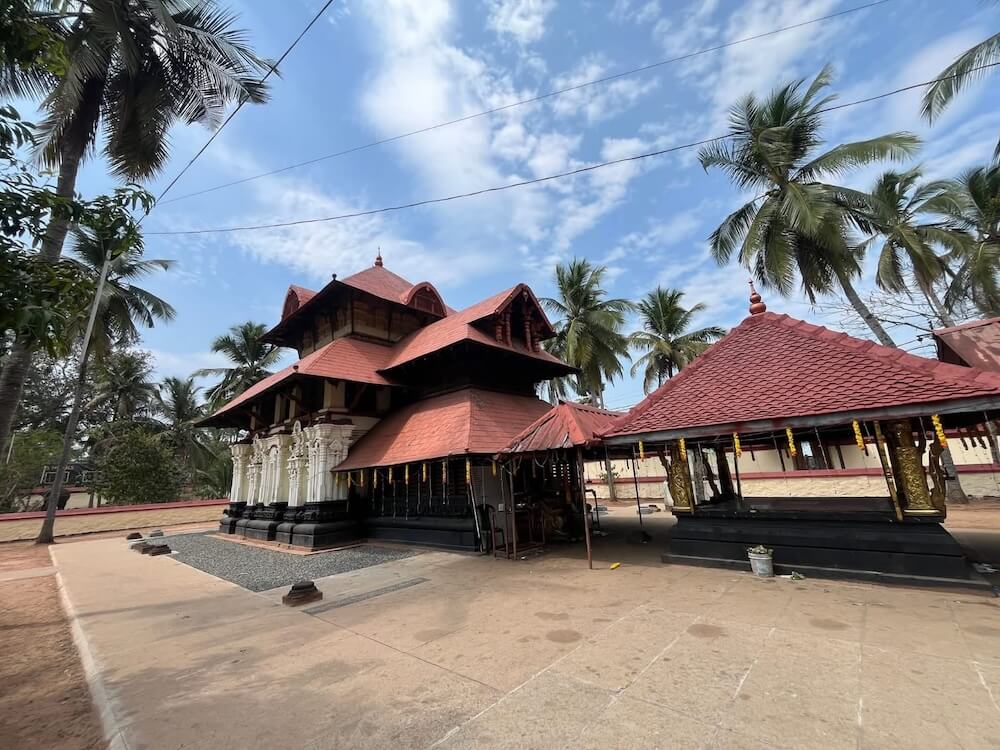 Another legend states that King Mandhata of the Solar Dynasty (Ikshvaku Dynasty) built the temple after recognising the presence of Lord Shiva in deep meditation at this sacred place. There is also a belief associated with the large bilva tree near the temple pond. Devotees believe that it is not an ordinary bilva tree but the rare Mahabilva tree, which is found only in the Himalayas. It is also believed that circumambulating this tree once is equal in merit to circumambulating Mount Kailash three times.
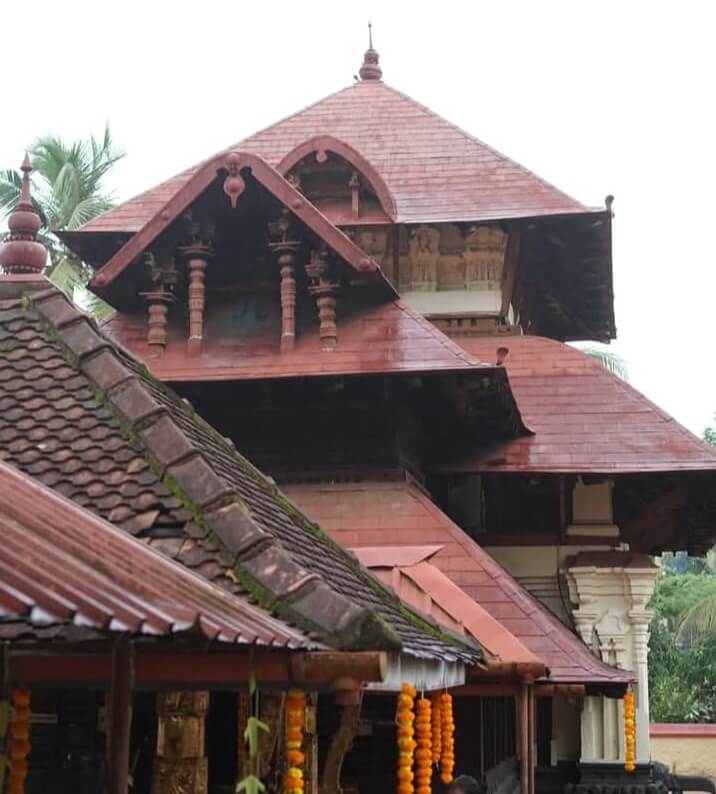
Thrikkuratti Mahadeva Temple is a rare blend of traditional Kerala and North Indian temple architecture. As you enter the temple, the first thing that catches your attention is the massive outer wall built of large stone blocks. According to local tradition, this wall was built by the Bhoothaganas and adds to the grandeur of the temple. 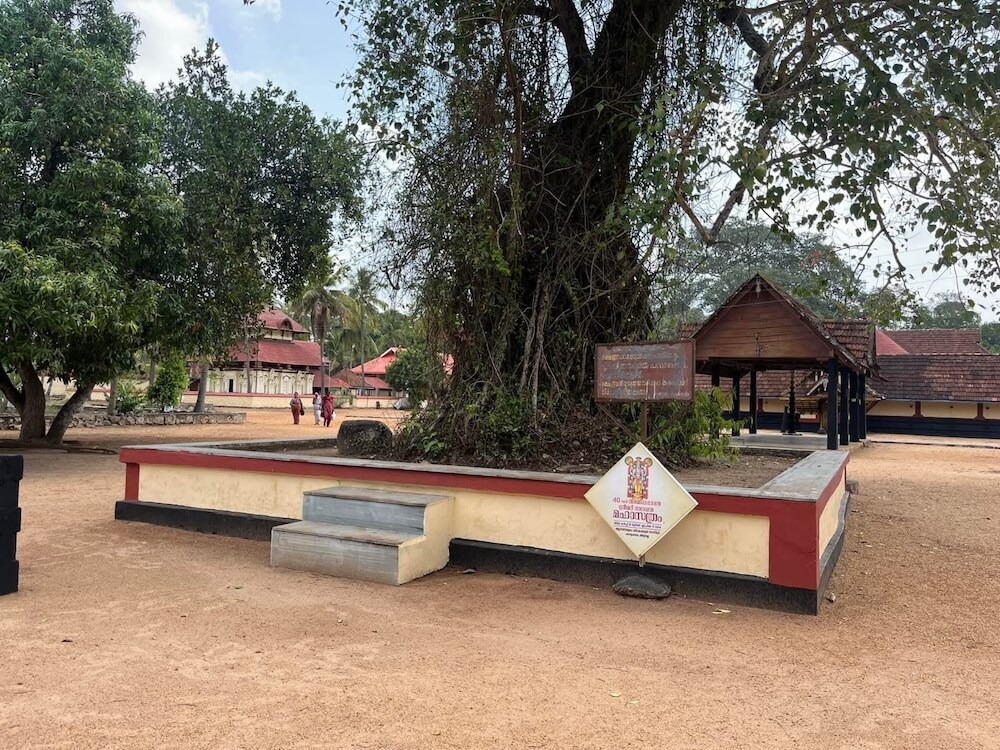 The eastern entrance, with its beautiful flight of steps, serves as the main gateway to the temple. This historic entrance is also known for the long-standing tradition of Muslim devotees offering prayers here. Outside the temple complex is a large temple pond and nearby stands the rare Mahabilva tree, which is believed to have originated in the Himalayas. After passing through the entrance hall, devotees can see Nandi and the large Balikkal (sacrificial stone). One of the most remarkable features of the temple is that it has two main sanctums of equal importance within the same temple compound.
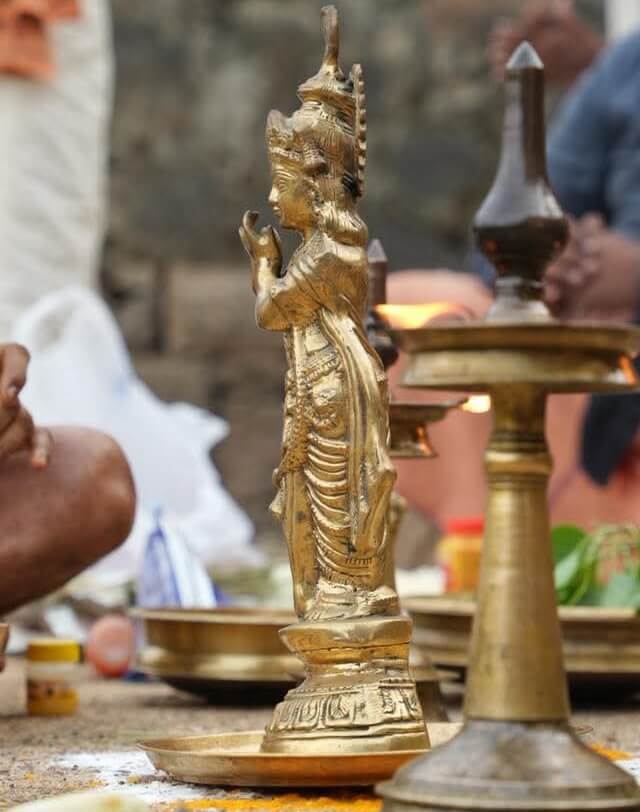
After passing through the entrance hall, the first shrine you see is the Mahadeva Temple, built in the traditional circular Kerala-style sanctum. The main deity is a large Shiva Linga, installed facing east inside the circular sanctum.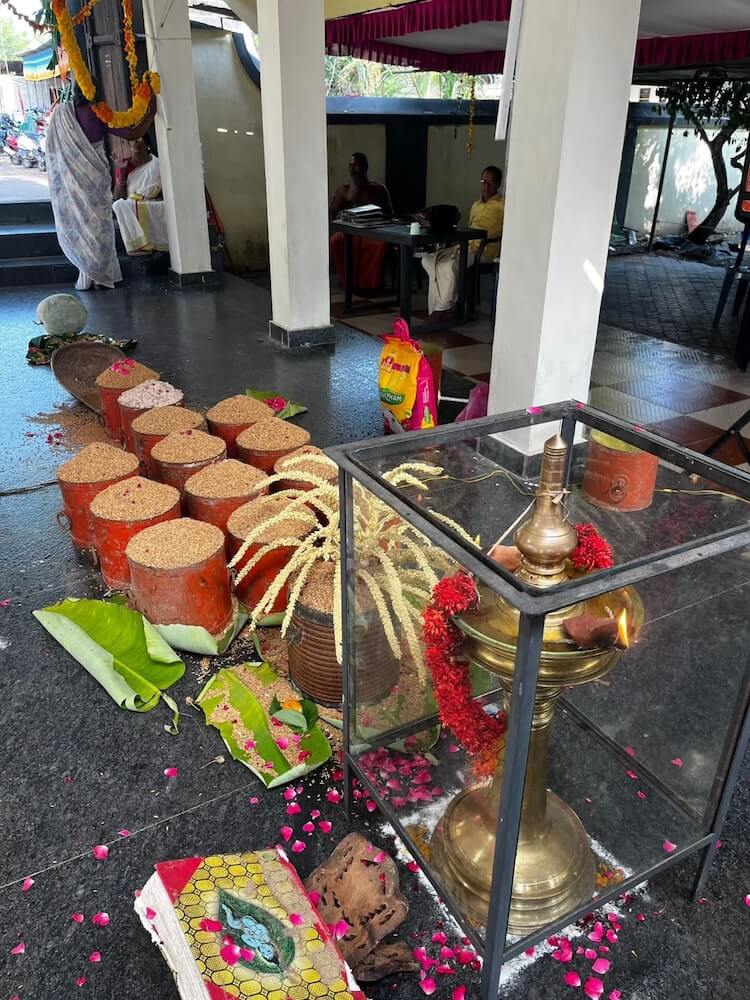 Lord Shiva is worshipped here in an ascetic form, representing deep meditation. The walls of the sanctum feature the rare Kinnara Shiva sculpture mentioned in the sixteenth-century Shilparatnam treatise, along with beautiful wooden carvings. Close to the Mahadeva Temple stands the Mahavishnu Temple, which is built in the North Indian architectural style. This style of temple architecture is rarely seen in Kerala, making it one of the temple’s unique features. Inside the sanctum, Lord Mahavishnu is enshrined in a four-armed standing form, holding the conch, discus, mace and lotus. The deity is worshipped in a beautifully adorned form with a calm and serene expression.
Surrounding the two main sanctums are a beautiful Nalambalam (inner courtyard) and a traditional Vilakkumadam, where oil lamps are lit. In addition to Lord Mahadeva and Lord Mahavishnu, the temple is home to several other deities. Lord Ganesha is enshrined at the south-west corner of the main Shiva shrine. Outside the main Nalambalam, at the south-west corner, is a separate small shrine dedicated to Lord Sastha (Lord Ayyappa). On the western side of the temple is a sacred naga platform, where Nagaraja, Nagayakshi and other naga deities are worshipped. A shrine dedicated to Rakshas is located at the north-west corner of the temple compound.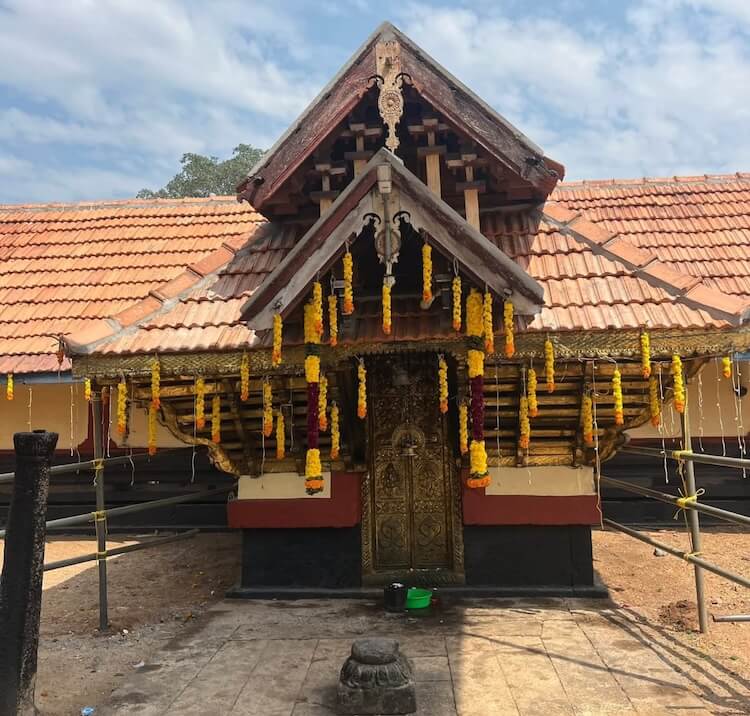 Outside the main outer wall is a shrine dedicated to Yakshiyamma, where devotees offer their prayers.
The most important festival of the temple is Maha Shivaratri, celebrated during the Malayalam month of Kumbham (February–March). One of the temple’s most distinctive traditions is the famous Shivaratri Nritham, performed on the night of Shivaratri. This ritual, which symbolises Lord Shiva’s cosmic dance (Tandava), attracts thousands of devotees every year. A special Vilakkezhunnallippu (ceremonial lamp procession) held at the Mahavishnu shrine on the fifth day of the festival is another major attraction. During Shivaratri, hundreds of devotees also perform Bali Tharpanam on the banks of the Pamba River and at the temple ghat in honour of their ancestors. As Lord Mahavishnu is worshipped with equal importance in the temple, Ashtami Rohini (Sri Krishna Jayanti), observed during the Malayalam month of Chingam (August–September), is also celebrated with special poojas and prayers. Thiruvathira, observed during the Malayalam month of Dhanu (December–January), is celebrated as a special day dedicated to Lord Mahadeva, with special abhishekams and poojas, followed by the distribution of Thiruvathira Puzhukku and kanji to devotees. The 41-day Mandala–Makaravilakku season, from the first day of Vrischikam to the first day of Makaram (November–January), is another important period at the temple. During this time, special poojas are offered to Lord Sastha (Lord Ayyappa) and Neerajanam is performed on Saturdays, attracting large numbers of Ayyappa devotees. In addition, special Pradosha Pooja and Deeparadhana are conducted every month on Pradosham days in honour of Lord Mahadeva.
One of the most important offerings at the temple is the Maikathi Pooja. This is the temple’s most well-known offering, during which special herbal mixtures and sacred pastes are applied to the idol of Thrikkurattiyappan. Devotees also offer Dhara and Shankhabhishekam daily, praying for good health and relief from illness. Another important offering is the Pinvilakku, in which a lamp is lit behind the sanctum for marital harmony and the well-being of the family. Offering a Koovalam Mala (garland of bilva leaves) to Lord Shiva and performing Umamaheswara Pooja for a happy and united married life are also popular offerings. The most important offering to Lord Mahavishnu is Palpayasam. Vishnu Sahasranamarchana is performed for prosperity and success, while Vennappayasam is offered for the health and well-being of children. Among the offerings made to the other deities, Ganapathi Homam is performed every morning at the Lord Ganesha shrine for the removal of obstacles. On Saturdays, Neerajanam, performed by lighting sesame oil lamps for Lord Sastha (Lord Ayyappa), is an important offering for relief from the effects of Saturn. Nagarootu (Ayilyam Pooja), performed for the naga deities, is another important offering for relief from naga doshas.
The temple opens daily at 4:00 a.m. with Nirmalya Darshan. This is followed by Abhishekam at 4:30 a.m., Usha Pooja at 5:30 a.m., Ethirettu Pooja and Sreebali at 7:00 a.m., Pantheeradi Pooja at 8:30 a.m., Ucha Pooja at 10:30 a.m. and Ucha Sreebali at 11:00 a.m. The temple closes at 11:30 a.m. It reopens at 5:00 p.m., followed by Sandhya Deeparadhana at 6:30 p.m. and Athazha Pooja and Athazha Sreebali at 7:30 p.m. The temple closes for the day at 8:00 p.m.
Key highlight :-
- Located 8 km from Mavelikkara, 11 km from Chengannur and 11 km from Thiruvalla.
- The nearest railway stations are Mavelikkara Railway Station, about 8 km away, and Thiruvalla
- Railway Station, about 11 km from the temple.
- KSRTC and local buses are available to the temple from Mavelikkara and Chengannur.
- Private vehicles can be parked in the temple’s parking area.
- Accommodation and food facilities are available in the nearby towns.
मन्नार थ्रिक्कुरत्ती महादेव मंदिर
मन्नार, जिला. अलाप्पुझा.
मंदिरे
Temples
मंदिर
-
कंदीयूर महादेवाचे मंदिर मावेलीक्कारा, जि. अलप्पुझा
अधिक माहितीKandiyoor Mahadeva Temple Mavelikkara, Dist. Alappuzha
View Detailsकंडियूर महादेव मंदिर मावेलिक्कारा, जिला. अलाप्पुझा
विवरण देखें -
अधिक माहिती
Mararikulam Sree Mahadeva Temple Mararikulam, Dist. Alappuzha.
View Detailsविवरण देखें -
हरिपाद श्री सुब्रमण्य स्वामी मंदिर हरिपाद, जि. अलप्पुझा.
अधिक माहितीHaripad Sree Subramanya Swami Temple Haripad, Dist. Alappuzha.
View Detailsहरिपद श्री सुब्रमण्यम स्वामी मंदिर हरिपद, जिला. अलाप्पुझा.
विवरण देखें