
आजीकाल श्री वराह देवस्वोम
अळेकल, चेराई, जि. एर्नाकुलम.
Azheekal Shree Varaha Devaswom
Azheekal, Cherai, Dist. Ernakulam.
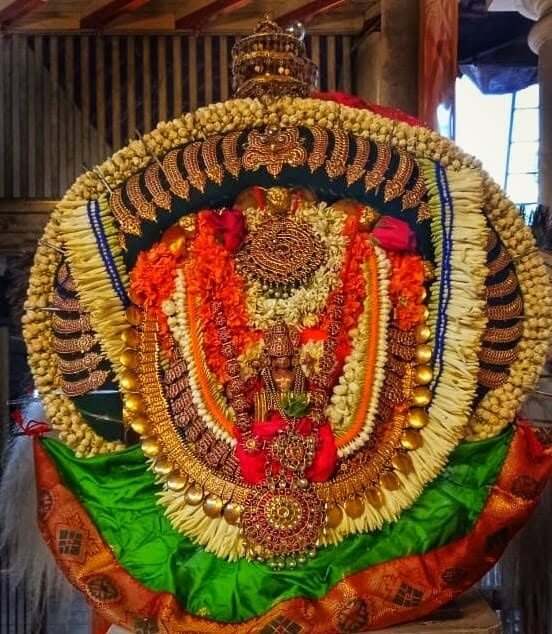 Azheekal Sree Varaha Temple, located at Pallipuram near Cherai in Ernakulam district, is the first temple established in Kerala by the Gaud Saraswat Brahmins (GSB). Founded in 1565, this historic temple is known as the only “Sampoorna Temple” in South India, as all seven deities worshipped by the Gaud Saraswat Brahmin community are enshrined here. The temple also has a large wooden chariot with intricate carvings, which is drawn along a track built specifically for the chariot during the annual chariot festival.
In the 16th century, the Gaud Saraswat Brahmins (GSB), who migrated from Goa to Kochi, were given refuge and protection by the then King of Kochi, Kesava Rama Varma. Under the leadership of Paliath Achan, the King’s Prime Minister and the ruler of Vypin Island, land was granted on Vypin Island for their settlement and for the construction of temples. Krishnan Prabhu, a prominent merchant of the time, purchased land from Paliath Achan and established Sree Varaha Temple at Azheekal. As the Gaud Saraswat Brahmins settled in the Vypin region, several temples were established in and around Azheekal, with Sree Varaha Temple becoming one of the most important.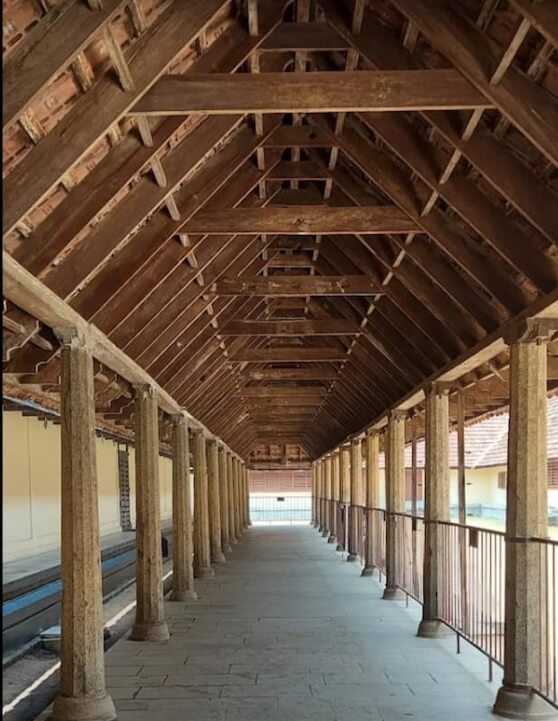 Around the same period, the Kashi Math was established under the leadership of Yadavendra Tirtha Swami and the administration of the temple was later entrusted to the Math. Over the years, repeated sea erosion and floods caused extensive damage to the temple. During the flood of 1723, the main idols were placed
inside the temple well for protection. After the flood, however, the area was covered with sand and mud and the location of the temple well could no longer be identified. A statue of Sree Venkatachalapathy, presented by the Tirumala Devaswom, was then temporarily installed in a newly built Agrashala at Cherai. The well was rediscovered later and in 1835 the idols, along with the idol of Mareecha Yakshi, were recovered and reinstalled. The old temple at Azheekal was subsequently dismantled and a new temple was built at Pallipuram near Cherai, where the consecration was completed in 1880.
The history of Azheekal Sree Varaha Temple is closely connected with the migration of the Gaud Saraswat Brahmins (GSB). According to tradition, the Saraswat Brahmins are believed to be the descendants of Sage Saraswata, who lived on the banks of the Saraswati River in Kashmir. The Skanda Purana states that Lord Parasurama later settled 66 Saraswat Brahmin families in Goa. Over the centuries, they faced repeated invasions and religious persecution.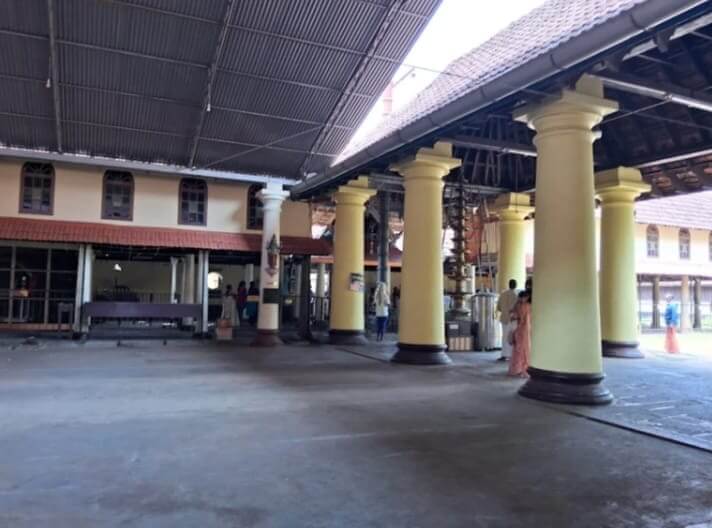 Following the forced expulsion ordered by the Portuguese rulers in 1559, many families left Goa and migrated to different parts of South India. During this migration, several families carried the idols of their family deities with them. It is believed that Krishnan Prabhu of the Kasturi family reached Azheekal, near Cherai and established a temple for the family’s deities—Sree Varaha, Devaki and Sree Krishna. The temple is believed to be the first in Kerala dedicated to Sree Varaha. He also installed separate shrines for Mareecha Yakshi and the family’s other deities.
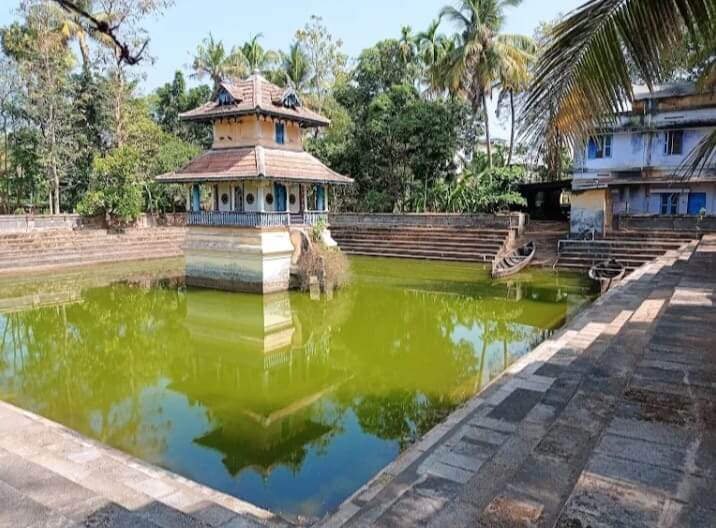
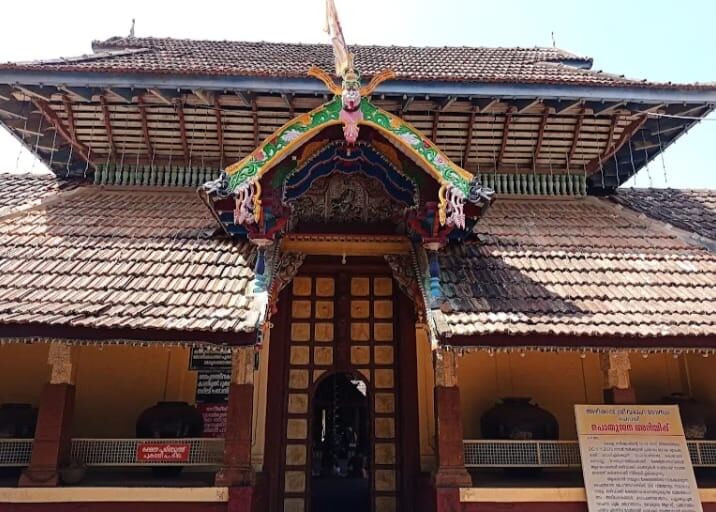
The temple combines traditional Kerala architecture with elements of Konkani (Nagara) style. Passing through the spacious open courtyard and the covered walkway in front of the temple, 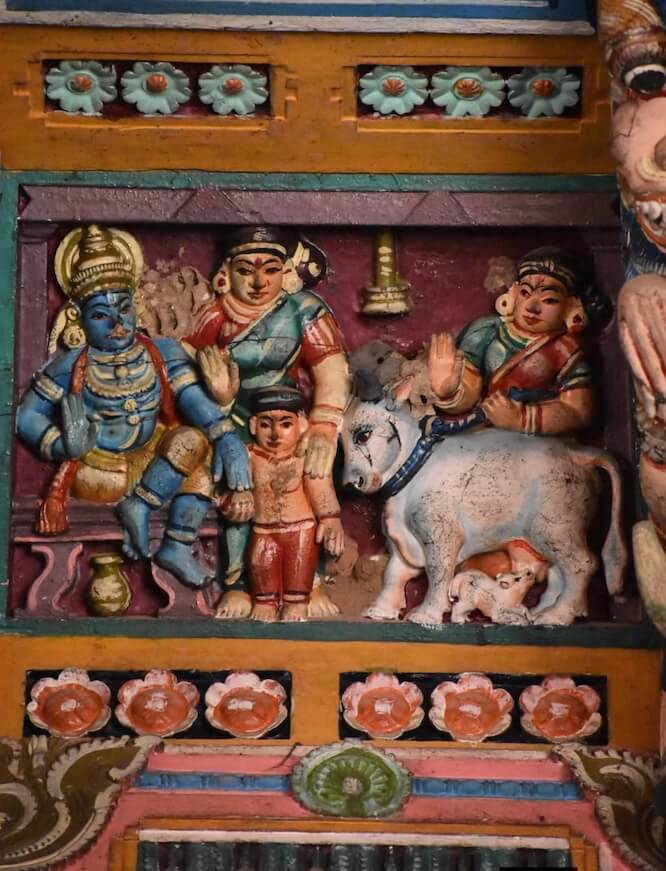 visitors reach the entrance gateway and the elephant shelter. Around the temple courtyard is a track specially built for the movement of the temple chariot. Within the temple grounds are the chariot house, where the large bronze chariot is kept except during festival days and the spacious Seeveli Pura (processional corridor). Near the Balikkal Pura stands the golden flagstaff, while the Nalambalam surrounds the main sanctum. The inner walls of the Nalambalam are fitted with traditional oil-lamp holders, adding to the temple’s architectural character.
On entering the temple and approaching the main sanctum, visitors first see the square Sreekovil with its copper-covered roof. Inside the sanctum, the idols of Sree Lakshmi Varaha and Sree Venkateswara (Perumal) are enshrined side by side on a single pedestal. Made of Panchaloha (a traditional five-metal alloy), both idols are in a standing posture, holding the conch and discus in their upper hands, while the lower hands are in the Abhaya and Varada mudras. The idol of Sree Varaha is depicted with a human body and the head of a boar. On either side of the main idols are smaller idols of Goddess Mahalakshmi and Goddess Bhoomidevi. Nearby are the shrines of Shanthadurga and the Naga deities, the family deities of the Gaud Saraswat Brahmin community.
 In addition to the main deities, the temple has shrines for seven other deities representing seven different Gaud Saraswat Brahmin (GSB) clans. The presence of these seven clan deities is why the temple is known as a “Sampoorna Temple”. Around the main Sreekovil, visitors can see separate shrines and platforms dedicated to Sree Shanthadurga, worshipped in the form of the famous Goddess Shanthadurga of Goa; Sree Mahalakshmi, the Goddess of prosperity; Sree Ganapathi, the remover of obstacles; a Shiva Linga representing Lord Shiva near the main sanctum; Sree Hanuman, the loyal devotee of Lord Rama; Sree Garuda, the divine mount of Lord Vishnu; and the Naga deities, including Nagaraja and Nagayakshi.
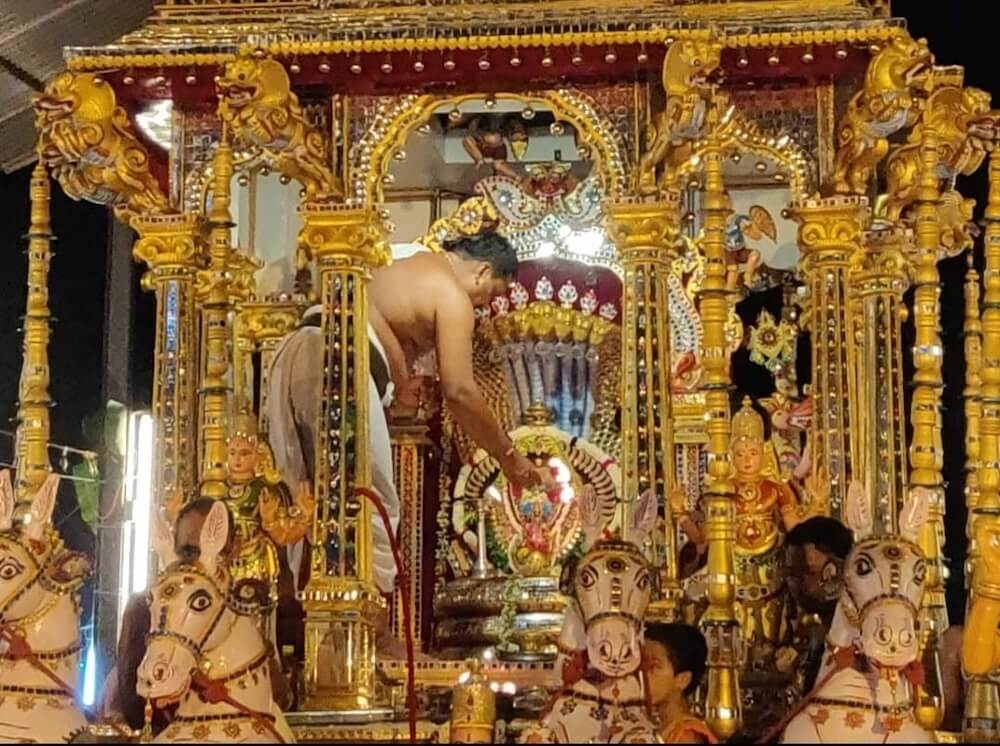
The main festivals of the temple are the two annual flag-hoisting festivals, held in honour of the principal deities, 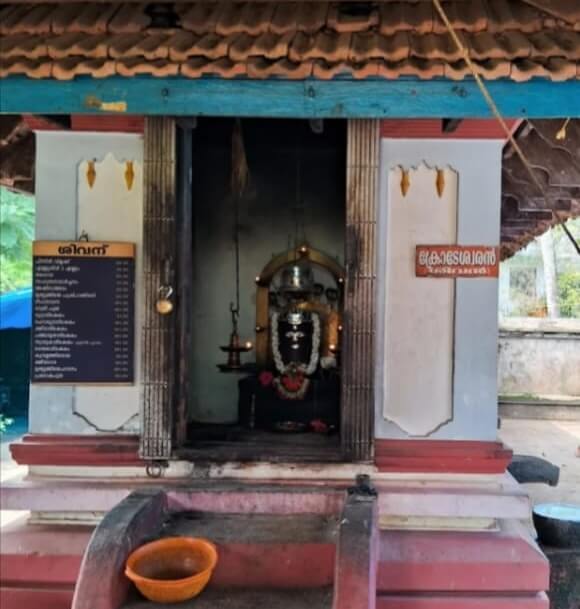 Sree Varaha and Sree Venkateswara, with equal importance. The Vrischikotsavam, celebrated during the Malayalam month of Vrischikam (November–December) and the Meenotsavam, held during Meenam (March–April), are the temple’s major annual festivals. The highlight of both festivals is the Rathotsavam (Chariot Festival), during which the idol is taken in procession on the bronze temple chariot, which is pulled by devotees along the track specially built for the chariot within the temple courtyard. The festivals also include the Pallivetta ritual and the Arattu (ceremonial holy bath) in the sea. Varaha Jayanthi, celebrated on the fifth day of the waxing phase of the moon (Shukla Paksha Panchami) in the month of Meenam, marks the birth anniversary of Lord Varaha and is observed with special prayers and rituals. As a Vishnu temple, Vaikuntha Ekadashi is also observed as an important festival. Karthika Pournami (Thrikkarthika) is marked by the lighting of lamps and special Deeparadhana, while Shravana Pournami (Rigveda Upakarma) is observed with the traditional ceremonies of the Gaud Saraswat Brahmin community.
  In addition, Ekadashi, Pournami (Full Moon Day) and Sankashti Chaturthi, dedicated to Sree Ganapathi, are observed every month.
Among the temple’s main offerings, Seva is one of the most important. It is a special ritual performed by devotees as an offering to the deity for their personal prayers. Offering Kanika is another important offering. Similar to the practice at the Tirupati Venkatachalapathy Temple, it is believed that offering Kanika to Sree Venkateswara helps in overcoming debts and brings prosperity. Payasam Prasadam, prepared in the traditional Konkani style, is a well-known offering of the temple. During the Vrischikotsavam and Meenotsavam, devotees can participate in the Rathotsava Seva when the idol is taken in procession on the bronze temple chariot.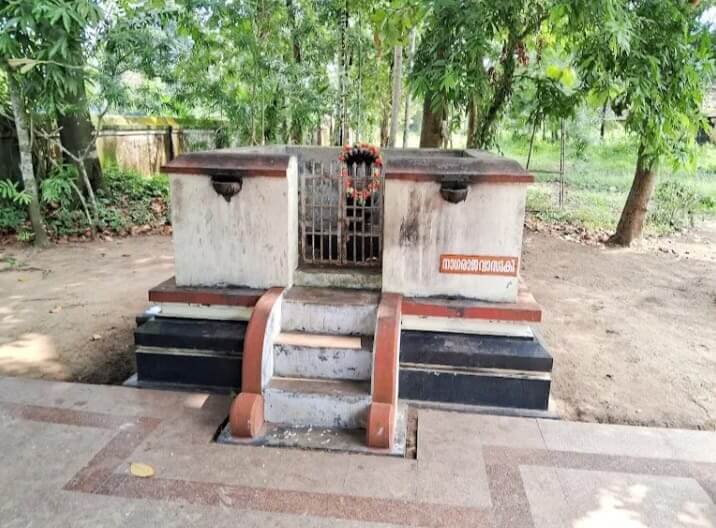 Thousands of devotees take part in pulling the chariot, praying for family prosperity and the fulfilment of their wishes. Other important offerings include Ganapathi Havanam for the removal of obstacles, Shanthadurga Pooja for family well-being and a happy married life and Naga Pooja, including offerings of milk and Noorum Palum, at the Naga shrine for relief from Rahu and Ketu Doshas.
The temple is open to devotees daily from 5:30 am to 11:00 am and from 5:30 pm to 8:30 pm. The temple opens at 5:30 am with Nirmalya Darshanam, followed by the morning rituals. Usha Pooja is performed at 6:00 am, followed by Navakabhishekam and special milk and Panchamritham Abhishekam for the main idols at 8:30 am. Ucha Pooja and Maha Nivedyam take place at 10:30 am and the temple closes at 11:00 am. The temple reopens at 5:30 pm, followed by Deeparadhana at 6:30 pm and Athazha Pooja at 7:30 pm. The temple closes for the day at 8:30 pm. On festival days and special occasions such as Vaikuntha Ekadashi and Varaha Jayanthi, pooja timings may vary and the temple may remain open until late in the evening.
Key highlight :-
- Located 5 km from North Paravur, 21 km from Aluva and 25 km from Ernakulam Town.
- The nearest railway station is Aluva railway station, about 22 km from the temple.
- KSRTC and local bus services are available to Cherai from Ernakulam and Aluva.
- Private vehicles can be parked at the temple’s parking area.
- Accommodation and food facilities are available in the nearby towns.
- Contact number + 91 4842488235
अज़ीकाल श्री वराह देवस्वोम
अज़ीकल, चेराई, जिला। एर्नाकुलम.
मंदिरे
Temples
मंदिर
-
व्यत्तिला शिव सुब्रह्मण्य स्वयंभू क्षेत्रम् विट्टीला, जि. एर्नाकुलम.
अधिक माहितीVyttila Shiva Subrahmanya Swayambhu Kshethram Vyttila, Dist. Ernakulam.
View Detailsव्यत्तिला शिव सुब्रह्मण्यं स्वयंभू क्षेत्रम् विट्टिला, जिला. एर्नाकुलम.
विवरण देखें -
श्री मरातिल कोट्टाराम भगवती मंदिर मराडू, जि. एर्नाकुलम.
अधिक माहितीSree Marattil Kottaram Bhagavathy Temple Maradu, Dist. Ernakulam.
View Detailsश्री मरात्तिल कोट्टारम भगवती मंदिर मरदु, जिला. एर्नाकुलम.
विवरण देखें -
मत्तनचेरी पझायनूर भगवती मंदिर कप्पालंदीमुक्कू, मत्तनचेरी, जि. एर्नाकुलम.
अधिक माहितीMattancherry Pazhayannur Bhagavathy Temple Kappalandimukku, Mattancherry, Dist. Ernakulam.
View Detailsमट्टनचेरी पझायन्नूर भगवती मंदिर कप्पलांडीमुक्कु, मट्टनचेरी, जिला। एर्नाकुलम.
विवरण देखें