
व्यत्तिला शिव सुब्रह्मण्य स्वयंभू क्षेत्रम्
विट्टीला, जि. एर्नाकुलम.
Vyttila Shiva Subrahmanya Swayambhu Kshethram
Vyttila, Dist. Ernakulam.
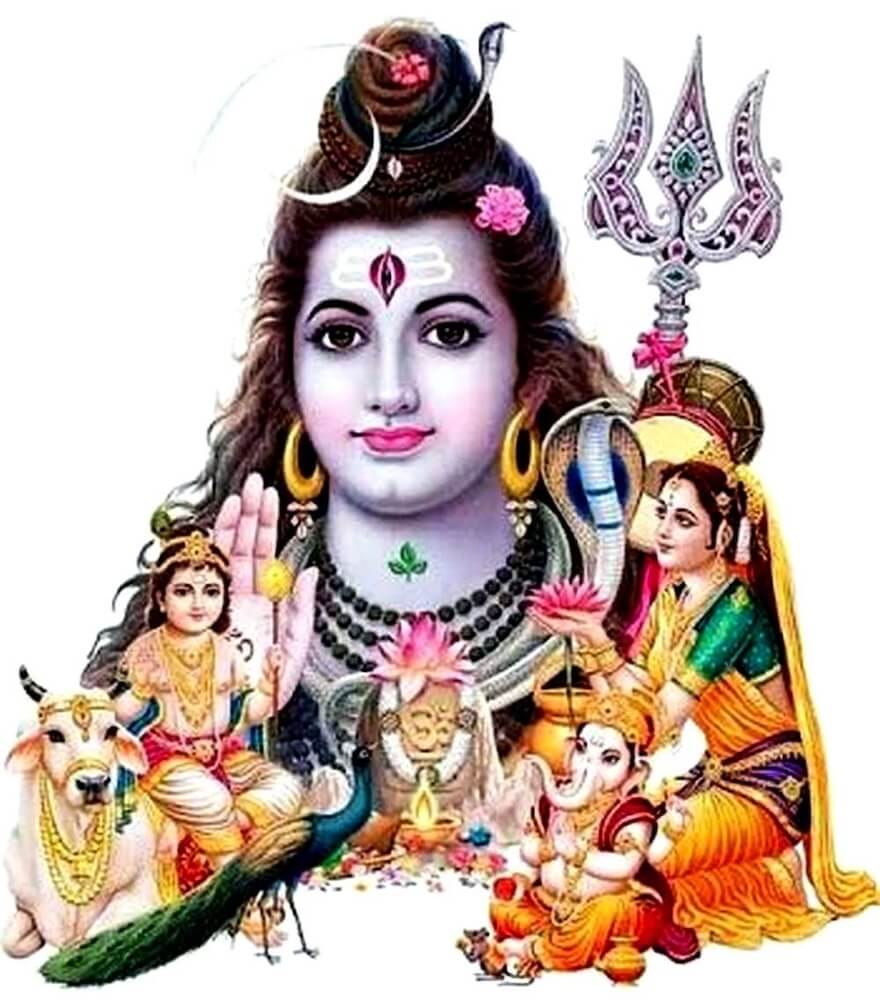 Located in Vyttila, one of the busiest parts of Ernakulam city, the Vyttila Shiva–Subrahmanya Temple stands between National Highway 66 and the Ernakulam–Ettumanoor State Highway. The temple complex consists of two separate temples dedicated to Lord Shiva and Lord Subrahmanya as the main deities. Although they are independent temples within the same compound they are collectively known as the Vyttila Shiva–Subrahmanya Temple. The Shiva Temple is regarded as one of Kerala’s ancient 108 Shiva temples. The idol of Lord Subrahmanya is believed to be Swayambhu (self-manifested). Another unique feature of the temple is that both shrines have their own Nalambalam, flagstaff and Bali stone. This reflects the equal importance given to Lord Shiva and Lord Subrahmanya in the temple’s worship tradition.
The temple is believed to have a history spanning more than 1,000 years. Historians suggest that a place of worship existed here during the medieval period or even earlier. For many centuries, the temple was owned and administered by the renowned Thekke Madhom in Thrissur. 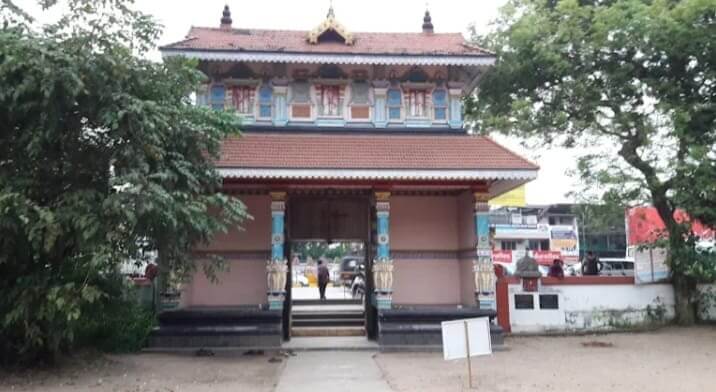 The administration was later taken over by the Cochin Devaswom Board and the temple is now maintained as one of its major Grade A temples. Records also indicate that the temple underwent significant renovation during the rule of the Kochi Royal Family. Extensive modern renovation and restoration works were later carried out during the late 20th century and the early 21st century.
One of the main legends associated with the temple is the belief that the idol of Lord Subrahmanya is Swayambhu (self-manifested). It is also believed that the Shiva Temple at Vyttila is one of the 108 Shiva temples consecrated by Parasurama.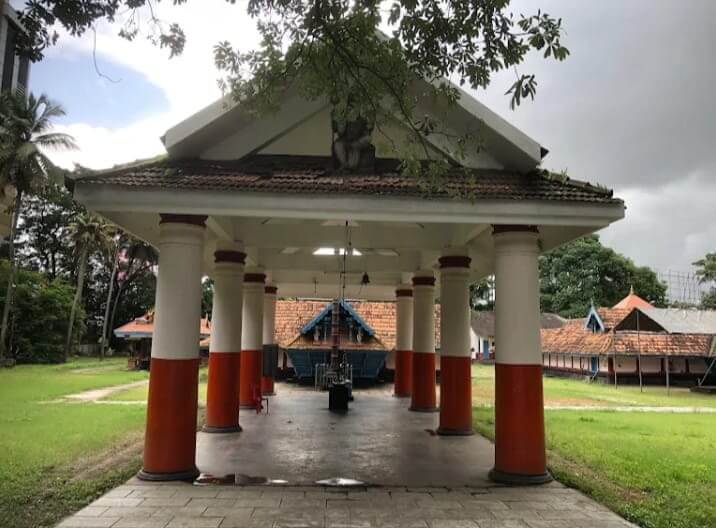 According to local tradition, the Shiva idol is in a fierce form with the third eye open. It is believed that the large temple pond on the eastern side facing the Sreekovil was created to calm this fierce aspect and maintain a peaceful atmosphere within the temple. Tradition further holds that the deity’s eyes are always directed towards the temple pond, symbolically calming the fierce form.
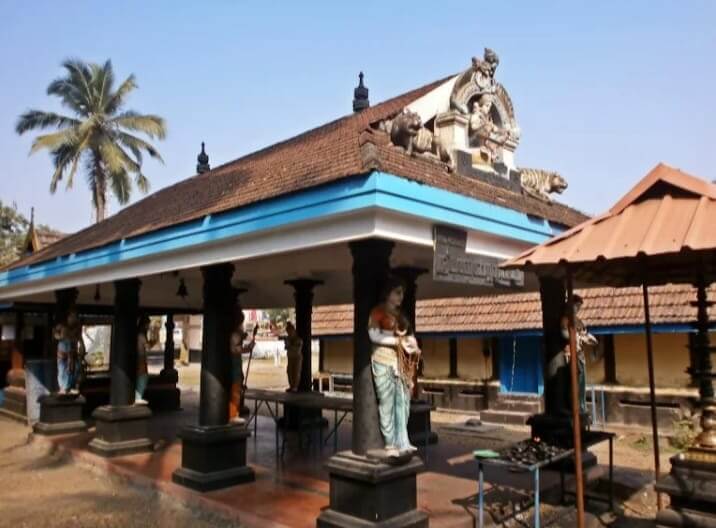
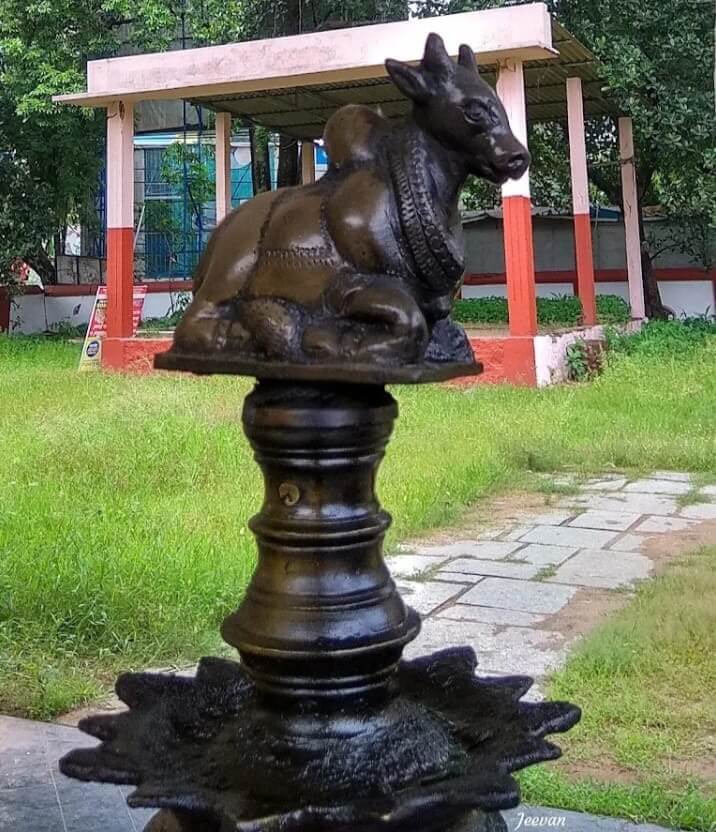
The Vyttila Shiva–Subrahmanya Temple is a fine example of traditional Kerala temple architecture. The most distinctive architectural feature of the temple is its twin temple complex, where two separate temples dedicated to Lord Shiva and Lord Subrahmanya stand within the same temple compound. Near the main entrance, 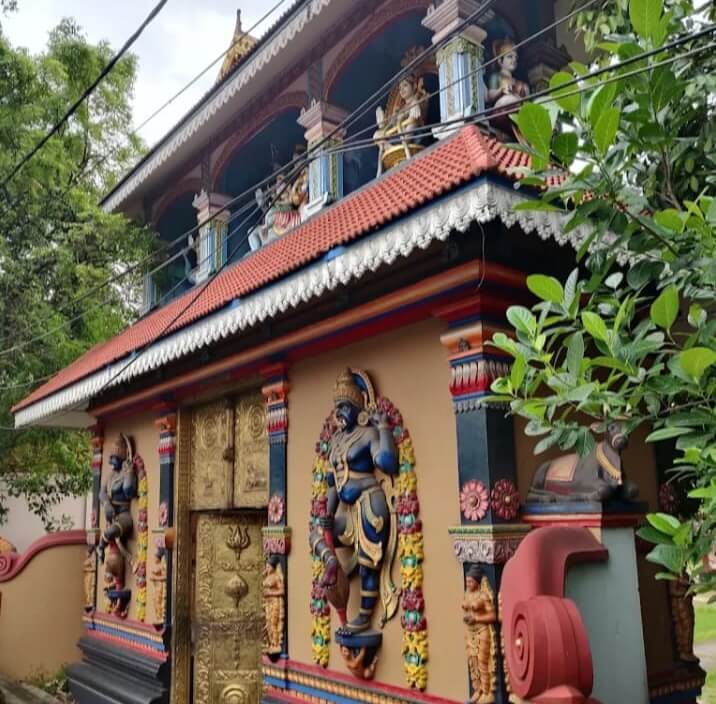 visitors can see a large banyan tree that provides shade and adds to the peaceful atmosphere of the temple. A spacious and beautifully built temple pond is situated on the eastern side of the Sreekovil. This pond is also associated with the legend of the fierce form of the Shiva idol. Two tall flagstaffs can be seen rising within the temple compound, one for Lord Shiva and the other for Lord Subrahmanya. Having separate flagstaffs for both deities is another unique feature of the temple.
Within the temple compound, visitors can see two separate square Sreekovils of equal size dedicated to Lord Shiva and Lord Subrahmanya. Both Sreekovils face east. Their laterite stone walls and pyramid-shaped roofs made of timber and covered with copper plates reflect the beauty of traditional Kerala temple architecture. The walls of the Sreekovils are adorned with beautiful carvings and each Sreekovil has its own Namaskara Mandapam in front. The Shiva Linga in the Shiva Temple and the idol of Lord Subrahmanya are both believed to be in their natural stone form. Lord Subrahmanya is worshipped here in a calm and gentle form.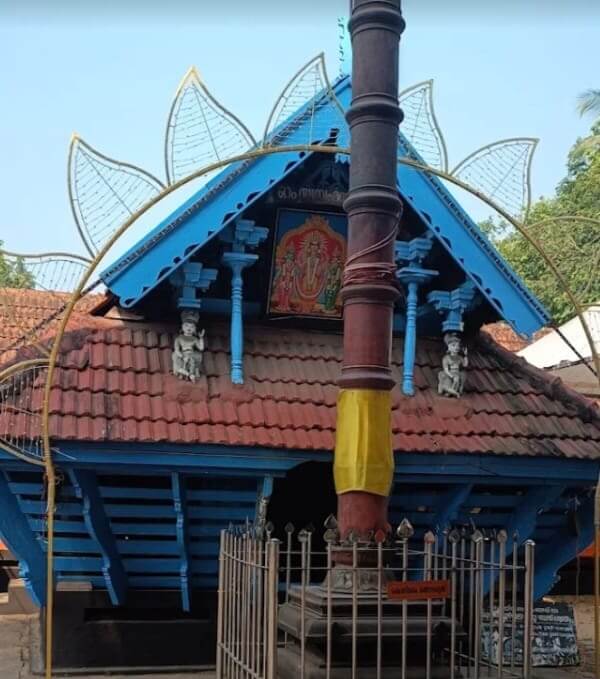
Near the main Sreekovils, visitors can see a shrine dedicated to Lord Ganesha. The temple compound also has separate shrines for Lord Ayyappa, Goddess Bhadrakali, Veerabhadra and Hidumban, along with a sacred Nagathara dedicated to the Naga deities.
Thaipooyam Mahotsavam, Kodiyettam Utsavam and Makara Bharani Vela are the temple’s main annual festivals. The eight-day Thaipooyam festival, celebrated during the Malayalam month of Makaram, concludes with the Arattu ceremony. Kavadi procession, ceremonial processions and special poojas are held during the festival. The six-day Kodiyettam Utsavam, celebrated during the Malayalam month of Kumbham, and Makara Bharani Vela, dedicated to Goddess Bhadrakali, are also among the temple’s major annual celebrations. Maha Shivaratri, Skanda Shashti and Dhanu Thiruvathira are observed with special rituals. In addition, special poojas and abhishekams are performed for Lord Subrahmanya on every Shashti day and for Lord Shiva on every Pradosham day.
The temple gives special importance to the offerings made to Lord Shiva and Lord Subrahmanya.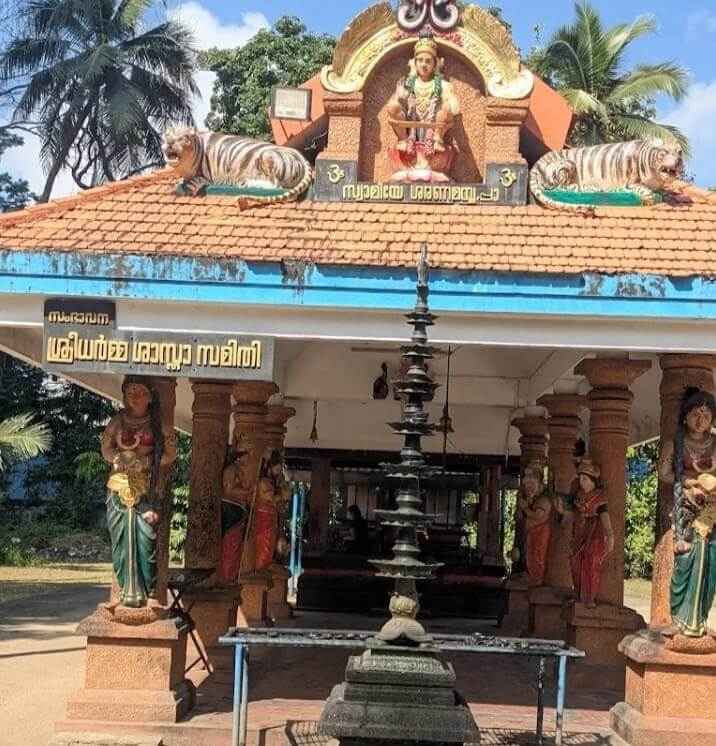 Panchamrutha Abhishekam is the principal offering to Lord Subrahmanya and is performed by devotees seeking blessings and prosperity. Palabhishekam (milk offering) and Enna Abhishekam (oil offering) are offered for good health and relief from hardships, while Kadali Banana Nivedyam is offered for knowledge and the educational well-being of children. During the Thaipooyam festival, devotees also offer various types of Kavadi, including Paal Kavadi and Bhasma Kavadi, as fulfilment of their vows. For Lord Shiva, Dhara is performed for good health, long life and divine blessings, while Koovala Mala and Koovala Leaf Archana are offered for prosperity. Lighting the Pinvilakku behind the Sreekovil, symbolically dedicated to Goddess Parvati, is another important offering performed for marital harmony and to calm the fierce aspect of the Shiva idol. Devotees also offer Ganapathi Homam and Karuka Mala to Lord Ganesha for the removal of obstacles, Neerajanam (sesame oil lamp) to Lord Ayyappa on Saturdays for relief from the effects of Shani and Guruthi Pooja to Goddess Bhadrakali on special days for protection from enemies and negative influences.
The temple opens daily at 5:00 am with Nirmalya Darshanam. This is followed by Malar Nivedyam at 5:10 am, Dhara, the principal offering to Lord Shiva, at 8:30 am and Ucha Pooja at 9:20 am. The temple closes at 10:00 am after the morning rituals. It reopens at 5:00 pm. Deeparadhana is performed at 6:30 pm followed by Athazha Pooja at 7:30 pm. The temple closes for the day at 8:00 pm. Pooja timings may vary on festival days such as Thaipooyam, Maha Shivaratri and Skanda Shashti.
Key highlight :-
- Located 6 km from Ernakulam city and 5 km from Tripunithura.
- 5 km from Ernakulam jn. ( south ) railway station and 1 km from Vyttila metro station.
- 28 km from Cochin International Airport.
- KSRTC and local bus services are available to the temple from Ernakulam city.
- Private vehicles can be parked near the temple.
- Accommodation and food facilities are available near the temple.
व्यत्तिला शिव सुब्रह्मण्यं स्वयंभू क्षेत्रम्
विट्टिला, जिला. एर्नाकुलम.
मंदिरे
Temples
मंदिर
મંદિરો
கோவில்கள்
దేవాలయాలు
ക്ഷേത്രങ്ങൾ
ದೇವಾಲಯಗಳು
মন্দিরসমূহ
ਮੰਦਿਰ
-
परांदूर भगवती मंदिर पेरांदूर, जि. एर्नाकुलम
अधिक माहितीPerandoor Bhagavathy Temple Perandoor, Dist. Ernakulam
View Detailsपेरंदूर भगवती मंदिर पेरंदूर, जिला. एर्नाकुलम
विवरण देखेंPerandoor Bhagavathy Temple Perandoor, Dist. Ernakulam
વિગત જુઓPerandoor Bhagavathy Temple Perandoor, Dist. Ernakulam
விவரங்களைக் காண்கPerandoor Bhagavathy Temple Perandoor, Dist. Ernakulam
వివరాలను చూడండిPerandoor Bhagavathy Temple Perandoor, Dist. Ernakulam
വിശദാംശങ്ങൾ കാണുകPerandoor Bhagavathy Temple Perandoor, Dist. Ernakulam
ವಿವರಗಳನ್ನು ವೀಕ್ಷಿಸಿPerandoor Bhagavathy Temple Perandoor, Dist. Ernakulam
বিস্তারিত দেখুনPerandoor Bhagavathy Temple Perandoor, Dist. Ernakulam
ਵੇਰਵੇ ਦੇਖੋ -
किझक्के कडुंगल्लूर श्री भुवनेश्वरी महादेवी मंदिर कडुंगल्लूर, जि. एर्नाकुलम
अधिक माहितीKizhakke Kadungalloor Sree Bhuvaneswari Mahadevi Temple Kadungalloor, Dist. Ernakulam
View Detailsकिज़हक्के कडुंगल्लूर श्री भुवनेश्वरी महादेवी मंदिर कडुंगल्लूर, जिला. एर्नाकुलम
विवरण देखेंKizhakke Kadungalloor Sree Bhuvaneswari Mahadevi Temple Kadungalloor, Dist. Ernakulam
વિગત જુઓKizhakke Kadungalloor Sree Bhuvaneswari Mahadevi Temple Kadungalloor, Dist. Ernakulam
விவரங்களைக் காண்கKizhakke Kadungalloor Sree Bhuvaneswari Mahadevi Temple Kadungalloor, Dist. Ernakulam
వివరాలను చూడండిKizhakke Kadungalloor Sree Bhuvaneswari Mahadevi Temple Kadungalloor, Dist. Ernakulam
വിശദാംശങ്ങൾ കാണുകKizhakke Kadungalloor Sree Bhuvaneswari Mahadevi Temple Kadungalloor, Dist. Ernakulam
ವಿವರಗಳನ್ನು ವೀಕ್ಷಿಸಿKizhakke Kadungalloor Sree Bhuvaneswari Mahadevi Temple Kadungalloor, Dist. Ernakulam
বিস্তারিত দেখুনKizhakke Kadungalloor Sree Bhuvaneswari Mahadevi Temple Kadungalloor, Dist. Ernakulam
ਵੇਰਵੇ ਦੇਖੋ -
अवनामकोडे सरस्वती मंदिर नेदुंबसेरी, जि. एर्नाकुलम
अधिक माहितीAvanamkode Saraswathi Temple Nedumbassery, Dist. Ernakulam
View Detailsअवनमकोड सरस्वती मंदिर नेदुम्बस्सेरी, जिला. एर्नाकुलम
विवरण देखेंAvanamkode Saraswathi Temple Nedumbassery, Dist. Ernakulam
વિગત જુઓAvanamkode Saraswathi Temple Nedumbassery, Dist. Ernakulam
விவரங்களைக் காண்கAvanamkode Saraswathi Temple Nedumbassery, Dist. Ernakulam
వివరాలను చూడండిAvanamkode Saraswathi Temple Nedumbassery, Dist. Ernakulam
വിശദാംശങ്ങൾ കാണുകAvanamkode Saraswathi Temple Nedumbassery, Dist. Ernakulam
ವಿವರಗಳನ್ನು ವೀಕ್ಷಿಸಿAvanamkode Saraswathi Temple Nedumbassery, Dist. Ernakulam
বিস্তারিত দেখুনAvanamkode Saraswathi Temple Nedumbassery, Dist. Ernakulam
ਵੇਰਵੇ ਦੇਖੋ