
परांदूर भगवती मंदिर
पेरांदूर, जि. एर्नाकुलम
Perandoor Bhagavathy Temple
Perandoor, Dist. Ernakulam
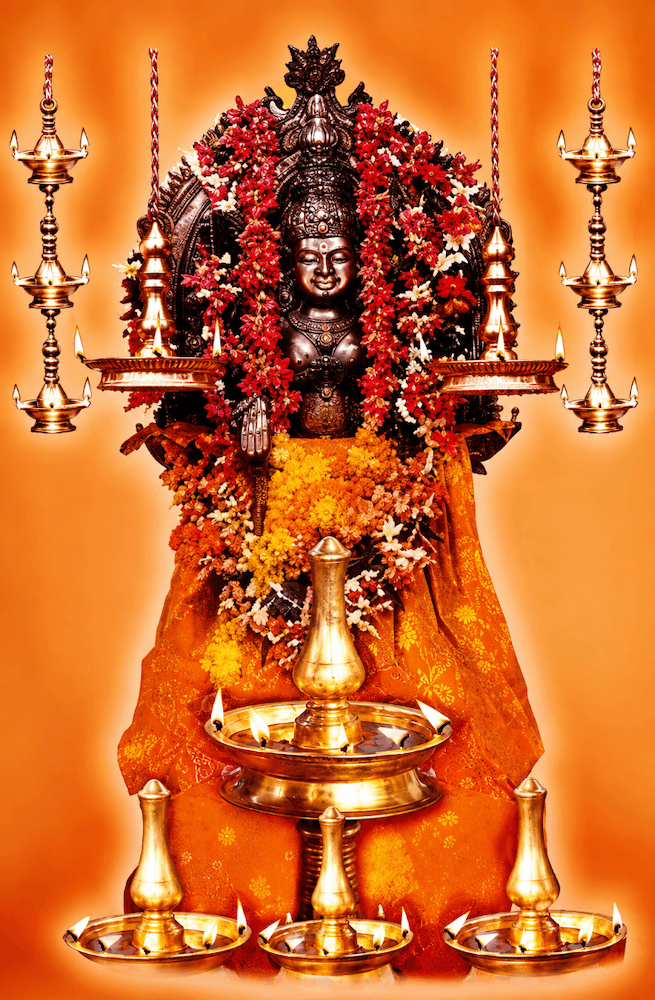 Perandoor Bhagavathy Temple is situated at Perandoor in Elamakkara, about 5 KM from the city of Ernakulam. It is regarded as one of the 108 Durga temples of Kerala traditionally believed to have been consecrated by Sage Parasurama. The temple is also revered as the family deity of the Elangalloor Swaroopam, from which the royal family of Edappally originated.
According to tradition, when Cheraman Perumal, who ruled Kerala in the 10th century, divided his kingdom among local chieftains and nobles, he inadvertently omitted his royal preceptors, the Elangalloor Namboothiris. Realising this, he recovered certain territories from other chieftains and granted them to his royal preceptors. They subsequently came to be associated with the Edappally royal lineage, one of the two Brahmin royal families of Kerala. Perandoor Bhagavathy is revered as the Paradevata, or principal tutelary deity, of this royal lineage. The temple underwent extensive renovation with public support following a major fire in 1965. During the restoration, certain records reportedly recovered from above the Sreekovil indicated that the temple has a history extending back approximately 1,600 years. Historical records also indicate that, centuries ago, the rulers of Edappally transferred several tax-free properties belonging to the Edappally Swaroopam to the temple. In 1973, under an agreement, the administration of the temples at Perandoor, Punnakkal and Puthukkalavattom was transferred by Vasudevan Valiya Raja of the Elangalloor Swaroopam to the Elamakkara N.S.S. Karayogam.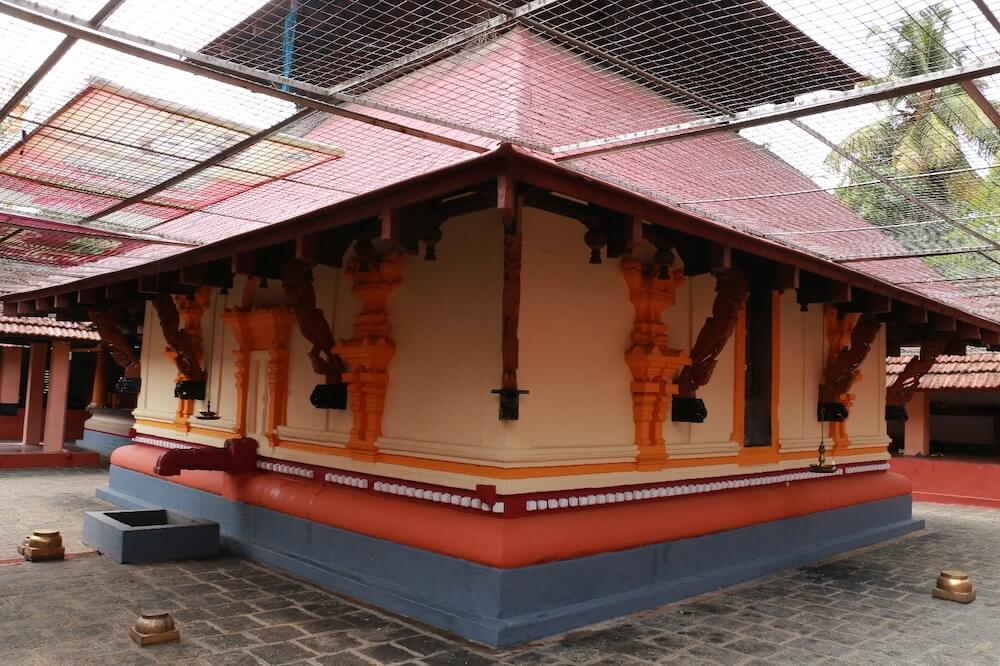
Perandoor Temple is associated with more than one sacred tradition. In earlier times, it was customary for the ruler of the Elangalloor Swaroopam, centred at Edappally, to personally attend and supervise the festivals of the temples under his patronage. On one such occasion, the Edappally Valiya Raja travelled to Thrikunnappuzha Dharma Sastha Temple to attend its festival. While staying there, he is believed to have received a divine vision of the Goddess in a dream. In the dream, the Goddess expressed her desire to proceed to Edappally and reside in the land where Lord Ganapathy was already enshrined. Subsequent Deva Prasnam, a traditional astrological enquiry, is said to have confirmed the divine message. 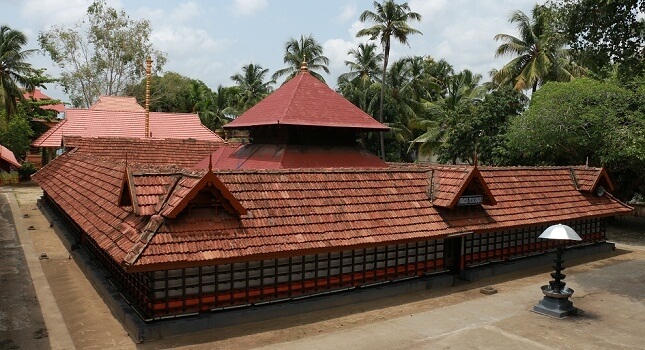 The ruler therefore returned towards Edappally carrying an image of the Goddess. When he arrived at the Palliyodappura Kadavu, where the royal family traditionally disembarked, the image of the Goddess accidentally slipped from his hands and fell to the ground. A subsequent Deva Prasnam revealed that the Goddess wished to remain at that very spot and she was accordingly consecrated there in accordance with traditional rituals.
Another tradition explains that the place came to be known as Perandoor because the image had “perandu veenu”—unexpectedly fallen—from the ruler’s hands. 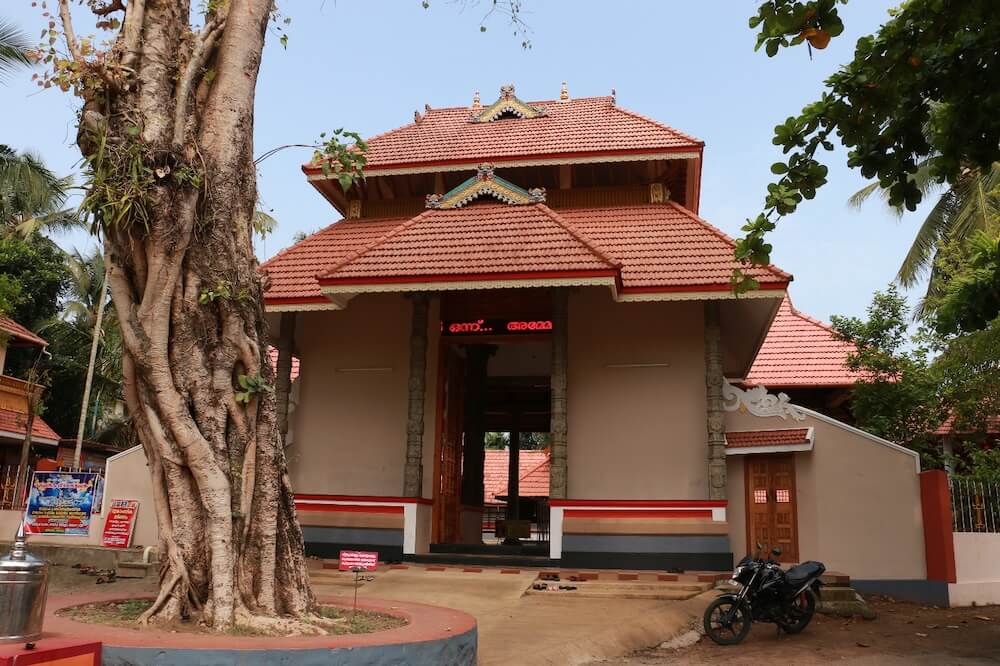 The temple also preserves a distinctive ritual associated with the ancestor who is believed to have brought the Goddess to this land. This ancestral presence is conceived in the form of an Adimana Rakshasa, for whom ritual worship is performed with a Padmam offering at the Thidappally. As the temple is also worshipped as the family deity by numerous ancestral families, including families living in distant regions, Perandoor Bhagavathy Temple is widely known as an important Kuladevata temple.
The temple is built in the traditional Kerala architectural style, characterised by sloping tiled roofs, finely crafted timber elements and spacious open courtyards. Devotees enter the temple through an imposing Gopuram, designed in the traditional Kerala style with a multi-tiered tiled roof and ornamental gables. Beyond the entrance lies the spacious Chuttambalam, 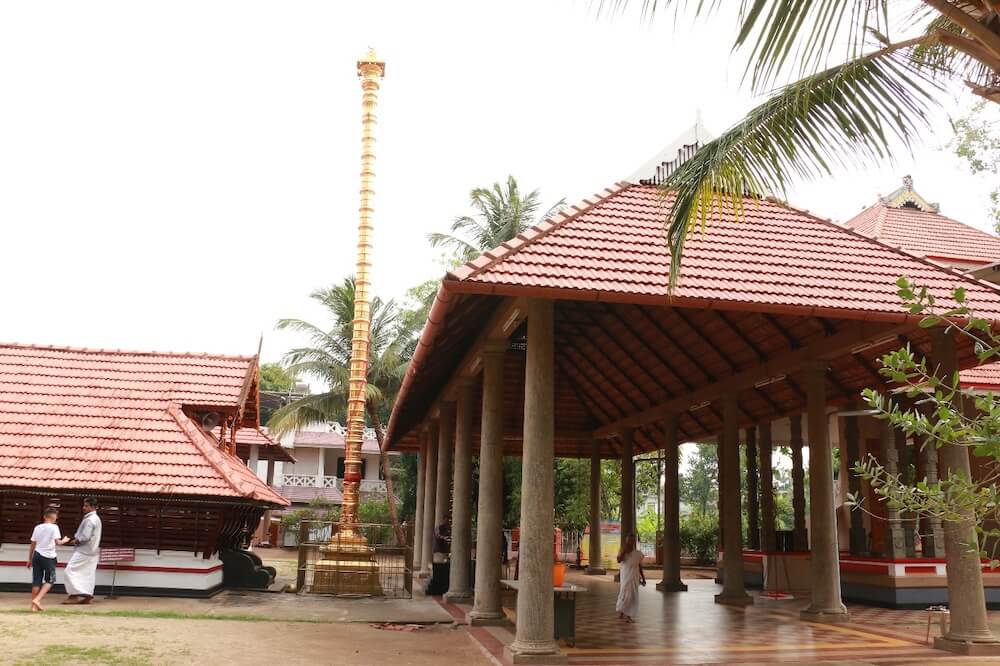 which encloses the sacred structures and is distinguished by its long, low tiled roofs and wooden-framed walls. At the centre of the courtyard stands the Dwajasthambam, rising prominently before the main shrine. Proceeding further, one reaches the spacious Namaskara Mandapam, supported by massive pillars and adorned with richly carved wooden beams and an elaborate ornamental ceiling. Traditional lamps arranged within the mandapam further enhance its sacred ambience. Beyond the Namaskara Mandapam stands the Sreekovil, the innermost and most sacred structure of the temple, built in the classic Kerala architectural style and crowned with a steeply sloping tiled roof,
 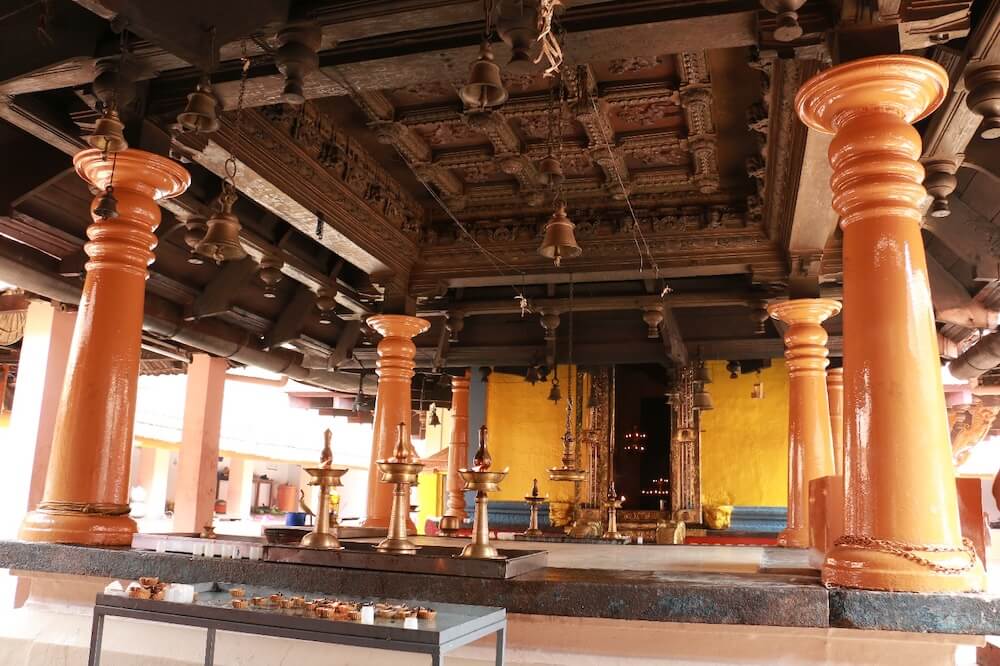 forming the spiritual and architectural culmination of the temple complex.
 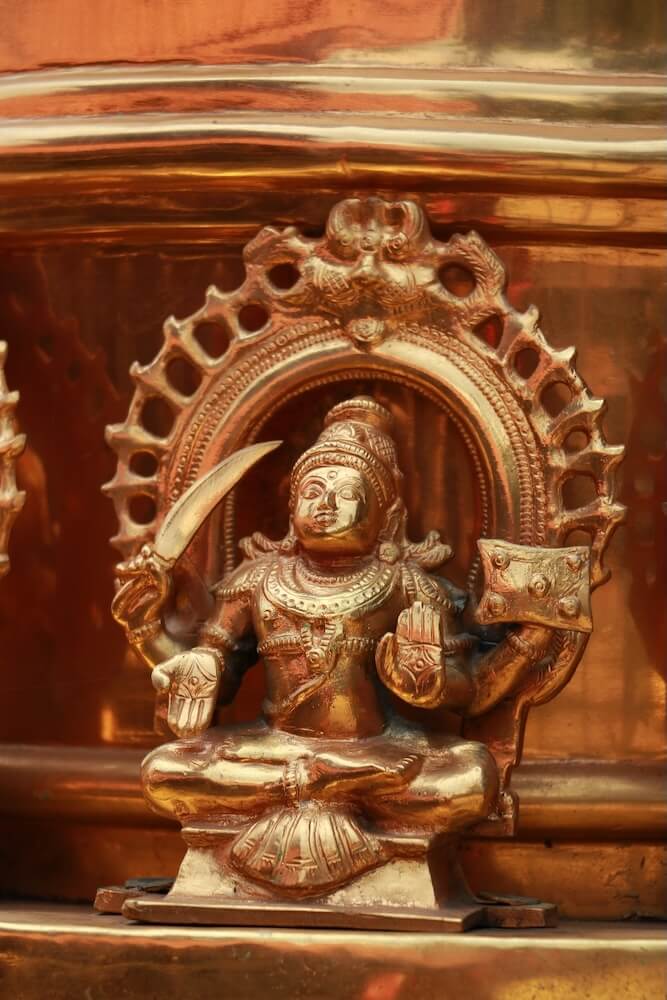 The presiding deity, worshipped in the Karthyayani Sankalpa, is a distinctive manifestation of Adi Parashakti, who is conceived and worshipped here in the form of an eight-year-old child. Owing to this benign and childlike form, the deity is regarded as especially compassionate, benevolent and easily pleased by sincere and innocent devotion. In a small sanctum to the left of the main Sreekovil is Lord Ganapathy. A Shiva Lingam, believed to have been the personal worship deity of one of the temple’s former priests, is also consecrated there as a manifestation of the divine presence of Lord Shiva. Outside the Balivattam, Lord Sastha is worshipped in a separate shrine, while Yakshi is consecrated on a raised platform on the southern side of the temple. Another distinctive feature of the temple is its sacred Nagathara, or Naga shrine. Numerous Naga images, brought and consecrated by ancestral families and devotees from distant places, are installed here.
Thrikarthika, observed during the Malayalam month of Vrischikam, is one of the temple’s most important celebrations. The annual Thiruvulsavam is celebrated for eight days, culminating in the Arattu on the day of the Uthram star in the Malayalam month of Medam. A significant observance is Makam Thozhal. According to local belief, the fire that once affected the temple occurred on the same day as Makam Thozhal at the renowned Chottanikkara Bhagavathy Temple. Believing the incident to have reflected the Goddess’s displeasure, the temple thereafter began observing Makam Thozhal with great importance.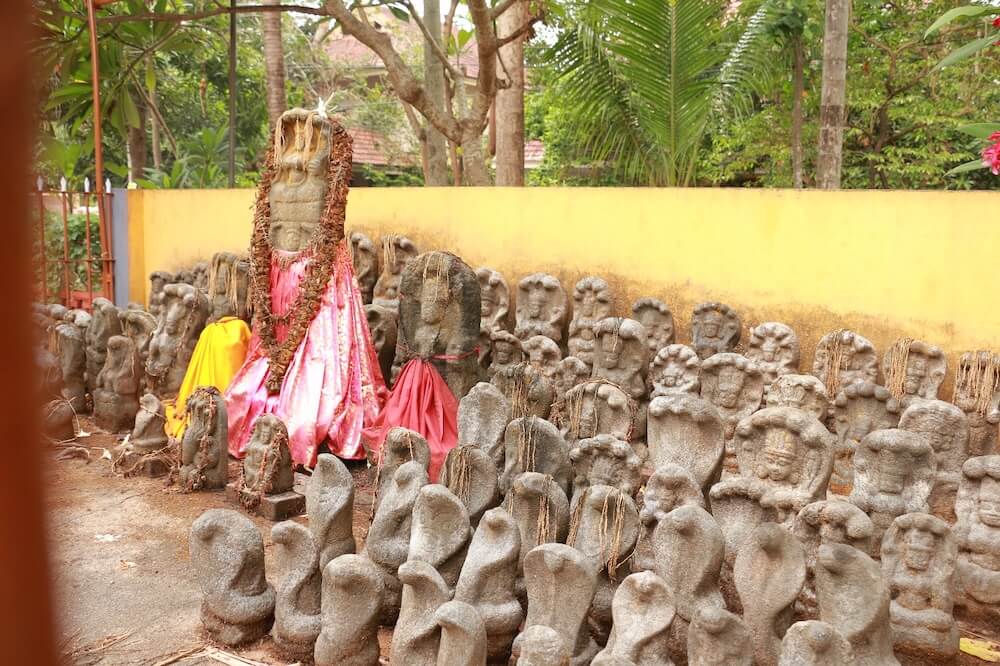 Today, it is conducted with ritual and ceremonial significance comparable to a festival. The Mandala period during the month of Vrischikam is observed with ceremonies such as Niramala and Vilakku Vayppu. On the forty-first day, a ceremonial Thalam Ezhunnallippu, organised by the local devotees, arrives at the temple from the nearby Punnakkal Temple. Once a year, on the fortieth day of the Mandala season, the special ritual known as Yakshikku Enna Aadal, or the ceremonial anointing of Yakshi with oil, is conducted. The oil used in the ritual is traditionally believed to possess protective and beneficial properties. Navaratri and Durga Pooja are also observed annually. On Vijayadasami, numerous children are initiated into the world of learning through the sacred ceremony of Vidyarambham. A nine-day music festival is also traditionally conducted during this period.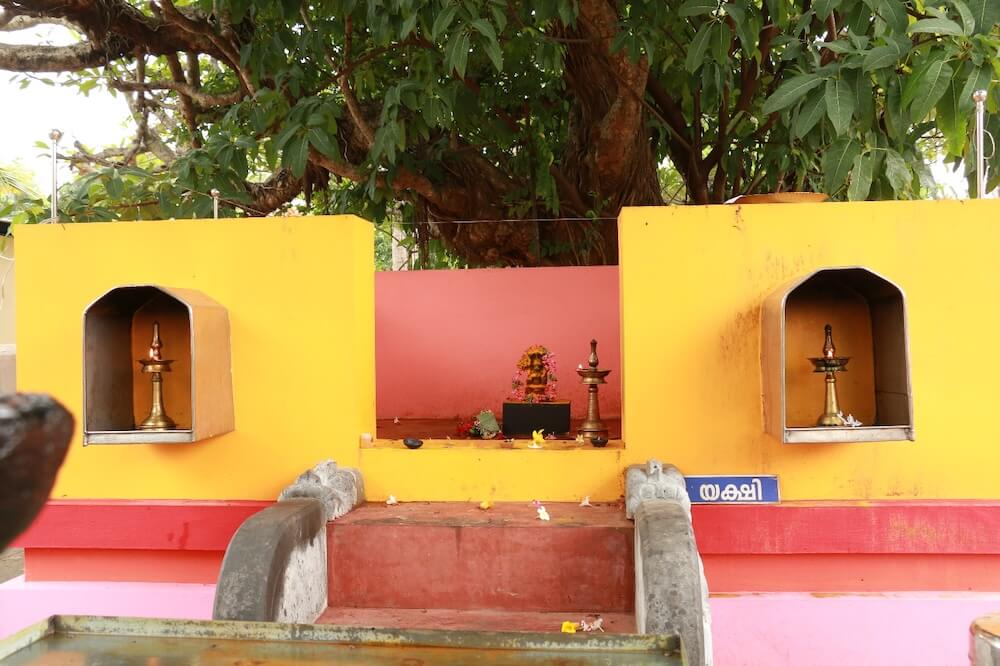
There are a number of important offerings at the temple. Pattum Thaliyum Nadakku Vaykkuka, the offering of a silk cloth and a thali before the sanctum, is one of the main offerings. It is performed by women seeking marriage, as well as by married women seeking the blessings of the Goddess, who is worshipped as Mangalyaswaroopini, the embodiment of marital auspiciousness. Thottil Nadakku Vaykkuka, the offering of a cradle before the sanctum and Para Nirakkuka, the ceremonial filling of a traditional measure with offerings, are also important vows observed by devotees. Yakshi Pooja, including the offerings of Koottu Payasam and Koottu Padmam, is performed in the belief that Yakshi has been entrusted with the protection of both the Goddess and the temple, making it one of the significant ritual offerings. Noorum Palum is another important offering, conducted every month on the day of the Ayilyam star. Other main offerings include Bhagavathy Seva, Ashtadravya Ganapathy Homam and special offerings made by the temple’s Moola Kudumbams, or ancestral families.
The temple is also unique among the temples in the Edappally region in conducting five daily poojas. The daily pooja schedule begins with Nirmalya Darshanam at 5.00 AM, followed by Usha Pooja at 5.30 AM and Ethirtha Pooja at 6.00 AM. Pantheeradi Pooja is conducted at 8.30 AM, followed by Ucha Pooja at 10.30 AM. The temple reopens in the evening at 5.15 PM, after which Deeparadhana is performed, followed by Athazha Pooja at 7.45 PM. The temple closes at 8.00 PM.
Key Highlights
- Located 5 km from Ernakulam town.
- About 5 km from Ernakulam Railway Station.
- Local bus services are available.
- Dedicated parking is available for private vehicles.
- Accommodation and dining facilities are available nearby.
पेरंदूर भगवती मंदिर
पेरंदूर, जिला. एर्नाकुलम
मंदिरे
Temples
मंदिर
મંદિરો
கோவில்கள்
దేవాలయాలు
ക്ഷേത്രങ്ങൾ
ದೇವಾಲಯಗಳು
মন্দিরসমূহ
ਮੰਦਿਰ
-
किझक्के कडुंगल्लूर श्री भुवनेश्वरी महादेवी मंदिर कडुंगल्लूर, जि. एर्नाकुलम
अधिक माहितीKizhakke Kadungalloor Sree Bhuvaneswari Mahadevi Temple Kadungalloor, Dist. Ernakulam
View Detailsकिज़हक्के कडुंगल्लूर श्री भुवनेश्वरी महादेवी मंदिर कडुंगल्लूर, जिला. एर्नाकुलम
विवरण देखेंKizhakke Kadungalloor Sree Bhuvaneswari Mahadevi Temple Kadungalloor, Dist. Ernakulam
વિગત જુઓKizhakke Kadungalloor Sree Bhuvaneswari Mahadevi Temple Kadungalloor, Dist. Ernakulam
விவரங்களைக் காண்கKizhakke Kadungalloor Sree Bhuvaneswari Mahadevi Temple Kadungalloor, Dist. Ernakulam
వివరాలను చూడండిKizhakke Kadungalloor Sree Bhuvaneswari Mahadevi Temple Kadungalloor, Dist. Ernakulam
വിശദാംശങ്ങൾ കാണുകKizhakke Kadungalloor Sree Bhuvaneswari Mahadevi Temple Kadungalloor, Dist. Ernakulam
ವಿವರಗಳನ್ನು ವೀಕ್ಷಿಸಿKizhakke Kadungalloor Sree Bhuvaneswari Mahadevi Temple Kadungalloor, Dist. Ernakulam
বিস্তারিত দেখুনKizhakke Kadungalloor Sree Bhuvaneswari Mahadevi Temple Kadungalloor, Dist. Ernakulam
ਵੇਰਵੇ ਦੇਖੋ -
अवनामकोडे सरस्वती मंदिर नेदुंबसेरी, जि. एर्नाकुलम
अधिक माहितीAvanamkode Saraswathi Temple Nedumbassery, Dist. Ernakulam
View Detailsअवनमकोड सरस्वती मंदिर नेदुम्बस्सेरी, जिला. एर्नाकुलम
विवरण देखेंAvanamkode Saraswathi Temple Nedumbassery, Dist. Ernakulam
વિગત જુઓAvanamkode Saraswathi Temple Nedumbassery, Dist. Ernakulam
விவரங்களைக் காண்கAvanamkode Saraswathi Temple Nedumbassery, Dist. Ernakulam
వివరాలను చూడండిAvanamkode Saraswathi Temple Nedumbassery, Dist. Ernakulam
വിശദാംശങ്ങൾ കാണുകAvanamkode Saraswathi Temple Nedumbassery, Dist. Ernakulam
ವಿವರಗಳನ್ನು ವೀಕ್ಷಿಸಿAvanamkode Saraswathi Temple Nedumbassery, Dist. Ernakulam
বিস্তারিত দেখুনAvanamkode Saraswathi Temple Nedumbassery, Dist. Ernakulam
ਵੇਰਵੇ ਦੇਖੋ -
कडुंगल्लूर श्री नरसिंह स्वामी मंदिर कडुंगल्लूर, जि. एर्नाकुलम
अधिक माहितीKadungalloor Sree Narasimha Swamy Temple Kadungalloor, Dist. Ernakulam
View Detailsकदुंगल्लूर श्री नरसिम्हा स्वामी मंदिर कडुंगल्लूर, जिला. एर्नाकुलम
विवरण देखेंKadungalloor Sree Narasimha Swamy Temple Kadungalloor, Dist. Ernakulam
વિગત જુઓKadungalloor Sree Narasimha Swamy Temple Kadungalloor, Dist. Ernakulam
விவரங்களைக் காண்கKadungalloor Sree Narasimha Swamy Temple Kadungalloor, Dist. Ernakulam
వివరాలను చూడండిKadungalloor Sree Narasimha Swamy Temple Kadungalloor, Dist. Ernakulam
വിശദാംശങ്ങൾ കാണുകKadungalloor Sree Narasimha Swamy Temple Kadungalloor, Dist. Ernakulam
ವಿವರಗಳನ್ನು ವೀಕ್ಷಿಸಿKadungalloor Sree Narasimha Swamy Temple Kadungalloor, Dist. Ernakulam
বিস্তারিত দেখুনKadungalloor Sree Narasimha Swamy Temple Kadungalloor, Dist. Ernakulam
ਵੇਰਵੇ ਦੇਖੋ