
वेंबिल मनालयम शिव मंदिर
कुरुपुझा, एलावट्टम, जि. तिरुवनंतपुरम.
Vembil Manalayam Siva Temple
Kurupuzha, Elavattom, Dist. Thiruvananthapuram.
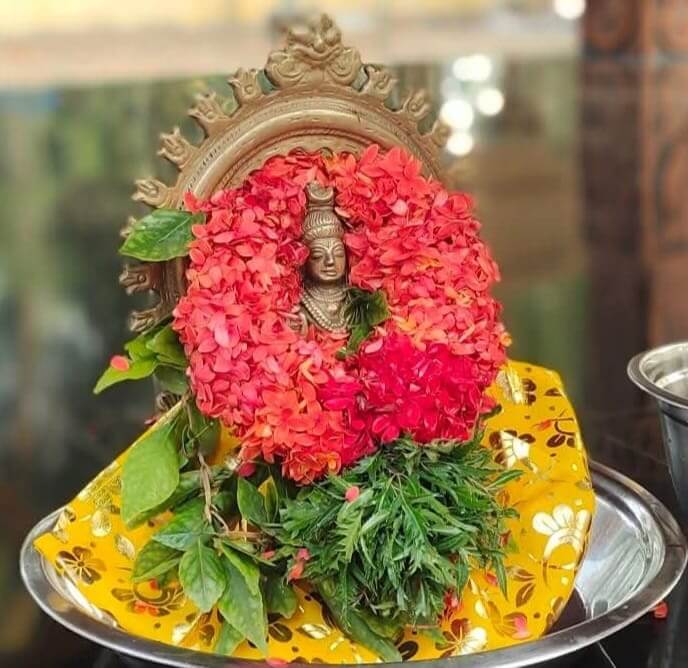 Vembil Manalayam Shiva Temple is an ancient and historically significant temple located at Kurupuzha, near Palode in Thiruvananthapuram district. Known as one of the few forest temples in South Kerala, the temple is situated amidst a forested area. The main deity is a self-manifested (Swayambhu) Shiva Linga of Lord Shiva. The temple also has shrines dedicated to Vanadurga, Ganapati and Sastha, among other deities. Maha Shivaratri, celebrated during the Malayalam month of Kumbham (February–March), is the temple’s main annual festival.
The temple is believed to be several centuries old, although no historical records clearly mention its exact date of origin. According to available information, it was rediscovered from the remains of an ancient place of worship located within the forest. There are no records identifying any particular king or notable person as its builder. It is believed to have been established by the ancestors of the local people, 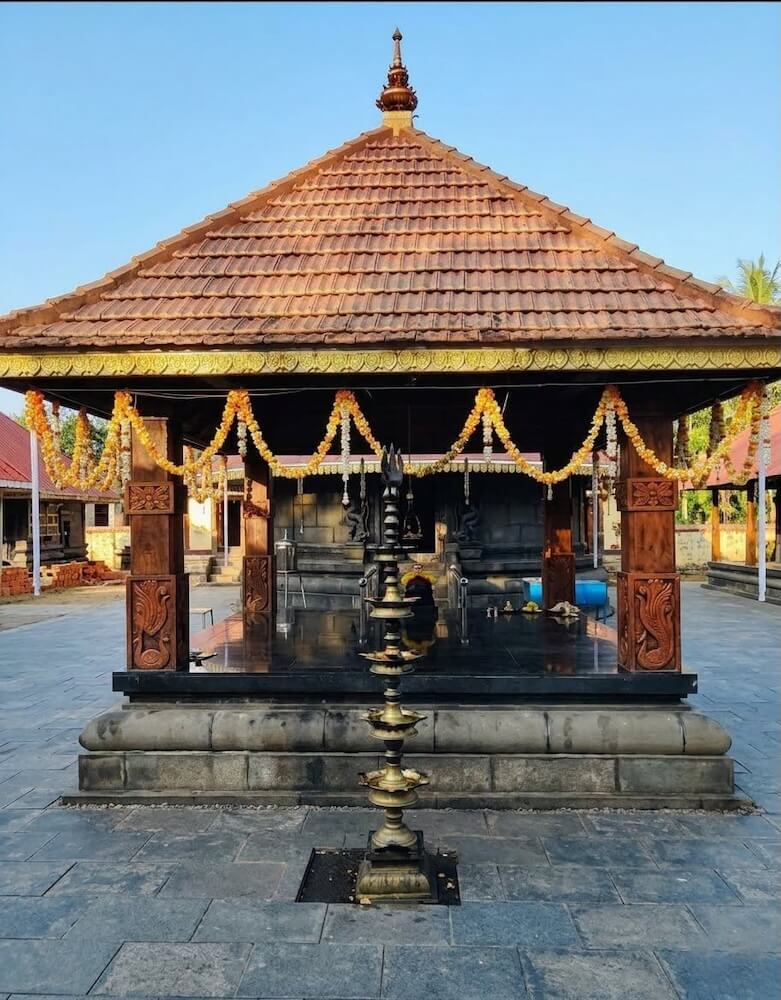 but over time the surrounding area became dense forest and the temple fell into ruins. Later, local residents and devotees began restoration work and in 1996 the temple trust was officially registered, marking the beginning of an organised system of administration. The temple was gradually developed into its present form through continuous renovation. Today, the temple’s daily rituals, administration and maintenance are managed by a public trust and a 15-member governing committee formed by local residents and devotees.
According to the temple’s main legend, centuries ago, when this area was covered by dense forest, a Kattunaikkan (tribal man) who had come to collect forest produce sharpened his sickle on a stone found there. It is said that blood began to flow from the stone. After the incident was reported to the local people, traditional astrological rituals were performed, which revealed that the stone was not an ordinary rock but a naturally formed Swayambhu Shiva Linga. The local people then built a small earthen platform at the site and began offering worship there.
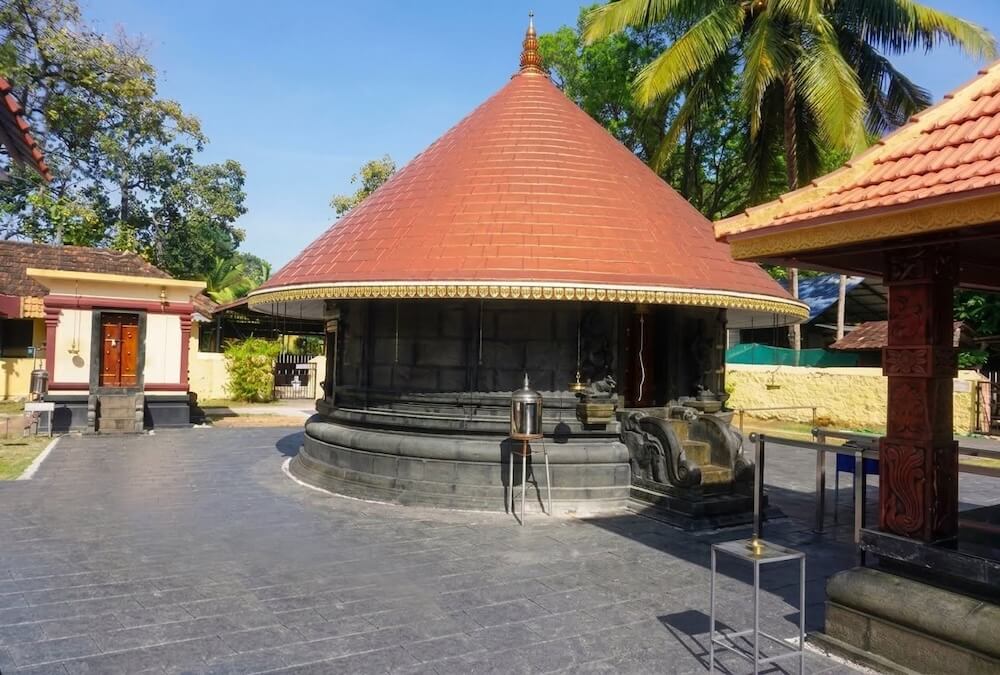
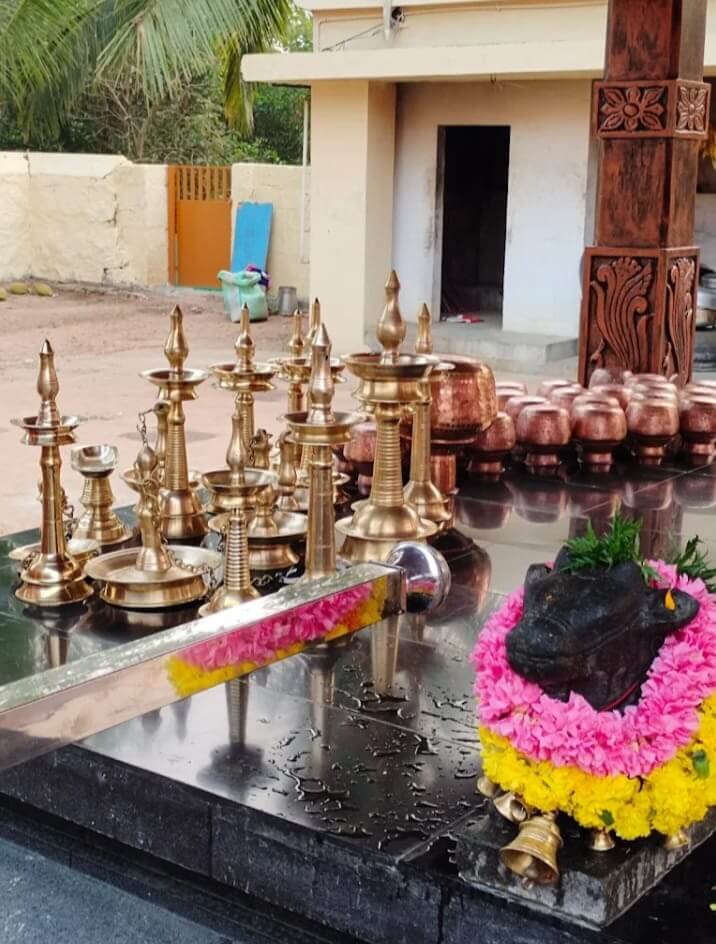
As a forest temple, the surroundings blend naturally with the forest rather than being enclosed by large temple walls. The outer area features a small, traditional Kerala-style Chuttambalam (inner cloister) with a tiled roof and the main entrance gateway. 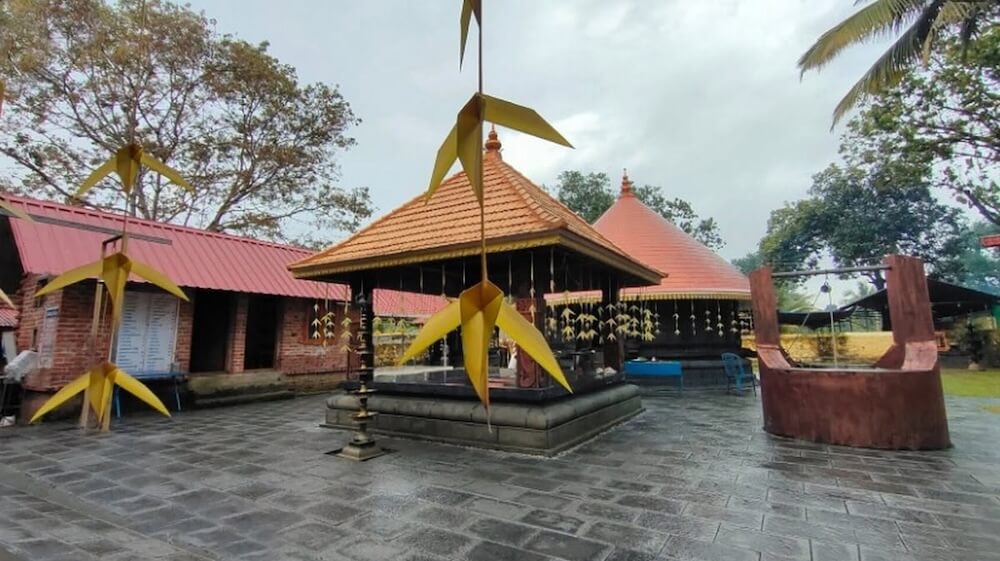 A traditional temple pond is located nearby for devotees to wash their hands and feet before entering the temple. After passing through the main entrance and entering the inner courtyard, the first structure seen is the Balikkalppura, which houses the large sacrificial stone (Balikkal). Directly in front of the Sreekovil is a square Namaskara Mandapam with the idol of Nandikesha, the sacred bull and vehicle of Lord Shiva. Devotees usually offer prayers to Nandikesha before worshipping the main deity.
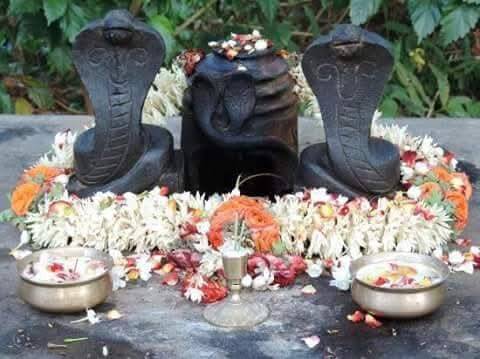
The first feature that stands out on reaching the main Sreekovil is its circular Kerala-style design.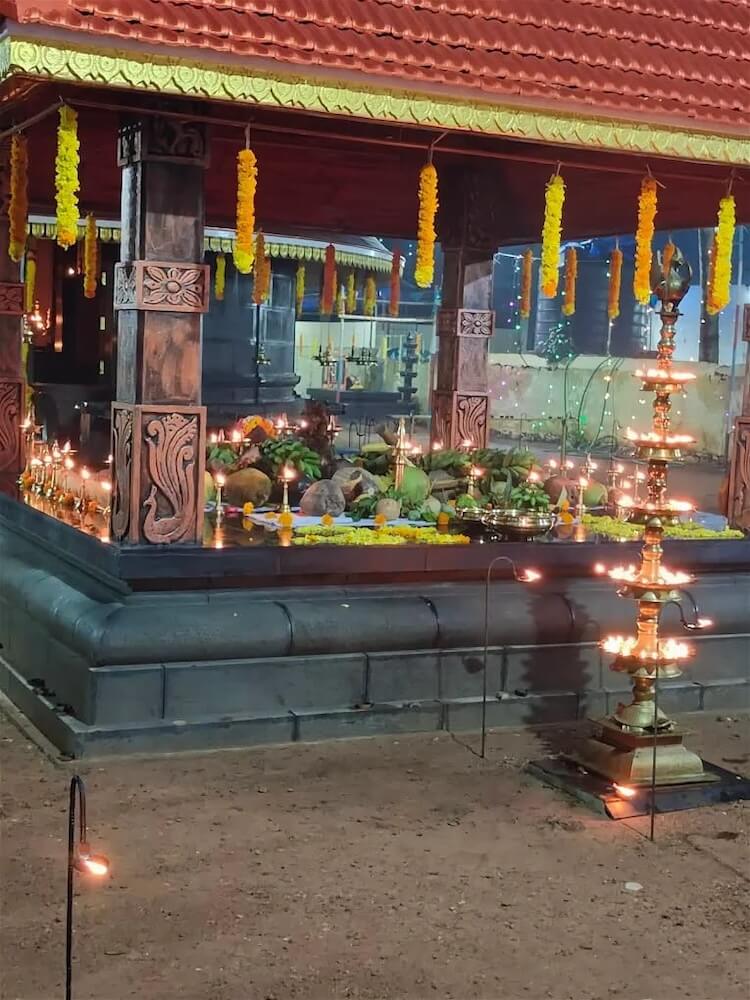 Built using granite and timber, the Sreekovil is topped with a traditional roof. Inside is the naturally formed Swayambhu Shiva Linga, the main deity of the temple. Another distinctive feature is that the Sreekovil has two entrances. The Swayambhu Shiva Linga faces east, while the shrine of Goddess Parvati, located directly behind it, faces west. Around the main Sreekovil, devotees can see the shrine of Lord Ganapati in the south-west corner facing east, along with the shrines of Lord Dharmasastha and Ayiravalli Vanadurga nearby. Outside the Chuttambalam are separate shrines dedicated to Brahmarakshas, Yogeeswaran, Nagaraja and Nagayakshi.
The main annual festival of the temple is Maha Shivaratri, celebrated during the Malayalam month of Kumbham (February–March). Known as the “Maha Shivaratri National Mahotsavam”, this five-day festival includes special poojas, Annadanam (free community meal) at noon and Thulabharam offerings by devotees. A special ritual known as “Valiya Padukka”, in which bells are tied to the sacred Peepal tree and offered to the sub-deity Ayiravalli Vanadurga, is also part of the festival. On the fourth day, the ceremonial procession (Ezhunnallathu) of Lord Shiva takes place and the festival concludes on the fifth day with the offering of Pongala to Goddess Parvati, whose shrine faces west. Bhajans, dance performances, dramas, musical programmes and other cultural events are also held during the festival nights. 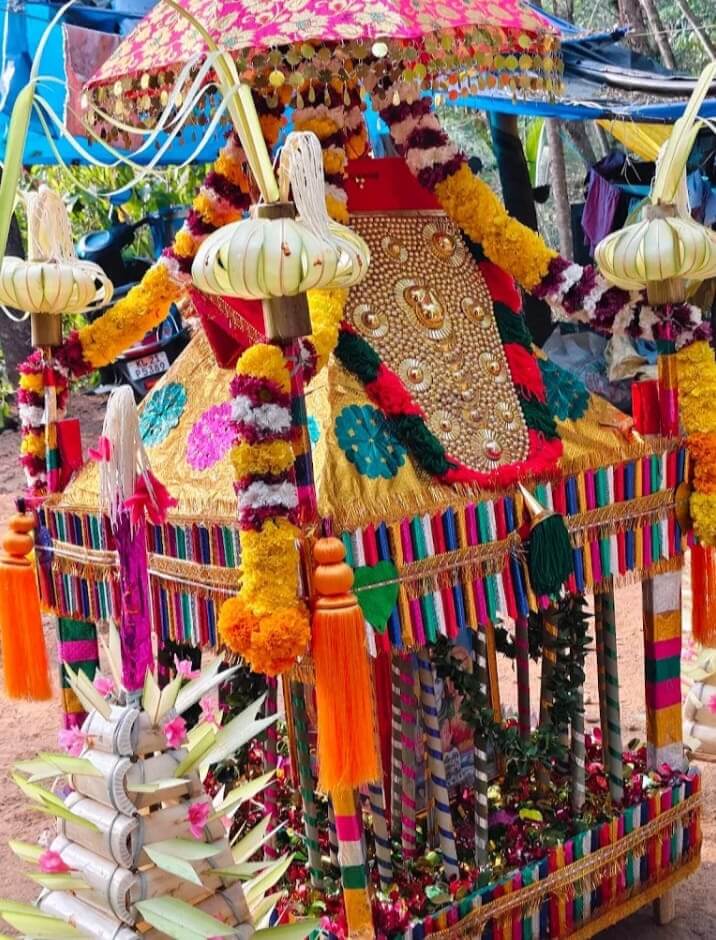 In addition, Mondays, Pradosham days each month, Thiruvathira in the Malayalam month of Dhanu and the Mandala season (from the 1st of Vrischikam to the 11th of Dhanu) are observed as important occasions, with special poojas and rituals for Lord Shiva, Goddess Parvati and the sub-deity Lord Dharmasastha.
The main offerings at the temple include Jaladhara (water offering), Ksheeradhara (milk offering), Maha Mrityunjaya Homam, Pushpabhishekam (flower offering), Bhasmabhishekam (sacred ash offering) and Koovalam Mala (garland of bael leaves) offered to Lord Shiva. Payasa Pongala is the main offering made to Goddess Parvati, whose shrine faces west. Other important offerings include Ashtadravya Maha Ganapathi Homam for Lord Ganapati, Neerajanam for Lord Dharmasastha, Ayilya Pooja and Nagarootu for the Naga deities and “Valiya Padukka”, an offering made to Ayiravalli Vanadurga by tying bells to the sacred Peepal tree. In addition, devotees may offer various other vazhipadus (ritual offerings) according to their vows and prayers.
The temple is open to devotees daily from 5:00 AM to 10:30 AM and from 5:00 PM to 8:00 PM. The day begins at 5:00 AM with the opening of the sanctum for Nirmalya Darshan, followed by Jaladhara, tender coconut abhishekam, milk abhishekam and the Usha Pooja. The Ucha Pooja is performed at around 10:00 AM, after which the temple closes at 10:30 AM. The temple reopens at 5:00 PM, followed by the Deeparadhana in the evening and the Athazha Pooja at night. The temple closes at 8:00 PM after the Athazha Pooja. On special occasions such as Maha Shivaratri, Pradosham and the Mandala season, the pooja schedule and temple opening hours may vary.
Key highlight :-
- Located 15 km from Nedumangad.
- The nearest railway station is Thiruvananthapuram Central Railway Station, located about 26 km from the temple.
- KSRTC and local bus services are available to Vembil from Thiruvananthapuram city.
- Private vehicles can be parked in the temple’s parking area.
- Accommodation and dining facilities are available in nearby towns.
वेम्बिल मनलायम शिव मंदिर
कुरुपुझा, इलावत्टोम, जिला। तिरुवनंतपुरम.
मंदिरे
Temples
मंदिर
મંદિરો
கோவில்கள்
దేవాలయాలు
ക്ഷേത്രങ്ങൾ
ದೇವಾಲಯಗಳು
মন্দিরসমূহ
ਮੰਦਿਰ
-
पळवंगडी श्री महागणपती मंदिर पूर्व किल्ला, जि. तिरुवनंतपुरम
अधिक माहितीPazhavangadi Sree Maha Ganapathy Temple East Fort, Dist. Thiruvananthapuram
View Detailsपझावंगडी श्री महा गणपति मंदिर पूर्वी किला, जिला. तिरुवनंतपुरम
विवरण देखेंPazhavangadi Sree Maha Ganapathy Temple East Fort, Dist. Thiruvananthapuram
વિગત જુઓPazhavangadi Sree Maha Ganapathy Temple East Fort, Dist. Thiruvananthapuram
விவரங்களைக் காண்கPazhavangadi Sree Maha Ganapathy Temple East Fort, Dist. Thiruvananthapuram
వివరాలను చూడండిPazhavangadi Sree Maha Ganapathy Temple East Fort, Dist. Thiruvananthapuram
വിശദാംശങ്ങൾ കാണുകPazhavangadi Sree Maha Ganapathy Temple East Fort, Dist. Thiruvananthapuram
ವಿವರಗಳನ್ನು ವೀಕ್ಷಿಸಿPazhavangadi Sree Maha Ganapathy Temple East Fort, Dist. Thiruvananthapuram
বিস্তারিত দেখুনPazhavangadi Sree Maha Ganapathy Temple East Fort, Dist. Thiruvananthapuram
ਵੇਰਵੇ ਦੇਖੋ -
श्री परशुराम स्वामी मंदिर तिरुवल्लम, जि. तिरुवनंतपुरम
अधिक माहितीSree Parasurama Swamy Temple Thiruvallam, Dist. Thiruvananthapuram
View Detailsश्रीपरशुराम स्वामी मंदिर तिरुवल्लम, जिला. तिरुवनंतपुरम
विवरण देखेंSree Parasurama Swamy Temple Thiruvallam, Dist. Thiruvananthapuram
વિગત જુઓSree Parasurama Swamy Temple Thiruvallam, Dist. Thiruvananthapuram
விவரங்களைக் காண்கSree Parasurama Swamy Temple Thiruvallam, Dist. Thiruvananthapuram
వివరాలను చూడండిSree Parasurama Swamy Temple Thiruvallam, Dist. Thiruvananthapuram
വിശദാംശങ്ങൾ കാണുകSree Parasurama Swamy Temple Thiruvallam, Dist. Thiruvananthapuram
ವಿವರಗಳನ್ನು ವೀಕ್ಷಿಸಿSree Parasurama Swamy Temple Thiruvallam, Dist. Thiruvananthapuram
বিস্তারিত দেখুনSree Parasurama Swamy Temple Thiruvallam, Dist. Thiruvananthapuram
ਵੇਰਵੇ ਦੇਖੋ -
वेल्लमकुलथला श्रीभागवती मंदिर वेंपाकल, नेयट्टिनकारा, जि. तिरुवनंतपुरम.
अधिक माहितीVellamkulathala Sree Bhagavathy Temple Venpakal, Neyyattinkara, Dist. Thiruvananthapuram.
View Detailsवेल्लमकुलथला श्री भगवती मंदिर वेनपाकल, नेय्याट्टिनकारा, जिला। तिरुवनंतपुरम.
विवरण देखेंVellamkulathala Sree Bhagavathy Temple Venpakal, Neyyattinkara, Dist. Thiruvananthapuram.
વિગત જુઓVellamkulathala Sree Bhagavathy Temple Venpakal, Neyyattinkara, Dist. Thiruvananthapuram.
விவரங்களைக் காண்கVellamkulathala Sree Bhagavathy Temple Venpakal, Neyyattinkara, Dist. Thiruvananthapuram.
వివరాలను చూడండిVellamkulathala Sree Bhagavathy Temple Venpakal, Neyyattinkara, Dist. Thiruvananthapuram.
വിശദാംശങ്ങൾ കാണുകVellamkulathala Sree Bhagavathy Temple Venpakal, Neyyattinkara, Dist. Thiruvananthapuram.
ವಿವರಗಳನ್ನು ವೀಕ್ಷಿಸಿVellamkulathala Sree Bhagavathy Temple Venpakal, Neyyattinkara, Dist. Thiruvananthapuram.
বিস্তারিত দেখুনVellamkulathala Sree Bhagavathy Temple Venpakal, Neyyattinkara, Dist. Thiruvananthapuram.
ਵੇਰਵੇ ਦੇਖੋ