
पुंथुरा श्रीसंस्था मंदिर
पुंथुरा, जि. तिरुवनंतपुरम.
Poonthura Sree Sastha Temple
Poonthura, Dist. Thiruvananthapuram.
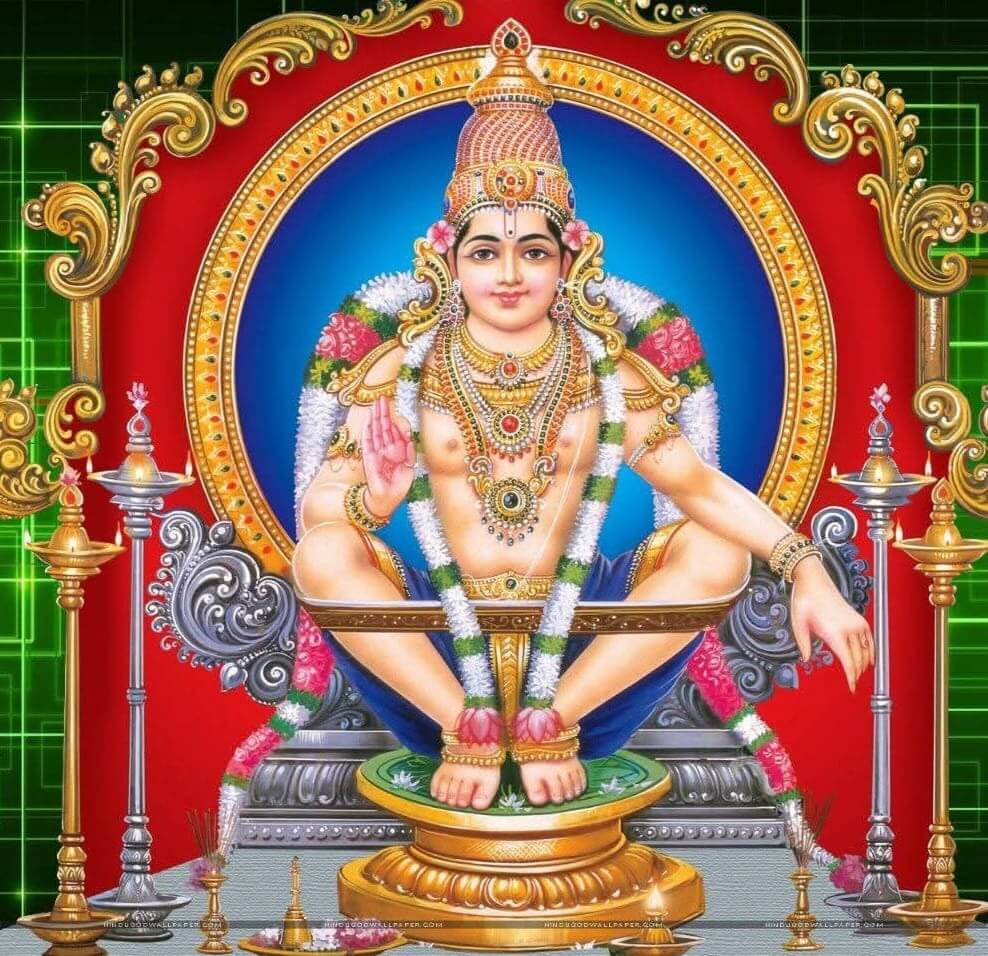 Poonthura Sree Sastha Temple, located in Poonthura in Thiruvananthapuram district, is an important place of worship with a long history and strong ties to the local cultural heritage. The main deity of the temple is Sree Dharma Sastha (Lord Ayyappa), who is worshipped here as Kaliyuga Varadan. The temple is regarded as one of the notable Sastha temples in South Kerala. It also has a close association with the local history and the cultural traditions of the Dheevara community. The temple is well known for the belief that worship here helps in relieving the effects of Saturn (Shani Dosha). Large numbers of devotees visit the temple on Saturdays and during the Mandala season to offer prayers and perform rituals. Along with its religious significance, the temple continues to play an important role in the social and cultural life of the local community through its festivals and other religious events.
The history of the temple dates back several centuries. In its early days, it was a small place of worship. 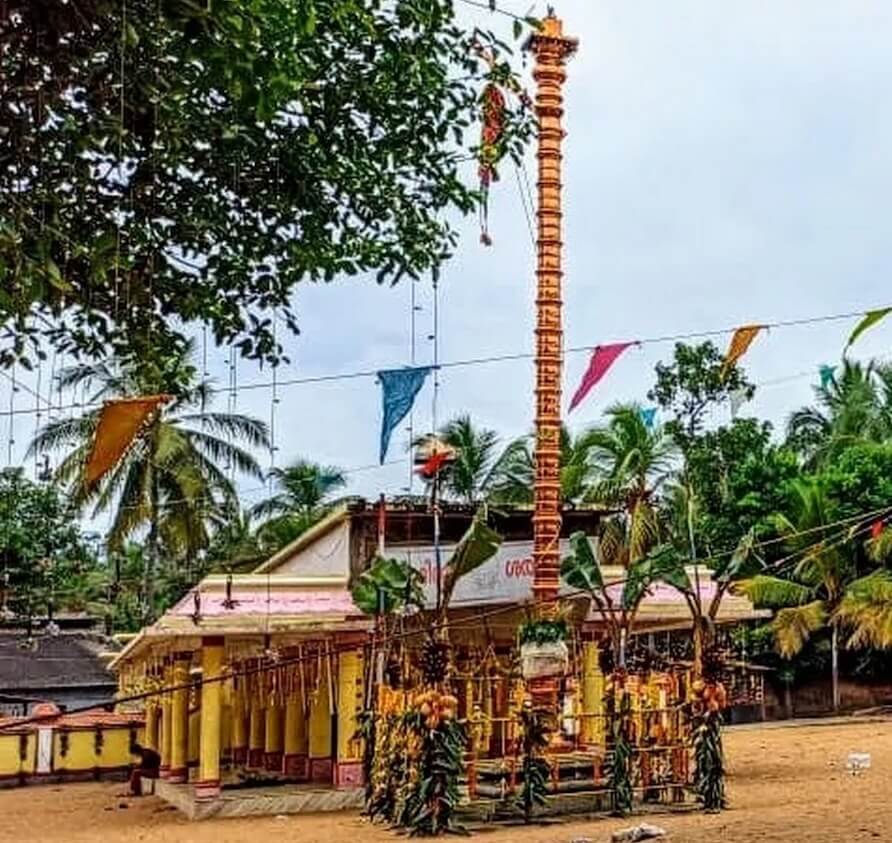 Over time, the temple fell into a state of disrepair and was later restored. The main idol was recovered from the overgrown remains and the temple was rebuilt through the collective efforts of the local people. During the second half of the 20th century, the temple was expanded under the leadership of the Poonthura branch (Karayogam) of the Akhila Kerala Dheevara Sabha. The old sanctum and nalambalam were replaced with the present temple complex built in accordance with traditional Kerala architecture and Tantric principles. The consecration ceremonies and ritual renovations were led by Tantris from leading Namboothiri illams of Kerala. Over the years, the temple also became an important centre for the religious, social and cultural activities of the local fishing community and other residents.
According to the temple legend, this area was covered with dense forests and thick bushes several centuries ago and had very few inhabitants. 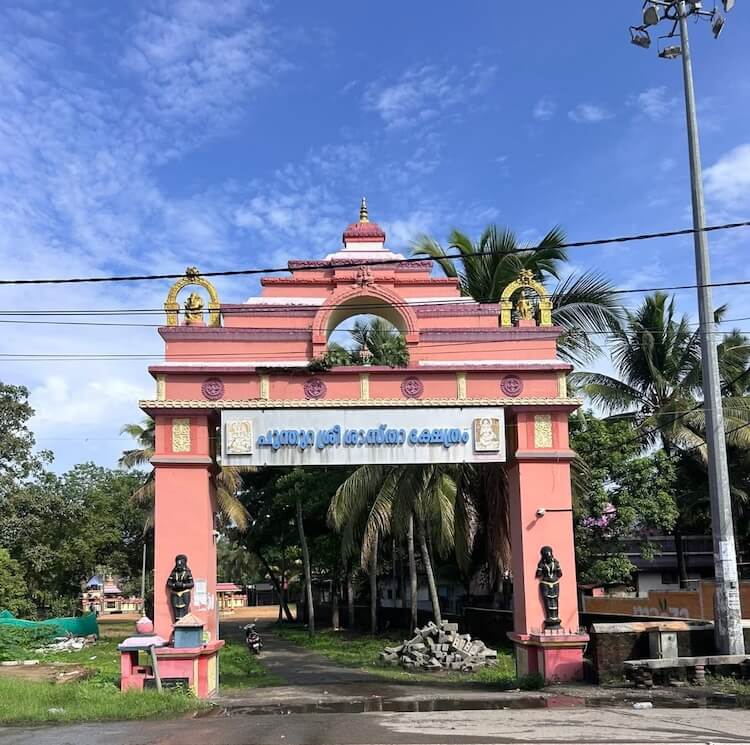 During that time, a cowherd who had come to graze cattle experienced a divine vision at this place and informed the local people. They then invited well-known astrologers to conduct a Devaprasnam. It is believed that the ritual revealed the presence of the sacred idol of Sree Dharma Sastha (Lord Ayyappa), worshipped as Kaliyuga Varadan, hidden beneath the overgrown site. The area was then cleared, the idol was consecrated according to traditional rituals and regular worship began. This is regarded as the main legend associated with the origin of Poonthura Sree Sastha Temple.
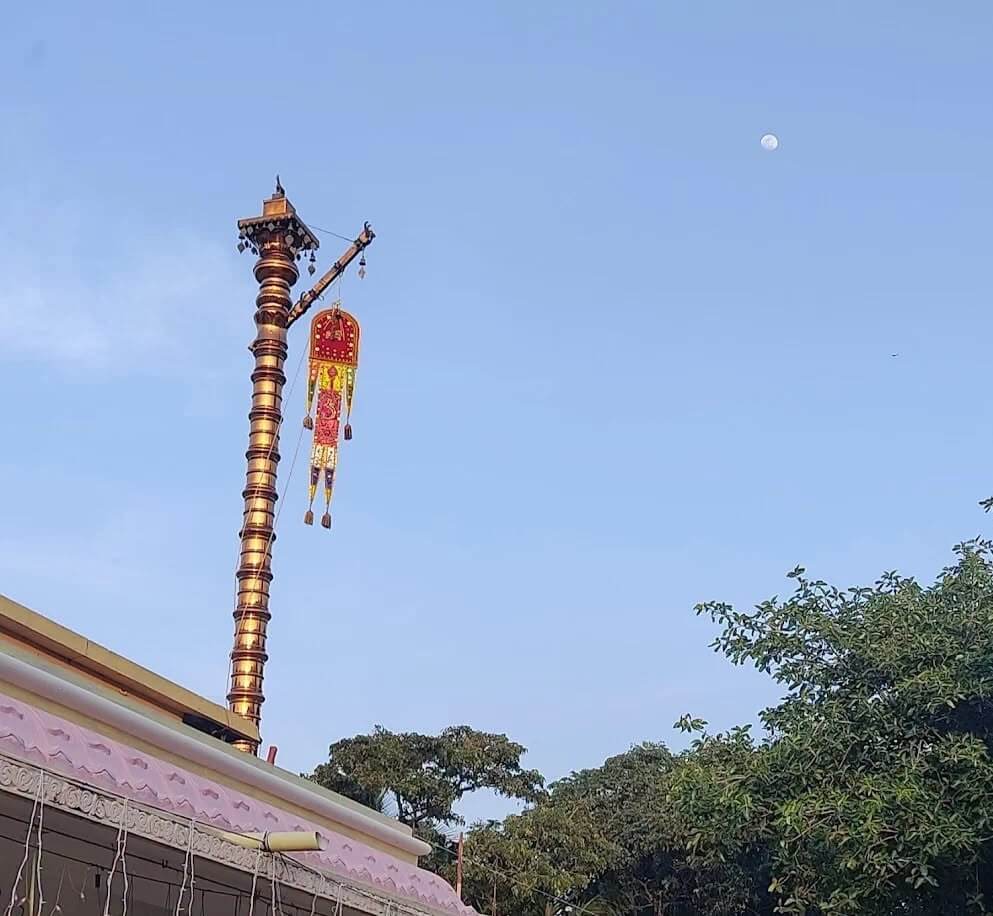
Devotees are welcomed through the temple’s beautifully built gopuram at the main entrance. Beyond the gopuram is a spacious Aanappanthal, which is used for ceremonial elephants and major temple rituals during festivals. Next to it stands the copper-clad flagstaff, where the ceremonial flag is hoisted to mark the beginning of the annual festival. Behind the flagstaff is the Balikkalpura, which houses the main sacrificial stone. 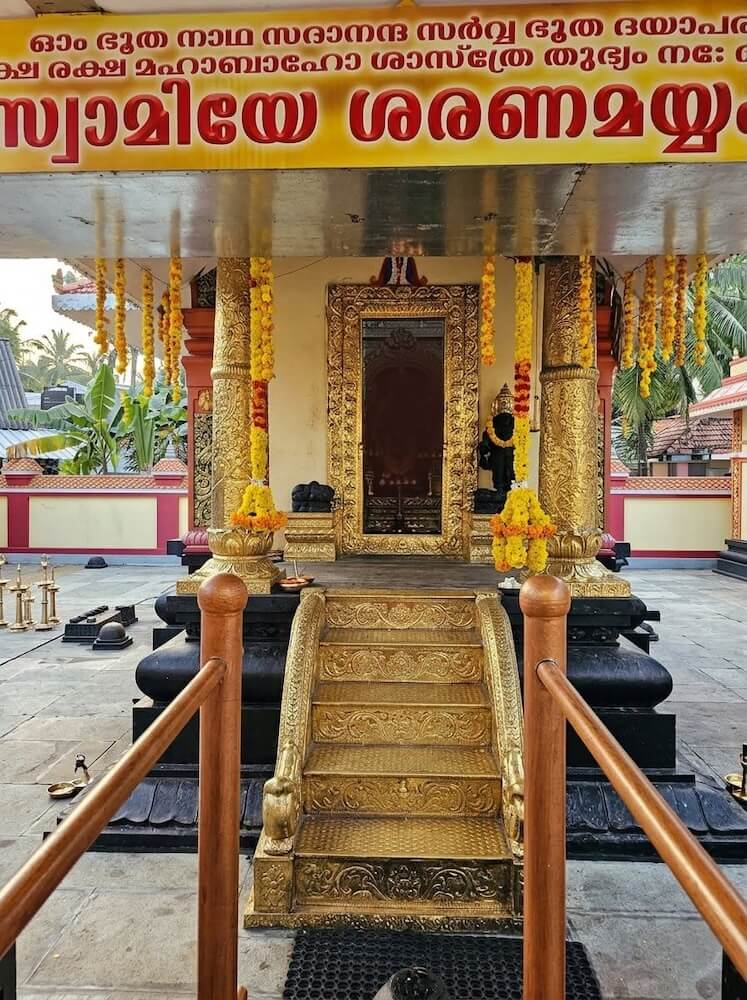 Further inside is the square-shaped Chuttambalam (Nalambalam), which surrounds the main sanctum. The Nalambalam also includes the Thidappalli, where offerings are prepared, along with other supporting facilities. The outer walls of the Nalambalam are lined with a traditional Vilakkumadam fitted with rows of oil lamps.
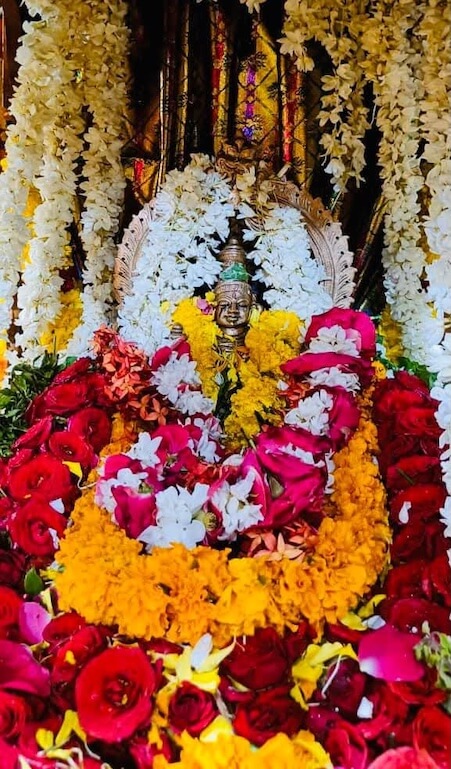
At the centre of the Chuttambalam is the main sanctum. Built in the traditional Kerala architectural style, the square-shaped sanctum features fine wooden craftsmanship and granite construction. The roof is covered with copper sheets and is crowned with a Thazhikakudam. Dwarapalaka sculptures can be seen on either side of the entrance, while granite Sopanam steps lead to the sanctum. In front of the Sopanam is the Namaskara Mandapam. Inside the Garbhagriha, the main idol of Sree Dharma Sastha (Lord Ayyappa), carved from black stone, is consecrated in a yogic seated posture facing east.
Within the temple walls surrounding the main sanctum are the shrines of several other deities. The shrines of Lord Ganapathi, Malikappurathamma, the Navagrahas and Sree Yogeeswaran (Guru Swamy) are located around the main temple. On one side of the temple is a sacred naga grove, where the idols of Nagaraja and Nagayakshi can be seen.
The main annual festival of the temple is the ten-day Mandalachirappu Mahotsavam held in the Malayalam month of Dhanu.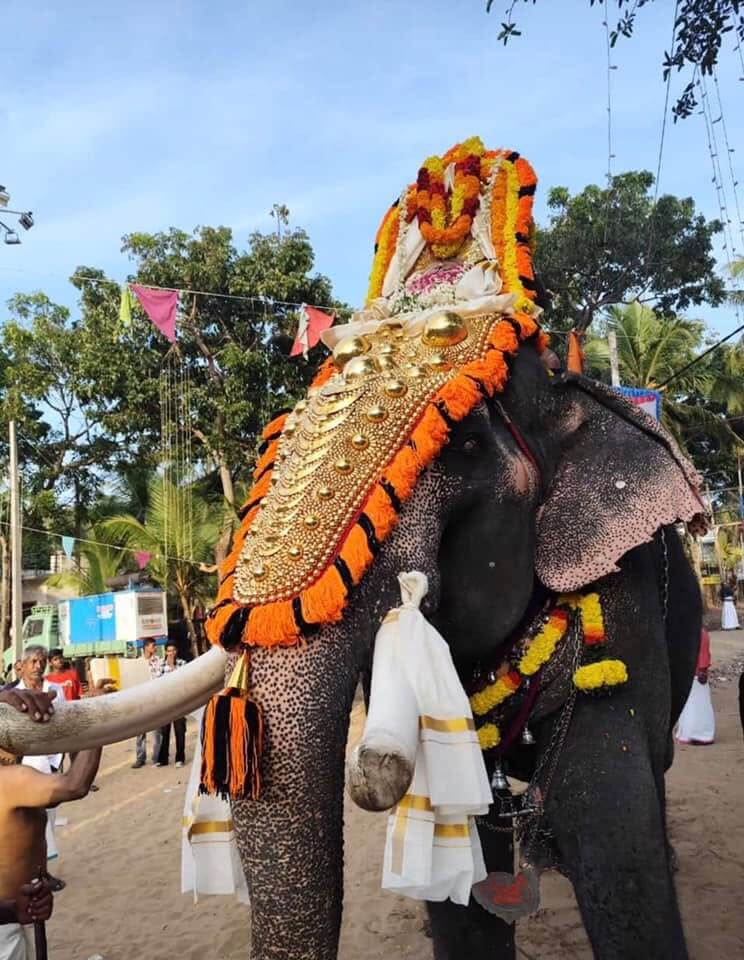 The festival begins on the first day with the Thrikodiyettam performed by the Tantri. This is followed by various special rituals including Ashtadravya Maha Ganapathi Homam, Kalamezhuthu and Sarpam Pattu, Bhagavatha Parayanam, Pushpabhishekam and special Mandala poojas. The festival concludes with the Arattu procession held on the ninth night and the Thrikodiyirakkam on the tenth day. The Mandala–Makaravilakku season from Vrischikam 1 to Dhanu 11 is also an important period of worship at the temple. In addition, Vinayaka Chaturthi is observed with Ganapathi Homam and Gaja Pooja, the month of Karkidakam includes daily Ramayana recitation and Laksharchana, Ayilyam day is observed with special poojas and Naga Roodu for Nagaraja and Nagayakshi and during Navaratri the rituals of Pooja Vaypu on Durga Ashtami and Maha Navami and Vidyarambham on Vijayadashami are also performed as important temple observances.
The temple places special importance on offerings related to relief from Shani Dosha. On Saturdays, devotees perform Neeranjanam, where a coconut filled with sesame is lit with oil to reduce the intensity of Shani Dosha. Ellu payasam is offered for the blessings of Lord Shani and Sree Dharma Sastha, while Shani Shanti Pooja is conducted to overcome obstacles caused by Shani dasha in one’s horoscope. For the main deity, 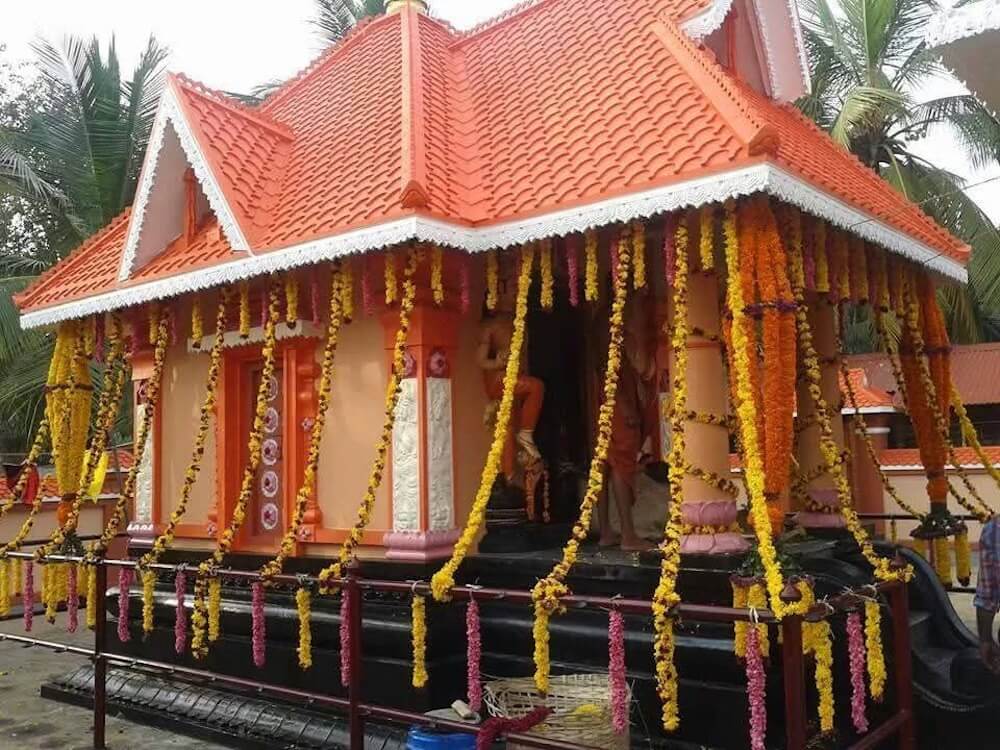 Sree Dharma Sastha, important offerings include Neyyabhishekam, Ellennei abhishekam to maintain the divine energy of the idol and remove doshas, Pushpabhishekam with various fragrant flowers, as well as offerings of Aravana and Appam. For the sub deities, Naga Roodu (Ayilyam Pooja) is performed for Nagaraja and Nagayakshi to remove Naga Dosha and bring family prosperity. Mrityunjaya Homam is conducted for protection from diseases and dangers, Ganapathi Homam is performed for the smooth completion of new ventures and auspicious beginnings and Purattu Vilakku is offered to Malikappurathamma as part of devotional practice.
Daily rituals at the temple begin at 05:00 AM with the opening of the sanctum and Nirmalya Darshan. This is followed at 05:30 AM by abhishekam using water, ghee and oil and at 06:00 AM by the Ushapooja. After the Uchapooja at 09:00 AM, the temple closes for the morning at 10:00 AM. In the evening, the temple reopens at 05:00 PM for darshan. At 06:30 PM, Deeparadhana and camphor aarathi are performed with lamps lit in the sanctum and the Vilakkumadam. This is followed at 07:30 PM by Athazha Pooja and the offering of neivedyam. At 08:00 PM, the temple closes for the night after the recitation of Harivarasanam, which is sung to put the deity to rest. During the Mandala–Makaravilakku season and annual festival days, the timings may be adjusted due to heavy crowds of devotees.
Key highlight :-
- Located 6 km from East Fort, Thiruvananthapuram.
- Nearest railway station is Thiruvananthapuram Central Railway Station, about 7 km away.
- KSRTC and local buses are available to Poonthura from Thiruvananthapuram.
- Private vehicles can be parked in the temple’s parking area.
- Accommodation and food facilities are available near the temple.
- Contact number + 91 4712382711
पूनथुरा श्री संस्था मंदिर
पून्थुरा, जिला. तिरुवनंतपुरम.
मंदिरे
Temples
मंदिर
મંદિરો
கோவில்கள்
దేవాలయాలు
ക്ഷേത്രങ്ങൾ
ದೇವಾಲಯಗಳು
মন্দিরসমূহ
ਮੰਦਿਰ
-
पळवंगडी श्री महागणपती मंदिर पूर्व किल्ला, जि. तिरुवनंतपुरम
अधिक माहितीPazhavangadi Sree Maha Ganapathy Temple East Fort, Dist. Thiruvananthapuram
View Detailsपझावंगडी श्री महा गणपति मंदिर पूर्वी किला, जिला. तिरुवनंतपुरम
विवरण देखेंPazhavangadi Sree Maha Ganapathy Temple East Fort, Dist. Thiruvananthapuram
વિગત જુઓPazhavangadi Sree Maha Ganapathy Temple East Fort, Dist. Thiruvananthapuram
விவரங்களைக் காண்கPazhavangadi Sree Maha Ganapathy Temple East Fort, Dist. Thiruvananthapuram
వివరాలను చూడండిPazhavangadi Sree Maha Ganapathy Temple East Fort, Dist. Thiruvananthapuram
വിശദാംശങ്ങൾ കാണുകPazhavangadi Sree Maha Ganapathy Temple East Fort, Dist. Thiruvananthapuram
ವಿವರಗಳನ್ನು ವೀಕ್ಷಿಸಿPazhavangadi Sree Maha Ganapathy Temple East Fort, Dist. Thiruvananthapuram
বিস্তারিত দেখুনPazhavangadi Sree Maha Ganapathy Temple East Fort, Dist. Thiruvananthapuram
ਵੇਰਵੇ ਦੇਖੋ -
श्री परशुराम स्वामी मंदिर तिरुवल्लम, जि. तिरुवनंतपुरम
अधिक माहितीSree Parasurama Swamy Temple Thiruvallam, Dist. Thiruvananthapuram
View Detailsश्रीपरशुराम स्वामी मंदिर तिरुवल्लम, जिला. तिरुवनंतपुरम
विवरण देखेंSree Parasurama Swamy Temple Thiruvallam, Dist. Thiruvananthapuram
વિગત જુઓSree Parasurama Swamy Temple Thiruvallam, Dist. Thiruvananthapuram
விவரங்களைக் காண்கSree Parasurama Swamy Temple Thiruvallam, Dist. Thiruvananthapuram
వివరాలను చూడండిSree Parasurama Swamy Temple Thiruvallam, Dist. Thiruvananthapuram
വിശദാംശങ്ങൾ കാണുകSree Parasurama Swamy Temple Thiruvallam, Dist. Thiruvananthapuram
ವಿವರಗಳನ್ನು ವೀಕ್ಷಿಸಿSree Parasurama Swamy Temple Thiruvallam, Dist. Thiruvananthapuram
বিস্তারিত দেখুনSree Parasurama Swamy Temple Thiruvallam, Dist. Thiruvananthapuram
ਵੇਰਵੇ ਦੇਖੋ -
वेल्लमकुलथला श्रीभागवती मंदिर वेंपाकल, नेयट्टिनकारा, जि. तिरुवनंतपुरम.
अधिक माहितीVellamkulathala Sree Bhagavathy Temple Venpakal, Neyyattinkara, Dist. Thiruvananthapuram.
View Detailsवेल्लमकुलथला श्री भगवती मंदिर वेनपाकल, नेय्याट्टिनकारा, जिला। तिरुवनंतपुरम.
विवरण देखेंVellamkulathala Sree Bhagavathy Temple Venpakal, Neyyattinkara, Dist. Thiruvananthapuram.
વિગત જુઓVellamkulathala Sree Bhagavathy Temple Venpakal, Neyyattinkara, Dist. Thiruvananthapuram.
விவரங்களைக் காண்கVellamkulathala Sree Bhagavathy Temple Venpakal, Neyyattinkara, Dist. Thiruvananthapuram.
వివరాలను చూడండిVellamkulathala Sree Bhagavathy Temple Venpakal, Neyyattinkara, Dist. Thiruvananthapuram.
വിശദാംശങ്ങൾ കാണുകVellamkulathala Sree Bhagavathy Temple Venpakal, Neyyattinkara, Dist. Thiruvananthapuram.
ವಿವರಗಳನ್ನು ವೀಕ್ಷಿಸಿVellamkulathala Sree Bhagavathy Temple Venpakal, Neyyattinkara, Dist. Thiruvananthapuram.
বিস্তারিত দেখুনVellamkulathala Sree Bhagavathy Temple Venpakal, Neyyattinkara, Dist. Thiruvananthapuram.
ਵੇਰਵੇ ਦੇਖੋ