
सातकुंडा महादेव मंदिर
अमलीत, ता. संतरामपूर, जि. महिसागर
Satkunda Mahadev Temple
Amaliyat, Tal. Santarampur, Dist. Mahisagar
 Amaliyat (Ambaliyat) is a village situated in Santarampur Taluka of Mahisagar district, in the hilly eastern region of Gujarat. Within the limits of this village, amidst the forested catchment area of the Panam River, stands the Satkunda Mahadev Temple. The temple is the principal place of worship for the people of Amaliyat, Vena, Padedi, Gothib, Babaliya, Motingrel, Naningrel, Singalgadh and Hirpura, as well as several neighbouring villages. Members of the Bhil, Naikda and Koli tribal communities, together with farming families, regularly visit the shrine to perform religious ceremonies and family rites.
The Satkunda Mahadev Temple, nestled amid dense forests and natural water pools in the catchment area of the Panam River in the Santarampur (formerly the Sunth State) and Lunawada region,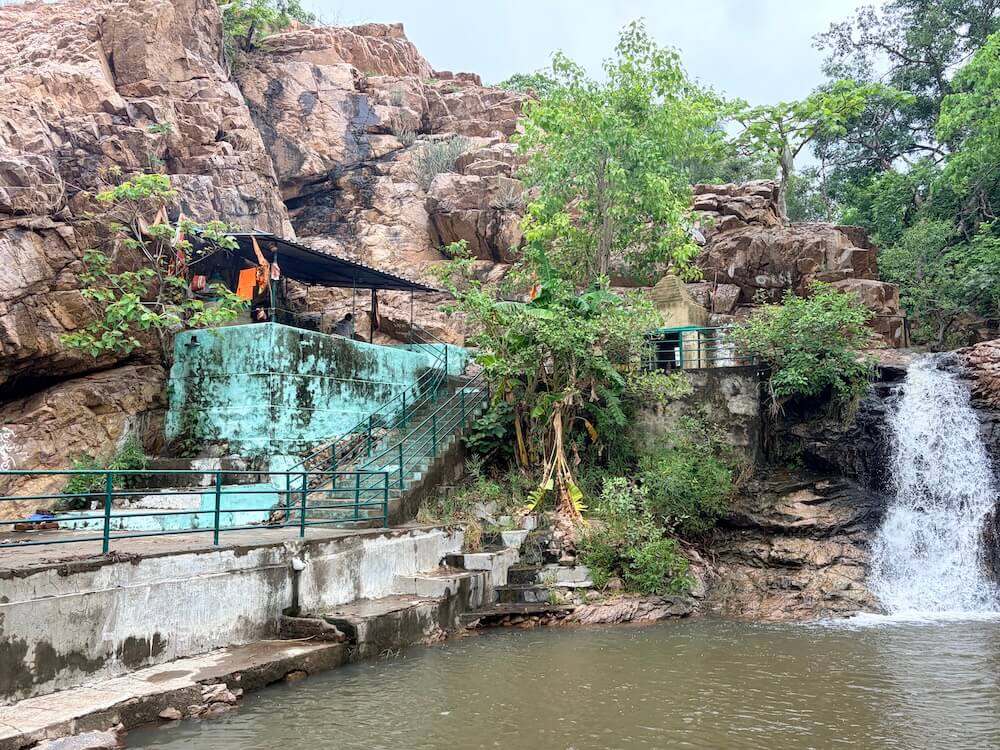 has been revered as an important place of worship since ancient times. According to the Gazetteer of the Bombay Presidency (Volume VI: Rewa Kantha, Narukot, Cambay and Surat Agencies, 1880), the entire region once formed part of the administrative jurisdiction of the princely State of Sunth. Its rulers belonged to the Puwar (Parmar) Rajput dynasty and claimed descent from the renowned Mahipavat branch of the Malwa dynasty. This lineage included the celebrated King Vikram of Ujjain, who is traditionally placed in the first century BCE and the illustrious King Bhoja of Dhar, who ruled in the eleventh century CE.
In AD 1247, Jalamsing, the ruler of Jhalod, was defeated and killed during a Muslim invasion. Following his death, his son Sant and his brother Limdev were compelled to abandon Jhalod and seek refuge in the surrounding hills.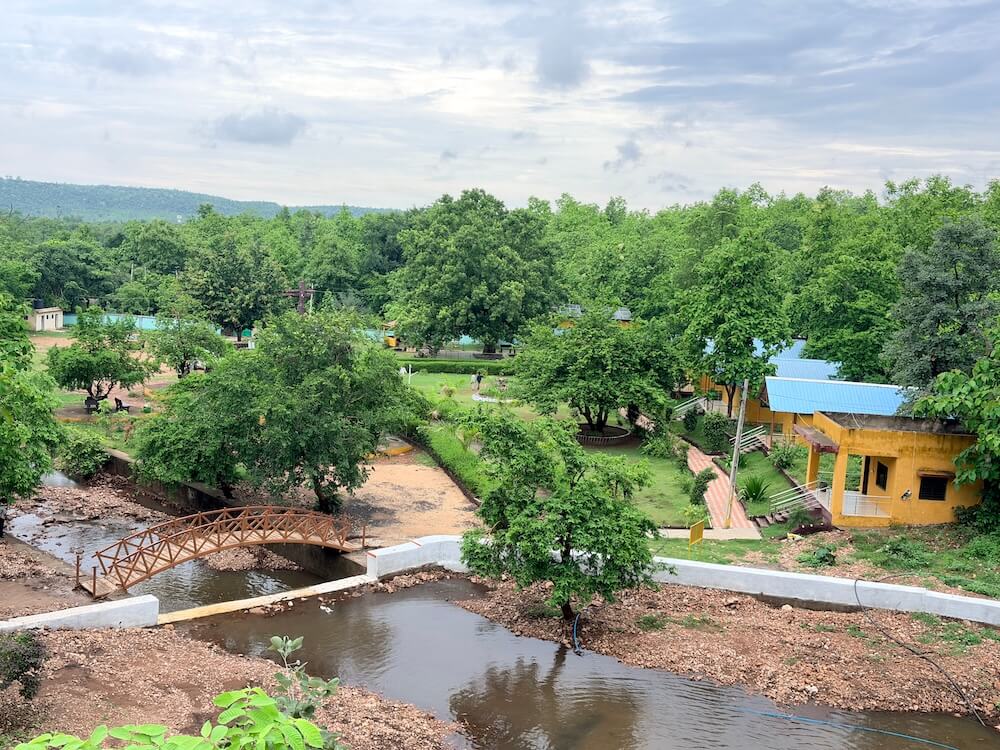 In AD 1255, Sant established an independent kingdom. He made the Bhil village of Brahmpuri, where he had taken shelter, his capital and renamed it Sant, later known as Sunth. The rulers of this State, together with the local Garasia and Koli chiefs, enacted special revenue regulations and issued grants for the conservation of forests, hills and water sources. As a result, the natural hill shrine of Satkunda Mahadev and its surrounding landscape also received special protection during the historical period.
For the local Bhil, Naikda and Koli tribal communities, the sacred water pools and the Shiva linga at Satkunda Mahadev Temple have been objects of deep reverence since ancient times. Among these tribal communities, the Barwa occupies the highest religious and spiritual position.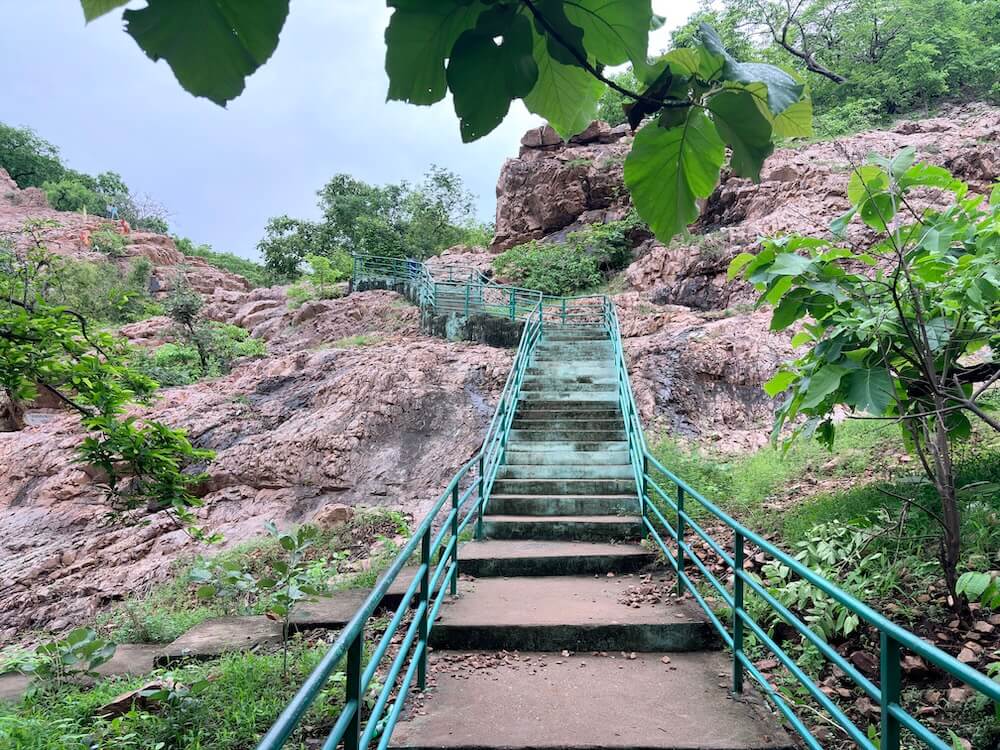 The Barwa is not merely a priest but also serves as the community’s traditional guide, healer and practitioner of indigenous medicine. Tribal society regards him as the vital link between nature and the divine.
In tribal tradition, a twelve-year religious cycle holds special significance. After each cycle, the Barwa performs a rigorous observance to renew his spiritual power and mastery of sacred mantras. This discipline must be undertaken in complete solitude, away from human habitation, at a sacred place where perennial springs, caves and natural Shiva lingas or sacred rocks are found.
 The forested catchment of the Panam River, with its abundant natural springs and water pools, made the Satkunda Mahadev Temple an ideal location for this observance. During the ritual, the Barwa would reside within the temple precincts for an entire month, observing strict celibacy, fasting, Jal-Sadhana (water austerities), continuous recitation of sacred mantras and other religious activities. Upon completing the month-long observance, his spiritual practice was believed to have attained perfection. Only then would he return to society and resume religious ceremonies, worship and traditional healing practices. Recognising the importance of these religious traditions, it is said that the Parmar Rajput rulers of the Sunth State and the local chiefs protected natural Shiva shrines such as Satkunda Mahadev, together with the surrounding forests and water sources.
 In AD 1819, the forces of Scindia (Sindhia) overran the State of Sunth. In AD 1873, the British Government introduced a permanent system of direct administration for the State. Following India’s Independence in 1947, the princely State of Sunth was formally integrated into the Indian Union. Initially, the region became part of Bombay State and, following the linguistic reorganisation of states in 1960, was incorporated into Panchmahal district of Gujarat. To improve administrative efficiency, the Government of Gujarat reorganised the state’s districts on 26 January 2013 and created Mahisagar as Gujarat’s twenty-eighth district. Under this reorganisation, the talukas of Santarampur and Lunawada were transferred from Panchmahal district to the newly formed Mahisagar district.
 According to local tradition, the temple dates back to the Dvapara Yuga, the age of the Mahabharata, or perhaps even earlier. One legend states that this region once formed part of the ancient Hidimba Forest. During their exile, the Pandavas sought refuge here. They excavated a cave in the hillside, established the Shivalinga within it and created seven water pools to ensure a constant supply of water. Another tradition holds that the Pandavas chose this hill because of its abundant natural springs and lived beside the ancient Shivalinga within the cave. Yet another local belief says that sages and the Saptarishis performed penance here in ancient times and that the power of their austerities caused seven sacred springs to emerge, giving rise to the seven pools.
 The Satkunda Mahadev Temple is revered as a sacred centre of Shiva worship and water worship. According to the Hindu Sanatan tradition, Lord Shiva is especially pleased by jalabhishek. Consequently, Shiva lingas are traditionally established near natural springs. Here, a clear stream flowing from the upper reaches of the hill falls continuously upon the Shiva linga, providing an unceasing natural abhishek.
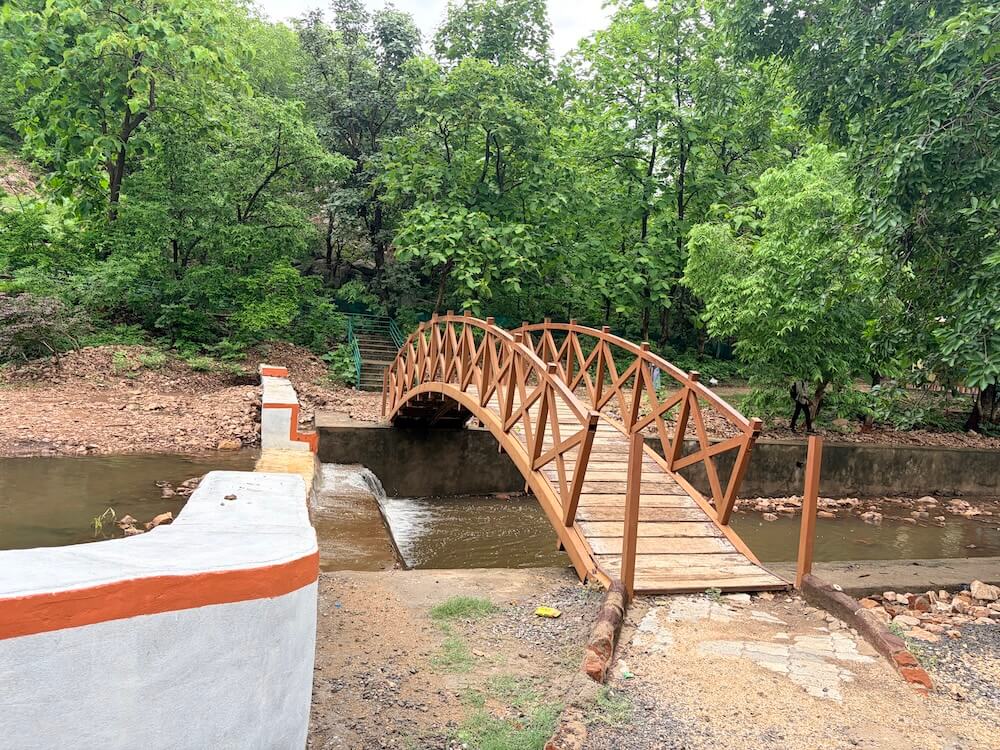
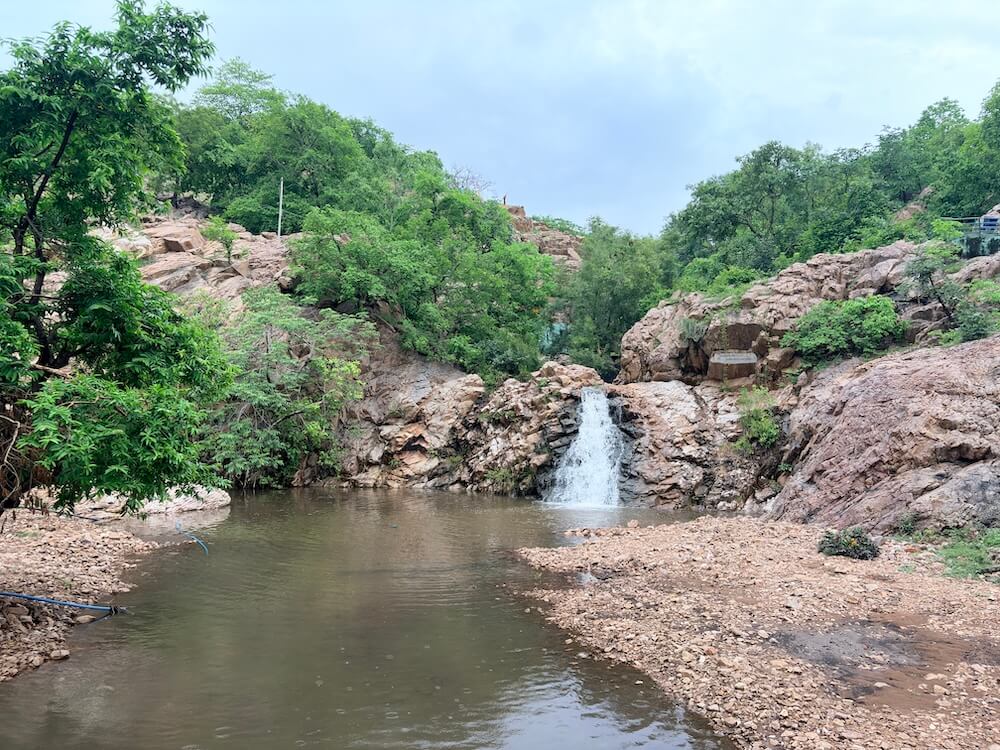
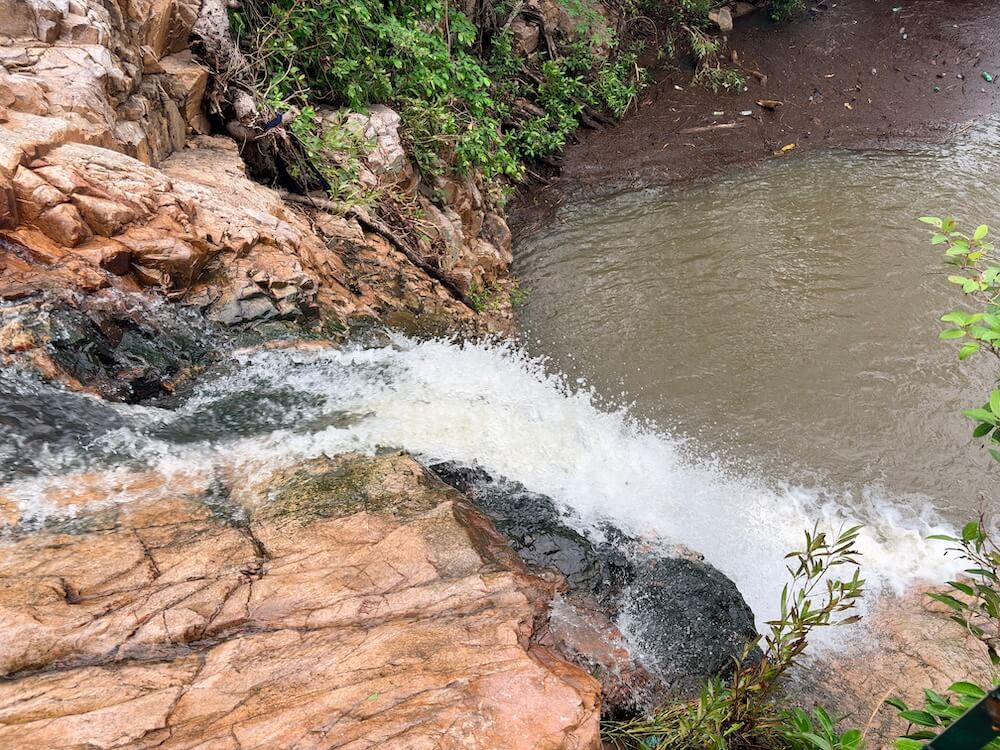
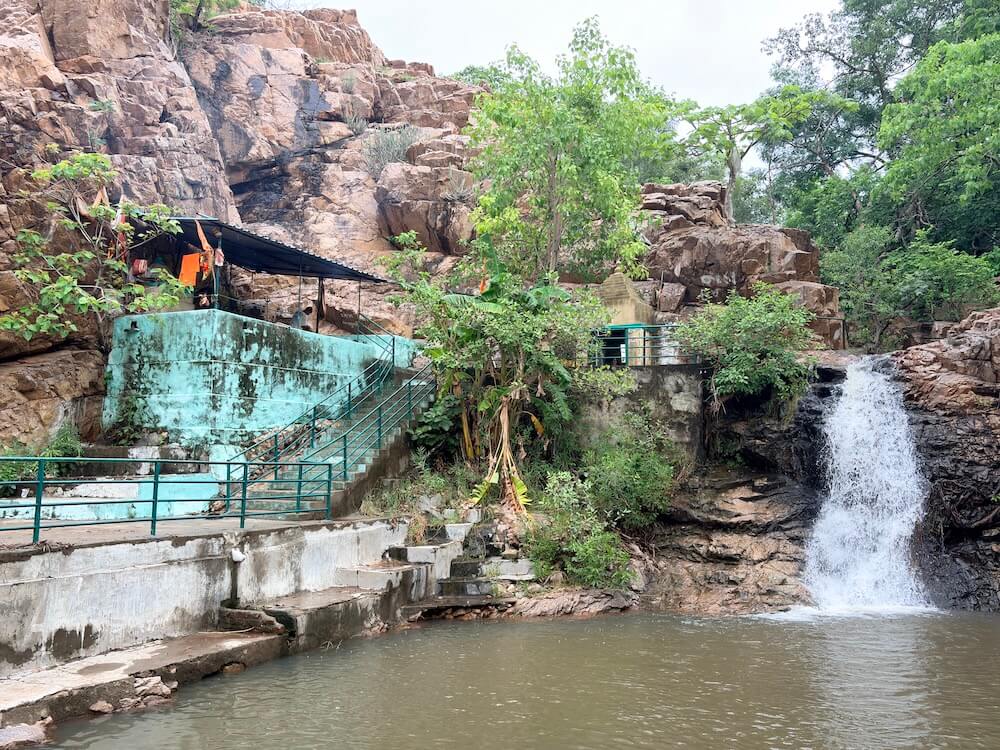
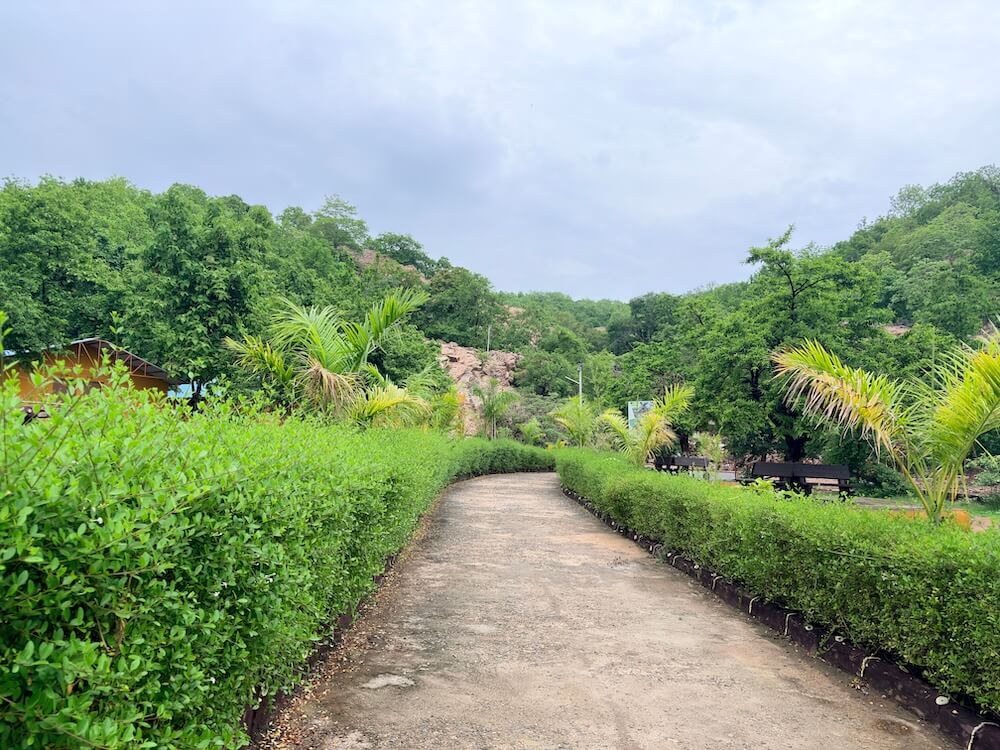
The temple and its surrounding forest fall under the jurisdiction of the Forest Department. A metalled road leads to the foot of the hill, where a parking area has been provided. The Forest Department has developed the site as a landscaped park with drinking water facilities, seating and a visitor rest area. The first natural pool lies at the foot of the hill, while the remaining six are arranged successively along the ascent. Water from one pool flows into the next and the perennial springs ensure that all seven pools remain filled throughout the year. A flight of paved steps leads from the base to the temple. The winding path passes the water pools and dense woodland, offering an atmosphere of remarkable serenity.
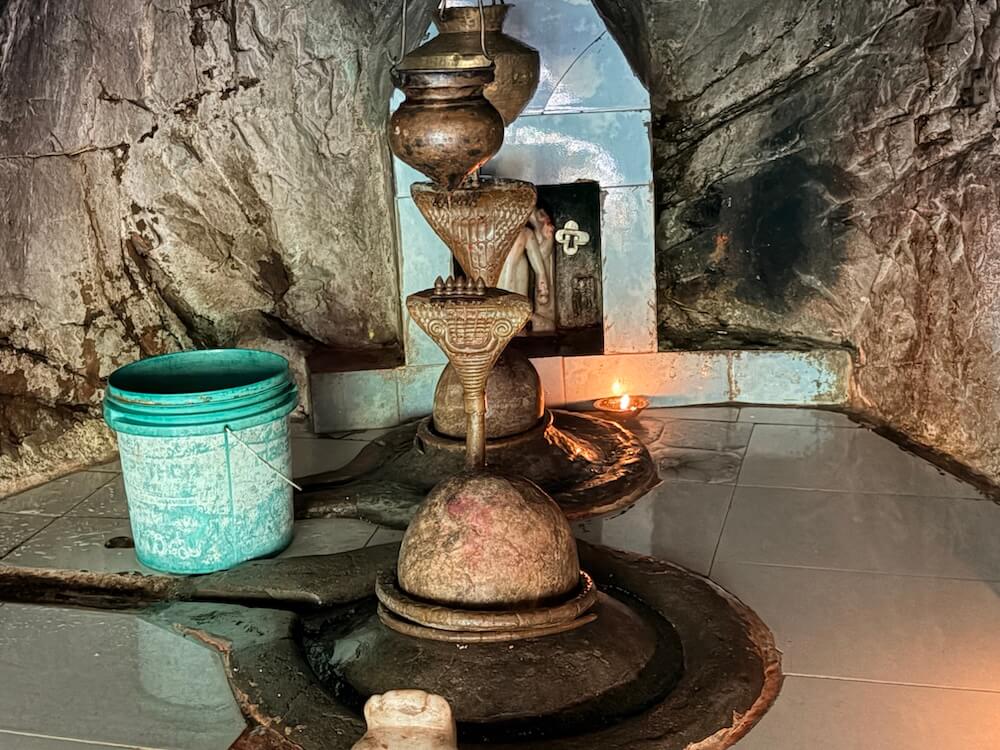
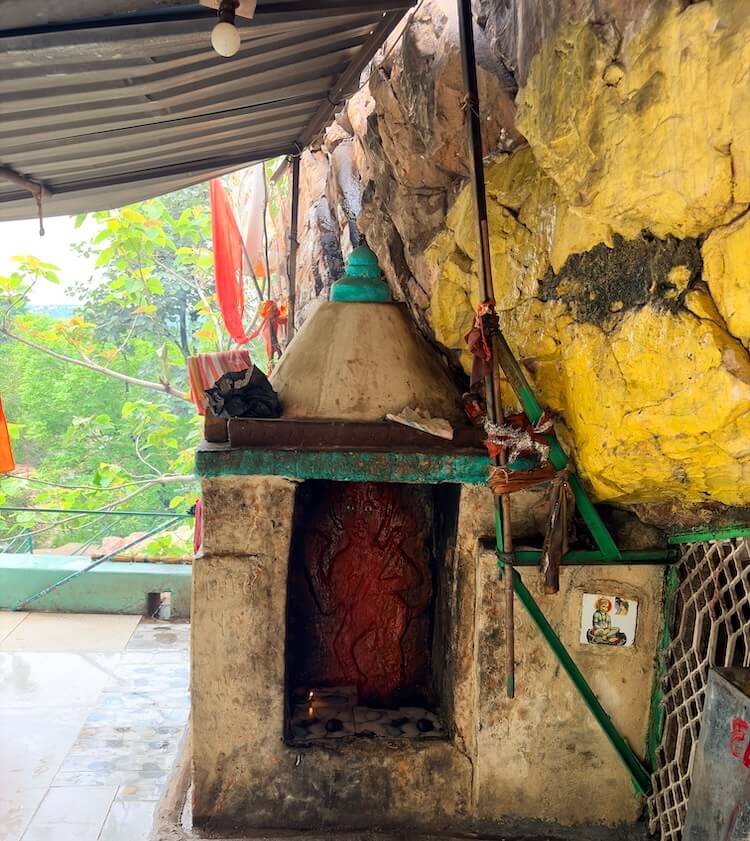
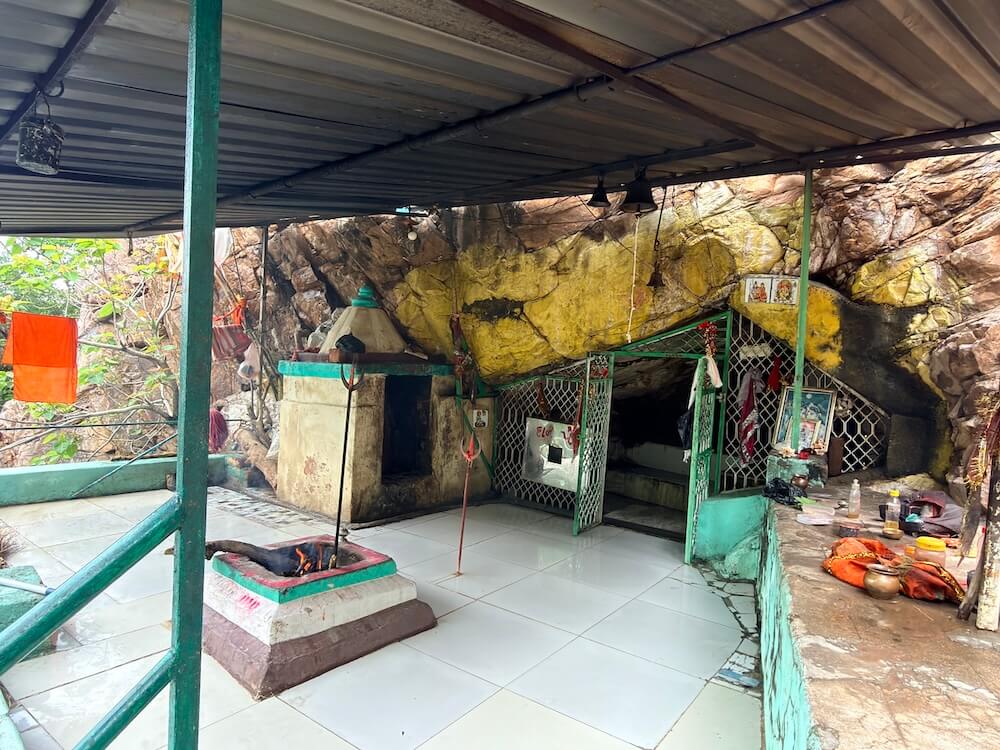
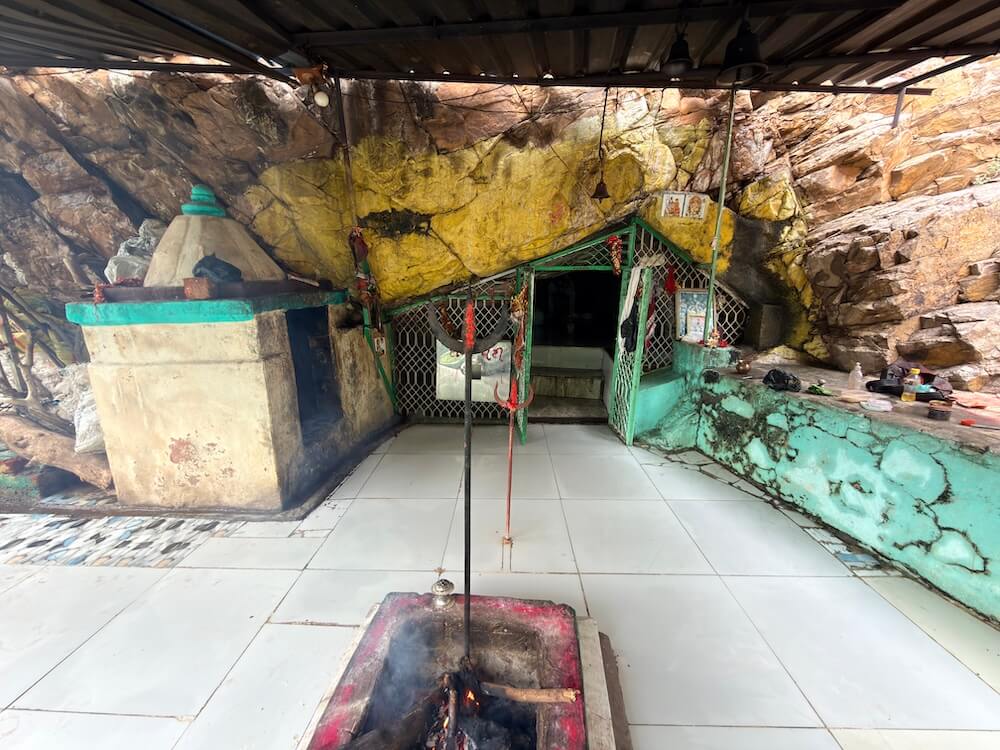
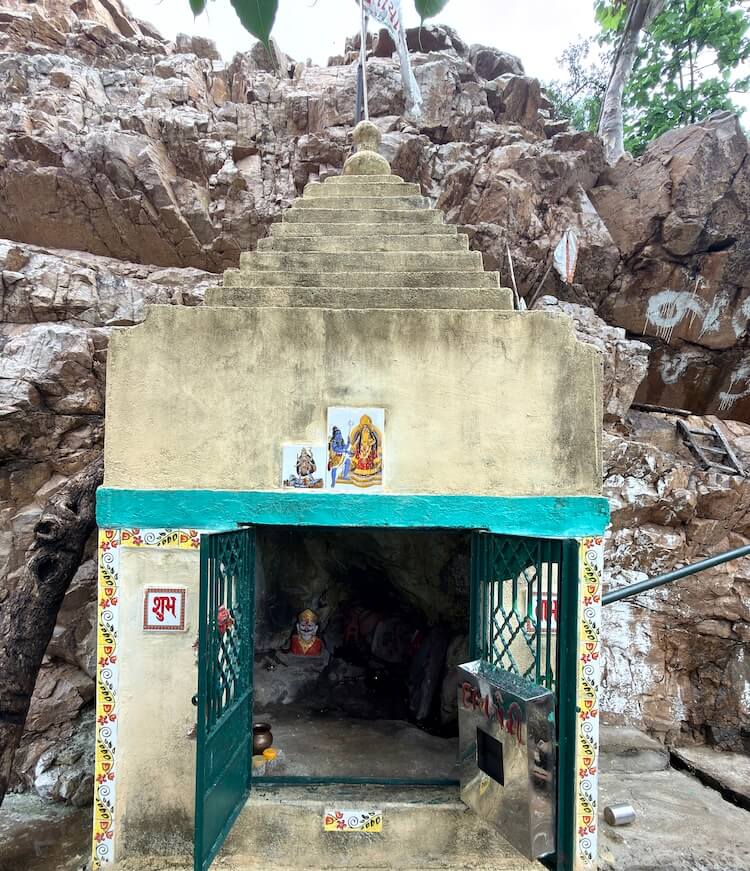
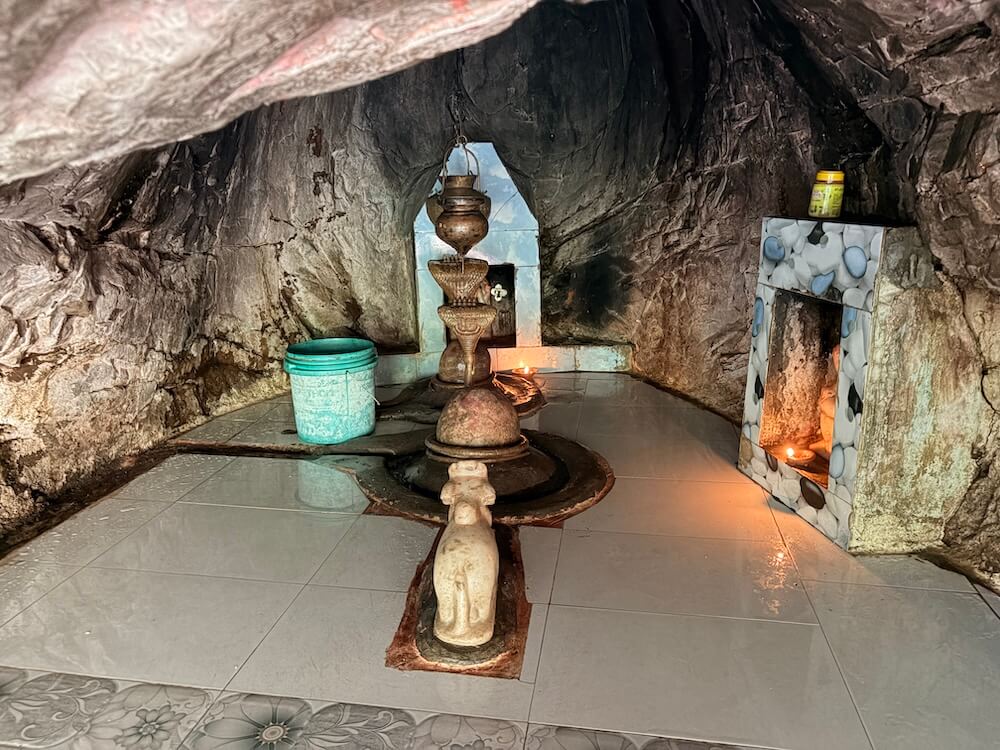 The temple itself occupies a natural cave. A covered assembly hall has been constructed in front of it with an iron framework supporting a metal roof. Within the hall, against the rock face, stands a small shrine containing a vermilion-smeared stone image of Lord Hanuman. Upon entering the cave, a marble image of Lord Ganesha is installed within an ornate marble niche on the left. Opposite it, upon a marble pedestal, is a marble image of Nandi. Beyond Nandi stand two self-manifested (Swayambhu) Shivalingas placed side by side. A copper serpent shelters each, while water dripping naturally from the cave roof performs a perpetual abhishek. At the rear of the cave, against the rock face, is a marble shrine housing an image of Goddess Parvati. As the shrine is situated within a natural cave, it has no superstructure or shikhara.
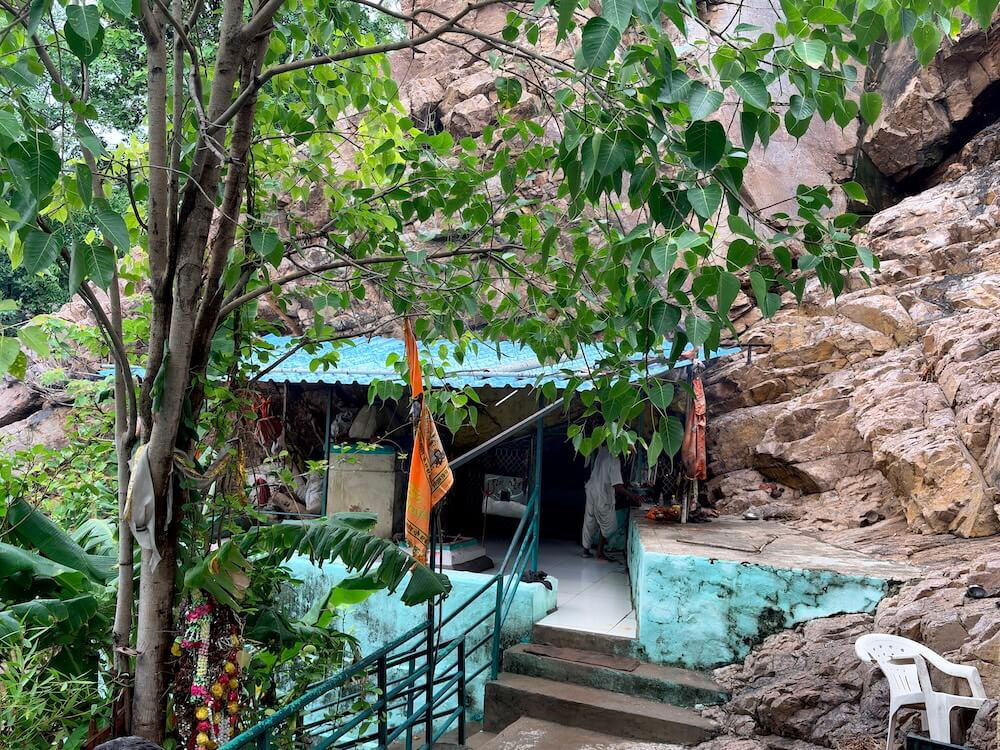 A short distance uphill from the Mahadev Temple, another small cave houses a stone image of Baliya Dev.
Large numbers of devotees visit during Mahashivaratra, the Mondays of the holy month of Shravan, Nag Panchami, the Ashwin and Chaitra Navratra festivals, Tripuri Purnima and the Hindu New Year. Every Monday in Shravan, Rudrabhishek and the Maha Aarti are performed. Devotees arrive from Santarampur, Lunawada, Godhra, Balasinor and Dahod. On Mahashivaratra, the temple observes continuous worship throughout the four prahars of the night, while an annual fair showcasing the work of local artisans is also held. During the monsoon, from July to September, tourists visit in large numbers to experience the waterfalls and the region’s natural beauty. Devotees may have darshan at the temple daily from 6:00 a.m. to 8:00 p.m.
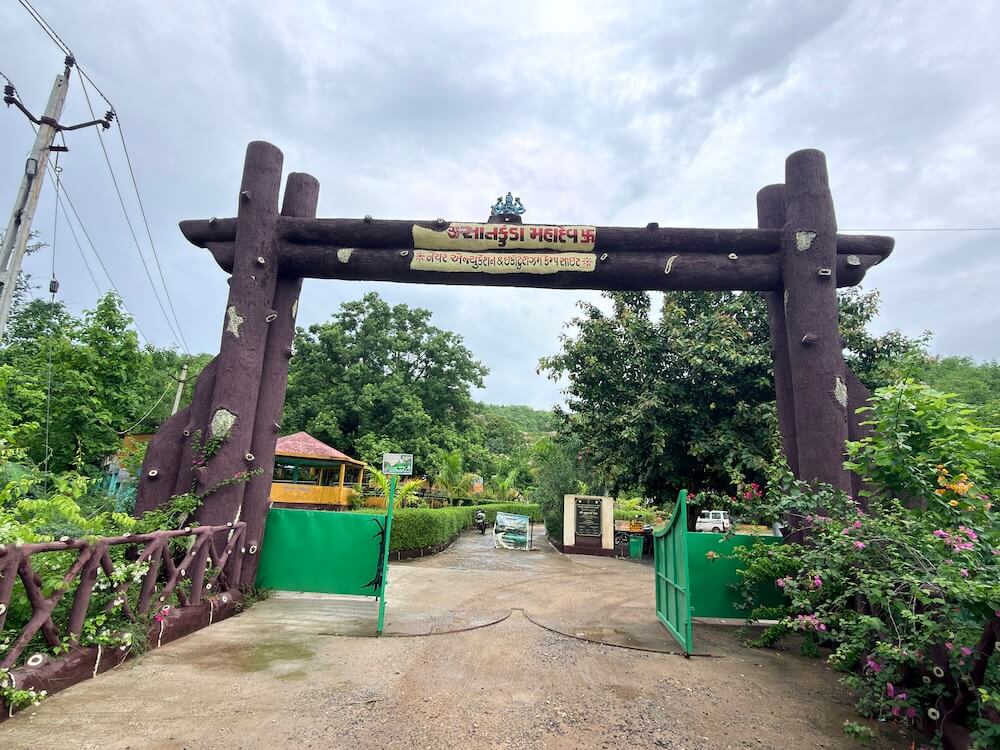
The Gujarat Forest Department and the local administration have developed this area as the ‘Satkunda Eco Tourism Centre’. Paid accommodation and dining facilities are available for visitors at the foot of the hill. The site also offers waterfall trekking, forest excursions and nature camps. Reservations for these facilities may be made by contacting 8780641445, 8980552151, or 8849854546.
Useful Information :
- Located at 29 km from Santarampur and 28 km from Lunawada.
- State Transport (ST) bus services are available from Santarampur.
- Private vehicles can reach the temple directly.
- Accommodation and breakfast facilities are available in the vicinity.
सतकुंडा महादेव मंदिर
अमलियात, ताल. संतरामपुर, जिला. महिसागर
मंदिरे
Temples
मंदिर
મંદિરો
கோவில்கள்
దేవాలయాలు
ക്ഷേത്രങ്ങൾ
ದೇವಾಲಯಗಳು
মন্দিরসমূহ
ਮੰਦਿਰ
-
हरसिद्धी माता मंदिर दह्यापूर, ता. संतरामपूर, जि. महिसागर
अधिक माहितीHarsiddhi Mata Temple Dahyapur, Tal. Santarampur, Dist. Mahisagar
View Detailsहरसिद्धि माता मंदिर दहियापुर, ताल. संतरामपुर, जिला. महिसागर
विवरण देखेंHarsiddhi Mata Temple Dahyapur, Tal. Santarampur, Dist. Mahisagar
વિગત જુઓHarsiddhi Mata Temple Dahyapur, Tal. Santarampur, Dist. Mahisagar
விவரங்களைக் காண்கHarsiddhi Mata Temple Dahyapur, Tal. Santarampur, Dist. Mahisagar
వివరాలను చూడండిHarsiddhi Mata Temple Dahyapur, Tal. Santarampur, Dist. Mahisagar
വിശദാംശങ്ങൾ കാണുകHarsiddhi Mata Temple Dahyapur, Tal. Santarampur, Dist. Mahisagar
ವಿವರಗಳನ್ನು ವೀಕ್ಷಿಸಿHarsiddhi Mata Temple Dahyapur, Tal. Santarampur, Dist. Mahisagar
বিস্তারিত দেখুনHarsiddhi Mata Temple Dahyapur, Tal. Santarampur, Dist. Mahisagar
ਵੇਰਵੇ ਦੇਖੋ -
SMVS स्वामीनारायण मंदिर गोधर, ता. संतरामपूर, जि. महिसागर
अधिक माहितीSMVS Swaminarayan Temple Godhar, Tal. Santarampur, Dist. Mahisagar
View Detailsएसएमवीएस स्वामीनारायण मंदिर गोधर, ताल. संतरामपुर, जिला. महिसागर
विवरण देखेंSMVS Swaminarayan Temple Godhar, Tal. Santarampur, Dist. Mahisagar
વિગત જુઓSMVS Swaminarayan Temple Godhar, Tal. Santarampur, Dist. Mahisagar
விவரங்களைக் காண்கSMVS Swaminarayan Temple Godhar, Tal. Santarampur, Dist. Mahisagar
వివరాలను చూడండిSMVS Swaminarayan Temple Godhar, Tal. Santarampur, Dist. Mahisagar
വിശദാംശങ്ങൾ കാണുകSMVS Swaminarayan Temple Godhar, Tal. Santarampur, Dist. Mahisagar
ವಿವರಗಳನ್ನು ವೀಕ್ಷಿಸಿSMVS Swaminarayan Temple Godhar, Tal. Santarampur, Dist. Mahisagar
বিস্তারিত দেখুনSMVS Swaminarayan Temple Godhar, Tal. Santarampur, Dist. Mahisagar
ਵੇਰਵੇ ਦੇਖੋ -
त्रिपदी कुमारेश्वर महादेव मंदिर लुणावडा, ता. लुणावडा, जि. महिसागर
अधिक माहितीTripadi Kumareshwar Mahadev Temple Lunawada, Tal. Lunawada, Dist. Mahisagar
View Detailsत्रिपदी कुमारेश्वर महादेव मंदिर लुनावाडा, ताल. लुनावाडा, जिला. महिसागर
विवरण देखेंTripadi Kumareshwar Mahadev Temple Lunawada, Tal. Lunawada, Dist. Mahisagar
વિગત જુઓTripadi Kumareshwar Mahadev Temple Lunawada, Tal. Lunawada, Dist. Mahisagar
விவரங்களைக் காண்கTripadi Kumareshwar Mahadev Temple Lunawada, Tal. Lunawada, Dist. Mahisagar
వివరాలను చూడండిTripadi Kumareshwar Mahadev Temple Lunawada, Tal. Lunawada, Dist. Mahisagar
വിശദാംശങ്ങൾ കാണുകTripadi Kumareshwar Mahadev Temple Lunawada, Tal. Lunawada, Dist. Mahisagar
ವಿವರಗಳನ್ನು ವೀಕ್ಷಿಸಿTripadi Kumareshwar Mahadev Temple Lunawada, Tal. Lunawada, Dist. Mahisagar
বিস্তারিত দেখুনTripadi Kumareshwar Mahadev Temple Lunawada, Tal. Lunawada, Dist. Mahisagar
ਵੇਰਵੇ ਦੇਖੋ