
त्रिपदी कुमारेश्वर महादेव मंदिर
लुणावडा, ता. लुणावडा, जि. महिसागर
Tripadi Kumareshwar Mahadev Temple
Lunawada, Tal. Lunawada, Dist. Mahisagar
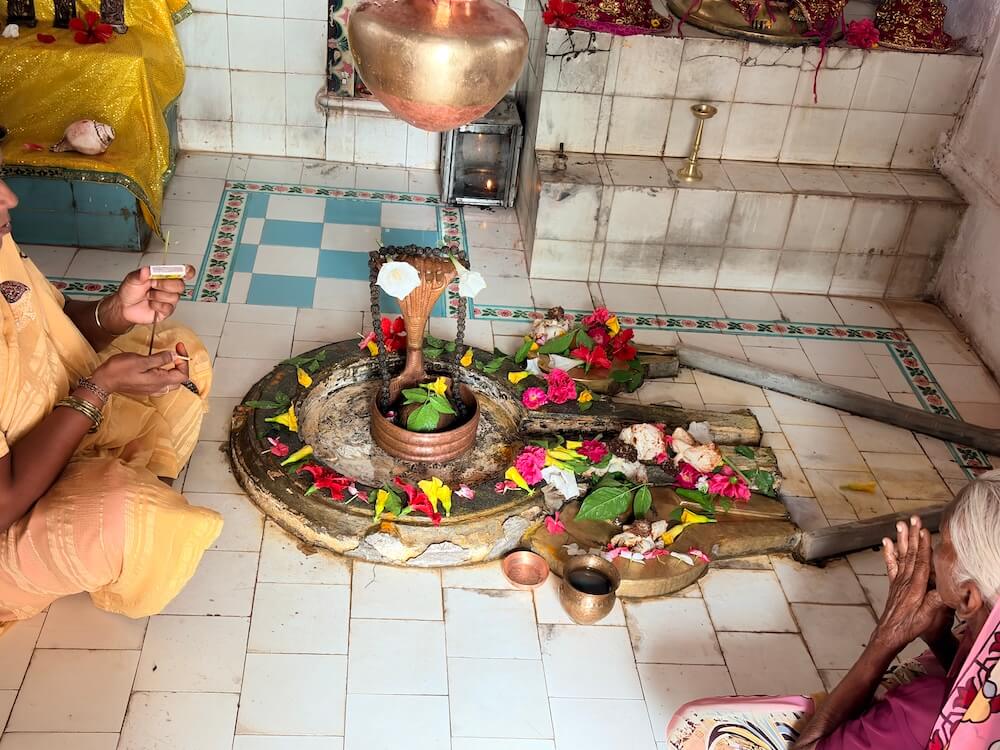 The Tripadi Kumareshwar Mahadev Temple stands in the town of Lunawada, the headquarters of Mahisagar District. This region has been an important centre of Shaivite worship since ancient times. Beyond Luneshwar Mahadev, other Shiva temples in this region are also renowned. These include Vishwanath at Kegdhara, Hatkeshwar, Kedareshwar and Kaleshwari. The town of Lunawada derives its name from the ancient Luneshwar Temple. According to local tradition, the Pandavas took refuge in this region during the Mahabharata period. Against this backdrop, the Kumareshwar Temple has become a revered place of worship for local devotees. It is believed that performing shraddha here grants liberation to departed souls and that Lord Mahadev fulfils the sincere wishes of those who worship him.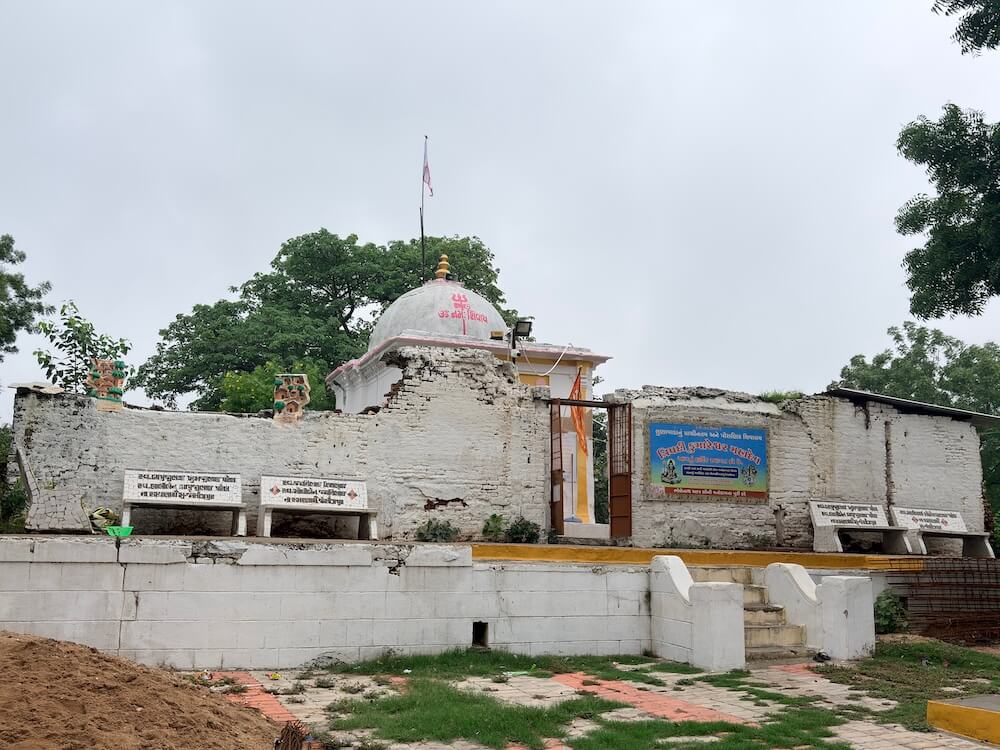
According to local tradition, the temple is around 500 to 600 years old. An inscription within the temple records that it was renovated in 1877. The legend of this form of Mahadev is described in the Skanda Purana, while the origin of the three Shivalingas is narrated in the Shiva Purana. According to Hindu tradition, Kartikeya, the son of Lord Shiva, was the commander of the celestial army. The gods, sages and mankind were tormented by the cruel demon Tarakasura and sought Kartikeya’s protection. Kartikeya challenged Tarakasura to battle and, after a fierce war, slew him. Although Tarakasura was a tyrant, he was also an unwavering devotee of Lord Shiva. Realising that he had killed a great devotee of his own father, Kartikeya was overcome with remorse. 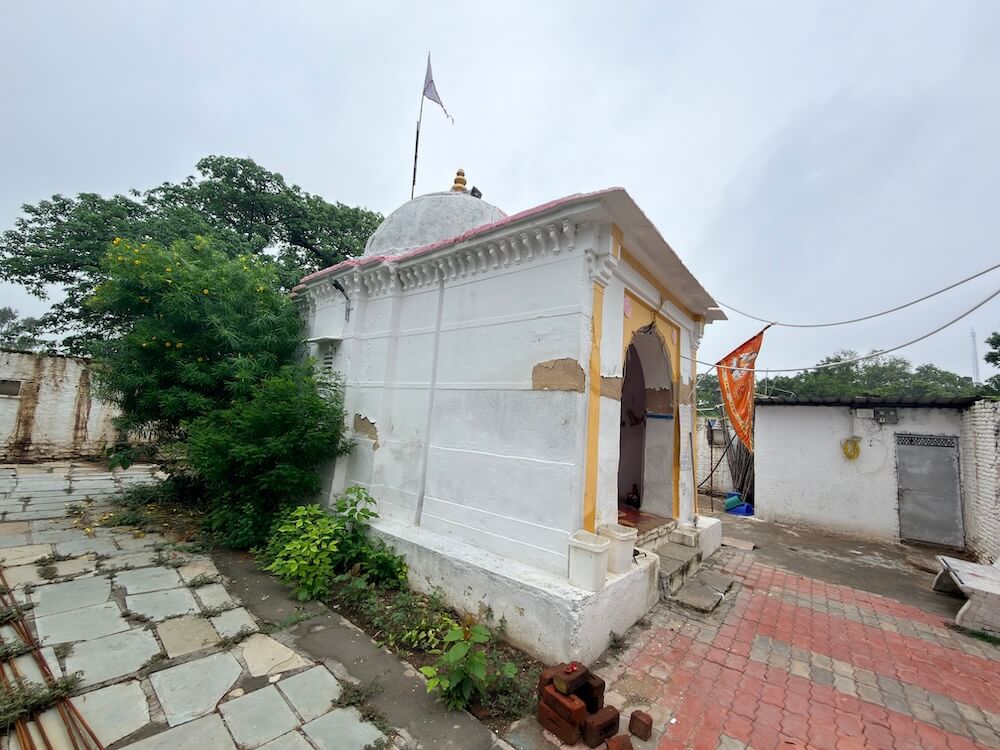 To free himself from this burden of guilt, he sought the guidance of Lord Vishnu. Vishnu advised him to worship Lord Shiva. Kartikeya then requested Vishwakarma, the divine architect, to create three Shivalingas. These came to be known as Pratikeshwar, Kapaleshwar and Kumareshwar. Kartikeya worshipped Lord Shiva at this very place. He performed the shraddha rites for Tarakasura before the Kapaleshwar Linga and prayed for the demon’s liberation. Pleased by Kartikeya’s devotion, Lord Shiva absolved him of his sin and granted liberation to the demons who had perished in the battle.
The temple stands on the outskirts of the town and is reached by a paved road. Opposite the temple, across the road, lies the Kumareshwar Lake, surrounded by trees. 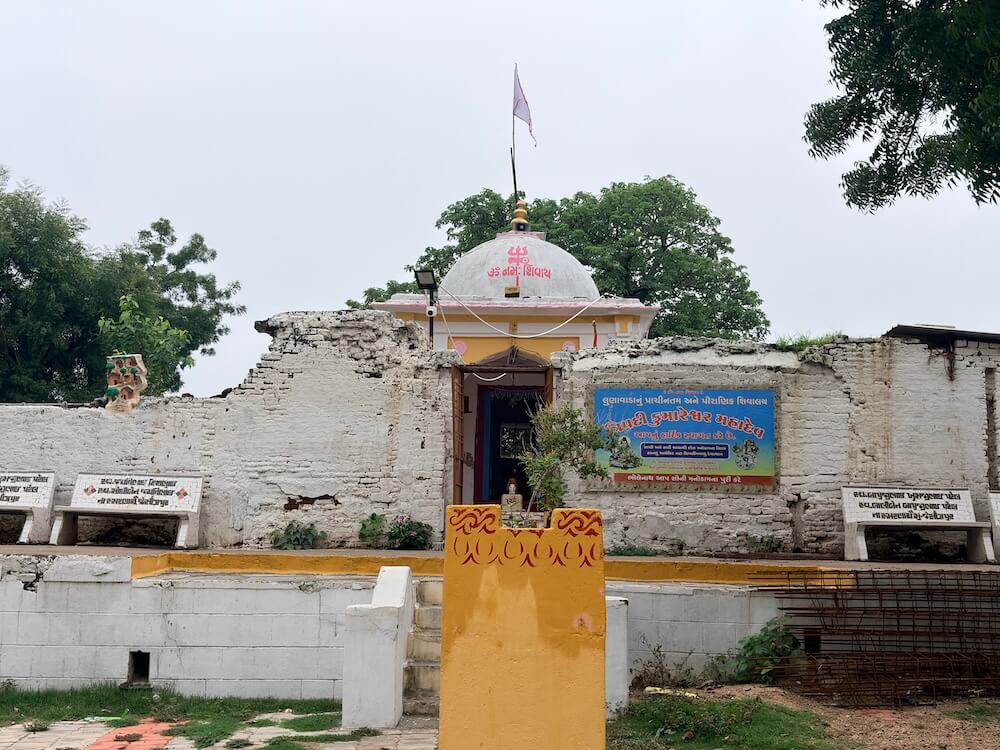 Devotees perform shraddha rites and other rituals for the peace of departed souls on its banks. In the courtyard before the temple stands a tall wooden pillar known as the ‘Stambha Linga’. An old bael tree also grows within the premises, while behind the temple stands a sacred peepal tree. Local tradition holds that this tree was planted by a wandering ascetic about 300 years ago. It is regarded as a ‘Kalpavriksha’, or wish-fulfilling tree and devotees believe that sincere prayers offered here fulfil their heartfelt wishes. In front of the temple, a Tulsi Vrindavan has been built upon a stone platform.
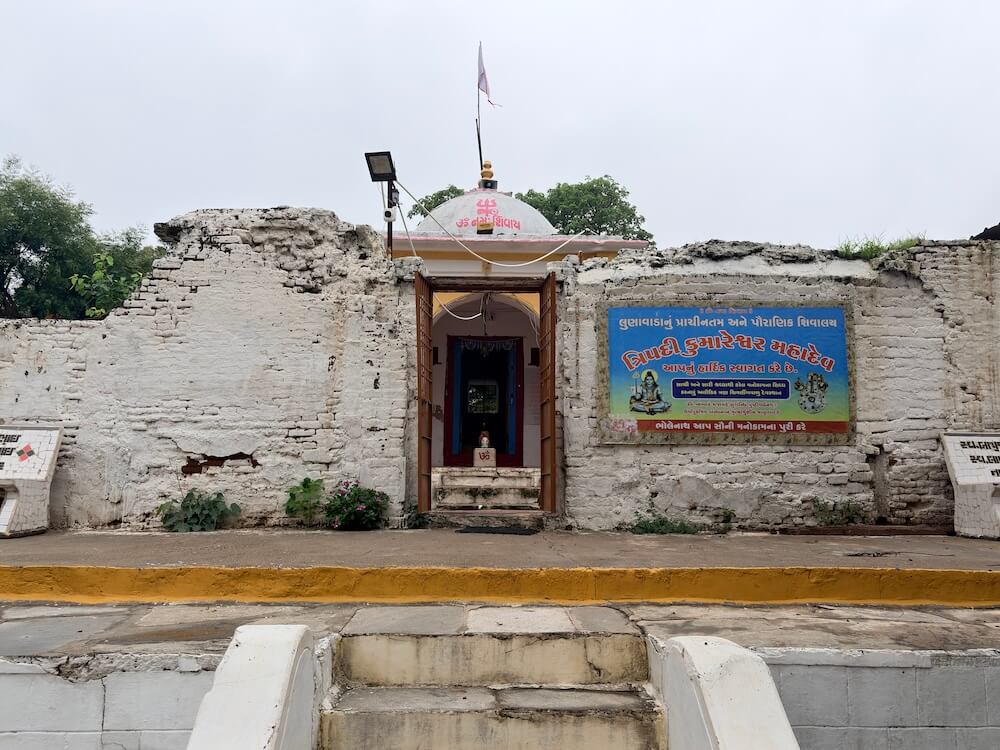
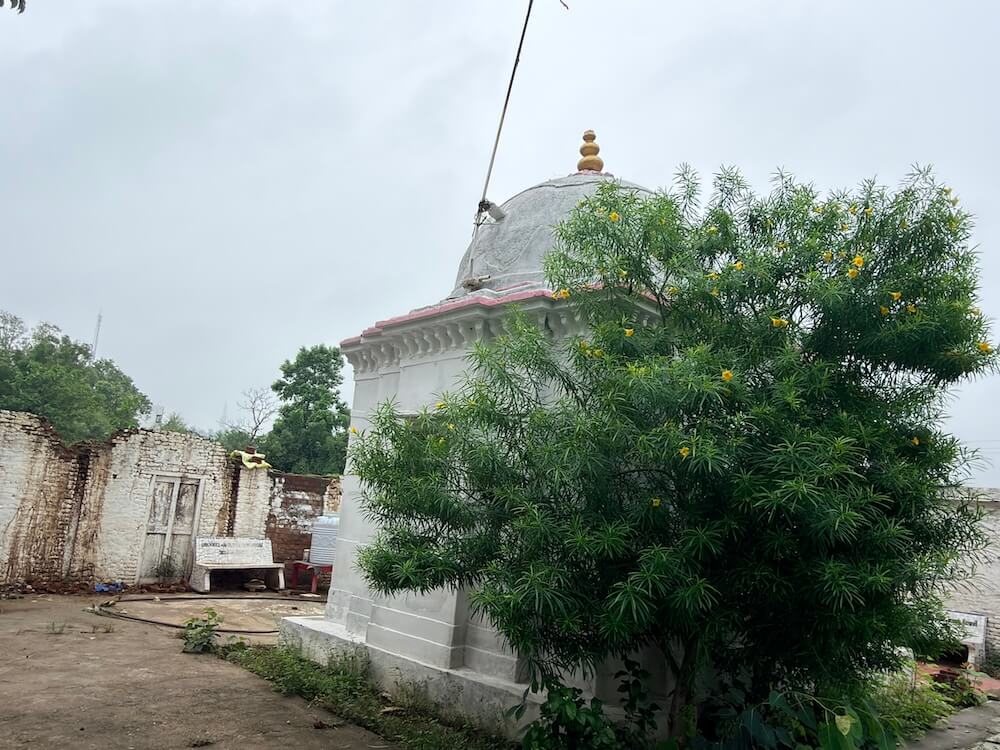
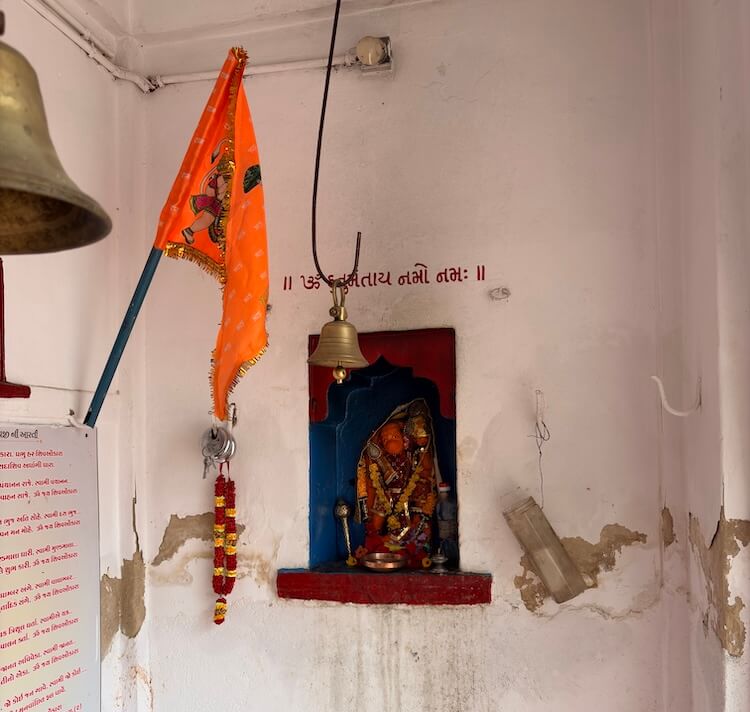
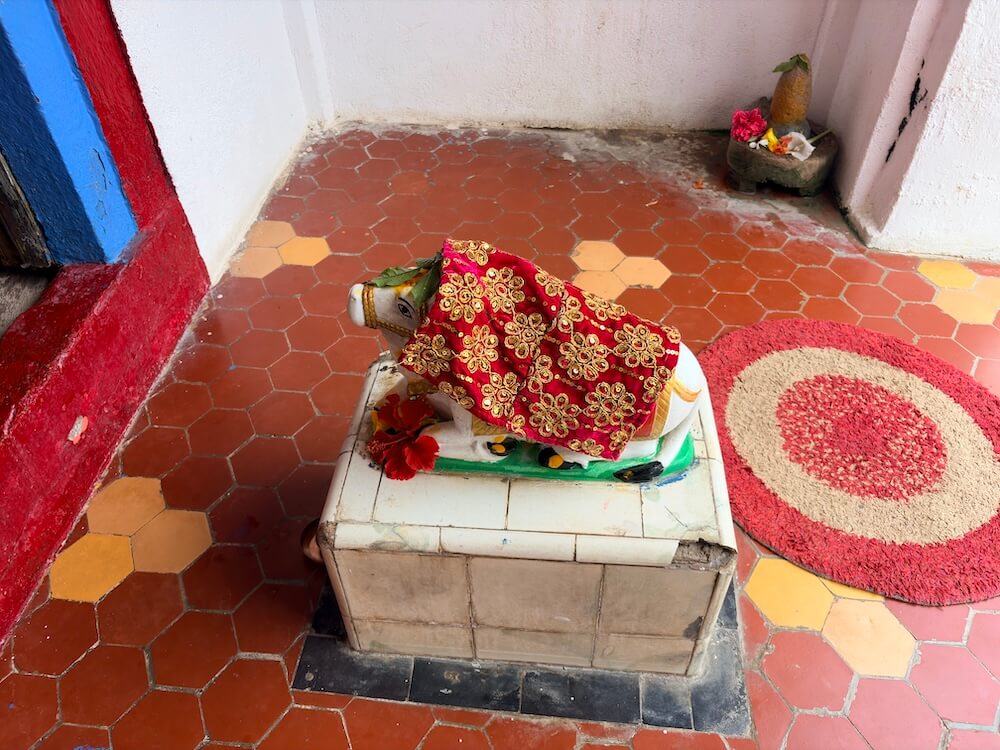
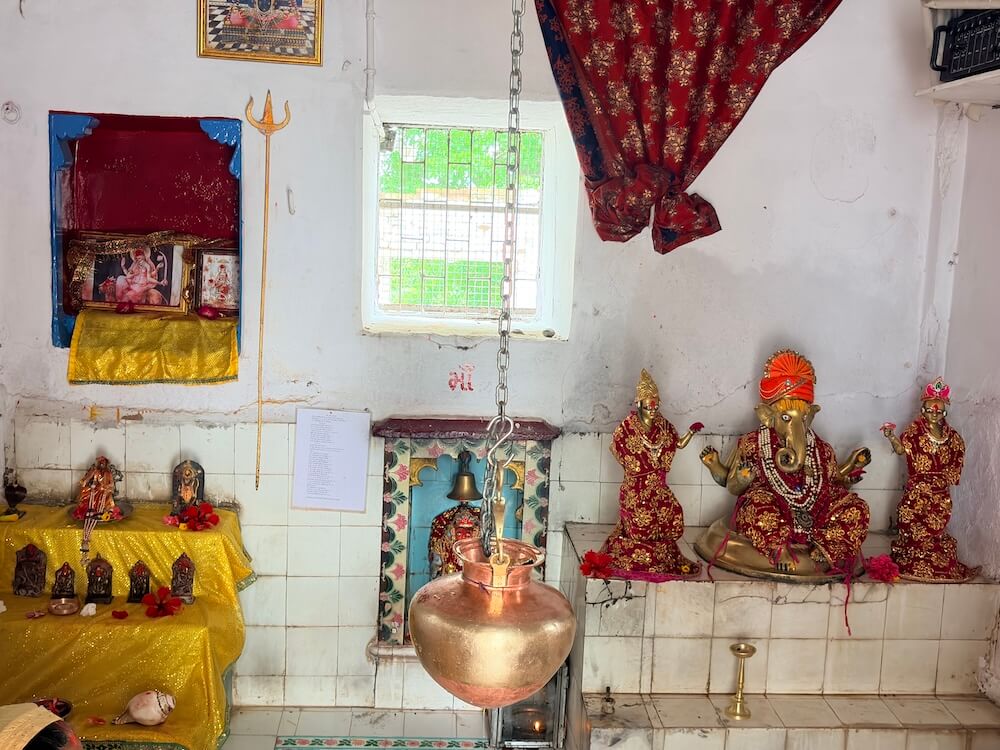
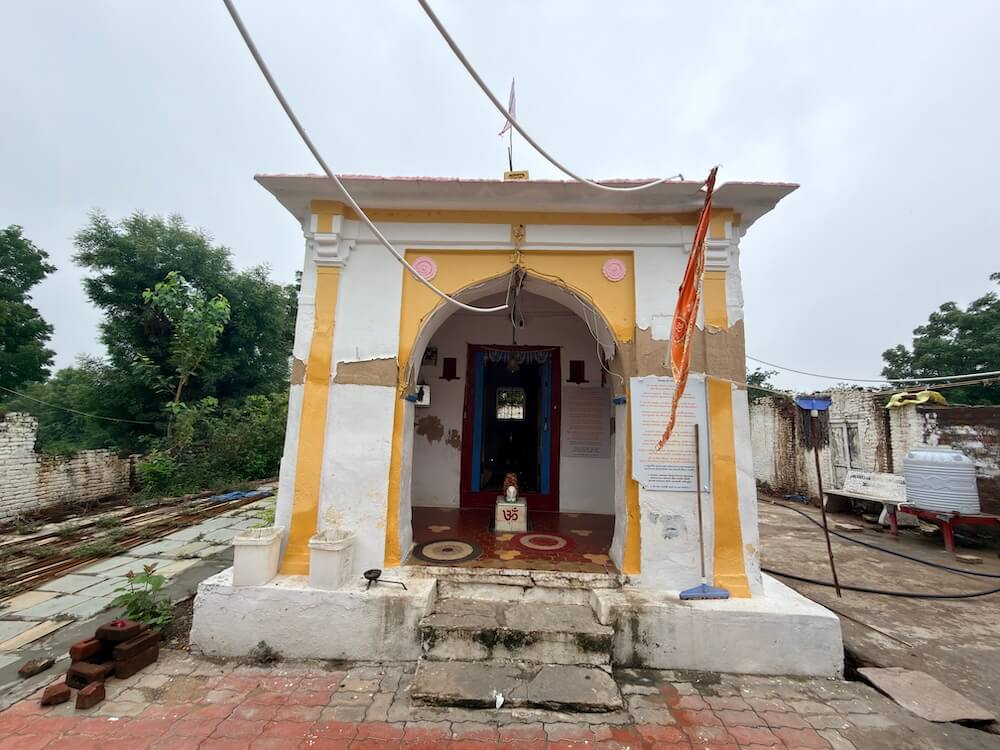
The original temple stands on a plinth about four feet high, reached by six steps. At a later period, a brick protective wall was built around the plinth to safeguard the original structure. This enclosure has a single entrance gateway. 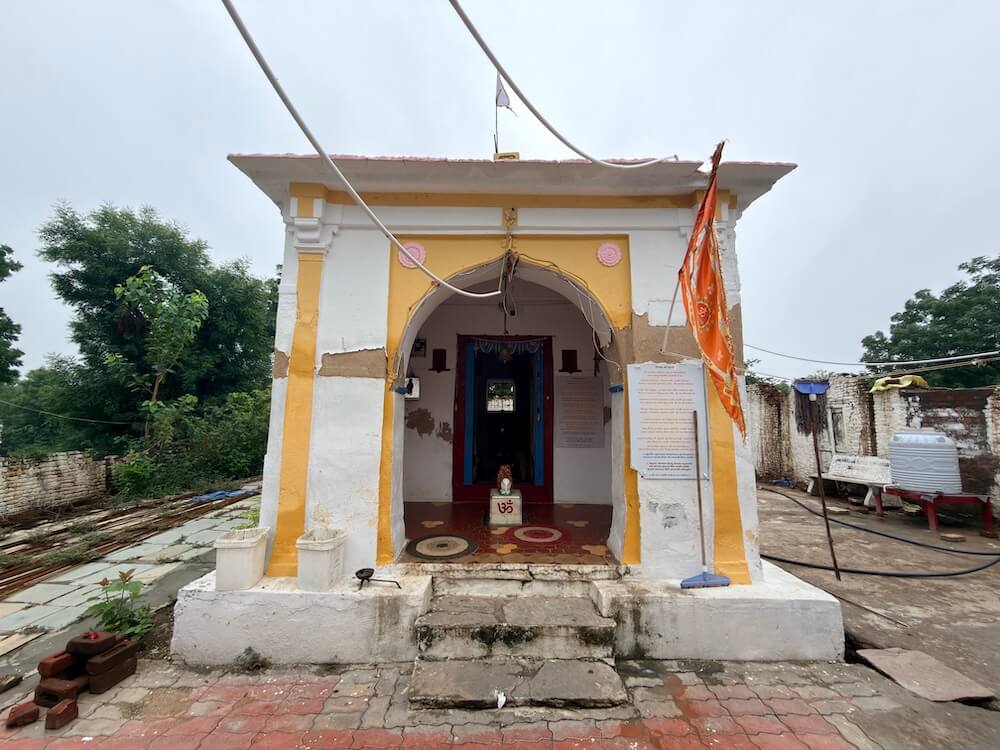 The temple consists of a sabhamandapa (assembly hall), an antarala (vestibule) and the sanctum. Within the assembly hall, marble idols of Lord Ganesha and Lord Hanuman have been installed in niches on either side of the vestibule. The plaque recording the renovation carried out in 1877 is also fixed to one of these walls. In the vestibule, directly before the entrance to the sanctum, stands the stone image of Nandi upon a pedestal. A traditional temple drum (nagara) is kept here and is played during the aarti. The doorframe of the sanctum is decorated with vertical carved bands.
Inside the sanctum, three Shivalingas are installed on the floor. These represent Pratikeshwar, Kapaleshwar and Kumareshwar Mahadev. The central Linga is larger than the two placed on either side. 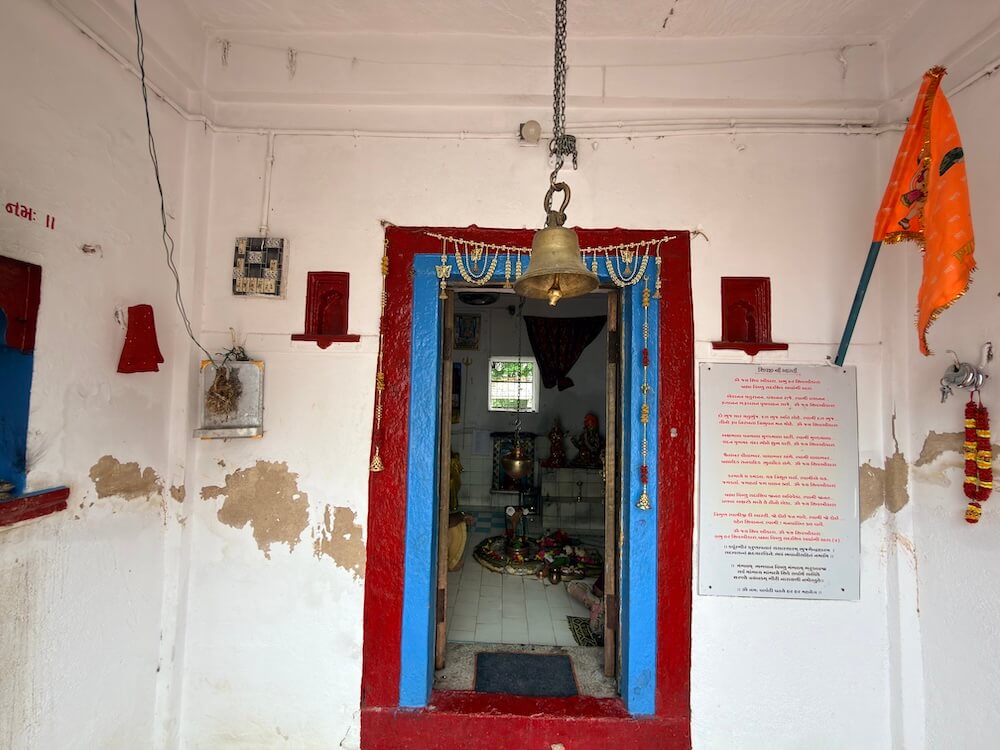 A brass serpent holding a canopy is mounted above the central Linga, while water flows continuously over it from a silver vessel suspended from the ceiling. A brass trident stands beside the Lingas. A niche in the rear wall of the sanctum houses an idol of Goddess Parvati. Small windows have been provided to admit light and fresh air. Above the assembly hall rises a circular domed shikhara crowned with a stupika, a kalasha and the temple flag. The sanctum is surmounted by a tall square shikhara that tapers gracefully towards the top. Smaller subsidiary spires adorn all four sides of the main shikhara.
Maha Shivaratra and the Mondays of the holy month of Shravan are the temple’s principal annual festivals. During these occasions, thousands of devotees from across the district visit the temple for darshan and to fulfil their vows. 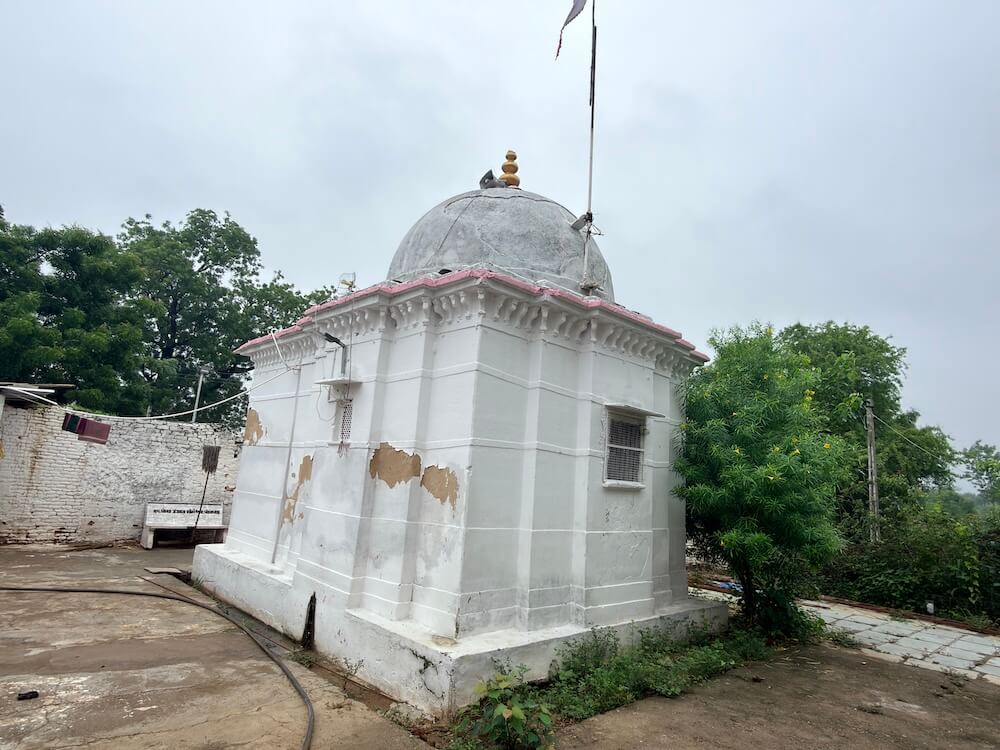 Special ceremonies such as Laghu Rudra, Mahabhishek, Shiva Yajna, devotional singing, kirtans, chanting of the Mahamrityunjaya Mantra and the distribution of mahaprasad are organised.
The temple also celebrates Ganesh Jayanti, Hanuman Jayanti, Kartiki Purnima, Chaitra Navratra, Nag Panchami, Shri Krishna Janmotsav, Dussehra and Diwali. During the fifteen days of Pitru Paksha in the month of Bhadrapada, the temple receives a particularly large number of devotees. People from across Gujarat come here with the belief that performing shraddha at this sacred place grants liberation to their ancestors. The temple is also especially crowded every Monday, on Pradosh and on every full moon and new moon day. Devotees may have the darshan of Kumareshwar Mahadev every day from 6.00 a.m. to 8.30 p.m.
Useful Information :
- Located at 2 km from Lunawada Bus Stand.
- State Transport (ST) bus services connect Lunawada with many towns across the district.
- Small private vehicles can reach the temple directly.
- Accommodation and breakfast facilities are available nearby.
त्रिपदी कुमारेश्वर महादेव मंदिर
लुनावाडा, ताल. लुनावाडा, जिला. महिसागर
मंदिरे
Temples
मंदिर
મંદિરો
கோவில்கள்
దేవాలయాలు
ക്ഷേത്രങ്ങൾ
ದೇವಾಲಯಗಳು
মন্দিরসমূহ
ਮੰਦਿਰ
-
सातकुंडा महादेव मंदिर अमलीत, ता. संतरामपूर, जि. महिसागर
अधिक माहितीSatkunda Mahadev Temple Amaliyat, Tal. Santarampur, Dist. Mahisagar
View Detailsसतकुंडा महादेव मंदिर अमलियात, ताल. संतरामपुर, जिला. महिसागर
विवरण देखेंSatkunda Mahadev Temple Amaliyat, Tal. Santarampur, Dist. Mahisagar
વિગત જુઓSatkunda Mahadev Temple Amaliyat, Tal. Santarampur, Dist. Mahisagar
விவரங்களைக் காண்கSatkunda Mahadev Temple Amaliyat, Tal. Santarampur, Dist. Mahisagar
వివరాలను చూడండిSatkunda Mahadev Temple Amaliyat, Tal. Santarampur, Dist. Mahisagar
വിശദാംശങ്ങൾ കാണുകSatkunda Mahadev Temple Amaliyat, Tal. Santarampur, Dist. Mahisagar
ವಿವರಗಳನ್ನು ವೀಕ್ಷಿಸಿSatkunda Mahadev Temple Amaliyat, Tal. Santarampur, Dist. Mahisagar
বিস্তারিত দেখুনSatkunda Mahadev Temple Amaliyat, Tal. Santarampur, Dist. Mahisagar
ਵੇਰਵੇ ਦੇਖੋ -
हरसिद्धी माता मंदिर दह्यापूर, ता. संतरामपूर, जि. महिसागर
अधिक माहितीHarsiddhi Mata Temple Dahyapur, Tal. Santarampur, Dist. Mahisagar
View Detailsहरसिद्धि माता मंदिर दहियापुर, ताल. संतरामपुर, जिला. महिसागर
विवरण देखेंHarsiddhi Mata Temple Dahyapur, Tal. Santarampur, Dist. Mahisagar
વિગત જુઓHarsiddhi Mata Temple Dahyapur, Tal. Santarampur, Dist. Mahisagar
விவரங்களைக் காண்கHarsiddhi Mata Temple Dahyapur, Tal. Santarampur, Dist. Mahisagar
వివరాలను చూడండిHarsiddhi Mata Temple Dahyapur, Tal. Santarampur, Dist. Mahisagar
വിശദാംശങ്ങൾ കാണുകHarsiddhi Mata Temple Dahyapur, Tal. Santarampur, Dist. Mahisagar
ವಿವರಗಳನ್ನು ವೀಕ್ಷಿಸಿHarsiddhi Mata Temple Dahyapur, Tal. Santarampur, Dist. Mahisagar
বিস্তারিত দেখুনHarsiddhi Mata Temple Dahyapur, Tal. Santarampur, Dist. Mahisagar
ਵੇਰਵੇ ਦੇਖੋ -
SMVS स्वामीनारायण मंदिर गोधर, ता. संतरामपूर, जि. महिसागर
अधिक माहितीSMVS Swaminarayan Temple Godhar, Tal. Santarampur, Dist. Mahisagar
View Detailsएसएमवीएस स्वामीनारायण मंदिर गोधर, ताल. संतरामपुर, जिला. महिसागर
विवरण देखेंSMVS Swaminarayan Temple Godhar, Tal. Santarampur, Dist. Mahisagar
વિગત જુઓSMVS Swaminarayan Temple Godhar, Tal. Santarampur, Dist. Mahisagar
விவரங்களைக் காண்கSMVS Swaminarayan Temple Godhar, Tal. Santarampur, Dist. Mahisagar
వివరాలను చూడండిSMVS Swaminarayan Temple Godhar, Tal. Santarampur, Dist. Mahisagar
വിശദാംശങ്ങൾ കാണുകSMVS Swaminarayan Temple Godhar, Tal. Santarampur, Dist. Mahisagar
ವಿವರಗಳನ್ನು ವೀಕ್ಷಿಸಿSMVS Swaminarayan Temple Godhar, Tal. Santarampur, Dist. Mahisagar
বিস্তারিত দেখুনSMVS Swaminarayan Temple Godhar, Tal. Santarampur, Dist. Mahisagar
ਵੇਰਵੇ ਦੇਖੋ