
पंचकृष्ण मंदिर
थेरका, ता. झालोद, जि. दाहोद
Panchakrishna Temple
Therka, Tal. Jhalod, Dist. Dahod
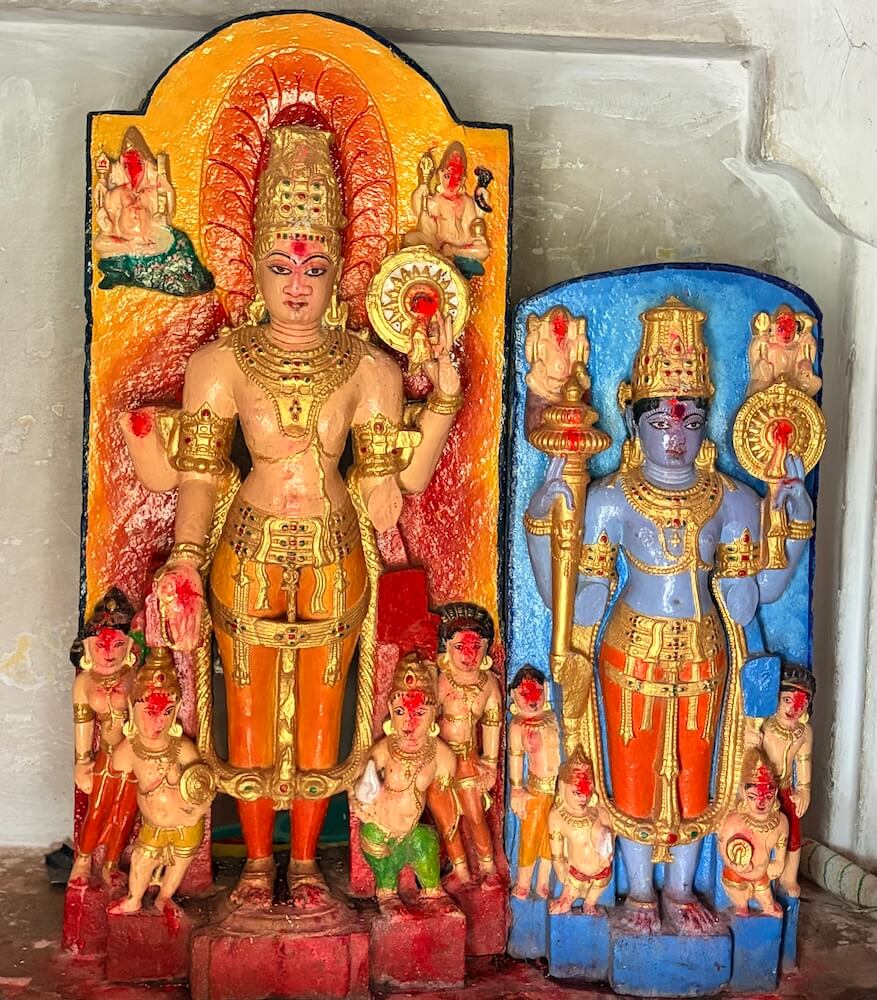 Dahod lies on the eastern frontier of Gujarat. Within Jhalod Taluka of this district stands the village of Therka. On the banks of the Machhan River, which flows along the village boundary, stands the Panchakrishna Temple. With a tradition extending back more than seven centuries, this sacred site is remarkable for its architecture, history and local cultural heritage. The temple complex, situated within an ancient sacred grove, comprises five interconnected shrines housing eleven deities. Revered by the local Bhil tribal community, the temple is significant not only as a place of worship but also as an important centre for environmental conservation.
The religious tradition of this region is deeply rooted in Lord Krishna’s ancient association with Gujarat. After slaying Kansa at Mathura, Krishna left the city because of the repeated invasions of Jarasandha and established his new capital at Dwarka in Gujarat. Dwarka is revered as one of the four sacred Char Dham pilgrimage centres. Lord Krishna is believed to have departed from the mortal world at Bhalka Tirth near Veraval. Gujarat is also home to the famous Ranchhodrai Temple at Dakor.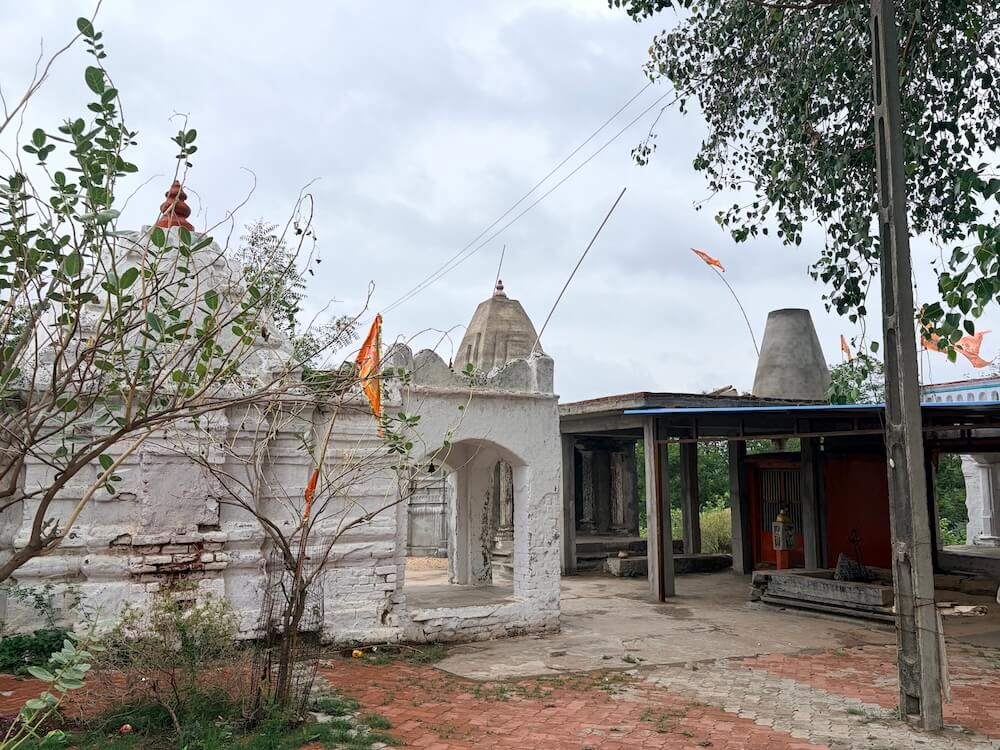 For these reasons, Gujarat is regarded as both the ‘Karmabhoomi’ and the ‘Mokshabhoomi’ of Lord Krishna. Even today, ‘Jai Shri Krishna’ remains the customary greeting across the state. The legend of the Therka temple is connected with the meeting of Lord Krishna and the Pandavas.
According to local tradition, this region was once known as ‘Hidimbavan’. After losing the game of dice to the Kauravas, the Pandavas were compelled to undergo twelve years of exile followed by one year of incognito life. It is said that they stayed here for a single night during this period. Lord Krishna came to meet them at this very place. To commemorate that meeting, the Pandavas are believed to have built eleven temples here in a single night. According to the ‘Gujarat State Gazetteers – Panchmahals District’ (1972),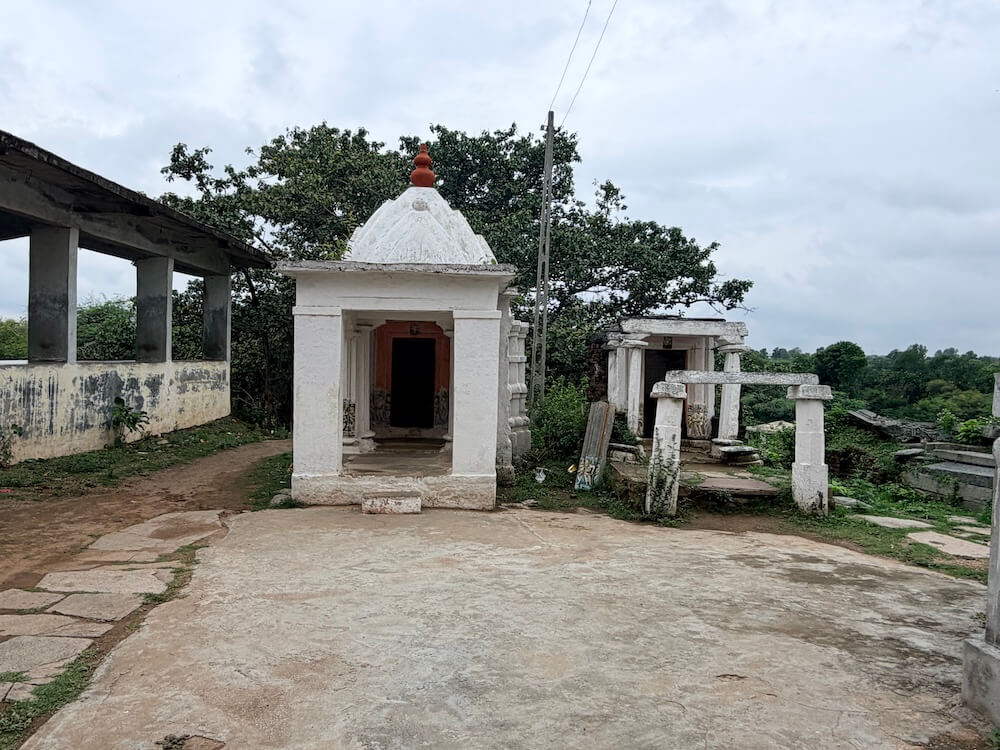 the ancient hermitage of Sage Suvrata stood on the banks of the Machhan River at this site.
Scholars believe that these five shrines were constructed between the thirteenth and fourteenth centuries. An inscription discovered near one of the temples records the year AD 1355. Likewise, a nearby hero stone bears the clear inscription ‘Vikram Samvat 1366’, corresponding to AD 1309. Based on these inscriptions, researchers suggest that the original temple complex was built a few years before AD 1309 and that construction was completed by about AD 1355.
The Bhil tribal community constitutes about 91.8 per cent of the population of Jhalod Taluka. Nature occupies a sacred place in Bhil culture and the protection of trees and plants forms an integral part of their traditions.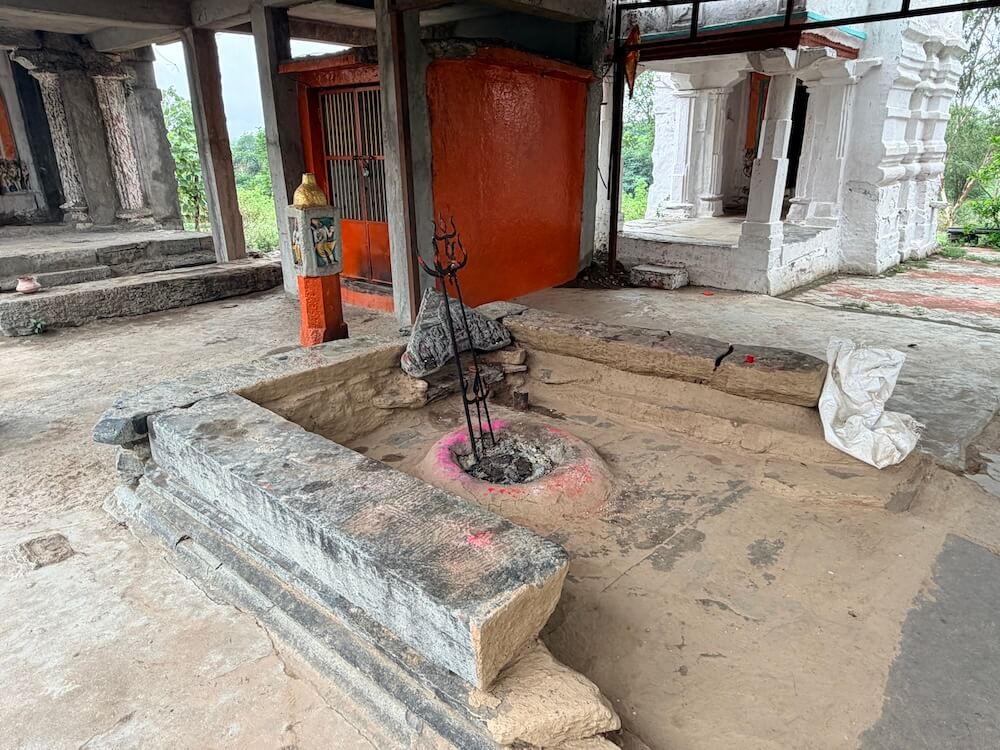 The temple complex lies within the sacred grove known as ‘Hidimbavan’. Strict community rules govern the preservation of its vegetation. Owing to religious belief, felling trees, cutting green branches, or even carrying away dry wood for domestic use is forbidden. Among the six principal sacred groves in the Dahod region, this grove contains 37 recorded plant species belonging to 26 different botanical families. These include drumstick, bael, mahogany, neem, Persian lilac, sadad, banyan, peepal and bamboo. The grove also plays an important ecological role by helping to recharge groundwater and prevent soil erosion.
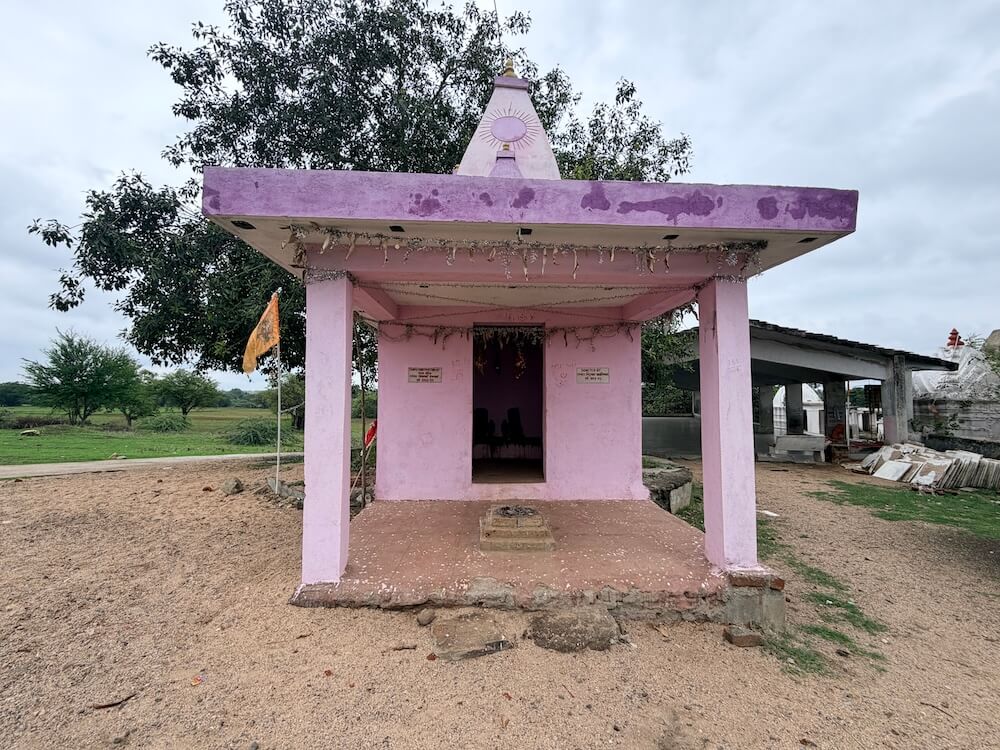
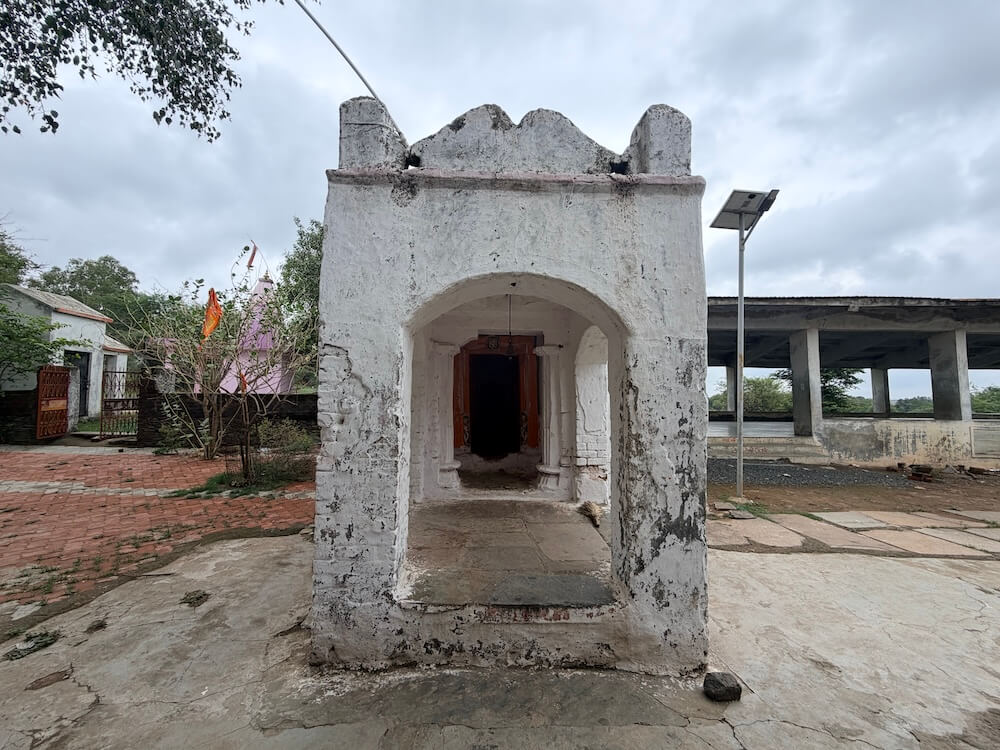
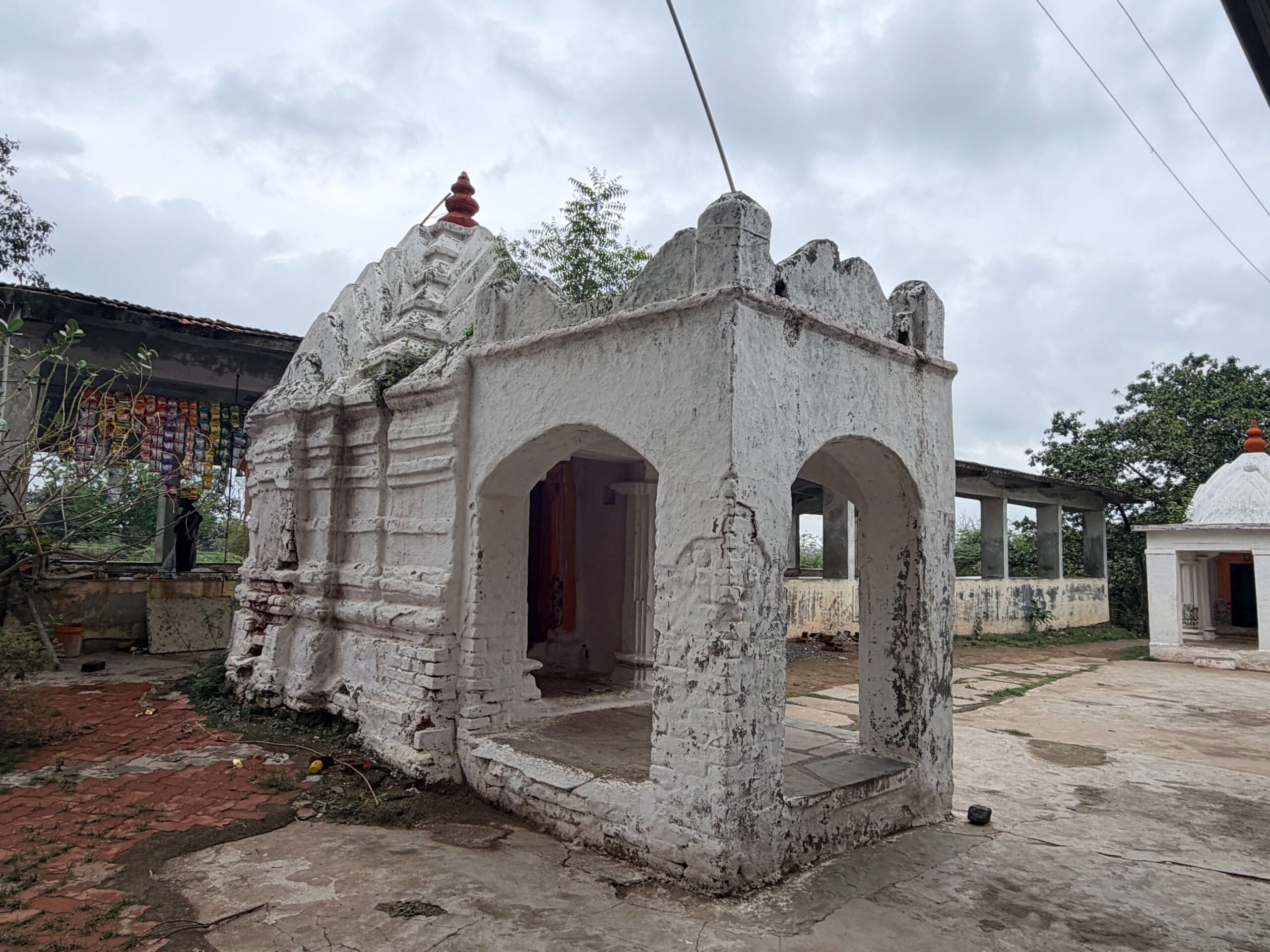
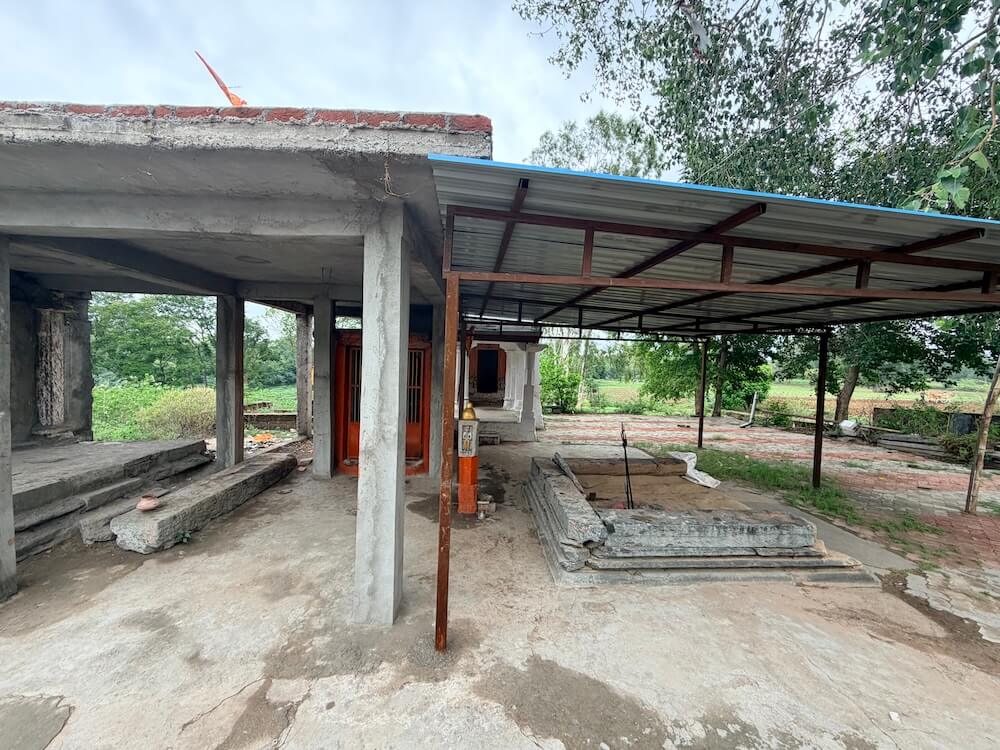
The temple complex stands in a secluded location away from the village. A parking area is available outside the premises.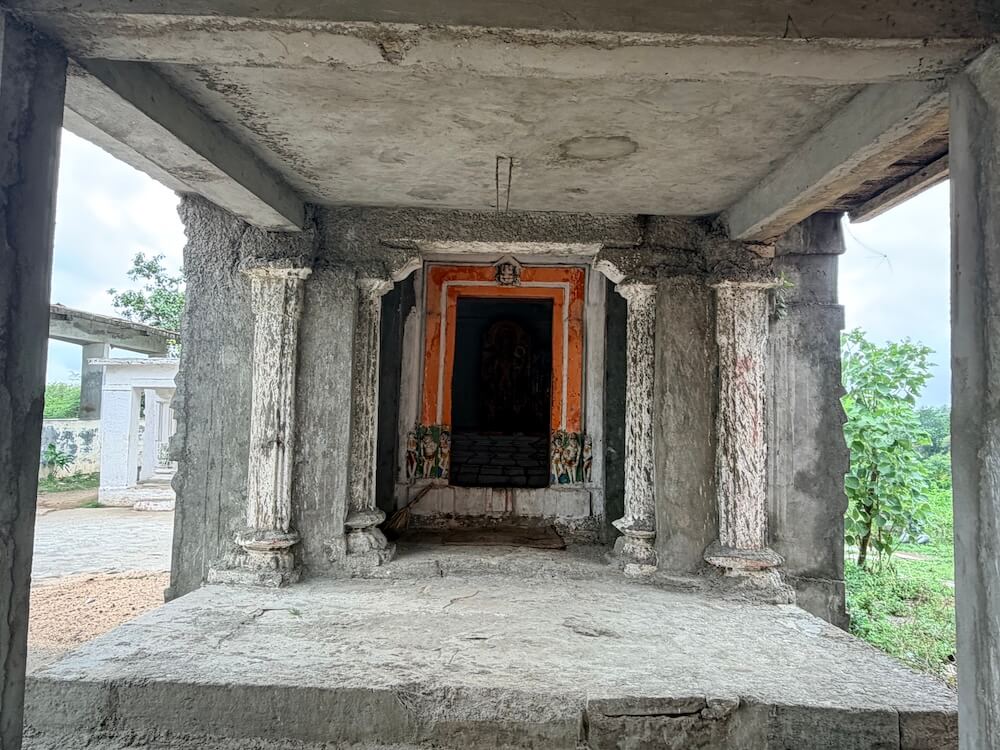 The entire complex is enclosed by a protective wall. Within the courtyard are several old trees and a sacrificial fire altar. After the fulfilment of their vows, local devotees offer ‘Narvans’—ceremonial flags made of bamboo and cotton cloth—to the temple. The name ‘Panchakrishna’ is believed to derive from the presence of five interconnected temples housing eleven consecrated deities. The complex contains five shrines built during different periods. Some are constructed of stone, while others are built of ancient bricks.
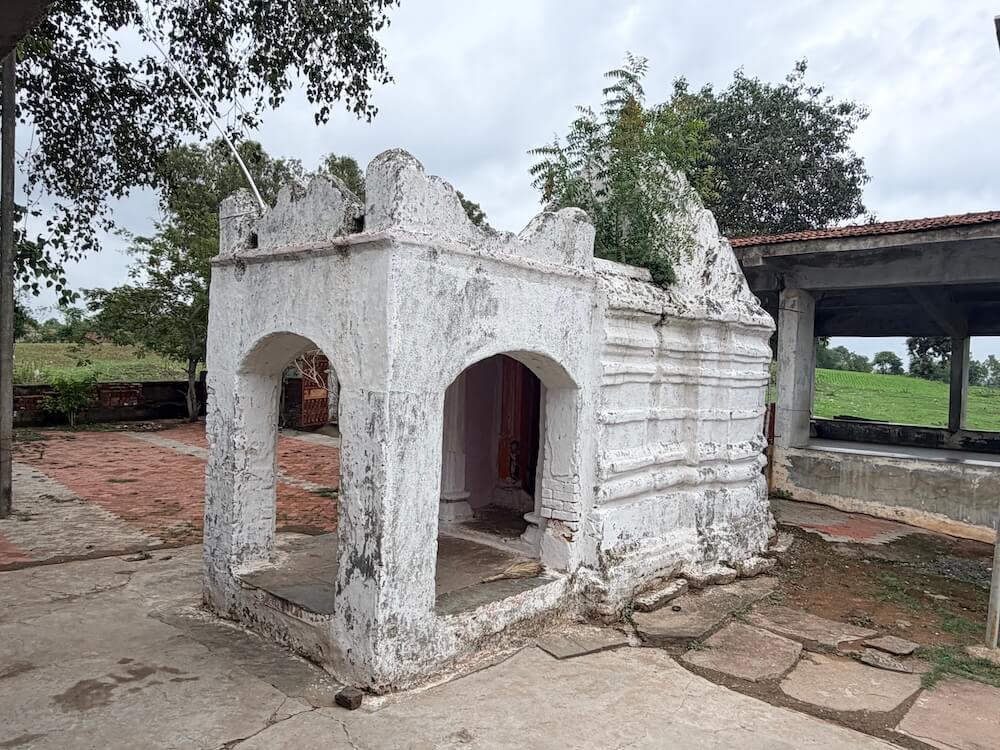
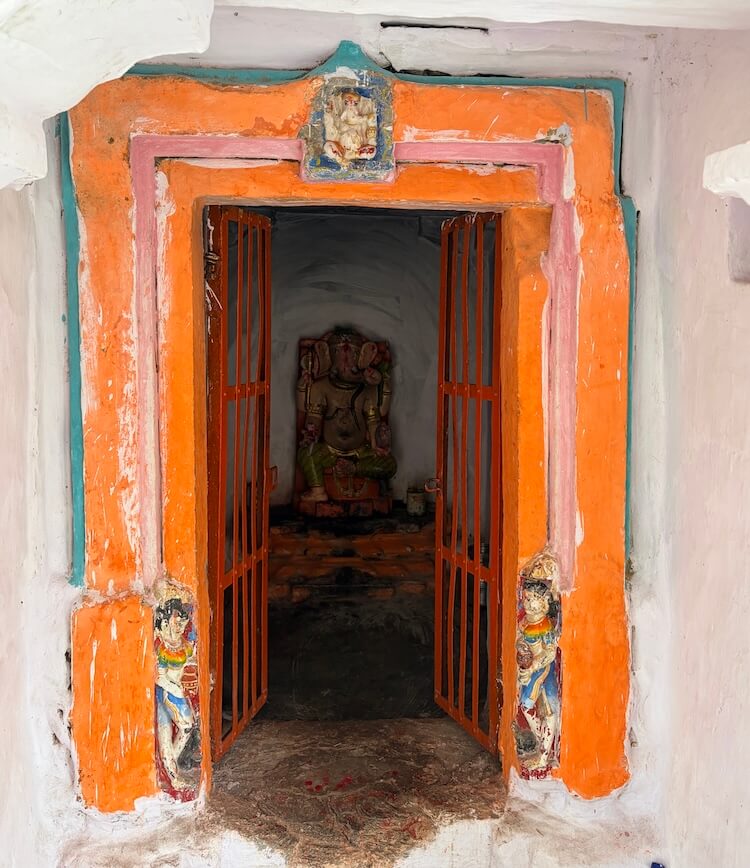
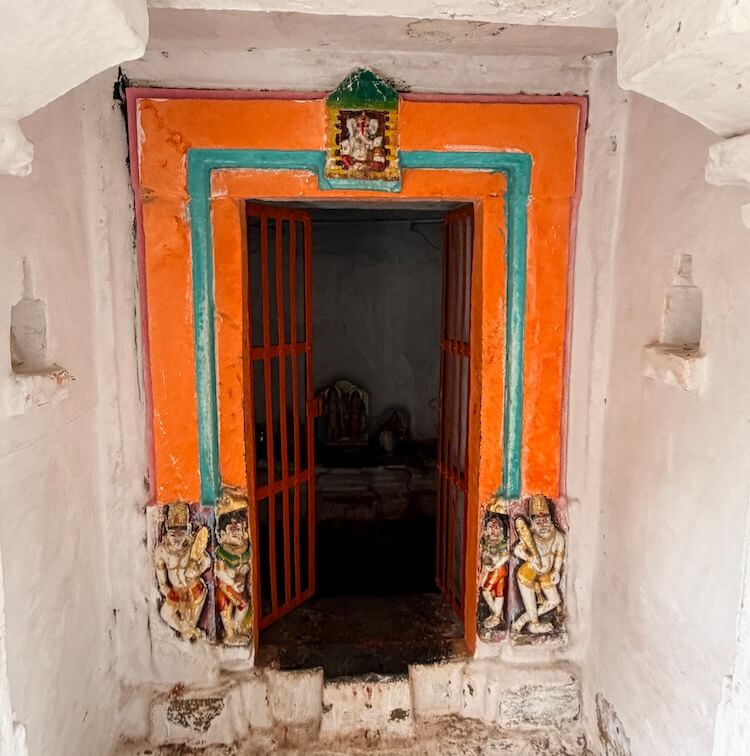
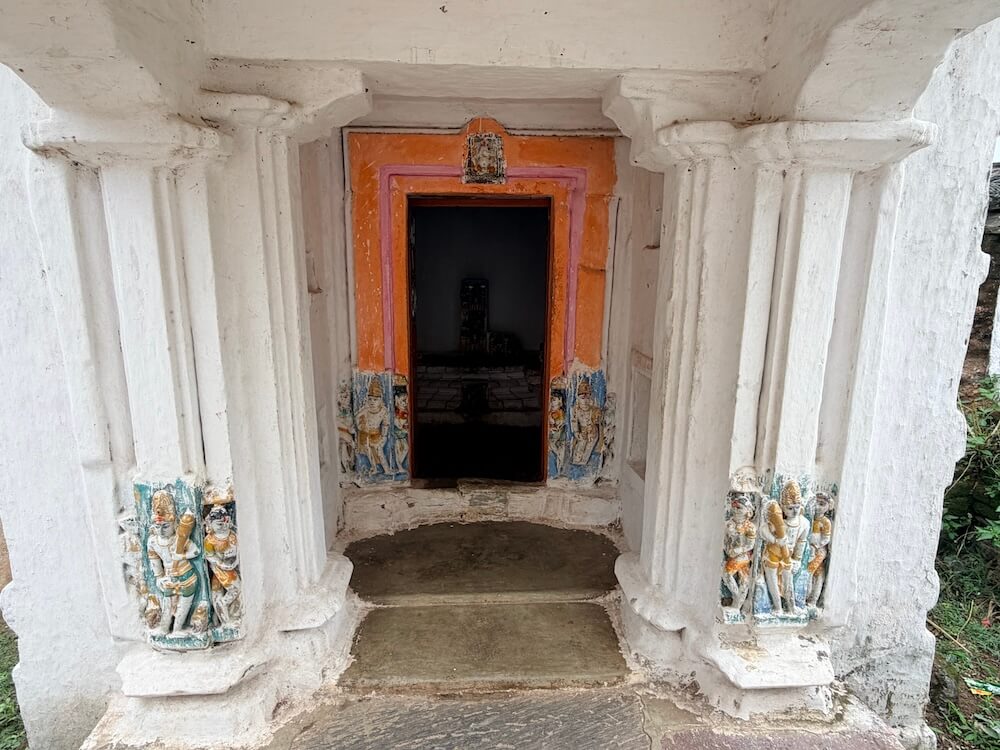
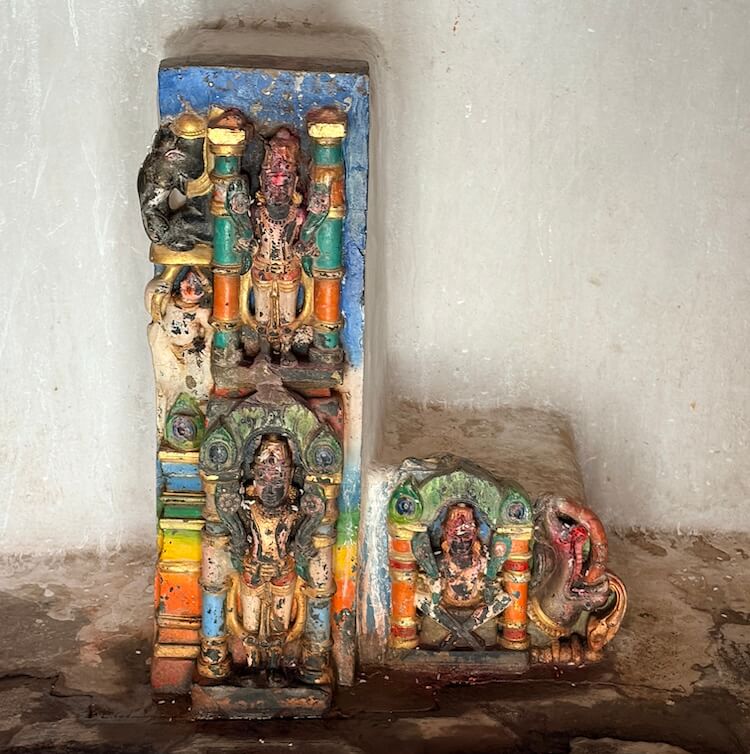
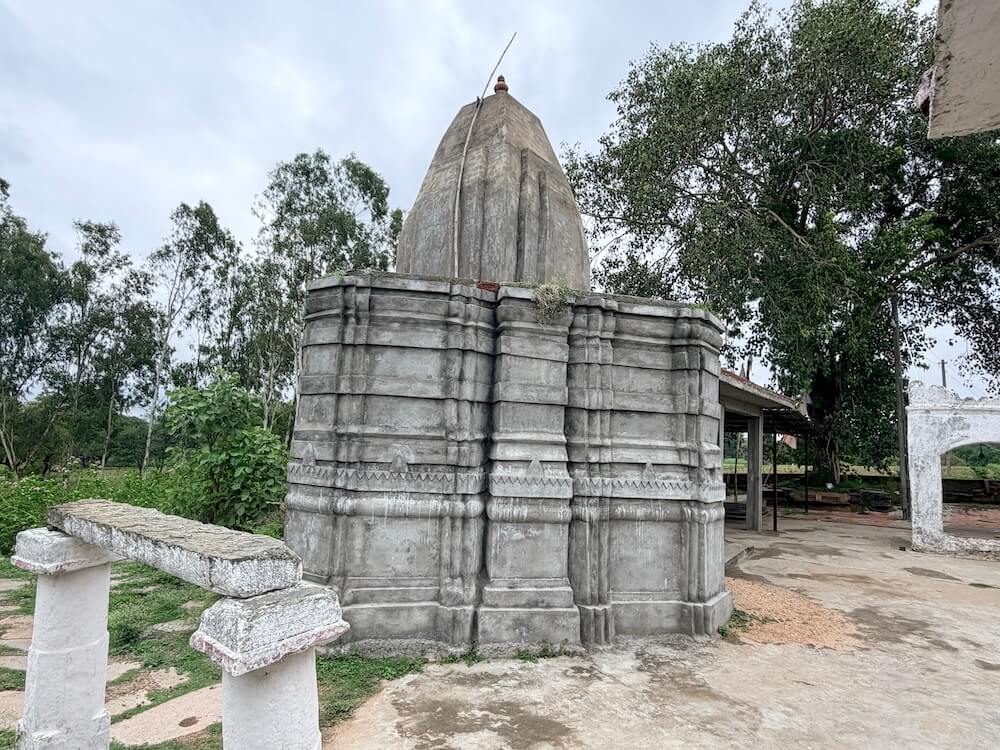
The first temple dedicated to Lord Vishnu, consists of a mandapa, an antarala and a sanctum. The pillars of its semi-open mandapa are crowned with ornamental capitals and brackets supporting an octagonal ceiling. A beautifully carved wheel motif adorns the centre of the ceiling.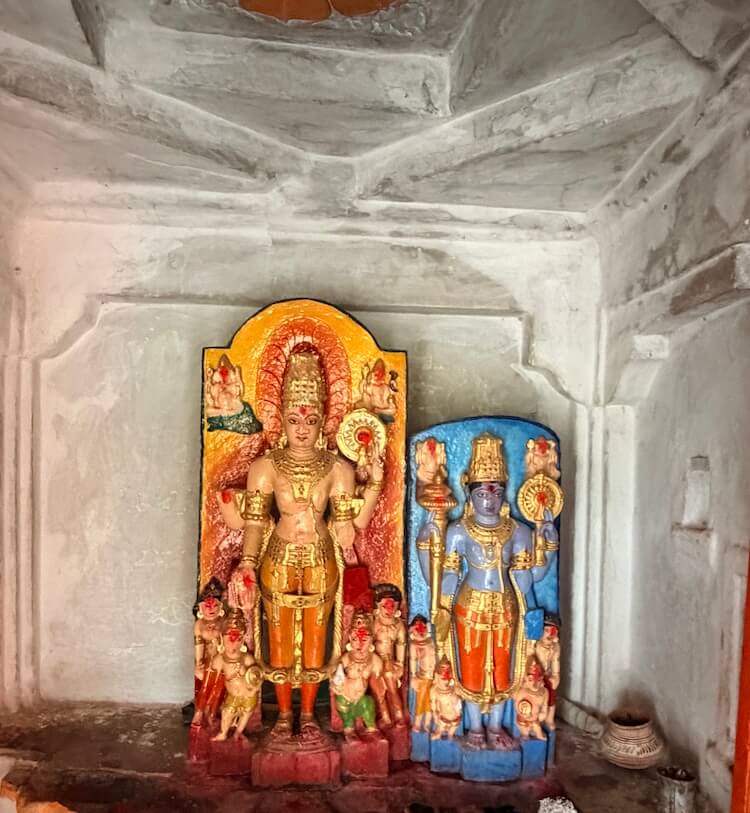 The entrance to the antarala has an elaborately carved doorway featuring sculptures of the door guardians, the river goddesses Ganga and Yamuna and an image of Lord Ganesha on the lintel. A Chandrashila threshold stone marks the entrance to the sanctum, which stands on a higher level than the antarala. Within the sanctum, relief sculptures depicting various forms of Lord Vishnu are installed upon the pedestal. The sanctum also contains deity niches and lamp niches and is surmounted by a square tower.
Beside this stands a second temple, raised upon a platform about three feet high and built with brick walls. It is now in a ruined condition. The remains of its old mandapa platform, antarala and sanctum survive. As the pillars are of stone while the walls are of brick; scholars believe that the brick masonry was added later to support the structure after the original stone temple had partially collapsed. The entrance to the sanctum bears sculptures of the door guardians, Ganga and Yamuna, vertical ornamental bands, an image of Lord Ganesha on the lintel and a Chandrashila at the threshold.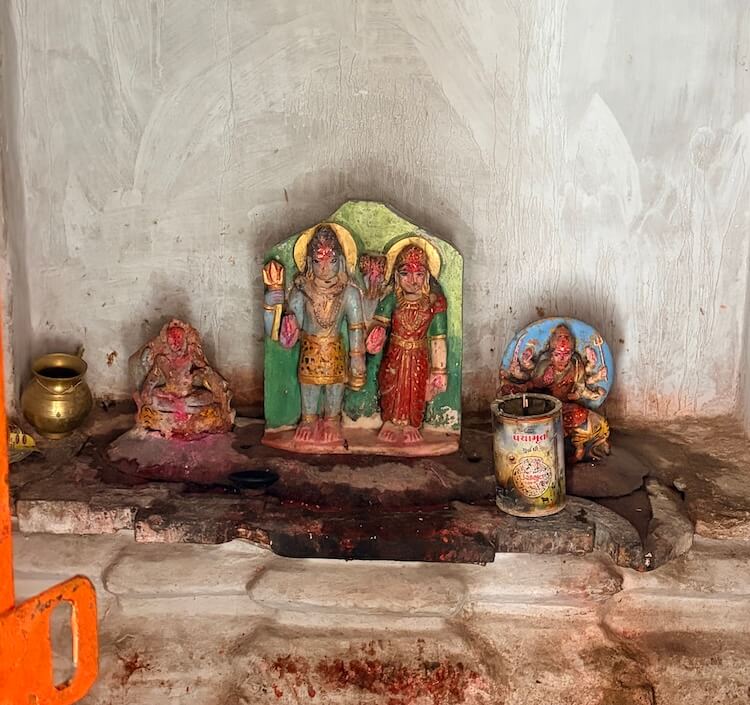 Inside are two four-armed images of Lord Vishnu, whose back-slabs also depict Goddess Lakshmi and other deities.
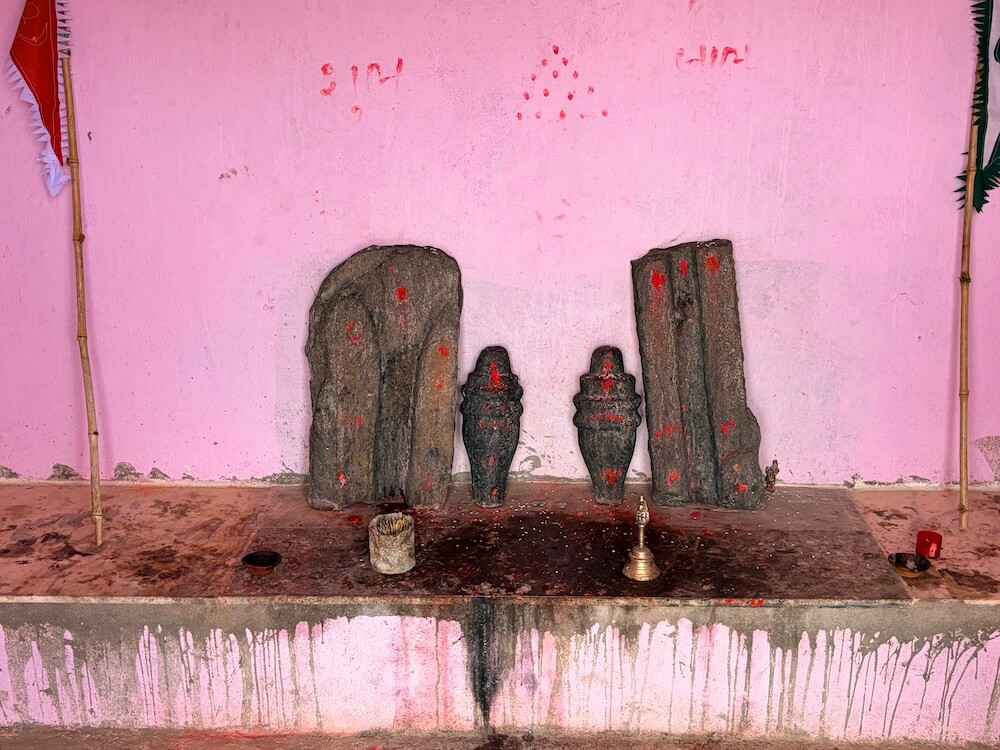
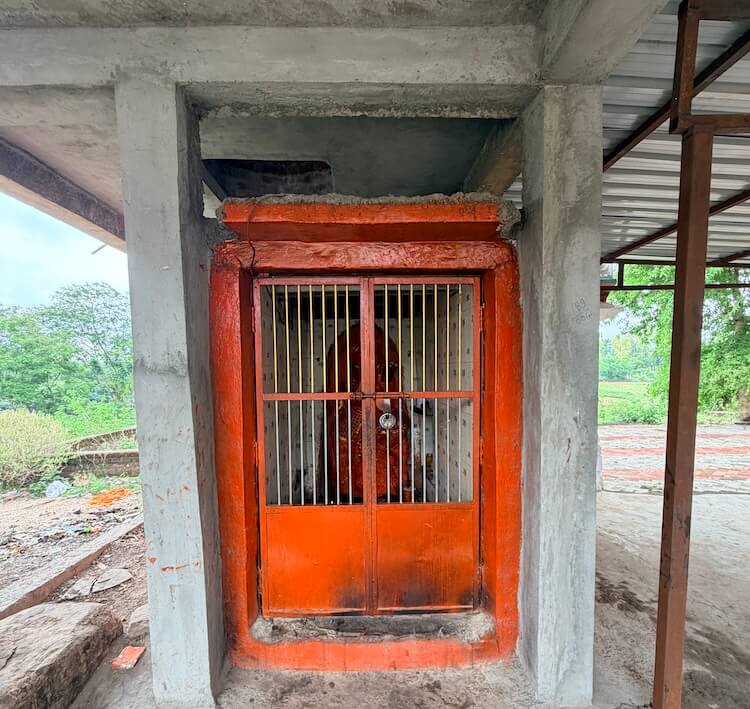
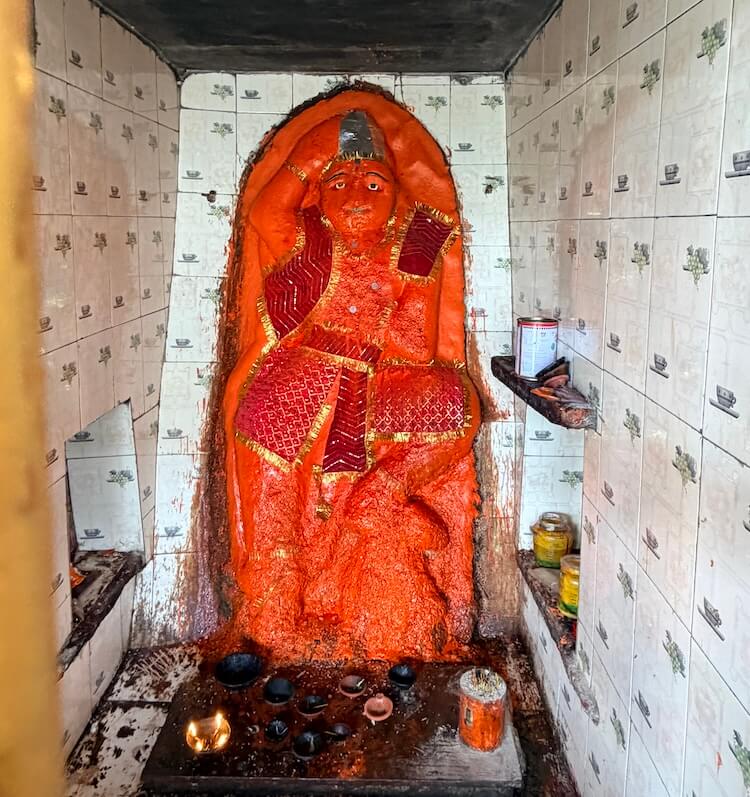
Adjacent to it stands a Mahadev temple built in the Chaulukya architectural style from finely carved stone. It consists of a mandapa, an antarala and a sanctum. Installed upon the pedestal are images of Gauri-Hara, Goddess Ambamata and Lord Shiva in meditation. The temple tower is crowned with an amalaka and kalasha. Next to the Mahadev temple is another shrine containing an image of Lord Ganesha upon a pedestal. Nearby are a Narasimha temple adorned with relief sculptures and a Hanuman temple housing a single six-foot-tall monolithic image of Hanuman.
Most of the temples within the complex follow a similar architectural plan, although several now survive only in ruins. Scattered throughout the precincts are broken pillars, lintels, toranas, beams, hero stones and finely carved sculptural fragments.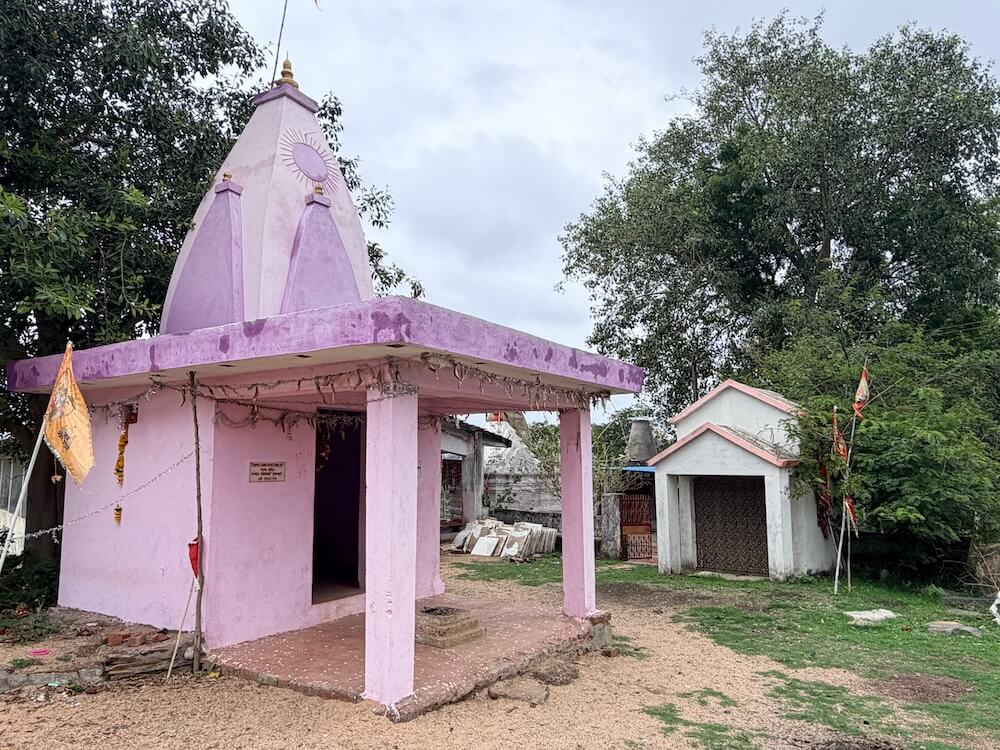 A hero stone bearing the inscription ‘Vikram Samvat 1366’ stands within the complex. A children’s park and a tree garden have been developed beside the temple.
The temple celebrates several religious festivals throughout the year. Krishna Janmashtami, observed during the months of Shravan, is the principal annual festival. On this occasion, special worship, an elaborate adornment of the infant Krishna, devotional singing and community food distribution are organised. Thousands of devotees arrive from Dahod and neighbouring Rajasthan to participate.
During Chaitra Navratra, special religious ceremonies, worship, devotional singing and flag-hoisting are held on Rama Navami.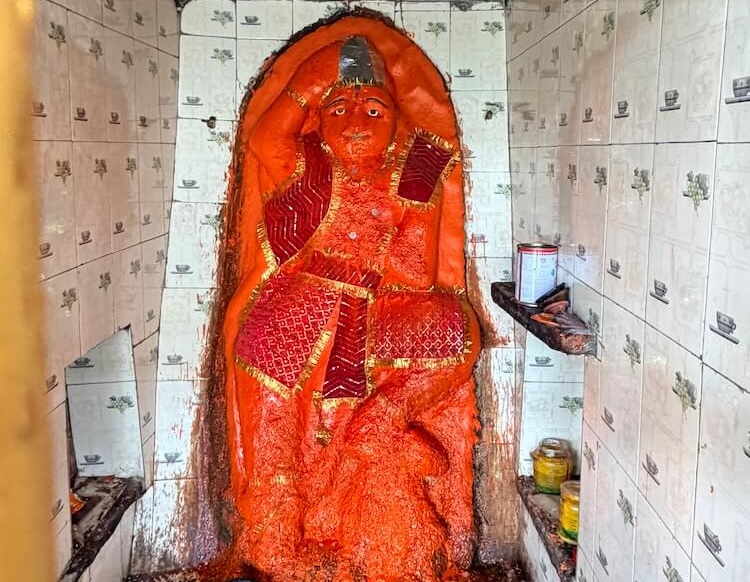 A large fair is organised on Vijayadashami (Dussehra) in the month of Ashwin, showcasing the art, handicrafts and folk traditions of the local Bhil community. On Kartik Purnima, celebrated as Dev Diwali, the temple is illuminated with lamps, followed by a grand evening Maha Aarti.
Hanuman Jayanti, Ganesh Jayanti, the Bhadrapada Ganesh festival, Mahashivaratra, Chaitra and Sharad Navratra, the month of Shravan, Diwali and the Ashadhi and Kartiki Ekadashi festivals are also observed with devotion. During these celebrations, yajnas, Mahabhisheka, devotional singing, kirtans, religious discourses and Mahaprasad are organised. Every year on Ganga Dashami in the month of Jyeshtha, villagers gather on the banks of the Machhan River to perform Ganga worship and undertake a cleanliness drive in the temple area. Devotees may have the darshan of Lord Krishna every day from 7.00 a.m. to 7.00 p.m.
Useful Information :
- Located at 4 km from Jhalod and 37 km from Dahod city
- State Transport (ST) bus services are available from Jhalod
- Private vehicles can reach the temple
- Accommodation and breakfast facilities are available in Jhalod town
- Contact: Sunilbhai Sangada, Mo. 9638070395, 9726170395
पंचकृष्ण मंदिर
थेरका, ताल. झालोद, जिला. दाहोद
मंदिरे
Temples
मंदिर
મંદિરો
கோவில்கள்
దేవాలయాలు
ക്ഷേത്രങ്ങൾ
ದೇವಾಲಯಗಳು
মন্দিরসমূহ
ਮੰਦਿਰ
-
घुघरदेव महादेव मंदिर चकल्या, ता. झालोद, जि. दाहोद
अधिक माहितीGhughardev Mahadev Temple Chakaliya, Tal. Jhalod, Dist. Dahod
View Detailsघुघरदेव महादेव मंदिर चकलिया, ताल. झालोद, जिला. दाहोद
विवरण देखेंGhughardev Mahadev Temple Chakaliya, Tal. Jhalod, Dist. Dahod
વિગત જુઓGhughardev Mahadev Temple Chakaliya, Tal. Jhalod, Dist. Dahod
விவரங்களைக் காண்கGhughardev Mahadev Temple Chakaliya, Tal. Jhalod, Dist. Dahod
వివరాలను చూడండిGhughardev Mahadev Temple Chakaliya, Tal. Jhalod, Dist. Dahod
വിശദാംശങ്ങൾ കാണുകGhughardev Mahadev Temple Chakaliya, Tal. Jhalod, Dist. Dahod
ವಿವರಗಳನ್ನು ವೀಕ್ಷಿಸಿGhughardev Mahadev Temple Chakaliya, Tal. Jhalod, Dist. Dahod
বিস্তারিত দেখুনGhughardev Mahadev Temple Chakaliya, Tal. Jhalod, Dist. Dahod
ਵੇਰਵੇ ਦੇਖੋ -
देवझरी महादेव मंदिर जळकोट, ता./जि. दाहोद
अधिक माहितीDevjhari Mahadev Temple Jekot, Tal./Dist. Dahod
View Detailsदेवझरी महादेव मंदिर जेकोट, ताल./जिला. दाहोद
विवरण देखेंDevjhari Mahadev Temple Jekot, Tal./Dist. Dahod
વિગત જુઓDevjhari Mahadev Temple Jekot, Tal./Dist. Dahod
விவரங்களைக் காண்கDevjhari Mahadev Temple Jekot, Tal./Dist. Dahod
వివరాలను చూడండిDevjhari Mahadev Temple Jekot, Tal./Dist. Dahod
വിശദാംശങ്ങൾ കാണുകDevjhari Mahadev Temple Jekot, Tal./Dist. Dahod
ವಿವರಗಳನ್ನು ವೀಕ್ಷಿಸಿDevjhari Mahadev Temple Jekot, Tal./Dist. Dahod
বিস্তারিত দেখুনDevjhari Mahadev Temple Jekot, Tal./Dist. Dahod
ਵੇਰਵੇ ਦੇਖੋ -
शिव गंगाझरी धाम नानी खरज, ता./जि. दाहोद
अधिक माहितीShiv Gangazhari Dham Nani Kharaj, Tal./Dist. Dahod
View Detailsशिव गंगाझारी धाम नानी खराज, ताल./जिला. दाहोद
विवरण देखेंShiv Gangazhari Dham Nani Kharaj, Tal./Dist. Dahod
વિગત જુઓShiv Gangazhari Dham Nani Kharaj, Tal./Dist. Dahod
விவரங்களைக் காண்கShiv Gangazhari Dham Nani Kharaj, Tal./Dist. Dahod
వివరాలను చూడండిShiv Gangazhari Dham Nani Kharaj, Tal./Dist. Dahod
വിശദാംശങ്ങൾ കാണുകShiv Gangazhari Dham Nani Kharaj, Tal./Dist. Dahod
ವಿವರಗಳನ್ನು ವೀಕ್ಷಿಸಿShiv Gangazhari Dham Nani Kharaj, Tal./Dist. Dahod
বিস্তারিত দেখুনShiv Gangazhari Dham Nani Kharaj, Tal./Dist. Dahod
ਵੇਰਵੇ ਦੇਖੋ