
देवझरी महादेव मंदिर
जळकोट, ता./जि. दाहोद
Devjhari Mahadev Temple
Jekot, Tal./Dist. Dahod
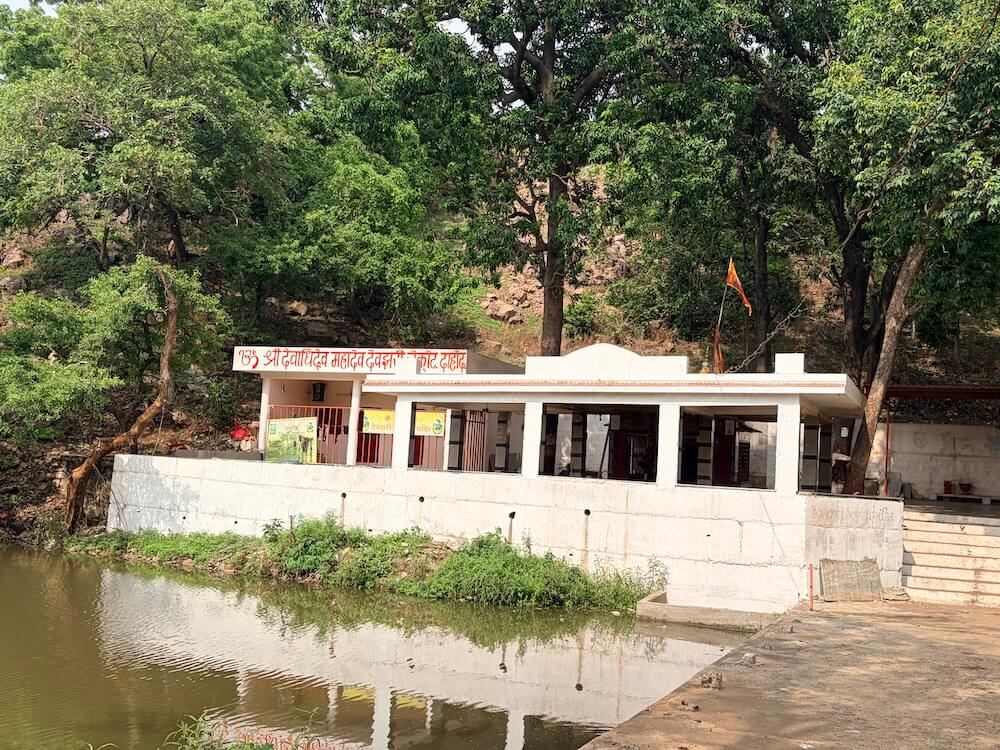
 Situated within the limits of Jekot village in Dahod district, on the eastern frontier of Gujarat, stands the ancient temple of Devjhari Mahadev. In the local tribal dialect, the word ‘Jhari’ means a small natural spring. This sacred spring has given both the village and the temple their name, Devjhari. The shrine forms part of India’s ancient cultural tradition of establishing Shiva temples beside rivers, lakes and perennial water sources. Surrounded by dense forests, the temple is blessed with a natural spring and a sacred water tank. According to local belief, Mahadev enshrined here is a living and awakened deity.
Across India, numerous temples dedicated to Lord Shiva are found amidst dense forests, along riverbanks and beside natural water reservoirs. 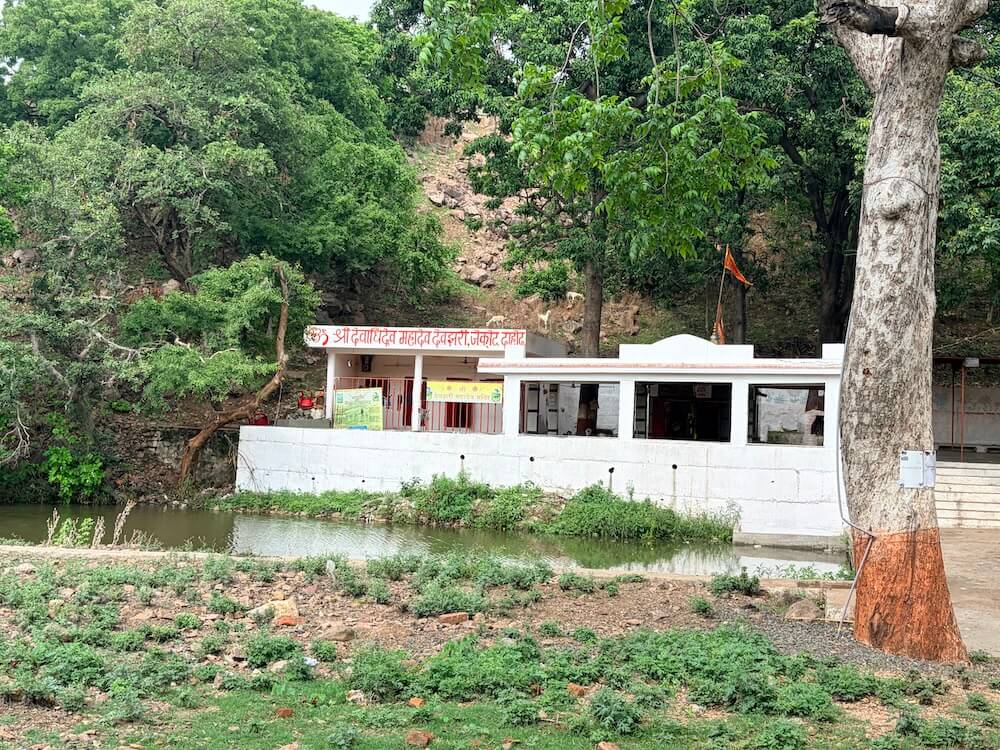 According to Puranic tradition, after consuming the deadly Halahala poison that emerged during the churning of the cosmic ocean (Samudra Manthana), Shiva’s body was overcome with an intense burning sensation. According to later Shaiva tradition, the practice of continuous Jalabhisheka symbolises the cooling of Shiva after He consumed the Halahala poison. This, in turn, gave rise to the tradition of establishing Shiva temples beside rivers and natural water bodies, where abundant supply of water was available. Since Lord Shiva is also revered as the bearer of the River Ganga, the association between water and Shiva occupies a central place in Hindu sacred tradition.
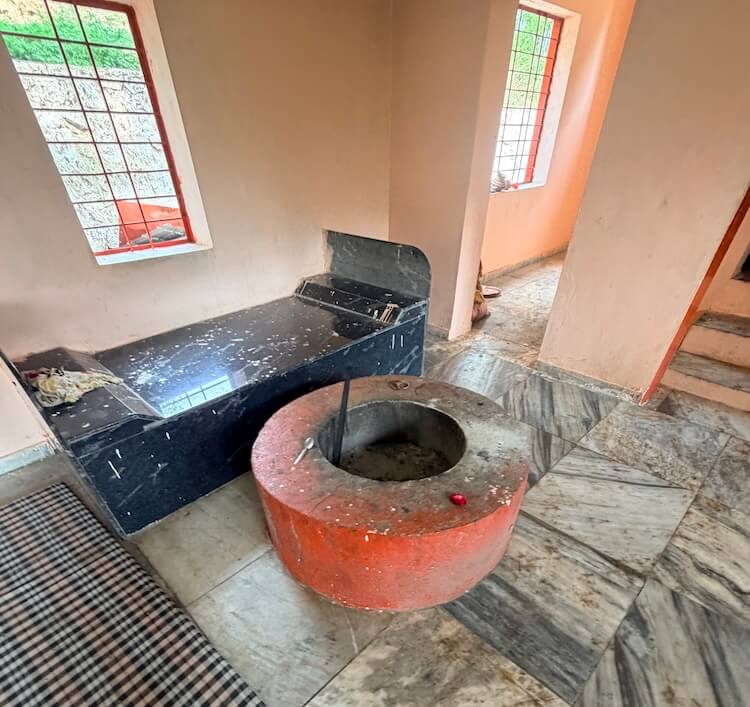
Although the Devjhari Mahadev Temple is believed to be several centuries old, local tradition associates its origins with the Mahabharata period. 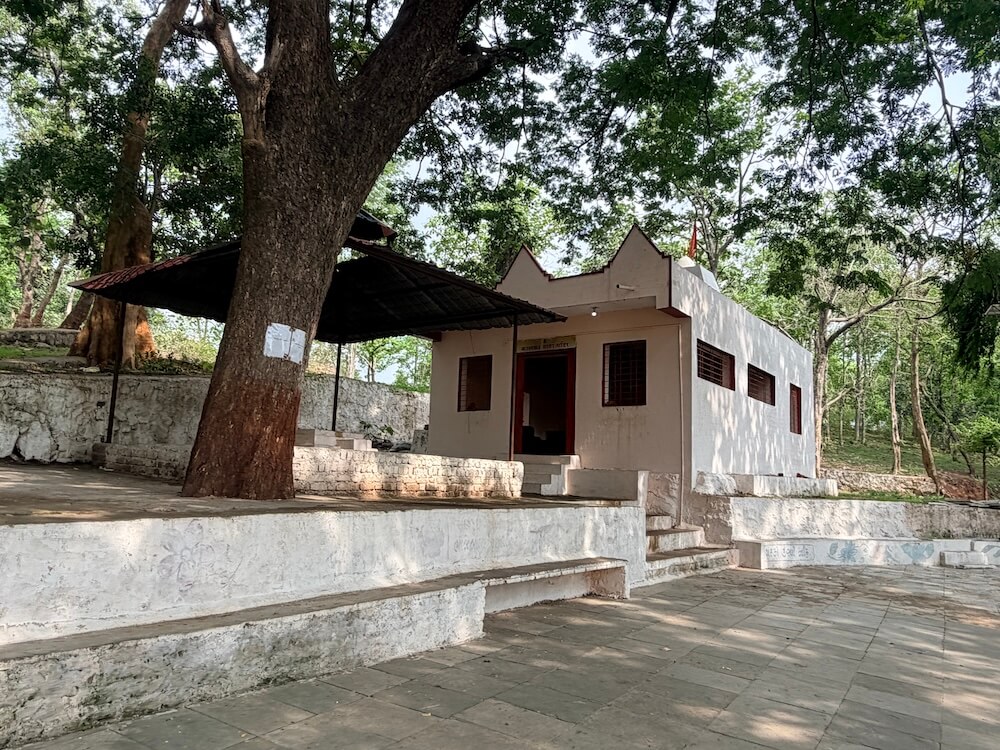 Legend has it that dense forests once blanketed this region and the Pandavas sought refuge there during their exile. As devoted worshippers of Lord Shiva, they are believed never to have eaten a meal without first offering Jalabhisheka to the Shivalinga. For this reason, a sacred Shivalinga was established here for their daily worship. It is further believed that Bhima created a water reservoir to provide water for the ritual ablutions of the deity. Consequently, this sacred tank came to be known as Bhim Kund. Local belief holds that it retains water throughout the year.
Another well-known local legend connected with the temple dates to the British period. During British rule, the Bombay, Baroda and Central India (BB&CI) Railway undertook the construction of the railway line linking Godhra, Dahod and Ratlam. 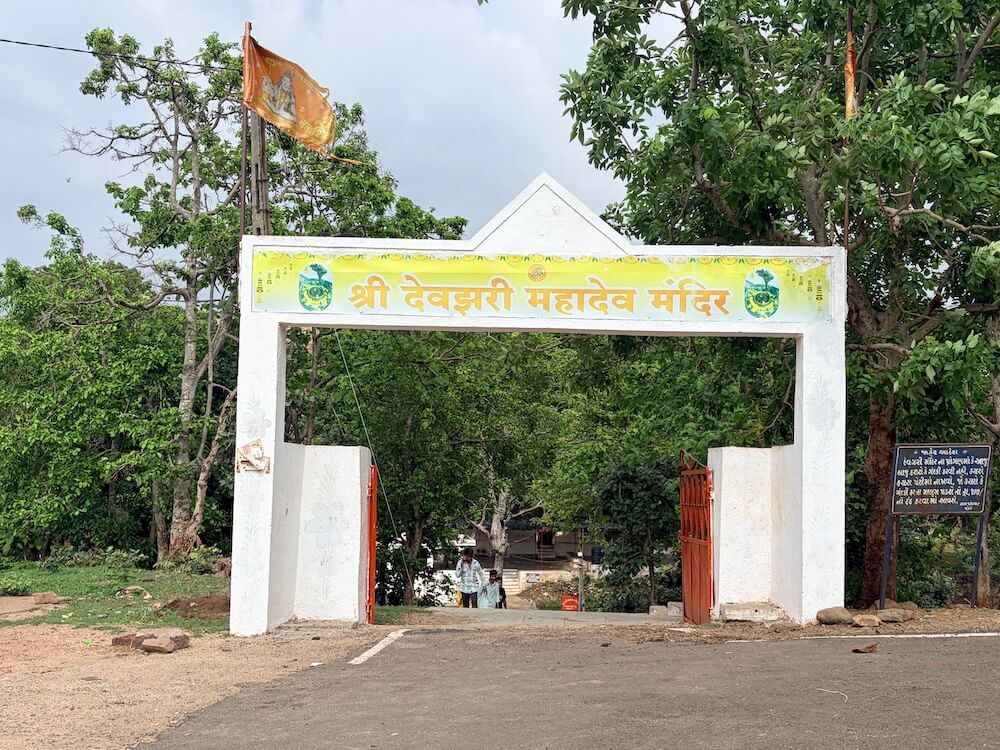 For that a bridge was being built across a small river near the temple. According to local tradition, the construction repeatedly collapsed. Faced with these repeated failures, the engineers prayed to Lord Mahadev, vowing that they would restore the ancient temple, if the bridge could be completed successfully. Thereafter, the bridge was completed without further difficulty. Though there is no official record, it is said that in fulfilment of their vow, the Railway officials are said to have undertaken the renovation of the Devjhari Mahadev Temple.
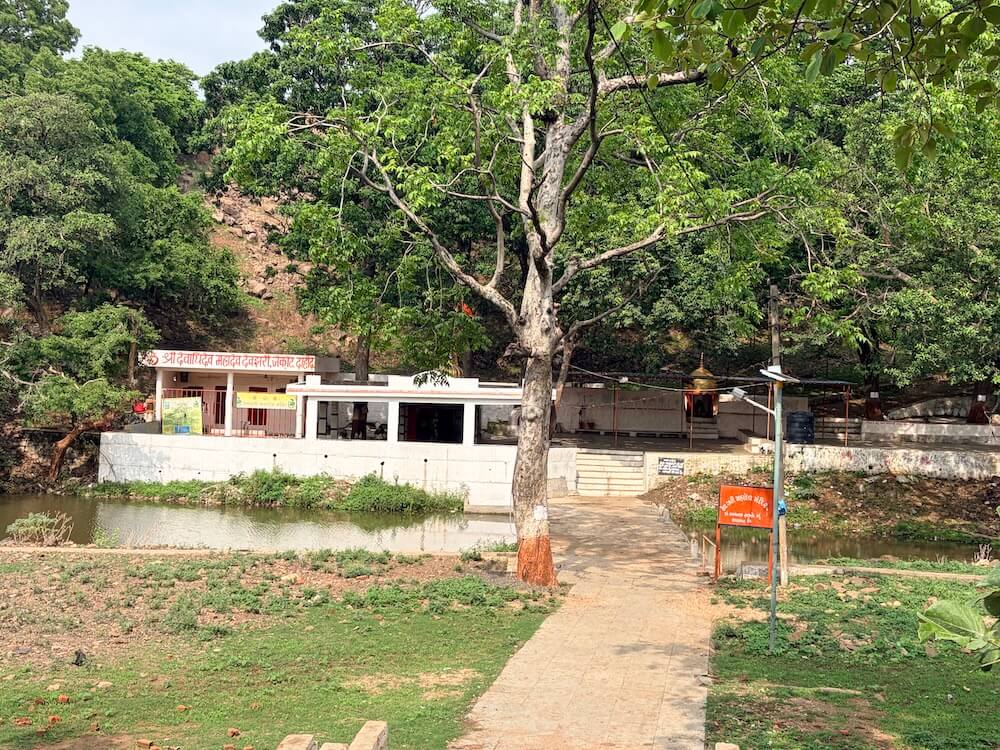
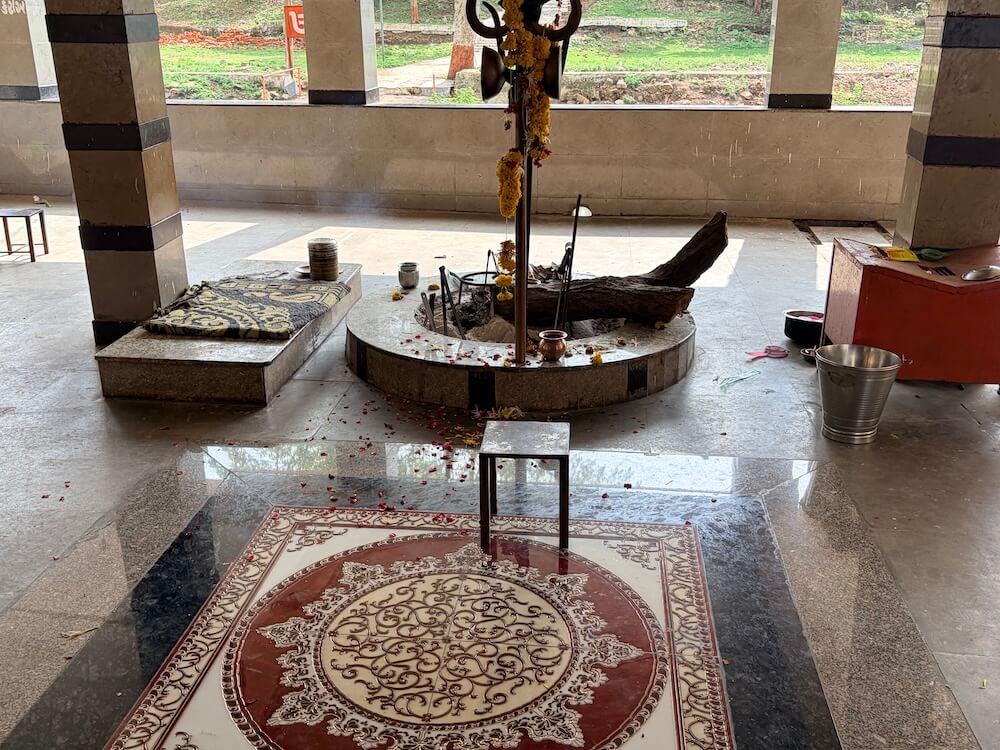
The temple stands on the bank of a small river, away from human habitation, amidst a tranquil natural setting. The approach to the shrine begins at a welcoming entrance arch, from where a flight of steps leads down to the temple complex. 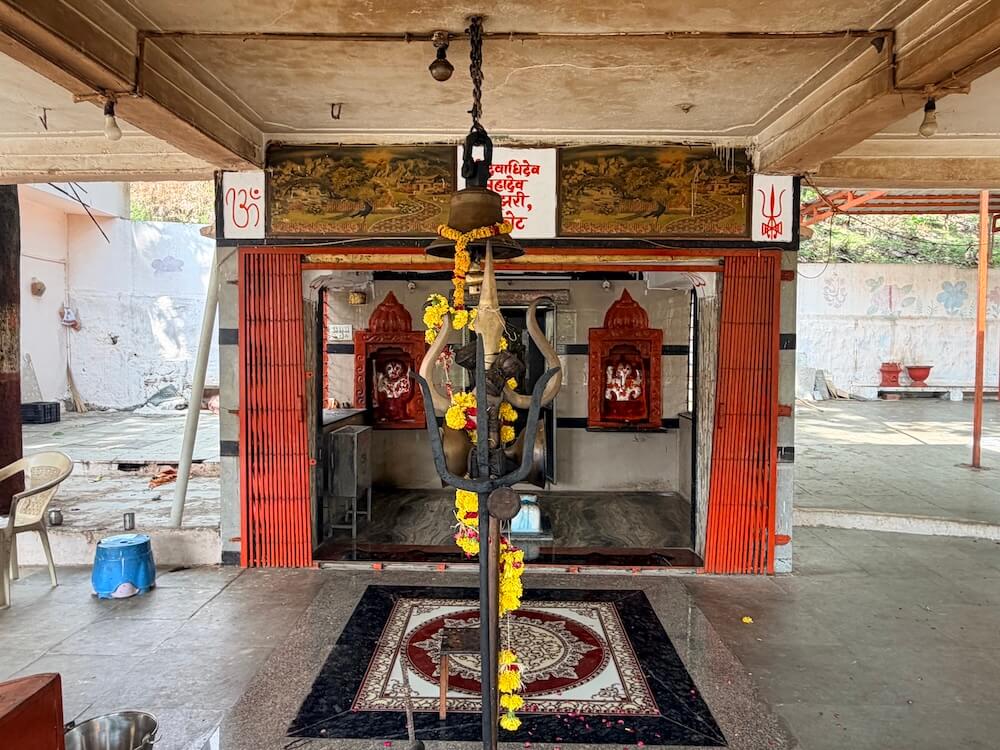 The temple courtyard is situated on a level higher than the pathway. In the courtyard, directly in front of the temple, is a Yajna Kunda (sacrificial fire altar).
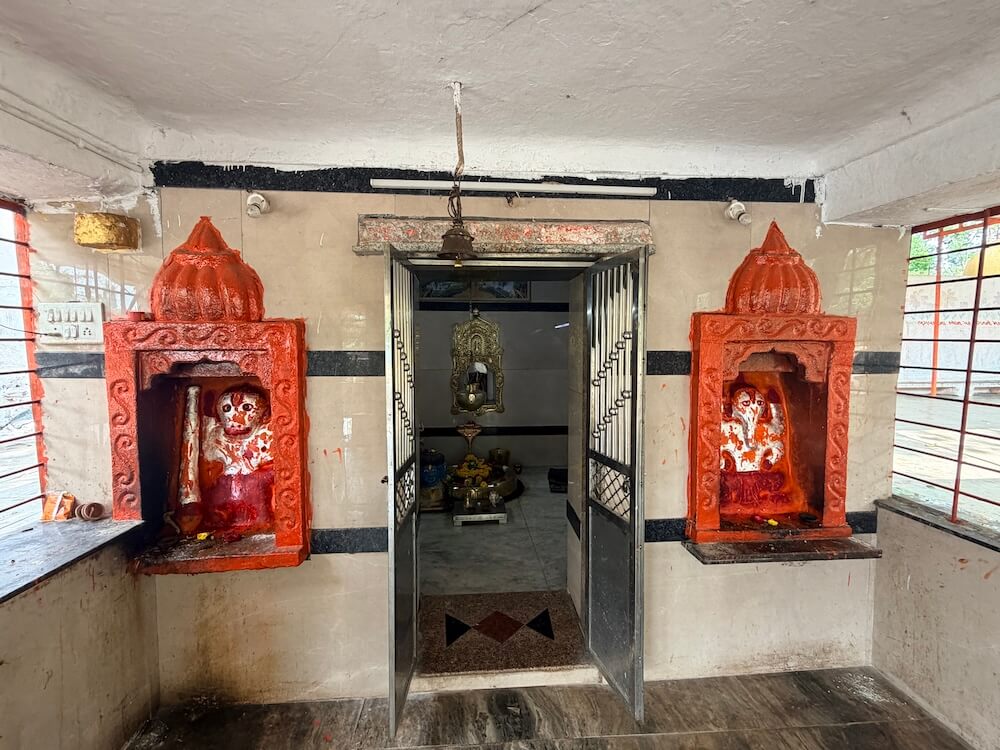
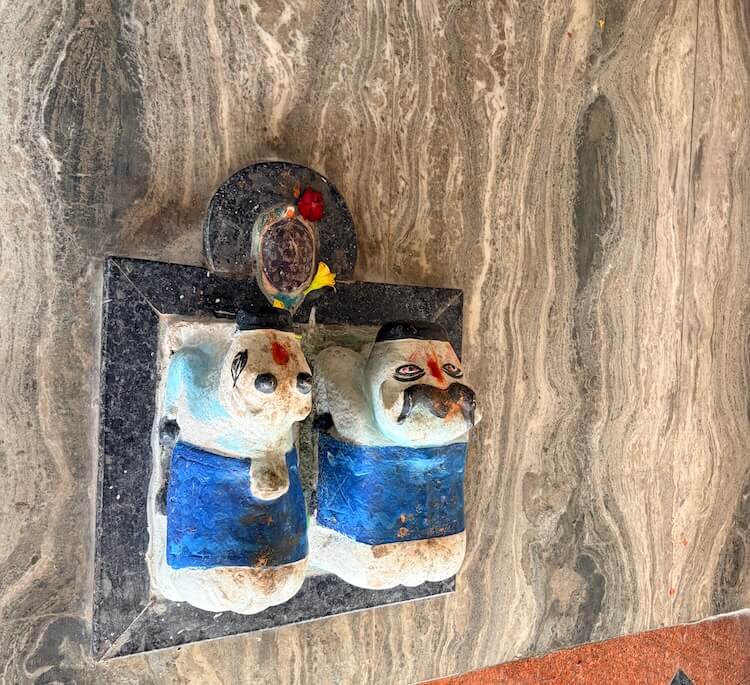
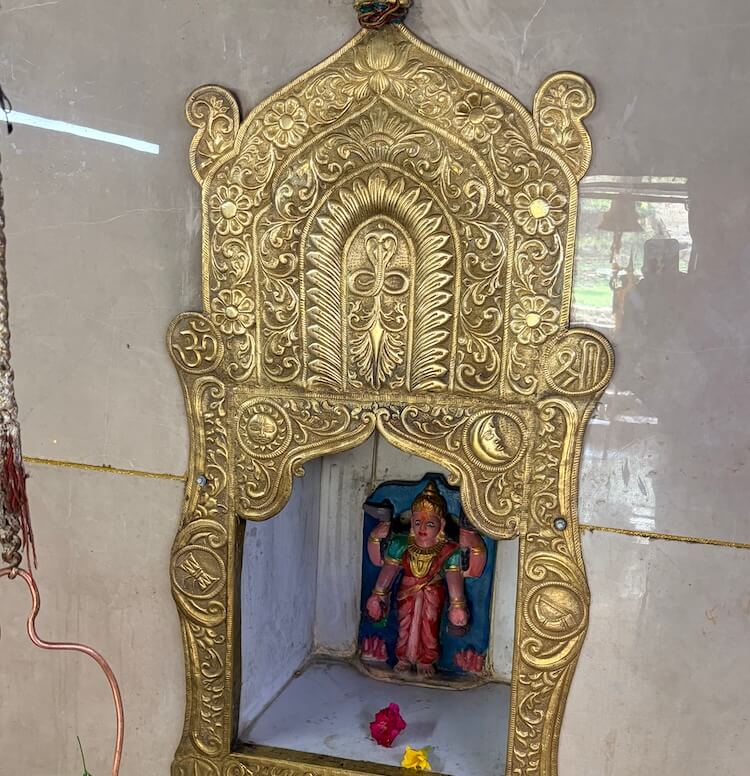
The temple comprises an assembly hall (Sabha Mandapa), a vestibule (Antarala) and the sanctum (Garbhagriha). In the vestibule, which lies beyond the semi-open assembly hall, two images have been installed beside Nandi, directly facing the entrance to the sanctum. Recessed niches are provided in the front walls on either side of the sanctum doorway. These niches enshrine idols of Lord Ganesha and Lord Hanuman.
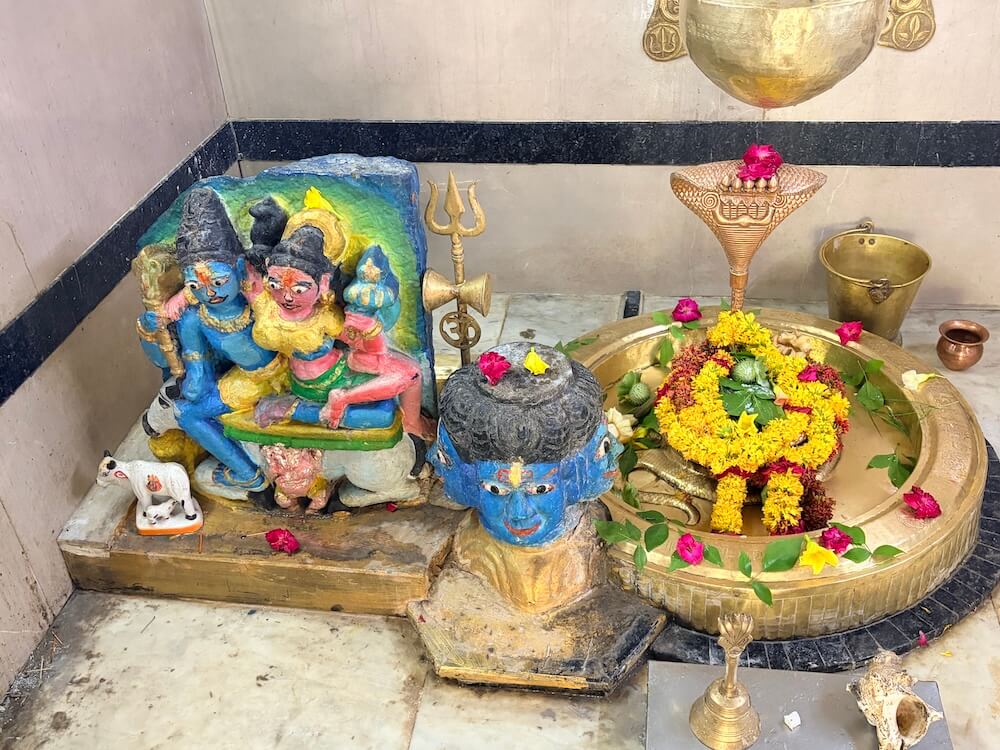
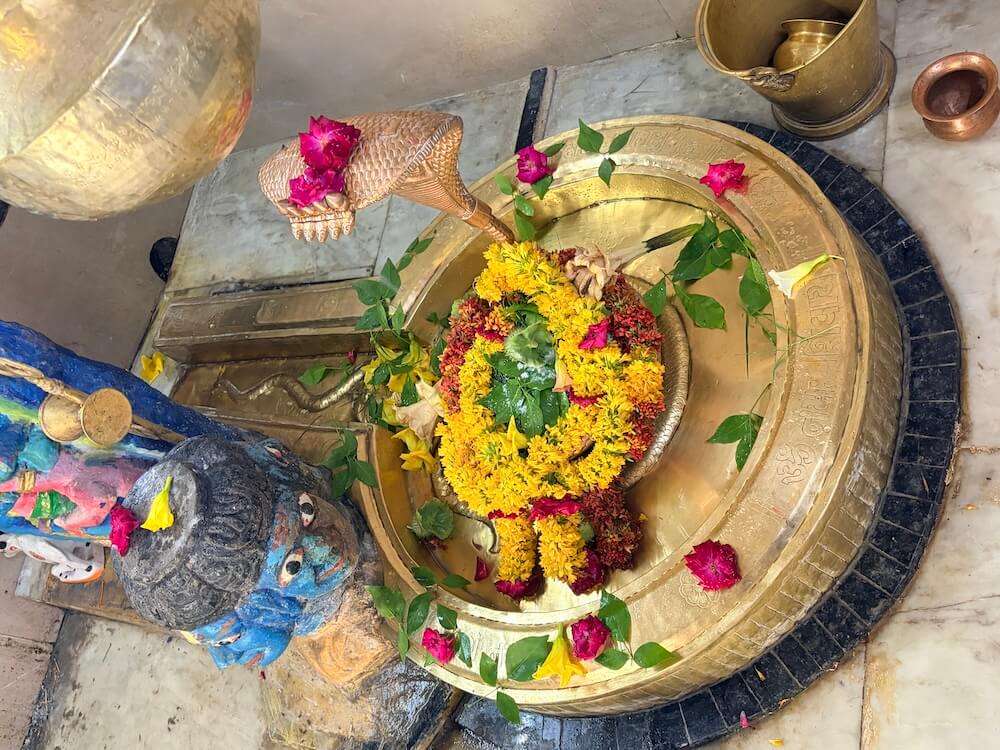
At the centre of the sanctum, set at floor level, is the sacred Shivalinga. Above it rises a copper serpent spreading its hood protectively over the deity. A copper Abhisheka Patra is suspended from the ceiling to ensure the continuous ritual offering of water upon the Linga. Beside it stands a brass Trishula. 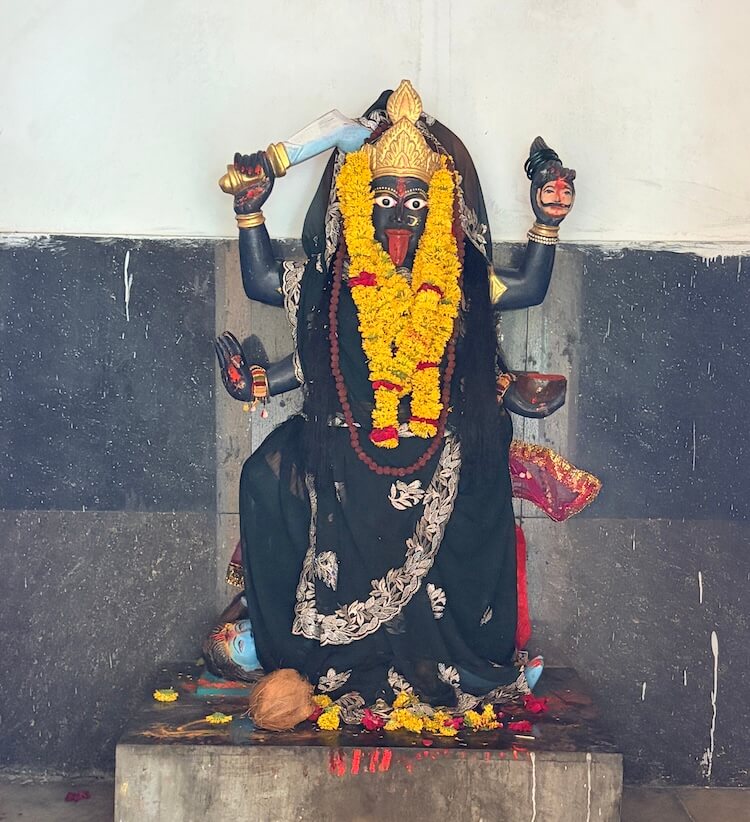 Also preserved within the sanctum is a ‘Gauri-Hara’ sculpture depicting Shiva and Parvati, together with a rare Chaturmukha Shivalinga bearing four faces. A niche in the rear wall of the sanctum houses an image of Goddess Parvati. Above the sanctum rises a domed Shikhara.
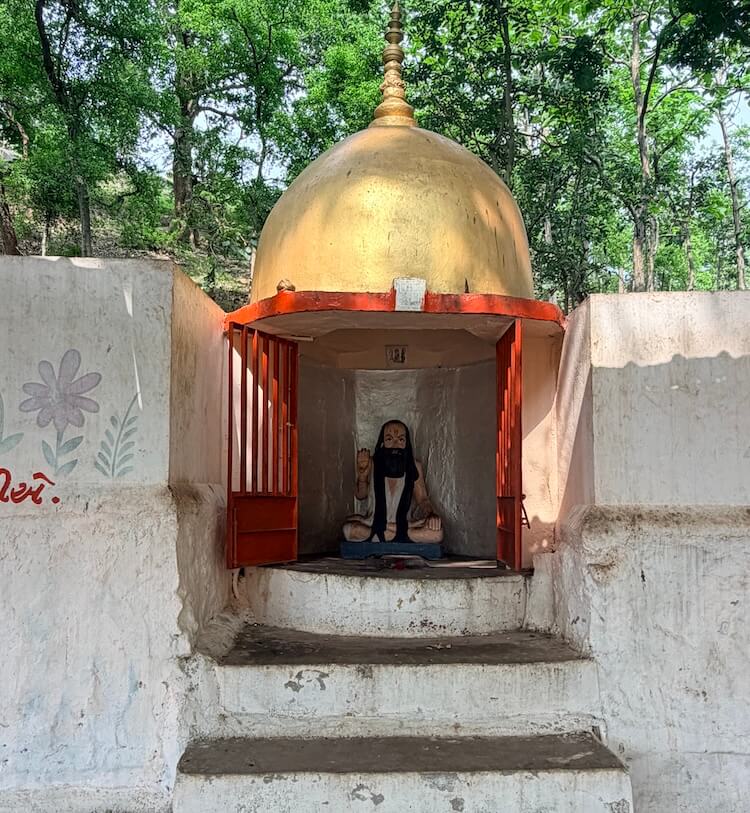
Near the Mahadev Temple stands the ancient shrine of Goddess Mahakali. This temple consists of an assembly hall and a sanctum. Upon the Vajrapitha within the sanctum is installed the idol of Mahakali Mata. The sanctum is crowned by a conical Shikhara. From the temple courtyard, a flight of steps descends to the adjoining river. A small check dam has been constructed across the stream to create a permanent water reservoir. Near the temple, a rock-cut tank has been carved into a large boulder. According to local tradition, Bhima himself created this tank.
Devotees may have darshan here of Lord Mahadev every day from 6.00 a.m. until 8.00 p.m. The temple witnesses particularly large gatherings on Maha Shivaratri and on every Monday during the holy month of Shravan. Devotees perform Abhisheka of the Shivalinga using water drawn from Bhim Kund. During these sacred occasions, the temple organises Laghu Rudra, Maha Abhisheka, devotional singing (Bhajans) and Kirtans. Khichdi Prasad is distributed among all devotees visiting the shrine.
Other festivals celebrated here with great devotion include Nag Panchami, Shri Krishna Janmotsav, Chaitra Navratri, Sharad Navratri, Shravani Purnima, Dussehra and Diwali. Large numbers of devotees also visit the temple on Mondays, Pradosha, Ekadashi, Purnima and Amavasya for worship and darshan.
Useful Information :
- Approximately 19 km from Dahod.
- State Transport (ST) bus services are available from Dahod city.
- Private vehicles can reach the temple parking area.
- Accommodation and breakfast facilities are available nearby.
देवझरी महादेव मंदिर
जेकोट, ताल./जिला. दाहोद
मंदिरे
Temples
मंदिर
મંદિરો
கோவில்கள்
దేవాలయాలు
ക്ഷേത്രങ്ങൾ
ದೇವಾಲಯಗಳು
মন্দিরসমূহ
ਮੰਦਿਰ
-
पंचकृष्ण मंदिर थेरका, ता. झालोद, जि. दाहोद
अधिक माहितीPanchakrishna Temple Therka, Tal. Jhalod, Dist. Dahod
View Detailsपंचकृष्ण मंदिर थेरका, ताल. झालोद, जिला. दाहोद
विवरण देखेंPanchakrishna Temple Therka, Tal. Jhalod, Dist. Dahod
વિગત જુઓPanchakrishna Temple Therka, Tal. Jhalod, Dist. Dahod
விவரங்களைக் காண்கPanchakrishna Temple Therka, Tal. Jhalod, Dist. Dahod
వివరాలను చూడండిPanchakrishna Temple Therka, Tal. Jhalod, Dist. Dahod
വിശദാംശങ്ങൾ കാണുകPanchakrishna Temple Therka, Tal. Jhalod, Dist. Dahod
ವಿವರಗಳನ್ನು ವೀಕ್ಷಿಸಿPanchakrishna Temple Therka, Tal. Jhalod, Dist. Dahod
বিস্তারিত দেখুনPanchakrishna Temple Therka, Tal. Jhalod, Dist. Dahod
ਵੇਰਵੇ ਦੇਖੋ -
घुघरदेव महादेव मंदिर चकल्या, ता. झालोद, जि. दाहोद
अधिक माहितीGhughardev Mahadev Temple Chakaliya, Tal. Jhalod, Dist. Dahod
View Detailsघुघरदेव महादेव मंदिर चकलिया, ताल. झालोद, जिला. दाहोद
विवरण देखेंGhughardev Mahadev Temple Chakaliya, Tal. Jhalod, Dist. Dahod
વિગત જુઓGhughardev Mahadev Temple Chakaliya, Tal. Jhalod, Dist. Dahod
விவரங்களைக் காண்கGhughardev Mahadev Temple Chakaliya, Tal. Jhalod, Dist. Dahod
వివరాలను చూడండిGhughardev Mahadev Temple Chakaliya, Tal. Jhalod, Dist. Dahod
വിശദാംശങ്ങൾ കാണുകGhughardev Mahadev Temple Chakaliya, Tal. Jhalod, Dist. Dahod
ವಿವರಗಳನ್ನು ವೀಕ್ಷಿಸಿGhughardev Mahadev Temple Chakaliya, Tal. Jhalod, Dist. Dahod
বিস্তারিত দেখুনGhughardev Mahadev Temple Chakaliya, Tal. Jhalod, Dist. Dahod
ਵੇਰਵੇ ਦੇਖੋ -
शिव गंगाझरी धाम नानी खरज, ता./जि. दाहोद
अधिक माहितीShiv Gangazhari Dham Nani Kharaj, Tal./Dist. Dahod
View Detailsशिव गंगाझारी धाम नानी खराज, ताल./जिला. दाहोद
विवरण देखेंShiv Gangazhari Dham Nani Kharaj, Tal./Dist. Dahod
વિગત જુઓShiv Gangazhari Dham Nani Kharaj, Tal./Dist. Dahod
விவரங்களைக் காண்கShiv Gangazhari Dham Nani Kharaj, Tal./Dist. Dahod
వివరాలను చూడండిShiv Gangazhari Dham Nani Kharaj, Tal./Dist. Dahod
വിശദാംശങ്ങൾ കാണുകShiv Gangazhari Dham Nani Kharaj, Tal./Dist. Dahod
ವಿವರಗಳನ್ನು ವೀಕ್ಷಿಸಿShiv Gangazhari Dham Nani Kharaj, Tal./Dist. Dahod
বিস্তারিত দেখুনShiv Gangazhari Dham Nani Kharaj, Tal./Dist. Dahod
ਵੇਰਵੇ ਦੇਖੋ