
शिव गंगाझरी धाम
नानी खरज, ता./जि. दाहोद
Shiv Gangazhari Dham
Nani Kharaj, Tal./Dist. Dahod
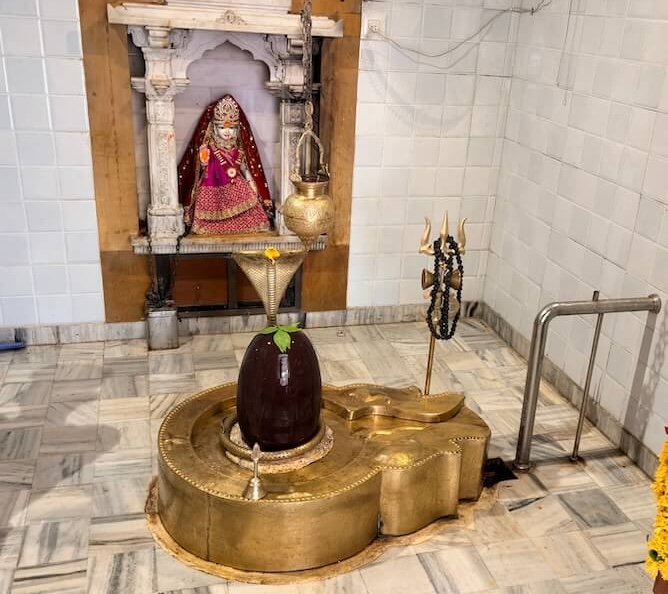 The Shiv Gangazhari Dham is gracefully situated atop a hill near the village of Nani Kharaj in the Dahod district. In local dialects, a natural water source bursting forth from the earth is termed a ‘zhari’ or ‘gangazhari’. Sites blessed with such natural springs are held in high religious esteem. Enshrining Lord Mahadev at these spots remains an ancient tradition. Following this customary practice, the temple, nestled in the tranquil environment of the hillside, has become a principal seat of faith for local devotees. The sacred Shiva Pinda here is believed to be self-manifested (‘swayambhu’).
According to the popular legend surrounding the shrine, this region was a dense forest in antiquity. While exiled after their defeat in the game of dice, the Pandavas spent some time wandering through this forest. As devout followers of Shiva, the Pandavas consecrated a Shivalinga at this spot.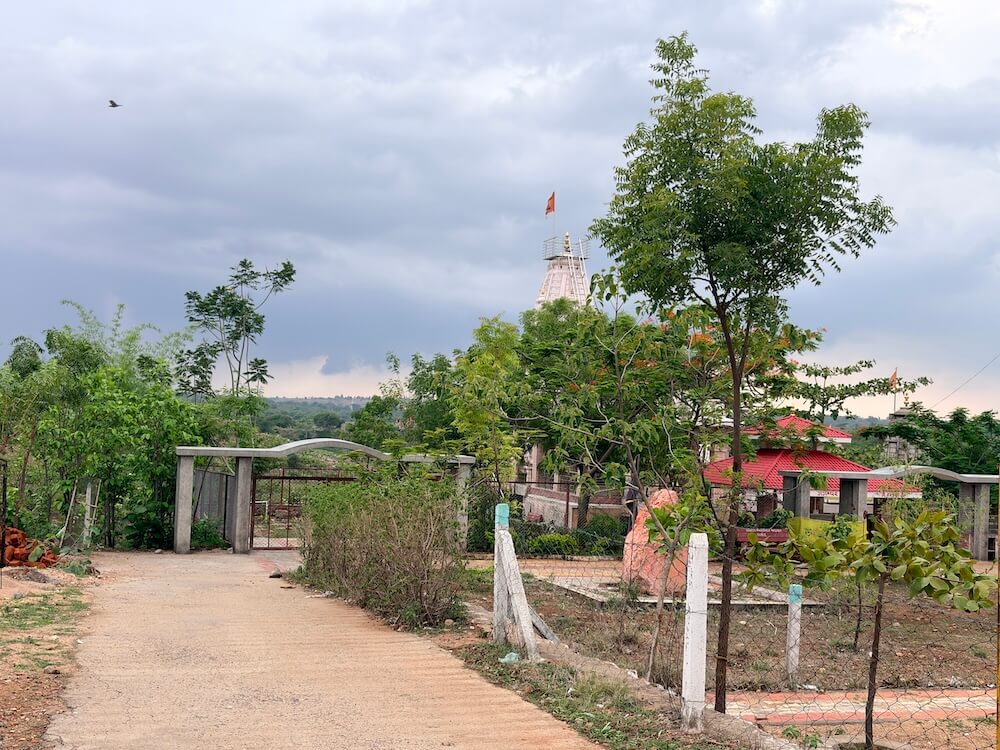 However, finding no water available for the ritual anointment, Dharma Raja Yudhishthira prayed fervently to the holy river Ganga, who manifested herself here in response. Since that momentous day, an uninterrupted stream of holy water has flowed from the earth. The site eventually derived its name, ‘Shiv Gangazhari’, from this continuous flowing spring and its sacred association with the Shivalinga.
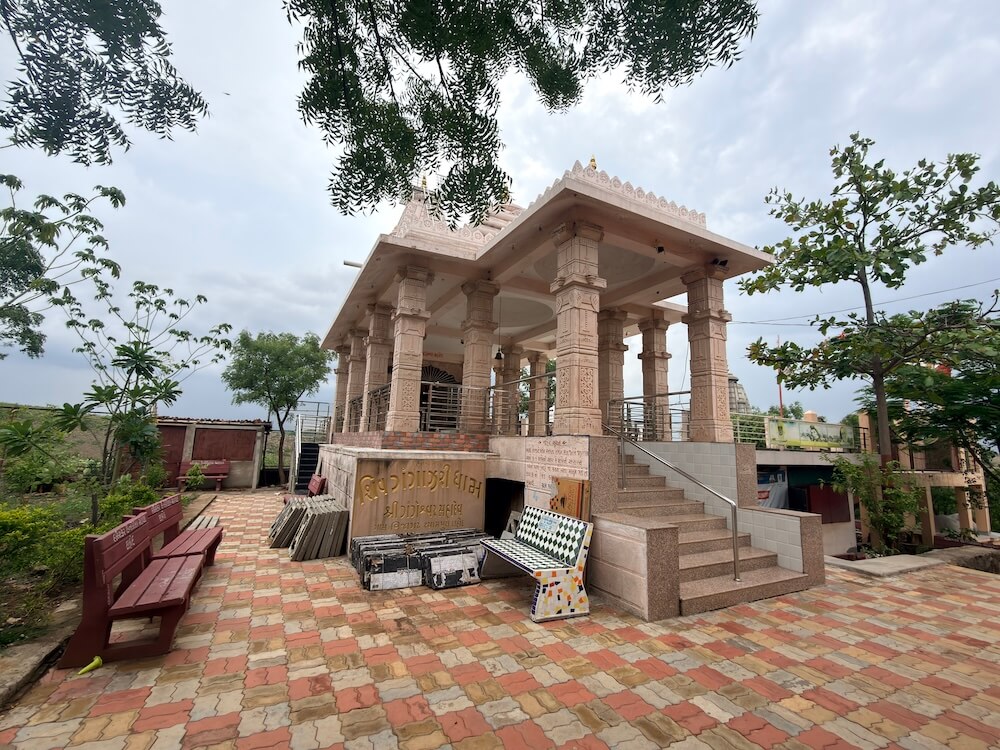
The temple stands upon a high hill located a short distance from the village. Devotees seeking to ascend the hill are provided with two options : a stepped pathway or a direct motorable road. A spacious parking area is situated immediately in front of the temple complex. The sanctuary is secured by a perimeter wall composed of iron lattice fencing. 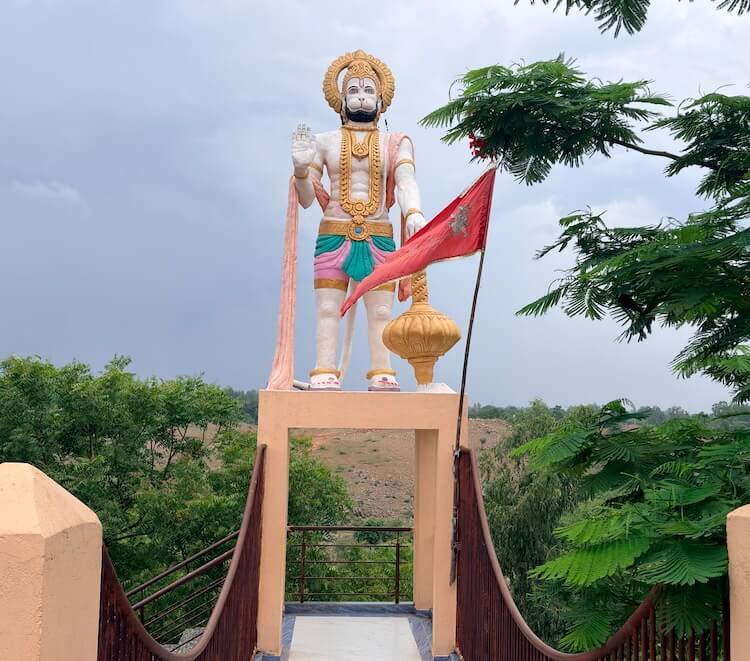 The shrine itself is said to be approximately seven hundred years old. Although local lore credits King Bhimdev II of the Solanki-Chalukya dynasty of Gujarat with the construction of this shrine, direct historical evidence to substantiate this claim remains unavailable. Nevertheless, the architecture of the temple is widely believed to be contemporary with the historic Shiva Temple at Bavka near Dahod.
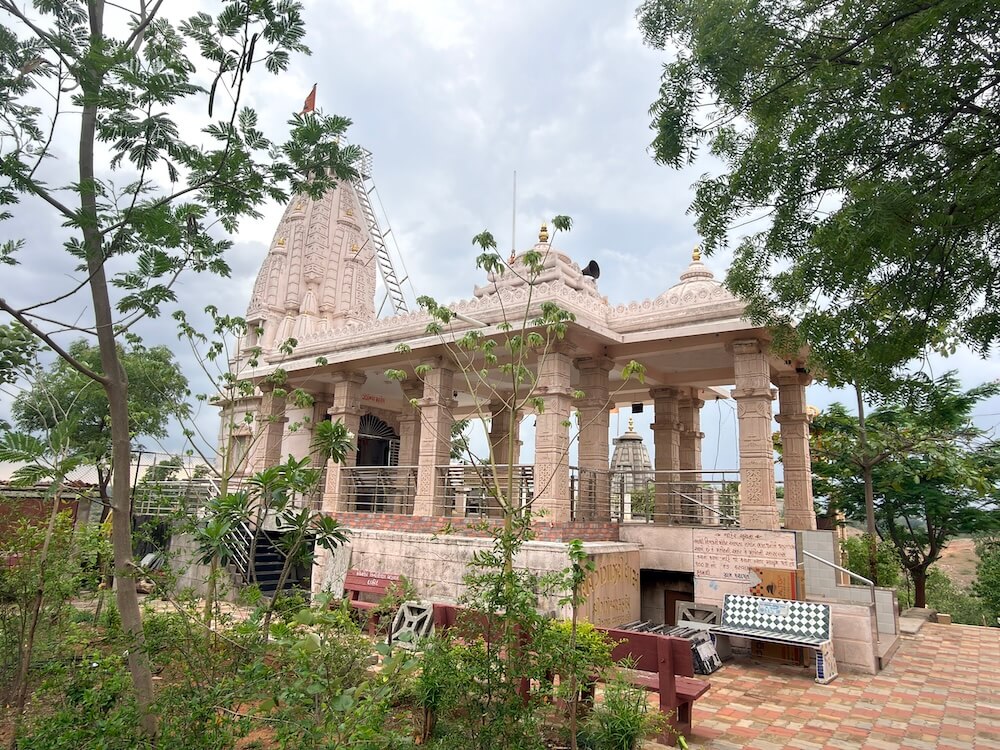
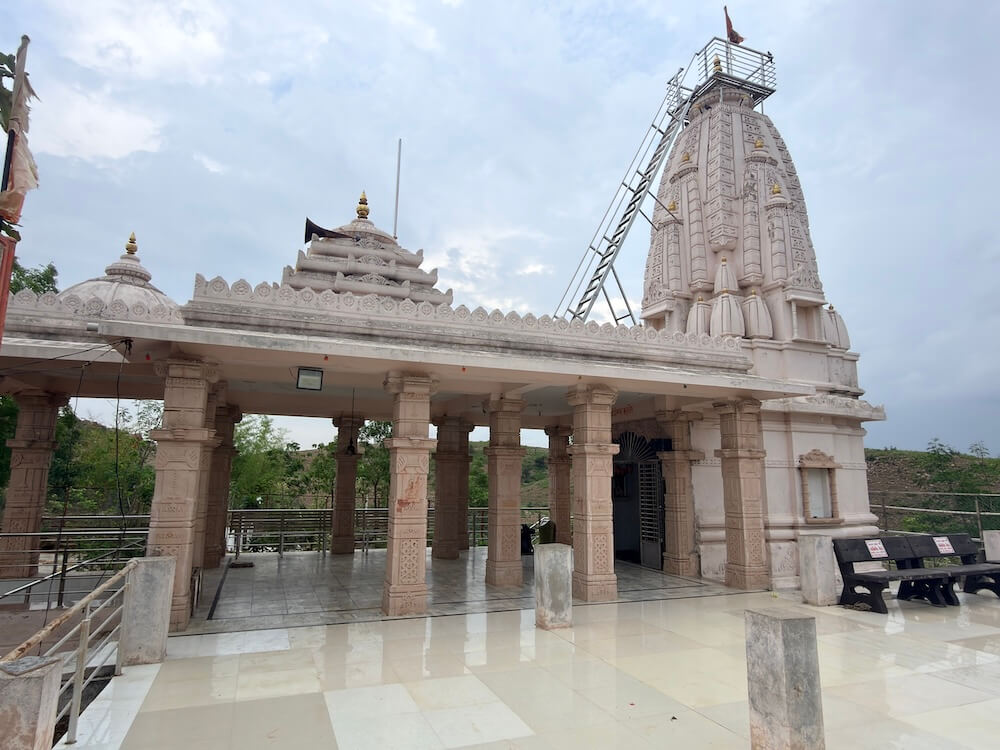
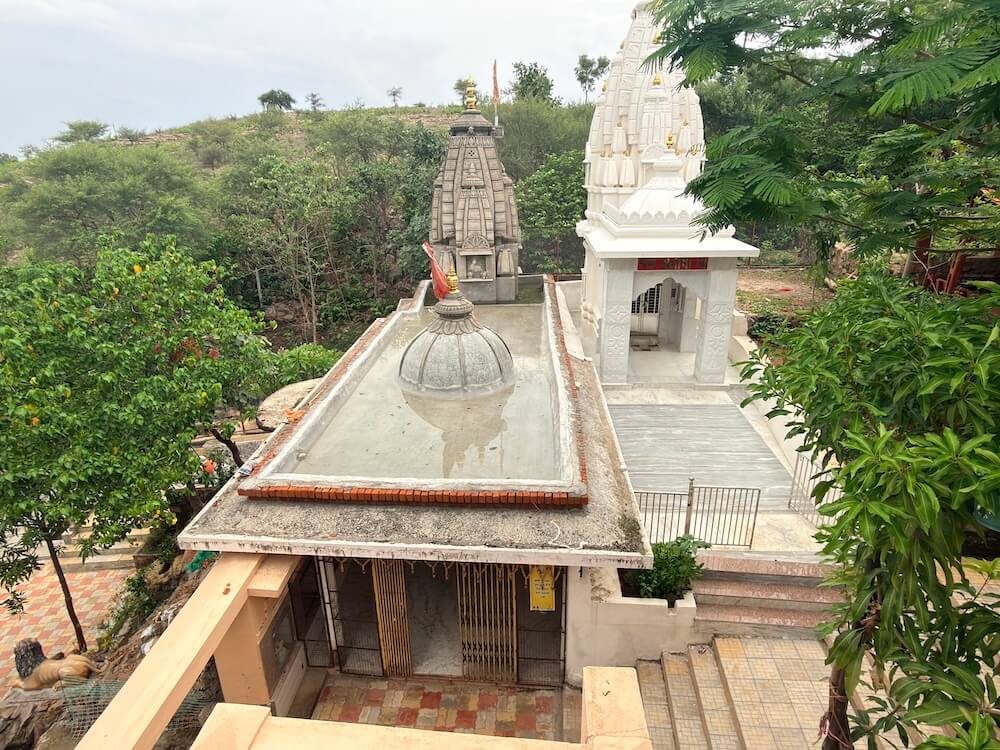
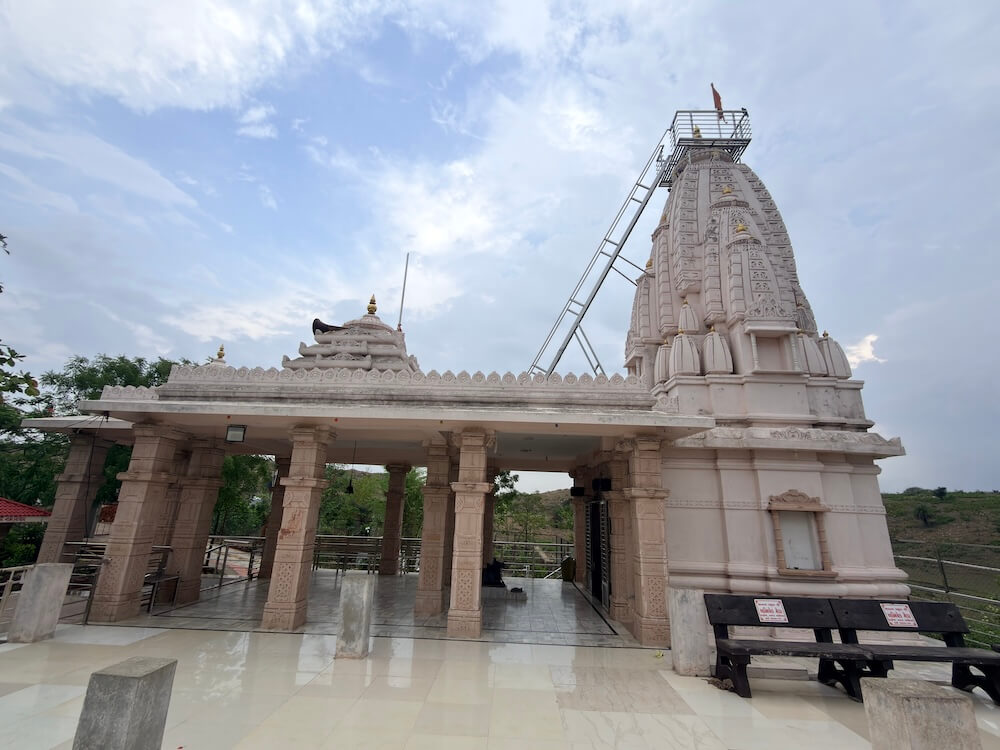
The outer courtyard in front of the main shrine features a beautifully maintained botanical garden and a children’s play area. The children’s park is equipped with various play structures for the entertainment of young visitors. Standing upon a high plinth within the garden is a monumental, twenty-foot-tall standing idol of Lord Hanuman. Nearby, an idol depicting Lord Mahadev with his divine family has been installed adjacent to an artificial waterfall. Furthermore, the precincts house four to five smaller shrines dedicated to various Hindu deities.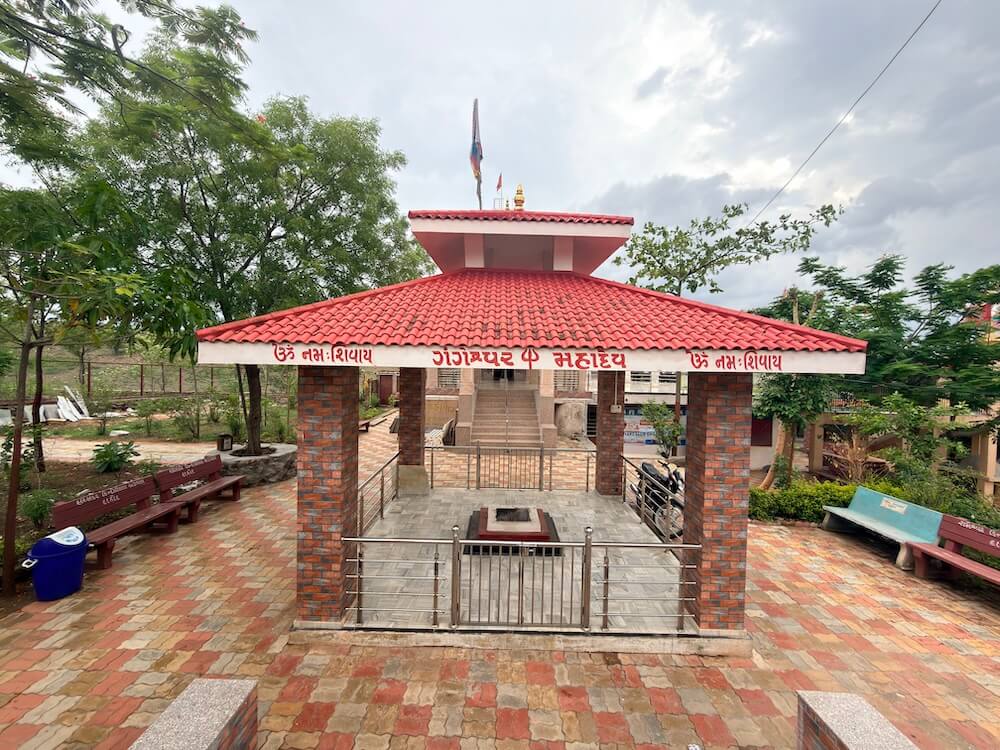 Within this complex flows the ever-flowing spring. It emerges directly from a sculpted cow’s mouth, known as the ‘gomukha’ and is revered as the Gangazhari. Facing the main shrine is a sacrificial pavilion (‘Yagna Mandapa’), covered by a roof supported by four pillars. It is distinctly divided into upper and lower tiers. The architectural layout of the main temple comprises an entrance porch (‘Mukhamandapa’), a central assembly hall (‘Sabhamandapa’), an ante-chamber (‘Antarala’) and the sanctum sanctorum (‘Garbhagriha’). Domed roofs crown the entrance porch and the assembly hall, while the sanctum sanctorum is surmounted by a tall, square spire. This principal spire is beautifully adorned on all four sides with miniature replicas of smaller spires.
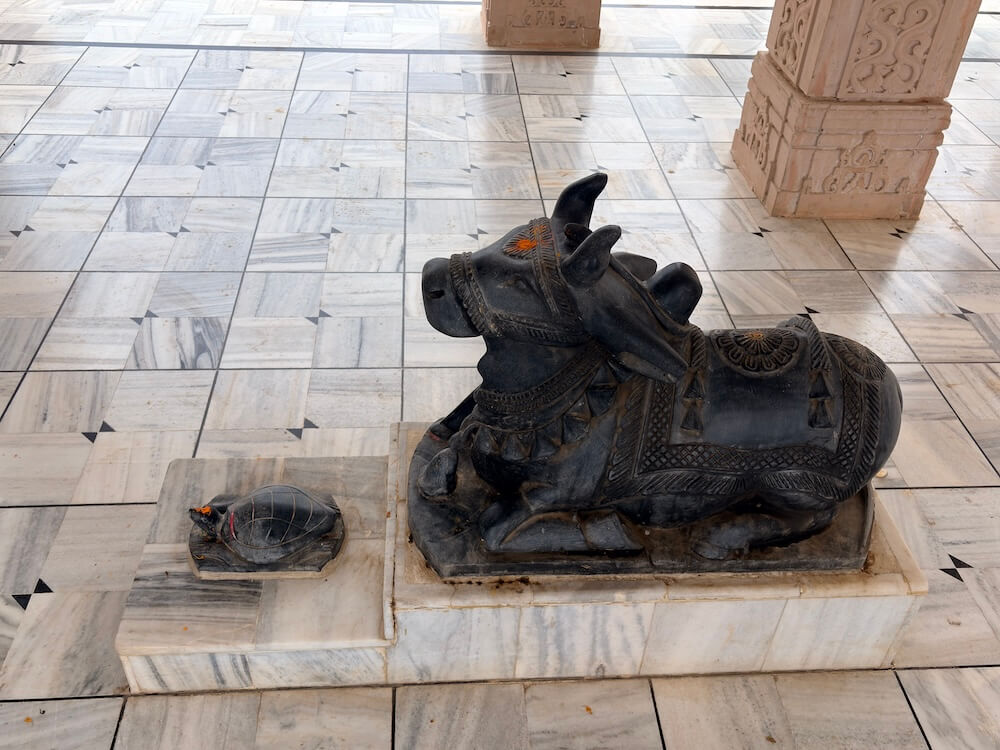
Devotees ascend eight steps to enter the entrance porch, 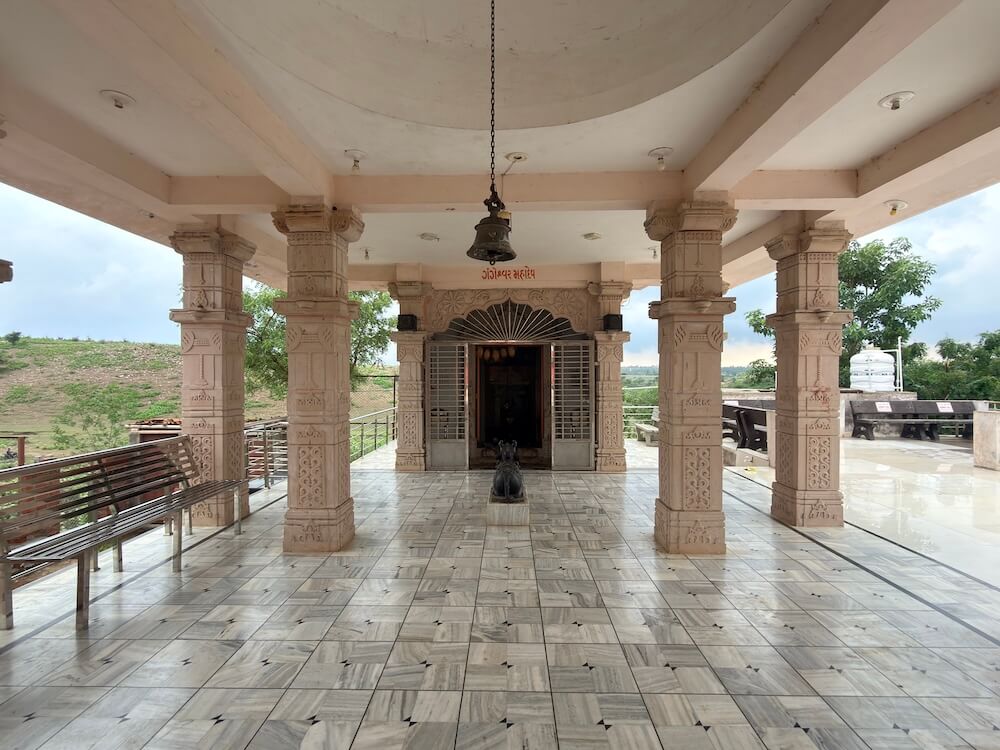 which rests on a six-foot-high plinth. The entrance porch features four intricately carved pillars. The semi-open assembly hall houses four rows of square, ornate columns. A heavy brass bell hangs from the ceiling of the hall. The corbelled vault (‘Vitan’) is embellished with beautiful wheel patterns. Beyond the assembly hall lies the doorway to the antechamber. The entrance is adorned with decorative doorposts topped by a beautifully sculpted arched frame (‘Mahirapi Torana’). An idol of Lord Ganesha graces the central lintel (‘Lalatabimba’). Inside the ante-chamber, directly facing the entrance of the sanctum sanctorum, a sculpted figure of Nandi rests upon a stone altar (‘Vajrapeetha’), preceded by a stone tortoise. Built into the side walls of the ante-chamber are niches housing the idols of Lord Ganesha and Lord Hanuman.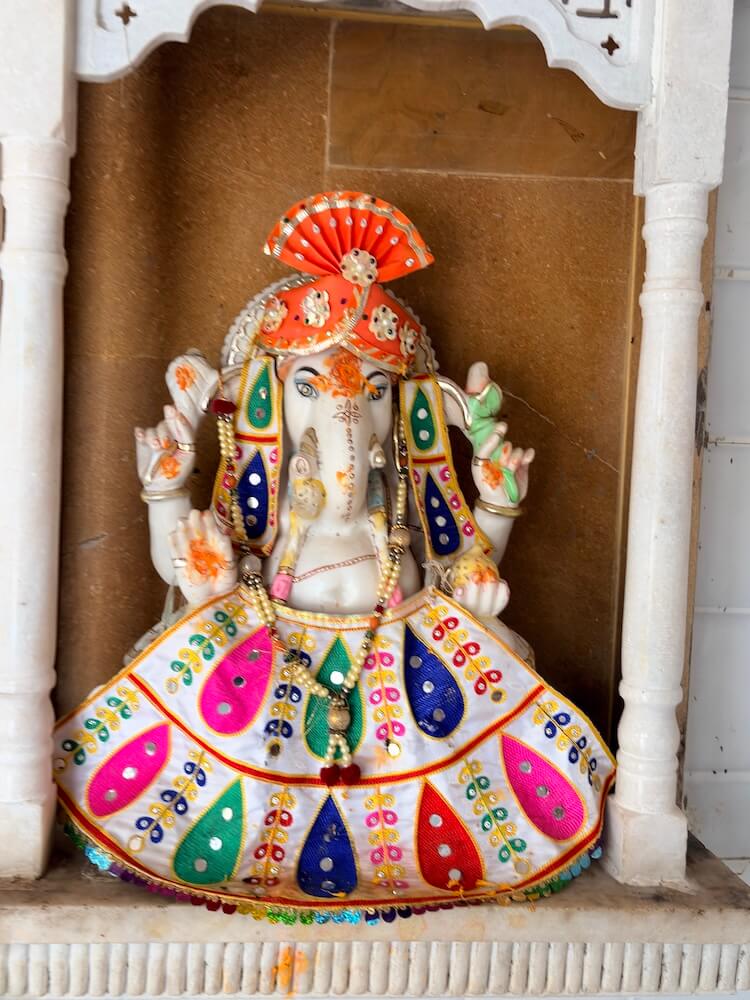
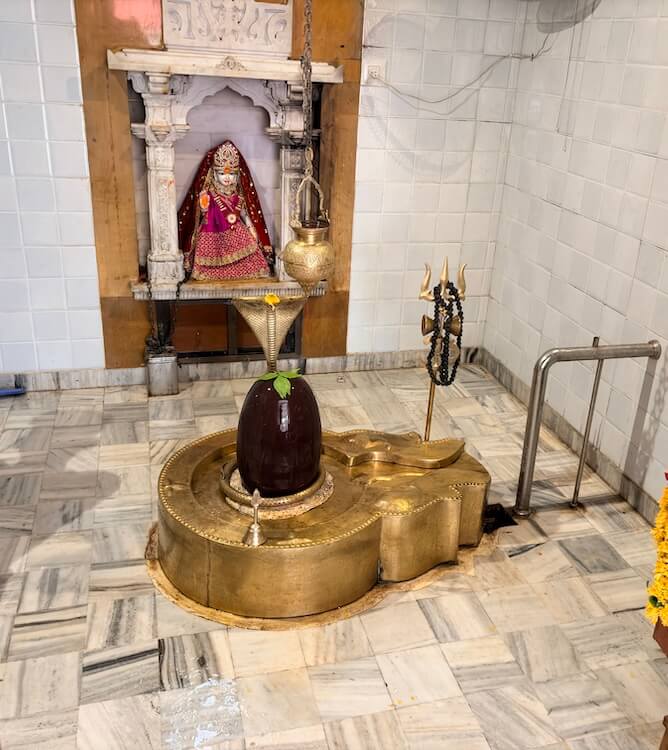
The doorposts of the sanctum sanctorum are carved with delicate floral and foliate motifs, with another figure of Lord Ganesha positioned on the lintel. Enshrined flat upon the ground at the very center of the sanctum is the self-manifested Shivalinga. The sacred Linga is encased in finely polished brass sheeting, shielded by a protective brass serpent with a flared hood. An anointment vessel (‘Abhishek Patra’) is suspended from the ceiling directly above the Pinda to provide a continuous trickle of water. A traditional brass trident and a pellet drum (‘Damru’) are placed beside the deity. Enshrined within a structural niche on the rear wall behind the Shiva Pinda is a pristine white marble idol of Goddess Parvati.
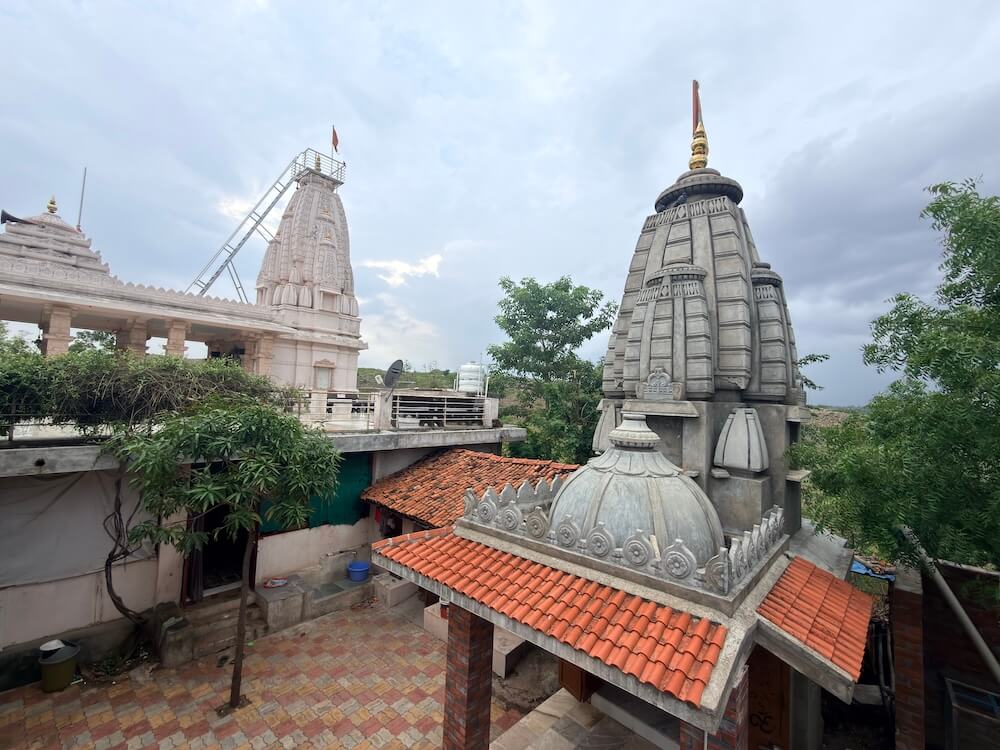 Directly adjacent to the Mahadev shrine stands the Sitaram Temple. The architectural design of this secondary structure consists of an assembly hall, an ante-chamber and a sanctum sanctorum. This shrine features a long row of individual wall niches. Enshrined within these niches are the idols of numerous deities, saints and holy sages, including Sitaram Bappa, Saint Ravidas, Mata Shabari, the river goddesses Ganga and Yamuna, Saint Ramdevpir, Amba Mata and Gangaram Maharaj.
The temple remains open for public viewing (‘Darshan’) daily from 6:00 am to 8:00 pm. Festive fairs are organized with great enthusiasm on the auspicious occasion of Mahashivratri and on every single Monday during the holy month of Shravan. During these festive periods, thousands of devotees from the surrounding regions converge upon the hill to seek divine blessings. On the days of the fair and throughout the Mondays of Shravan, the temple organises an array of religious services, including the collective chanting of the ‘Laghurudra’, special grand anointments (‘Mahabhishek’), the continuous recital of the Mahamrityunjaya Mantra, scriptural recitations, devotional singing (‘Bhajans’ and ‘Kirtans’) and the distribution of sanctified community meals (‘Mahaprasad’). In addition to these events, festivals like Dussehra, Diwali, Kartiki Poornima, Vaikuntha Chaturdashi and Nag Panchami are celebrated here with deep devotion. The shrine also witnesses a substantial influx of pilgrims on special days such as Mondays, the monthly Pradosha Tithi, the full moon day (‘Poornima’) and the new moon day (‘Amavasya’).
Useful Information :
- Situated at a distance of 13 km from Dahod town.
- State Transport (ST) bus services connect Dahod directly to Nani Kharaj.
- Private vehicles can drive right up to the dedicated parking lot on the hilltop.
- Numerous lodging and breakfast options are widely available within Dahod town.
शिव गंगाझारी धाम
नानी खराज, ताल./जिला. दाहोद
मंदिरे
Temples
मंदिर
મંદિરો
கோவில்கள்
దేవాలయాలు
ക്ഷേത്രങ്ങൾ
ದೇವಾಲಯಗಳು
মন্দিরসমূহ
ਮੰਦਿਰ
-
पंचकृष्ण मंदिर थेरका, ता. झालोद, जि. दाहोद
अधिक माहितीPanchakrishna Temple Therka, Tal. Jhalod, Dist. Dahod
View Detailsपंचकृष्ण मंदिर थेरका, ताल. झालोद, जिला. दाहोद
विवरण देखेंPanchakrishna Temple Therka, Tal. Jhalod, Dist. Dahod
વિગત જુઓPanchakrishna Temple Therka, Tal. Jhalod, Dist. Dahod
விவரங்களைக் காண்கPanchakrishna Temple Therka, Tal. Jhalod, Dist. Dahod
వివరాలను చూడండిPanchakrishna Temple Therka, Tal. Jhalod, Dist. Dahod
വിശദാംശങ്ങൾ കാണുകPanchakrishna Temple Therka, Tal. Jhalod, Dist. Dahod
ವಿವರಗಳನ್ನು ವೀಕ್ಷಿಸಿPanchakrishna Temple Therka, Tal. Jhalod, Dist. Dahod
বিস্তারিত দেখুনPanchakrishna Temple Therka, Tal. Jhalod, Dist. Dahod
ਵੇਰਵੇ ਦੇਖੋ -
घुघरदेव महादेव मंदिर चकल्या, ता. झालोद, जि. दाहोद
अधिक माहितीGhughardev Mahadev Temple Chakaliya, Tal. Jhalod, Dist. Dahod
View Detailsघुघरदेव महादेव मंदिर चकलिया, ताल. झालोद, जिला. दाहोद
विवरण देखेंGhughardev Mahadev Temple Chakaliya, Tal. Jhalod, Dist. Dahod
વિગત જુઓGhughardev Mahadev Temple Chakaliya, Tal. Jhalod, Dist. Dahod
விவரங்களைக் காண்கGhughardev Mahadev Temple Chakaliya, Tal. Jhalod, Dist. Dahod
వివరాలను చూడండిGhughardev Mahadev Temple Chakaliya, Tal. Jhalod, Dist. Dahod
വിശദാംശങ്ങൾ കാണുകGhughardev Mahadev Temple Chakaliya, Tal. Jhalod, Dist. Dahod
ವಿವರಗಳನ್ನು ವೀಕ್ಷಿಸಿGhughardev Mahadev Temple Chakaliya, Tal. Jhalod, Dist. Dahod
বিস্তারিত দেখুনGhughardev Mahadev Temple Chakaliya, Tal. Jhalod, Dist. Dahod
ਵੇਰਵੇ ਦੇਖੋ -
देवझरी महादेव मंदिर जळकोट, ता./जि. दाहोद
अधिक माहितीDevjhari Mahadev Temple Jekot, Tal./Dist. Dahod
View Detailsदेवझरी महादेव मंदिर जेकोट, ताल./जिला. दाहोद
विवरण देखेंDevjhari Mahadev Temple Jekot, Tal./Dist. Dahod
વિગત જુઓDevjhari Mahadev Temple Jekot, Tal./Dist. Dahod
விவரங்களைக் காண்கDevjhari Mahadev Temple Jekot, Tal./Dist. Dahod
వివరాలను చూడండిDevjhari Mahadev Temple Jekot, Tal./Dist. Dahod
വിശദാംശങ്ങൾ കാണുകDevjhari Mahadev Temple Jekot, Tal./Dist. Dahod
ವಿವರಗಳನ್ನು ವೀಕ್ಷಿಸಿDevjhari Mahadev Temple Jekot, Tal./Dist. Dahod
বিস্তারিত দেখুনDevjhari Mahadev Temple Jekot, Tal./Dist. Dahod
ਵੇਰਵੇ ਦੇਖੋ