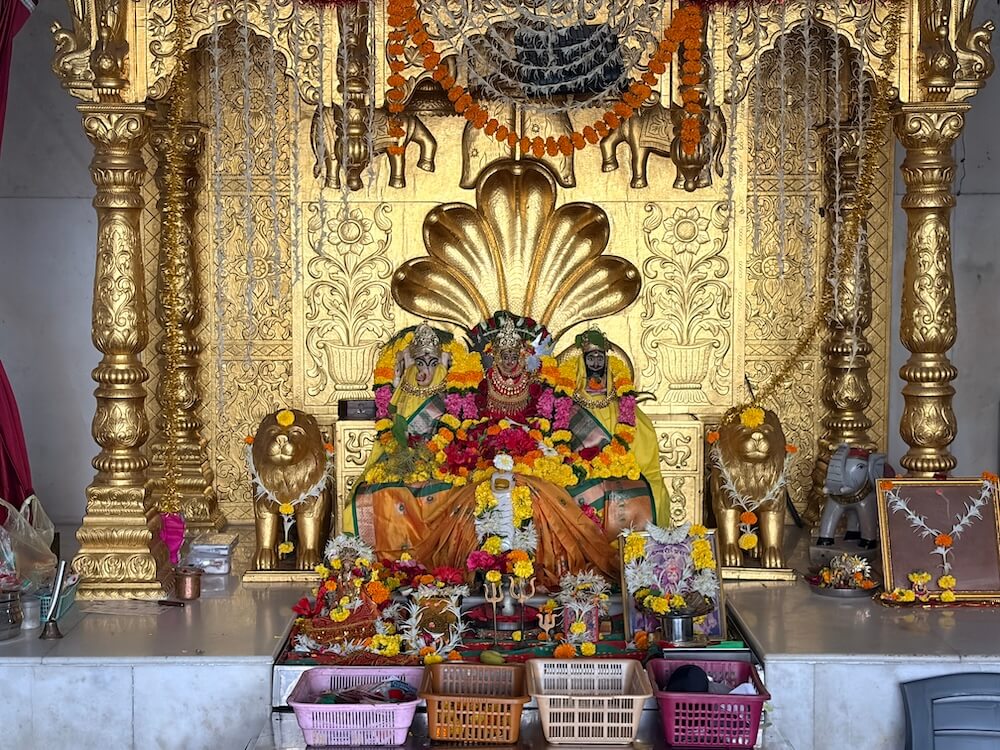
 Ashapuri Mata is revered as the family deity (Kuldevi) of the Rawal Rajput royal lineage of Rajasthan, as well as of nearly 256 clans across Gujarat and Rajasthan. Many families in and around Navsari also worship her as their village deity (Gramdevata). Situated on Vijalpore Main Road in Navsari, the Ashapuri Mata Temple is regarded as one of the principal centres of Shakti worship in South Gujarat. According to local tradition, the temple’s history extends back nearly four centuries. One of its distinctive features is the presence of idols of Lord Ganesha and Sage Markandeya on either side of the principal deity within the sanctum. Such an arrangement is rarely found in other Ashapuri temples. This unique feature gives the shrine a special place in terms of religious tradition, local devotion and Kuldevi worship.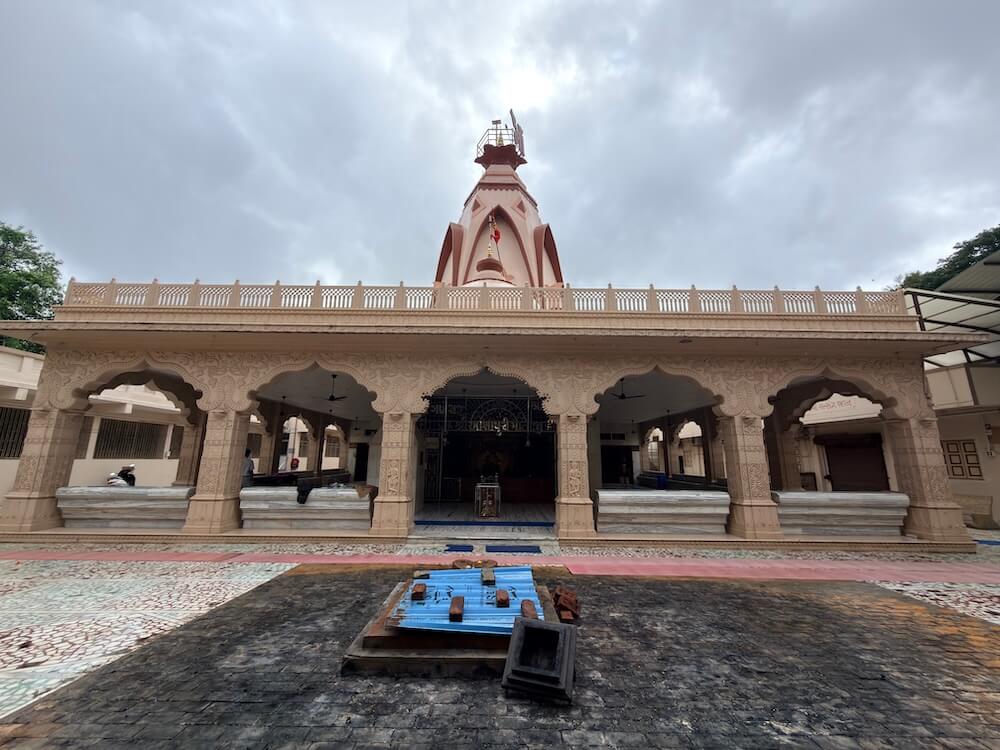
Popular belief holds that the Goddess came to be known as ‘Ashapuri’ because she fulfils the hopes and wishes of her devotees. According to the first volume of the ‘Bharatiya Sanskritikosh’, edited by Pandit Mahadevshastri Joshi, Ashapuri is also worshipped in the form of Goddess Shakambhari. Devotees also pray to her for the blessing of children. Important shrines dedicated to Ashapuri are found at Sambhar in Jaipur District, Nadol in Pali District of Rajasthan and at Mata-no-Madh in Kutch District, Gujarat. She is worshipped as the family deity by communities including the Jadeja Rajputs, Bhanushalis, Gosars, Savalas, Poladias and several others in Gujarat. According to a local legend associated with the Navsari temple, the idol of the Goddess manifested here after she appeared in a devotee’s dream.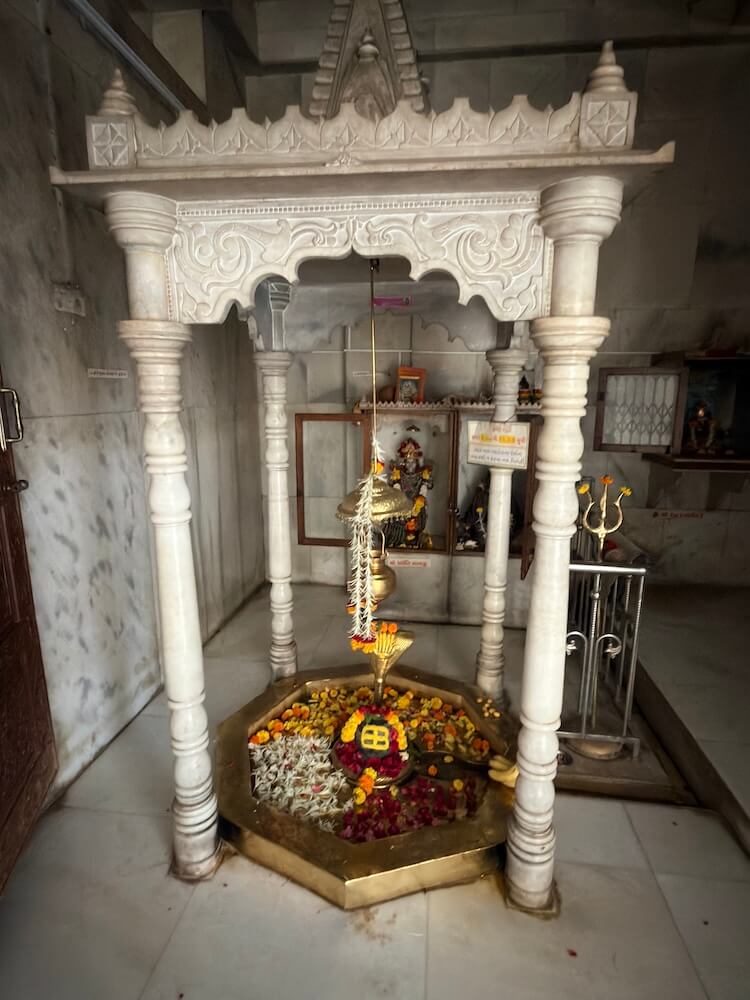
The legend relates that about four centuries ago, a devotee named Hargovind Harivallabhdas lived in Vijalpore village. He was a devoted worshipper of Ashapuri Mata. On the day of Devshayani Ekadashi, the Goddess appeared to him in a dream and said, ‘My sacred place lies at a particular spot in this village. Unearth me from there and establish my shrine.’ Hargovind shared the dream with a close friend but later forgot about it. Some months later, on Kartik Shukla Chaturdashi, he attended a Shraddha ceremony with the same friend. While returning home, he stumbled heavily at a particular spot on level ground. That night, the Goddess again appeared in his dream and told him, ‘The place where you stumbled is the very spot where I reside.’
This time, Hargovind excavated the site. He discovered an idol of Ashapuri Mata there. The idol was then installed beneath a nearby banyan tree. Hargovind had no children. According to local belief, soon after establishing the shrine, he was blessed with a son. From that time onwards, devotion to Ashapuri Mata grew steadily among the local people.
No contemporary historical records relating to the temple’s foundation are presently available. However, according to local tradition, its early development took place during the Gaekwad period. The temple was gradually expanded and renovated over the years. 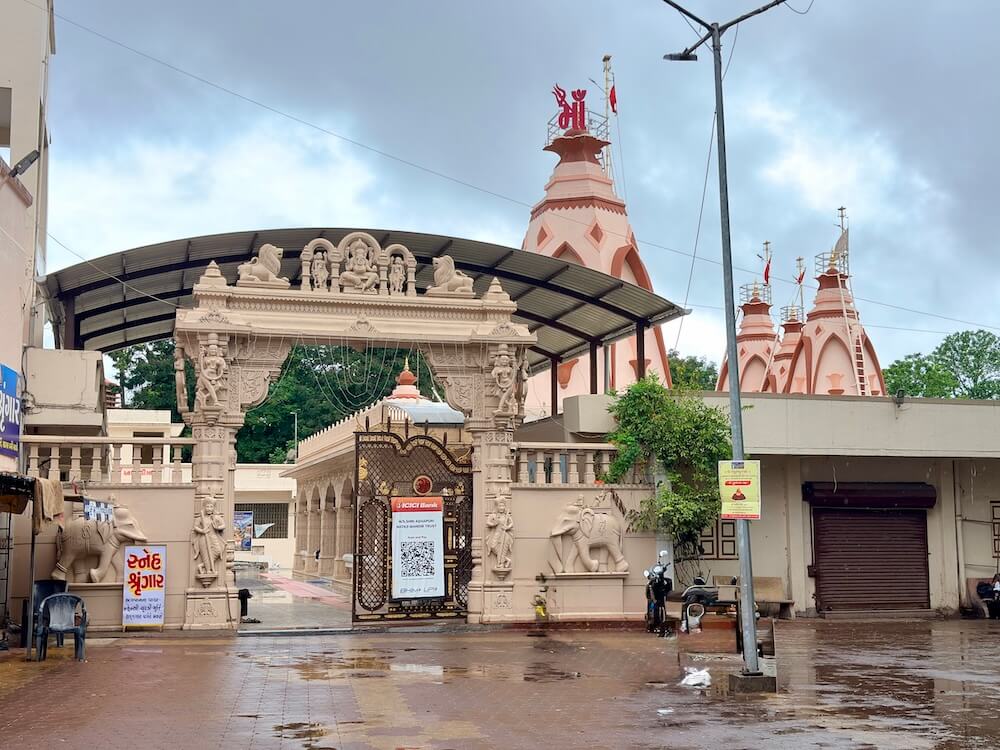 It is also said that during the rule of the Baroda State, financial assistance was provided for its upkeep. In AD 2004, the temple underwent a major renovation, during which an idol of Lord Swaminarayan was also installed.
A large gateway stands in the enclosure wall surrounding the temple. Guardian figures and lion sculptures adorn both sides of its front facade. The gateway pillars are decorated with graceful female figures (Surasundaris), while an idol of Lord Ganesha occupies the central upper portion, flanked by lion sculptures. Beyond the gateway lies the temple courtyard. In front of the temple stands a covered pavilion with a metal roof. A Homa Kund is situated within this pavilion. The temple consists of a semi-open assembly hall with the sanctum placed at its centre.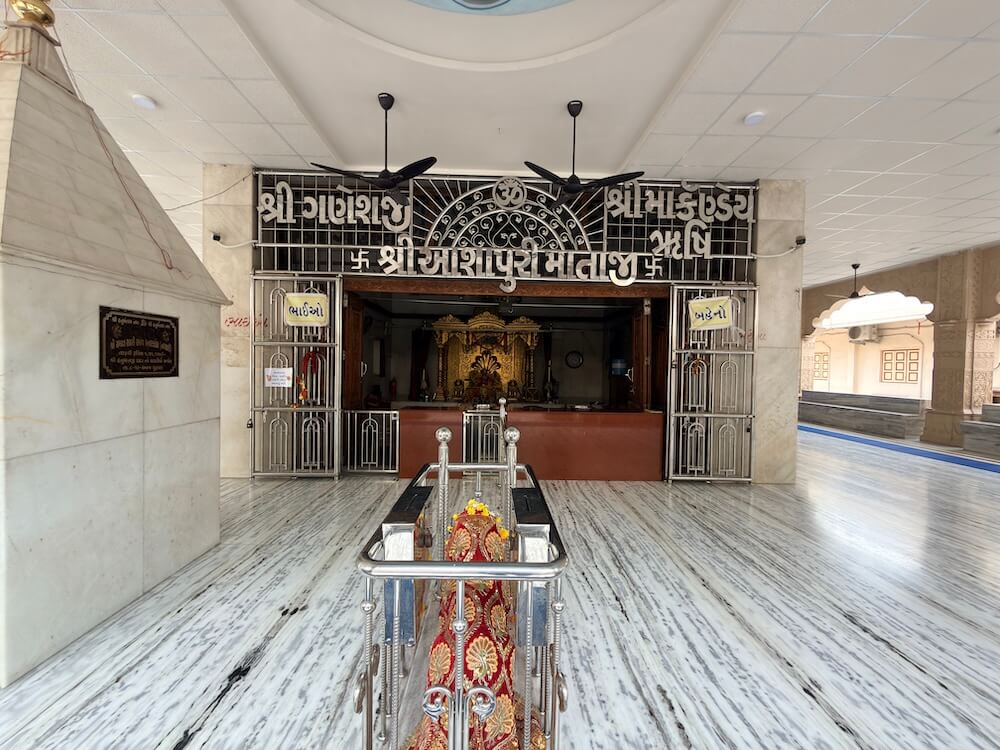
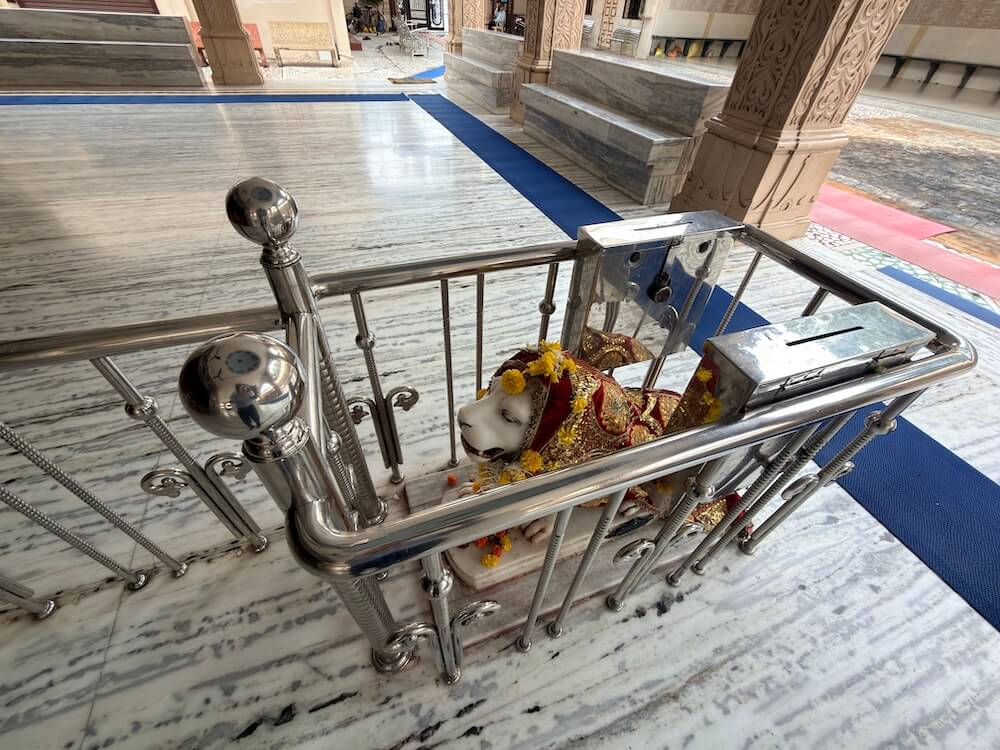
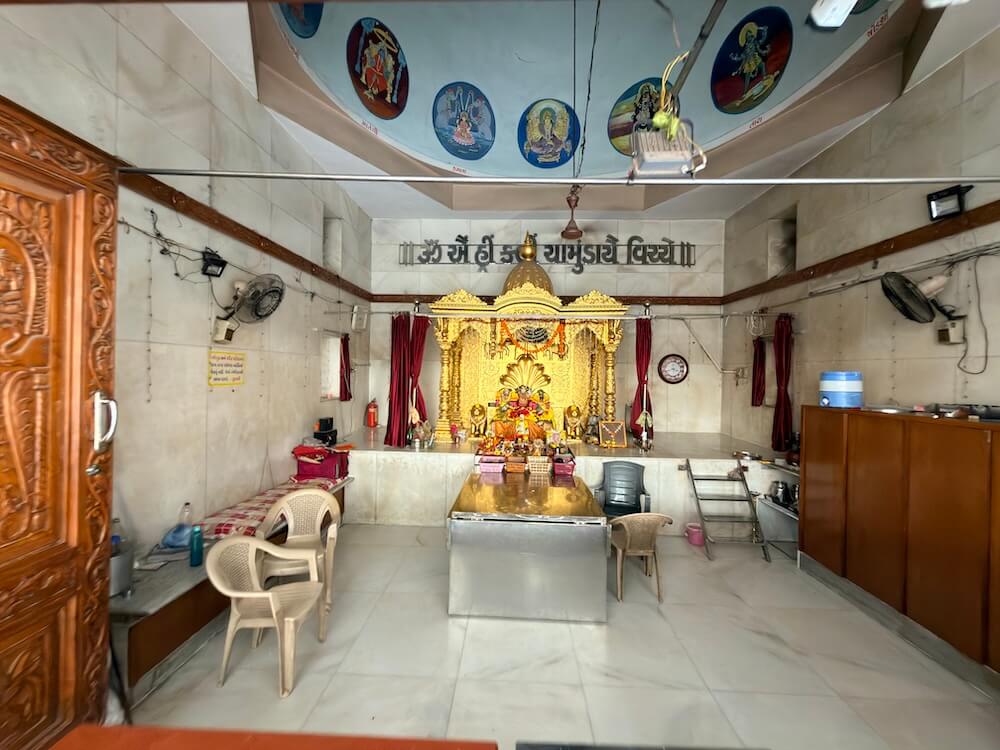
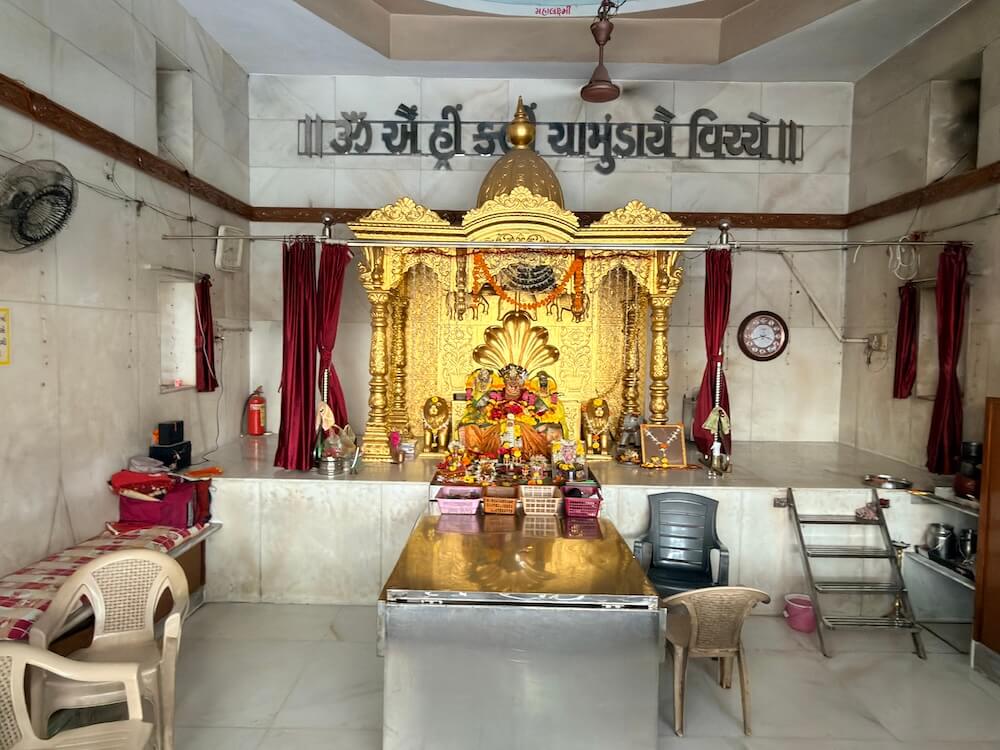
Inside the assembly hall, directly in front of the sanctum, is a marble sculpture of the lion, the vehicle of the Goddess. Within the sanctum, the idol of Ashapuri Mata is enshrined inside an ornamental shrine upon a marble pedestal. The Goddess wears a golden crown and holds a trident in her hand. A five-hooded serpent forms a protective canopy above her. Immediately beside the Goddess are the idols of Lord Ganesha on her right and Sage Markandeya on her left. A local legend explains their presence.
It is said that when Sage Markandeya presented the Durga Saptashati, composed by him, before the Goddess, she summoned Lord Ganesha and instructed him to translate the sacred text. Because of this event, both Sage Markandeya and Lord Ganesha were given places beside Ashapuri Mata.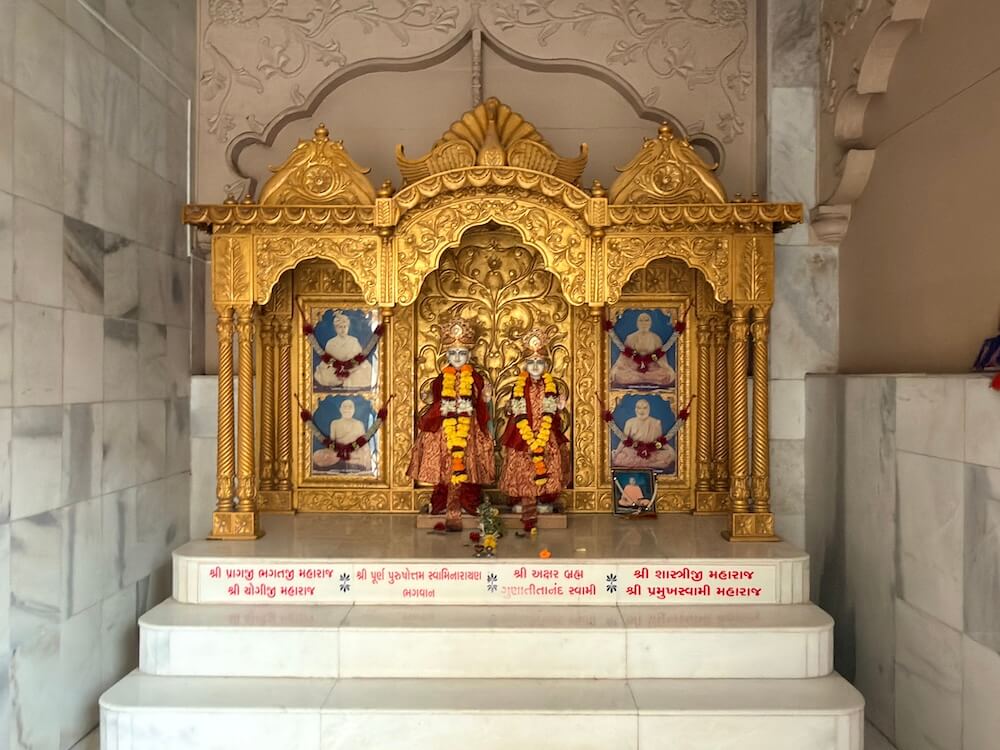
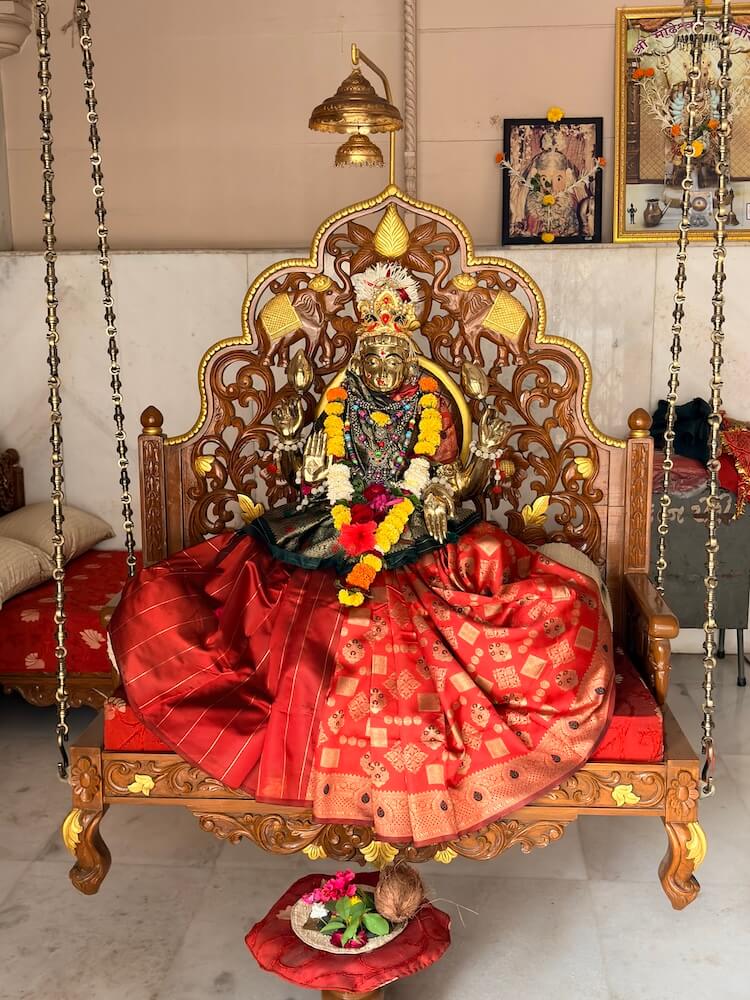
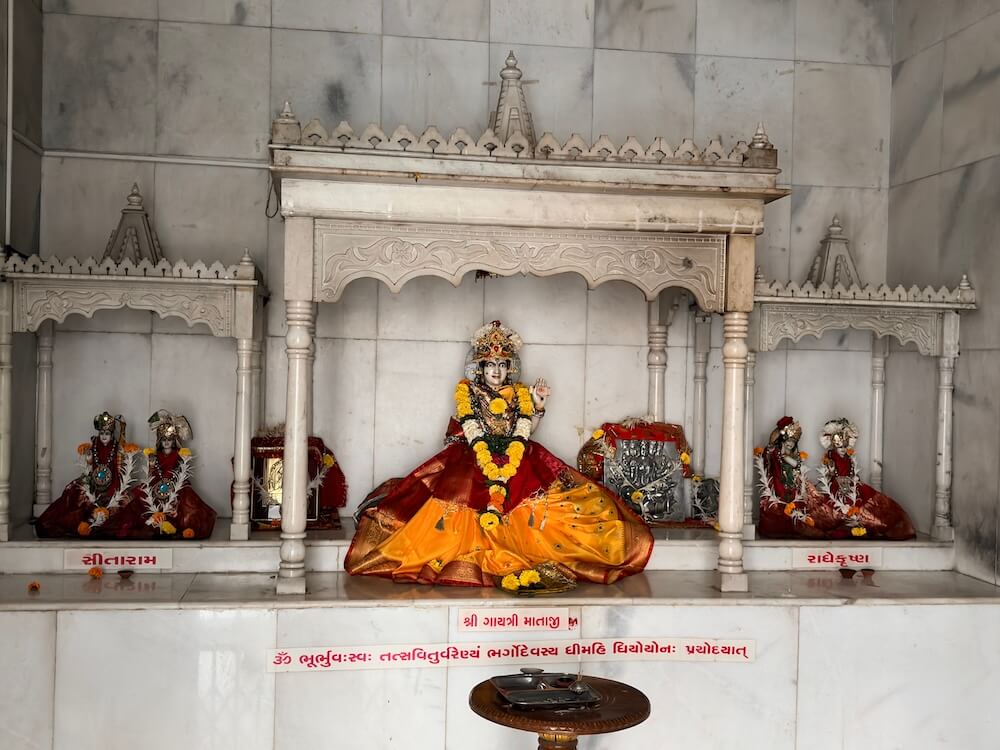
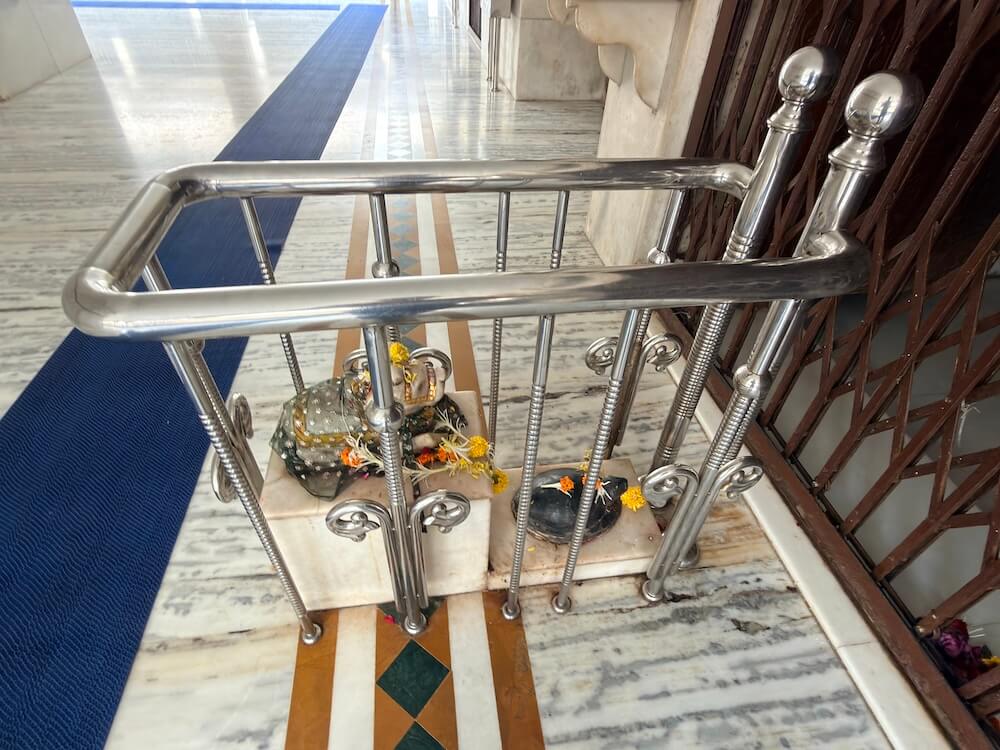
Devotees believe that Ashapuri Mata blesses childless couples with children, grants homes to the homeless and removes the sorrows of those who seek her grace. The temple complex also contains shrines dedicated to Lord Hanuman, Goddess Mahalakshmi, Goddess Gayatri, Baliyadev, Lord Rama and Sita and Lord Mahadev.
Devotees may have darshan at the Ashapuri Mata Temple from 6.00 a.m. to 1.00 p.m. and again from 3.30 p.m. to 8.00 p.m. every day. Regular worship, Aarti and various religious rituals are performed throughout the year. Sharadiya Navratra is the temple’s most important annual festival. During this period, the Goddess is adorned with special decorations and numerous religious programmes are organised. 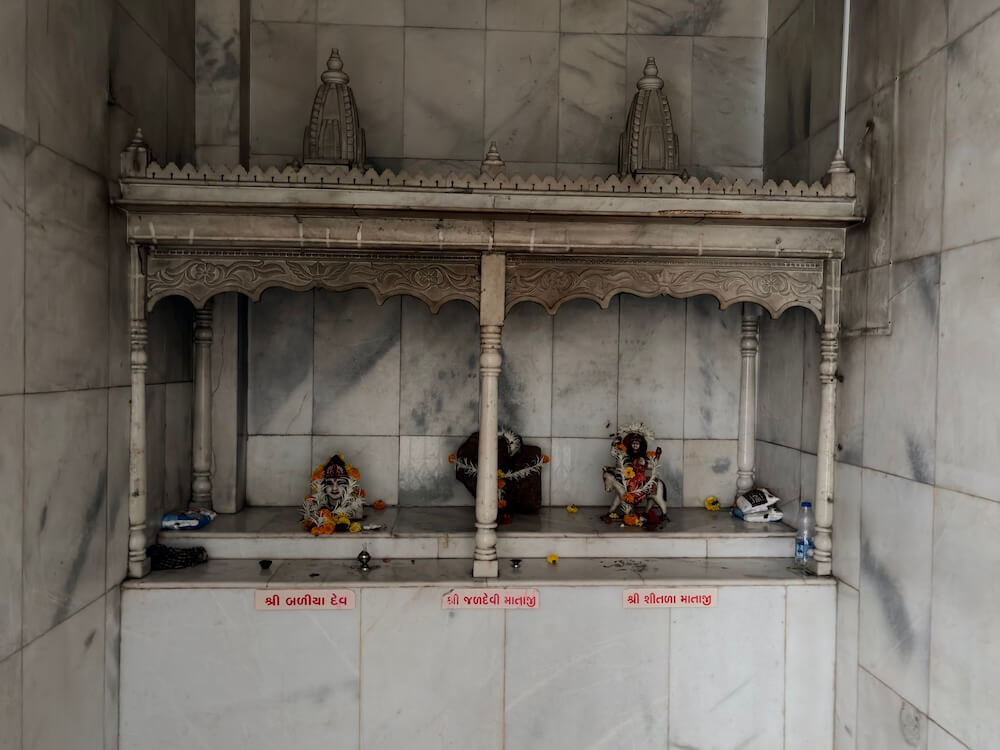 Various Vedic rituals, including the Shata Chandi Yajna, are performed during the Navratra celebrations. Large numbers of devotees also visit the temple to perform the Chaul (first tonsure) ceremony and other religious rites. Since Ashapuri Mata is the family deity of many communities, devotees arrive throughout the year from different parts of Gujarat and neighbouring states. The temple is especially important for family traditions, the fulfilment of vows and domestic religious ceremonies.
Alongside its religious activities, the temple also conducts various social welfare programmes. These include health check-up camps, the distribution of educational materials to students and other community service initiatives. The spacious temple courtyard is also made available for weddings and other cultural events.