
गुप्तेश्वर महादेव मंदिर
नंदाई-भैरवी, ता. खेरगाम, जि. नवसारी
Gupteshwar Mahadev Temple
Nandhai–Bhairavi, Tal. Khergam, Dist. Navsari
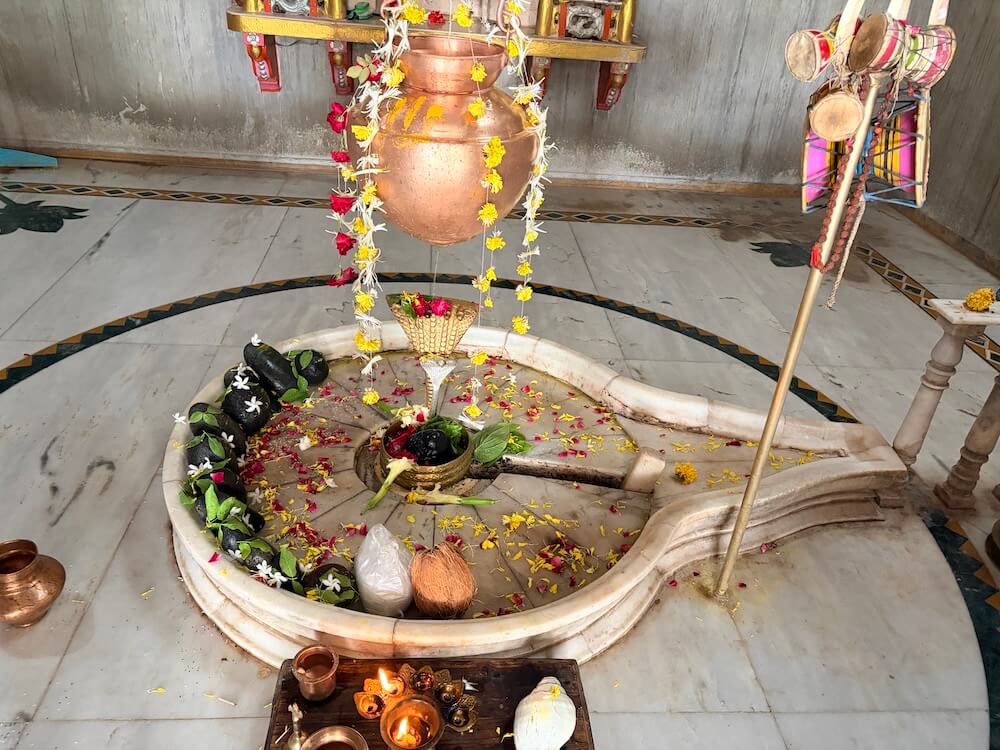 Nandhai, in Khergam Taluka of Navsari District, is a modern centre of Shaivite worship situated on the banks of the Auranga River. It is home to the Gupteshwar Mahadev Temple, which is more than a century old. Devotees believe that the sacred waters of the hidden ‘Gupta Ganga’ flow beneath the temple area. It is from this belief that Lord Shiva here is worshipped as ‘Gupteshwar’. Many devotees also believe that those who worship this Shivlinga with deep faith can hear the sacred sound of ‘Om’ emanating from it. Every year, on Maha Shivaratra, the temple hosts a grand annual fair attended by thousands of devotees.
The ancient name of Navsari, the district in which Nandhai–Bhairavi is situated, was Navsarika. In the seventh century, Jaysimhavarman established the rule of the Chalukya dynasty in South Gujarat, with Navsarika as his capital.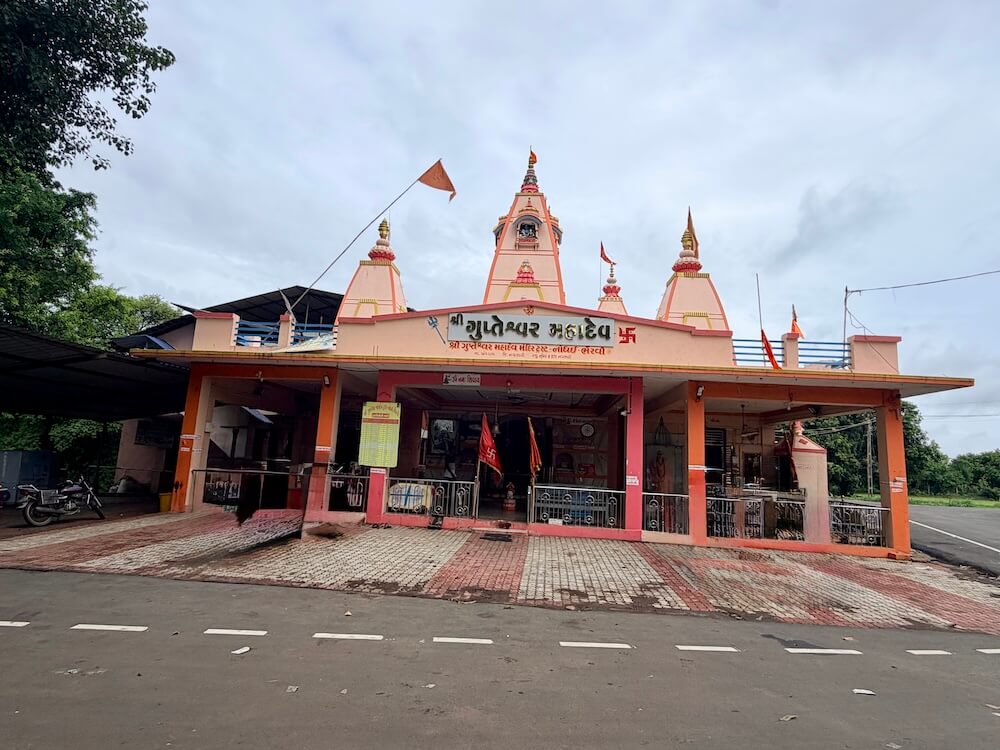 Around AD 671, the region was known as ‘Samana Navsarika’. It is also said that during this period, Shiladitya of the Chalukya dynasty renamed the region Nagvardhan in honour of his guru, Nagvardhan. Around AD 1142, members of the Parsi community who had migrated from Iran began settling in Navsari. According to Parsi tradition, the region was then known as ‘Nagmandal’. Scholars believe that this name reflects the area’s historical association with serpent-worshipping communities. Alongside the worship of serpents among the rural and tribal population, the worship of Lord Shiva has also flourished in this region since ancient times.
The Shiva temple at Nandhai forms an important part of this long religious tradition. 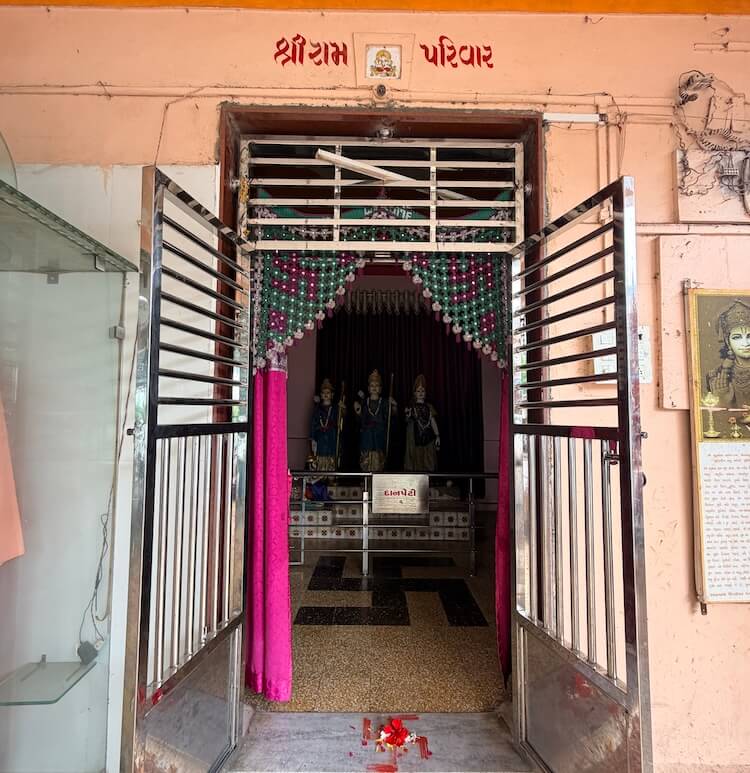 The present temple has a recorded history of just over a hundred years. According to local tradition, Vallabhram Vajirbhai Patel, a devoted worshipper of Lord Shiva from Khergam (Shamla Falia), had a vision of this Shivlinga in a dream. The Auranga River flows beside the present temple and devotees believe that the sacred Gupta Ganga flows alongside it.
Inspired by his dream, he resolved to build a sacred bathing tank at the site. At that time, the entire area was covered with dense forest. Patel came here immediately and cleared the thorny undergrowth along the riverbank. During this work, he discovered the Shivlinga. In 1911, he established a small shrine beneath the shade of a large tree and constructed the sacred bathing tank. From then onwards, he worshipped Gupteshwar Mahadev here every day.
The following year, on Maha Shivaratra in 1912, prominent residents Kalidas Bhikabhai Patel and Gopibhai Dajabhai Patel of Nandhai, together with Jerambhai Virjibhai Patel of Bhairavi, organised the first annual pilgrimage fair at the temple. This tradition continues to the present day.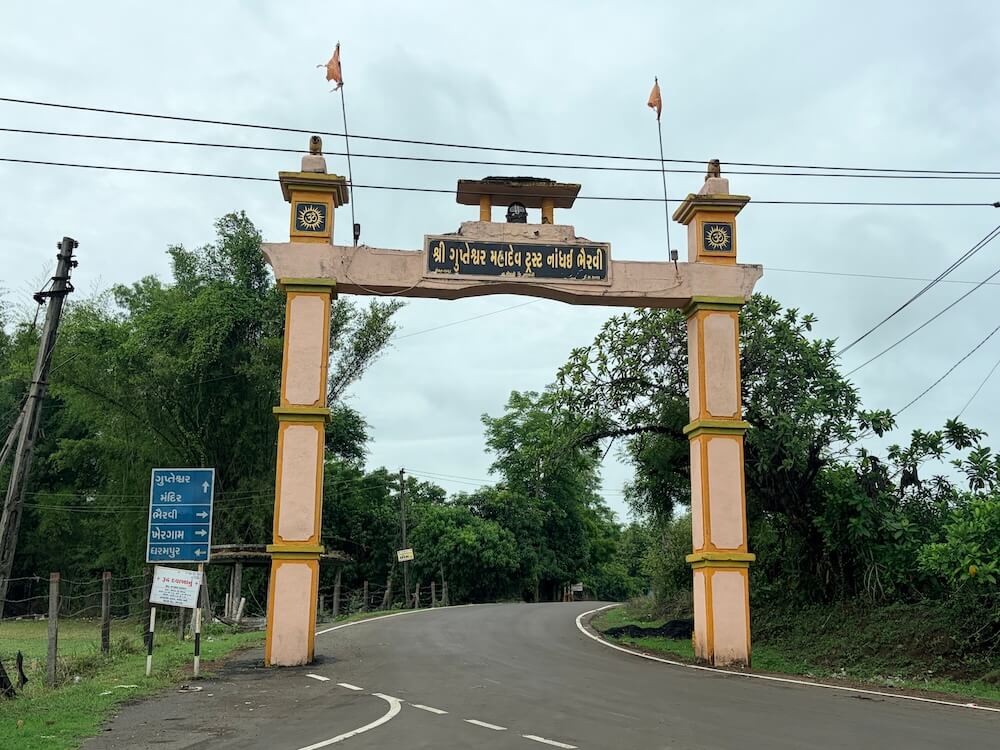
In 1958, the villagers established the ‘Shri Gupteshwar Mahadev Temple Trust’. The trust undertook the renovation of the temple. Later, in 1981, temples dedicated to Radha-Krishna, Lord Shri Ram and Amba Mata were established within the complex and a dharamshala was built for pilgrims.
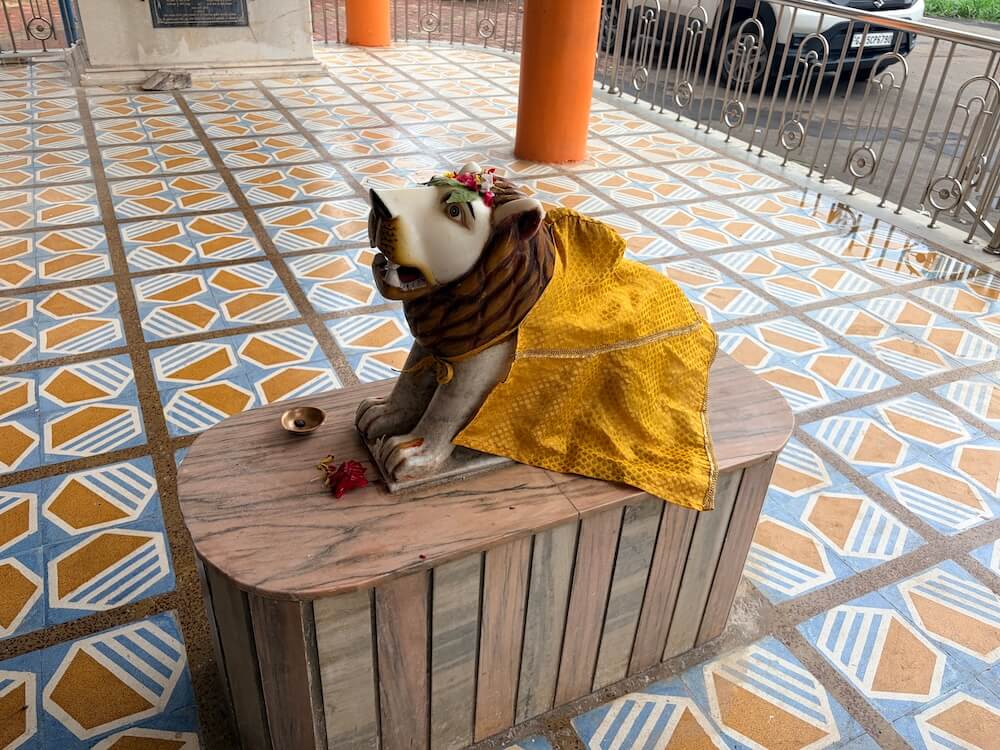
About one kilometre from the temple, on the main road, stands the entrance arch to the shrine. The upper portion of the arch is adorned with sculptures of lions on either side, while an open niche at the centre houses a Shivlinga.
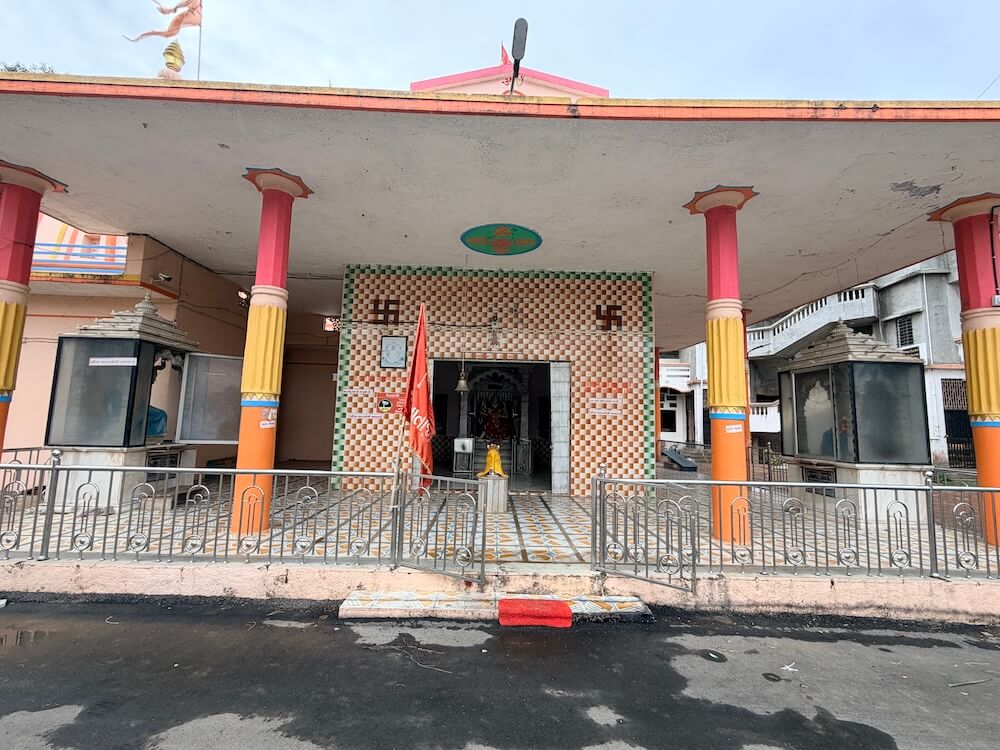
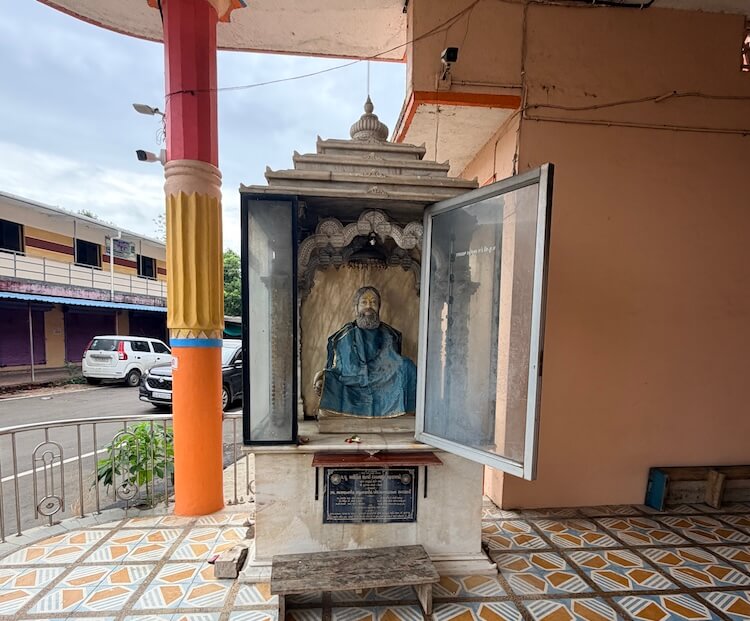
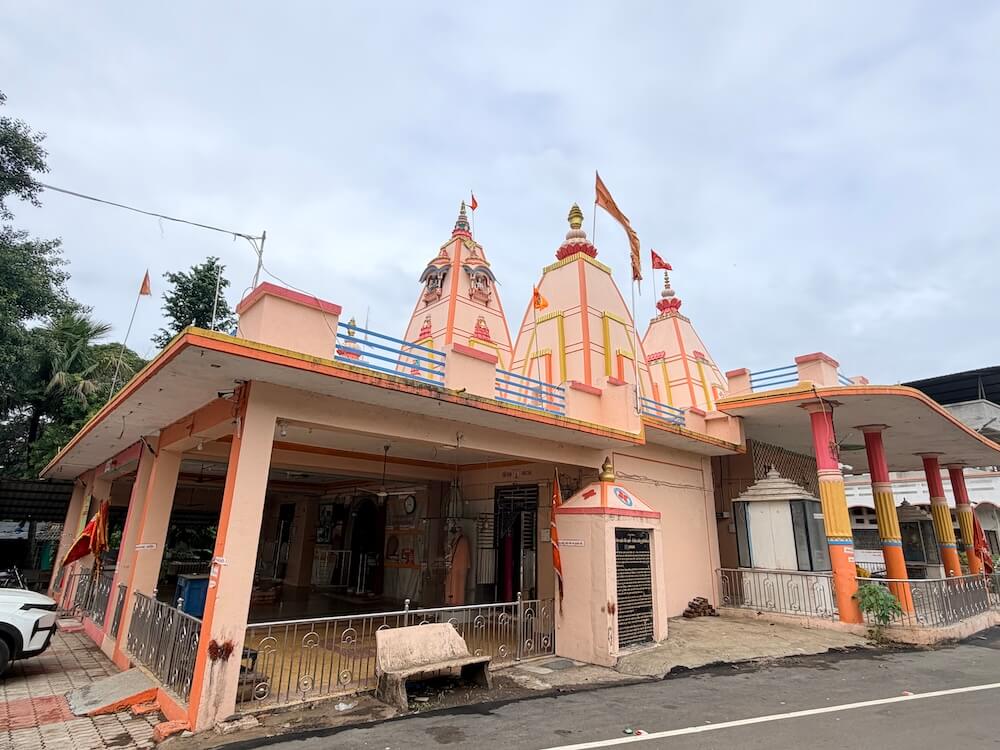
The temple stands beside the road leading to the village. The temple consists of a semi-open sabhamandapa (assembly hall) and three sanctums.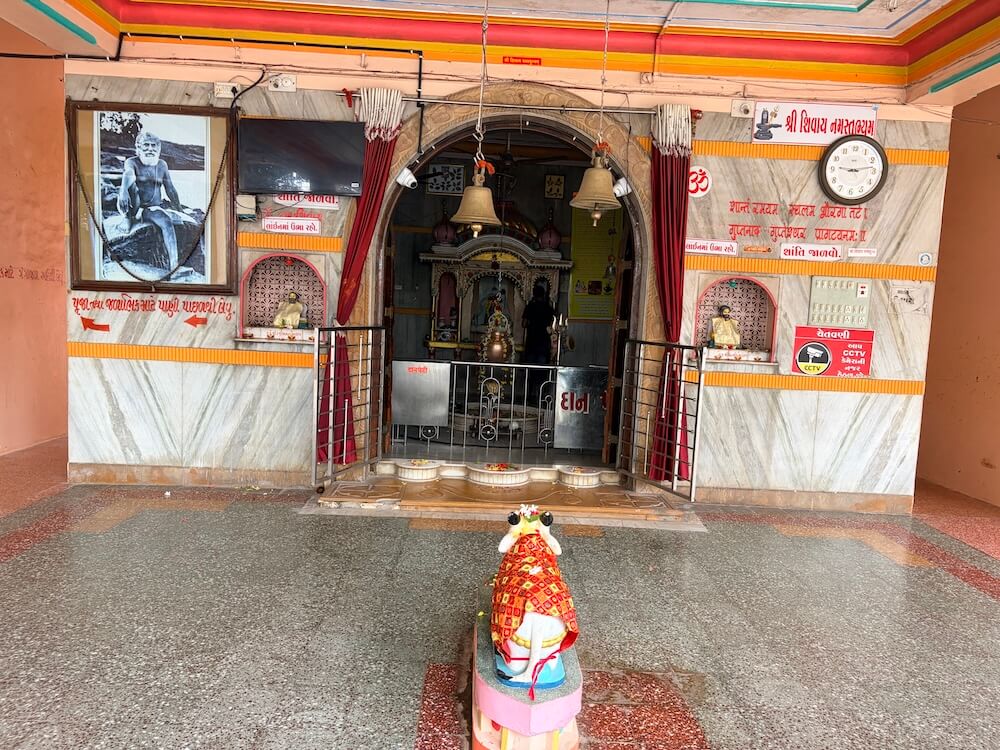 In the assembly hall, directly before the sanctum of Gupteshwar Mahadev, stands a white marble idol of Nandi upon a raised platform. Niches on the front wall of the sanctum contain the idols of Rang Avadhoot Maharaj on the right and Chandramani Maharaj on the left. The arched doorway to the sanctum is decorated with intricate carvings.
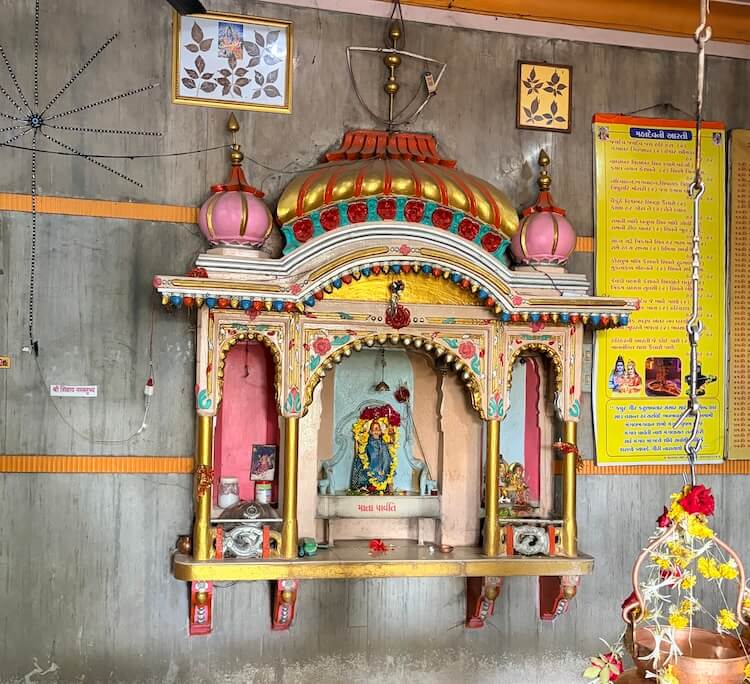
Inside the sanctum, the original Shivlinga of Gupteshwar is encircled by a white marble shalunka. A brass serpent holds a protective canopy above the Linga, while a copper vessel suspended from the ceiling provides a continuous stream of water for the ritual abhishek. A trident and a damaru stand beside the Linga. A beautifully crafted shrine on the rear wall houses an idol of Goddess Parvati.
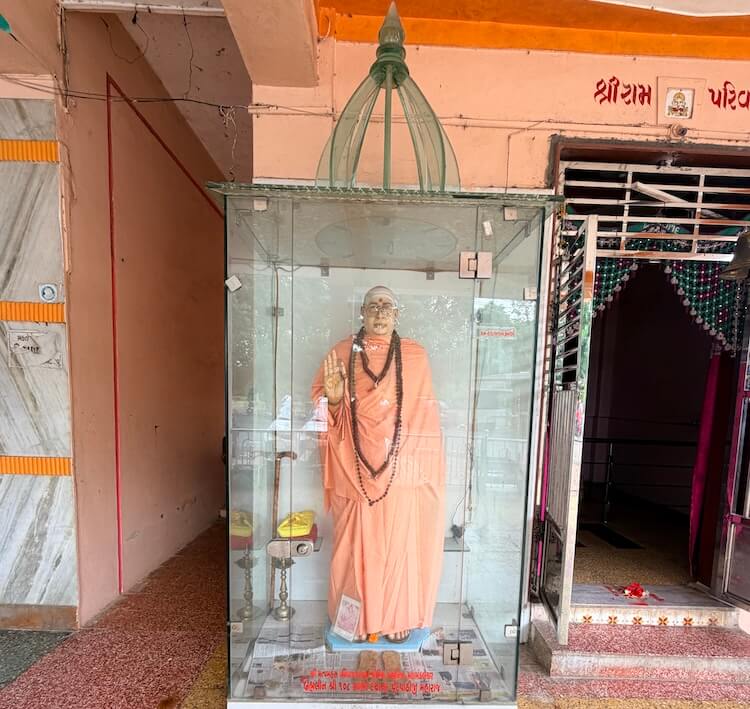
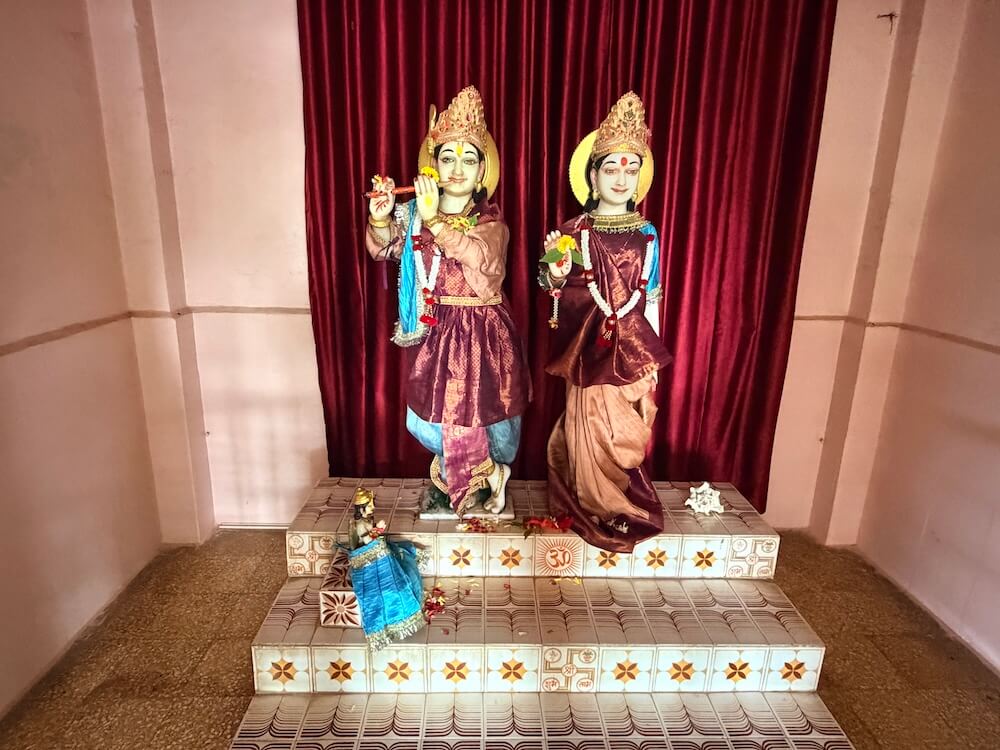
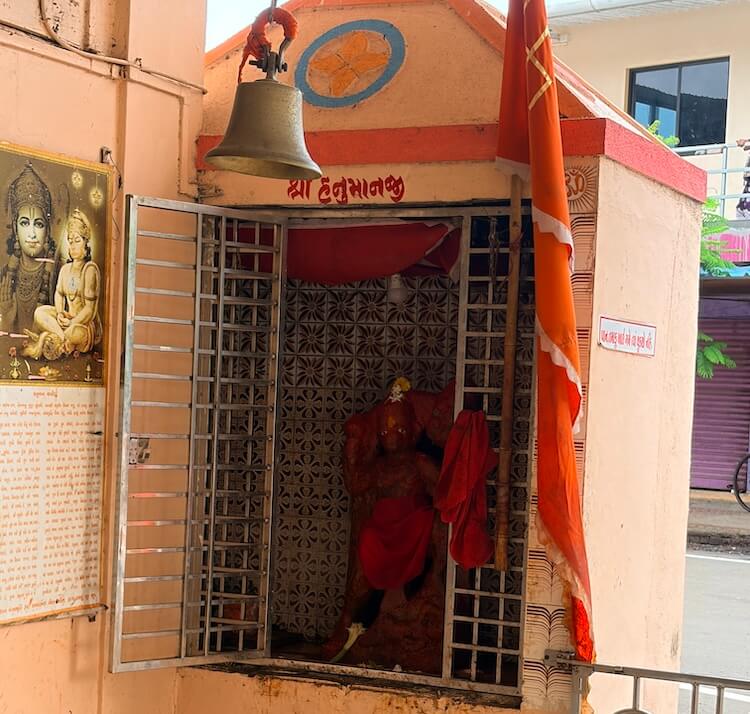
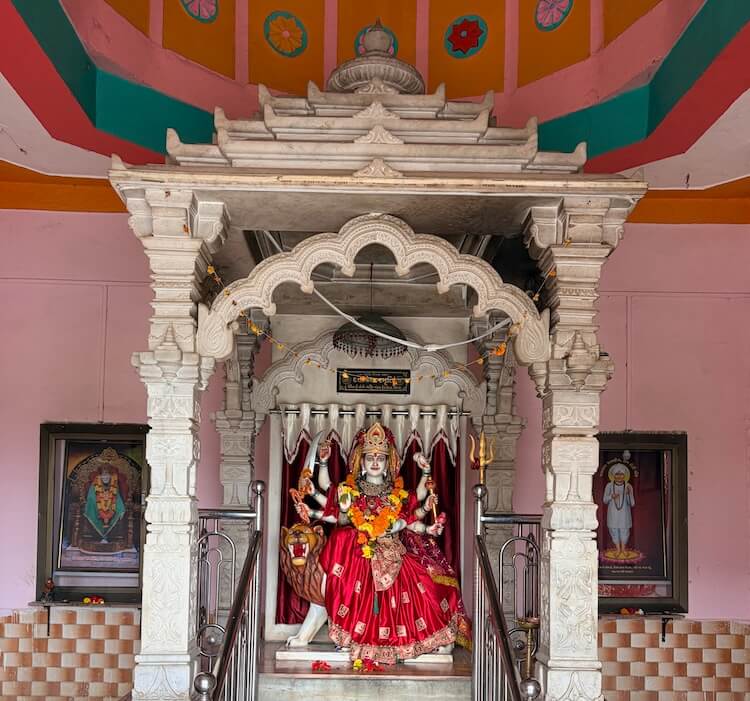
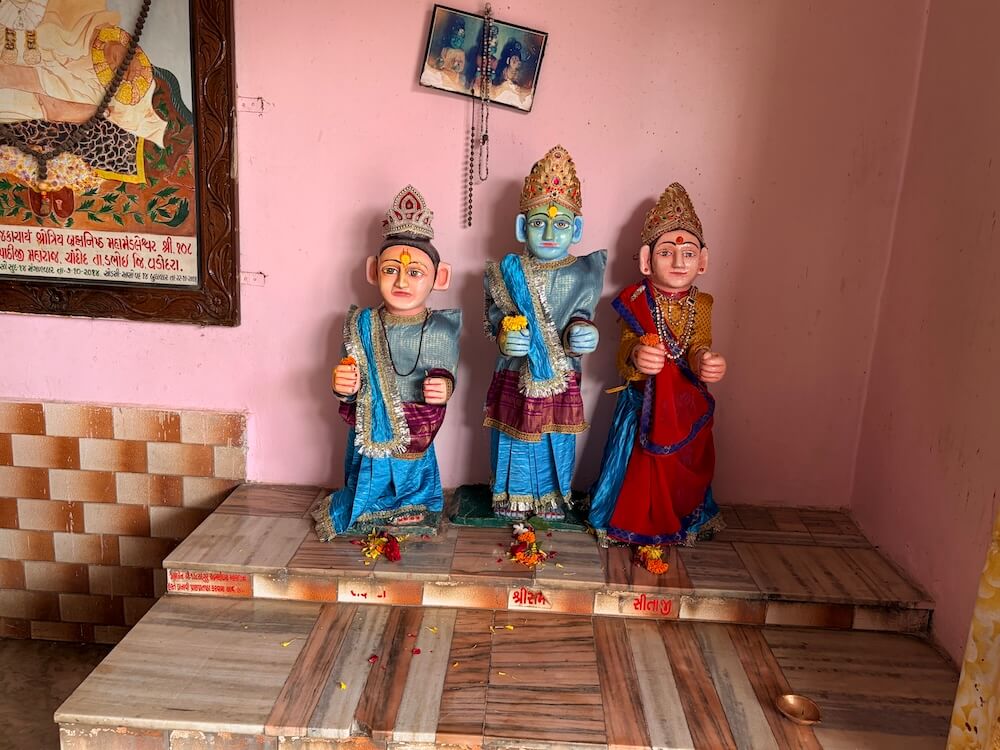
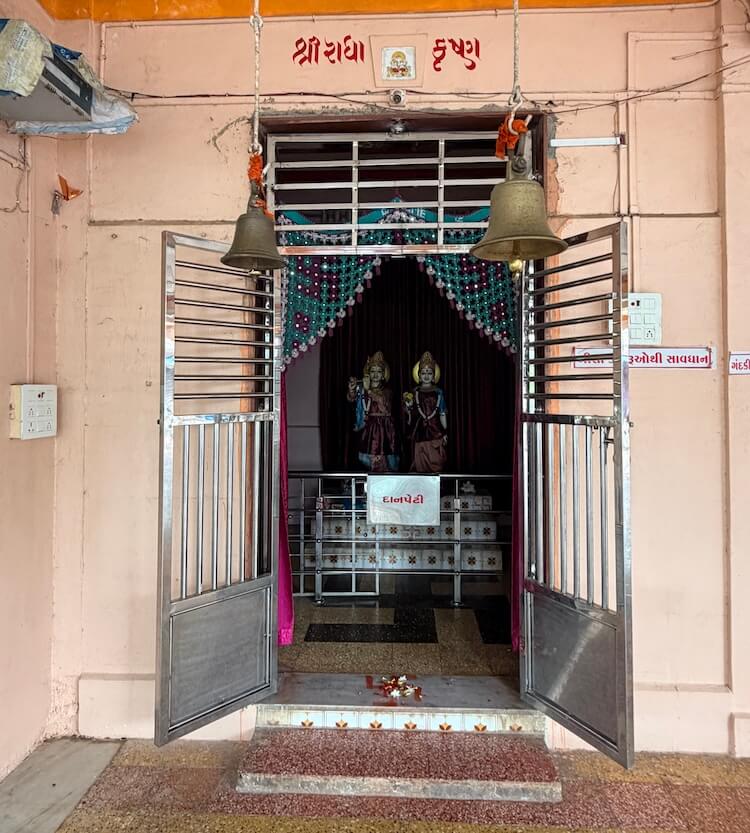 The two subsidiary sanctums adjoining the main shrine contain the idols of Lord Shri Ram, Goddess Sita and Lord Lakshmana and those of Radha and Lord Krishna. Beside the idol of Lord Rama stands Lord Hanuman, while Garuda is enshrined beside Lord Krishna. The temple complex also includes a separate shrine dedicated to Ambaji Mata.
Devotees may have the darshan of Gupteshwar Mahadev every day from 6.00 a.m. to 12.00 noon and from 4.00 p.m. to 8.00 p.m. The morning Mangala Aarti is performed daily at 6.30 a.m., while the evening Aarti takes place at 7.00 p.m. The temple’s largest annual celebration is Maha Shivaratra. On this occasion, a grand pilgrimage fair is organised every year. Thousands of devotees bathe in the sacred bathing tank before offering prayers to Lord Mahadev. The temple grounds come alive with shops selling religious articles, household goods, food and refreshments, while large crowds of pilgrims fill the entire area. One of the principal attractions of the fair is the giant Ferris wheels erected during the festivities.
Throughout the holy month of Shravan, special worship, abhishek and religious programmes are organised every Monday and continue throughout the month. The temple attracts a large number of devotees during this period. In addition, festivals such as Rama Navami, Krishna Janmashtami, Navratri and other major Hindu celebrations are observed here with traditional religious ceremonies.
Useful Information :
- Located at 5 km from Khergam and 51 km from Navsari city.
- State Transport (ST) bus services are available from Khergam.
- Private vehicles can reach the temple directly.
- Accommodation and breakfast facilities are available nearby.
गुप्तेश्वर महादेव मंदिर
नन्दई-भैरवी, ताल. खेरगाम, जिला. नवसारी
मंदिरे
Temples
मंदिर
મંદિરો
கோவில்கள்
దేవాలయాలు
ക്ഷേത്രങ്ങൾ
ದೇವಾಲಯಗಳು
মন্দিরসমূহ
ਮੰਦਿਰ
-
आशापुरी माता मंदिर विजलपूर मेन रोड, नवसारी, ता./जि. नवसारी
अधिक माहितीAshapuri Mata Temple Vijalpore Main Road, Navsari, Tal./Dist. Navsari
View Detailsआशापुरी माता मंदिर विजलपोर मेन रोड, नवसारी, ताल./जिला. नवसारी
विवरण देखेंAshapuri Mata Temple Vijalpore Main Road, Navsari, Tal./Dist. Navsari
વિગત જુઓAshapuri Mata Temple Vijalpore Main Road, Navsari, Tal./Dist. Navsari
விவரங்களைக் காண்கAshapuri Mata Temple Vijalpore Main Road, Navsari, Tal./Dist. Navsari
వివరాలను చూడండిAshapuri Mata Temple Vijalpore Main Road, Navsari, Tal./Dist. Navsari
വിശദാംശങ്ങൾ കാണുകAshapuri Mata Temple Vijalpore Main Road, Navsari, Tal./Dist. Navsari
ವಿವರಗಳನ್ನು ವೀಕ್ಷಿಸಿAshapuri Mata Temple Vijalpore Main Road, Navsari, Tal./Dist. Navsari
বিস্তারিত দেখুনAshapuri Mata Temple Vijalpore Main Road, Navsari, Tal./Dist. Navsari
ਵੇਰਵੇ ਦੇਖੋ -
चौसठ जोगणी माता मंदिर माळवाडा, ता. चिखली, जि. नवसारी
अधिक माहितीChausath Jogani Mata Temple Malwada, Tal. Chikhli, Dist. Navsari
View Detailsचौसठ जोगणी माता मंदिर मालवाड़ा, ताल. चिखली, जिला. नवसारी
विवरण देखेंChausath Jogani Mata Temple Malwada, Tal. Chikhli, Dist. Navsari
વિગત જુઓChausath Jogani Mata Temple Malwada, Tal. Chikhli, Dist. Navsari
விவரங்களைக் காண்கChausath Jogani Mata Temple Malwada, Tal. Chikhli, Dist. Navsari
వివరాలను చూడండిChausath Jogani Mata Temple Malwada, Tal. Chikhli, Dist. Navsari
വിശദാംശങ്ങൾ കാണുകChausath Jogani Mata Temple Malwada, Tal. Chikhli, Dist. Navsari
ವಿವರಗಳನ್ನು ವೀಕ್ಷಿಸಿChausath Jogani Mata Temple Malwada, Tal. Chikhli, Dist. Navsari
বিস্তারিত দেখুনChausath Jogani Mata Temple Malwada, Tal. Chikhli, Dist. Navsari
ਵੇਰਵੇ ਦੇਖੋ -
गंगेश्वर महादेव मंदिर कचोली, ता. गाणदेवी, जि. नवसारी
अधिक माहितीGangeshwar Mahadev Temple Kachholi, Tal. Gandevi, Dist. Navsari
View Detailsगंगेश्वर महादेव मंदिर कछोली, ताल. गणदेवी, जिला. नवसारी
विवरण देखेंGangeshwar Mahadev Temple Kachholi, Tal. Gandevi, Dist. Navsari
વિગત જુઓGangeshwar Mahadev Temple Kachholi, Tal. Gandevi, Dist. Navsari
விவரங்களைக் காண்கGangeshwar Mahadev Temple Kachholi, Tal. Gandevi, Dist. Navsari
వివరాలను చూడండిGangeshwar Mahadev Temple Kachholi, Tal. Gandevi, Dist. Navsari
വിശദാംശങ്ങൾ കാണുകGangeshwar Mahadev Temple Kachholi, Tal. Gandevi, Dist. Navsari
ವಿವರಗಳನ್ನು ವೀಕ್ಷಿಸಿGangeshwar Mahadev Temple Kachholi, Tal. Gandevi, Dist. Navsari
বিস্তারিত দেখুনGangeshwar Mahadev Temple Kachholi, Tal. Gandevi, Dist. Navsari
ਵੇਰਵੇ ਦੇਖੋ