
हाफेश्वर महादेव मंदिर
हणफ, ता. कवंत, जि. छोटा उदेपूर
Hafeshwar Mahadev Temple
Hanf, Tal. Kavant, Dist. Chhota Udepur
 The Hafeshwar Mahadev Temple, nestled within the Kavant taluka of the Chhota Udepur district, stands as a renowned and ancient sanctuary currently submerged within the waters of the Narmada River. Generally, Hindu temples are discovered perched upon mountain peaks, lining the banks of reservoirs or sprawling across flat plains. However, the number of shrines that have been completely inundated due to natural or man-made transformations remains exceptionally few. This select group of submerged sanctuaries includes the Stambheshwar Temple on the Arabian Sea coast of Gujarat, the Gopinath Temple within the Mahanadi River basin in Odisha, the Sangameshwar Temple in Andhra Pradesh, the Venugopalaswamy Temple in Karnataka and the Palasnath Temple in Maharashtra.
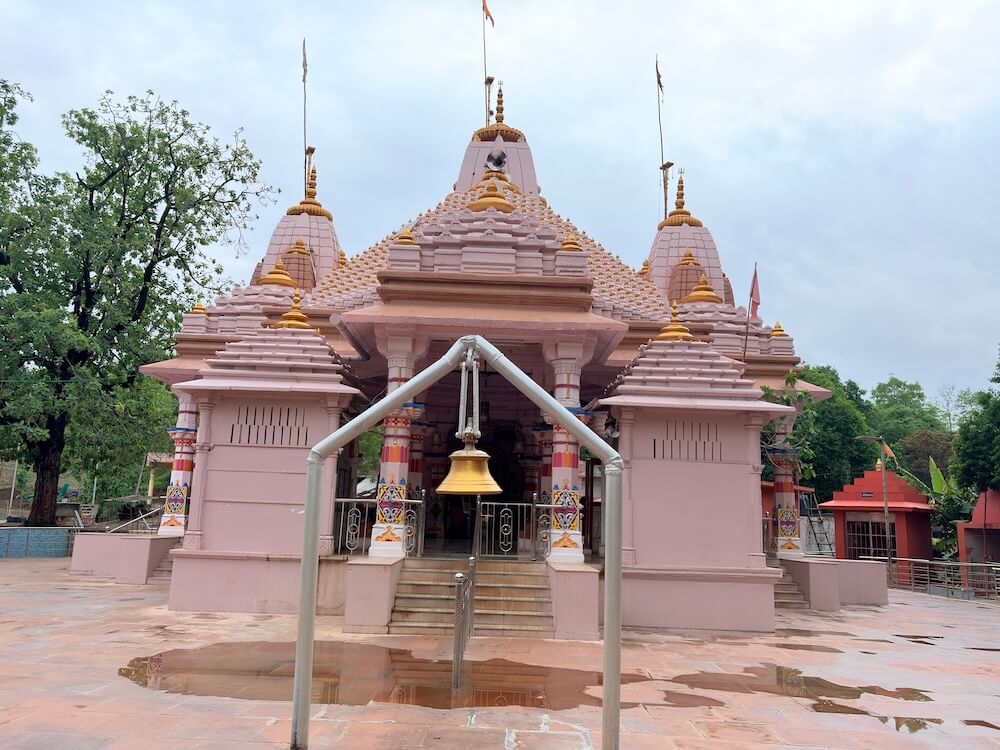
  The shrine of Hafeshwar Mahadev belongs to this unique lineage. While the original temple has been submerged following the construction of the Sardar Sarovar Dam, a magnificent new temple has been erected directly upon the riverbank.
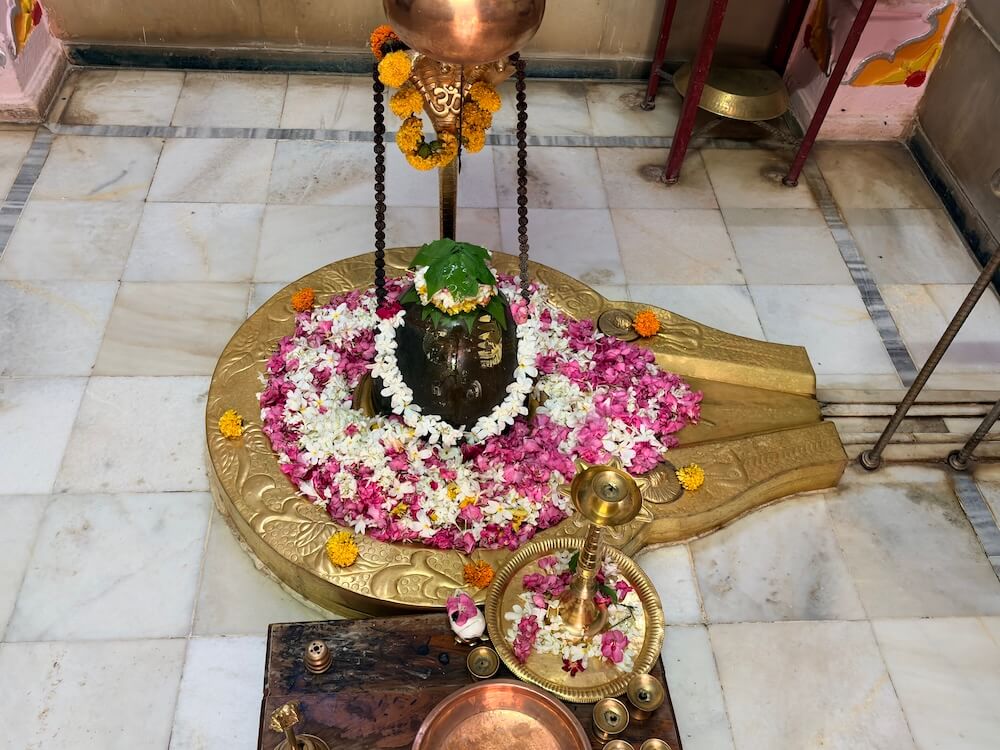
The original temple was constructed during the twelfth century. Certain historical references indicate that the ruling kings of the princely state of Chhota Udepur founded it. At present, only the sacred flag and a fraction of the temple spire (shikhara) are visible above the river waters. When the water level rises, devotees have to journey by boat to obtain a glimpse (darshan) of this ancient structure and its floating flag. Consecrated within the newly constructed riverside temple is the primordial phallic emblem (shivlinga) salvaged from the submerged temple.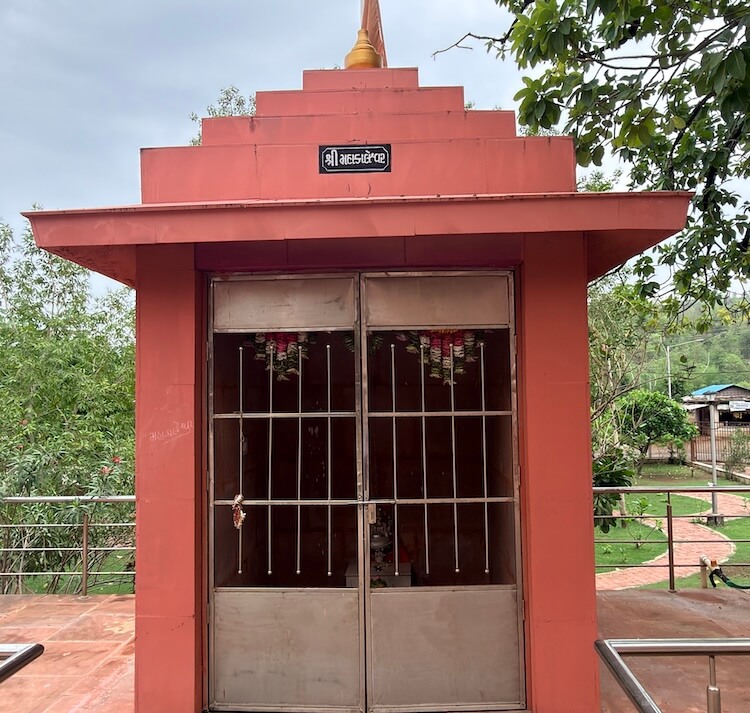
Legend has it that Sage Markandeya originally narrated the spiritual significance of this shrine to King Yudhishthira. According to the lore, in ancient epochs, a sage named Kalahansa performed rigorous austerities at this spot to propitiate Lord Shiva. To test the sage’s devotion, Indra, the king of the gods, manifested before him and inquired about his desires. Bowing before Indra, Sage Kalahansa expressed a singular yearning—to experience the direct, divine presence of Lord Shiva. Blessed by Indra, Sage Kalahansa was granted a direct vision of Lord Shiva. The sage then implored Mahadev to sanctify this ground and reside here eternally. Lord Shiva bestowed a holy vow upon the sage, proclaiming that any mortal who performs or facilitates worship, sacrificial offerings (yajna), charity and virtuous deeds at this spot shall attain absolute liberation (moksha) in the heavenly realms. 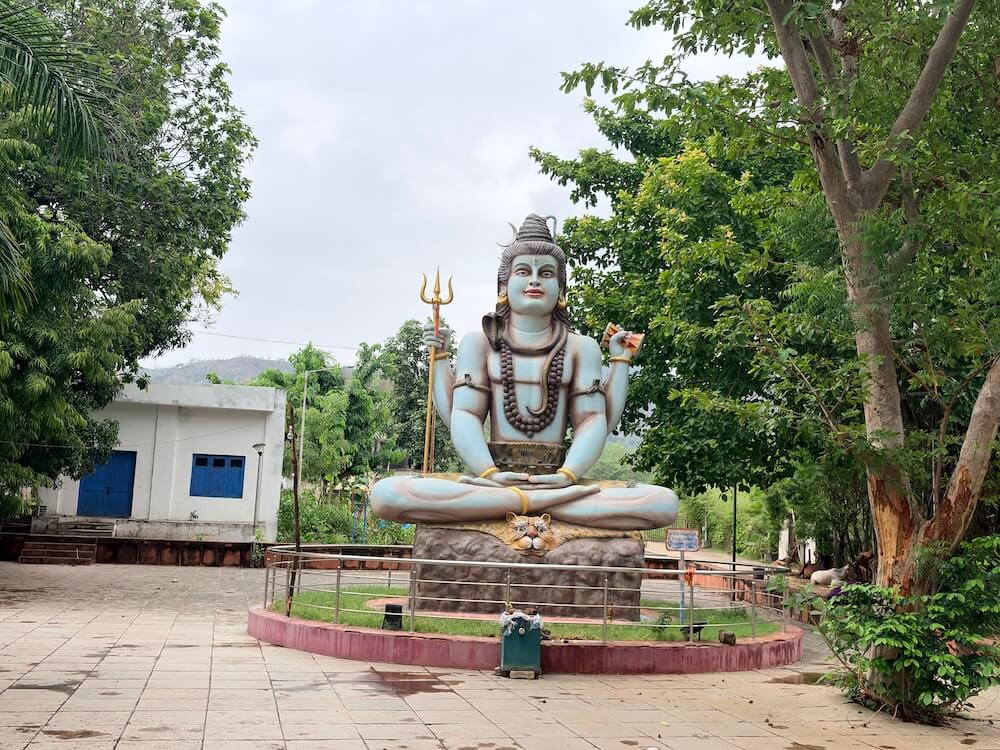 Due to the intense penance of Sage Kalahansa, the consecrated shivling at this spot initially came to be known as Kalhansheshwar Mahadev. Since this temple was situated in the village of Hanf, it subsequently came to be known as Hafeshwar Mahadev. According to local legend, pilgrims historically had to traverse towering mountains and treacherous, rocky pathways to reach this sacred shrine. The arduous journey left the devotees thoroughly exhausted. As they arrived, they would be panting heavily for breath (colloquially termed ‘haanf padta hai’). It was from this specific physical trial that the location subsequently acquired the name of ‘Hafeshwar’.
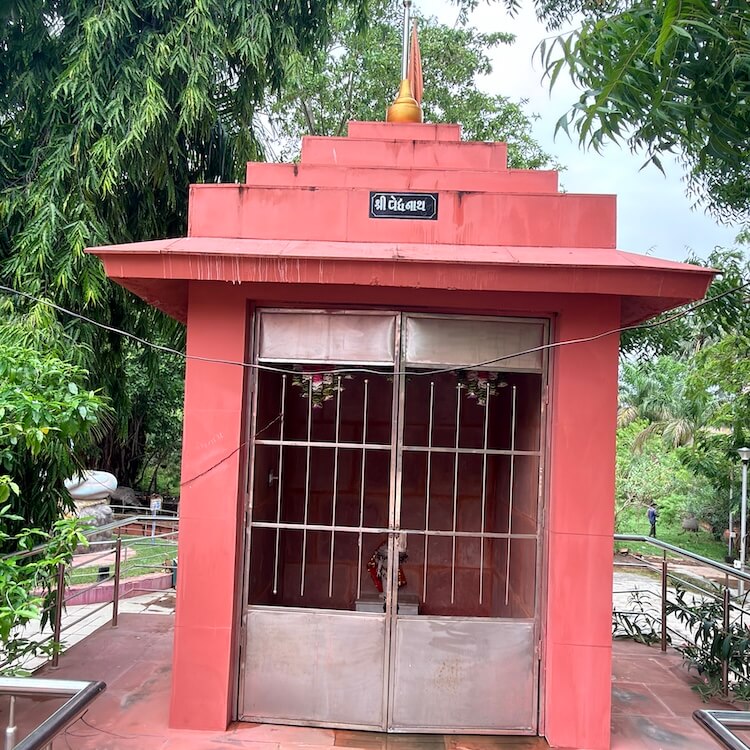
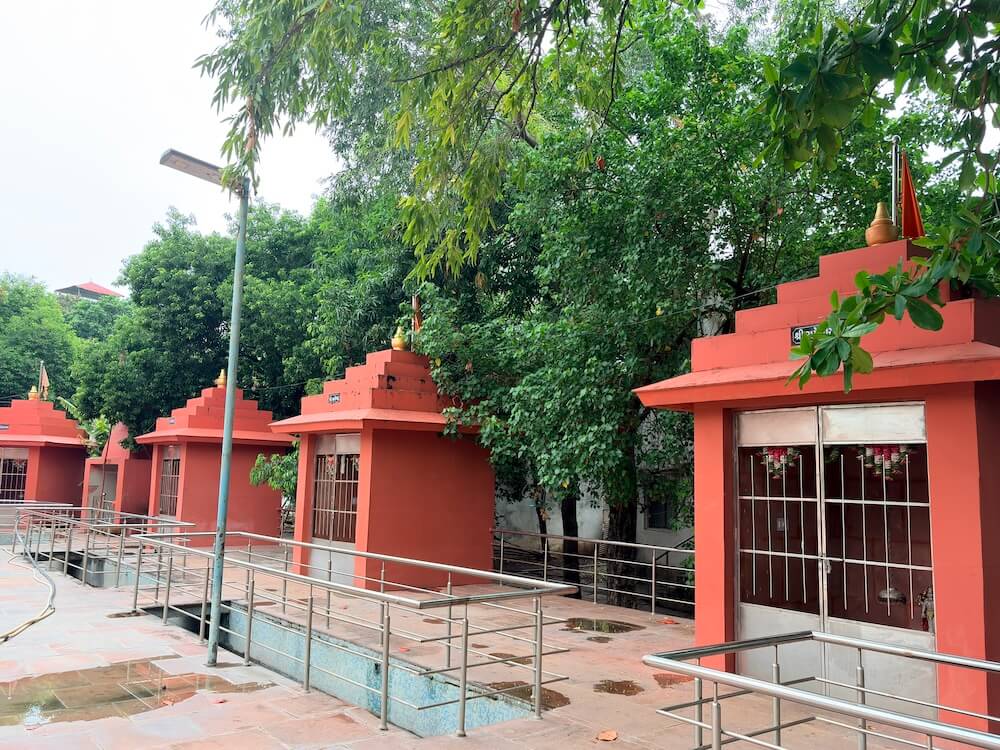
A paved parking facility has been constructed near the temple premises for the convenience of visiting vehicles. A protective iron mesh fence and a grand entry gate enclose this newly erected temple complex. Elevated within the paved courtyard stands a colossal sculpture depicting a four-armed Lord Shiva seated in deep meditation. 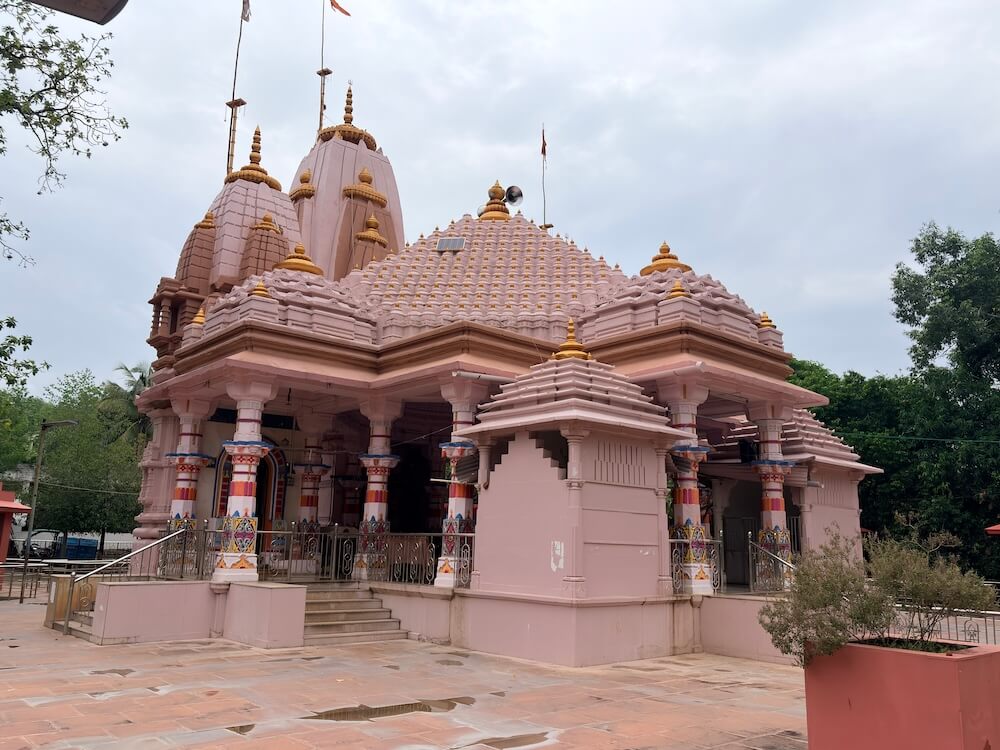 Flanking the courtyard in all four cardinal directions are smaller sub-shrines that house intricate replicas of the twelve sacred Jyotirlingas.
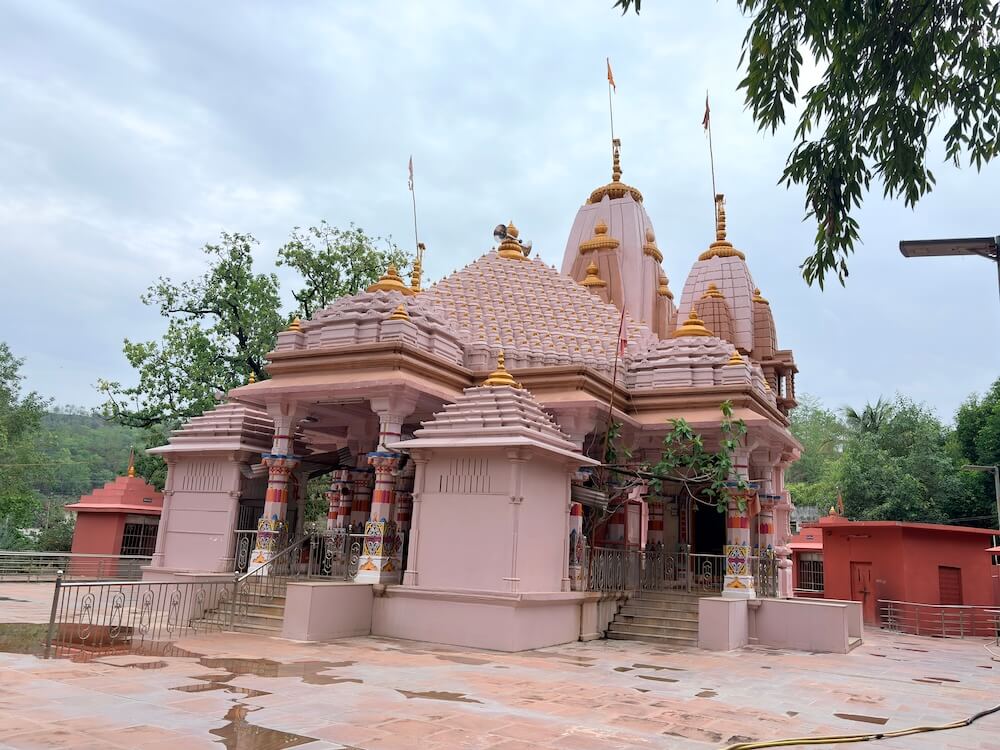
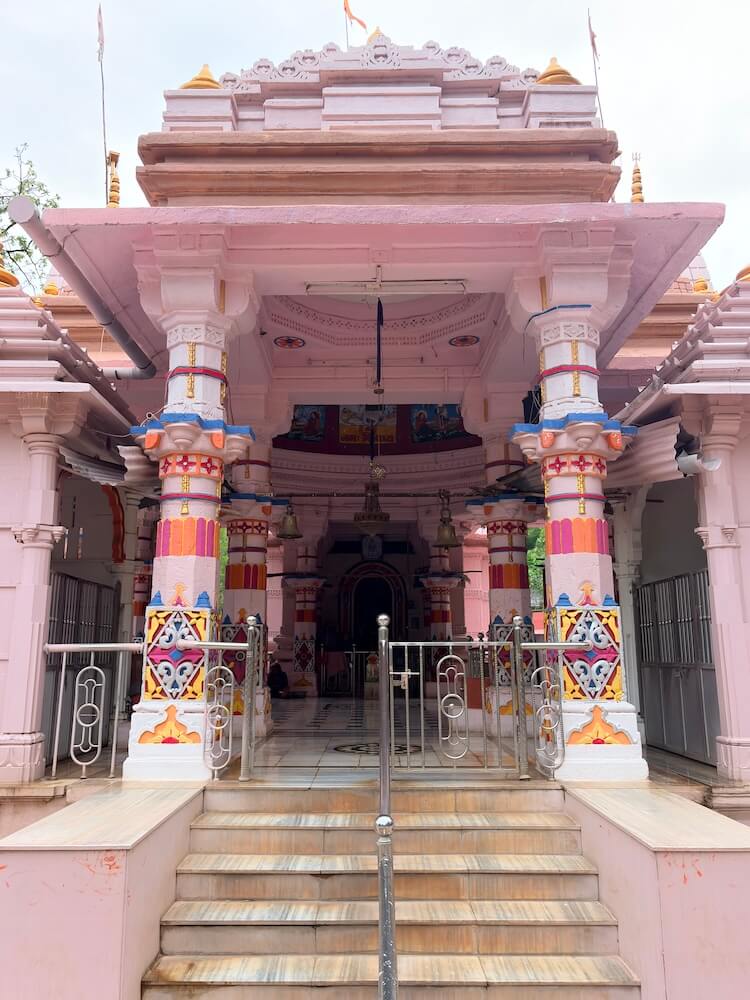
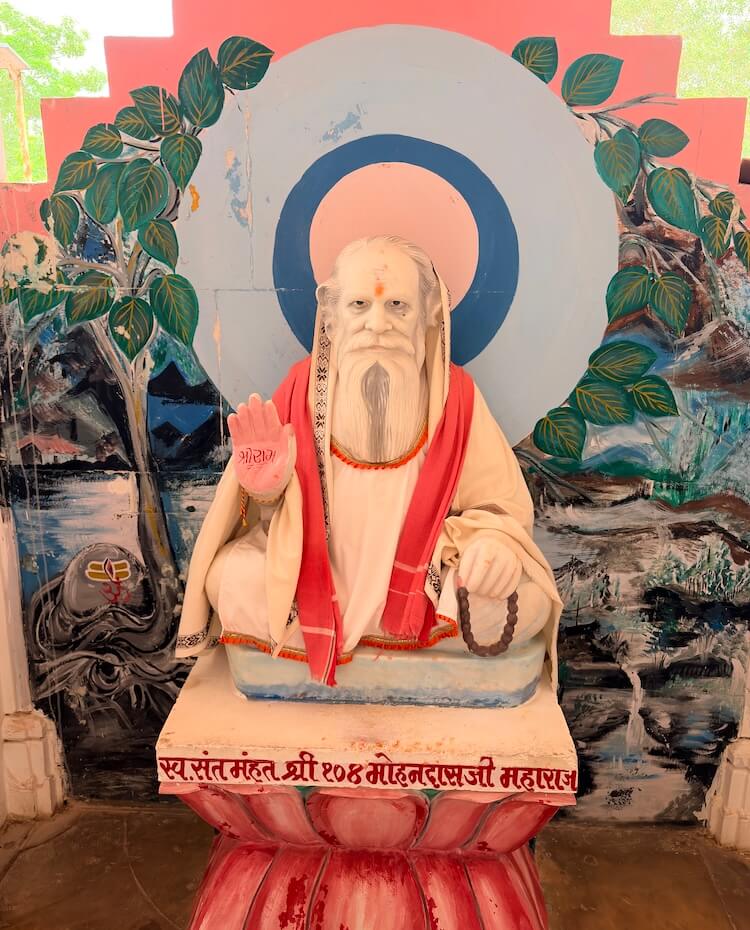
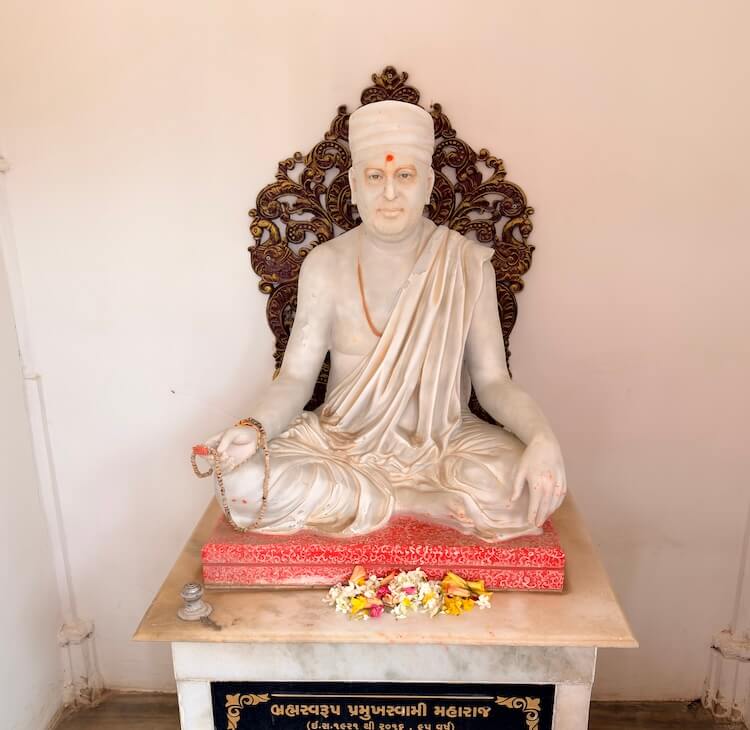
The temple has a traditional design with three front porches, a main assembly hall, a small entrance room and the main holy chamber, all built on a raised platform about three feet high. The roofs covering the three front porches and the central assembly hall are capped with square, tapering spires. These spires are embellished with hundreds of matching miniature auxiliary spires built in the traditional urushringa architectural style. The apexes of these primary spires culminate in classical finials (stupikas) topped with sacred pots (kalasas). The structure above the main sanctum rises into a towering, square-based spire that tapers gradually towards the sky. It is decorated on all four faces with rows of small auxiliary spires (angashikharas). Each of the three front porches is fronted by five steps. 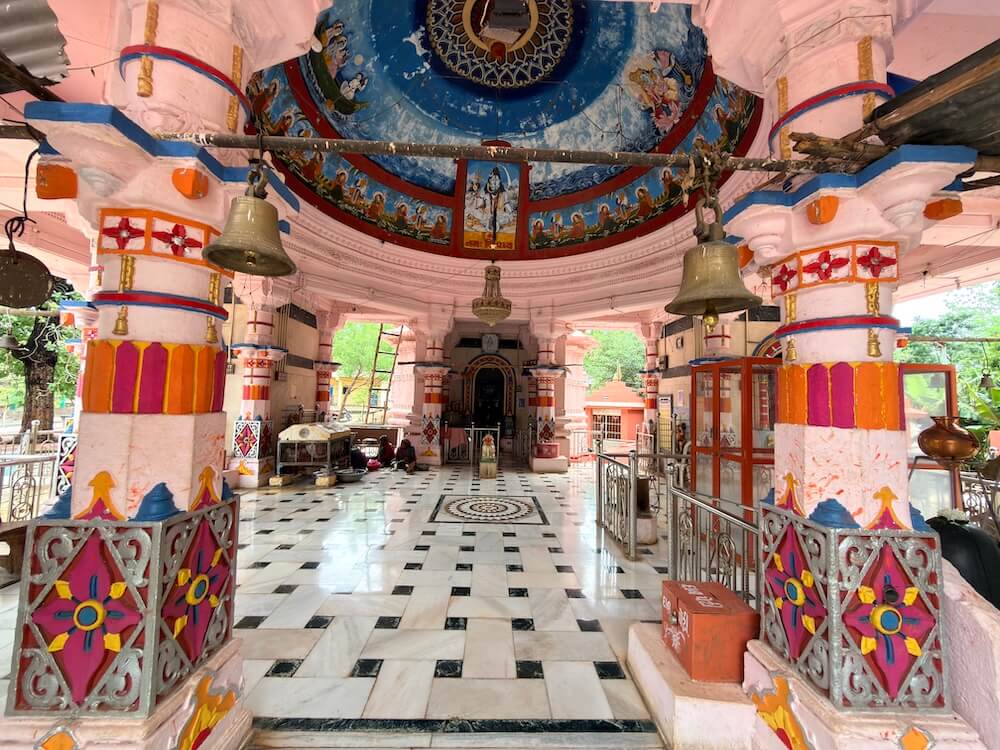 Positioned to the left and right sides of the main entrance porch are two dedicated chambers enshrining the statues of the shrine’s late spiritual preceptors, Mahant Mohandas and Nakulswami Maharaj.
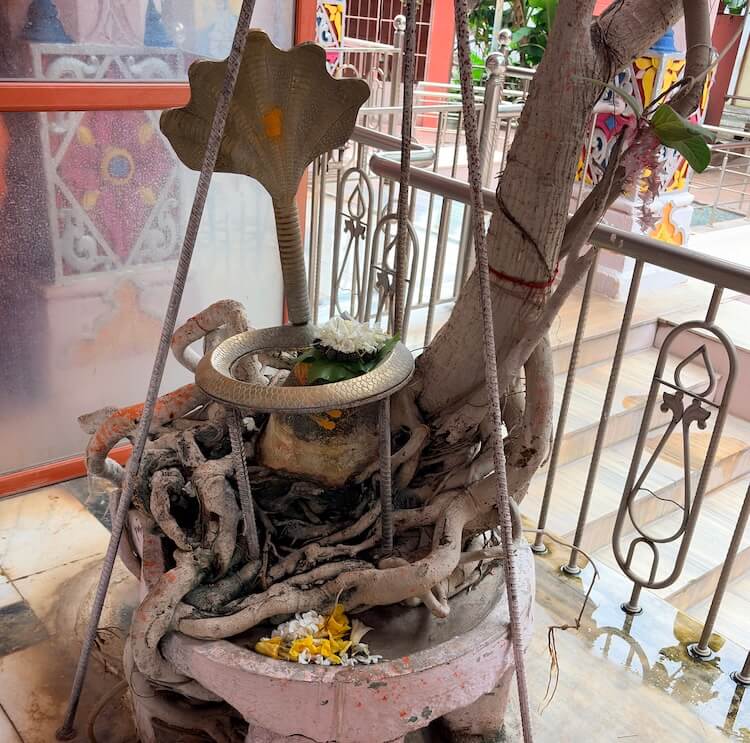
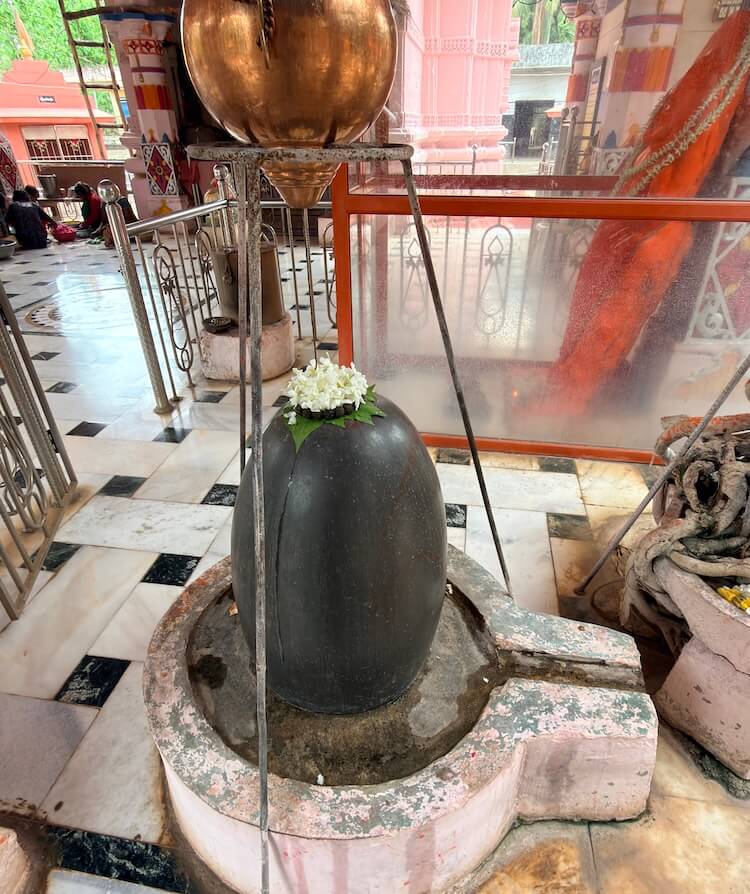
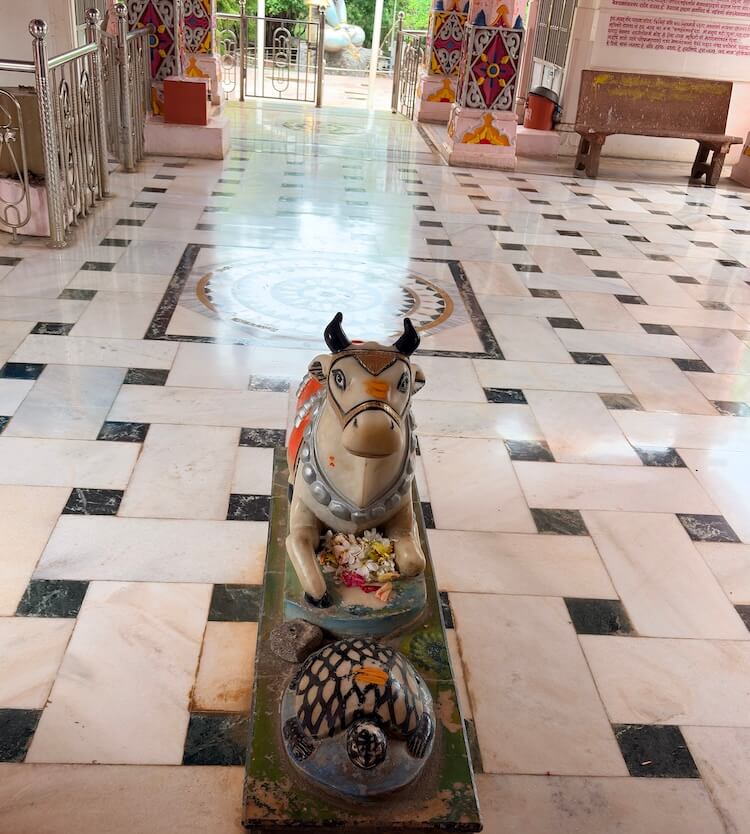
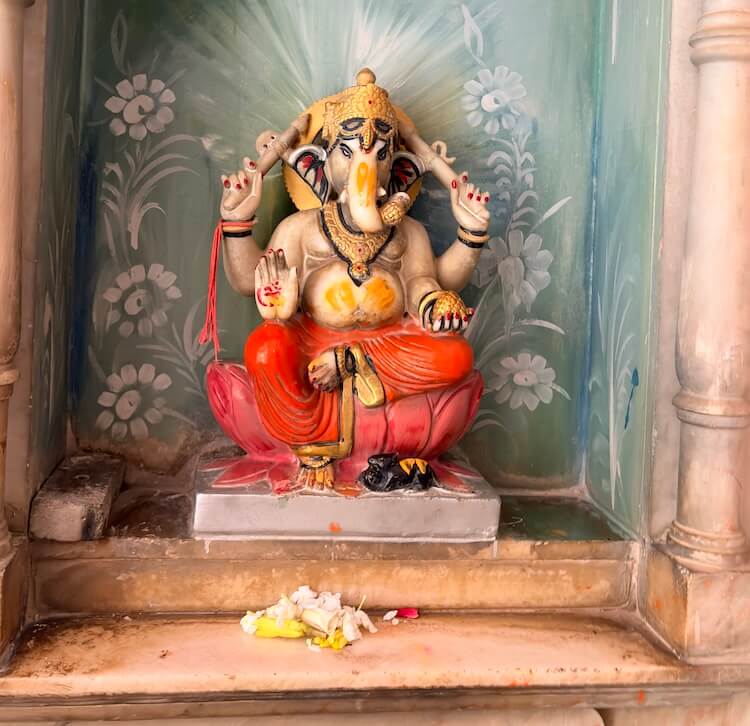
The semi-open porches and the assembly hall (sabhamandap) are supported by magnificently carved columns. The upper shafts of these pillars culminate in classical capital brackets adorned with detailed relief carvings. The dome-shaped ceiling of the assembly hall is beautifully painted with vibrant depictions of various Hindu deities. Rising through the assembly hall beneath the canopy of an overhanging banyan tree are two shivpindis enclosed within a square stainless-steel balustrade. 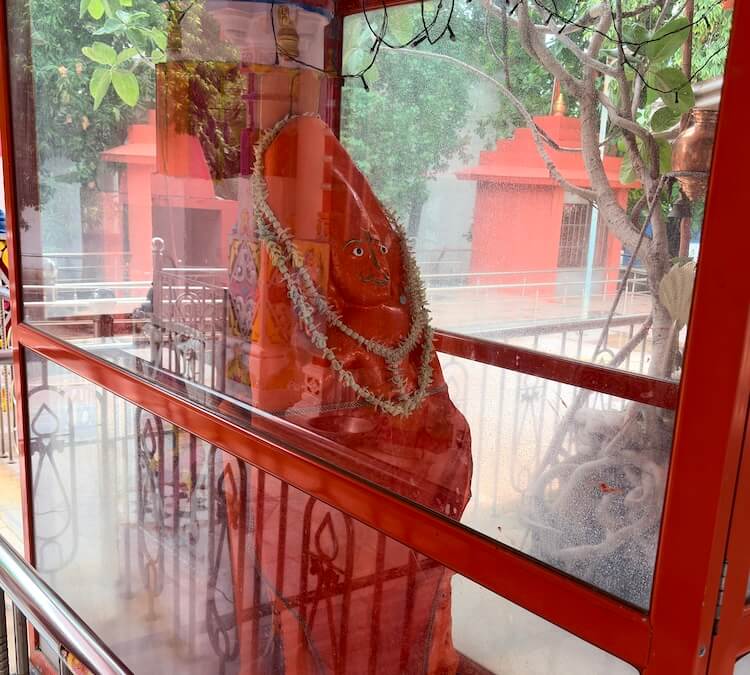 Enshrined immediately adjacent to this area, within a dedicated glass enclosure, is a stone idol of Lord Hanuman coated in traditional vermilion. Consecrated upon a stone pedestal directly fronting the entrance to the antechamber are masterfully sculpted representations of Nandi facing a sacred stone tortoise. The left and right walls of the antechamber house dedicated niches enshrining elegant idols of Lord Ganesha and Lord Hanuman respectively.
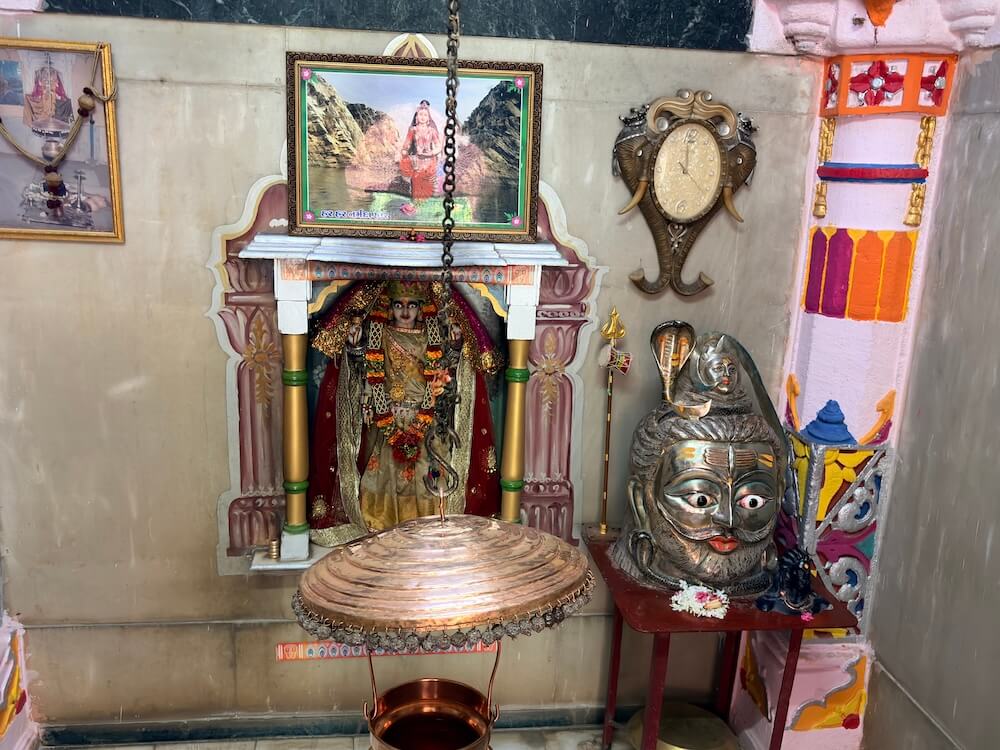
The door jambs of the primary sanctum sanctorum display detailed relief carvings, with a fine sculpture of Lord Ganesha gracing the central lintel (lalatabimba). The entrance is embellished with painted depictions of traditional gatekeepers (dwarpalas), while the threshold features a classical moon-stone (chandrashila) flanked on either side by protective tiger-faced (vyaghramukha) motifs. Consecrated at the exact centre of the sanctum floor is the primordial shivpindi, which was successfully relocated from the ancient submerged temple in the riverbed. 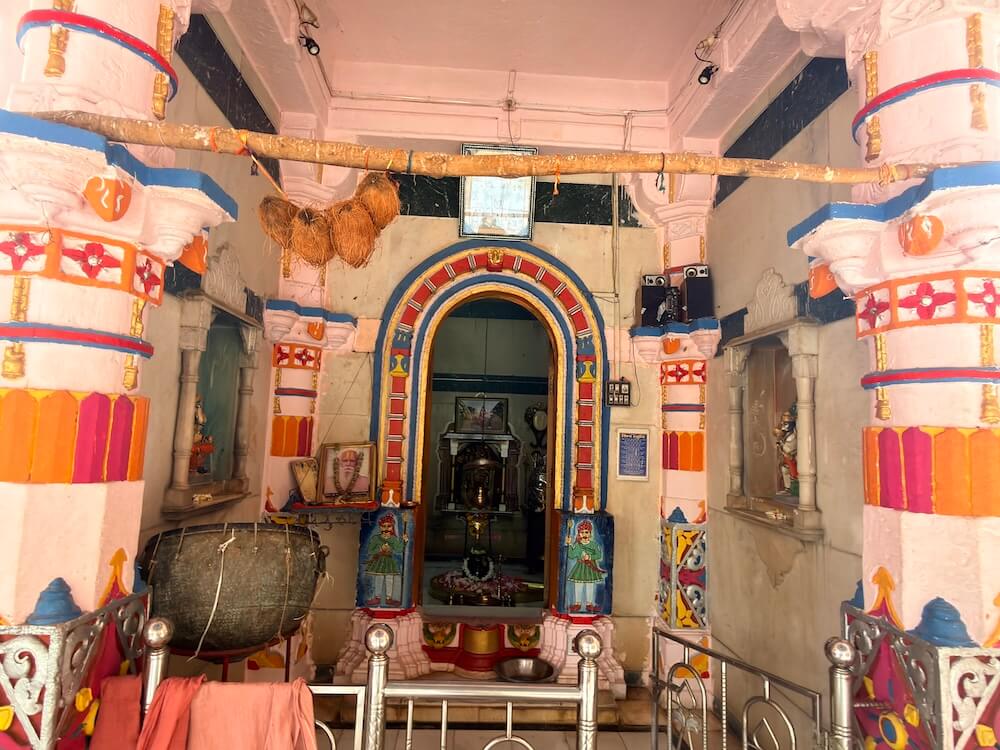 This sacred emblem is encased in a highly polished brass sheet, surmounted by a copper serpent deity (Nagraj) forming a protective canopy, while a ritual vessel (abhishekpatra) remains suspended from the ceiling to ensure a continuous holy drip. Enshrined within a beautifully sculpted niche on the rear wall behind the main deity is an idol of Mother Parvati.
Elevated upon the main plinth, to the right and left sides of the primary sanctum, stand two additional subsidiary shrines. The shrine on the left houses the beautifully consecrated idols of Lord Ram, Laxman, Janaki and Hanuman upon a stone pedestal, while the shrine on the right enshrines an idol of Mother Amba. Both of these subsidiary structures are crowned with soaring, square-based spires.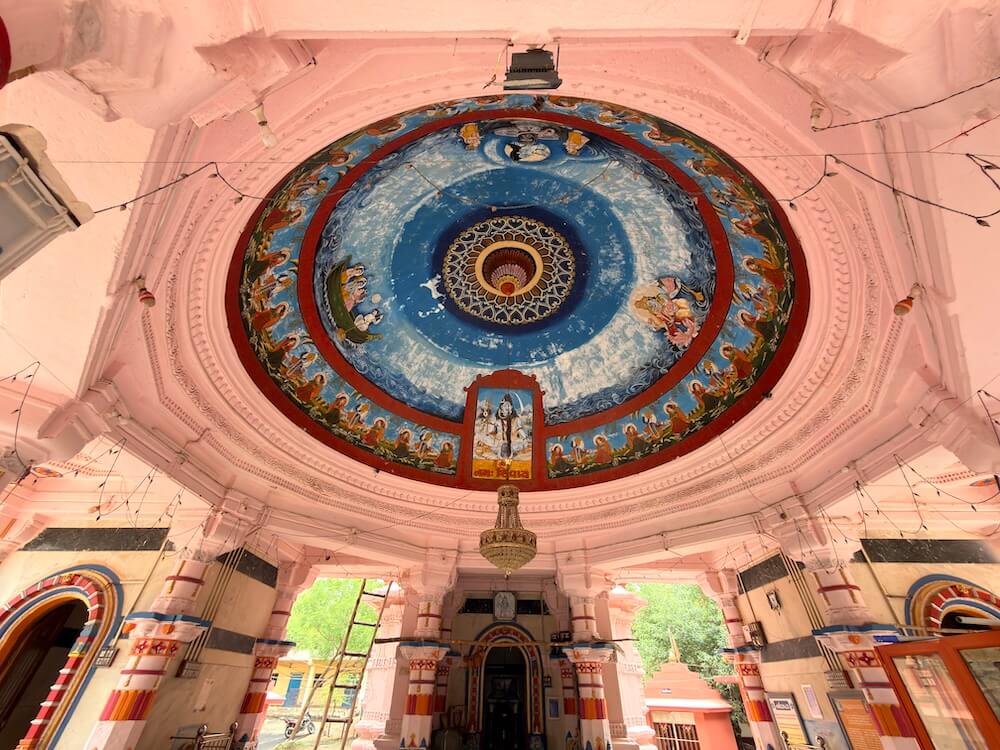
The festivals of Mahashivratri and Shravan Mondays stand as the prominent annual celebrations observed at the temple premises. Additionally, major festivals such as Nag Panchami, Shri Krishna Janmotsav, Chaitra and Sharadiya Navratri, Ram Navami, Hanuman Jayanti, Diwali and Dussehra are celebrated here with immense public enthusiasm. During these festive periods, thousands of devotees from the surrounding regions converge upon the shrine to seek blessings. The temple trust organises Laghurudra, Maha Abhisheka, bhajans and kirtans and the distribution of mahaprasad. The temple witnesses a steady influx of pilgrims throughout the week, particularly on Mondays, Saturdays, Thursdays and during the auspicious lunar phases of Purnima and Amavasya. The temple doors remain open to welcome devotees for the darshan of Hafeshwar Mahadev daily from 6:00 am until 8:00 pm.
Useful Information :
- Situated at a distance of 18 km from Kavant
- Located 40 kilometres away from Chhota Udepur city
- State transport bus services to the location are available from Kavant.
- Private vehicles can drive directly up to the designated temple parking grounds.
- Lodging and breakfast facilities are not available in the immediate vicinity.
हफेश्वर महादेव मंदिर
हनफ, ताल. कावंत, जिला. छोटा उदेपुर
मंदिरे
Temples
मंदिर
મંદિરો
கோவில்கள்
దేవాలయాలు
ക്ഷേത്രങ്ങൾ
ದೇವಾಲಯಗಳು
মন্দিরসমূহ
ਮੰਦਿਰ
-
पंचेश्वर महादेव मंदिर हांडोड, ता. संखेडा, जि. छोटा उदेपूर
अधिक माहितीPancheshwar Mahadev Temple Handod, Tal. Sankheda, Dist. Chhota Udepur
View Detailsपंचेश्वर महादेव मंदिर हैंडोड, ताल. संखेडा, जिला. छोटा उदेपुर
विवरण देखेंPancheshwar Mahadev Temple Handod, Tal. Sankheda, Dist. Chhota Udepur
વિગત જુઓPancheshwar Mahadev Temple Handod, Tal. Sankheda, Dist. Chhota Udepur
விவரங்களைக் காண்கPancheshwar Mahadev Temple Handod, Tal. Sankheda, Dist. Chhota Udepur
వివరాలను చూడండిPancheshwar Mahadev Temple Handod, Tal. Sankheda, Dist. Chhota Udepur
വിശദാംശങ്ങൾ കാണുകPancheshwar Mahadev Temple Handod, Tal. Sankheda, Dist. Chhota Udepur
ವಿವರಗಳನ್ನು ವೀಕ್ಷಿಸಿPancheshwar Mahadev Temple Handod, Tal. Sankheda, Dist. Chhota Udepur
বিস্তারিত দেখুনPancheshwar Mahadev Temple Handod, Tal. Sankheda, Dist. Chhota Udepur
ਵੇਰਵੇ ਦੇਖੋ -
पशुपतीनाथ महादेव मंदिर नसवडी, ता. नसवडी, जि. छोटा उदेपूर
अधिक माहितीPashupatinath Mahadev Temple Naswadi, Tal. Naswadi, Dist. Chhota Udepur
View Detailsपशुपतिनाथ महादेव मंदिर नसवाडी, ताल. नसवाडी, जिला. छोटा उदेपुर
विवरण देखेंPashupatinath Mahadev Temple Naswadi, Tal. Naswadi, Dist. Chhota Udepur
વિગત જુઓPashupatinath Mahadev Temple Naswadi, Tal. Naswadi, Dist. Chhota Udepur
விவரங்களைக் காண்கPashupatinath Mahadev Temple Naswadi, Tal. Naswadi, Dist. Chhota Udepur
వివరాలను చూడండిPashupatinath Mahadev Temple Naswadi, Tal. Naswadi, Dist. Chhota Udepur
വിശദാംശങ്ങൾ കാണുകPashupatinath Mahadev Temple Naswadi, Tal. Naswadi, Dist. Chhota Udepur
ವಿವರಗಳನ್ನು ವೀಕ್ಷಿಸಿPashupatinath Mahadev Temple Naswadi, Tal. Naswadi, Dist. Chhota Udepur
বিস্তারিত দেখুনPashupatinath Mahadev Temple Naswadi, Tal. Naswadi, Dist. Chhota Udepur
ਵੇਰਵੇ ਦੇਖੋ -
नानी अंबाजी मंदिर जीवनपुरा, ता. नसवडी, जि. छोटा उदेपूर
अधिक माहितीNani Ambaji Temple Jeevanpura, Tal. Naswadi, Dist. Chhota Udepur
View Detailsनानी अम्बाजी मंदिर जीवनपुरा, ताल. नसवाडी, जिला. छोटा उदेपुर
विवरण देखेंNani Ambaji Temple Jeevanpura, Tal. Naswadi, Dist. Chhota Udepur
વિગત જુઓNani Ambaji Temple Jeevanpura, Tal. Naswadi, Dist. Chhota Udepur
விவரங்களைக் காண்கNani Ambaji Temple Jeevanpura, Tal. Naswadi, Dist. Chhota Udepur
వివరాలను చూడండిNani Ambaji Temple Jeevanpura, Tal. Naswadi, Dist. Chhota Udepur
വിശദാംശങ്ങൾ കാണുകNani Ambaji Temple Jeevanpura, Tal. Naswadi, Dist. Chhota Udepur
ವಿವರಗಳನ್ನು ವೀಕ್ಷಿಸಿNani Ambaji Temple Jeevanpura, Tal. Naswadi, Dist. Chhota Udepur
বিস্তারিত দেখুনNani Ambaji Temple Jeevanpura, Tal. Naswadi, Dist. Chhota Udepur
ਵੇਰਵੇ ਦੇਖੋ