स्वामीनारायण संप्रदायाचा इतिहास धरमपूर या ऐतिहासिक नगराशी घनिष्ठपणे जोडलेला आहे, जे वाकी नदीच्या काठावर वसलेले आहे, जिला ‘स्वर्गवाहिनी’ म्हणून ओळखले जाते. हा संबंध भगवान स्वामीनारायण यांच्या जीवनातील एका महत्त्वपूर्ण घटनेतून निर्माण झाला आहे, ज्यांनी धरमपूरमध्ये सुमारे सहा महिने वास्तव्य केले होते. त्यांच्या भेटीने या नगराला त्यांच्या अनुयायांसाठी एक महत्त्वाचे तीर्थक्षेत्र बनवले. आज, बीएपीएस श्री स्वामीनारायण मंदिर या पवित्र संबंधाची चिरंतन आठवण म्हणून उभे आहे. ‘बोचासणवासी अक्षर पुरुषोत्तम स्वामीनारायण संस्था’ (बीएपीएस) द्वारे स्थापित, हे या क्षेत्रातील प्रमुख स्वामीनारायण मंदिरांपैकी एक आहे आणि ते संपूर्ण गुजरात आणि त्याबाहेरील भाविकांना आकर्षित करते.
स्वामीनारायण चळवळ एकोणिसाव्या शतकाच्या सुरुवातीस गुजरातमध्ये स्वामी सहजानंद यांच्या नेतृत्वाखाली उदयाला आली, ज्यांना त्यांचे अनुयायी भगवान स्वामीनारायण म्हणून पूजतात. त्यांचा जन्म १७८१ मध्ये घनश्याम पांडे म्हणून झाला. वयाच्या बाराव्या वर्षी त्यांनी सांसारिक जीवनाचा त्याग केला आणि संपूर्ण भारतात सात वर्षांच्या तीर्थयात्रेला सुरुवात केली. या काळात, ते नीलकंठ वर्णी म्हणून ओळखले जात होते आणि त्यांनी हिमालयातील तपश्चर्येसह कठोर आध्यात्मिक साधना केली. १८०० मध्ये, त्यांना सौराष्ट्रातील मांगरोळ येथे स्वामी मुक्तानंद यांच्याकडून दीक्षा मिळाली आणि नंतर पिपलाणा येथे गुरु रामानंद यांनी त्यांना अधिकृतपणे दीक्षा दिली.
गुजरातमध्ये स्थायिक झाल्यानंतर, सहजानंदांनी स्वतःला धार्मिक आणि सामाजिक सुधारणेसाठी समर्पित केले. रामानुजाचार्यांच्या ‘विशिष्टाद्वैत’ आणि वल्लभाचार्यांच्या ‘शुद्धाद्वैत’ या दार्शनिक परंपरांचा आधार घेऊन, त्यांनी भक्ती, नैतिक शिस्त आणि करुणा यावर केंद्रित असलेल्या मार्गाचा उपदेश केला. गुरु रामानंद यांनी त्यांना ‘सहजानंद’ हे नाव दिले. १८०१ मध्ये रामानंदांच्या निधनानंतर, सहजानंदांनी पंथाचे नेतृत्व स्वीकारले आणि त्याच्या कार्याचे पुनर्गठन केले. गावोगावी फिरून त्यांनी ‘स्वामीनारायण महामंत्रा’चा प्रसार केला आणि मोठ्या संख्येने अनुयायी जोडले. त्यांच्या आध्यात्मिक शिकवणीसोबतच, त्यांनी सती प्रथा, कन्या भ्रूणहत्या, पशुबळी, मद्यपान, जुगार, चोरी, व्यभिचार, अंधश्रद्धा आणि धार्मिक उत्सवांदरम्यान होणारी अश्लीलता यांसारख्या सामाजिक अनिष्ट प्रथांविरुद्ध मोहीम राबवली. जैन धर्माप्रमाणेच, त्यांच्या शिकवणीत अहिंसा आणि शाकाहारावर मोठा भर देण्यात आला होता. त्यांनी प्राण्यांच्या हत्येला, अगदी धार्मिक विधींचा भाग म्हणूनही, तीव्र विरोध केला. त्यांनी आपल्या अनुयायांसाठी एक कठोर नैतिक आचारसंहिता लागू केली आणि भगवान स्वामीनारायण हे भगवान श्रीकृष्णाचेच रूप असून ते पूर्ण भक्तीस पात्र आहेत, अशी शिकवण दिली. स्वामीनारायण परंपरेनुसार, त्यांनी नोव्हेंबर १८२० मध्ये गोपालनंद स्वामींना आपल्या दिव्य अवताराचा उद्देश सांगितला. १८३० मध्ये त्यांनी आपला नश्वर देह त्यागला.
आपल्या निधनापूर्वी, स्वामीनारायणांनी १८२५ मध्ये पंथाच्या दोन मुख्य गादींची स्थापना केली. पहिली, अहमदाबाद येथील, ‘नर-नारायण देव गादी’ बनली, तर दुसरी, वडताल येथील, ‘लक्ष्मी-नारायण देव गादी’ बनली. त्यांनी अशी आज्ञा दिली की आचार्यांचे पद वंशपरंपरागत असावे. त्यानुसार, त्यांचे थोरले बंधू रामप्रताप पांडे यांचे पुत्र अयोध्याप्रसाद यांची अहमदाबाद गादीचे आचार्य म्हणून नियुक्ती करण्यात आली, तर त्यांचे धाकटे बंधू इच्छाराम यांचे पुत्र रघुवीर हे वडताल गादीचे आचार्य झाले.
१९०५ मध्ये, शास्त्री यज्ञपुरुषदास, जे नंतर शास्त्रीजी महाराज म्हणून ओळखले गेले, त्यांनी वैचारिक आणि प्रशासकीय बाबींवरून मतभेद झाल्यानंतर बोचसन येथे ‘बोचसनवासी अक्षर पुरुषोत्तम स्वामीनारायण संस्था’ (BAPS) ची स्थापना केली. BAPS शिकवते की भगवान स्वामीनारायण आध्यात्मिकदृष्ट्या प्रबुद्ध गुणातीत गुरूंच्या अखंड परंपरेद्वारे भक्तांना मार्गदर्शन करत राहतात. परंपरेनुसार, गुणातीतानंद स्वामी हे या परंपरेतील पहिले आध्यात्मिक उत्तराधिकारी होते. आज, महंत स्वामी महाराज तिचे आध्यात्मिक प्रमुख म्हणून सेवा करत आहेत.
भगवान स्वामीनारायण यांच्या हयातीतच या संप्रदायाने धरमपूरच्या संस्थानाशी आपला ऐतिहासिक संबंध प्रस्थापित केला होता. या राज्याची स्थापना उदयपूर, राजस्थान येथील सिसोदिया राजपूत घराण्याच्या एका शाखेतील राणा रामशाह (राज्यकाळ १२६२–१२९५) यांनी केली होती. नवरोजी एम. दुमासिया यांच्या ‘धरमपूर – अ ब्रीफ स्केच ऑफ इट्स हिस्ट्री अँड ॲडमिनिस्ट्रेशन’ (द टाइम्स प्रेस, बॉम्बे, १९२८) या ग्रंथानुसार, या राज्याची मूळ राजधानी मांडवगण येथे होती. १७६६ मध्ये महाराणा धर्मदेवजी रामदेव यांनी नवीन राजधानी वसवली आणि तिचे नाव धरमपूर ठेवले. महाराणा सोमदेव दुसरे १७८४ मध्ये गादीवर आरूढ झाले. त्यांच्या राणी, कुशल कुंवरबा, भगवान स्वामीनारायण यांच्या निस्सीम भक्त होत्या. सोमदेव यांच्या निधनानंतर, त्यांचे पुत्र रूपदेव गादीवर आले, परंतु त्यांचेही अल्पवयातच निधन झाले. परिणामी, १८०७ मध्ये राणी कुशल कुंवरबा यांनी त्यांचे तरुण नातू विजयदेव यांच्या राज्याभिषेकाचे कार्य पाहिले आणि राज्याच्या प्रशासनात महत्त्वाची भूमिका बजावली.
परंपरेनुसार कुशल कुंवरबा यांचे वर्णन एक अत्यंत धार्मिक राणी असे केले जाते, ज्या आपला बराचसा वेळ भागवत पुराणाचे प्रवचन ऐकण्यात व्यतीत करत असत. विजयदेव यांच्या कारकिर्दीत, भगवान स्वामीनारायण यांचे प्रमुख परमहंस शिष्य स्वामी चैतन्यानंद यांनी धरमपूरला भेट दिली. जेव्हा राणीने आदराने त्यांच्या चरणांना स्पर्श करण्याचा प्रयत्न केला, तेव्हा त्यांनी नम्रपणे नकार दिला, आणि सांगितले की ते भगवान स्वामीनारायण यांचे संन्यासी आहेत. ज्या संतांची ते सेवा करत होते, त्यांच्याबद्दल अधिक जाणून घेण्याच्या उत्सुकतेपोटी, कुशल कुंवरबा यांनी भगवान स्वामीनारायण यांच्याबद्दल विचारणा केली आणि लवकरच त्यांना भेटण्याची तीव्र इच्छा त्यांच्या मनात निर्माण झाली. त्यानंतर त्यांनी भगवान स्वामीनारायण यांना धरमपूरला भेट देण्याची विनंती करणारे अधिकृत आमंत्रण पाठवले.
भगवान स्वामीनारायण यांनी आमंत्रण स्वीकारले आणि त्यांचे मोठ्या सन्मानाने स्वागत करण्यात आले. राज्याच्या वतीने त्यांच्या सन्मानार्थ एका भव्य मिरवणुकीचे आयोजन करण्यात आले होते, ज्यामध्ये राजधानीच्या मुख्य रस्त्यांवर हत्ती, रथ आणि सुशोभित केलेले घोडे रांगेत उभे होते. राणीच्या भक्तीने प्रभावित होऊन, ते धर्मपूरमध्ये सुमारे ६ महिने राहिले. या काळात, त्यांनी वसंत पंचमीसह अनेक धार्मिक उत्सव साजरे केले आणि भक्तांना आध्यात्मिक प्रवचने दिली. स्वामीनारायण परंपरेनुसार, राणी कुशल कुंवरबा यांना त्यांच्या वास्तव्यादरम्यान अधिकृतपणे संप्रदायात दीक्षित करण्यात आले. या घटनांमुळे स्वामीनारायण संप्रदायाच्या इतिहासामध्ये धर्मपूरला एक अद्वितीय स्थान प्राप्त झाले. या पवित्र संबंधाचे स्मरण करण्यासाठी, बोचासणवासी अक्षर पुरुषोत्तम स्वामीनारायण संस्था (BAPS) ने नंतर शहरात सध्याचे मंदिर बांधले.
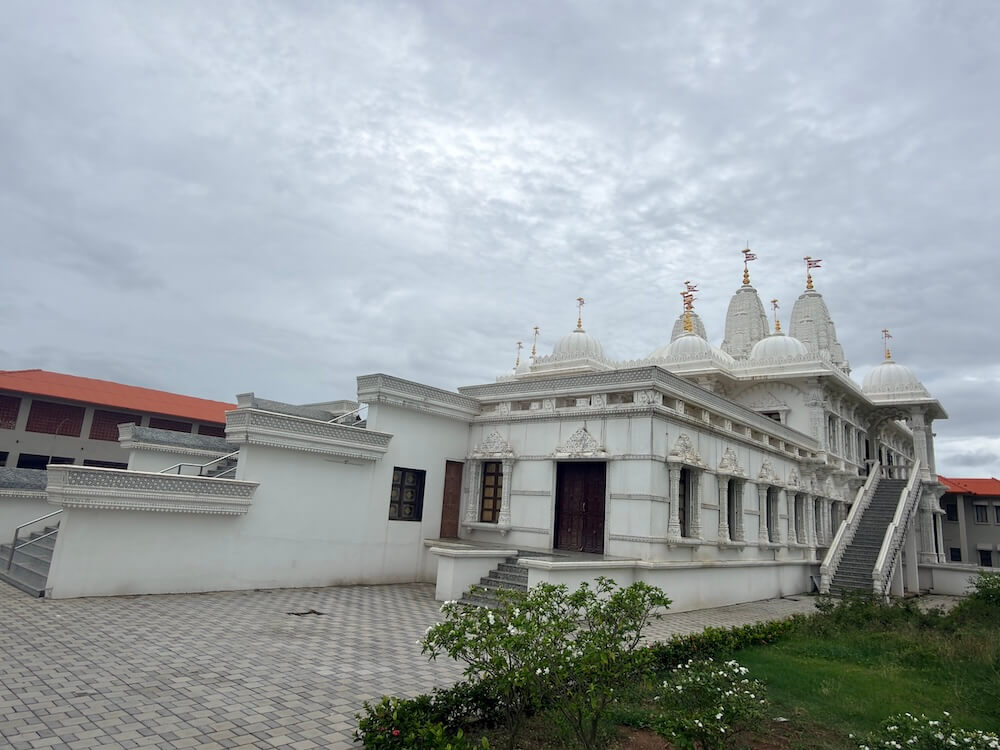
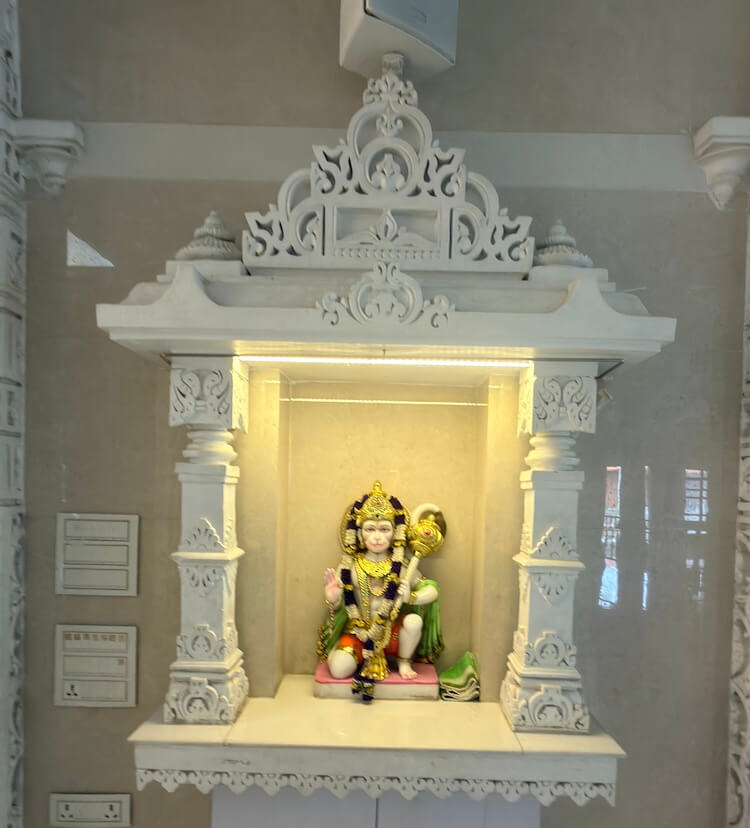
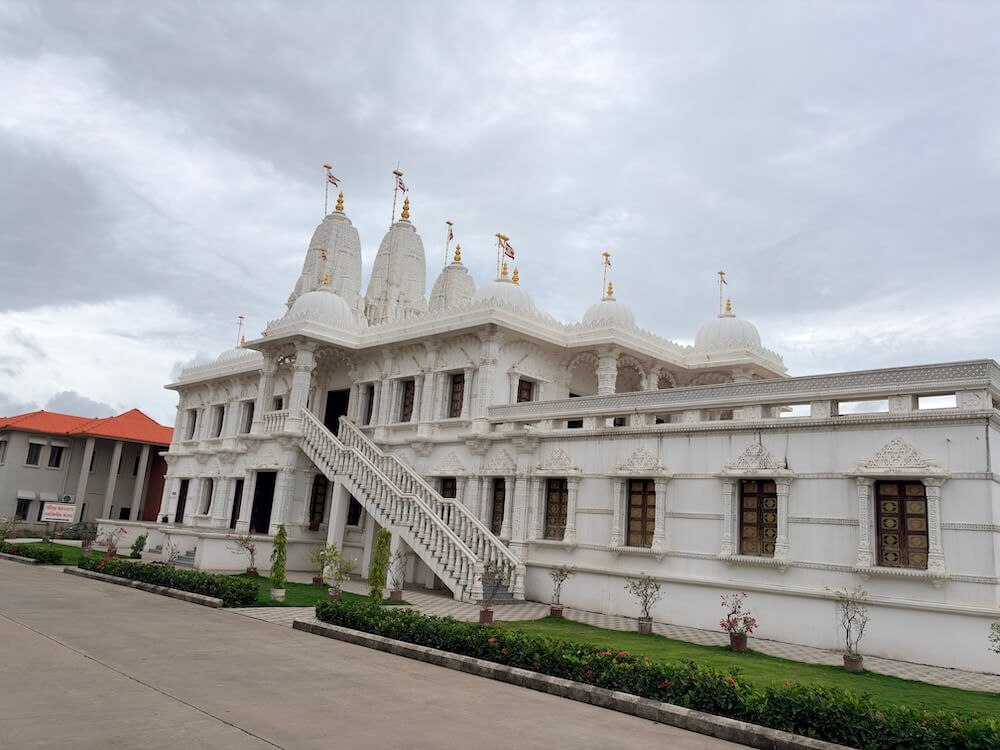
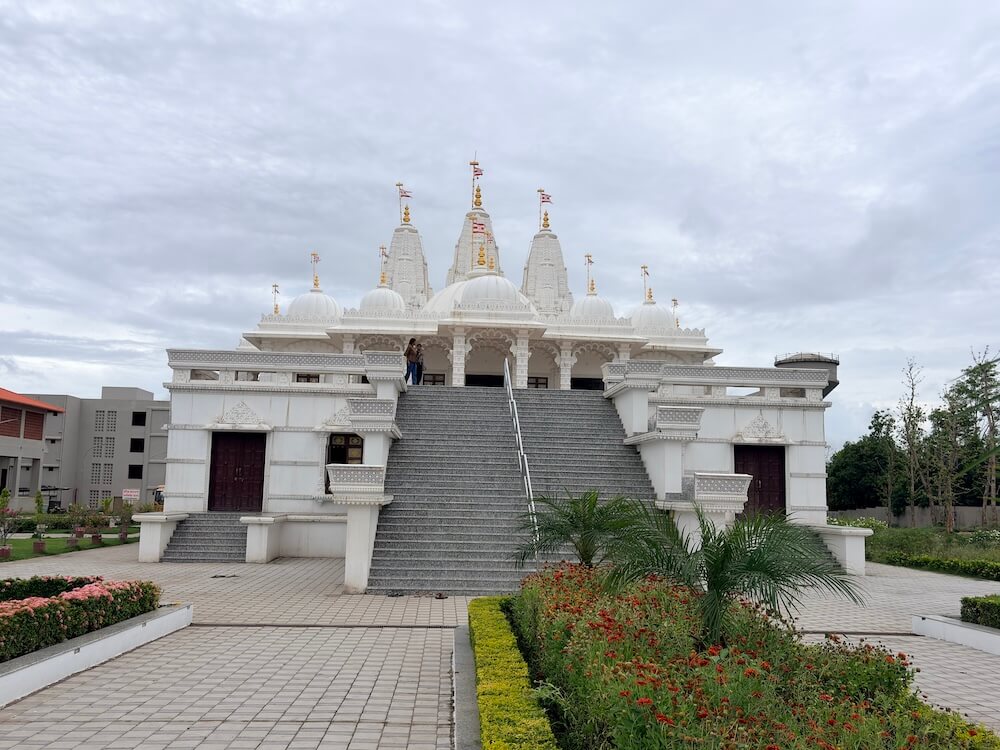
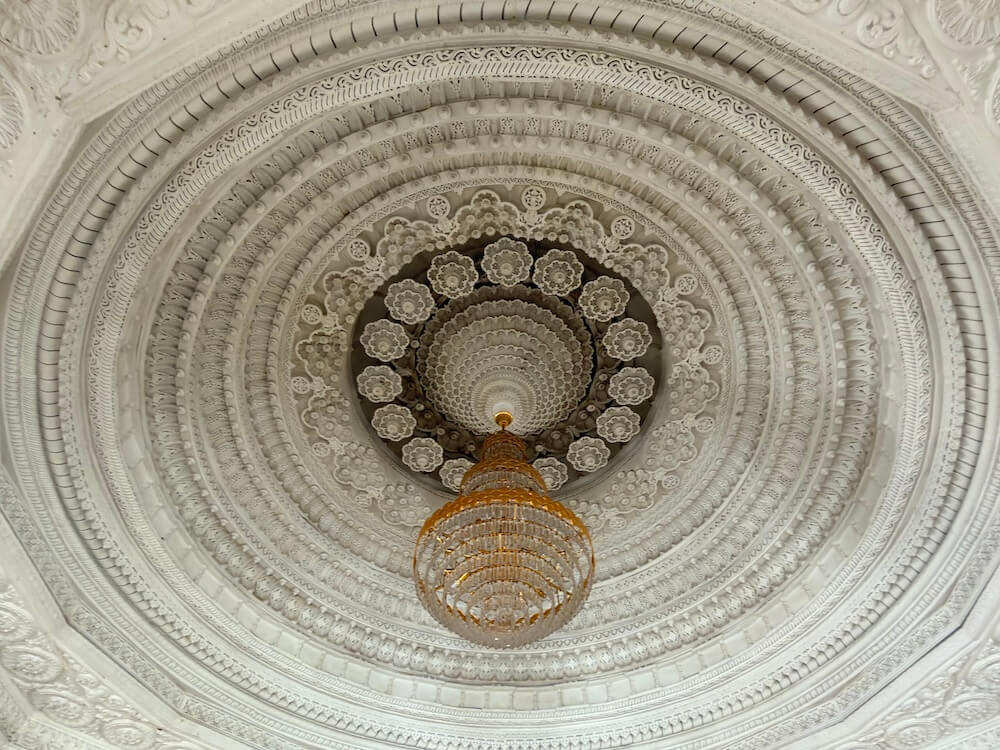
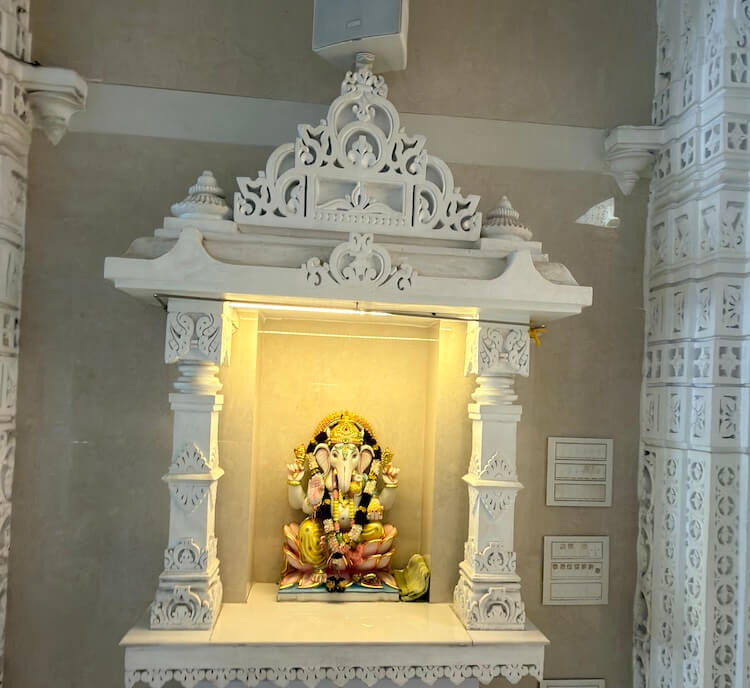
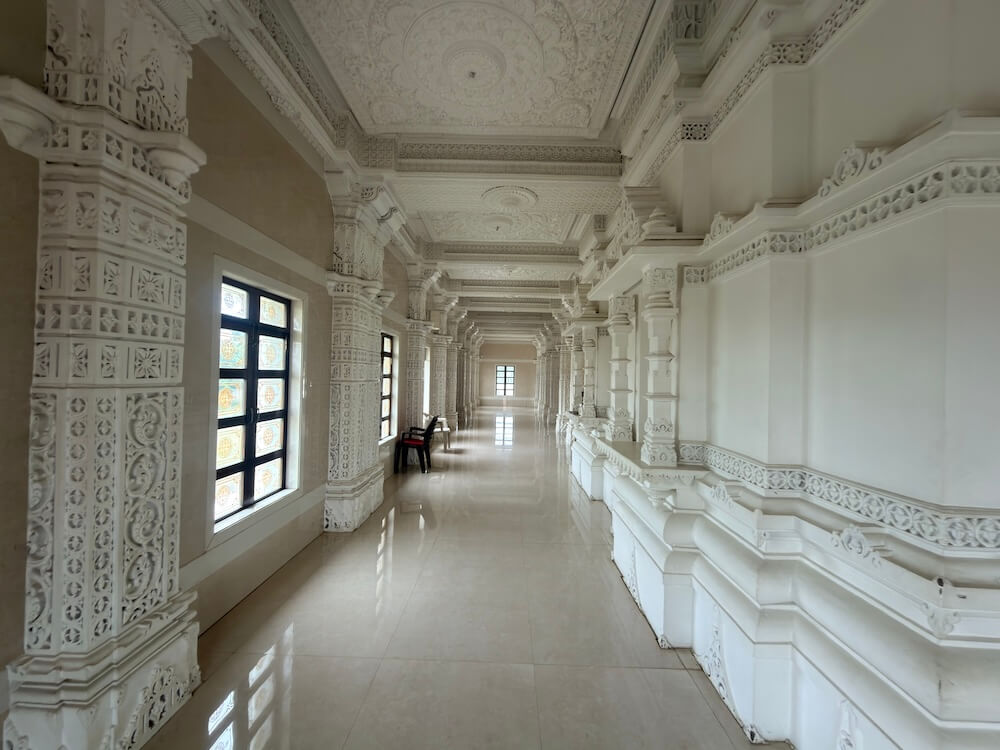
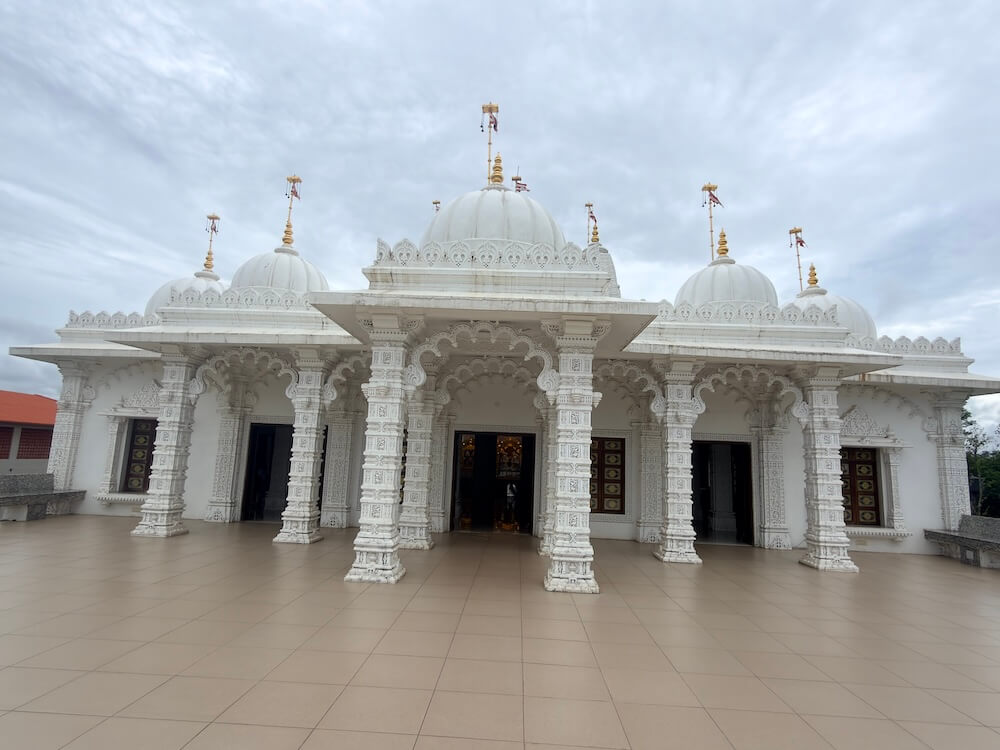
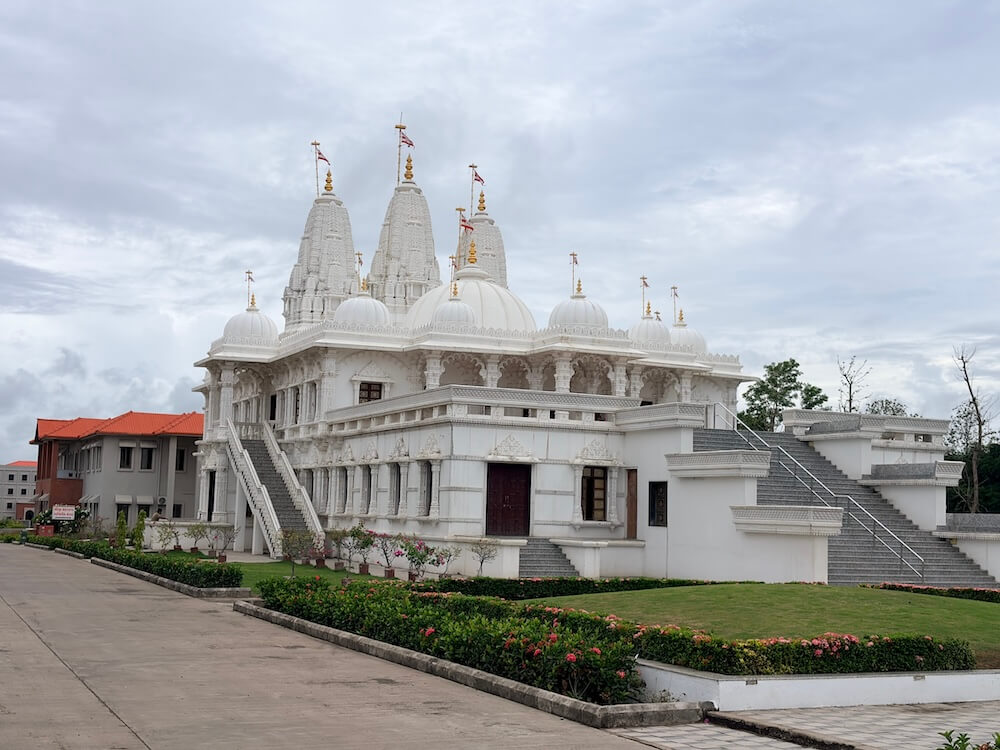
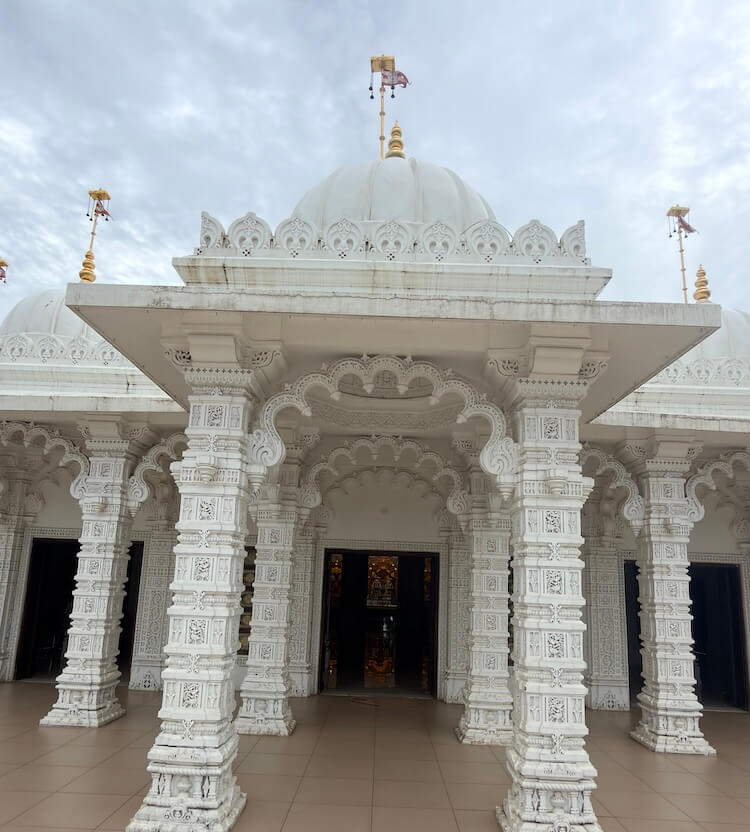
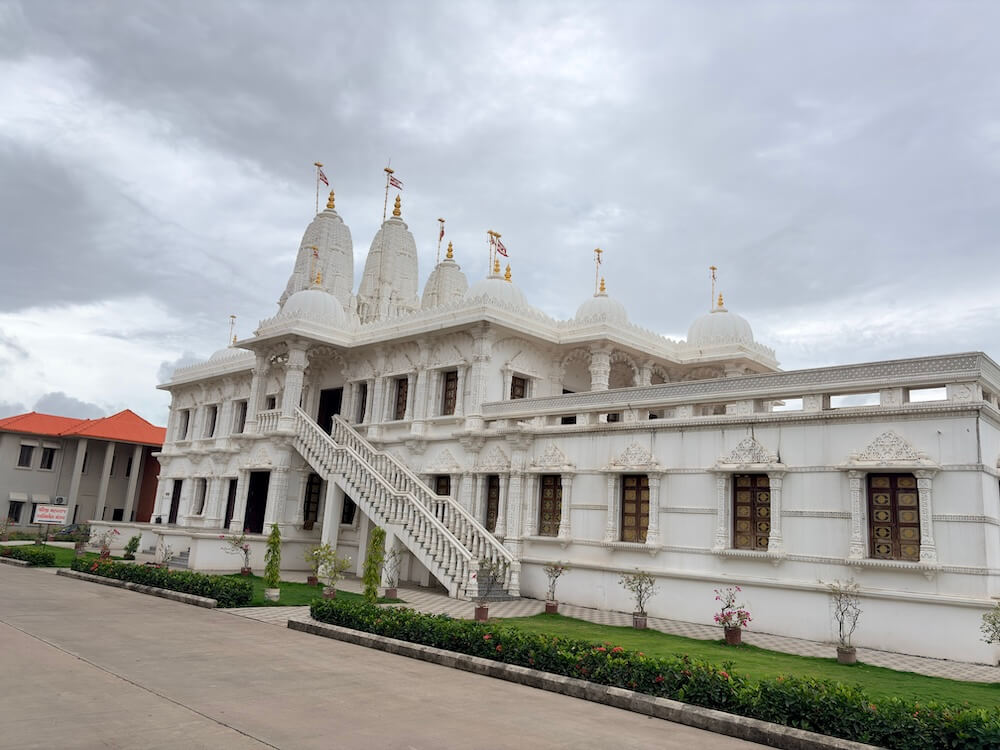
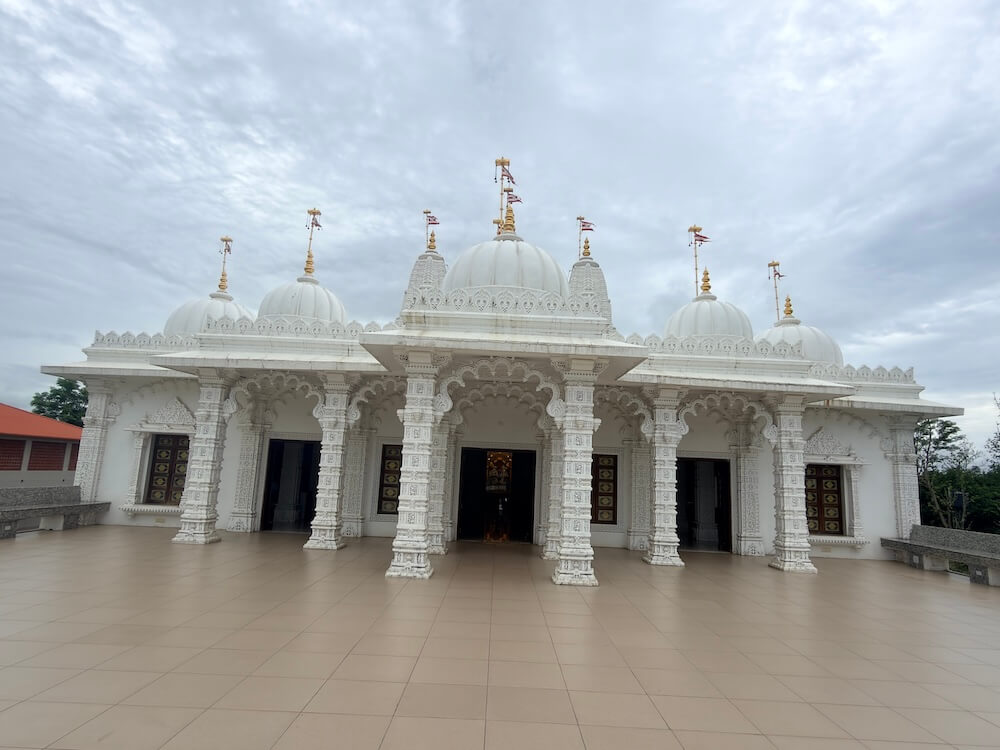
स्वामीनारायण मंदिरे त्यांच्या पारंपारिक भारतीय वास्तुकला, बारीक कोरीव काम आणि सुसंवादी प्रमाणबद्धतेसाठी प्रसिद्ध आहेत. धर्मपूर येथील BAPS श्री स्वामीनारायण मंदिरही त्याला अपवाद नाही. शहराच्या बाहेरील भागात स्थित, हे मंदिर विस्तीर्ण तटबंदी असलेल्या संकुलात असून, त्याच्या भोवती सुंदर बागा आणि सुस्थितीत असलेली हिरवळ आहे, ज्यामुळे पूजा आणि ध्यानासाठी एक शांत वातावरण निर्माण होते. पूर्णपणे पांढऱ्या संगमरवरातून बांधलेले हे मंदिर दोन मजली आहे. मंदिराच्या तळमजल्यावर एक मोठे सामुदायिक आणि सांस्कृतिक सभागृह आहे, तर मुख्य गर्भगृह वरच्या मजल्यावर स्थित आहे. ३२ पायऱ्यांचा एक रुंद जिना प्रशस्त प्रांगणाकडे जातो, जिथे दगडी बाकांवर भाविक आणि यात्रेकरूंसाठी बसण्याची सोय आहे. हे मंदिर स्वामीनारायण वास्तुकलेच्या पारंपारिक आराखड्याचे पालन करते. यात तीन प्रवेशद्वारे (मुखमंडप), एक मध्यवर्ती सभा मंडप (सभामंडप), एक अंतराळ आणि तीन गर्भगृहे आहेत. प्रवेशद्वारे आणि सभामंडप हे उत्कृष्टरीत्या कोरलेल्या संगमरवरी खांबांनी, शोभिवंत कमानींनी आणि गुंतागुंतीच्या फुलांच्या नक्षीकामांनी सुशोभित केलेले आहेत. बाहेरील खांब मोहकपणे कोरलेल्या कमानींनी जोडलेले आहेत, जे इमारतीचे सौंदर्य आणि रचनात्मक संतुलन वाढवतात. सभामंडपाच्या आत, कोरलेल्या कंस आणि कोनाड्यांवर विसावलेले जड तुळई आणि छताचे नक्षीकाम अत्यंत बारकाईने सजवलेले आहे. सभामंडपाच्या पलीकडे अंतराळ आहे, जे मंदिराच्या तीन गर्भगृहांकडे जाते. अंतराळाच्या दोन्ही बाजूंना असलेल्या संगमरवरी कोनाड्यांमध्ये भगवान गणेश आणि भगवान हनुमान यांच्या मूर्ती विराजमान आहेत. तिन्ही गर्भगृहांच्या दरवाजांच्या चौकटी नाजूक संगमरवरी कोरीव कामांनी सजवलेल्या आहेत, ज्या BAPS मंदिरांशी संबंधित उच्च दर्जाच्या कारागिरीचे दर्शन घडवतात.
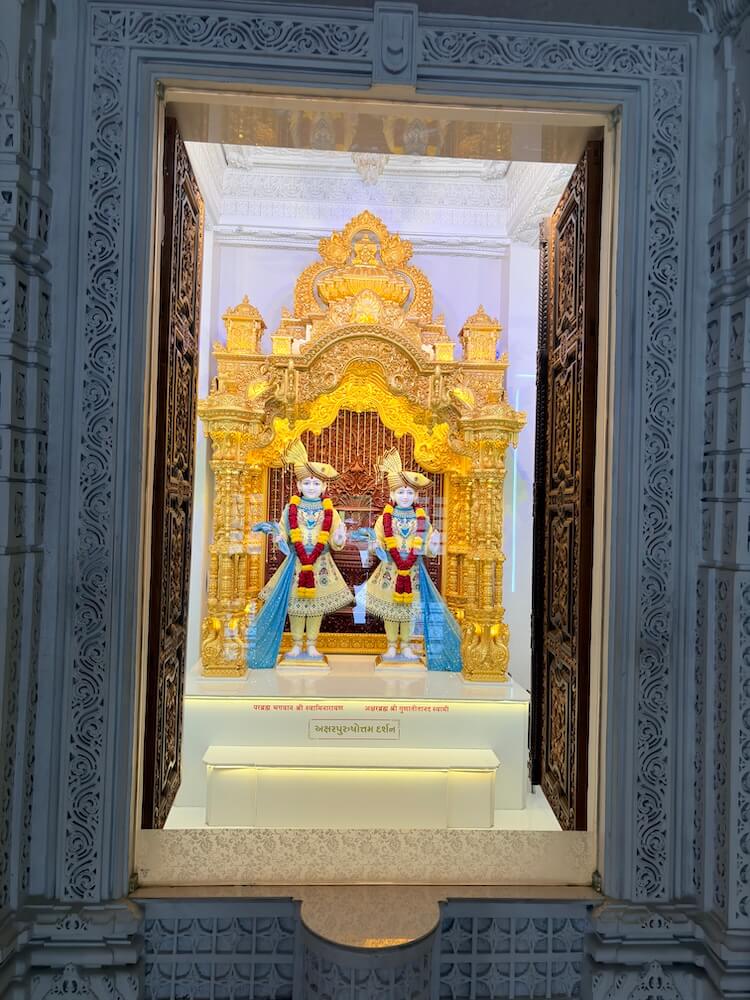
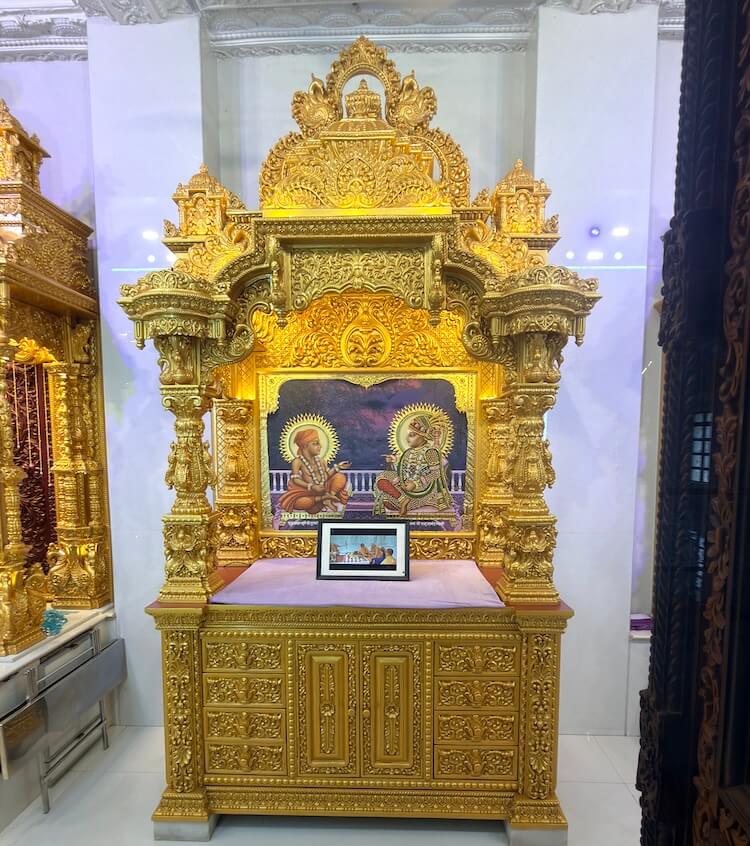
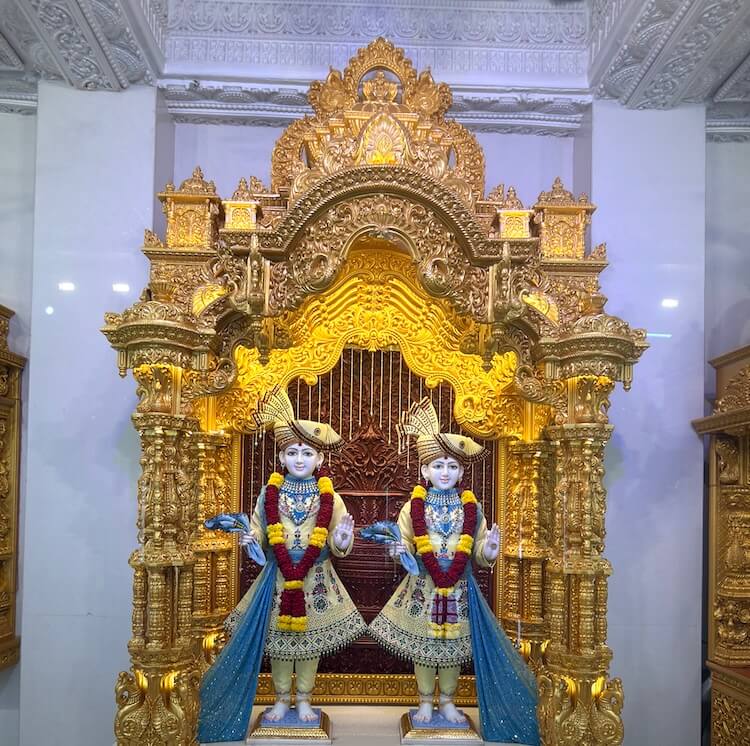
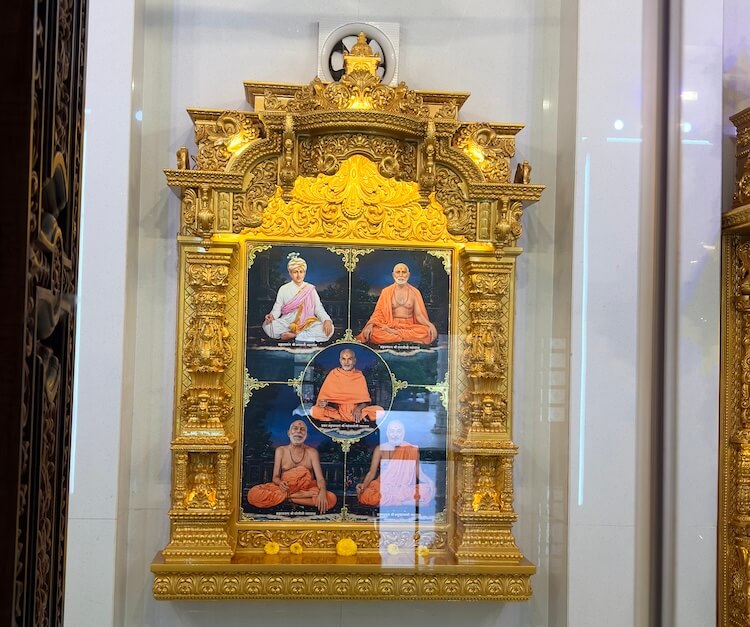
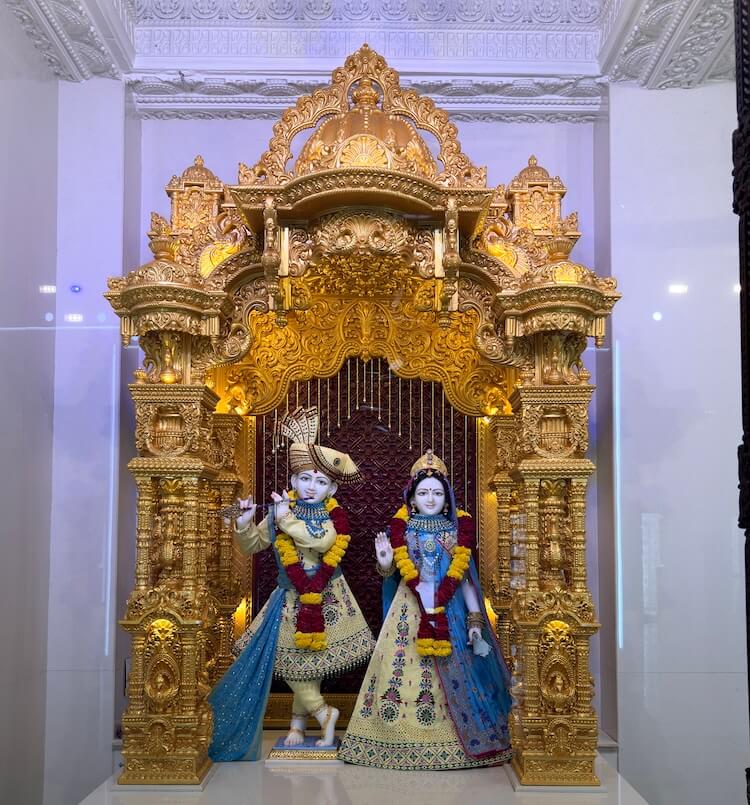
मध्यवर्ती गर्भगृहात मंदिराचे मुख्य आराध्य दैवत आहे. एका मोहक संगमरवरी मंडपाखाली वज्रपीठावर परब्रह्म भगवान स्वामीनारायण आणि गुणातीतानंद स्वामी यांच्या पवित्र मूर्ती स्थापित आहेत. उजव्या बाजूच्या गर्भगृहात राधा-कृष्ण, तर डाव्या बाजूच्या गर्भगृहात घनश्याम महाराज यांची मूर्ती आहे. गर्भगृह आणि अंतराळाच्या भोवती एक अखंड प्रदक्षिणा मार्ग आहे, जो भाविकांना विधीवत प्रदक्षिणा घालण्यास सक्षम करतो.
मंदिरातील दैनंदिन पूजा एका निश्चित वेळापत्रकानुसार पार पडते. दिवसाची सुरुवात सकाळी ६:०० वाजता मंगल आरतीने होते, त्यानंतर सकाळी ७:३० वाजता श्रृंगार आरती केली जाते. देवांना नैवेद्य अर्पण करण्यासह राजभोग आरती सकाळी ११:१५ वाजता संपन्न होते. सायंकाळी ७:०० वाजता संध्या आरती होते आणि रात्री ८:१५ वाजता शयन आरतीने दिवसाची पूजा संपन्न होते.
दिवसभरातील दर्शनाच्या वेळाही काळजीपूर्वक नियंत्रित केल्या आहेत. भाविक सकाळी ७:३० ते १०:१५ पर्यंत दर्शन घेऊ शकतात. त्यानंतर राजभोग थाळ अर्पण करण्यासाठी गर्भगृह सकाळी ११:१५ वाजेपर्यंत बंद राहते. दर्शन पुन्हा सकाळी ११:१५ ते दुपारी १२:०० वाजेपर्यंत सुरू राहते, त्यानंतर मंदिर दुपारी १२:०० ते ४:०० वाजेपर्यंत बंद राहते. सायंकाळी ६:०० ते ७:०० या वेळेत संध्याकाळची थाळ सेवा आणि आरतीसाठी मंदिर बंद होण्यापूर्वी, मंदिर पुन्हा दुपारी ४:०० ते ६:०० वाजेपर्यंत उघडते. दर्शनाचे शेवटचे सत्र सायंकाळी ७:०० ते रात्री ८:१५ पर्यंत असते, त्यानंतर शयन आरती होऊन मंदिर रात्रीसाठी बंद होते.
मंदिरात वर्षभर अनेक धार्मिक उत्सव मोठ्या भक्तीभावाने साजरे केले जातात. वैशाख महिन्यात मंदिरात ‘चंदन वाघ’ उत्सव साजरा केला जातो. उन्हाळ्याच्या उष्णतेपासून दिलासा मिळण्यासाठी, भगवान स्वामीनारायण आणि श्री हरिकृष्ण महाराज यांच्या धातूच्या मूर्तींना अनेक दिवस सुगंधी चंदनाच्या लेपाने लेपित केले जाते. भगवान श्रीकृष्णाच्या जन्मोत्सवानिमित्त ‘हिंडोळा’ उत्सव साजरा केला जातो. या उत्सवादरम्यान, देवांच्या मूर्ती सुंदर सजवलेल्या झुल्यांवर ठेवल्या जातात आणि भक्त भजन-कीर्तन गात असताना त्यांना हळुवारपणे झुलवले जाते. दिवाळी आणि अन्नकूट महोत्सव हे मंदिरातील सर्वात भव्य उत्सवांपैकी एक आहेत. दिवाळी पाडव्याच्या दिवशी, भगवान स्वामीनारायण यांना ‘छप्पन भोग’ (छप्पन्न प्रकारचे खाद्यपदार्थ) अर्पण केले जातात, त्यानंतर सामुदायिक भोजन आणि भक्तिमय कार्यक्रमांचे आयोजन केले जाते.
भगवान स्वामीनारायण यांचा जन्मोत्सव रामनवमीसोबत साजरा केला जातो. इतर महत्त्वाच्या उत्सवांमध्ये होळी, गुरु पौर्णिमा, कोजागिरी पौर्णिमा, दसरा, पवित्र श्रावण महिना आणि आषाढी व कार्तिकी एकादशी या सणांचा समावेश होतो. या प्रसंगी, मंदिर भक्तिमय गायन, शास्त्र प्रवचने, होम-हवन विधी आणि भक्तांना महाप्रसाद वाटपामुळे चैतन्यमय होते.
उपयुक्त माहिती :
धरमपूर बस स्थानकापासून ३ किमी अंतरावर स्थित.
वलसाडपासून ३० किमी अंतरावर स्थित.
नियमित राज्य परिवहन (एसटी) बस सेवा धरमपूरला जिल्ह्यातील अनेक शहरी केंद्रांशी जोडतात.
खाजगी वाहने थेट मंदिराच्या समर्पित पार्किंगपर्यंत नेता येतात.
परिसरामध्ये राहण्याची आणि नाश्त्याची सोय उपलब्ध आहे.
संपर्क: मंदिर कार्यालय, मोबाईल: ९५३७९७०८७८
BAPS Swaminarayan Mandir
Nayak Pada, Dharampur, Dist. Valsad
The history of the Swaminarayan Sampradaya is closely linked with the historic town of Dharampur, situated on the banks of the Waki River, popularly known as the Swargavahini. This association stems from a significant event in the life of Lord Swaminarayan, who stayed in Dharampur for nearly six months. His visit transformed the town into an important center of pilgrimage for his followers. Today, the BAPS Shri Swaminarayan Mandir stands as a lasting reminder of this sacred connection. Established by the ‘Bochasanwasi Akshar Purushottam Swaminarayan Sanstha’ (BAPS), it is one of the prominent Swaminarayan temples in the region and attracts devotees from across Gujarat and beyond.
The Swaminarayan movement emerged in Gujarat during the early nineteenth century under the leadership of Swami Sahajanand, who is revered by his followers as Bhagwan Swaminarayan. He was born as Ghanshyam Pande in 1781. At the age of twelve, he renounced worldly life and embarked on a seven-year pilgrimage across India. During this period, he was known as Neelkanth Varni and undertook rigorous spiritual practices, including penance in the Himalayas. In 1800, he received initiation from Swami Muktanand at Mangrol in Saurashtra and was later formally initiated by Guru Ramanand at Piplana.
After settling in Gujarat, Sahajanand devoted himself to religious and social reform. Drawing upon the philosophical traditions of Ramanujacharya’s ‘Vishishtadvaita’ and Vallabhacharya’s ‘Shuddhadvaita’, he preached a path centred on devotion, moral discipline and compassion. Guru Ramanand bestowed upon him the name Sahajanand. Following Ramanand’s death in 1801, Sahajanand assumed leadership of the sect and reorganised its activities. Travelling from village to village, he spread the Swaminarayan Mahamantra and attracted a large following. Alongside his spiritual teachings, he campaigned against social evils such as sati, female infanticide, animal sacrifice, alcohol consumption, gambling, theft, adultery, superstition and obscenity during religious festivals. Like Jainism, his teachings placed great emphasis on non-violence and vegetarianism. He strongly opposed the killing of animals, even as part of sacrificial rituals. He also introduced a strict moral code for his followers and taught that Lord Swaminarayan was identical with Lord Krishna and worthy of complete devotion. According to Swaminarayan tradition, he later explained the purpose of his divine incarnation to Gopalanand Swami in November 1820. He departed from his mortal body in 1830.
Before his death, Swaminarayan established two principal dioceses of the sect in 1825. The first, at Ahmedabad, became the Nar-Narayan Dev Gadi, while the second, at Vadtal, became the Laxmi-Narayan Dev Gadi. He ordained that the office of Acharya should remain hereditary. Accordingly, Ayodhyaprasad, the son of his elder brother Rampratap Pande, was appointed Acharya of the Ahmedabad diocese, while Raghuvir, the son of his younger brother Ichharam, became the Acharya of the Vadtal diocese.
In 1905, Shastri Yagnapurushdas, later known as Shastriji Maharaj, founded the ‘Bochasanwasi Akshar Purushottam Swaminarayan Sanstha’ (BAPS) at Bochasan following differences over doctrinal and administrative matters. BAPS teaches that Bhagwan Swaminarayan continues to guide devotees through an unbroken lineage of spiritually enlightened Gunatit Gurus. According to the tradition, Gunatitanand Swami was the first spiritual successor in this lineage. Today, Mahant Swami Maharaj serves as its spiritual leader.
It was during the lifetime of Lord Swaminarayan that the sect established its historic association with the princely state of Dharampur. The kingdom was founded by Rana Ramshah (reigned 1262–1295), a branch of the Sisodia Rajput dynasty of Udaipur in Rajasthan. According to ‘Dharampur – A Brief Sketch of its History and Administration’ by Naoroji M. Dumasia (The Times Press, Bombay, 1928), the original capital of the state was at Mandavgan. In 1766, Maharana Dharamdevji Ramdev founded a new capital and named it Dharampur. Maharana Somdev II ascended the throne in 1784. His queen, Kushal Kunwarba, was a devoted follower of Lord Swaminarayan. After Somdev’s death, his son Rupdev succeeded him but also died at a young age. Consequently, in 1807, Queen Kushal Kunwarba supervised the coronation of her young grandson, Vijaydev and assumed an important role in the administration of the state.
Tradition describes Kushal Kunwarba as a deeply religious queen who spent much of her time listening to discourses on the Bhagavata Purana. During Vijaydev’s reign, Swami Chaitanyanand, one of Lord Swaminarayan’s prominent paramahamsa disciples, visited Dharampur. When the queen sought to touch his feet in reverence, he respectfully declined, saying that he was an ascetic of Lord Swaminarayan. Curious to know more about the saint he served, Kushal Kunwarba enquired about Lord Swaminarayan and soon developed a deep desire to meet him. She subsequently sent a formal invitation requesting him to visit Dharampur.
Lord Swaminarayan accepted the invitation and was welcomed with great honour. The state arranged a grand procession in his honour, with elephants, chariots and richly caparisoned horses lining the principal streets of the capital. Moved by the queen’s devotion, he stayed in Dharampur for nearly six months. During this period, he celebrated several religious festivals, including Vasant Panchami and delivered spiritual discourses to devotees. According to Swaminarayan tradition, Queen Kushal Kunwarba was formally initiated into the sect during his stay. These events gave Dharampur a unique place in the history of the Swaminarayan Sampradaya. To commemorate this sacred association, the Bochasanwasi Akshar Purushottam Swaminarayan Sanstha (BAPS) later built the present temple in the town.
Swaminarayan temples are renowned for their traditional Indian architecture, finely carved stonework and harmonious proportions. The BAPS Shri Swaminarayan Mandir at Dharampur is no exception. Situated on the outskirts of the town, the temple stands within a spacious walled complex surrounded by landscaped gardens and well-maintained lawns, creating a peaceful atmosphere for worship and meditation. Constructed entirely of white marble, the temple rises on two storeys. The ground floor houses a large community and cultural hall, while the main shrine is located on the upper level. A broad flight of 32 steps leads to the spacious courtyard, where stone benches provide seating for visitors and pilgrims. The temple follows the traditional layout of Swaminarayan architecture. It consists of three entrance porches (Mukhamandapas), a central assembly hall (Sabhamandapa), an Antarala (antechamber) and three Garbhagrihas (sanctums). The porches and assembly hall are richly ornamented with finely carved marble pillars, decorative arches and intricate floral motifs. The outer pillars are connected by elegantly carved arches, enhancing both the beauty and structural balance of the building. Inside the assembly hall, the heavy beams resting on the carved brackets and the corbelled ceiling are richly decorated with intricate ornamental designs. Beyond the assembly hall lies the Antarala, which leads to the temple’s three sanctums. Marble niches on either side of the Antarala enshrine the idols of Lord Ganesha and Lord Hanuman. The doorframes of all three sanctums are adorned with delicate marble carvings that reflect the high standard of craftsmanship associated with BAPS temples.
The central sanctum houses the principal deities of the temple. Installed beneath an elegant marble pavilion on the Vajrapeetha (altar) are the sacred idols of Parabrahma Bhagwan Swaminarayan and Gunatitanand Swami. The sanctum to the right enshrines Radha and Krishna, while the sanctum to the left houses the idol of Ghanshyam Maharaj. A continuous Pradakshina Marga (circumambulatory passage) surrounds the sanctums and the Antarala, enabling devotees to perform ritual circumambulation.
Daily worship at the temple follows a well-defined schedule. The day begins with the Mangala Aarti at 6:00 am, followed by the Shringar Aarti at 7:30 am. The Rajbhog Aarti, accompanied by the ceremonial offering of food to the deities, is performed at 11:15 am. In the evening, the Sandhya Aarti takes place at 7:00 pm and the day’s worship concludes with the Shayan Aarti at 8:15 pm.
Darshan timings are also carefully regulated throughout the day. Devotees can have darshan from 7:30 am to 10:15 am. The sanctums then remain closed until 11:15 am for the offering of the Rajbhog Thal. Darshan resumes from 11:15 am to 12:00 noon, after which the temple remains closed from 12:00 pm to 4:00 pm. The temple reopens from 4:00 pm to 6:00 pm before closing for the evening Thal Seva between 6:00 pm and 7:00 pm. The final darshan session is from 7:00 pm to 8:15 pm, after which the temple closes for the night following the Shayan Aarti.
A number of religious festivals are celebrated at the temple with great devotion throughout the year. During the Hindu month of Vaishakha, the temple observes the ‘Chandan Vagha’ festival. To provide relief from the summer heat, the metal idols of Bhagwan Swaminarayan and Shri Harikrishna Maharaj are ceremonially covered with fragrant sandalwood paste for several days. The festival of ‘Hindola’ is celebrated to mark the birth anniversary of Lord Krishna. During this festival, the idols of the deities are placed on beautifully decorated swings and gently rocked while devotees sing bhajans and kirtans. Diwali and the Annakut Mahotsav are among the grandest celebrations at the temple. On Diwali Padva, an elaborate offering of ‘Chhappan Bhog’ (fifty-six varieties of food) is made to Bhagwan Swaminarayan, followed by community feasting and devotional programmes.
The birth anniversary of Bhagwan Swaminarayan is celebrated along with Rama Navami. Other important observances include Holi, Guru Purnima, Kojagiri Purnima, Dussehra, the holy month of Shravan and both the Ashadhi and Kartiki Ekadashi festivals. On these occasions, the temple comes alive with devotional singing, scriptural discourses, Hom-Havan rituals and the distribution of Mahaprasad to devotees.
Useful Information :
Located 3 km away from the Dharampur Bus Station.
Located 30 km away from Valsad.
Regular state transport (ST) bus services connect Dharampur with several urban centres across the district.
Private vehicles can drive right up to the dedicated parking lot of the temple.
Lodging and breakfast facilities are available in the surrounding vicinity.

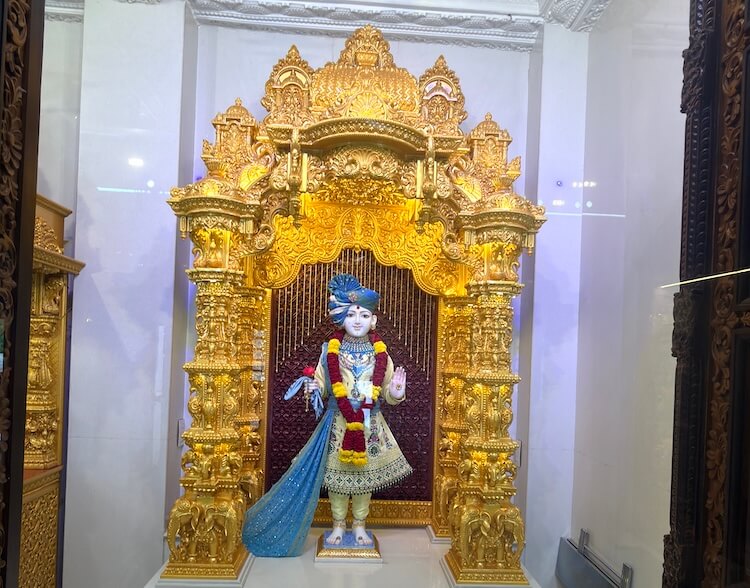
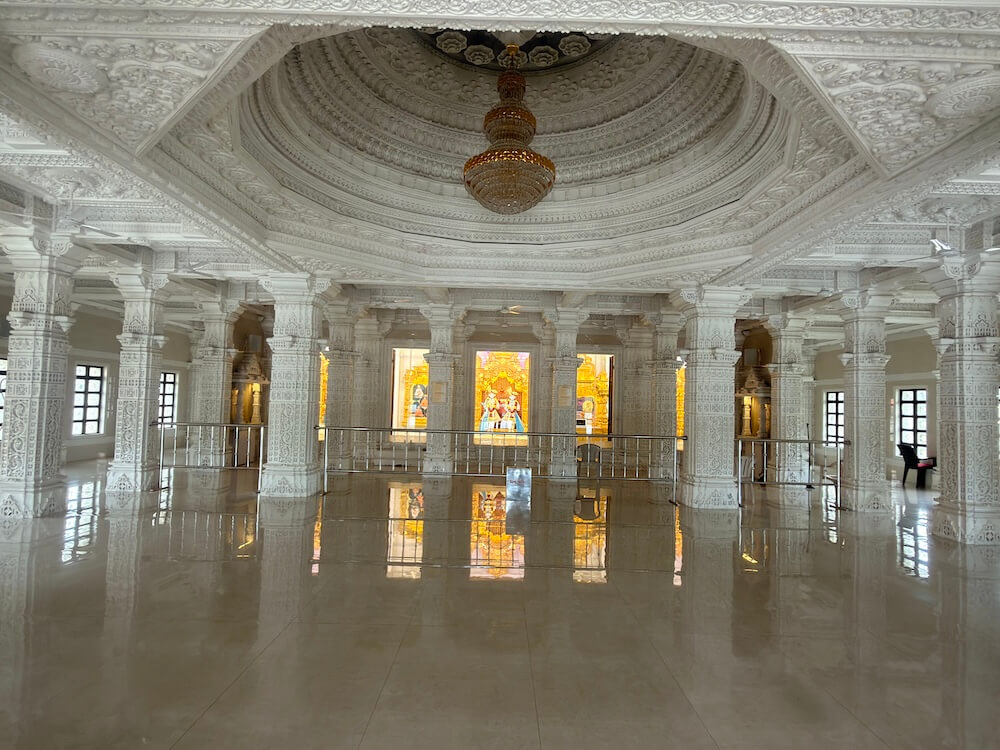 सभामंडपाच्या पलीकडे अंतराळ आहे, जे मंदिराच्या तीन गर्भगृहांकडे जाते. अंतराळाच्या दोन्ही बाजूंना असलेल्या संगमरवरी कोनाड्यांमध्ये भगवान गणेश आणि भगवान हनुमान यांच्या मूर्ती विराजमान आहेत. तिन्ही गर्भगृहांच्या दरवाजांच्या चौकटी नाजूक संगमरवरी कोरीव कामांनी सजवलेल्या आहेत, ज्या BAPS मंदिरांशी संबंधित उच्च दर्जाच्या कारागिरीचे दर्शन घडवतात.