
चंद्रमौलेश्वर महादेव मंदिर
पारनेरा पारडी, वलसाड, जि. वलसाड
Chandramouleshwar Mahadev Temple
Parnera Pardi, Valsad, Dist. Valsad
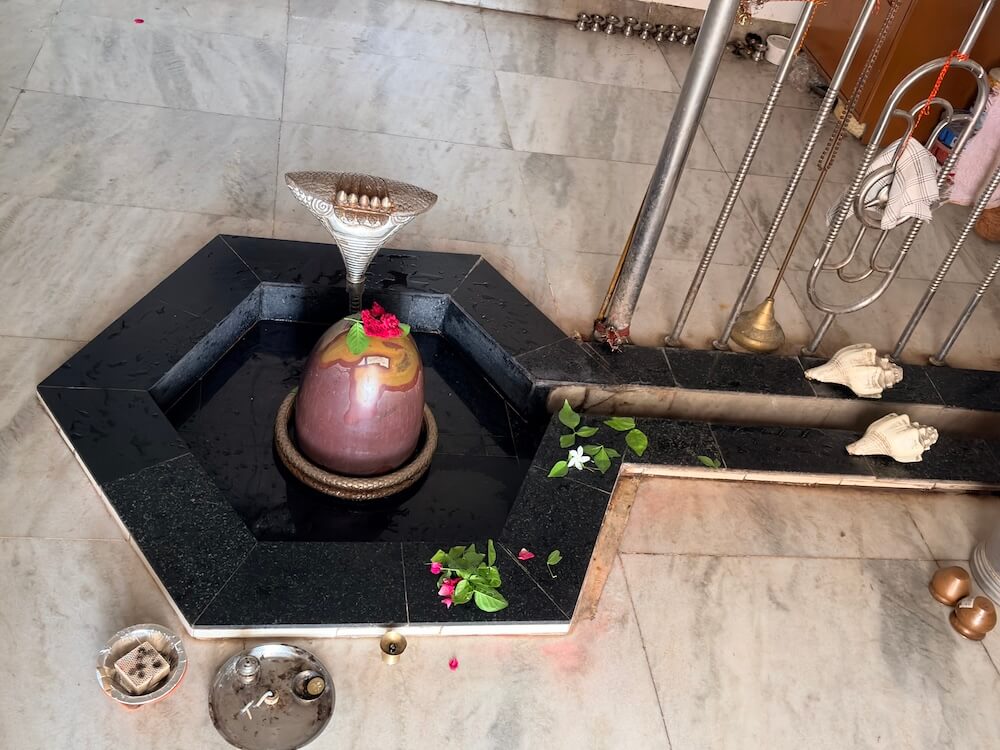 Mahadev signifies the God of Gods. The revered deity of millions of Hindus, Mahadev is known by various names such as Kapardi, Gangadhar, Neelkanth, Shashishekhar and Phanivardhar, reflecting the unique attributes of his manifest form. Chandramouleshwar is one such epithet. Across all five seats (‘Peethas’) established by Adi Shankaracharya, Lord Shiva is worshipped daily in the form of the Chandramouleshwar Linga. A temple dedicated to this very form of Chandramouleshwar was established in Valsad three decades ago. The distinctive feature of this shrine lies in the consecration of replicas of the twelve Jyotirlingas alongside Chandramouleshwar Mahadev. Consequently, this temple has emerged as a paramount centre of faith for Shiva devotees in the region.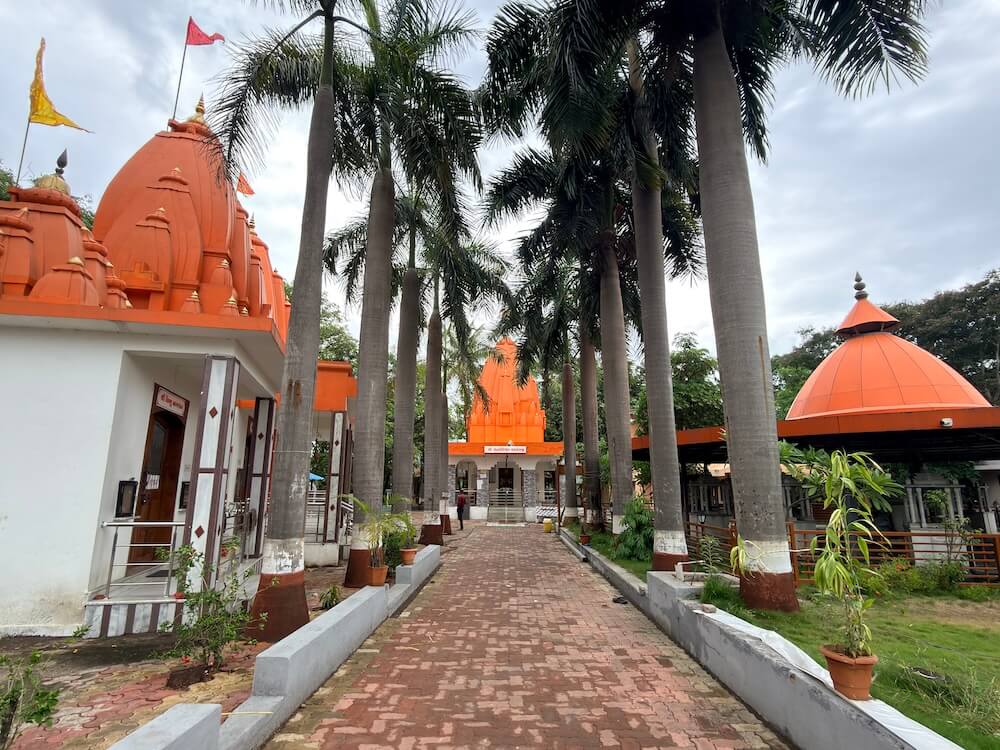
The worship of Lord Shiva has been practised in the country since time immemorial. Scholars believe that this Shaivite deity is intrinsically linked to Rudra, the Vedic god. In sacred texts like the Rigveda, Yajurveda (‘Vajasaneyi Samhita’) and Atharvaveda, as well as the Aitareya Brahmana and Shankhayana Brahmana, the adjective ‘Shiva’ is employed to describe Rudra. The Vajasaneyi Samhita addresses Rudra as Neelkanth. During the Upanishadic era, Rudra and Shiva came to be viewed as one entity. Some religious scholars posit that this deity originally belonged to non-Aryan and non-Vedic traditions. Mythological lore narrates that Shiva destroyed the sacrificial ‘yagnas’ of Lord Brahma and Daksha. He resides in cremation grounds, draped in animal hide. His companions are spirits and ghosts. Shiva is also closely associated with non-Vedic sects such as the Kaula, Kapalika and Pashupata.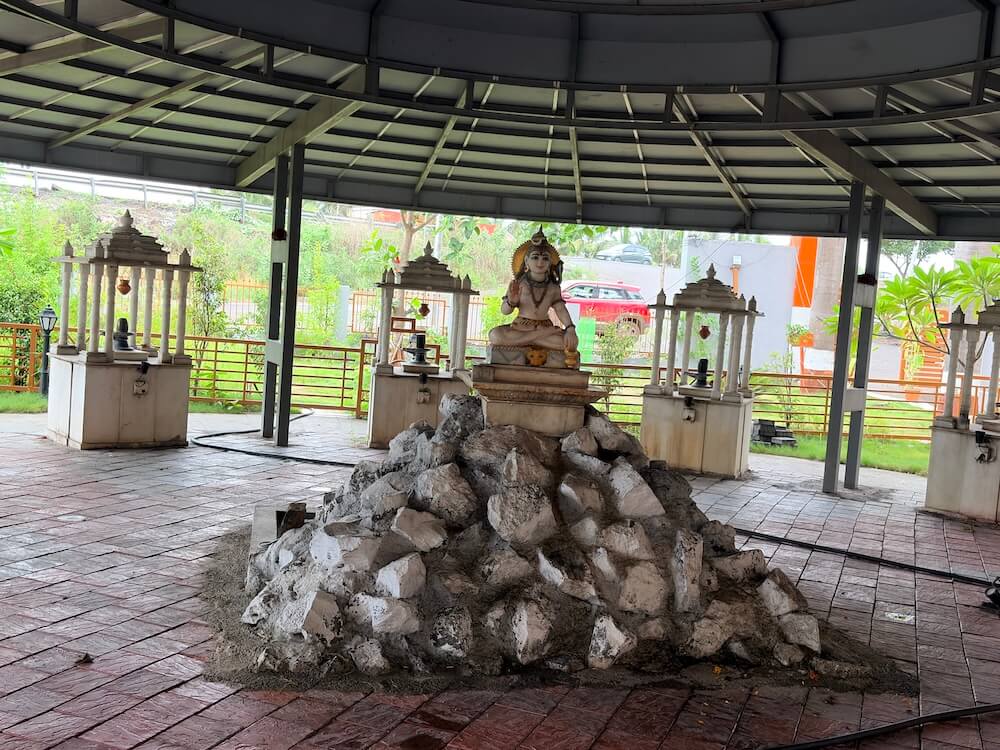
Shiva worship is primarily conducted in three forms : sacred symbols, the Shivalinga and idols. Among these, the worship of the Shivalinga is prevalent across the entire Asian continent. The Linga manifests in various types, including Parthiv (earthen), Parad (mercury), metallic, gemstone, floral, ash, sugar and crystal (‘Sphatika’) variants. Adi Shankaracharya, revered by faithful Hindus as an incarnation of Shiva himself, used to worship a crystal Linga known as Chandramouleshwar. The era of Adi Shankaracharya is generally considered to be around 788 to 820 AD. A legend surrounding this Shivalinga states that Adi Shankaracharya performed rigorous penance on Mount Kailash.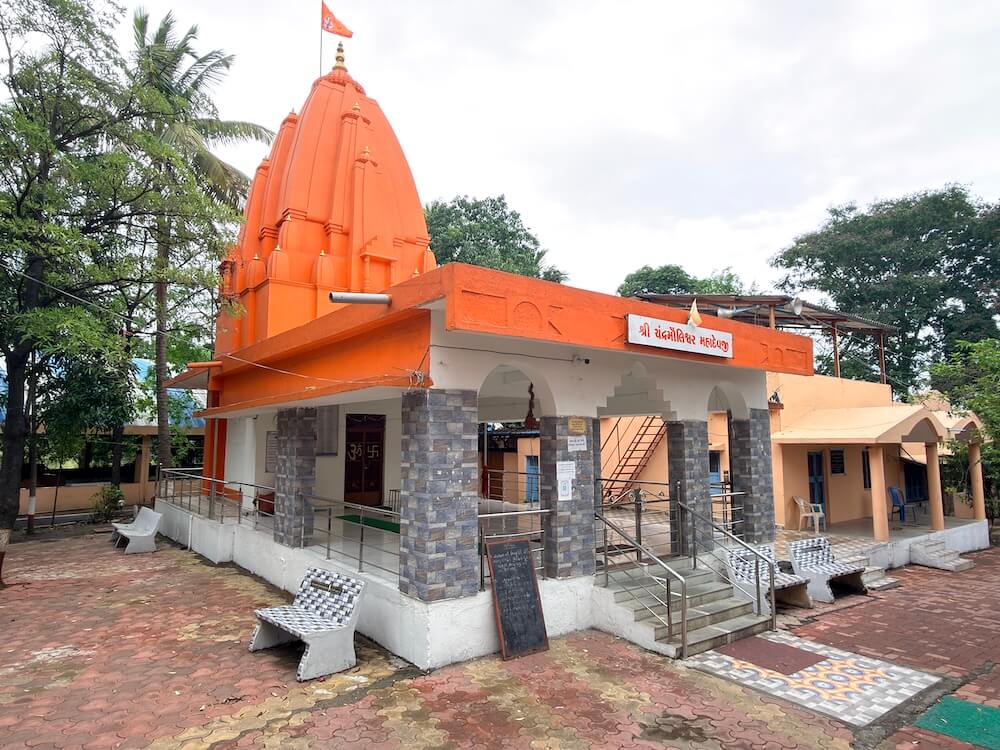 Pleased with his devotion, Lord Mahadev himself bestowed five crystal Lingas upon him. Four of these Shivalingas are enshrined at the Peethas of Badrinath, Dwarka, Jagannath Puri and Sringeri. The fifth Shivlinga is established at the Kanchi Kamakoti Peetha. The Shankaracharyas perform the elaborate ‘Shodashopachara’ worship of the Chandramouleshwar Linga at these seats three times a day amidst the resonant chanting of the Rudra Sukta. A temple dedicated to this majestic Chandramouleshwar Mahadev is nestled in Parnera Pardi on the banks of the Waki River in Valsad.
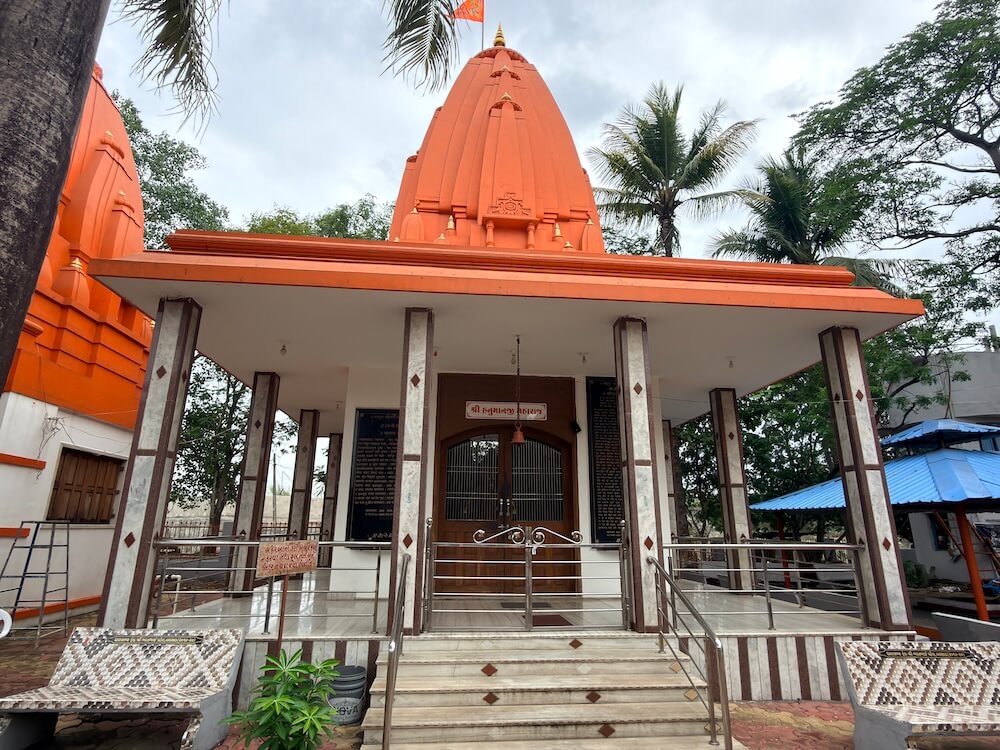
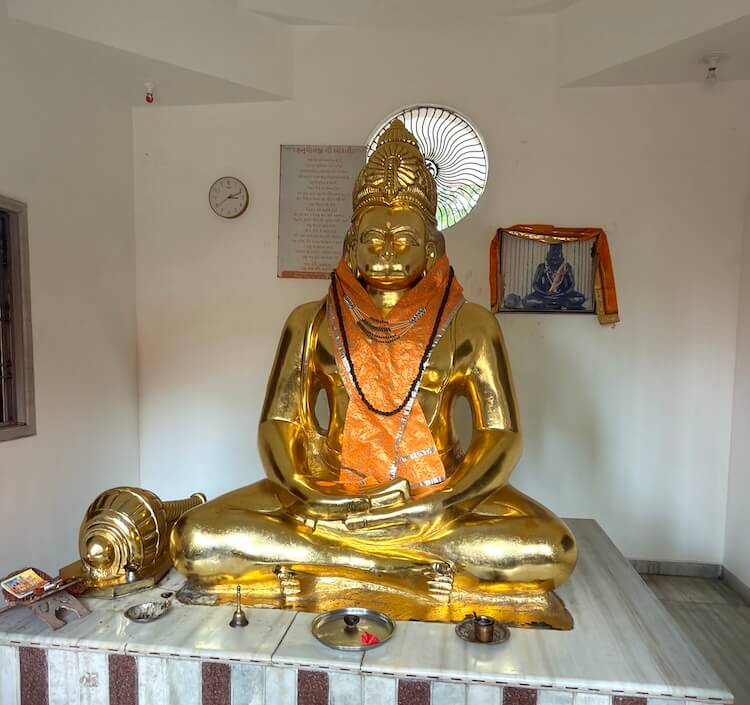
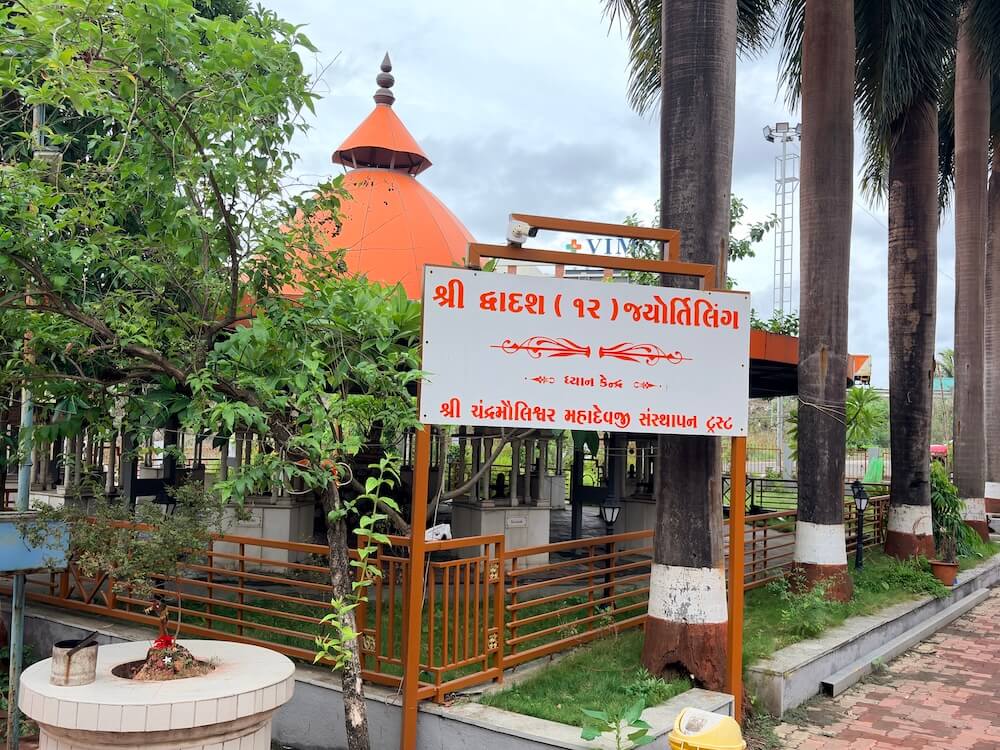
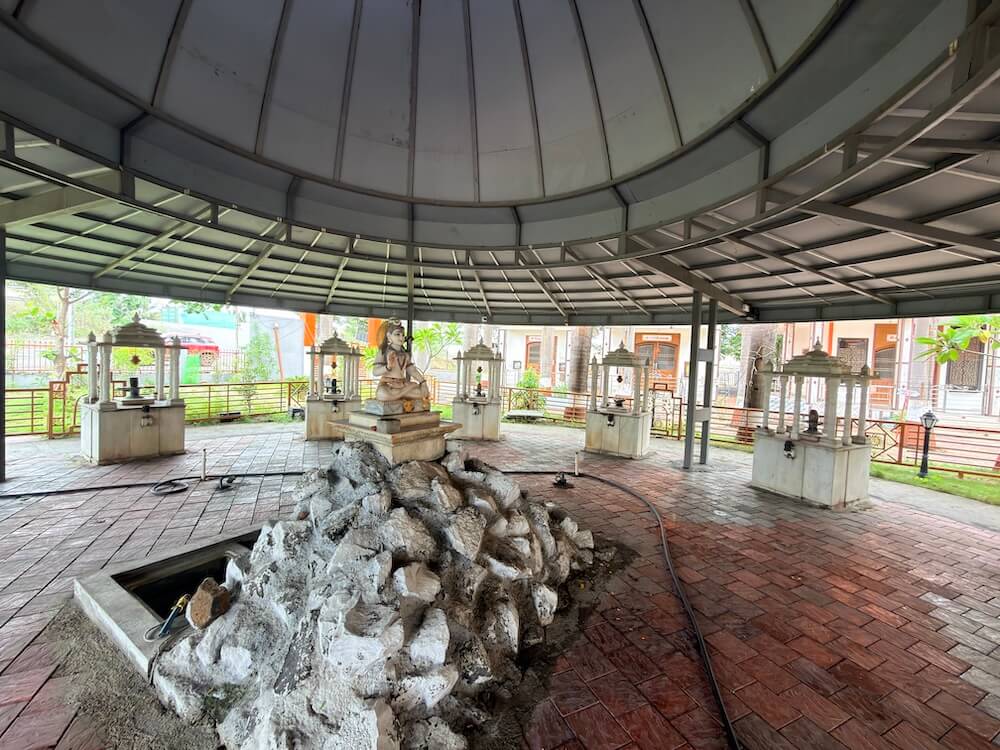
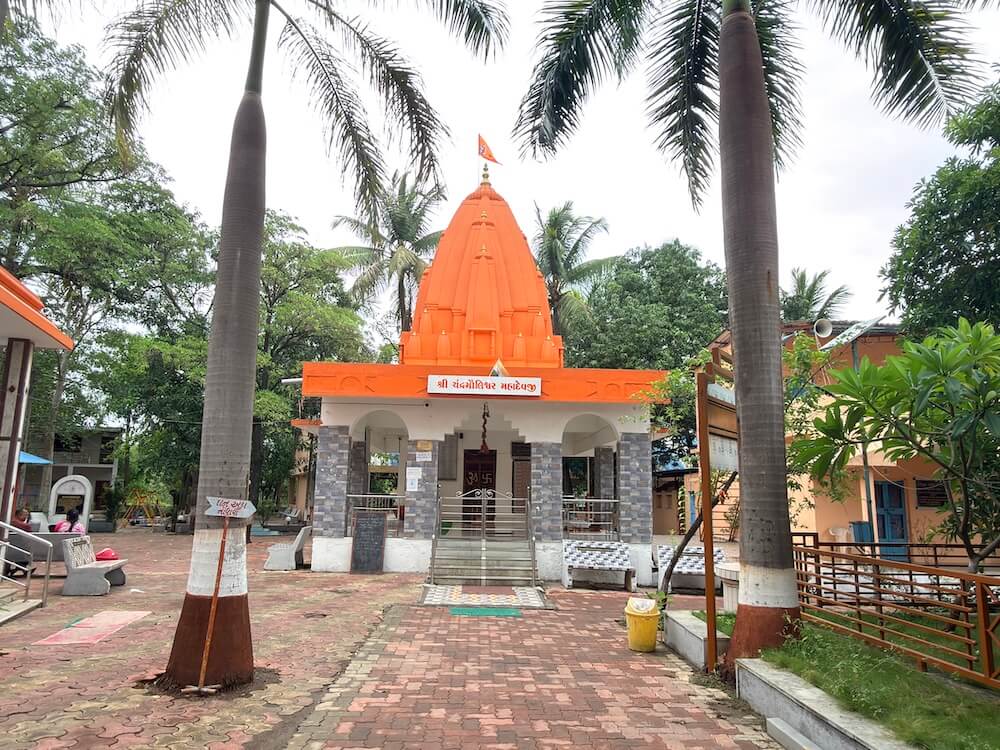
The shrine was established on Monday, 12 December 1994, a day deeply favoured by Lord Shiva. The consecration ceremony (‘Prana Pratishtha’) was performed by Saint Ramanand Bapu of the Mora Tekra Ashram in Surat. 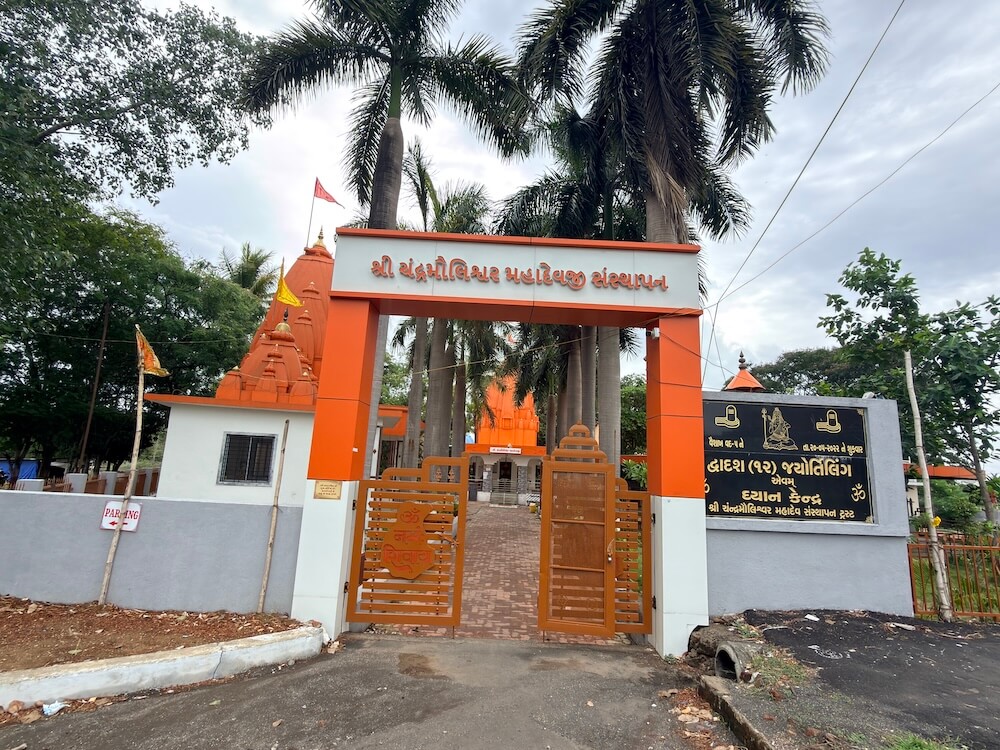 Situated adjacent to the Mumbai-Surat highway in Parnera Pardi, this temple is enclosed by a rampart. Entry into the temple courtyard is through a gateway built into the fortification wall. The paved pathway stretching from the entrance to the main shrine is flanked on both sides by palm trees. To the left of this pathway stand separate temples dedicated to Lord Vishnu, Santoshi Mata and Hanuman. Each of these shrines features a design comprising a semi-open assembly hall (‘Sabhamandapa’) and a sanctum sanctorum (‘Garbhagriha’). To the right of the approaching pathway lies the Dwadash Jyotirlinga temple. In this semi-open structure, an idol of Lord Mahadev seated atop Mount Kailash resides at the centre, surrounded by replicas of the twelve Jyotirlingas enshrined in elegant marble niches.
 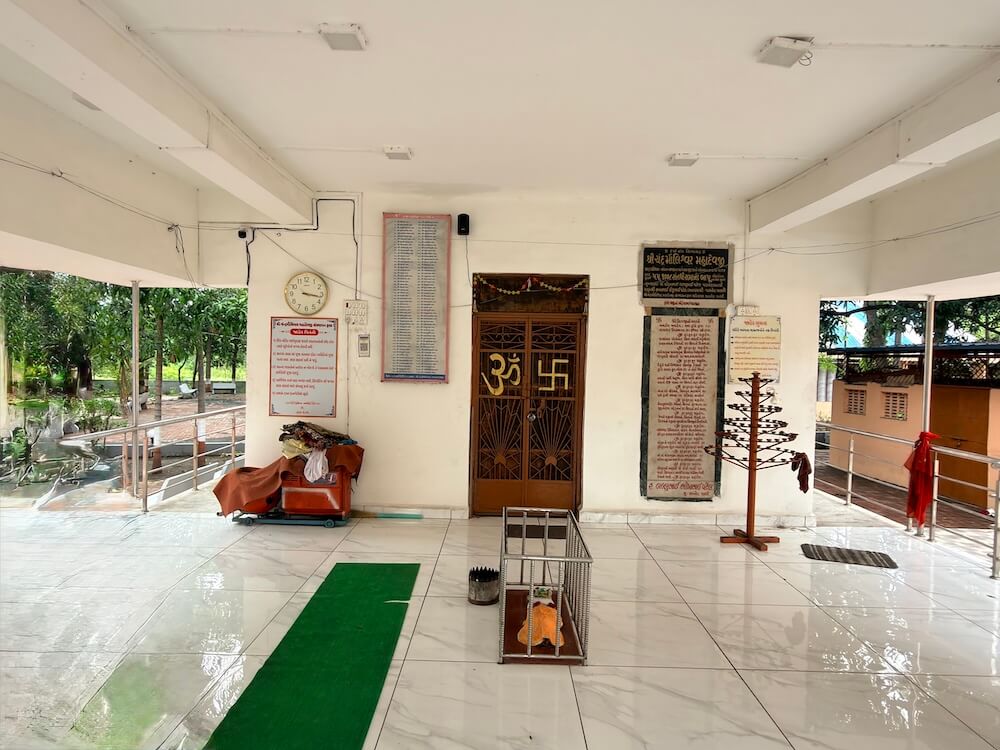 Furthermore, the courtyard features a spacious community hall and numerous seating arrangements for pilgrims.
Ascending five steps from the courtyard leads devotees into the assembly hall of the Chandramouleshwar Temple, which rests on a raised plinth. The architectural layout of this main shrine consists of a semi-open assembly hall, followed by a circumambulatory path (‘Pradakshina Marga’) surrounding the sanctum sanctorum. In the assembly hall, directly facing the entrance of the sanctum, are the sculpted figures of Nandi the bull and a tortoise. Inside the sanctum, a hexagonal Shiva Pindi rests flat on the ground at the very centre. A canopy in the form of a five-metal (‘Panchadhatu’) serpent shields the Pinda. In a niche on the rear wall behind the Shiva Pinda, a pristine marble idol of Goddess Parvati is enshrined. 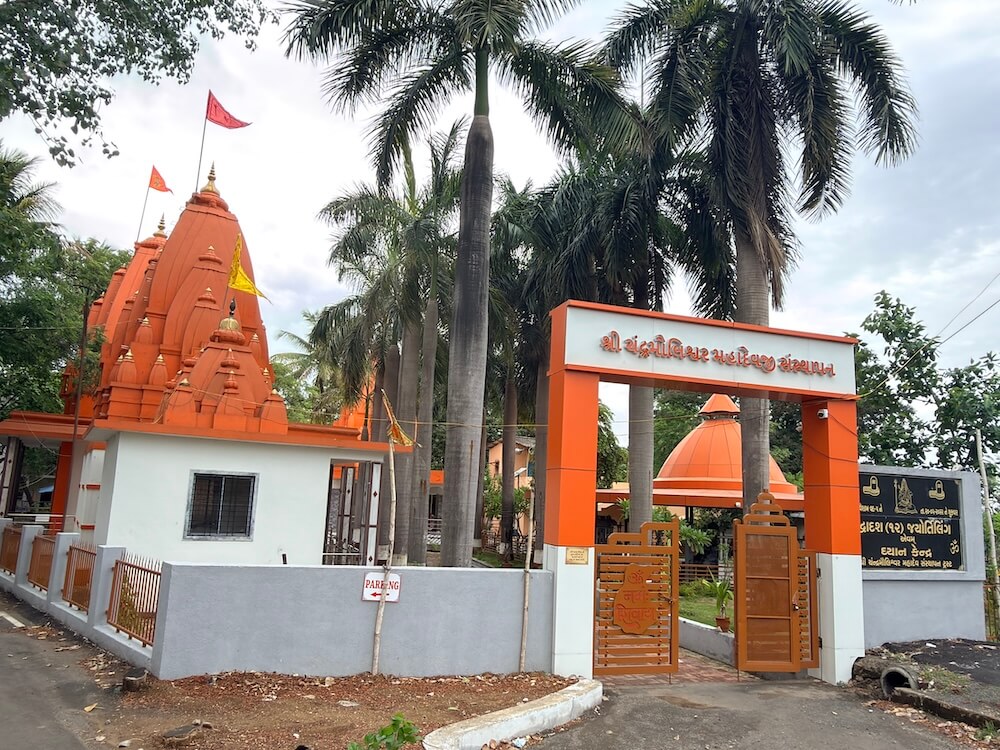 Additionally, other niches within the sanctum walls house marble sculptures of Lord Ganesha and Lord Hanuman. The spire (‘Shikhara’) rising above the sanctum is built in the ‘Urushringa’ architectural style, adorned with numerous miniature replicas of smaller spires.
Devotees can seek divine blessings at the Chandramouleshwar Mahadev Temple from 5:30 am to 12:00 pm and from 4:00 pm to 8:00 pm. Throughout the year, numerous religious festivals and occasions are celebrated here with great fervour. The Mahashivratra festival remains the grandest annual event at this temple. Thousands of devotees from Valsad, Pardi and surrounding regions converge here on this auspicious day. The temple is adorned with spectacular lighting and exquisite floral arrangements for the occasion. 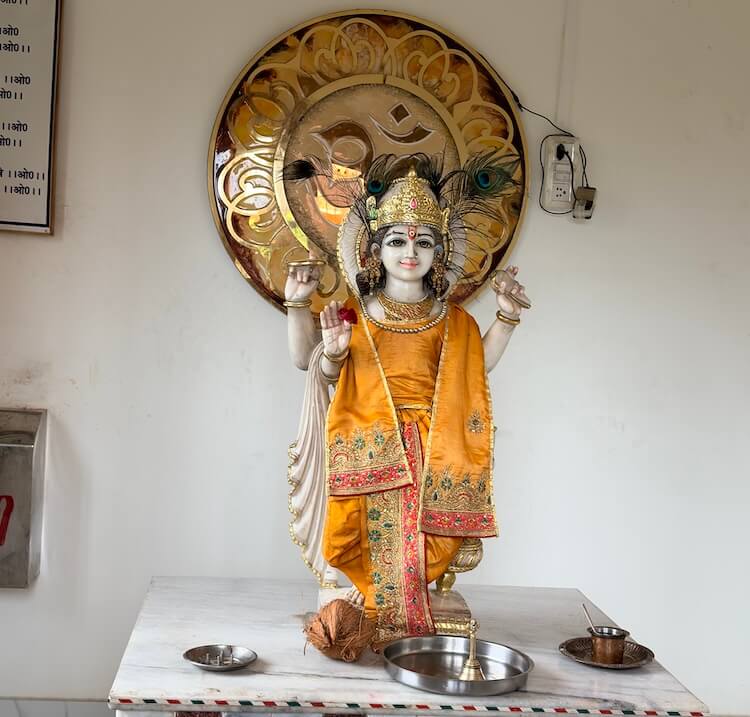 Ritualistic offerings of water (‘Jalabhishek’), milk (‘Dugdhabhishek’) and holy chants (‘Rudra Abhishek’) are performed from the early hours of dawn. Similarly, throughout the holy month of Shravan and especially on Shravan Mondays, the Shiva Pinda and the twelve Jyotirlingas are beautifully decorated with diverse themes, including ice adornments, fruit arrangements and floral displays. Devotees participate in the collective chanting of the ‘Laghurudra’ and ‘Maharudra’ prayers all month long. In the evenings, devotional singing programmes (‘Shiv Bhajans’) are performed by local musical troupes. During Shravan, many Shiva devotees carry holy water collected from various sacred rivers in traditional sling-pots (‘Kawads’) to perform anointment rituals for Chandramouleshwar Mahadev. Beyond these events, festivals like ‘Tripuri Poornima’ on Kartik Shuddha Poornima and the festival of lights (‘Deepotsav’) are celebrated with joy. Special evening prayers and a grand ‘Maha Aarti’ are performed for Chandramouleshwar Mahadev on the monthly Pradosha Tithi and the monthly Shivratri during the waning phase of the moon.
Useful Information :
- Located at 7 km away from Valsad.
- State transport (ST) bus services connect Valsad to several cities across the state.
- Private vehicles can drive right up to the temple premises.
- Numerous lodging and breakfast options are available in the vicinity.
- Contact: Bharatbhai K. Patel, Chief, Telephone: 02632-57772
चंद्रमौलेश्वर महादेव मंदिर
पारनेरा पारडी, वलसाड, जिला। वलसाड

मंदिरे
Temples
मंदिर
મંદિરો
கோவில்கள்
దేవాలయాలు
ക്ഷേത്രങ്ങൾ
ದೇವಾಲಯಗಳು
মন্দিরসমূহ
ਮੰਦਿਰ
-
साईबाबा मंदिर तिथळ, ता./जि. वलसाड
अधिक माहितीSai Baba Temple Tithal, Tal./Dist. Valsad
View Detailsसाईं बाबा मंदिर तीथल, ताल./जिला. वलसाड
विवरण देखेंSai Baba Temple Tithal, Tal./Dist. Valsad
વિગત જુઓSai Baba Temple Tithal, Tal./Dist. Valsad
விவரங்களைக் காண்கSai Baba Temple Tithal, Tal./Dist. Valsad
వివరాలను చూడండిSai Baba Temple Tithal, Tal./Dist. Valsad
വിശദാംശങ്ങൾ കാണുകSai Baba Temple Tithal, Tal./Dist. Valsad
ವಿವರಗಳನ್ನು ವೀಕ್ಷಿಸಿSai Baba Temple Tithal, Tal./Dist. Valsad
বিস্তারিত দেখুনSai Baba Temple Tithal, Tal./Dist. Valsad
ਵੇਰਵੇ ਦੇਖੋ -
भाव-भावेश्वर महादेव मंदिर बारुमाळ, ता. धरमपूर, जि. वलसाड
अधिक माहितीBhav-Bhaveshwar Mahadev Temple Barumal, Tal. Dharampur, Dist. Valsad
View Detailsभाव-भावेश्वर महादेव मंदिर बारुमल, ताल. धरमपुर, जिला. वलसाड
विवरण देखेंBhav-Bhaveshwar Mahadev Temple Barumal, Tal. Dharampur, Dist. Valsad
વિગત જુઓBhav-Bhaveshwar Mahadev Temple Barumal, Tal. Dharampur, Dist. Valsad
விவரங்களைக் காண்கBhav-Bhaveshwar Mahadev Temple Barumal, Tal. Dharampur, Dist. Valsad
వివరాలను చూడండిBhav-Bhaveshwar Mahadev Temple Barumal, Tal. Dharampur, Dist. Valsad
വിശദാംശങ്ങൾ കാണുകBhav-Bhaveshwar Mahadev Temple Barumal, Tal. Dharampur, Dist. Valsad
ವಿವರಗಳನ್ನು ವೀಕ್ಷಿಸಿBhav-Bhaveshwar Mahadev Temple Barumal, Tal. Dharampur, Dist. Valsad
বিস্তারিত দেখুনBhav-Bhaveshwar Mahadev Temple Barumal, Tal. Dharampur, Dist. Valsad
ਵੇਰਵੇ ਦੇਖੋ -
दत्त मंदिर पाथरी, ता./जि. वलसाड
अधिक माहितीDatt Temple Pathri, Tal./Dist. Valsad
View Detailsदत्त मंदिर पाथरी, ताल./जिला. वलसाड
विवरण देखेंDatt Temple Pathri, Tal./Dist. Valsad
વિગત જુઓDatt Temple Pathri, Tal./Dist. Valsad
விவரங்களைக் காண்கDatt Temple Pathri, Tal./Dist. Valsad
వివరాలను చూడండిDatt Temple Pathri, Tal./Dist. Valsad
വിശദാംശങ്ങൾ കാണുകDatt Temple Pathri, Tal./Dist. Valsad
ವಿವರಗಳನ್ನು ವೀಕ್ಷಿಸಿDatt Temple Pathri, Tal./Dist. Valsad
বিস্তারিত দেখুনDatt Temple Pathri, Tal./Dist. Valsad
ਵੇਰਵੇ ਦੇਖੋ